How Acidity, Salt and Water Activity Affect Cheese Safety
Your knife glides through one soft cheese, then another.
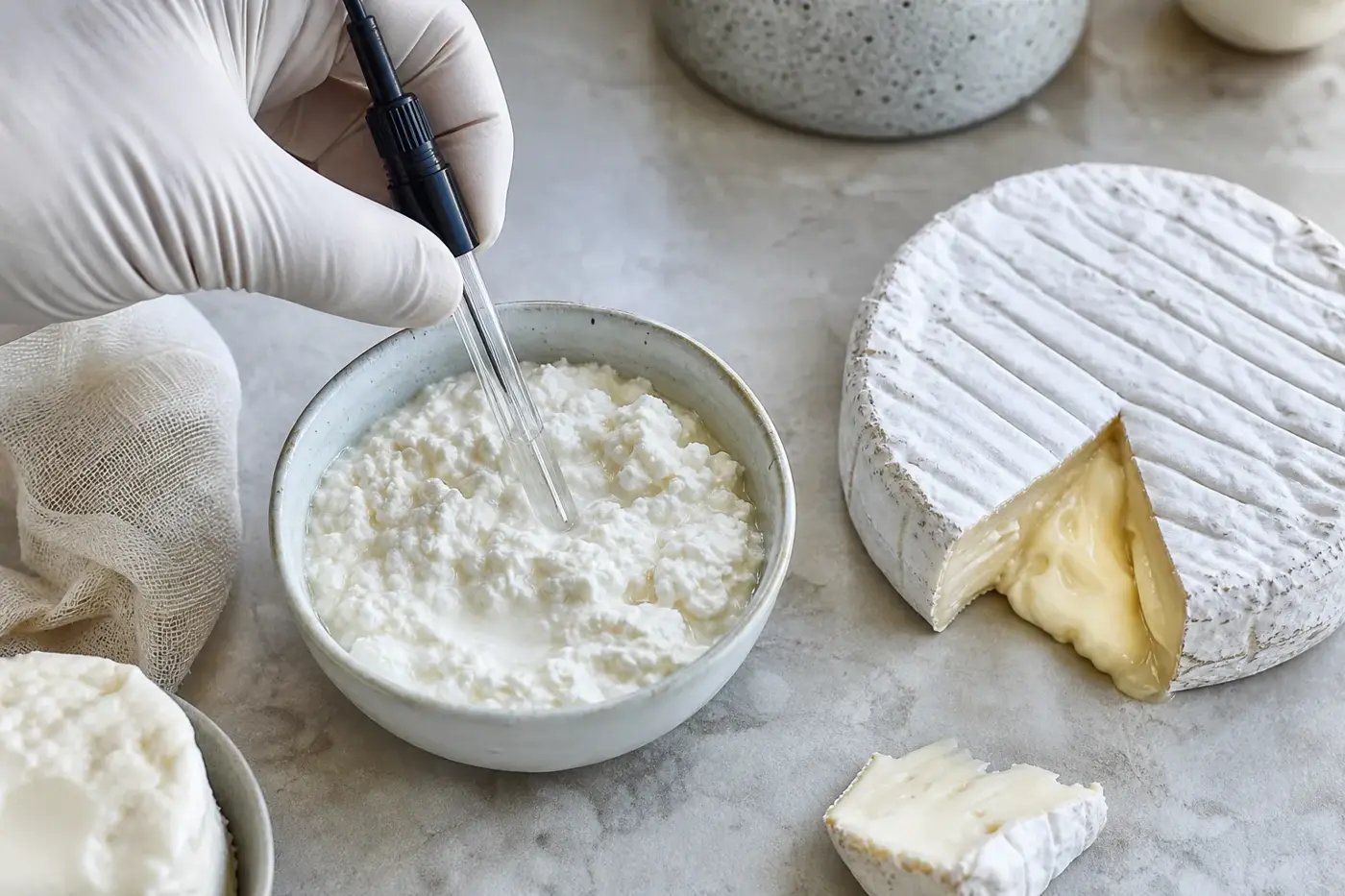
Your knife glides through one soft cheese, then another. They feel much alike, but an acid-set fresh cheese and a mould-ripened soft cheese follow different paths through manufacture and maturation, with very different acidity. A firm, aged cheese may depend more on reduced water activity. Safety rests on acidity, salt and available water working alongside temperature, time and hygienic handling, not on low pH or a salty taste alone. [1,2,3]
Acidity: follow the journey, not just the final reading
Starter cultures set fermentation in motion. These added bacteria turn milk sugar, lactose, into lactic acid, lowering pH and making conditions less comfortable for many unwanted bacteria. For cheesemakers, how quickly that happens matters as well as how far the pH falls. [2,4]
Think of pH as the intensity of acidity: technically, it describes hydrogen ion activity. The scale is logarithmic, so a fall from pH 6 to pH 5 means a tenfold increase in hydrogen ion activity. You need a suitable, calibrated electrode to measure it. Dirty or poorly calibrated equipment can give misleading results. [2,4]
Titratable acidity answers a different question: how much alkali does it take to reach a defined endpoint? Milk proteins and minerals buffer acidity, resisting changes in pH, so this measurement captures more than the free acidity represented by pH. A result expressed as lactic acid equivalents does not measure lactic acid alone. For microbial control, the University of Guelph identifies pH as the more useful indicator. [4]
Salt: look at the water inside the cheese
Salt restrains microbes by making water less available to them. Its concentration in the cheese's water therefore tells you more than salt as a percentage of the whole cheese. The University of Guelph calls this salt as a percentage of cheese moisture. [3,6]
To calculate salt in moisture, divide salt mass by water mass, then multiply by 100. Take a deliberately simple example: 2 g of salt with 40 g of water gives 5% salt in moisture. Put the same salt with 60 g of water and you get about 3.3%. These are arithmetic examples, not cheese recipes or safety targets. [3]
Salt also affects starter cultures, changing acid development as well as conditions for unwanted organisms. Move a recipe's salting stage and you can alter several controls at once. Microbes differ in their salt tolerance, and salting cannot replace hygiene. [2,3,6]
Water activity: what can microbes actually use?
Moisture tells you how much water a cheese contains. Water activity, written aw, tells you how available that water is for microbial activity. Dissolved salt and other components affect that availability. Two foods with the same moisture percentage can therefore have different water activities. [5,6]
Technically, aw is the ratio of water vapour pressure above the food to that above pure water at the same temperature. Pure water has an aw of 1. To measure it, a sample reaches equilibrium in a controlled chamber, then the surrounding humidity is assessed. Temperature control matters to the result. [5]
Your nutrition panel gives salt, but normally not enough information to determine aw. A dry cut face cannot tell you the water activity throughout a cheese either. Laboratory measurements describe the sample tested, under the stated conditions. [5]
Give temperature and time their place
Acidity, salt and aw work together, not independently. The central question is whether a particular organism can grow in that cheese, under its actual storage conditions, over its intended shelf life. Preventing growth is different from killing organisms already present. [1,6,7]
Time can help or hinder. An effective manufacturing process may gradually make conditions less favourable, while prolonged storage can give surviving bacteria more opportunity to multiply if conditions permit. Refrigeration slows many organisms, but Listeria monocytogenes can grow at refrigeration temperatures. Cold storage must therefore work alongside formulation and shelf life. [1,7,8]
Fresh, soft or hard: look beyond texture
Texture gives you clues about water retention. The manufacturing process and measured properties tell you more. The patterns below are broad tendencies, not verdicts on the safety of individual products. [1,2]
| Cheese group | What usually happens | What deserves a closer look |
|---|---|---|
| Fresh, unripened | Water retention can be high; acid development varies with the method. | Acidity, refrigeration, handling and shelf life. [1,2] |
| Soft, ripened | pH can change as the cheese ripens. | Properties over shelf life, including at the surface. [2,8] |
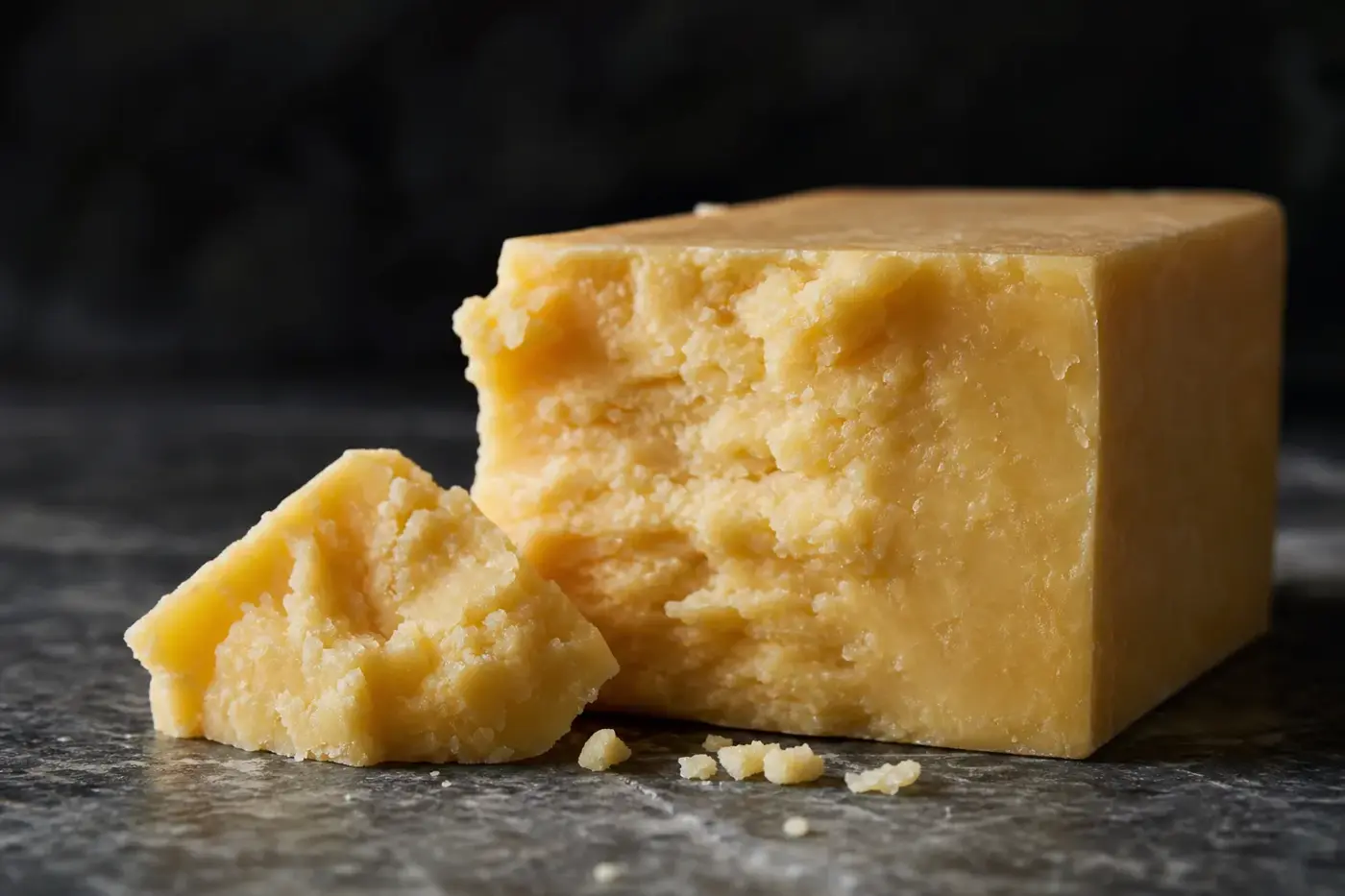
| Hard, aged | Lower moisture often goes with lower aw and more concentrated salt in moisture. | Composition, process history and contamination after manufacture. [1,2] |
These differences guide which properties need assessing. An acid-set fresh cheese and a mould-ripened soft cheese can both yield to your knife while their acidity develops differently. A firm aged cheese may rely more on reduced aw. For the wider distinctions, see how to tell cheese styles apart. [1,2]
From draining to ripening, the cheese keeps changing
Draining removes more than liquid. Whey leaving the curd carries lactose with it, changing the fuel available for further acid development. The timing of acid production relative to draining affects how much acidity stays in the cheese. [2] You can follow the complete production sequence in how cheese is made.
Salting influences fermentation as it continues. During ripening, moisture loss and soluble breakdown products can reduce aw, while pH may rise after its initial minimum. A measurement at the end of draining cannot describe the cheese's entire later life. [2,3]
In some surface ripened cheeses, microorganisms use acid at the surface and raise the local pH as ripening proceeds. The centre can be a different environment. Producers therefore need evidence covering the relevant parts of their product over shelf life. An average measurement cannot establish conditions everywhere. [2,5,8]
This page summarises published guidance from the official sources it cites. It is not medical advice. Guidance differs between countries and changes over time, so check the current source for where you live, and ask your doctor, midwife, pharmacist or dietitian about your own circumstances.
Listeria and other pathogens need different controls
Listeria monocytogenes tolerates salt and can grow in cold conditions, according to the FDA. It also persists in food manufacturing environments, making contamination control especially important for cheese you eat without further cooking. Read listeria and cheese safety for the organism's specific risks. Conditions that inhibit its growth do not establish that contamination is absent. [7]
Other pathogens tolerate different stresses. Staphylococcus aureus is notably tolerant of salt and reduced aw. The FSA's MyHACCP glossary emphasises that microbial responses to available water vary by species. Conditions that restrict one organism may still allow another to grow or survive. [6,7]
Stopping bacteria does not necessarily remove their toxins
Staphylococcus aureus can produce enterotoxins that cause illness when eaten. The FDA explains that these toxins can remain biologically active after heating has destroyed the bacterial cells. Falling bacterial numbers alone cannot establish that previously formed toxin has disappeared. [7]
Prevention means controlling contamination and growth under conditions that allow toxin production. If cheese has been mishandled, heating is not a reliable rescue measure for preformed staphylococcal toxin. [7]
After pasteurisation, hygiene still matters
Pasteurisation uses heat treatment to target harmful organisms in milk. Handling, equipment or the environment can introduce contamination afterwards. Hygienic production and handling remain essential. [1,7]
The NHS's pregnancy guidance reflects that distinction. It gives extra precautions for certain soft ripened cheeses whether the milk is pasteurised or unpasteurised. For an explanation of the treatments, see raw milk, thermised and pasteurised cheese. [12]
British Listeria rules: understand where growth matters
The FSA's November 2026 guidance distinguishes assimilated Regulation 2073/2005 in Great Britain from the EU regulation applying in Northern Ireland. It reports an important change applying in Northern Ireland and the EU from 1 July 2026. [8]
For ready to eat foods able to support Listeria growth in Northern Ireland and the EU, the amended criterion requires no detection in 25 g throughout shelf life where the producer cannot demonstrate that 100 colony forming units per gram will not be exceeded throughout shelf life. The FSA explains that the alternative criterion remains available where that demonstration satisfies the competent authority. [8,9]
These requirements govern product assessment and compliance. Your household taste or pH check cannot replace them. The 2026 EU amendment must also be kept separate from the Great Britain framework. [8]
At home, start with the label
If you follow FSA advice in England, Wales and Northern Ireland, keep your fridge between 0 and 5 °C and check it with a thermometer. Follow the cheese's storage instructions, including what to do after opening. During preparation, keep chilled food outside the fridge for the shortest possible time. The FSA gives a maximum of four hours. [10]
A use-by date concerns safety; a best before date concerns quality. UK government guidance makes this distinction and warns that incorrect storage can make food unsafe before its use-by date. Follow opening instructions alongside the date, and do not eat cheese after its use-by date. [11]
Use clean hands and utensils. Keep raw foods separate from ready-to-eat cheese, following NHS hygiene advice. For wrapping and practical fridge organisation, see how to store cheese at home. [7,13]
At higher risk? Begin with official advice
Pregnancy, newborn age and weakened immunity are associated with a higher risk of serious listeriosis, according to the NHS. Risk also increases with older age. Check its advice for your circumstances rather than judging cheese by firmness or saltiness. [13]
The NHS's November 2026 UK pregnancy guidance lists hard cheeses and specified pasteurised soft cheeses among choices you can eat. It advises cooking soft cheeses made with unpasteurised milk, soft mould ripened cheeses with a white coating and soft blue cheeses until steaming hot. Read the NHS pregnancy guidance for its full categories and exceptions. [12]
For other countries, consult the relevant national authority's current advice. Discuss personal decisions with your doctor, midwife, pharmacist or dietitian.
Questions people ask
Does a firm or salty cheese mean it is safe?
Safety depends on how acidity, salt and available water work together with temperature, time and hygienic handling. Firmness or a salty taste alone cannot establish safety.
What is water activity in cheese?
Water activity describes how available water is for microbial activity, rather than how much water a cheese contains. Two foods with the same moisture percentage can have different water activities.
Can Listeria grow in cheese kept in the fridge?
Listeria monocytogenes can grow at refrigeration temperatures. Cold storage must work alongside the cheese's formulation and shelf life.
Can I eat soft cheese during pregnancy?
The NHS advises cooking soft cheeses made with unpasteurised milk, soft mould ripened cheeses with a white coating and soft blue cheeses until steaming hot. See the NHS pregnancy guidance for its full categories and exceptions.
How should I store cheese at home?
The FSA advises households in England, Wales and Northern Ireland to keep the fridge between 0 and 5 °C and check it with a thermometer. Follow the cheese's storage and opening instructions, and do not eat it after its use by date.
Sources
[1] University of Guelph, CMC1: Introduction to Cheesemaking, “Unit 5.a. Cheese Safety”, online teaching edition, publication year not stated. Source.
[2] University of Wisconsin-Madison, Center for Dairy Research, Measuring and Controlling Acidity and Moisture, online technical article, publication year not stated. Source.
[3] University of Guelph, Cheese Making Technology e-Book, “Ripening and Packaging”, online edition, publication year not stated. Source.
[4] University of Guelph, Cheese Making Technology e-Book, “pH and Titratable Acidity”, online edition, publication year not stated. Source.
[5] US Food and Drug Administration, Water Activity (aw) in Foods, Inspection Technical Guide, 16 April 1984. Used for physical principles and measurement, not current equipment recommendations. Source.
[6] Food Standards Agency, MyHACCP Glossary, online edition, publication year not stated, entry “Aw”. Source.
[7] US Food and Drug Administration, Bad Bug Book: Foodborne Pathogenic Microorganisms and Natural Toxins Handbook, second edition, 2012, introduction and chapters on Listeria monocytogenes and Staphylococcus aureus. Source.
[8] Food Standards Agency, Managing food safety, online PDF edition, section “Revised CFA Shelf-Life Guidance for Managing Listeria monocytogenes”, retrieved November 2026. Source.
[9] European Commission, Commission Regulation (EU) 2024/2895 of 20 November 2024 amending Regulation (EC) No 2073/2005 as regards Listeria monocytogenes, Official Journal, 2024. Source.
[10] Food Standards Agency, How to chill, freeze and defrost food safely, online edition, originally published 18 December 2017, retrieved November 2026. Applies to England, Northern Ireland and Wales. Source.
[11] UK Government, Understanding food labelling: Best before and use-by dates, online edition, retrieved November 2026. Source.
[12] NHS, Foods to avoid in pregnancy, online edition, retrieved November 2026, section “Cheese, milk and other dairy”. Source.
[13] NHS, Listeriosis, online edition, retrieved November 2026, sections “Risks of listeriosis” and “How to avoid listeriosis”. Source.
[14] US Food and Drug Administration, CPG Sec 555.320 Listeria monocytogenes, compliance policy guide, online edition, retrieved November 2026. Used here for its scientific summary of growth inhibition. Source.
Researched through university dairy science references, official food safety guidance and regulatory material, with manufacturing principles distinguished from household advice.
Last checked: November 2026
Last checked November 2026.
The editors suggest you read next
Where Cheese Flavour Comes From: The Chemistry Explained
Your knife slips through a bloomy-rind cheese.