Tête de Moine
Turn the blade and a ribbon of cheese rises, almost translucent, before gathering into a ruffled rosette.
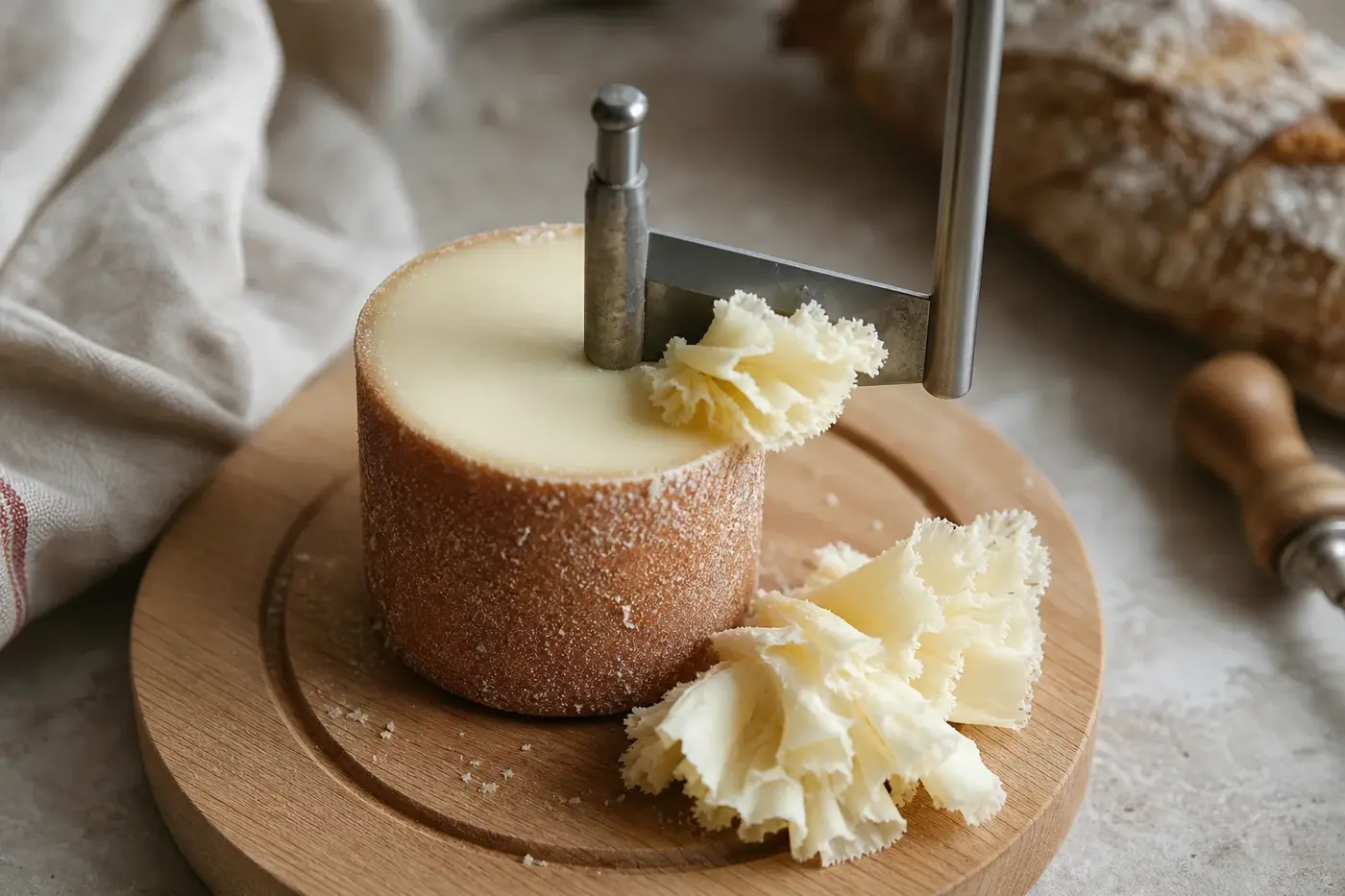
Turn the blade and a ribbon of cheese rises, almost translucent, before gathering into a ruffled rosette. Tête de Moine AOP makes quite an entrance. Its Swiss specification requires a paste cohesive enough to hold those delicate folds, while producers recommend shaving rather than slicing to reveal its supple texture and aromatic character. Follow your ribbon back to its beginnings and you reach Bellelay Abbey, mountain farms in the Swiss Jura and raw cow’s milk cheese maturing on spruce boards.[1][2][6]
A few things to savour before you start
- Its Swiss home has a precise production boundary, complete with named exclusions.[2]
- The cattle eat local roughage; silage is prohibited.[2]
- A rotating blade turns the cheese into those folded rosettes.[7]
| Your question | The useful detail |
|---|---|
| Familiar name | Tête de Moine.[1] |
| Registered name | Tête de Moine, Fromage de Bellelay; the specification also recognises Tête de Moine.[1][2] |
| Registration authority | Swiss Federal Office for Agriculture, register of designations of origin and geographical indications.[1] |
| Register ID | Not established here. |
| Swiss protection | Registered AOP as of November 2026. The register records a specification amendment dated 31 March 2026.[1] |
| EU protection | Not established here. |
| Great Britain protection | Not established here. |
| Northern Ireland protection | Not established here. |
| US protection or rights | Not established here. |
| Milk | Raw cow’s milk.[2][5] |
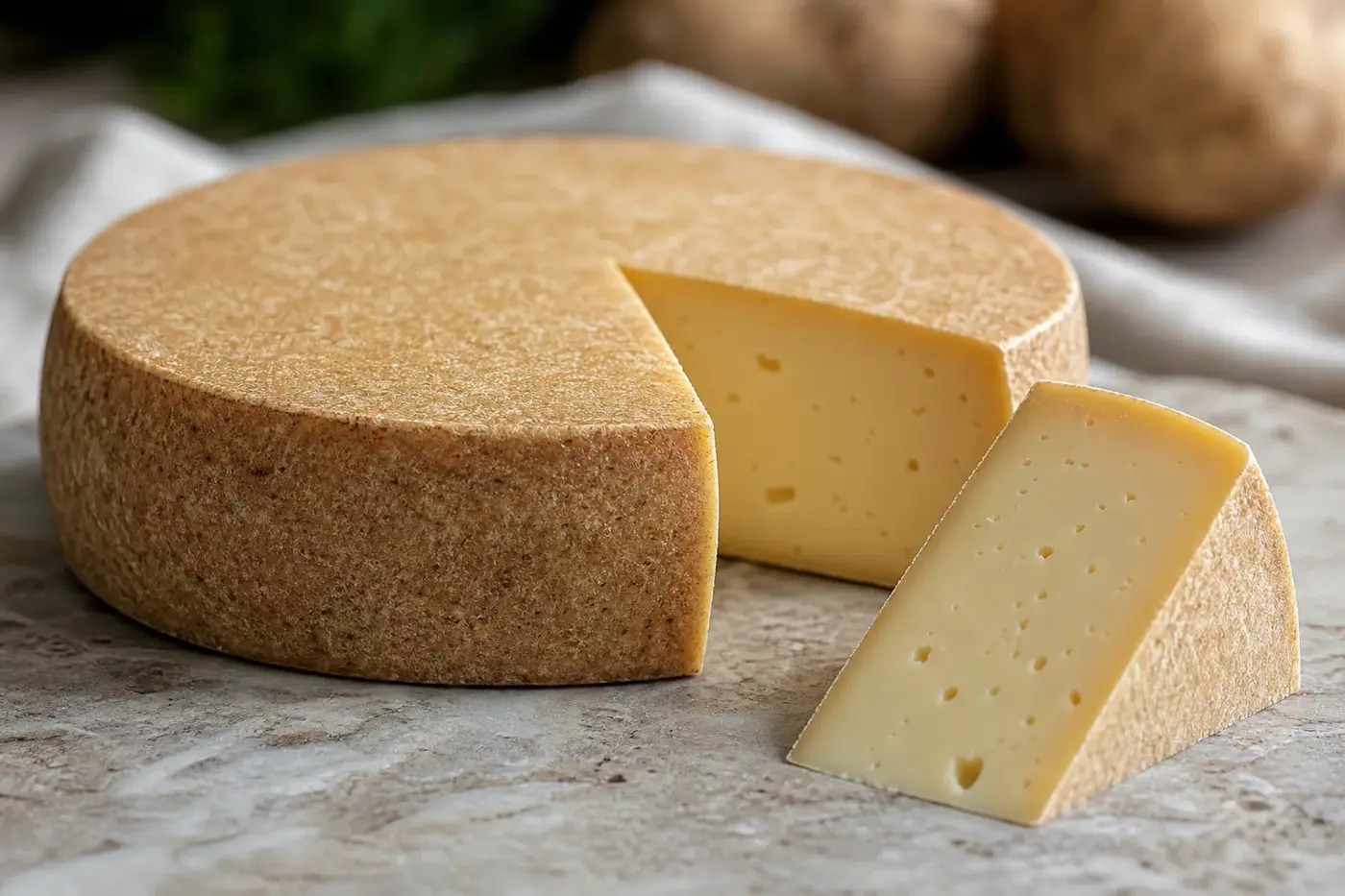
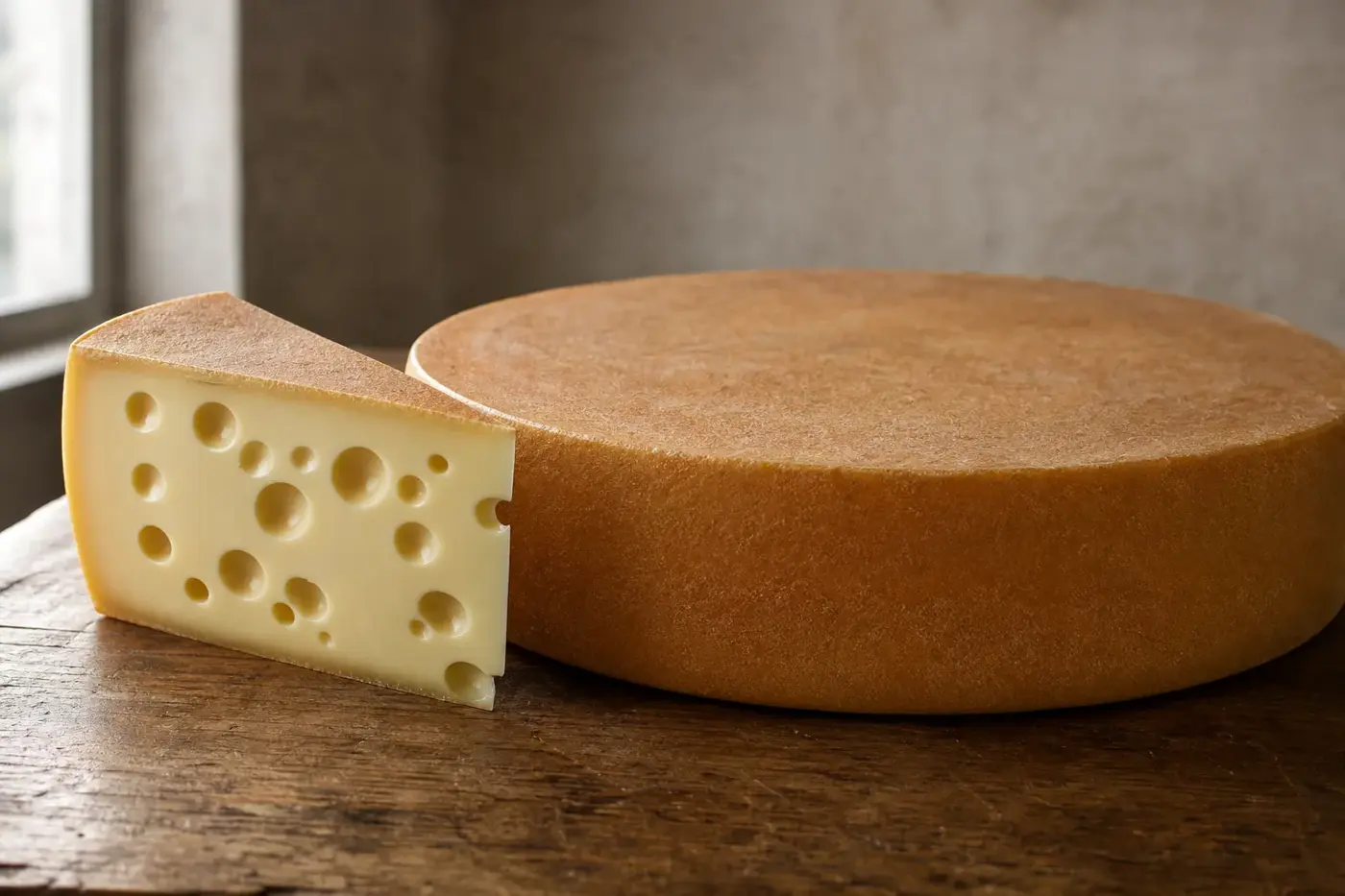
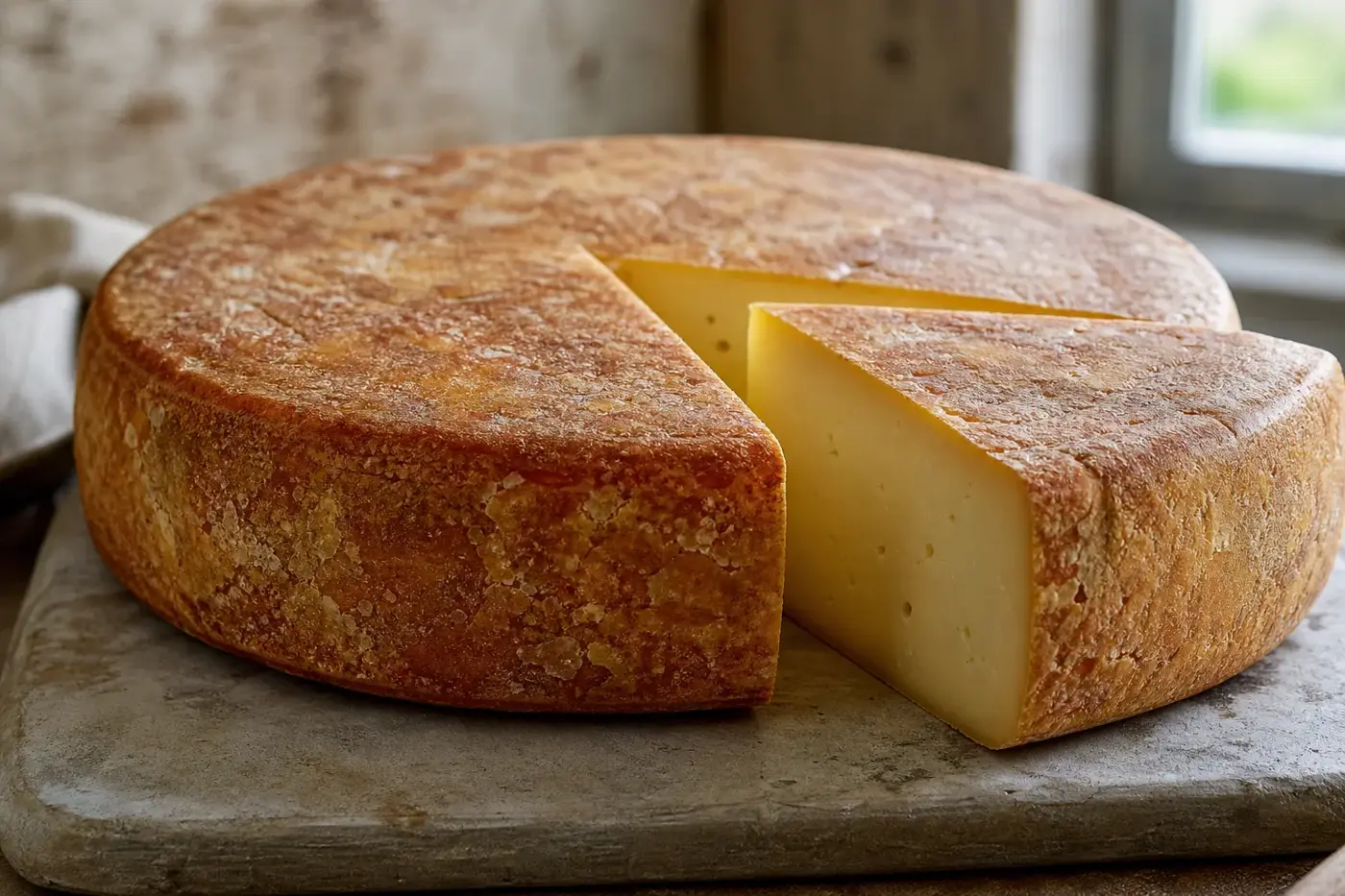
| Style | Semi-hard cylinder with a reddish-brown, smear-ripened rind.[2][3] |
| Dimensions and weight | Diameter 10 to 15 cm; height 70 to 100% of the diameter; weight 0.7 to 2 kg.[2][3] |
| Minimum maturation | 75 days within the defined production area.[2] |
| Longer-matured designations | RESERVE: at least four months; EXTRA: at least six months.[2] |
| Allergen | Milk.[2][5] |
| Coagulant source | Not established here. |
Those pretty folds have a purpose
A rosette is more than a flourish for your plate. Interprofession Tête de Moine, the producers’ organisation, describes shaving as a way to expose more surface to air, changing your experience of texture and flavour. An almost translucent shaving feels quite different in your mouth from a solid wedge of the very same cheese.[6]
The cheese’s shape plays its part. Tête de Moine is a comparatively small, upright cylinder, giving the blade a broad upper surface to travel across. Its paste must hold together well enough to form lasting rosettes, a requirement written expressly into the Swiss specification.[2][3]
Before you choose, consider its maturity, whether you want to shave it yourself, and whether a whole cheese or prepared rosettes would suit you better. The specification recognises whole wheels, half-wheels and packaged rosettes. Enjoying the folds need not mean entering a long-term relationship with an entire wheel.[2][3]
Thirty cheeses and a letter from the abbot
In 1570, the abbot of Bellelay wrote about the delivery of thirty Bellelay cheeses. Behind that letter sits the practical business of an abbey: cheese to be delivered, arrangements to be made. It appears in the registration application’s historical summary, bringing you close to the cheese’s long association with Bellelay Abbey’s Premonstratensian community.[5]
The producers’ history reaches further back, to 1192, when cheese met an annual obligation on land. That connects medieval Bellelay with cheese, but it does not supply a surviving recipe for the product you buy today. Switzerland’s culinary heritage inventory treats the early evidence cautiously and identifies explicit evidence of production from the fourteenth century.[4][7]
And the name? Tête de Moine means “monk’s head”. The producers’ account places its arrival around the end of the eighteenth century, with an archival occurrence dated within 1793 to 1799. Two explanations survive: the shaved cheese resembled a monk’s tonsure, or the abbey’s cheeses were counted by the number of monks.[4]
You will still find the older name, Fromage de Bellelay, in the registered designation. It keeps the abbey’s place in the story visible, even though production later spread to farms and village dairies.[1][5]
Put your finger on its corner of the Jura
“Made in the Jura” points you towards the right landscape, but it does not quite give you the address. Tête de Moine’s Swiss AOP, short for appellation d’origine protégée, protects a cheese tied to a defined place and method. Here, the boundary matters just as much as the name.[2]
The current specification covers mountain and associated summer-pasture areas in the districts of Franches-Montagnes, Porrentruy and Moutier, the municipality of Saulcy, and the Bernese Jura administrative area, with named exclusions. Nods, Diesse, Lamboing, Prêles and La Neuveville are excluded. For the exact boundary, you need the specification’s geographical wording rather than the broad regional label.[2]
The Swiss Federal Office for Agriculture maintains the registration. Its register distinguishes the original registration decision, dated 19 January 2001, from publication of the registration on 8 May 2001. Subsequent amendments include one dated 31 March 2026.[1]
At the cheese counter, look first for the full name and Swiss AOP identification. They connect your cheese with that defined origin and production method. If you would like to untangle the difference between a geographical designation and a cheese style, turn to protected names.
Follow your cheese back to the pasture
Fresh raw cow’s milk goes into copper vats. Both are fundamental requirements, not finishing touches, and the current specification sets a firm timetable too. Milk must be processed within a maximum of 18 or 24 hours of the oldest milking, depending on its cooling temperature.[2]
The feeding rules bring the surrounding farming landscape into the story. Roughage must make up at least 70% of the cattle’s annual ration, calculated on a dry-matter basis, and all that roughage must come from the defined geographical area. Silage is prohibited throughout the year, while dairy cows must have at least 120 days of pasture during the green-feeding period.[2]
In winter, sound hay and aftermath hay take centre stage. That does not make this a grass-only diet: other feeds are allowed under detailed conditions. The specification permits specified supplementary and concentrated feeds as well.[2]
The registration dossier identifies raw milk, dairy cultures, the silage prohibition and the cheese’s small form as elements of regional character. Together, they link the farm to the cheesemaking vat. It does not, however, attribute individual flavour notes to particular pasture plants.[5]
If the different milk treatments leave you wondering where to begin, try raw, thermised and pasteurised milk. It puts raw milk alongside the alternatives and explains the distinctions.
Into copper, through brine, onto spruce
Long before you take hold of the shaving blade, the cheesemaker is preparing the body and rind for that moment. Production brings together coagulation, heating, pressing, salting and repeated rind care. The registration dossier describes dairy cultures and rennet, which helps coagulate milk into curd, the solid material separated from liquid whey.[5]
The curd is heated, put into moulds and pressed. Next comes a spell in brine, followed by maturation. Each stage helps build a cheese that will give you thin, cohesive folds instead of crumbling beneath the blade.[2][3]
| Stage | What happens to your cheese |
|---|---|
| Into the vat | Raw milk is processed in copper vats.[2] |
| Heating and pressing | The standard process heats curd to 46 to 53 °C before pressing.[2][3] |
| Into the brine | Wheels spend at least 12 hours in brine.[2][3] |
| Caring for the rind | Regular treatment with water or brine and ripening cultures develops the surface smear.[2][3] |
| Resting on spruce | Wheels mature on spruce boards within the defined area.[2] |
That reddish-brown surface is a smear-ripened, or washed, rind. The specification names Brevibacterium linens in its treatment and permits other recommended cultures under stated conditions. Rather than being left simply to dry, the rind receives repeated attention as the cheese matures.[2][3]
The original registration dossier explicitly connects maturation from the rind with the cheese’s aroma. It also identifies spruce boards among the production features retained as the method developed.[5] For the wider journey from milk to finished wheel, explore how cheese is made.
Take your time with the first mouthful
Beneath the firm, moist, grainy, reddish-brown rind, you will find paste ranging from ivory to yellow. The specification describes a fine, cohesive texture with relatively few openings. Think supple rather than crumbly, yet firm enough to meet the shaving blade.[2][3]
There is plenty for your palate to explore. The aromatic character becomes more pronounced with maturation, alongside a cultured-milk tang, moderate saltiness and slight piquancy. Faint notes of rind, mushroom and hay round out the specification’s sensory portrait.[2][3]
Treat that description as a guide, not an examination requiring a clipboard. Look first for milk acidity, then the savoury notes associated with the rind and the sharper finish of a more mature cheese. The words help you compare ages; you need not find every characteristic in every mouthful.
For a practical starting point, read the maturation designation. RESERVE and EXTRA have specified minimum ages, so they offer more useful information than decorative praise on a label. Ask your cheesemonger for the actual age and the maker’s description of that particular cheese, then follow your own taste for intensity.[2]
Meet the Girolle, your rosette maker
The Girolle brings an older habit of scraping cheese neatly to your table. Its rotating blade travels around a central spindle, shaving the surface evenly into folded rosettes. You get the presentation without needing the same knife skill.[7]
The producers’ historical account credits Nicolas Crévoisier with the invention. The date remains uncertain: the Swiss culinary heritage inventory records both 1981 and 1982.[4][7] The change was in the ease and consistency of serving, with a turn of the blade making a thin shaving rather than a test of technique.[7]
According to the producers, shaving exposes more cheese surface to air and changes how you experience its body and aroma. You can feel the distinction in your mouth. Instead of biting through a dense piece, you meet a light arrangement of thin folds.[6]
Try a small shaving before you reach for bread or fruit. Notice its texture, then look for the cultured-milk, rind and hay characteristics described in the specification. The rosette deserves your attention for the way it lets you taste, not merely for its looks.[3][6]
Your turn to make the folds
Begin by mounting the cheese securely, following the instructions supplied with your shaving device. The essential arrangement holds the cheese around a central spindle, with a blade travelling across its upper surface. The culinary heritage inventory describes this spindle-and-rotating-blade principle.[7]
For a whole cheese, prepare the upper surface as the manufacturer directs, secure it and turn the blade to produce thin rosettes. Keep your fingers clear of the cutting edge. Before buying a half-wheel, ask whether its shape will suit your particular device.
Serve a few rosettes at a time, keeping the folds loose. Pressing them into a heap loses the open arrangement that makes them distinctive. Prepared rosettes are a recognised presentation too, useful when you want that texture without mounting and shaving a cheese yourself.[3]
Give your first rosette a moment on its own. It provides a reference point before accompaniments bring sweetness, acidity or seasoning to the plate. Add those afterwards, keeping the cheese’s texture and aromatic character at the centre of things.
Choose a little company for your cheese
Keep accompaniments simple: plain bread, a crisp apple or a ripe pear are useful places to start. They offer contrast with the cheese’s recorded tang, moderate salt and aromatic finish. Crucially, they still give you room to taste the rosette itself.[3]
For an alcohol-free drink, still or sparkling water is a straightforward choice. If you prefer your fruit in a glass rather than on the plate, try unsweetened apple juice diluted with sparkling water.
These are serving suggestions, not the results of a comparative tasting. Choose what you enjoy, tasting the cheese alone first so you can judge what each addition brings. For more on matching cheese with your glass, see the cheese and wine pairing guide.
Keep it cool and understand the raw milk guidance
Keep your cheese refrigerated according to its packaging instructions. Prepare only the rosettes you intend to serve, then return the remaining cheese to refrigeration promptly. Follow the pack’s directions for wrapping, storage and use after opening.
For households in England, Wales and Northern Ireland, the Food Standards Agency advises keeping the fridge at 5 °C or below.[9] Use that temperature alongside the instructions on your particular pack.
For UK pregnancy guidance, consult the NHS’s current advice directly. In November 2026, its advice lists hard cheeses made from pasteurised or unpasteurised milk among foods that can be eaten.[8]
The Swiss specification classifies Tête de Moine as semi-hard and raw-milk. Take those product details to your midwife or another appropriate health professional when discussing your own circumstances. Follow the guidance for the country where you live.[2][8]
General information only, not medical advice: follow the official guidance where you live.
Questions people ask
Where is Tête de Moine made?
Its Swiss AOP production area covers specified mountain and summer pasture areas in the Swiss Jura. Nods, Diesse, Lamboing, Prêles and La Neuveville are excluded.
Why is Tête de Moine shaved into rosettes?
The producers say shaving exposes more of the cheese’s surface to air and changes the experience of its texture and aroma. A rotating blade on a Girolle makes the folded rosettes.
How long is Tête de Moine matured?
It matures for at least 75 days on spruce boards within the defined production area. RESERVE must mature for at least four months and EXTRA for at least six months.
What milk is used to make Tête de Moine?
It is made with raw cow’s milk processed in copper vats. The cattle must receive local roughage, and silage is prohibited throughout the year.
Can you eat Tête de Moine during pregnancy?
The NHS lists hard cheeses made from pasteurised or unpasteurised milk among foods that can be eaten during pregnancy. Tête de Moine is classified as semi-hard and made from raw milk, so consult the NHS’s current pregnancy advice and discuss these details with your midwife or another appropriate health professional.
Sources
-
Swiss Federal Office for Agriculture. Register der Ursprungsbezeichnungen und geografischen Angaben, Tête de Moine, Fromage de Bellelay entry, current register checked November 2026. Official register.
-
Swiss Federal Office for Agriculture. Pflichtenheft: Tête de Moine, Fromage de Bellelay, incorporating the amendment decision of 31 March 2026. Current German specification.
-
Swiss Federal Office for Agriculture. Cahier des charges: Tête de Moine, Fromage de Bellelay, version incorporating amendments through 14 April 2021. Used for corroborating physical, sensory and production descriptions, checked against the corresponding provisions retrieved in the 2026 German specification. French specification.
-
Interprofession Tête de Moine. History, undated, accessed November 2026. Producer organisation’s account of the abbey connection, name and Girolle. Historical account.
-
Swiss Federal Office for Agriculture. Résumé de la demande d’enregistrement de la Tête de moine, Fromage de Bellelay, 23 January 2001. Historical application material, not the current production specification. Registration summary.
-
Interprofession Tête de Moine. Our Products, undated, accessed November 2026. Producer organisation’s explanation of shaving and sensory presentation. Product overview.
-
Association Patrimoine culinaire suisse. Tête de Moine (AOP), inventory entry, revisions recorded in 2017 and 2019. Culinary heritage entry.
-
NHS. Foods to avoid in pregnancy, current page accessed November 2026. UK pregnancy guidance.
-
Food Standards Agency. How to chill, freeze and defrost food safely, published 18 December 2017, current publication accessed November 2026. Applies to England, Northern Ireland and Wales. Household chilling guidance.
This article was researched from the Swiss register and specifications, the historical registration dossier, institutional heritage material, the producers’ published accounts and official UK guidance.
Last checked: November 2026
Last checked November 2026.
The editors suggest you read next