The American Cheese Society Competition
A cheese lands before two judges.
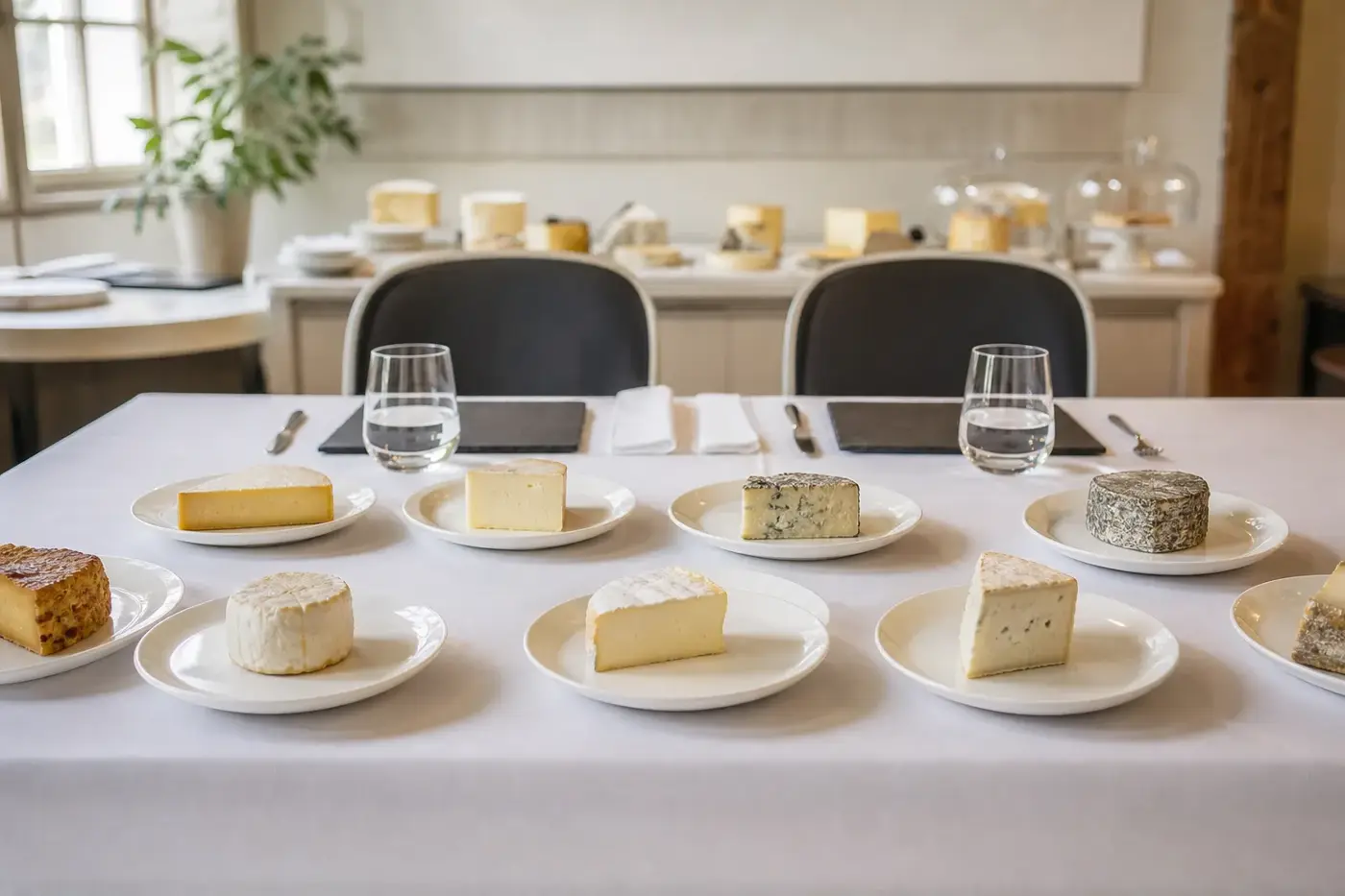
A cheese lands before two judges. One looks for faults; the other looks for reasons you might reach for another bite. Neither knows who made it. Here in the American Cheese Society judging room, flavour, aroma and texture get their moment alongside workmanship, as cheesemakers and dairy producers compete for category awards, written feedback and Best of Show honours. [1][2]
How character got a seat at the table
The American Cheese Society, usually shortened to ACS, held its first conference at Cornell University in 1983. Its first competition followed in Rome, New York, in 1985. As its 2003 awards brochure recalls, the ambition was to look beyond technical achievement and recognise flavour, aroma and texture too. [1][3]
That spirit still shapes the judging: a cheese’s character matters as much as its workmanship. ACS is a membership organisation and educational forum for cheesemakers and cheese enthusiasts, with volunteer committees helping deliver its work. The competition fits that wider purpose, bringing professional recognition together with opportunities to learn. [1][3][4]
Two places, two dates for your diary
In 2026, the cheeses went to Huntington Bank Stadium on the University of Minnesota’s Minneapolis campus for judging from 18 to 22 May. The annual conference followed in Louisville, Kentucky, from 7 to 10 July. The awards ceremony took place during the conference. [5][9]
If you are planning a visit, keep those two appointments separate. The judging timetable covers assessment; the conference programme sets out educational and social events for attendees. Consult both current listings before making plans, because venues, dates and arrangements can change. [5][9][10]
Who can send a cheese to the judges?
You do not need to make cheese from your own farm’s milk to enter. Under the published November 2026 eligibility rules, entrants need current ACS organisational membership. Eligible entrants include cheesemakers and cultured dairy producers, affineurs specialising in maturing cheese, processors, co-packers, designers and private labellers, subject to the society’s definitions and permissions. [2]
The competition does not stop at the United States border, either. Milk must come from North, Central or South America, and entries must contain at least 51% cheese or cultured dairy product. Cheeses must have been available for public sale for at least six months before competition begins. Prototypes are not eligible. [2]
A product gets only one entry per calendar year, even if it appears under different labels. Entrants must identify the original maker and dairy plant, obtain the maker’s permission and provide the production date. There is room for different production relationships here, provided you supply the required details. [2]
A proper place for every cheese
A familiar cheese name will only get you so far when choosing a category. ACS also considers milk, age, method, added flavour and production circumstances. These examples from its 2026 categories and standards show you how much thought goes into finding the right company for each cheese. [6]
| 2026 category | Cheeses you will find here |
|---|---|
| Fresh unripened cheeses | Cottage cheese, cheese curds, mascarpone and quark |
| Marinated cheeses | Separate classes for cow’s milk and mixed or other milks |
| Smoked cheeses | Smoked Cheddar, smoked Gouda and smoked Italian styles |
| Farmstead cheeses | Cheese from the producer’s own herd or flock, made and aged on the farm |
| Plain cultured milk and cream products | Includes crème fraîche |
Source: ACS, 2026 Categories & Standards of Excellence. “Farmstead” follows the competition’s definition. [6]
Then comes the deliciously specific question: what should the judges taste? Fresh curds should be milky, with a slightly salty finish; smoked cheeses should balance smoke with cheese. Those sensory criteria give each class its purpose, making room for delicacy in one category and a different expression in another. [6]
From your entry form to the judging table
Choose your category carefully: it decides which products yours will be judged alongside. Submission begins with eligibility and classification, followed by an entry record in ACS’s Award Force platform. You supply the required details before sending the physical product to the judging venue. [5]
Behind that journey is the society’s competition committee. It oversees category review, cheese receiving, volunteer staffing and judging logistics, bringing the entrant’s information together with the practical work of assessing many different products. At the table, entries remain anonymous, keeping the producer’s identity out of the assessment. [1][7]
If you are entering, keep the sequence simple. Read the current category description, complete the entry record and follow that year’s shipping instructions. Give classification and delivery just as much attention as the paperwork. [5][10]
Two judges, 100 points and another bite
The technical judge begins with 50 points and deducts for defects. The aesthetic judge builds a score for desirable qualities, up to 50. Together, they can award 100 points, giving both technical execution and positive sensory qualities a clear place in the result. [1]
ACS selects food professionals from academia, dairy science, culture manufacture, retail, distribution and food media. Working in pairs with those distinct responsibilities, they assess flavour, aroma, texture and appearance. Think of it as two questions: what might be wrong with this cheese, and what makes you want to eat it? [1]
After the conference, entrants receive scoresheets with comments, overall scores and the number of entries in their category. If you make cheese, the placing tells only part of the story. Those comments and scores give you something to learn from alongside the result. [1][10]
Why 97 points might not bring an award
A score of 97 sounds promising. You might already be clearing a space for the award. Yet it can still miss out if other entries score higher: ACS awards first, second and third places within subcategories, provided minimum scores are met, and ties are possible. [1][8]
Best of Show is a separate overall distinction, recorded above the category results. The official 2026 results give you two clear examples of that recognition. [8]
| 2026 Best of Show placing | Product | Entering organisation | State |
|---|---|---|---|
| First | Winnimere | Jasper Hill Farm | Vermont |
| Second | Artze | Blakesville Creamery | Wisconsin |
Source: ACS, Annual Judging & Competition 2026 Winners. Winnimere appears in the bark, leaves or grass wrapping category; Artze in soft-ripened cheese with added flavour. [8]
Follow the cheese beyond the winning state
The 2026 top two take you to Vermont and Wisconsin, and to two different approaches: a wrapped cheese and a soft-ripened cheese with added flavour. Geography offers a useful way into the results, alongside the placings. Before attributing production, though, consult the entry details: the entering organisation is not necessarily the original cheesemaker. [2]
The categories tell a story of their own. In its 2003 brochure, ACS described an early competition built around broad groupings, followed by growth in cheeses of makers’ own invention. Read alongside the range in the 2026 results, that account suggests cheesemaking developing through inherited styles as well as new approaches. [3][8]
So look beyond which state collected an award. Which kinds of cheesemaking received recognition? And how did those cheeses find their place in the competition?
Let an award lead you to your next cheese
An award gives you a reason to investigate, not an instruction to enjoy. Your taste buds are allowed an independent opinion. Start with the milk, rind, texture and intensity you like, then match the producer, product and award year to the official results: category and placing give that recognition its context. [8]
Use the results as a route into discovery. A favourite category offers familiar ground; a less familiar one gives you something to ask a cheesemonger about, perhaps with a taste. The judges assessed a particular entry, and your preferences may differ, so an award alone cannot promise you will enjoy the cheese.
At the counter, ask what the award-winning product is like today. Use how to tell cheese styles apart to describe what you enjoy and how to read a cheese label to make sense of the product details.
Make room for tasting in your plans
For entry and judging information, begin with the ACS competition page. For attendance, head to the conference page and that year’s agenda. The November 2026 ACS listing gives 18 to 21 May 2027 in Minneapolis for its next competition; consult the current listing before making plans. [10]
If you want to taste, look for a current Meet the Cheesemaker listing or another advertised tasting, then establish who may attend. Before booking, find out whether the ticket covers that event alone or conference sessions too, whether separate registration is required, and what accessibility arrangements the organiser provides. The 2026 site listed Meet the Cheesemaker separately within its conference navigation. [5]
For tasting and conversations with producers, choose the advertised visitor opportunity. The judging timetable is not your admission guide. If the current programme leaves attendance arrangements unclear, ask ACS directly.
Different competitions, different paths to an award
Before comparing medals, look at how they were earned. ACS combines technical deductions with positive aesthetic scoring, while other major competitions take different routes to their awards. When you read the results, the organiser and year matter. [1][11][12]
The World Cheese Awards, organised by the Guild of Fine Food, draws entries internationally. Its awards run through Bronze, Silver, Gold and Super Gold, followed by selection of a World Champion Cheese. Its 2026 rules provide for blind assessment of flavour, rind, body, texture and appearance. [11]
The World Championship Cheese Contest is a separate event, organised by the Wisconsin Cheese Makers Association every two years since 1957. Its international technical judges begin at 100 points and deduct for defects. Gold, Silver and Bronze go to the three highest-scoring entries in each class. [12]
Keep those distinctions in mind and you can read the results with more confidence. ACS gives technical quality and positive sensory character their own scores; the Guild follows its medal ladder; the Wisconsin contest centres on technical assessment. Each award belongs to the system that produced it. [1][11][12]
Questions people ask
How is cheese judged at the American Cheese Society Competition?
Each entry is assessed anonymously by two judges. The technical judge starts with 50 points and deducts for defects, while the aesthetic judge awards up to 50 points for desirable qualities.
Who can enter the competition?
Eligible entrants include cheesemakers, cultured dairy producers, affineurs, processors, co-packers, designers and private labellers, subject to ACS definitions and permissions. Entrants need current ACS organisational membership, and the milk must come from North, Central or South America. Products must contain at least 51% cheese or cultured dairy product, and cheeses must have been available for public sale for at least six months before competition begins.
Who won Best of Show in 2026?
Winnimere, entered by Jasper Hill Farm of Vermont, placed first. Artze, entered by Blakesville Creamery of Wisconsin, placed second.
When and where is the next competition?
As checked in November 2026, ACS listed its next competition for 18 to 21 May 2027 in Minneapolis. Recheck the ACS listing before making plans, as dates and arrangements can change.
How does the ACS competition differ from other cheese competitions?
ACS combines technical deductions with positive aesthetic scoring. The World Cheese Awards uses a medal ladder followed by selection of a World Champion Cheese, while the World Championship Cheese Contest starts entries at 100 points and deducts for defects.
Sources
- American Cheese Society, Judging Process, undated published guidance, retrieved November 2026. Covers judge selection, anonymous assessment, paired scoring, award criteria and entrant feedback.
- American Cheese Society, Judging & Competition Eligibility Requirements, undated current webpage, checked November 2026. Covers membership, eligible entities, milk origin, public sale, product composition and entry declarations.
- American Cheese Society, 2003 Judging Results and Awards Brochure, 2003, introductory statements and judging chair’s historical account.
- American Cheese Society, Who We Are, undated current webpage, checked November 2026. Describes volunteer leadership, committees and collaborative delivery of the society’s work.
- American Cheese Society, Judging & Competition Call for Entries, 2026 edition of the webpage, retrieved November 2026. Gives the 2026 judging arrangements, submission sequence and conference navigation.
- American Cheese Society, 2026 Categories & Standards of Excellence, revised 24 November 2025. Categories A, L, M, P and Q.
- American Cheese Society, Judging and Competition Committee, 2024 committee description. Lists category review, receiving, staffing and judging responsibilities.
- American Cheese Society, American Cheese Society Annual Judging & Competition 2026 Winners, 2026, Best of Show table and associated category descriptions.
- American Cheese Society, ACS 2026 Annual Conference, 2026 event webpage. Gives Louisville and 7 to 10 July 2026.
- American Cheese Society, Competition, current webpage, checked November 2026. Gives the announced 2027 timetable, shipping guidance, awards arrangements and feedback information.
- Guild of Fine Food, World Cheese Awards and World Cheese Awards, Terms & Conditions, terms published May 2026. Covers international participation, organiser, judging attributes and award terminology.
- Wisconsin Cheese Makers Association, About: World Championship Cheese Contest, undated current webpage, checked November 2026. Covers the organiser, biennial history, technical scoring and class medals.
This piece was researched from the organisers’ published rules, category standards, results, historical records and event information.
Last checked: November 2026
Last checked November 2026.
The editors suggest you read next
Cheese Festivals Around the World
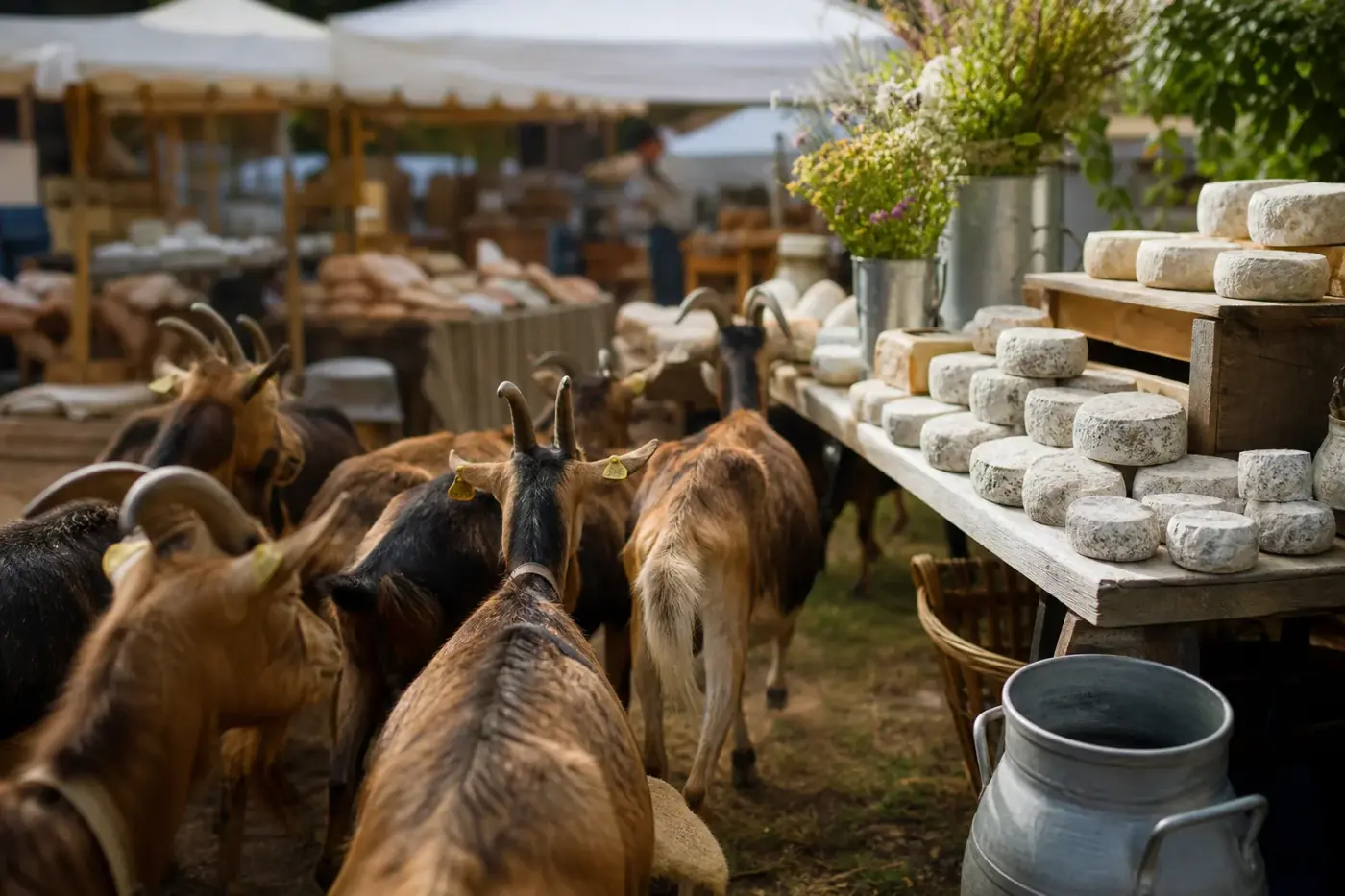
A herd of goats arrives at Rocamadour's cheese festival.