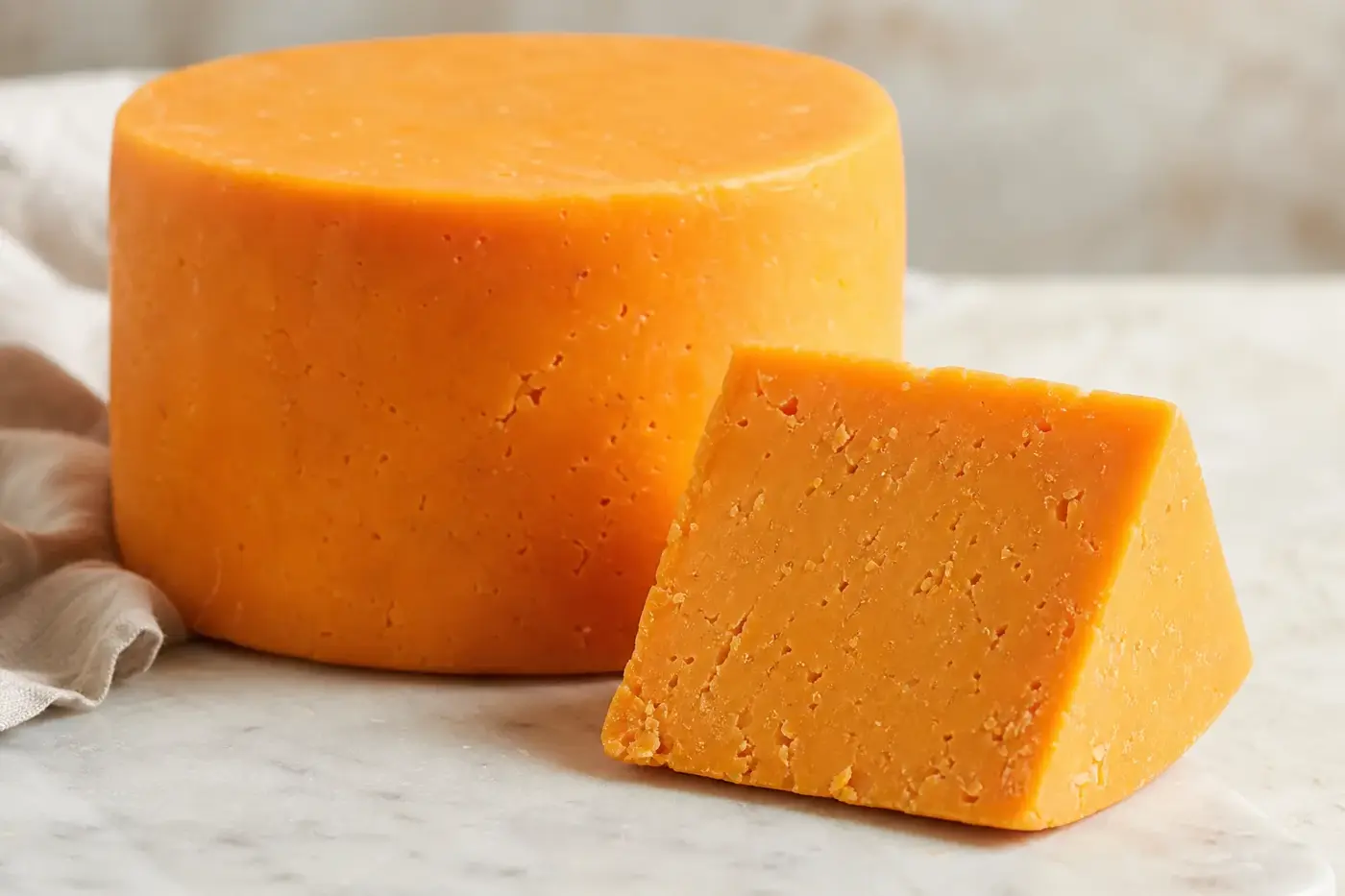
Water hits the curd. Outside Colby, in 1885, a family cheese factory turns that simple step into something of its own: a mild, soft, moist cheese, made by washing and cooling the curd with water. A Wisconsin original takes shape, with a much bigger story gathering around it. [2][3]
Follow it and you travel from springy fresh curds and traditional brick to long-aged Cheddar and pasture-based Alpine-style wheels. Dairy farming, European immigrant traditions and local ingenuity all find their way onto your plate. Start with Colby and curds, then give ripening a chance to show you what it can do. [2][3][7][8]
Your first taste of Wisconsin
| Get your bearings | What to know |
|---|---|
| Where you are | Wisconsin, United States, in the American Midwest. [2] |
| Milk production, 2024 | About 14.7 million tonnes. [1] |
| Cheese production, 2024 | About 1.63 million tonnes, 25% of US production. [1] |
| Local originals to try | Colby and brick. [3][5] |
| Information date | November 2026. |
Follow the milk, meet the makers
Your Wisconsin cheese story starts on dairy farms in the American Midwest. Milk leaves for factories, cooperatives and farmstead dairies, each with its own approach. The same state's raw material opens the door to very different cheeses. [1][2][6][8]
There is plenty to work with. USDA's 2025 Wisconsin agricultural bulletin records approximately 14.7 million tonnes of milk and 1.63 million tonnes of cheese for 2024. That year, Wisconsin supplied a quarter of US cheese production. [1]
Almost half its cheese output belonged to USDA's Italian cheese category. Colby, brick and curds might be the names that first catch your eye, but the everyday industry stretches well beyond them. You are looking at a cheesemaking region with a broad reach, not just a few local favourites. [1]
The cheesemakers who carried a little Europe with them
Swiss cheeses, German Muenster and Limburger, English Cheddar: you can hear the different traditions in the names. All appear in Travel Wisconsin's account of nineteenth-century European immigration. Cheesemakers brought methods as well as recipes, and those methods gradually took on local identities. [2]
That helps explain why Wisconsin refuses to settle into one regional flavour. Its cheeses come from a meeting of traditions. The City of Colby's history brings one family into view: they established a cheese factory outside the settlement, where a new cheese emerged in 1885. [2][3]
A dedicated cheesemaking building gave makers room to repeat a familiar process, adjust it and share what they learned. That connection between farm and factory still runs through Wisconsin's cooperatives. At Chalet Cheese, Green County dairy farmer members deliver milk daily to the cheesemaking facility they jointly own. [3][6]
Founded in 1885, Chalet identifies Swiss cheesemaking heritage as part of its approach. Here, you can follow a continuing relationship between the people supplying the milk and those turning it into cheese. [6]
Give Colby a moment before reaching for the grater
Water made the difference. The City of Colby's account dates the cheese's creation to 1885 and describes a decisive change from Cheddar making. Once the whey, the liquid released from the curd, had drained away, the curd was washed and cooled with water. [3]
Out came a cheese that was mild, soft and moist. It took the name of the Wisconsin community where it developed. A small change in the process had given the place something distinctly its own. [3]
The US standard of identity, 21 CFR 133.118, still describes adding water and stirring to cool the curd and prevent the pieces from matting together. It also permits another procedure that produces the same physical and chemical properties. History explains the style; the finished cheese and its producer's account tell you about the example in your hand. [4]
Cut yourself a slice before you reach for the grater. Mild cheese deserves more than an automatic appointment with a baked potato. Notice Colby's openness and moisture, then try it beside an aged Cheddar: that contrast reveals more than several cheeses of similar maturity. [3][5]
Brick has a practical name and a question worth asking
Brick's name gets straight to the point. Dairy Farmers of Wisconsin dates its beginnings to 1877, when a Swiss immigrant cheesemaker used bricks to press and shape the curds. The name recalls both the tool and the familiar rectangular cheese. [5]
Chalet includes Wisconsin Brick among the cheeses it currently documents making. At the counter, though, that name is your introduction rather than the whole conversation. A few questions will help you choose the piece you actually want. [6]
How has the outside been treated? How mature is it, and what does the maker say about its aroma? Those answers tell you more than the word brick alone.
If you can, taste examples side by side. Pay attention to aroma and texture separately, without assuming that the strongest-smelling cheese will taste the sharpest. The distinctions in how to tell cheese styles apart give you useful words for what you find.
Find Limburger's story in Green County
Limburger brings two strands of Wisconsin's immigrant history together. Travel Wisconsin associates it with German arrivals, while Chalet Cheese describes its present-day production through Swiss cheesemaking heritage. The cooperative makes Limburger alongside Swiss, Baby Swiss and brick, within Green County's wider dairy tradition. [2][6]
In November 2026, Chalet's website described the cooperative as the only US producer of Limburger. That gives you a particular Wisconsin maker to seek out. Ask about the maturity of the cheese on offer and follow the producer's serving advice: the name introduces the style, but those details help you choose your piece. [6]
From springy curds to Cheddar with age
Pick up a fresh cheese curd and you have something small, irregular and springy. Dairy Farmers of Wisconsin describes its flavour as mild and Cheddar-like, its texture as rubbery. Put it beside a slice from a matured block and the difference is immediately apparent. [7]
Curds link one of Wisconsin's most familiar fresh foods to the state's English-derived Cheddar traditions. For the aged side of that story, choose cheeses with different stated ages from one maker. You can then ask a useful, focused question: what changes as this maker's cheese matures? [2][7]
Notice the firmness, how readily a piece breaks, and the balance between aroma and flavour. Leave comparisons between producers until afterwards, so you give each difference its due. The Cheddar guide takes you further into the family and how it is made.
Curds lead two distinct lives at the table. Plain and fresh, they put texture first; battered and fried, in the familiar version described by Dairy Farmers of Wisconsin, they offer another experience. Keep some plain for your first tasting, then explore what seasoning and batter bring. [7]
Pause for the curd's little squeak
A fresh curd can make its own contribution to the conversation. Your teeth meet a wet, rubbery curd, and vibration produces that little squeak. Dairy Farmers of Wisconsin links this behaviour to the structure of casein, the main milk protein. [7]
When you buy curds, ask when they were made and follow their storage instructions. A production date tells you more than the word fresh alone. Enjoy the sound, but use the label and official storage guidance to decide how to handle the cheese. [13]
Take a turn towards Alpine wheels, blues and autumn softness
At Dodgeville, Uplands Cheese makes Pleasant Ridge Reserve, an Alpine-style cheese inspired by Gruyère and Beaufort. The maker's tasting notes mention caramel or toffee, with possible tropical fruit, broth-like and roasted notes. Here, European methods meet the character of a particular Wisconsin farm. [8]
Uplands links differences between batches to pasture, weather and seasonal milk composition. Take that thought to the counter: which batch is on offer, and what does the maker say distinguishes it? You will learn more than if you expect every wheel bearing the same name to taste identical. [8]
For a different direction, look at Roth's Wisconsin range: Buttermilk Blue, Buttermilk Blue Affinée and Moody Blue. Roth describes its blue family as earthy, with a soft finish, and says its milk comes from local Wisconsin farms. Those descriptions give you a starting point for requesting a sample or choosing a blue to contrast with other styles. [9]
Then comes Uplands' Rush Creek Reserve, a contemporary seasonal original. The maker produces it in autumn, as its cows move from summer pasture towards winter hay. Each cheese arrives wrapped in spruce bark. [10]
Uplands describes a custard-like interior and a subtle woody flavour. Try it beside fresh curds or firm aged cheese and you have a particularly striking comparison. You are not looking for a winner here, but for the pleasure of noticing the differences. [10]
Give every cheese on your board a reason to be there
Choose contrasts in method and maturity, rather than gathering familiar names. A cheese board need not become a roll call of everyone you have ever liked. For your first tasting, pick examples the seller can describe clearly, with the maker identified and an age supplied where relevant.
| Your cheese | Ask at the counter | Look out for |
|---|---|---|
| Fresh curds | When were they made? | Springiness and squeak. |
| Colby | Who made it? | Moisture and openness. |
| Brick | Young or surface-ripened? | Aroma and texture. |
| Aged Cheddar | What is the stated age? | Firmness and flavour development. |
| Alpine-style cheese | Which maker and batch? | The maker's batch description. |
| Blue cheese | Which named product? | Its character beside the other styles. |
Keep the board focused. Curds and Colby introduce the fresh, mild end, while an aged cheese, a blue and a surface-ripened selection give you distinct comparisons. If the seller offers small tasting pieces, use them to make each choice count and keep those contrasts clear. [3][7][8][9]
Read the product name, maker, place of production, ingredients and stated age together. A distributor's address alone does not tell you where the cheese was made, so ask. Under the US Colby standard, an ingredient declaration may use the general word enzymes. [4]
If you want a particular coagulant, ask the producer rather than relying on that wording. For the wider checklist, turn to how to read a cheese label. A few precise questions can make choosing much more straightforward. [4]
Meet the experience behind licences and the Master's Mark
Wisconsin cheesemaker licensing and its advanced professional programme are separate credentials. The state's Department of Agriculture, Trade and Consumer Protection administers licensing. Its current page tells new applicants to speak to a licensing specialist before applying or requesting an examination. [11]
The master programme calls for substantial experience before a maker can enter. The University of Wisconsin's Center for Dairy Research says applicants must be making cheese in a Wisconsin plant. They must also have held a Wisconsin cheesemaker licence for at least ten years and made their chosen cheese for at least five years. [12]
Prerequisite courses and everyday involvement in cheesemaking are required too. After acceptance, the programme lasts two years and eight months, according to the centre. Certification applies to particular cheeses, and the Master's Mark depends on those products and continuing quality assessment. [12]
These credentials tell you about training, experience and oversight. They do not guarantee a particular flavour. When you choose something to taste, keep the style, maturity and maker's description at the centre of your decision. [12]
Keep your cheese cool and your tasting focused
Set your refrigerator at 4 °C (40 °F) or below and follow the label's storage directions, in line with US Food and Drug Administration guidance. When moving cheeses to a tasting board, keep track of which label belongs to each piece. Its handling instructions need to stay with it. [13]
The US FDA advises leaving perishable foods at room temperature for no more than two hours. When the air temperature is above approximately 32 °C (90 °F), that limit becomes one hour. Discard perishable food left out beyond those limits. [13]
Serve a manageable portion and replenish it from the fridge. You can find fuller wrapping and handling guidance in how to store cheese at home. Keeping the practical side straightforward leaves you free to concentrate on the tasting. [13]
Begin with plain curds and Colby, then move to the firmer aged cheese before exploring the more aromatic selections. Offer bread or plain crackers alongside. For each cheese, note one thing about texture and one about flavour, keeping the maker and age with your observations.
Next time, give yourself a narrower question. Try younger and older cheeses from one maker, two approaches to brick, or an Alpine-style cheese beside a seasonal soft cheese. Each comparison brings you closer to the Wisconsin cheeses you most enjoy, and gives you a good reason to return to the counter.
General information only, not medical advice: follow the official guidance where you live.
Questions people ask
What makes Colby cheese different from Cheddar?
Colby originated outside the Wisconsin community of Colby in 1885. Its curd was washed and cooled with water after the whey had drained, producing a mild, soft and moist cheese.
Why do fresh cheese curds squeak?
The squeak comes from vibration as teeth meet a wet, rubbery curd. Dairy Farmers of Wisconsin links it to the structure of casein, the main milk protein.
What is Pleasant Ridge Reserve?
Pleasant Ridge Reserve is a cheese made by Uplands Cheese in Dodgeville, inspired by Gruyère and Beaufort. The maker describes caramel or toffee notes, with possible tropical fruit, broth and roasted notes.
How do cheesemakers qualify for Wisconsin's master programme?
The University of Wisconsin's Center for Dairy Research says applicants must work in a Wisconsin plant, have held a Wisconsin cheesemaker licence for at least ten years and have made their chosen cheese for at least five years. Prerequisite courses and everyday involvement in cheesemaking are also required.
How should Wisconsin cheese be stored and served?
The US Food and Drug Administration advises keeping the refrigerator at 4 °C or below and following label storage directions. It advises leaving perishable foods at room temperature for no more than two hours, or one hour above approximately 32 °C, and discarding food left out beyond those limits. See the US FDA's food storage guidance for details.
Sources
- USDA National Agricultural Statistics Service. Wisconsin 2025 Agricultural Statistics, 2025, “Livestock & Dairy”, page 28. Production figures concern 2024. Official bulletin.
- Travel Wisconsin. Wisconsin Cheese, undated tourism fact sheet, historical account. Official fact sheet.
- City of Colby. Our History, undated, “The Development of Colby Cheese”. Municipal history.
- US Food and Drug Administration, eCFR. 21 CFR 133.118, Colby cheese, displayed text current to 5 November 2026. Federal standard.
- Dairy Farmers of Wisconsin. About, undated, historical timeline. Industry body's account, including brick's development. Industry history.
- Chalet Cheese. About Us, undated. Producer's account of its history, milk supply and cheese range. Producer account.
- Dairy Farmers of Wisconsin. Cheese Curds, undated. Industry body's descriptions and explanation of squeak. Industry reference.
- Uplands Cheese. Pleasant Ridge Reserve, undated. Producer's method, seasonal account and tasting notes. Product account.
- Roth Cheese. Blue, undated. Producer's range, milk sourcing and tasting descriptions. Producer account.
- Uplands Cheese. Rush Creek Reserve, undated. Producer's seasonal and sensory account. Product account.
- Wisconsin Department of Agriculture, Trade and Consumer Protection. Food, Dairy, and Retail Food Licenses and Cheesemaker License, current administrative pages. Licence directory; application guidance.
- University of Wisconsin-Madison, Center for Dairy Research. Requirements to become a Wisconsin Master Cheesemaker, current programme information within the master cheesemaker directory. Programme requirements.
- US Food and Drug Administration. Are You Storing Food Safely?, current consumer guidance. US storage advice.
- US Food and Drug Administration. Recalls, Market Withdrawals, & Safety Alerts, live notice index, consulted for the editorial recall check. Official notice index.
Researched through official statistics, municipal history, federal standards, programme administrators and attributed industry and producer accounts, with outstanding verification recorded below.
Last checked: November 2026
Last checked November 2026.
The editors suggest you read next

French Cheese: The Complete Guide
Picture Normandy’s pastures, then follow the milk towards the Loire’s goat dairies, the Jura’s shared cheesemaking traditions and the sheep country of the Pyrenees.


