Why Is Some Cheese So Prized? Milk, Time and Craft
Picture a wheel of Parmigiano Reggiano waiting its turn, while you contemplate another mouthful.
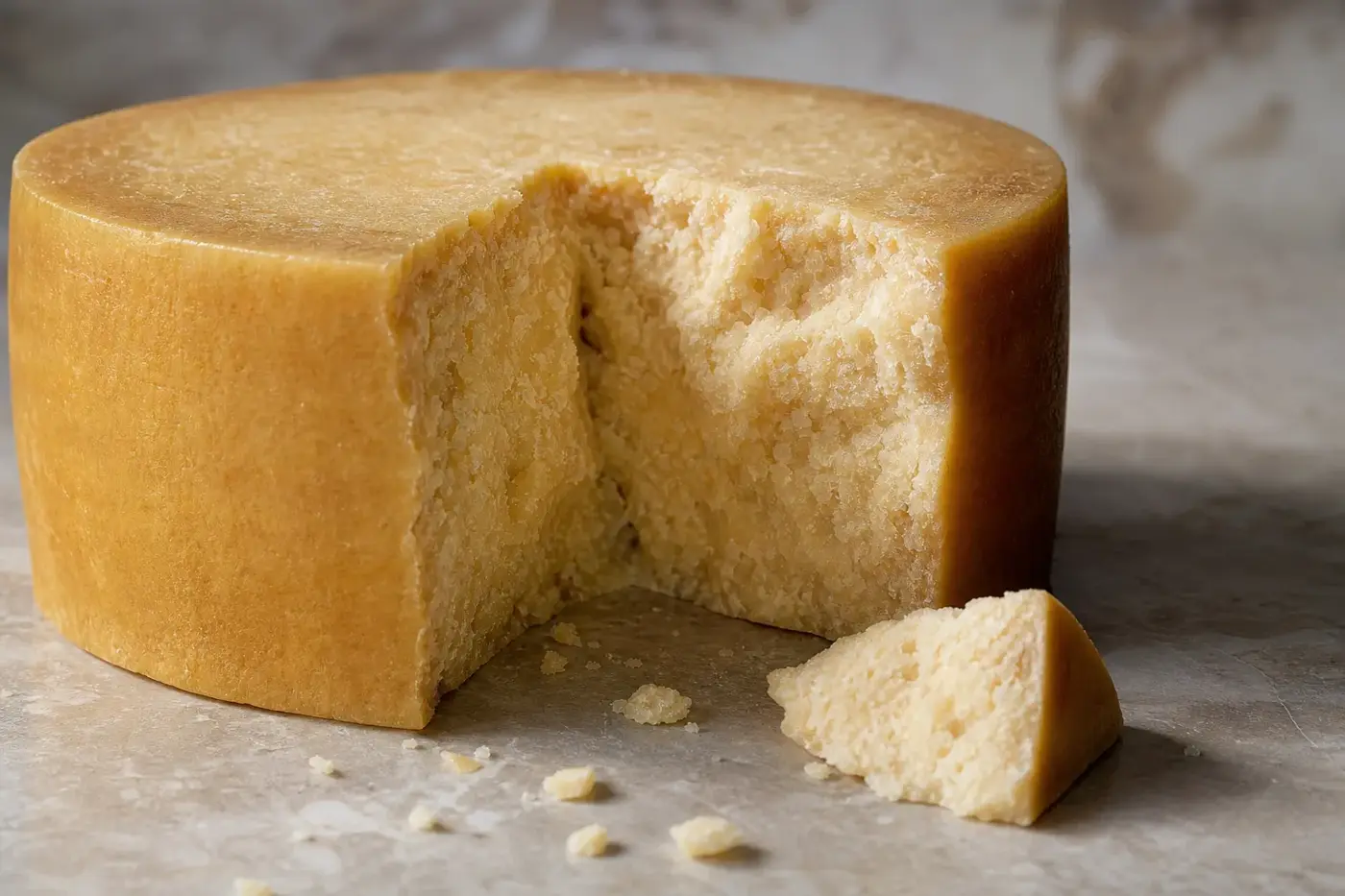
Picture a wheel of Parmigiano Reggiano waiting its turn, while you contemplate another mouthful. It must mature for at least 12 months, counted from moulding. Before that wait begins, raw, partially skimmed cow's milk meets naturally fermented whey starter and calf rennet. The curd is cut, cooked, shaped and brined, each stage helping define what eventually reaches your table. [1]
Yet a long wait is only one route to a prized cheese. Another ends with a delicate fresh curd. The fascination lies in how milk, draining and ripening create a flavour, texture or connection to place that makes you reach for another piece. [1,2]
What brings you back for another piece?
Perhaps it's the flavour. Perhaps a cheese belongs to a regional food culture you cherish, is hard to find, or simply beats everything else on your plate. Those reasons often overlap, but scarcity tells you how much is available, not how much pleasure a mouthful will give you.
Start with what the cheese offers you. Delicacy deserves as much attention as intensity, and today's lunch needn't be an audience with a celebrated name. Knowing what you want makes exploring more rewarding; for the wider picture, try the guide to cheese.
Before the wheel, there's the milk
Before the maker does anything, the animal species has already shaped what's in the vat. Research comparing sheep's and goat's milk records differences in composition, including minerals, fat characteristics and seasonal patterns. Each gives the cheesemaker different material to work with, not an inherently better milk. [3,4]
Fat, protein and their balance help determine what stays in the curd. That's the solid part that separates from liquid whey. Think of it as the maker's starting material: the choices ahead depend partly on what's already there. [3,4]
Season has a part to play too. In a Wisconsin experiment, researchers made hard, brined cheese from sheep's milk collected in February, May and August. February milk produced more cheese, associated with its higher casein and fat content. [4]
Weather, pasture quality and stage of lactation accompanied those seasonal differences. Feed and season mattered within these particular conditions. That doesn't make one season's milk consistently superior, however useful such a neat rule might seem when you're choosing cheese. [4]
Small cultures, important choices and a little salt
Starter bacteria turn milk sugar into acid, changing the conditions in which curd forms and other organisms develop. Cultures, the microorganisms used to guide fermentation and ripening, help set the cheese's course. Rennet, an enzyme preparation used to coagulate milk, helps milk proteins form a gel; draining and salting then shape what follows. [1,5]
Salt does considerably more than season your mouthful. It interacts with the cheese's water and protein structure, and influences microbial and enzyme activity. What happens depends on the cheese and the salting method. [5]
In an experiment that added salt to cheese, researchers observed changes in protein hydration, hardness and moisture. There was no single, simple relationship between salt and texture. To follow the journey from milk onwards, how cheese is made takes you through these stages in detail. [5]
The moment the maker decides to cut
At two sheep's milk dairies in Teruel, Spain, a study captured a telling moment: the cheesemaker judging the curd's consistency before cutting it. Here, you can see what craft means in practice. The curds were then stirred, drained, placed into moulds by hand and pressed, each decision helping build structure and control the water left inside. [6]
The work continued in the brine. The same study compared two brining regimes, sampling the outside and centre of cheeses during ripening. Salt distribution developed over time, so the surface alone couldn't tell the whole story. [6]
An ingredient list can tell you that salt is present. It cannot describe what's happening across a whole wheel as it matures. Getting a consistent result calls for judgement, with measurements and observation supporting each other. [6]
What time does inside the wheel
A maturing cheese isn't simply sitting there. Proteins break down into smaller peptides and amino acids through proteolysis. Fat breakdown, called lipolysis, releases fatty acids; these processes contribute to texture and flavour, developing according to the cheese's composition and the activity of its enzymes and microorganisms. [6,7]
Still, more time helps only if it takes the cheese somewhere you want to go. Think of maturity as a destination chosen for that particular cheese, rather than a contest to see who can wait longest. A gentler version may give you more pleasure than a more developed one.
Or perhaps you want a firmer texture and a finish that stays with you. Ask what has changed as the cheese has matured. Then ask the question that matters most at your table: do you enjoy that change?
A little care outside, a change within
The air around a cheese can change what happens beneath its rind. Affinage is the skilled care of cheese as it matures. Depending on the style, that can mean turning it, washing its rind and managing the surrounding air. [7]
In some cheeses, surface organisms make the rind an active participant in maturation. They change conditions and contribute to character. Different treatments encourage different results, so give the outside some attention when you're getting to know a cheese. [7]
An experiment with Camembert-type cheeses varied ripening temperature and humidity. The cheeses differed in odour, rind colour, the soft layer beneath the rind and the firmness of the centre. Some conditions left them dry and insufficiently ripened; others produced runny, overripe cheese with a strong ammonia odour. [8]
The calendar matters, then, but it cannot do the job alone. The room and the care within it matter too. [8]
Make room for the quieter cheese
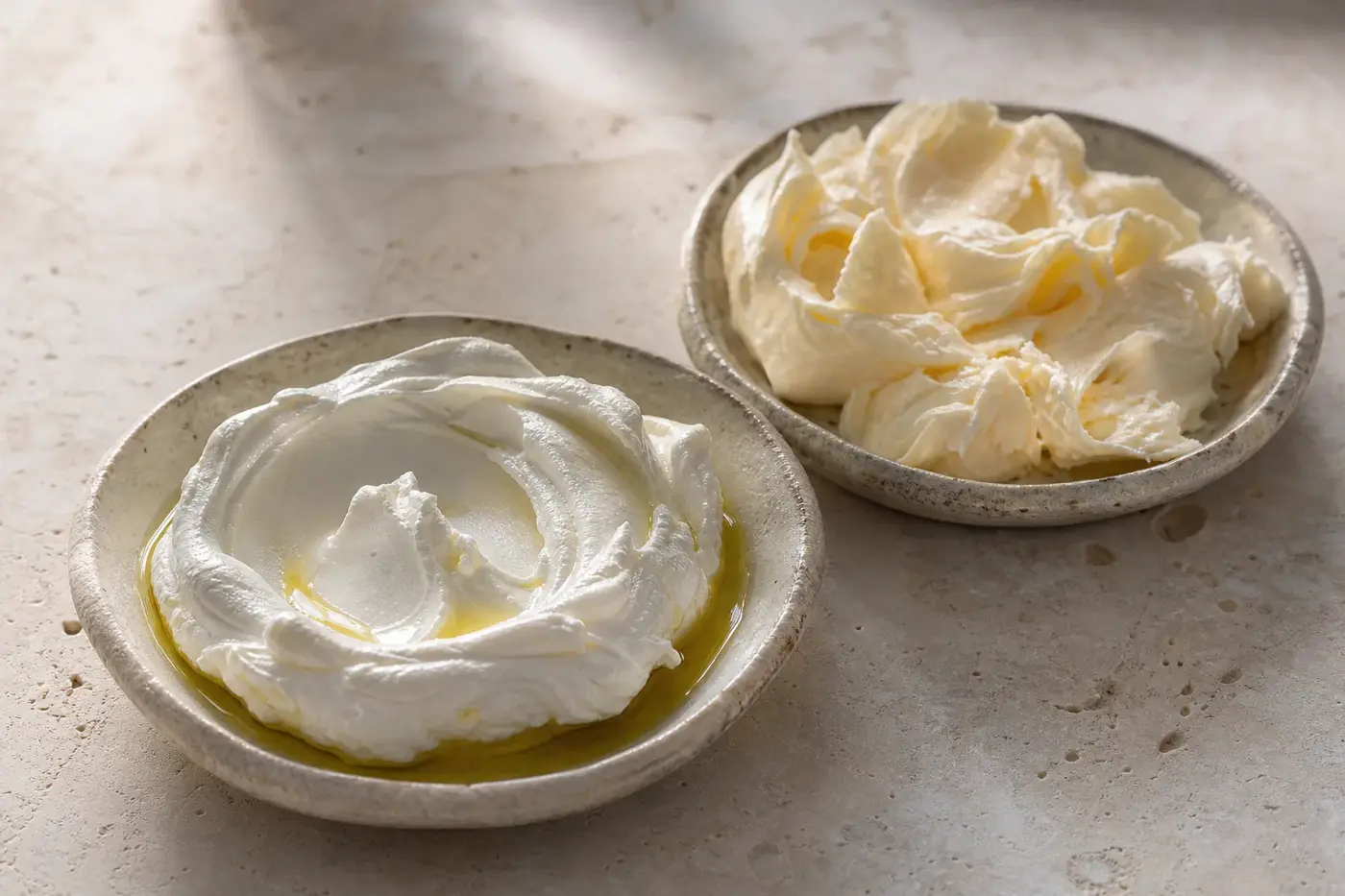
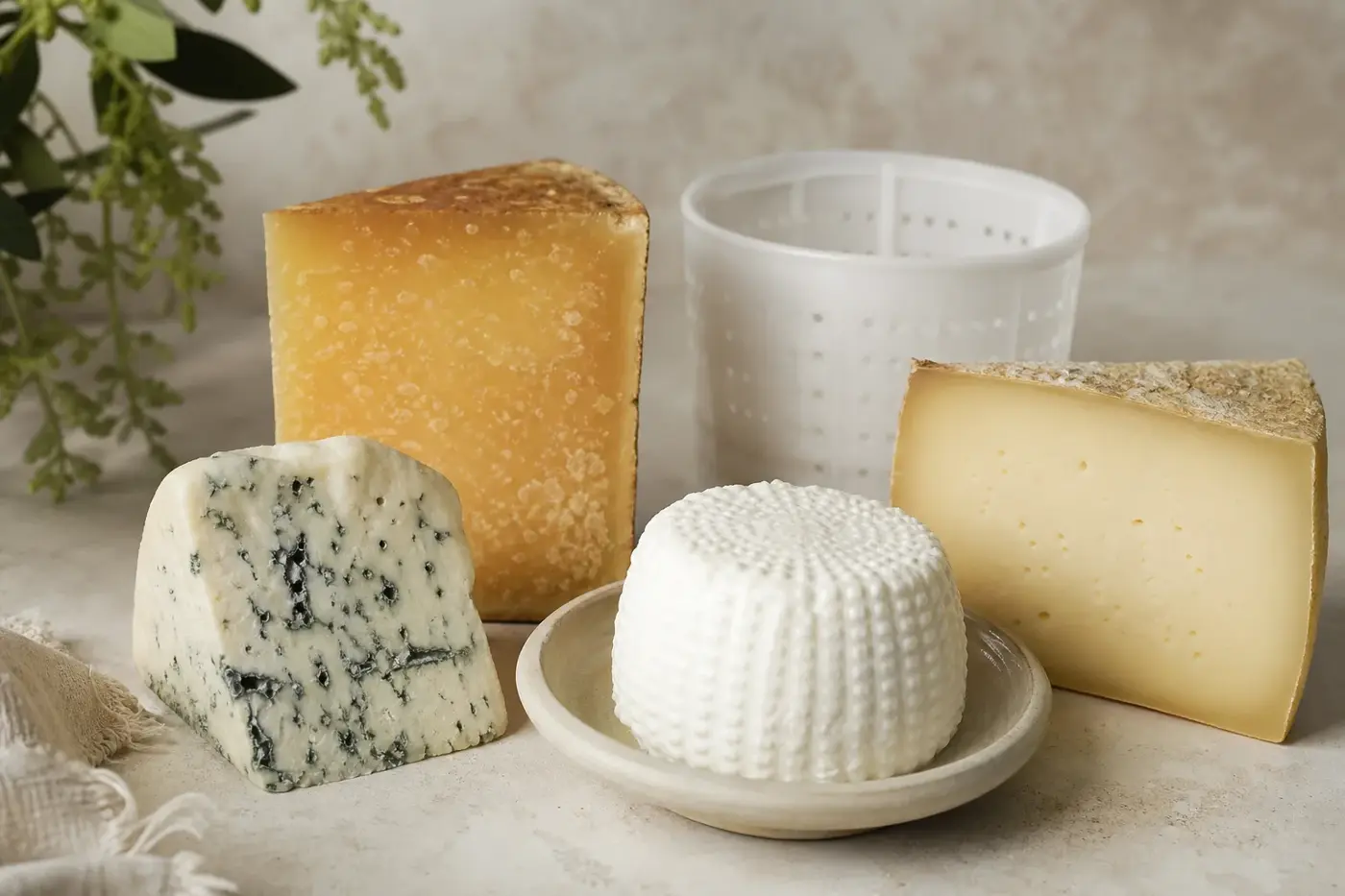
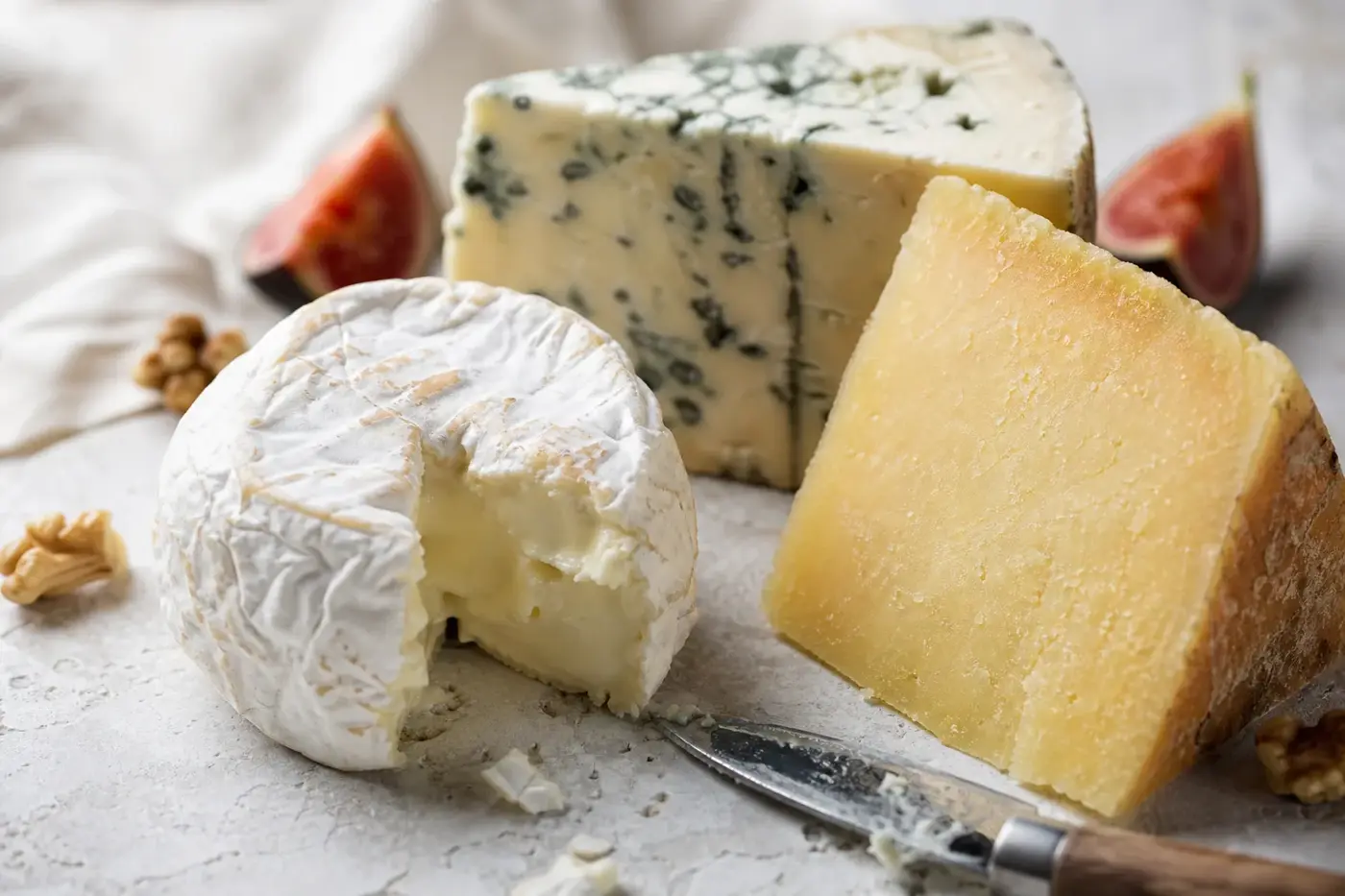
Put a fresh cheese beside a mature hard cheese and give each its own moment. With the fresh cheese, explore the gentle acid tang, moisture and soft curd. With the mature cheese, notice the developed aroma, firm bite and flavours that linger after you swallow.
Neither has to win. Complexity rewards close attention, but so does delicacy. You might love the texture most, or the way a particular flavour fits the meal.
Describe that pleasure before deciding which cheese deserves more admiration. An uncomplicated cheese you enjoy is a better choice for you than a demanding one you feel obliged to appreciate. Your plate is not an examination.
Parmigiano Reggiano and the place it belongs
Parmigiano Reggiano's identity rests on precise requirements, not just a familiar name. Its published production specification calls for raw, partially skimmed cow's milk, a naturally fermented whey starter and calf rennet. The curd is cut and cooked, formed into wheels and salted in brine, then matured for a minimum of 12 months from moulding. [1]
The map is just as precise. The production area covers Parma, Reggio Emilia and Modena, Bologna to the left of the River Reno, and Mantua to the right of the River Po. Milk production, cheesemaking and maturation must all happen within that area. [1,2]
The milk itself must not undergo heat treatment. Cooking the curd is a separate production stage, an important distinction when you're following the process from milk to wheel. [1,2]
Together, these requirements give the cheese a repeatable identity around which a reputation can grow. Each wheel connects farming, a defined method and a substantial stretch of maturation. You can explore its detailed record in the Parmigiano Reggiano guide.
Why there isn't always more to share
The supply of suitable milk is only the beginning. In the seasonal sheep's milk experiment, changes in composition changed the amount of cheese obtained. Draining removes whey, and maturation can bring further moisture loss. [4,6]
Researchers in the Teruel study recorded changing cheese weight during ripening. The milk entering a dairy and the mature cheese leaving it are different quantities. A full vat doesn't become an equivalent quantity of finished wheels. [4,6]
Time needs room, too. A wheel maturing for months needs somewhere to stay throughout, alongside the practical constraint of finding milk that meets a particular specification. Those limits can help explain why a cheese is sought after, but whether it's your favourite remains a question for the table.
The people and knowledge behind a protected name
A cheese can carry a community's knowledge as well as its name. A 2023 EU publication of an application to amend the Parmigiano Reggiano specification records the applicant's account of production knowledge handed down through generations within its area. Family knowledge and regional identity give the work meaning beyond the finished wheel, and making the cheese keeps that knowledge in use. [9]
Protected food names give some of those connections a formal structure. In the November 2026 account of Defra's guidance, the UK geographical indication schemes cover Great Britain, while EU schemes cover Northern Ireland and the EU. Those geographical scopes matter when you're reading a label. [10,11]
A protected designation of origin, or PDO, links production requirements to a defined area. Use it to understand a product's identity, then let your own taste decide where it belongs on your plate. The guide to PDO, PGI and TSG explains the distinctions. [10,11]
Look beyond raw milk, age and scale
Raw milk, long ageing and small production volumes describe a cheese. They don't automatically make it preferable. Ask what each contributes to the result you actually want to eat.
Distinction might come from a particular milk supply or careful control of a repeatable process. It might lie in a well judged decision about when to release a wheel. The description matters less than what those choices deliver for you.
Safety needs its own consideration. Milk treatment, age and production scale alone do not establish it. The UK Food Standards Agency's blue-cheese risk assessment explains that contamination can come from raw milk, brine or the processing environment, and considers cheeses made with both pasteurised and unpasteurised milk. [12]
It identifies pregnant people, infants, people over 65 and people with weakened immunity as vulnerable to listeriosis. For choices affecting these groups, consult current official guidance and the milk treatment guide. [12]
Find the cheese you'll want again
Taste to discover your preferences, not to award a universal score. Compare cheeses in similar circumstances, and make notes before reputation gets a chance to shape your response. A few precise observations will help you choose more confidently next time.
- Give it a good look. Notice the rind and cut surface. Ask the cheesemonger what's typical for that style and maturity, then judge the cheese against its intended character.
- Smell, then take a bite. Record what you notice, even if your first words are simply gentle, sharp or unfamiliar. Add detail when it helps you remember the cheese.
- Let texture have its say. Did you enjoy the bite and the way it broke down? A powerful aroma and an enjoyable texture are different observations, so separate texture from flavour.
- Ask one useful question. Find out what the maker or affineur wanted this cheese to be. Record whether you'd choose it again and what you'd eat it with.
Keep the note that will help you next time. Perhaps you want a softer texture, less salt or a longer finish. Once you can name what gives you pleasure, your preference becomes something you can use.
General information only, not medical advice: follow the official guidance where you live.
Questions people ask
What makes a cheese prized?
A cheese may be admired for its flavour, cherished in a regional food culture or sought after because little is available. Scarcity describes availability, not necessarily how much someone enjoys eating it.
How long must Parmigiano Reggiano mature?
It must mature for at least 12 months, counted from moulding. Milk production, cheesemaking and maturation must all take place within its defined production area.
What happens to cheese as it matures?
Proteins break down into smaller peptides and amino acids, while fat breakdown releases fatty acids. These processes contribute to the cheese’s texture and flavour.
What does affinage mean?
Affinage is the skilled care of cheese as it matures. Depending on the style, it can include turning the cheese, washing its rind and managing the surrounding air.
Is cheese made with raw milk safe for everyone?
The UK Food Standards Agency’s blue cheese risk assessment says contamination can come from raw milk, brine or the processing environment. It identifies pregnant people, infants, people over 65 and people with weakened immunity as vulnerable to listeriosis. Consult current Food Standards Agency guidance for choices affecting these groups.
Sources
- Consorzio del Formaggio Parmigiano Reggiano, Product specification of the protected designation of origin “Parmigiano Reggiano”, English document dated 2 July 2025 in its filename. Articles 1 to 3 describe milk treatment, area, starter, coagulant, production and minimum maturation.
- Consorzio del Formaggio Parmigiano Reggiano, Single document: Parmigiano Reggiano, English document dated 24 April 2025 in its filename. Sections 3.2 to 3.4 describe the milk and geographically linked production stages.
- Foods, Seasonal Variations in the Composition and Physicochemical Characteristics of Sheep and Goat Milks, 2022. Primary research on species and seasonal differences; indexed material retrieved.
- Journal of Dairy Science, Impact of seasonal changes in ovine milk on composition and yield of a hard-pressed cheese, volume 88, issue 4, 2005, pages 1358 to 1363. The indexed abstract reports the seasonal experiment and yield findings.
- Journal of Dairy Science, Effect of Salt on Structure-Function Relationships of Cheese, volume 86, 2003. Experimental investigation of salt addition, moisture, protein structure and functionality.
- Foods, Salt Distribution in Raw Sheep Milk Cheese during Ripening and the Effect on Proteolysis and Lipolysis, 2019. Primary study at two Teruel dairies.
- American Cheese Society, Best Practices Guide for Cheesemakers, 2025 edition, “Method of Ripening”. Industry technical guidance, distinguished here from experimental research.
- Journal of Dairy Science, Temperature and relative humidity influence the ripening descriptors of Camembert-type cheeses throughout ripening, volume 98, issue 2, 2015, pages 1325 to 1335. The retrieved abstract describes the experimental conditions and sensory outcomes.
- European Commission, Publication of an application for approval of an amendment to a product specification: Parmigiano Reggiano, Official Journal C 202, 9 June 2023. The single document records the applicant's account of geographical links and inherited production knowledge.
- Department for Environment, Food & Rural Affairs, Protected geographical food and drink names: UK GI schemes, updated 8 March 2024. Government guidance on the geographical scope of the schemes.
- Department for Environment, Food & Rural Affairs, Protect a geographical food or drink name, updated 6 January 2021. Government guidance describing PDO, PGI and TSG requirements.
- Food Standards Agency, The risk to vulnerable consumers from Listeria monocytogenes in blue cheese, published risk assessment, PDF version retrieved November 2026. The lay summary identifies vulnerable groups and routes of contamination.
This piece was researched through published production documents, government guidance, primary dairy studies and attributed industry technical guidance, with no site tasting or production visit.
Last checked: November 2026
Last checked November 2026.
The editors suggest you read next
Cheese: The Complete Guide
Picture milk draining through perforated pottery in sixth-millennium-BC Kuyavia, Poland.