Adyghe
Hot curd settles into a woven basket.
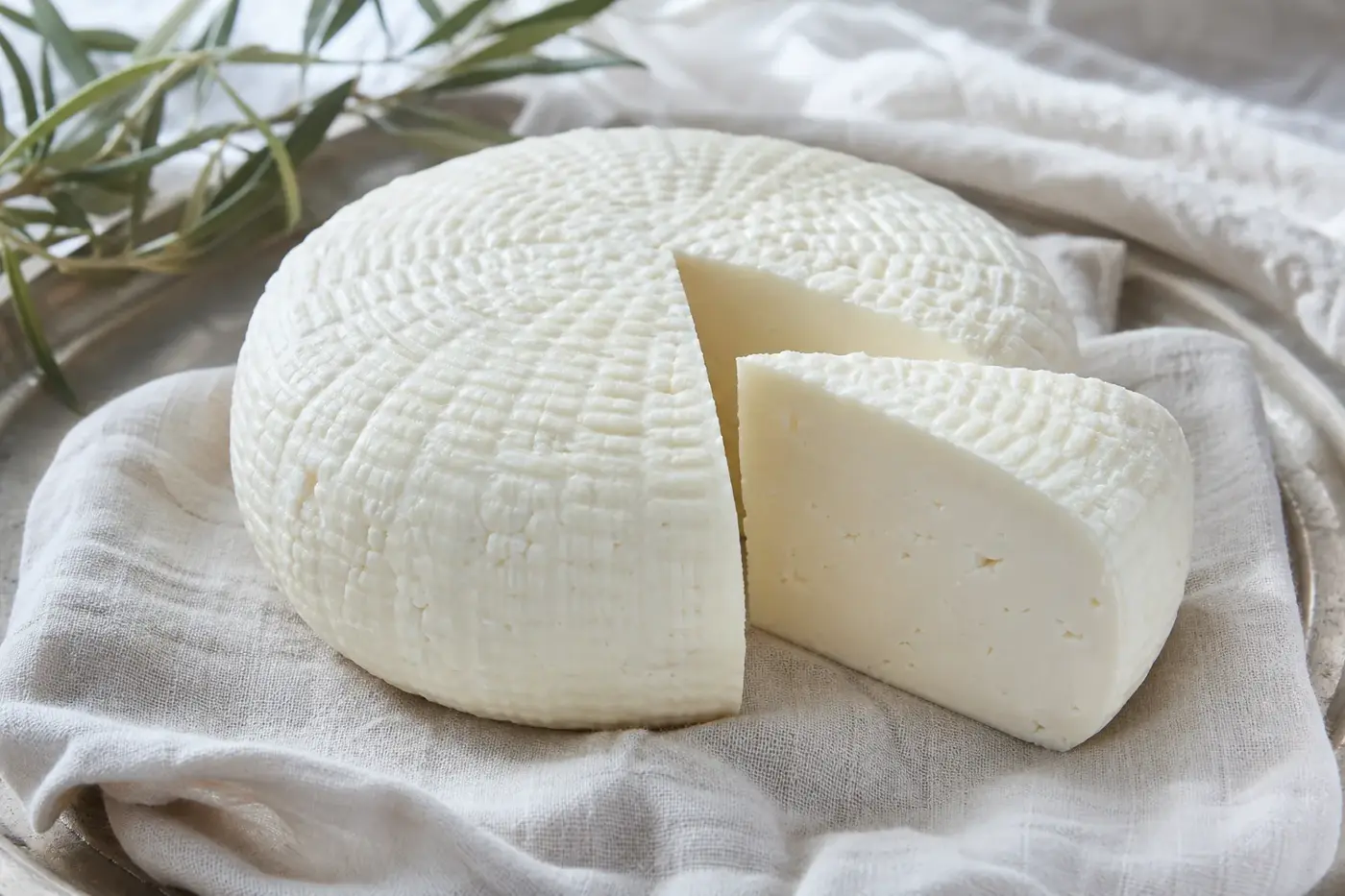
Hot curd settles into a woven basket. Liquid slips away, and the weave leaves its pattern behind: the basket has signed its work. This Circassian practice, recorded by the Russian Geographical Society, introduces you to Adyghe, the fresh cheese associated with the Republic of Adygea in the North Caucasus. Your first bite brings tender curd and the flavour of heated milk.[1]
Your first acquaintance with Adyghe
| What to look for | What you need to know |
|---|---|
| Name to remember | Adyghe; also Circassian cheese.[1] |
| Name on Russian packaging | Адыгейский сыр, commonly transliterated as Adygeyskiy syr.[2] |
| Russian regional listing | Rospatent lists Сыр адыгейский under No. 74 in its Adygea summary.[3] |
| Cultural home | Adygea and Circassian food culture in the North Caucasus.[1] |
| Relevant Russian standard | GOST 32263-2013, Soft cheeses. Specifications. Current applicable replacement provisions: unconfirmed.[2] |
| UK pregnancy guidance | NHS guidance on milk treatment and cheese type, November 2026.[7] |
Follow the basket into a Circassian kitchen
That basket is more than a handsome finishing touch. The Russian Geographical Society records the Circassian name матэкъуае, explaining its components as “basket” and “cheese”. Its account sets cheesemaking within a household dairy tradition, alongside fermented milk, butter and smoked cheese.[1]
If you are looking for this cheese in English, “Adyghe” is the useful name to remember. “Circassian cheese” points towards its wider cultural connection, while Russian-language packaging commonly uses Адыгейский сыр. The cultural name, product description and registered geographical name each tell you something different, so keep those distinctions in mind when choosing or discussing it.[1][2][3]
For your first taste, choose the fresh version. It offers the clearest introduction to the basket-shaped curd and milk flavour described here. Smoked Adyghe has its own named place in the Russian soft-cheese standard, so read the packet description to see which preparation you are taking home.[2]
Start your milk questions at the label
Which milk goes into Adyghe? For the cheese in your hand, its label is the place to start. Regional accounts discuss cheesemaking alongside cattle keeping, and the Russian Geographical Society refers to more than one milk tradition. That broad Circassian household history does not give every cheese made today a single recipe.[1]
The Russian standards catalogue places Adyghe among soft cheeses made from milk or dairy products, with provision for milk-processing by-products. That scope reaches beyond an individual household recipe.[2] You can explore the different treatments in the guide to raw, thermised and pasteurised milk.
When buying, ask two separate questions: which animal’s milk was used, and how was it treated? The familiar name cannot reliably answer either for an unidentified packet. If your seller cuts a portion from a larger wheel, ask for the original product information. Looking at the cut cheese cannot tell you its ingredients or milk treatment.
Watch hot milk take the basket’s shape
Heat and acidity form Adyghe’s curd. In the traditional account, milk is heated, then acidic milk whey is added to bring its proteins together into the solids that become cheese. Whey is the liquid separated during cheesemaking; here, its acidity also helps start coagulation, the setting of milk proteins.[1]
The warm curd goes into a draining basket. Liquid escapes through the weave as the mass settles into shape, and the cheese is then salted. The basket does two jobs at once: draining the curd and leaving that recognisable pattern on its surface.[1]
Roskachestvo’s current consumer explanation also identifies milk, whey and salt as the characteristic combination. It distinguishes this method from using rennet, a milk-coagulating enzyme.[5] That difference helps you read the ingredients, but you still need to check any vegetarian claim on the actual product.
These are the defining production stages, not instructions for making Adyghe at home. The guide to how cheese is made places them within the wider sequence of milk setting, drainage and shaping.
With a whole cheese, you can see how the basket pattern connects to the making. A cut or repacked portion may have lost that original surface. Ask about production and origin too: a decorative impression alone cannot establish either.
Take a moment with that tender curd
Picture a low cylinder with rounded edges. The regional account describes a tender, moderately firm consistency, slight acidity and the smell of heated milk.[1] This is a cheese for slicing or breaking into pieces, rather than a long-aged cheese chosen for a hard, granular interior.
The basket-marked exterior is simply the surface of the drained curd.[1] Beyond that shared feature, ask the maker or seller to describe the texture and appearance of the particular cheese in front of you.
Ask questions that will help you cook. Does it cut into neat slices, break readily into curds, or suit frying especially well? “Tender” can mean different things to different sellers. Knowing how the cheese behaves tells you more about its place in a dish than a general promise of mildness.
Before reaching for salt or a strongly flavoured dressing, taste a small piece. Then decide whether you want something sharp, fresh herbs or little beyond bread. Heavy seasoning can easily obscure the milk character you came to explore.
Adyghe, Sulguni or Tvorog? Let dinner decide
Start with the method, then consider what your recipe needs. Adyghe’s documented sequence is heated milk, acidic whey and basket drainage.[1] When choosing between it, Sulguni and Tvorog, ask how the available product behaves when sliced, crumbled and heated.
For a filling, find out about moisture and salt. For a fried slice, ask whether the cheese holds together. If your dish needs an elastic cheese that stretches, seek a specific recommendation from the maker or retailer. A shared Caucasian connection does not promise identical behaviour in the pan.
Colour and geographical proximity can only take you so far. The guide to telling cheese styles apart explains why method gives you a more useful comparison.
Make room at the table, fresh or fried
Young fried cheese eaten with maize dough appears in a historical description quoted by the Russian Geographical Society.[1] Frying, then, has a place in the regional record. For your own cooking, choose a product whose maker recommends frying and follow its instructions. A tender cheese intended chiefly for fresh eating may need different handling from a firmer one.
To get acquainted, start with a slice and bread, cucumber, tomatoes or fresh herbs. These are serving suggestions, not a prescribed Circassian menu. Try one accompaniment at a time before moving on to a mixed salad or a more elaborate dish. Consider it permission to linger over the bread.
For other savoury uses, give the cheese a clear job. Let its texture guide you:
- In a salad: keep pieces large enough to remain distinct, then taste before adjusting the dressing.
- In a vegetable filling: crumble the cheese and assess the mixture’s moisture before enclosing it in pastry or dough.
- To finish vegetables: add pieces to cooked vegetables for separate bites of cheese.
- As a warm cheese course: follow the maker’s frying instructions and serve with a fresh or acidic accompaniment.
These ideas are not tested recipes. If you adapt an existing recipe, keep its cooking and handling instructions. Check whether changing the cheese alters the filling’s moisture or structure.
Look beyond the familiar name when buying
Read the product description, ingredients, milk treatment and storage instructions first. Then look for the maker and stated place of manufacture. If regional origin matters to you, ask where the cheese was made. A distributor’s address answers a different question.
Choose an amount you can finish within the packet’s instructions after opening. A larger piece is useful only if it fits those directions. For a cut portion, ask for the original storage information and relevant date marking. Those details need to come home with your cheese, rather than stay behind with the wheel.
Keep the label until you finish the cheese. If a recall affects a particular batch, the label carries the information you need to identify the product. The guide to reading a cheese label helps you distinguish the food’s name from the other wording on the pack.
This page summarises published guidance from the official sources it cites. It is not medical advice. Guidance differs between countries and changes over time, so check the current source for where you live, and ask your doctor, midwife, pharmacist or dietitian about your own circumstances.
Find its fridge space, and read the UK pregnancy guidance
Give Adyghe a place in the fridge and follow its packaging instructions. The Food Standards Agency advises householders in England, Wales and Northern Ireland to keep fridges between 0 and 5 °C, refrigerate dairy products and follow the pack instructions.[6] Any more restrictive storage temperature or after-opening instruction on your cheese takes precedence.
A use-by date is about safety. UK government guidance says you should not eat food after that date, even if it looks or smells satisfactory.[8] Keep your cheese refrigerated throughout its stated life, taking out only what you need for preparation.
If you are pregnant, consult the NHS guidance for the UK, with November 2026 as the reference point here.[7] Establish the product’s milk treatment and cheese type rather than relying on its name alone.
Get to know what Adygea’s name can tell you
Rospatent’s regional summary lists Сыр адыгейский, No. 74, under Adygea.[3] Treat that regional listing separately from the individual record and current legal scope.
Origin and recipe remain separate questions when you choose your cheese. Ask where it was manufactured as well as how it was made. A familiar production method, a basket impression or an English spelling does not by itself establish entitlement to a registered name.
Questions people ask
What is Adyghe cheese?
Adyghe is a fresh cheese associated with Adygea and Circassian food culture in the North Caucasus. It has a tender, moderately firm consistency, slight acidity and the smell of heated milk.
How is Adyghe cheese made?
In the traditional account, acidic milk whey is added to heated milk to form the curd. The curd is drained in a woven basket and then salted.
Is Adyghe cheese vegetarian?
Roskachestvo describes milk, whey and salt as the characteristic ingredients and distinguishes the method from the use of rennet. A vegetarian claim still needs checking on the actual product.
Can you fry Adyghe cheese?
Fried young cheese appears in a historical regional description. Choose a product whose maker recommends frying and follow its instructions.
Can you eat Adyghe cheese during pregnancy?
The page advises consulting NHS pregnancy guidance for the UK and establishing the product’s milk treatment and cheese type. Guidance differs between countries and changes over time, so check the current source for where you live.
Sources
- Russian Geographical Society, Сырная история (“Cheese history”), 2011, archived capture dated 7 March 2013. Regional cultural account, traditional basket process and attributed sensory descriptions. Read at rgo.ru:80">Archived article.
- Rosstandart, ГОСТ 32263-2013. Сыры мягкие. Технические условия (“Soft cheeses. Specifications”), catalogue record, accessed November 2026. Records scope, introduction on 1 July 2015, active catalogue status and a replacement reference to GOST 32263-2026. Official catalogue record.
- Rospatent, Субъекты Российской Федерации, для региональных товаров которых зарегистрированы географические указания (ГУ) и наименования мест происхождения товаров (НМПТ), published 26 October 2026. Official regional registration summary. Official summary.
- Saransk Canning Plant, Сыр, undated manufacturer’s product information, retrieved November 2026. Ingredient declaration for its product; a commercial primary source. Product information.
- Roskachestvo, Адыгейский сыр: действительно ли он так полезен, как принято считать?, 2026. Used only for its ingredient and rennet statements, not its health assertions. Published explanation.
- Food Standards Agency, How to chill, freeze and defrost food safely, published 18 December 2017, live version checked November 2026. Applies to England, Northern Ireland and Wales. Official guidance.
- NHS, Foods to avoid in pregnancy, live version checked November 2026, section “Cheese, milk and other dairy”. Official guidance.
- UK Government, Understanding food labelling: Best before and use-by dates, live version checked November 2026. Official guidance.
Researched through published regional accounts, the Russian standards catalogue, official registration information, manufacturer declarations and UK public food guidance.
Last checked: November 2026
Last checked November 2026.
The editors suggest you read next
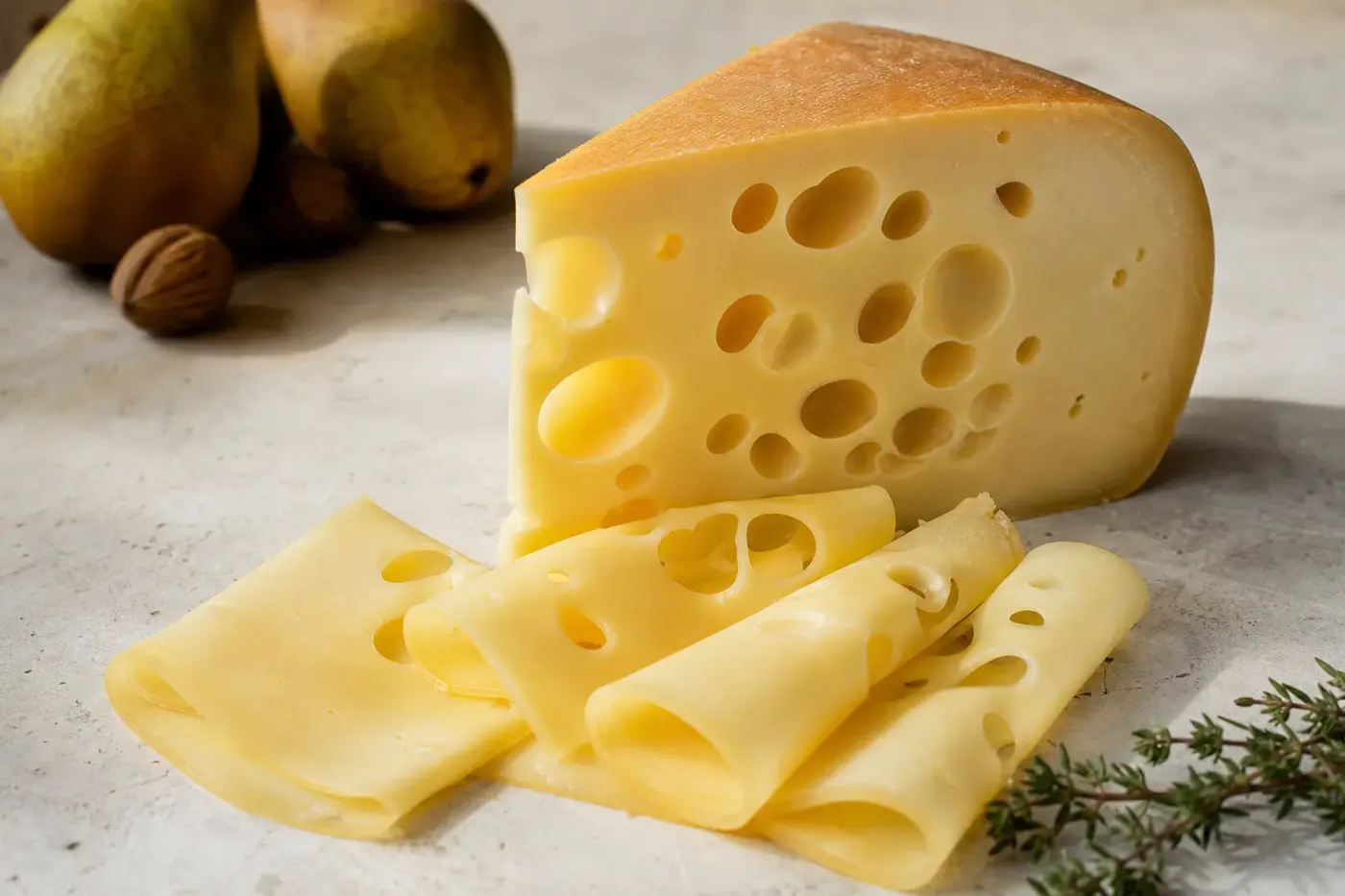
Jarlsberg
Cut into Jarlsberg and those great, rounded holes catch your eye before you take a bite.