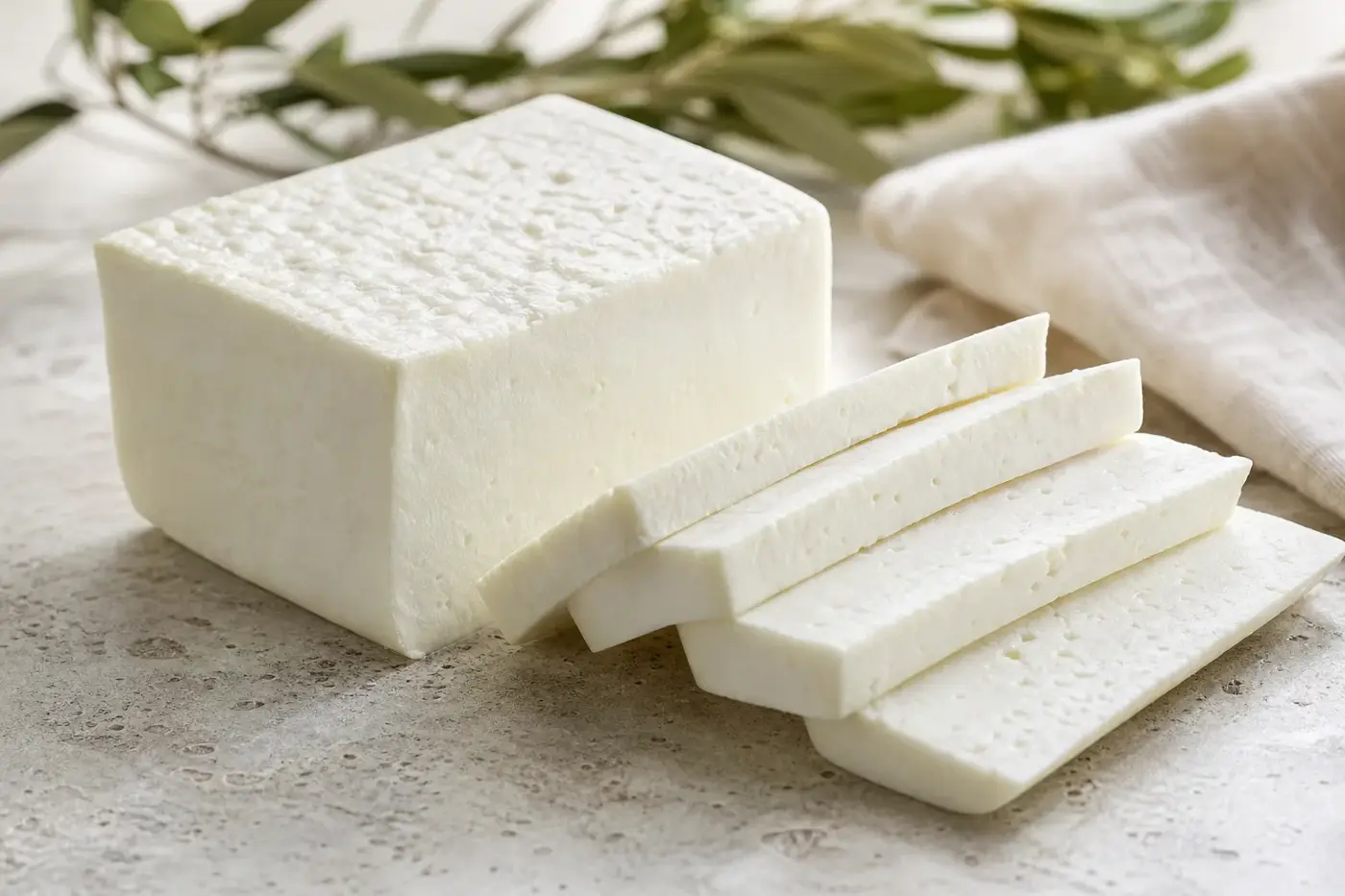
Akkawi
Breakfast bread on one side, syrup-soaked kanafeh on the other: Akkawi looks quite comfortable between the two.
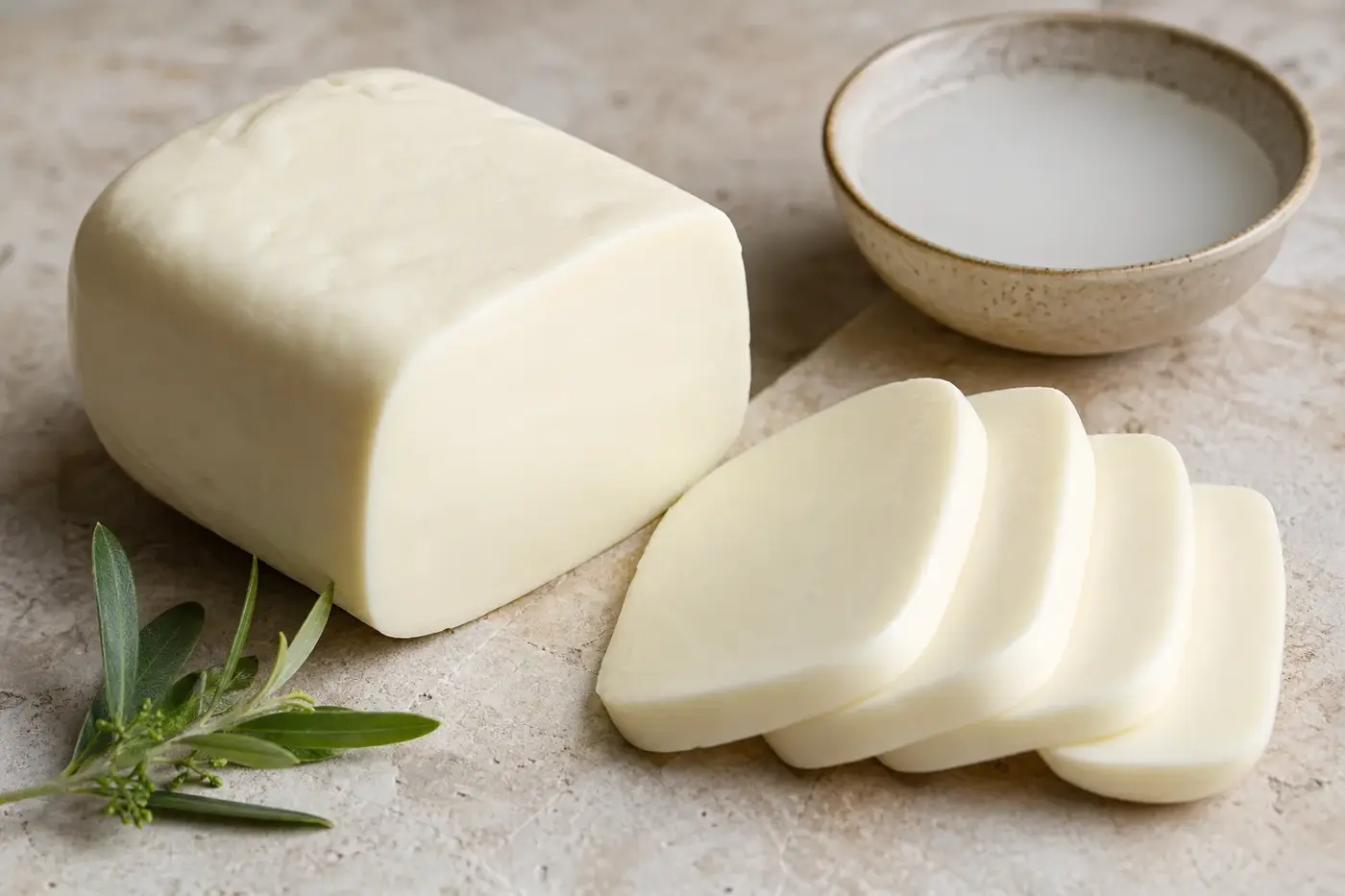
Breakfast bread on one side, syrup-soaked kanafeh on the other: Akkawi looks quite comfortable between the two. White, mild and salty, it belongs at both ends of that delicious journey. Follow its name and you reach Akka, the Palestinian coastal city also known as Acre, and the white brined cheese traditions of the Levant. [1,2]
Get acquainted with Akkawi
| What to know | Your quick guide |
|---|---|
| Names | Akkawi; Akawi, Ackawi and Akawieh. [3] |
| Where it belongs | Palestine and the wider Levant. [2,4] |
| Milk | Commonly cow’s milk; also sheep’s or goat’s milk. [2] |
| How it is made | Rennet-set, drained and salted; commonly kept in brine. [2,4] |
| Looks and flavour | White, mild and salty. [2] |
| Milk treatment and rennet in your pack | Look for the producer’s declaration. [3,4] |
Follow the name to Akka
Open Falastin and Akkawi turns up at breakfast and in sweet knafeh. This Palestinian culinary reference places the cheese in the port city of Akka. You get a clear sense of where its geographical name belongs in Palestinian food culture. [1]
A place in food culture is not quite the same as an origin story. Falastin offers a modern culinary account, rather than a dated record of the first cheesemaker. To pin down exactly when and where production began, you would need historical evidence beyond a modern recipe book.
Across the Levant, Akkawi is part of everyday dairy life. A Beirut retail study collected cow’s milk Akkawi from branded and unbranded suppliers, both packaged and portioned from brine-filled containers. Experimental production in Egypt also documents the cheese being made beyond the Levant. [2,4]
Into the vat, then into the brine
Akkawi commonly starts with cow’s milk, although makers also use sheep’s and goat’s milk. Look at your milk declaration rather than relying on the name: an Egyptian dairy experiment made Akawi with goat’s milk. The commercial version described by M.J. Dairies lists cow’s milk, salt, rennet and starter culture. [2,3]
Rennet, an enzyme preparation, turns milk into a gel. Cutting it separates the curds, the solids destined for cheese, from the whey, the liquid that drains away. Those curds go into moulds to drain, with handling and pressing varying between production methods. [2]
Next comes the surrounding saltwater, or brine. This is not necessarily the cheese’s only encounter with salt: the Egyptian experiment added salt before moulding. Research on retail Akkawi in Lebanon describes draining hoops followed by curing in brine, so you should not expect every maker to follow one fixed recipe. [2,4]
Want to follow the process further? Explore how cheese is made, or visit rennet explained for the differences between coagulants.
Meet the mild flavour and its salty streak
White, mild and salty is the description given in an Egyptian dairy study. The same study records textures ranging from soft to firm. That gentle flavour, then, is not a promise of low salt. [2]
Both salt treatment and age help shape your mouthful. A controlled Akkawi study varied the balance of sodium chloride and potassium chloride in brine, measuring texture alongside sensory responses. Salt treatment affected hardness and crumbliness, among other properties; age affected colour and fermented flavour. [5]
Let the cheese in front of you guide your plans. Taste a small piece and notice the salt, then see whether it cuts cleanly, bends or breaks. For salad, this helps you choose how to portion it; for pastry, it gives you a starting point for deciding whether to soak it.
Choosing between Akkawi, Nabulsi, halloumi and feta
White cheeses may look like relatives, but they do not all share kitchen manners. Nabulsi belongs to the same white brined cheese context as Akkawi, though its manufacture commonly includes boiling the cheese in brine. A Jordanian experiment found differences in physical properties between Nabulsi cheeses made with different proportions of sheep’s and cow’s milk. Choose for your dish, paying attention to salt and behaviour when heated. [6]
Halloumi has a distinct heat treatment of its own. In the Egyptian comparison, its curd was cooked in hot whey after draining, while Akawi followed a different moulding and salting route. When you are cooking, that difference matters more than their shared white appearance. [2]
Feta brings a different flavour to the table. The European Commission describes this EU protected designation of origin cheese as salty and slightly acidic. It is ripened and made from sheep’s milk, or a mixture of sheep’s and goat’s milk. That tang can work in a savoury salad, but for a sweet cheese pastry, use the cheese your recipe specifies. [7]
Considering a substitution? Get to know feta before making the swap.
A little soaking before the sweet course
Soaking reduces salt, especially useful when your Akkawi is destined for sweets. Falastin calls for several changes of cold water before the cheese goes into knafeh; M.J. Dairies also describes soaking its cheese before dessert-making. Keep it chilled throughout preparation, following the refrigeration guidance below and your pack’s instructions. [1,3,8]
- Read the pack first. Follow its desalting directions, including preparation time and what to do with the cheese afterwards.
- Portion what you need. Taste a small piece with a clean utensil. Place the portion for soaking in a clean, covered food container with fresh cold drinking water.
- Keep it refrigerated between checks. Drain and replace the water with fresh cold water, following the maker’s directions. Use a clean utensil to remove a small tasting piece when checking the salt.
- Think about the finished dish. A savoury filling may welcome some salt; a syrup-soaked dessert usually needs a gentler balance. Drain before using. [1,3,8]
Take your timing from the product’s instructions, not a fixed overnight soak borrowed from another cheese. For kanafeh, ask the seller which Akkawi is intended for that use and whether it needs desalting. Soak only the portion you need, keeping the rest under its original storage instructions.
Make room for bread, pastry and syrup
A few slices of Akkawi with bread make a simple breakfast. Falastin records breakfast and salad uses, while M.J. Dairies suggests bread, fruit and salads. You could add tomatoes and cucumber for freshness. Taste the cheese before adding other salty accompaniments or seasoning the vegetables. [1,3]
For savoury pastries, choose Akkawi when your recipe calls for it and adjust the salt through soaking as directed. Drain it carefully before assembling. If the product is new to you, test a small portion first to see how the filling behaves. Better a modest rehearsal than a whole tray demanding answers.
Then comes kanafeh, also written knafeh or kunafa: cheese, pastry and sugar syrup brought together. Akkawi’s place in this dessert appears in Palestinian culinary writing and producers’ descriptions. Give desalting its own place in your preparations, rather than trying to squeeze it in when you are ready to assemble. [1,3]
If the dessert depends on the cheese’s texture, ask whether your particular product is intended for kanafeh and how it behaves when heated. Follow a recipe written for the cheese you have.
Find the Akkawi for your table
Begin with what you want to eat. Breakfast Akkawi and Akkawi for a sweet pastry may call for different preparation. Read the milk declaration and ingredients, then check the salt figure on the nutrition panel, where provided. Compare figures on the same basis, preferably per 100 g.
For vegetarian suitability, look for a clear declaration or ask the producer about the coagulant. The M.J. Dairies ingredient list, for instance, says rennet without identifying its source. The declaration on your particular product tells you more than an assumption based on the name Akkawi. [3]
At a cheese counter, ask for the producer’s name, milk treatment, storage directions and instructions after purchase. If you buy packaged cheese, keep the label after opening so you have those details handy. The guide to reading a cheese label walks you through the wider checks.
Give opened Akkawi a chilled home
Store Akkawi in a fridge at 5 °C or below. This is the Food Standards Agency’s advice for home storage in England, Northern Ireland and Wales. Follow the packaging’s storage instructions and dates. [8]
After opening, keep the cheese chilled and handle its container and covering liquid as directed. A cheese sold in brine may have different instructions from a vacuum-packed block. If you transfer cheese from an opened tin, the FSA advises placing it in a storage container, covering it and refrigerating it. [3,8]
Keep the opening date with the pack and follow any instructions about how soon to use the cheese. After soaking, follow the producer’s directions for the prepared portion. For the rest of your cheese drawer, visit how to store cheese at home. [8]
General information only, not medical advice: follow the official guidance where you live.
Questions people ask
What is Akkawi cheese?
Akkawi is a white, mild and salty cheese associated with Palestine and the wider Levant. It is commonly made from cow’s milk, but sheep’s and goat’s milk are also used.
Why is Akkawi soaked before use?
Soaking reduces its saltiness, particularly for sweet dishes. Falastin calls for several changes of cold water before using it in knafeh, while the page recommends following the pack’s directions and keeping it chilled.
Can you use Akkawi for kanafeh?
Akkawi is used in kanafeh, a dessert of cheese, pastry and sugar syrup. Ask the seller whether your particular cheese is intended for kanafeh and whether it needs desalting.
What is the difference between Akkawi and halloumi?
Both are white cheeses, but they can be made using different methods. In an Egyptian comparison, halloumi curd was cooked in hot whey after draining, while Akawi followed a different moulding and salting route.
Is Akkawi suitable for vegetarians?
That depends on the particular product. Look for a clear vegetarian declaration or ask the producer about the coagulant, as a label that says rennet may not identify its source.
Sources
-
Ebury Press, Falastin, “Akkawi Cheese”, 2020. Culinary account covering Akka, breakfast, salads, knafeh and soaking in changes of cold water. Retrieved excerpt hosted by ckbk.
-
Agricultural Research Centre, Egypt, “Using Goat’s Milk in Making Three Types of Soft Cheese”, Journal of Food and Dairy Sciences, volume 2, issue 5, pages 251 to 260, 2011. Original comparative cheesemaking experiment. Full paper.
-
M.J. Dairies, “Akkawi cheese”, undated product information, checked November 2026. Producer’s own ingredients, alternative spellings, suggested uses and packaging formats. Product information.
-
American University of Beirut institutional repository, “Assessment of the Microbiological Acceptability of White Cheese (Akkawi) in Lebanon and the Antimicrobial Resistance Profiles of Associated Escherichia coli”, Antibiotics, volume 12, article 610, 2023. Original retail sampling study. Full paper.
-
Society of Chemical Industry, “The effect of partial substitution of NaCl with KCl on the physicochemical, microbiological and sensory properties of Akkawi cheese”, Journal of the Science of Food and Agriculture, first published online 10 September 2014. Retrieved abstract reporting instrumental texture and sensory results. DOI record.
-
Mutah University, “Quality of White-Brined Nabulsi Cheese Made with Different Proportions of Sheep’s and Cows’ Milk”, Current Research in Nutrition and Food Science, volume 11, issue 1, 2023. Original experiment comparing milk mixtures, desalting and storage. Full paper.
-
European Commission, Directorate-General for Agriculture and Rural Development, “Feta PDO”, undated, checked November 2026. Official explanatory account of flavour and production. Official account.
-
Food Standards Agency, “How to chill, freeze and defrost food safely”, published 18 December 2017, current page checked November 2026. Consumer guidance applying to England, Northern Ireland and Wales. Official guidance.
-
Food Standards Agency, “Alerts”, live food and allergy alert service, consulted November 2026 for the editorial recall check. Official alerts.
This desk-researched article brings together original dairy studies, attributed culinary documentation, producer information and official refrigeration guidance.
Last checked: November 2026
Last checked November 2026.
The editors suggest you read next