Androuët
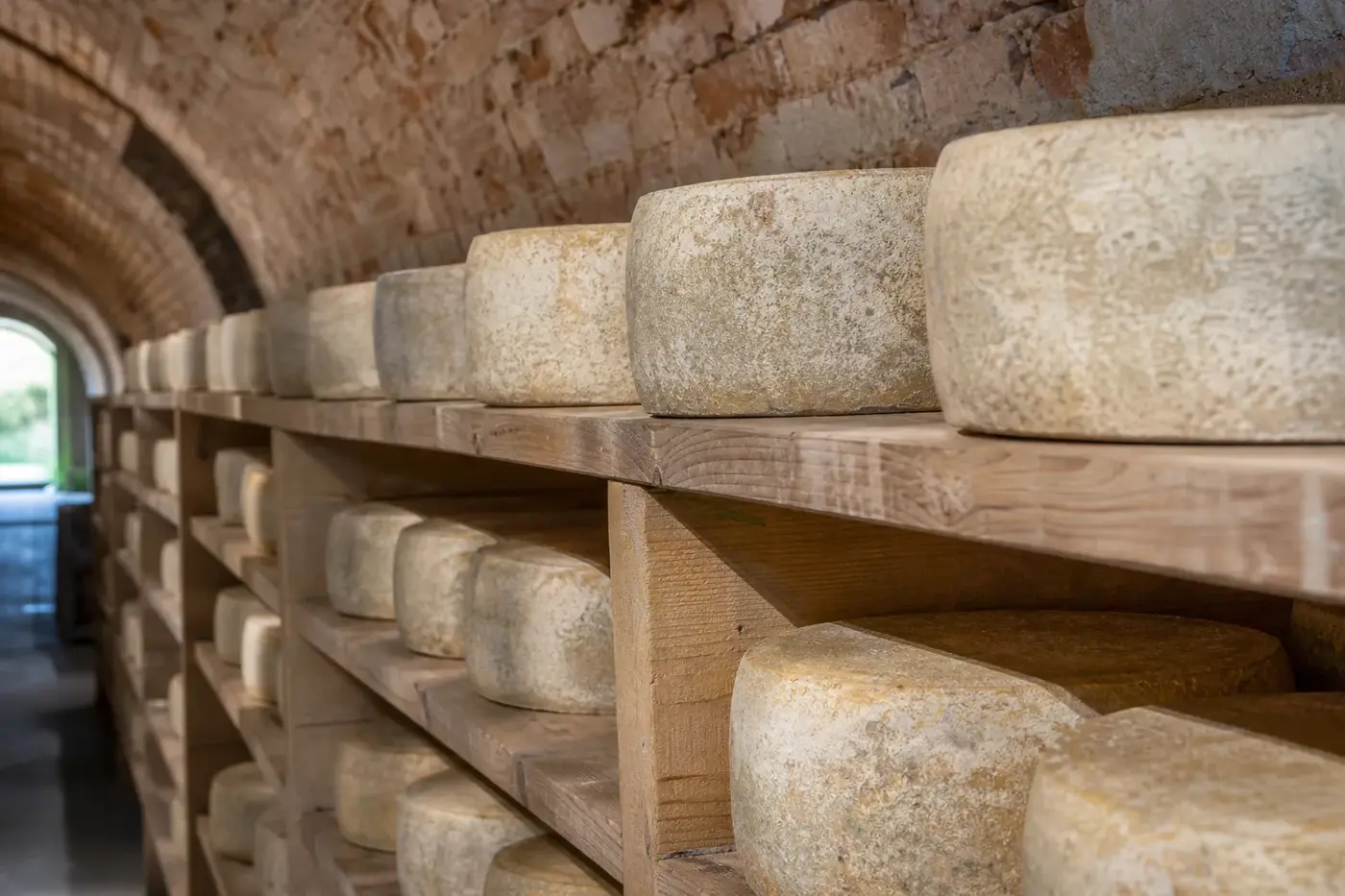
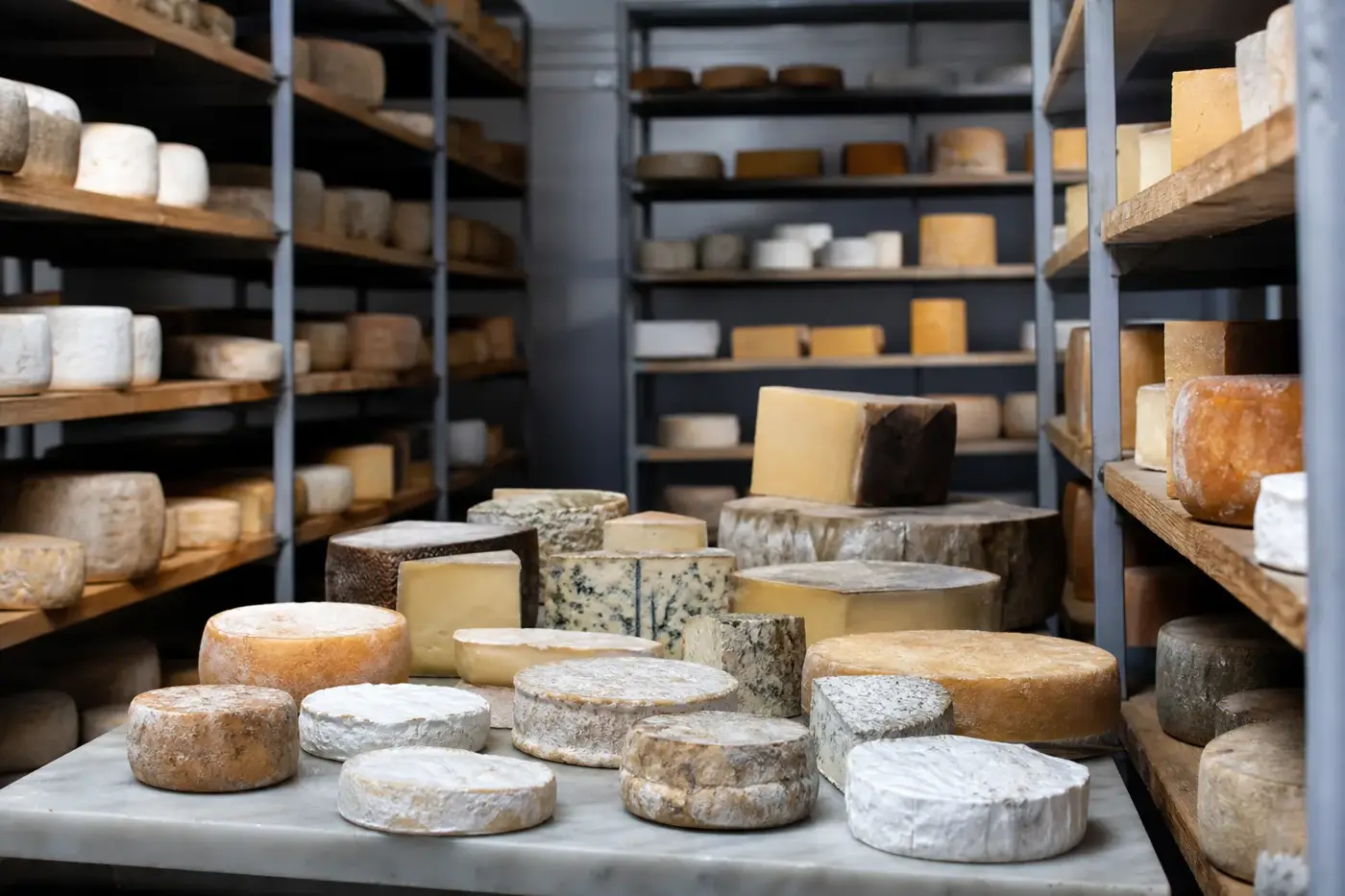
Picture five cellars, each devoted to a different family of cheese.
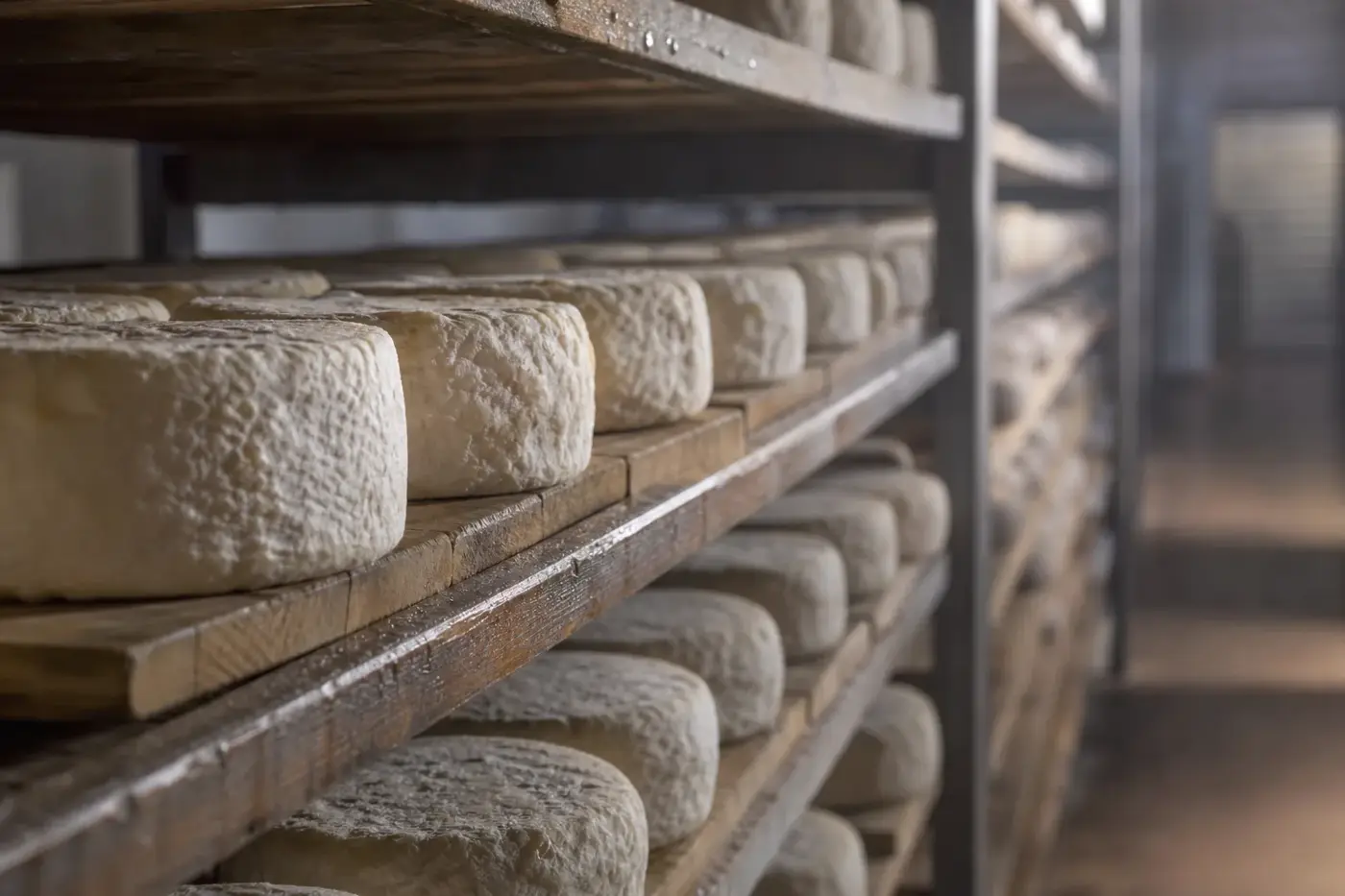
Picture five cellars, each devoted to a different family of cheese. At Androuët’s 250 m² maturing facility in Levallois, temperature, humidity and natural flora are adapted to the cheeses in its care. Opened through an investment in 2017, it gives you a glimpse of the patient work behind your wedge. Cheese, it seems, can be particular about its accommodation. [1]
Follow that work backwards and you meet Henri Androuët, seeking out regional cheeses, then his son Pierre, a merchant and writer. Follow it forwards and you reach today’s shops, boards and cheese experiences. Choosing cheese, bringing it to maturity and helping you understand it remain at the heart of the business. [1][2]
| At a glance | The details |
|---|---|
| The business | Androuët, French cheesemonger and affineur. [2] |
| Where it began | The company history starts in Paris in 1909. [1] |
| The founder | Henri Androuët, according to the company history. [1] |
| Who leads it today | Stéphane Blohorn, named as leader since 2005. [1] |
| What you can find | Retail, cheese selection, affinage, tailored boards and workshops. [2][5][6] |
| Visitor access | Not established. Shops listed by the operator. [5] |
On the road with Henri Androuët
The story begins in Paris in 1909, with Henri Androuët. After the First World War, according to the company history, he travelled to producers in search of regional cheeses. He bought them young and brought them to maturity himself. Finding a cheese and ripening it were two parts of the same job. [1]
Meet Pierre, the cheesemonger with a book for you
Pierre Androuët carried cheese knowledge beyond the counter. Identified by the business as Henri’s son, he continued direct sourcing and developed the maturing cellars. The company’s retrospective family history also dates the restaurant’s opening to 1934. [1]
The Bibliothèque nationale de France records Pierre as a fromager-affineur and author, born on 15 August 1915 and deceased on 3 February 2005. Those dates distinguish his career from the foundation associated with Henri. His books offer you another way into his working life, separate from the shop’s own account. [3]
Start with Guide du fromage, recorded by Google Books under Pierre Androuët’s name and published by Stock in 1971. The Library of Congress lists an English-language Guide du fromage, published by Aidan Ellis in 1983, translated by John Githens, with “New cheeses” by Anthea Bell. Translation brought his writing to readers beyond a French-speaking audience. [4][7]
The BnF authority record also cites Dictionnaire des fromages du monde in its 2005 documentation. A guide, a translation, a dictionary: you can trace the educational thread through Pierre’s work. This was cheese knowledge to carry home, search through and return to long after your visit to the counter. [3][4]
Behind the cellar door: the care your cheese receives
Those five Levallois cellars are devoted to affinage, the care of cheese during ripening. Androuët’s reported 2017 investment provided the 250 m² facility, with separate cellars for different cheese families. Temperature, humidity and natural flora are adapted to each. [1]
At the counter, you can get straight to the point: “What has your team done with this cheese?” Ask whether it arrived young, whether the producer or another affineur matured it, and what condition the monger recommends for your meal. The useful answer concerns the particular piece going home with you.
Choosing matters as much as tending. Androuët says seasonality guides its board service and that cheese is cut as late as possible to limit drying. Give your single wedge the same attention. Ask what texture to expect, which occasion it suits and how to wrap it. [6]
For the wider production story, turn to how cheese is made. In the shop, bring the conversation back to the cheese in front of you. Who made it, who matured it, and why does this piece suit the way you want to eat it?
Find your counter, then plan your occasion
Androuët’s directory for November 2026 lists twelve French locations. Seven are in Paris: Belles Feuilles, Cambronne, Daguerre, Marché de Passy, Mouffetard, Terrasse and Verneuil. The other five are Boulogne-Billancourt, Levallois, Marché de Neuilly, Neuilly Château and the Halles de Versailles. [5]
Among the directory’s addresses are 37 rue de Verneuil in Paris, 17 rue Henri Barbusse in Levallois and the Halles Notre Dame in Versailles. Before setting off, look up your branch’s current contact information and accessibility. Ask about any arrangements needed for a workshop or collection, too. [5]
You need not stop at a purchase from the counter. Androuët advertises tailored cheese boards, buffets for receptions, company events and workshops. Its board service distinguishes an end-of-meal selection from a cocktail presentation, offering whole pieces or prepared portions. Start with your occasion, then ask for a selection you can comfortably manage. [2][6]
If you fancy going further, the advertised L’amateur de fromage workshop takes place at the Musée Vivant du Fromage, 39 rue Saint-Louis en l’Île, Paris. The operator describes professional guidance and a visit to a maturing cellar, with booking through its website. Confirm the current format and your requirements directly before arranging your visit. [8]
Meet the leadership and untangle the British connection
Stéphane Blohorn has led the house since 2005, according to the company. The website’s legal notice names Androuet Alliance as its owner and operator. Leading the house and operating its website are distinct from the legal ownership questions in the table above. [1][9]
Looking for a British counter? The current French directory points you towards Paxton & Whitfield shops: Chelsea and Jermyn Street in London, Bath and Canterbury. They appear under the Paxton & Whitfield name. Check the trading name and address before following the French website to a British shop. [5]
For any British business trading as Androuët, establish the operator from its own current business information and ask about its relationship with France. Who selects the cheeses, where are they matured, and which business handles your order? Those answers tell you more about the service than a shared name alone.
Bring home cheese you cannot wait to eat
Start with your meal, not a roll call of famous cheeses. Tell the monger when you will eat them, how many people are sharing and whether cheese is the main event or follows other food. Describe your favourite textures: firm enough to slice, soft enough to spread, or crumbly. Ask for the maker and the cheese’s current condition, not just its name.
Make your first purchase a small, deliberate comparison. Try two contrasting textures, or two stages of maturity if suitable examples are available. Keep the labels so you can connect each piece with its maker and origin afterwards. The guide to cheese styles gives you useful words for that conversation, with no vocabulary test at the counter.
Before leaving, ask for written storage and wrapping instructions for each cheese, including what applies after cutting. Keep them with the cheese’s identity and date information. If a description, milk treatment or ingredient statement needs untangling, use how to read a cheese label alongside the shop’s information.
At home, turn to official handling guidance where you live. In England, Wales and Northern Ireland, the Food Standards Agency publishes How to chill, freeze and defrost food safely, with its current guidance linked in the sources below. Follow product-specific instructions. For a fuller discussion, use how to store cheese at home. [10]
At the table, keep each cheese identifiable. Compare the firmness of the paste and describe what you liked in ordinary words. “I preferred the firmer piece” gives the monger something genuinely useful for your next visit.
Let your occasion guide the presentation. Androuët’s board service offers whole pieces and prepared portions, so ask which makes sharing easiest for your group. For comparative tasting, keep accompaniments separate at first, then try them afterwards. You are discovering what you enjoy and gathering a clearer question for your next counter conversation. [6]
Find the specialist you will want to return to
Paxton & Whitfield makes a useful neighbouring reference because Androuët includes its British shops in the current directory. Look closely at what specialists actually do. Which makers do they represent, what information comes with each cheese, how do they explain maturity and what advice can you get after buying? [5]
Begin with a specific cheese and a specific service. Ask each shop the same questions, note the answers and return to the one whose explanations help you choose. That is how a specialist cheesemonger earns a place in your everyday life: by helping you understand, and enjoy, the food you bring home.
General information only, not medical advice: follow the official guidance where you live.
Questions people ask
Who founded Androuët?
Androuët traces its beginnings to Henri Androuët in Paris in 1909. After the First World War, he travelled to producers in search of regional cheeses, buying them young and maturing them himself.
What does Androuët do as an affineur?
Affinage is the care of cheese during ripening. At Androuët’s Levallois facility, temperature, humidity and natural flora are adapted to different families of cheese.
Where are Androuët’s shops?
The French directory, checked in November 2026, listed twelve locations, including seven in Paris. For Britain, it directed readers to Paxton & Whitfield shops in London, Bath and Canterbury.
Does Androuët offer cheese workshops?
Androuët advertises the L’amateur de fromage workshop at the Musée Vivant du Fromage in Paris. The operator describes professional guidance and a visit to a maturing cellar, with booking through its website.
Can I order an Androuët cheese board for an event?
Androuët advertises tailored cheese boards and buffets for receptions and company events. Its board service offers selections for the end of a meal or a cocktail presentation, with whole pieces or prepared portions.
Sources
- Maison Androuët, Une histoire et un savoir-faire, undated company history, version retrieved November 2026. Retrospective company account, including its description of the Levallois investment.
- Maison Androuët, Fromagerie Androuet, undated homepage, version retrieved November 2026. Current self-description and advertised services.
- Bibliothèque nationale de France, Androuët, Pierre (1915-2005), authority record FRBNF12585829, updated 19 November 2020.
- Library of Congress, Fromages de France, in French Cuisine & Café Culture in Paris, research guide and bibliographic listing, version retrieved November 2026.
- Maison Androuët, Nos boutiques, undated official directory, version retrieved November 2026.
- Maison Androuët, Découvrez nos plateaux, undated service description, version retrieved November 2026.
- Google Books, Guide du fromage, Pierre Androuët, Stock, 1971, bibliographic record retrieved November 2026.
- Maison Androuët, Atelier : L’amateur de fromage, Initiation à la caséologie, fromages et vins, à Paris, undated workshop description, version retrieved November 2026.
- Maison Androuët, Termes et conditions générales d’utilisation du blogg et du site Androuet, undated website legal notice, version retrieved November 2026.
- Food Standards Agency, How to chill, freeze and defrost food safely, published 18 December 2017, current publication page retrieved November 2026; stated territorial scope is England, Northern Ireland and Wales.
This desk-researched account brings together the operator’s historical and current descriptions, national-library records and official guidance, keeping company statements distinct from independently documented bibliographic facts.
Last checked: November 2026
Last checked November 2026.
The editors suggest you read next
Farmhouse, Artisan and Industrial Cheesemakers Explained
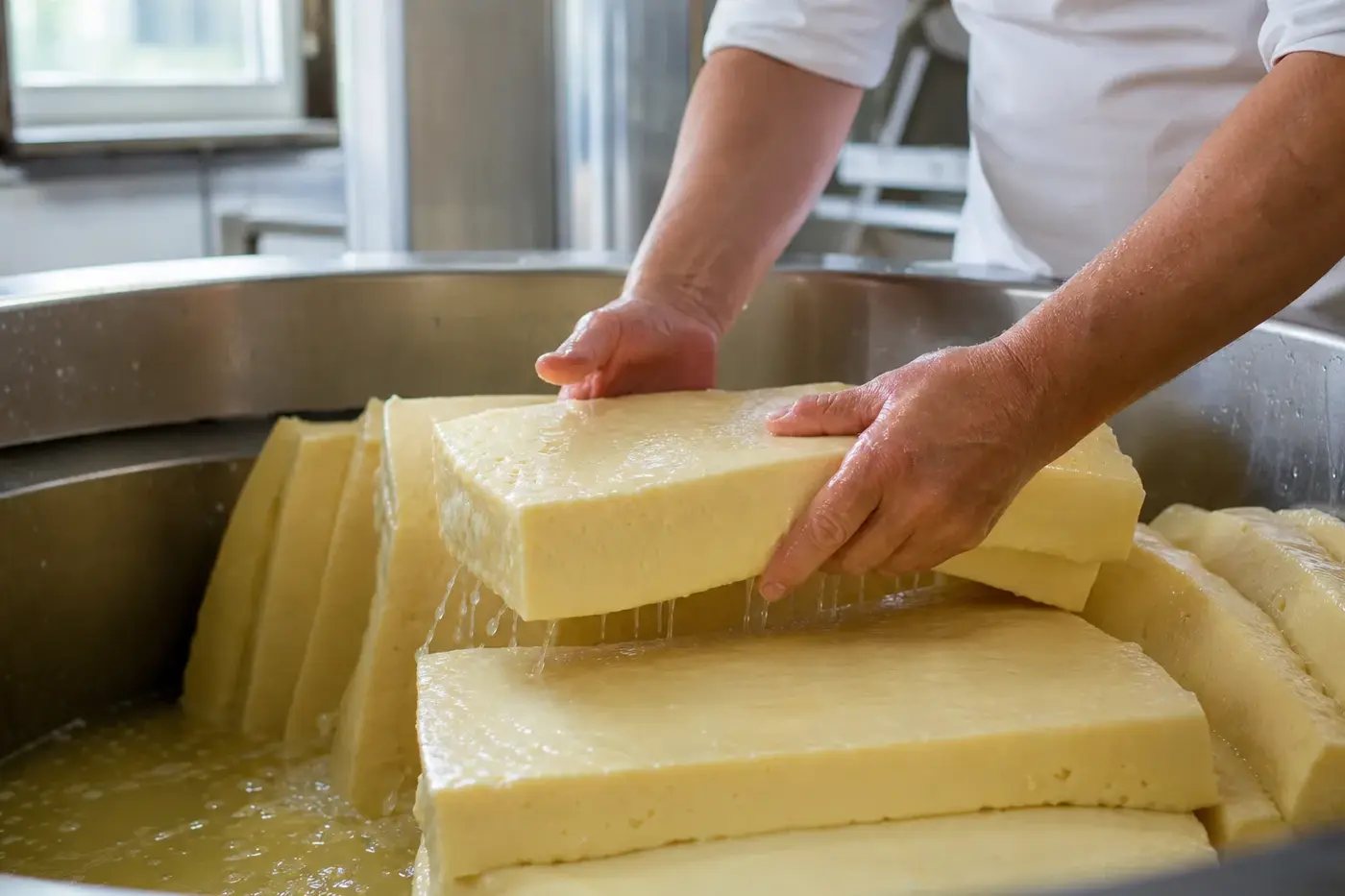
Slabs of curd are turned and stacked by hand.