Arla
You turn a supermarket cheese packet over, looking for the dairy behind your next slice.
You turn a supermarket cheese packet over, looking for the dairy behind your next slice. With Arla, the farmer supplying the milk can also own part of the business that puts cheese in your basket. Follow that connection and you reach far beyond the company's Scandinavian beginnings, into a network of dairies, brands and customers. [1,4]
Arla Foods amba took shape in 2000, when a Swedish cooperative and a Danish one joined forces. Today, this farmer-owned dairy cooperative is headquartered in Viby J, Denmark. Behind those familiar packets sits a business whose owners also supply its milk. [1,4]
| Arla at a glance | What you need to know |
|---|---|
| Legal entity | Arla Foods amba, a Danish cooperative with limited liability [1] |
| Registered number | Danish CVR 25313763 [1] |
| Headquarters | Viby J, Denmark [1] |
| Ultimate owners | Farmer members, directly and through member cooperatives [3,4] |
| Ownership form | Cooperative, with non-tradable membership rights [1] |
| Farmer membership | 7,265 at 31 December 2025, before the DMK combination [2] |
| Main cheese brands | Castello, Apetina and Arla-branded ranges [8,9] |
| Lurpak trademark owner and licence | Details not provided here |
| Ownership record date | November 2026 [1,3] |
From two Scandinavian cooperatives to a wider world
Arla Foods began in 2000 with the merger of Swedish Arla Ekonomisk Förening and Danish MD Foods amba. Its Danish registration dates from 17 April 2000. More combinations followed, including Britain's Milk Link in 2012, taking the cooperative further from its Scandinavian starting point. [1]
The latest major change arrived on 1 June 2026, when DMK GmbH and its subsidiaries became part of Arla. DMK's German and Dutch cooperatives initially joined as member cooperatives. Their farmers did not all become direct Arla members straight away. [3]
Another legal step followed on 1 September 2026. DMK records those cooperatives combining into a European Cooperative Society headquartered in Denmark. If you want to understand who owns the business, that distinction matters. [3]
Arla's 2025 annual report records 7,265 farmer owners across Denmark, Sweden, the United Kingdom, Germany, Belgium, Luxembourg and the Netherlands. That figure belongs to the business before the merger. It is not a membership total for the enlarged group. [1,2,3]
The farmers supplying the milk also own the business
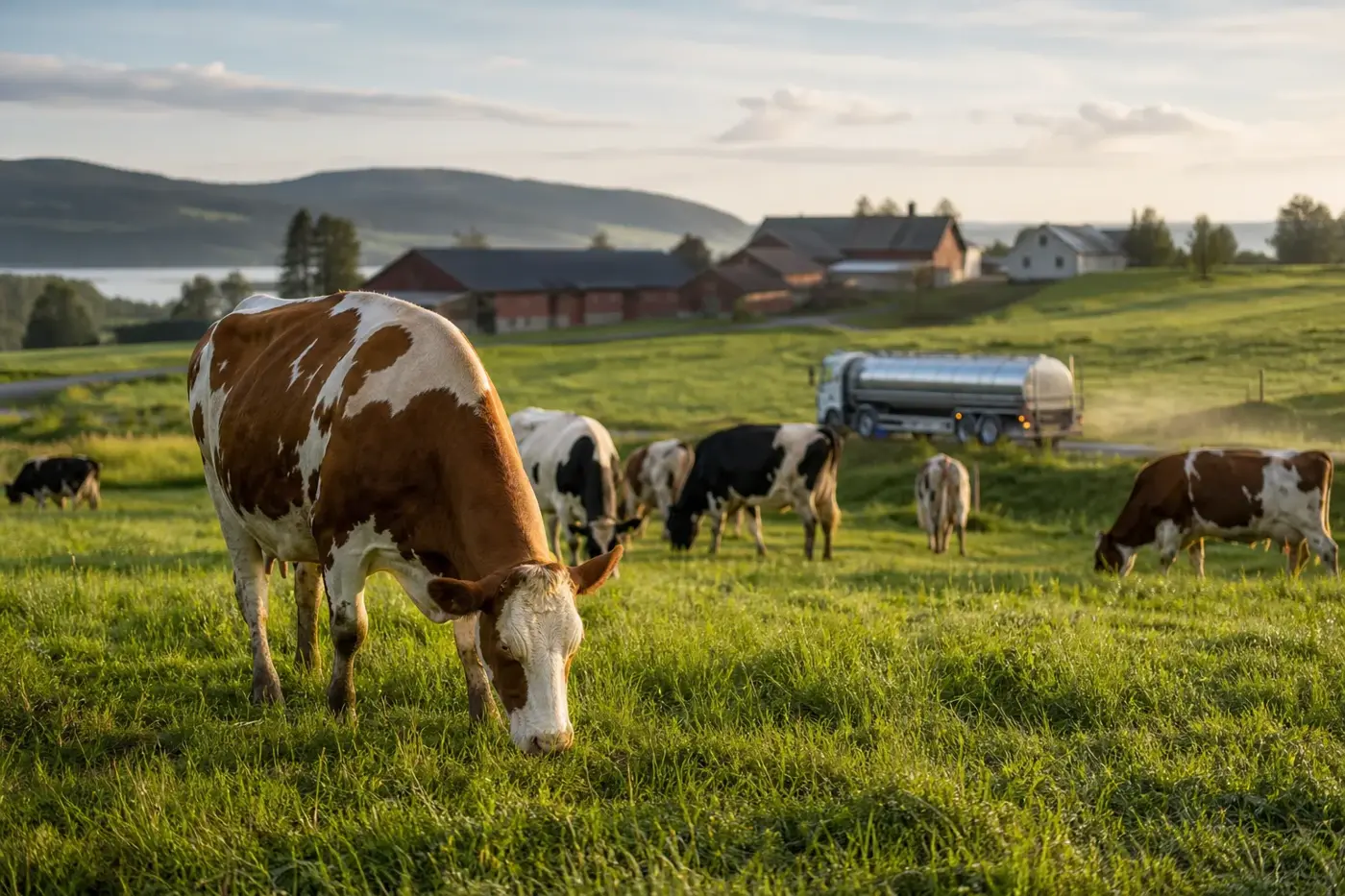
An Arla member wears two hats: milk supplier and part-owner of the business that processes and sells it. Arla describes its purpose as returning dairy business earnings to its owners through the milk they deliver. Here, supplying the milk and sharing in the business are closely connected. [4]
The governance structure includes representative, board and executive roles. If you need the current rules on voting, milk payments and profit allocation, turn to the governing documents. Those also cover arrangements following the DMK combination. [1,5]
For a farmer, collective ownership tackles an urgent practical question: where will this perishable milk find a market? Milk is not inclined to wait for a better offer. Today's return must also sit alongside investment in tomorrow's processing capacity, brands and distribution network, all within the same cooperative. [1,4]
Where Britain joins the milk round
Britain supplies member milk and gives Arla a manufacturing base. The United Kingdom, Sweden, Denmark and Germany are among its major European markets. Beyond Europe, the Middle East is its largest regional market, with local dairy operations alongside exports and international production. [1]
Browse Arla's British site listings and you will find Taw Valley in Devon, Lockerbie in Scotland and Oswestry in Shropshire. The Food Standards Agency separately lists Arla Foods Ltd (Cheese) at Lockerbie Creamery. Those listings alone do not tell you the current cheese activities at every site. [6,7]
Making cheese and packing it are different jobs. A block cut and wrapped in Shropshire need not have been made there. Likewise, a UK office address identifies a responsible business, not necessarily the dairy of origin: Arla separates functions that a small farm dairy may carry out under one roof. [6,13]
Membership connects British farmers' milk to that wider processing and selling organisation. You might meet the result under an Arla brand or a retailer's own label. The company behind your cheese and the name on its packet tell different parts of the story. [1,4]
Find your way around Castello, Apetina and Arla
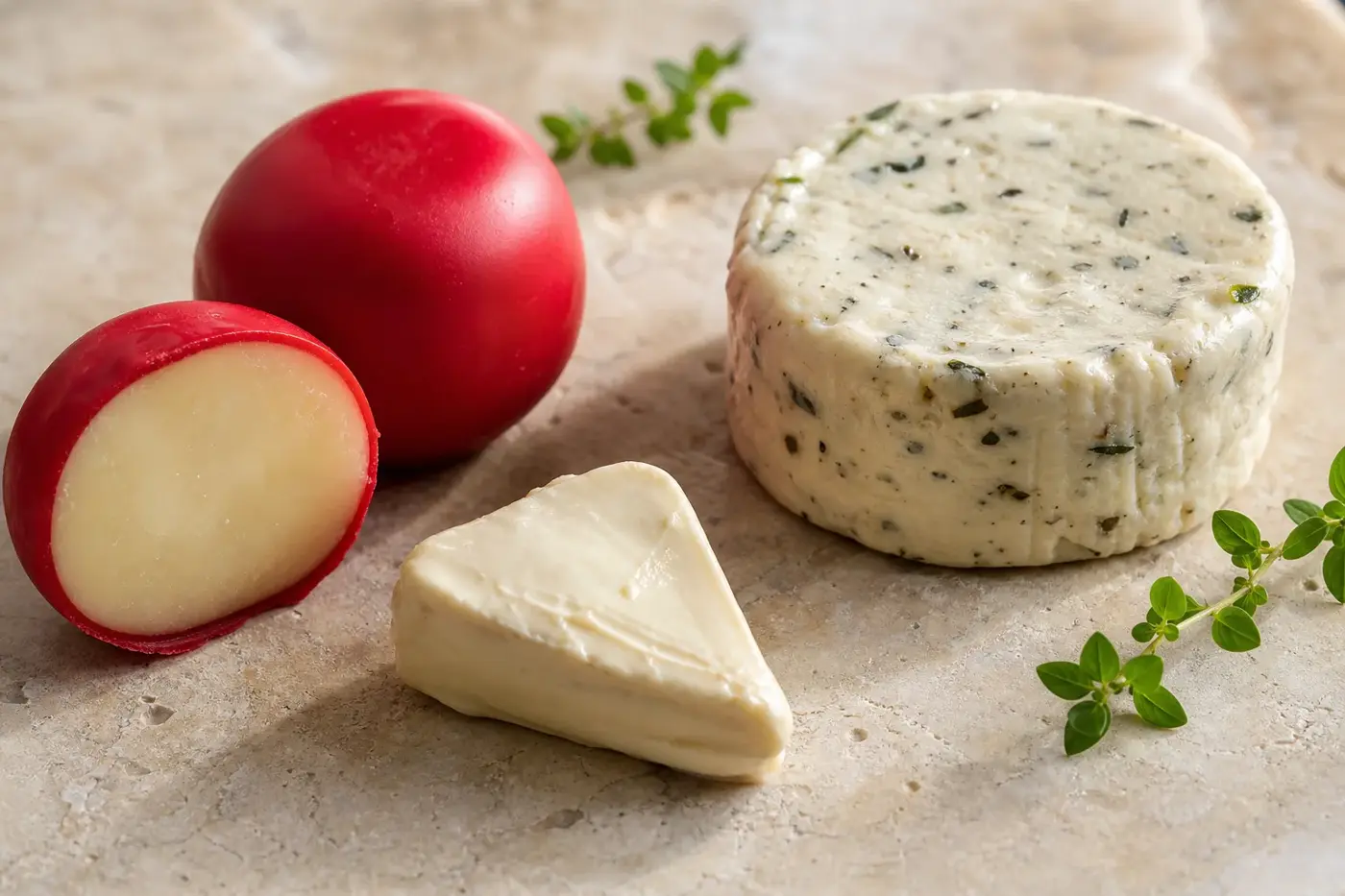
Castello and Apetina are distinct brands in Arla's portfolio, alongside products carrying the Arla name. Market-specific rights and ownership are a separate question, with those details outside this account. A familiar name gives you a starting point, rather than the whole story of a packet. [1,8,9]
Arla describes Castello as its speciality cheese brand. Its published range brings together different cheeses, rather than one recipe or geographical origin. Apetina heads towards the kitchen, particularly through white cheese, with shredded cheese, paneer and cream cheese also in its portfolio. [1,8,9]
That distinction is useful when you are choosing. Arla Foods is the owner and operating group; Castello and Apetina organise products for shoppers. For what is inside an individual pack, its descriptive name, ingredients and origin statement tell you more than the brand alone. [8,9,13]
Across the business, you will find supermarket blocks, cooking cheeses, soft cheeses and foodservice products. Industrial production belongs in this picture too. Craft skills and consistent process control can both matter without making every product a farmhouse cheese; explore the differences in method, rind and texture in cheese styles. [1,8,9]
Lurpak's story starts with Danish butter
In 1901, Danish farmers and cooperative dairies adopted a shared butter trademark, according to Arla's brand page. That was the beginning of Lurpak's story. It belongs with butter and spreads, rather than cheese, and Arla markets it today within its wider dairy portfolio. [10]
The Danish Dairy Board is a separate body: the Danish dairy industry's trade association. Its published responsibilities include administering trademarks and representing dairy interests. Commercial use of Lurpak is distinct from trademark ownership; details of the current rights holder and licence terms are not provided here. [11]
Follow the cheese from milk to packet
Arla says its farmer owners produce most of the milk it uses. For the stated origin of a particular cheese, though, start with the product label. Cooperative ownership describes the business, not the source of every ingredient in your basket. [13,15]
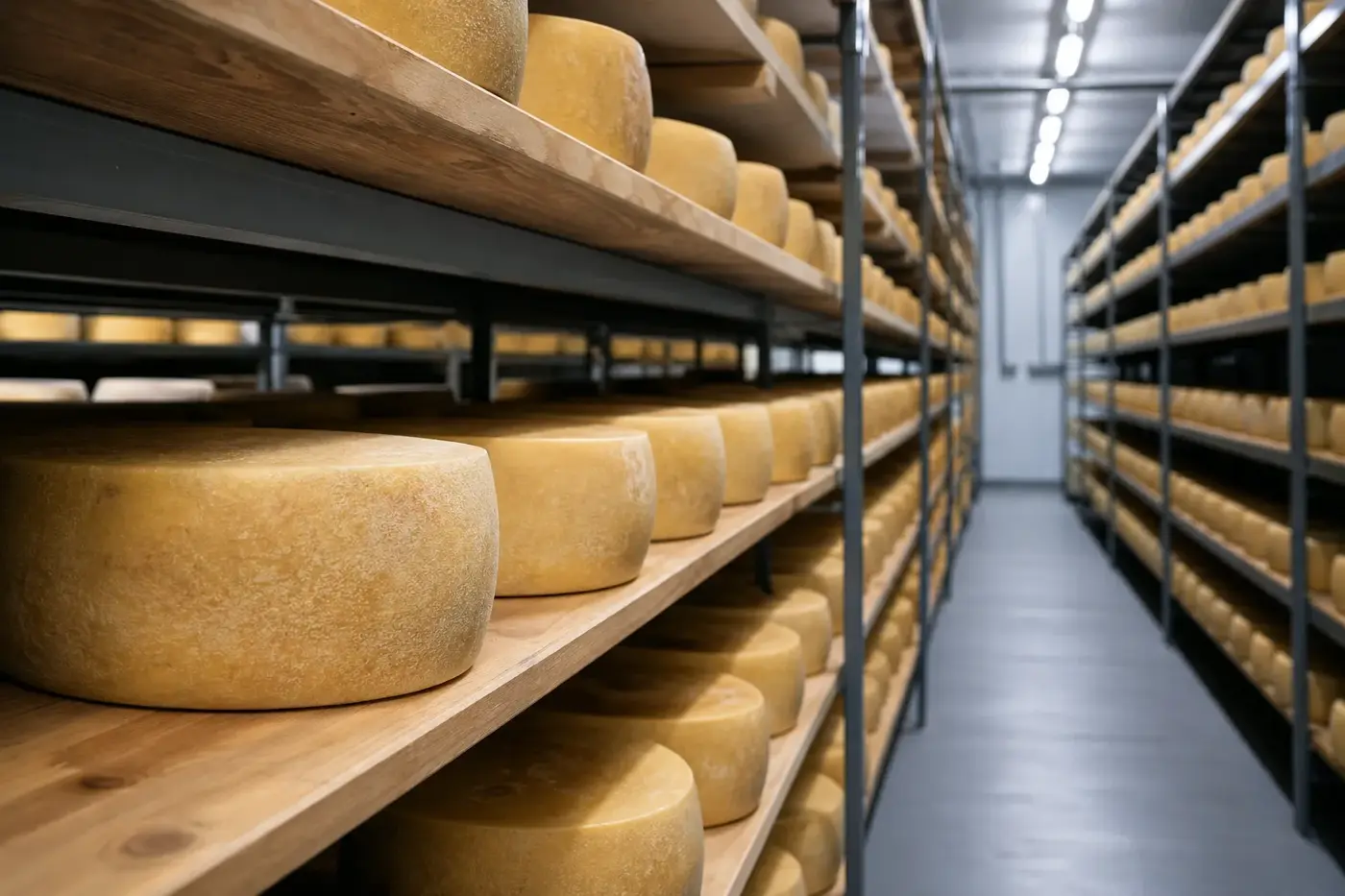
From the farm, the chain runs through dairy processing, cheesemaking and maturation, then packing and distribution. Arla's UK directory brings those separate jobs into view: creameries, a packing facility, a national distribution centre and transport operations. Milk becomes one of several products, rather than following a single route through the group. [6]
To follow a cheese, ask four questions. Where was the milk collected, which dairy made the cheese, where was it matured, and where was it cut and packed? Each answer may lead somewhere different, so your packet and Arla's product information are more useful guides than the group name alone. [6,13]
At Taw Valley, Arla's 2025 report records investment in Cheddar production and the expansion of mozzarella production. That gives you a glimpse of the making stage within this larger network. For a closer look at the process, see how cheese is made. [2]
Climate progress needs more than an efficient litre
Arla's 2025 report puts two figures side by side: improving owner-milk emissions intensity and a 3.5% increase in total scope 1 to 3 emissions compared with 2024. Increased milk volumes and sourced whey helped explain the rise. The question is easy to ask, harder to answer: can greater efficiency per unit also bring total emissions down? [2]
Arla targets a 63% reduction in scope 1 and 2 emissions by 2030 from a 2015 baseline. Those scopes cover its own operations and purchased energy. Most reported emissions sit in scope 3, the wider value chain, including milk production. [2]
Methane from cattle digestion and manure is central to that footprint. Current agricultural and other value chain targets, and progress against them, fall outside the detail covered here. They remain important parts of the picture alongside the operational target. [2]
To judge progress, you need both emissions intensity, meaning emissions per unit of output, and the absolute total. You also need a consistent accounting basis. The 2025 report restates historical emissions after changes to methods and reporting boundaries, so figures from different editions need aligning, including their treatment of methane. [2]
Greenpeace and the Changing Markets Foundation challenged Arla's approach in their February 2025 report Dairytales. They criticised its emphasis on emissions intensity and technological fixes, and the absence at that time of a separate methane reduction target. This was an advocacy assessment of Arla's published plans and earlier performance. [12]
Keep that timing in mind: its discussion of targets predates Arla's 2025 annual report. The underlying tension remains. Arla's scale can spread a new farming practice widely, while production growth can offset part of the emissions gain, which is why efficiency and total emissions need to be read together. [2,12]
Turn the packet over for the useful details
Start with the food's descriptive name, then its stated origin and the responsible business. An Arla logo identifies a brand relationship; an address may identify the business responsible for the information. Neither gives you the full production history on its own, however familiar the packet looks in your fridge. [13,14]
A British business address and a statement about the milk's origin answer different questions. Look at both when you compare packs. One cannot stand in for the other. [13,14]
Where there is an ingredients list, look for added herbs, oils and other ingredients. A short list does not tell you whether the cheese was made on a small or industrial scale. It is an ingredients list, not the dairy's autobiography. [13]
For nutritional comparisons, use the figures per 100 g rather than unequal serving sizes. Look at fat, saturates and salt for the product itself. Cooperative ownership tells you who owns the business; the nutrition table describes what is in your packet. [13]
For more help, see how to read a cheese label. Arla the cooperative, Arla on a label and a similarly named dairy product raise different questions about business identity, branding and food description. Your most useful starting points remain the descriptive name and origin.
Questions people ask
Who owns Arla Foods?
Arla Foods is a dairy cooperative owned by farmer members, directly and through member cooperatives. Its members supply milk and help own the business that processes and sells it.
When did Arla and DMK combine?
DMK GmbH and its subsidiaries became part of Arla on 1 June 2026. DMK's German and Dutch cooperatives initially joined as member cooperatives, so their farmers did not all immediately become direct Arla members.
What cheese brands does Arla make?
Arla's portfolio includes Castello, Apetina and products carrying the Arla name. Castello is its speciality cheese brand, while Apetina is associated with cooking and white cheese.
Does an Arla logo tell me where my cheese was made?
No. The logo identifies a brand relationship, while the product label is the starting point for tracing its stated origin. A British business address does not necessarily identify the dairy where the cheese was made.
Are Arla's emissions falling?
Arla's 2025 report recorded improving emissions intensity for owner milk, but total emissions across scopes 1 to 3 rose by 3.5% compared with 2024. Increased milk volumes and sourced whey helped explain the rise.
Sources
- Arla Foods Finance A/S and Arla Foods amba, Base Listing Particulars, 8 May 2026, particularly “Description of Arla Foods amba”, “Cooperative Characteristics” and “Description of the DMK Merger”.
- Arla Foods, Annual Report 2025, 2026, membership, investment and sustainability disclosures.
- DMK Group, Stronger Together for the Future of Dairy Farming in Europe, undated live account containing milestones through September 2026.
- Arla Foods, Farmer owned, undated corporate explanation, accessed November 2026.
- Arla Foods, Management, undated live corporate page, accessed November 2026.
- Arla Foods UK, Our UK sites, undated live directory, accessed November 2026.
- Food Standards Agency, Arla Foods Ltd (Cheese), live business record for Lockerbie Creamery, accessed November 2026.
- Arla Foods, Castello, undated corporate brand page, accessed November 2026.
- Arla Foods, Apetina, undated corporate brand page, accessed November 2026.
- Arla Foods, Lurpak, undated corporate brand page, accessed November 2026.
- Danish Dairy Board, The Danish Dairy Board, undated organisational account, accessed November 2026.
- Changing Markets Foundation and Greenpeace, Dairytales: Arla’s smokescreen for its lack of climate action, February 2025.
- Department for Environment, Food & Rural Affairs, Food labelling: giving food information to consumers, live guidance, accessed November 2026.
- GOV.UK, Food labelling and packaging: Food labelling, what you must show, live guidance, accessed November 2026.
- Arla Foods, Arla Foods Overview, undated corporate page, accessed November 2026.
Researched through corporate disclosures, cooperative records, an official business listing, government labelling guidance and an attributed environmental campaign report.
Last checked: November 2026
Last checked November 2026.
The editors suggest you read next
Who Makes the World's Cheese? The Big Dairy Groups
You pick up Galbani at the cheese counter, then pause over Kerrygold.