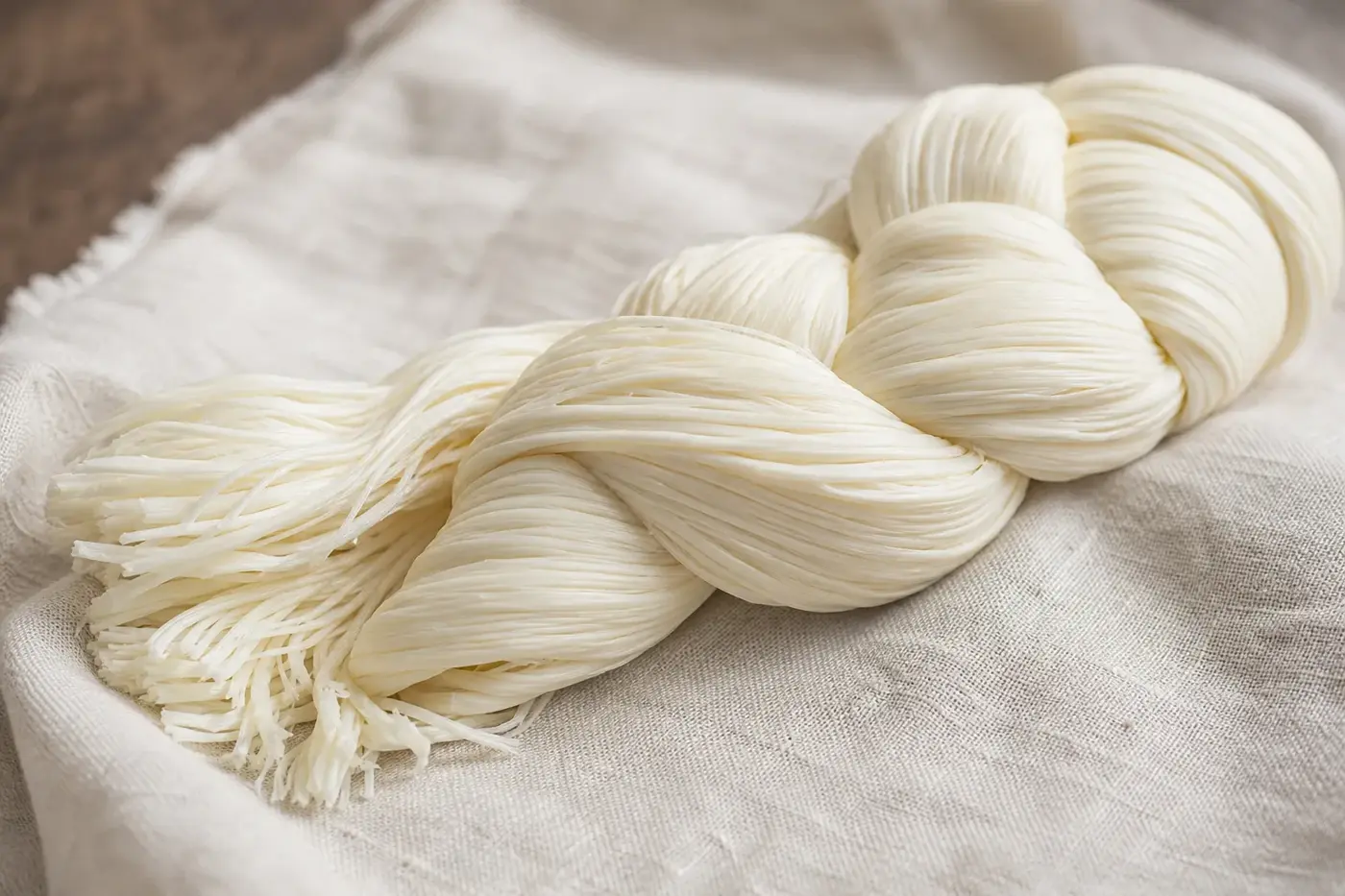
Curd stretches around a stick. Salt and maturation follow, turning it into Chechil, a cheese shaped by hand and patience in Armenia’s tourism guide.[1] Beside those strands sit firm Lori, brittle Chanakh and the varied cheeses sold as Motal. Roll a little into lavash to make a brduj, and you have Armenian milk, salt and local knowledge within reach of your next bite.[1][2]
| Your bearings | What to know |
|---|---|
| Country | Armenia.[1] |
| Milk traditions | Cow, sheep and goat milk.[2] |
| Names worth remembering | Lori, Chanakh, Chechil and Motal.[1][3][4] |
Start with lavash and a little curiosity
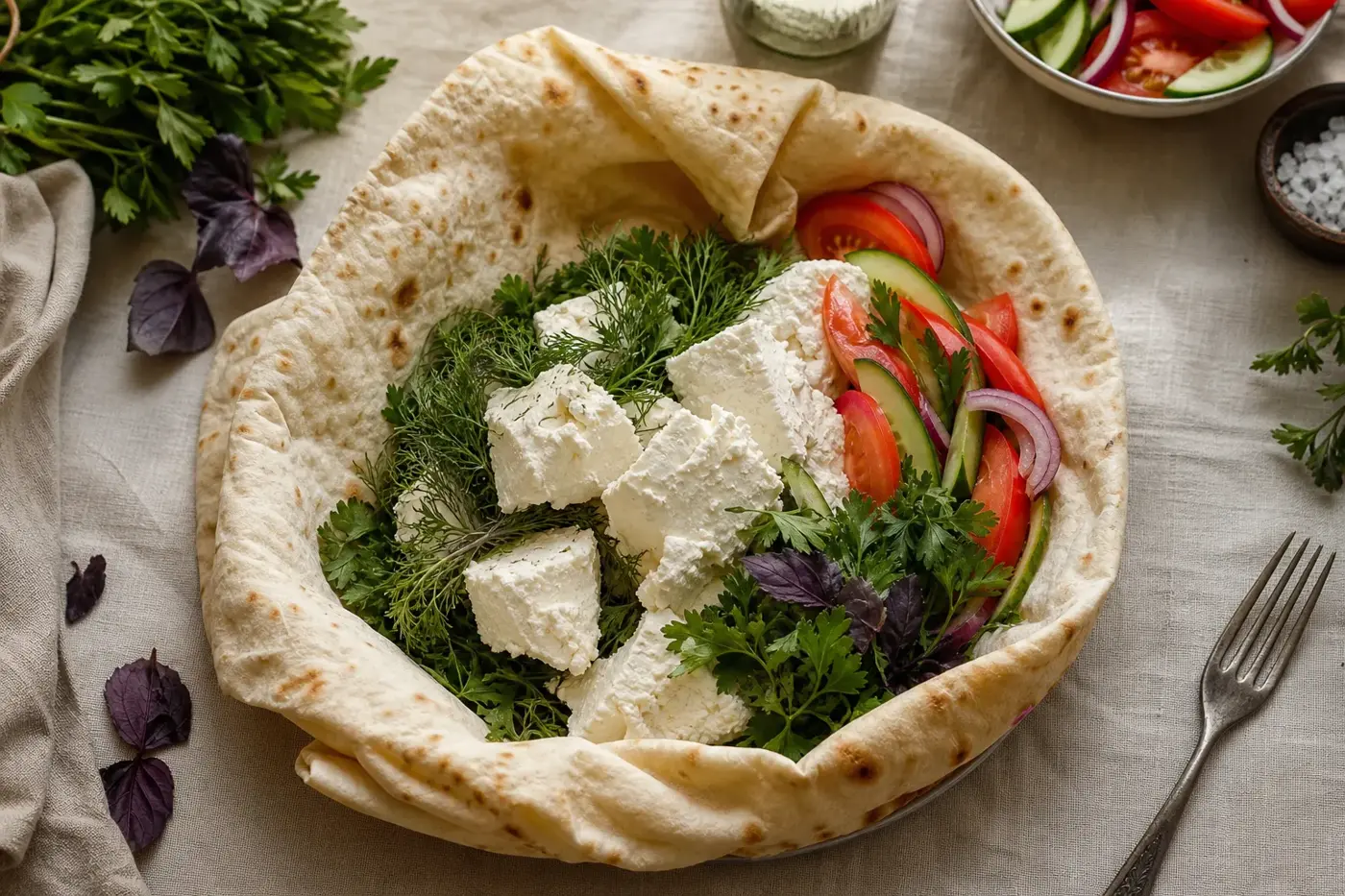
A brduj puts cheese at the heart of a meal. Lavash gathers a crumbly piece or a handful of strands, and you can shift the balance with every mouthful. For your first encounter, this simple wrap makes comparisons easier than a sprawling cheese board. There is less ceremony, and considerably less washing up.
Set out lavash, herbs and sliced vegetables. Taste each cheese alone, then assemble a mouthful and notice what the bread changes. Keep the accompaniments simple enough for the cheese to hold your attention.
Carry that curiosity with you when trying an unfamiliar cheese abroad. A familiar shape or translated name may reveal less than the maker’s description. Ask first, then taste.
Follow the milk up into the mountains
Summer pasture and winter housing frame the dairying landscape described in a UNIDO dairy market study. It places subalpine pasturelands in Shirak, Aragatsotn, Gegharkunik, Vayots Dzor and Syunik. Armenia’s tourism authority also connects Tashir, in Lori, with cheesemaking and locally produced milk. Those names on your cheese labels begin to acquire a landscape.[5][6]
Cow, sheep and goat milk all have a place here. CARD, an Armenian agricultural development foundation, documents work with cheeses from all three species. That includes cow’s milk Lori and Chanakh, alongside the development of goat dairy production. Treat an Armenian cheese name as a conversation starter about milk, rather than a complete ingredient description.[2]
Ask about feeding and season, too. Dili describes a farm using mountain grass, alfalfa, maize and hydroponic green fodder to provide feed throughout the year. Did the animals graze, eat stored fodder or have both? Then ask which season’s milk went into the cheese you’re choosing.[3]
Get to know the salt and the stretch
Chanakh rests in brine; Chechil is stretched, salted and matured. Armenia’s tourism authority describes both processes, offering a useful way into their different textures and flavours. Brine is salt dissolved in water, traditionally used to preserve cheese while adding saltiness. Curd is the solid portion separated from milk, ready to be stretched during cheesemaking.[1]
Look beyond the name and ask about the method. Was your cheese stretched, matured in brine or packed with herbs? Is it young, or has it had more time to develop?
The answers help explain why cheeses sharing a name can cut, crumble or pull apart differently. They give your tasting more direction than appearance alone. For a closer look at the underlying stages, see how cheese is made.
Four names to make room for
Lori: begin with a good slice
If you want cheese for bread or a sandwich, start with Lori. Armenia’s tourism guide describes it as firm and pale yellow, with small holes, and recommends it for sandwiches and pasta. CARD includes Lori among Armenia’s cow’s milk cheeses.[1][2]
Now turn the packet over. Dili lists pasteurised cow’s milk, salt, mesophilic starter organisms, a microbial milk-coagulating enzyme and calcium chloride for its Lori. The maker describes a delicate flavour and slight saltiness. When you compare another Lori, look for similarly clear information about that particular cheese.[3]
Chanakh: make peace with the crumbs
Chanakh breaks rather than bends, so leave your ambitions for neat, flexible slices with Lori. The national tourism guide describes a brittle white cheese with small holes, a mild flavour and a salty character. CARD includes it in its cow’s milk cheese work.[1][2]
Put it beside bread and vegetables, then break off a piece. You have a useful contrast with Lori straight away. No elaborate tasting arrangement is needed to appreciate what that crumbly texture brings to the table.[1][2]
Chechil: take it strand by strand
Pull a strand of Chechil apart and you’re already getting to know it. Dili describes its version as firm, stringy and distinctly salty, with pasteurised whole cow’s milk in the ingredients. The national tourism account connects traditional Chechil with Shirak. It describes curd stretched around a stick before salting and maturation.[4][1]
At the counter, ask how this particular Chechil was made and how mature it is. Pulling a strand apart tells you more than judging its outer shape alone. Ask separately about smoking and added seasonings. The strands introduce the texture, but the maker’s answers will help you anticipate the flavour.
Motal: a name worth a conversation
Motal rewards a conversation before you buy. Armenia’s tourism account describes mountain-made versions using goat’s or sheep’s milk. Dili, meanwhile, publishes a product called Motal Cheese with Savory, listing ricotta, mozzarella, salt and savoury. Its mozzarella component is declared as made from pasteurised cow’s milk.[1][7]
Those descriptions lead to quite different products, a distinction worth remembering when you shop outside Armenia. Ask which milk and cheeses are involved, whether herbs have been added and how the producer describes the texture. The name opens the conversation. The ingredients help you choose.
Bring the same curiosity to Chanakh and Chechil, especially when a retailer stocks cheeses from several neighbouring countries. A familiar name gives you a starting point. It cannot tell you everything.
Protected names: read a little further
A cheese’s traditional identity and its registered name protection are separate matters. Armenia’s Intellectual Property Office provides distinct routes to appellation of origin and geographical indication records. If someone claims a registration, ask for the exact registered name, authority, territory and record. Compare those details with the label before relying on the claim.[8]
Registration status: not verified
| Cheese name | Armenia | European Union | International registration |
|---|---|---|---|
See protected names explained for the distinction between a protected designation, a geographical indication and a traditional speciality. When you buy Armenian cheese abroad, look at the country of manufacture as well as the style name. Where a shop sells or packs your cheese is a separate detail from where it was made.
Pull up a chair and pass the lavash
Lavash, cheese, herbs, cucumber and tomato give you a straightforward introduction at home. Put everything on the table and let each person assemble a wrap. Think of it as a serving suggestion, not a fixed recipe.
Keep the cheeses separate at first. Compare a slice of Lori, a fragment of Chanakh and a few Chechil strands before combining them. Each deserves a moment before your enthusiasm takes over the bread.
For a cooked dish, turn to Gyumri’s panrkhash. Armenia’s tourism guide describes layers of Chechil and dried lavash with onion sautéed in butter, softened with boiling water. Here, cheese belongs to a local meal rather than a tasting plate. Ask about panrkhash when you want to explore that part of its life.[1]
Listen to what the pottery tells you
Fats preserved in pottery offer a glimpse of Armenia’s long dairying history. A 2022 study examined pottery from seven Early Bronze Age sites in Armenia. It used molecular and isotope methods to distinguish animal products. The study identified dairy residues, with stronger evidence of dairy processing at several higher settlements than at the lowland sites examined.[9]
That is evidence of dairy processing, not the identity of a particular ancient cheese. The authors explicitly state that their analysis could not chemically confirm fermented dairy production. Giving a modern cheese a precise prehistoric age therefore requires archaeological evidence identifying more than milk alone. Early dairying has substantial evidence behind it; individual cheeses raise a different question.[9]
For modern developments, look to the organisations involved. CARD reports work on milk cooperatives, cheesemaker training, equipment and product development, alongside cow, sheep and goat cheeses. Its account sets established styles beside newer dairy projects. You’re looking at an industry developing its repertoire, not simply handing down one unchanged collection of cheeses.[2]
In Armenia, follow your questions
Visit a food market to compare names and forms, then a restaurant to discover how cheese fits into a meal. At a market or specialist shop, ask for the maker and village, followed by the milk and maturation. In a restaurant, ask which cheese is on your plate or in the dish. “Local cheese” opens a conversation, but you can take it further.
Arrange a village producer visit before setting out. Ask whether visitors are received, whether tastings need booking and what accessibility arrangements are possible. A farm address is not an invitation in itself.
Your accommodation or a local guide may be able to make an introduction. Confirm the arrangements directly with the producer before you travel there. You can then arrive with the practical details settled and your attention on the visit.
For packaged cheeses, Dili’s website identifies retail partners including SAS, Parma and Carrefour. Consult the maker’s current stockist information, then ask the individual shop what it carries. Keep your questions direct: “Which milk is used?”, “Is it pasteurised?”, “When was this cheese made?” and “What are the storage instructions, including after opening?”[3]
Find the right cheese for your table
Outside Armenia, begin with an Armenian specialist grocer or a cheesemonger who can show you the original packaging. Compare maker, origin, milk and ingredients rather than relying on a translated name. Reading a cheese label is especially helpful for products combining cheeses or containing herbs, as the documented Motal example does.[7]
If you cannot find the cheese, think about its job in your meal. For a Lori sandwich, look for a sliceable, mildly flavoured cow’s milk cheese. For Chanakh’s place on the table, try a crumbly brined white cheese. An unseasoned string cheese offers Chechil’s format of strands you can pull apart.
Taste your substitute before deciding how much to use. These are functional substitutions, so reserve the Armenian name for the cheese you originally wanted. Doing a similar job does not make it the same cheese.
With Motal, establish which version your recipe or host means before choosing. A mixture of cheeses seasoned with herbs calls for a different decision from a sheep’s or goat’s milk cheese. Once everything reaches the table, let the cheese itself guide your proportions of bread, herbs and vegetables.[7][1]
Questions people ask
What are the main Armenian cheeses to know?
Lori is firm and pale yellow, while Chanakh is brittle, white and salty. Chechil is stringy, and Motal refers to varied products.
What is a brduj?
A brduj is cheese rolled in lavash. Cheese, herbs, cucumber and tomato can be set out for each person to assemble a wrap.
What milk is used to make Armenian cheese?
Armenian cheese traditions include cow, sheep and goat milk. Lori and Chanakh are documented among Armenia’s cow’s milk cheeses, while mountain versions of Motal are described as using goat’s or sheep’s milk.
Why can Motal cheeses be so different?
Armenia’s tourism account describes mountain versions made with goat’s or sheep’s milk. Dili’s Motal Cheese with Savory instead lists ricotta, mozzarella, salt and savoury.
Are Armenian cheese names protected?
The page does not verify registration status for Lori, Chanakh, Chechil or Motal in Armenia, the European Union or international registration. Armenia’s Intellectual Property Office provides separate routes to appellation of origin and geographical indication records.
Sources
-
Armenia Travel, Tourism Committee of Armenia. Discover the top 5 Armenian cheeses you must try. Published 21 January 2026. Cultural uses, attributed cheese descriptions and panrkhash.
-
Center for Agribusiness and Rural Development Foundation, CARD. Milk production and processing. Undated organisational account, accessed November 2026. Documents its dairy development work and cheeses grouped by milk species.
-
Dili. Lori Cheese Dili (kg), with the website’s farm description and stockist information. Undated producer documentation, accessed November 2026. Commercial source used for its own product declarations.
-
Dili. Chechil Cheese Dili 300g. Undated producer documentation, accessed November 2026. Commercial source used for its own ingredients and tasting description.
-
United Nations Industrial Development Organization. High Value Cheese Market Study Report. 2015. Publisher-indexed extract retrieved November 2026; full-document retrieval requires editorial resolution, as recorded below.
-
Armenia Travel, Tourism Committee of Armenia. Visit Lori. Undated destination information, accessed November 2026. Identifies Tashir with cheese and locally produced milk.
-
Dili. Motal Cheese Dili with Savory 300g. Undated producer documentation, accessed November 2026. Commercial source used for the declared composition of this named product.
-
Intellectual Property Office of the Republic of Armenia. Geographical indications. Official register navigation, accessed November 2026. Provides separate links for appellations of origin and geographical indications; individual cheese registrations remain unverified.
-
PLOS ONE. Diverse dietary practices across the Early Bronze Age ‘Kura-Araxes culture’ in the South Caucasus. Research article, 2022, DOI:
10.1371/journal.pone.0278345. Original archaeological residue analysis.
This desk-researched article compares Armenian cultural accounts, agricultural development records, producer declarations and archaeological research; outstanding register and source checks are recorded for editorial resolution.
Last checked: November 2026
Last checked November 2026.
The cheeses of Armenia
The editors suggest you read next
French Cheese: The Complete Guide
Picture Normandy’s pastures, then follow the milk towards the Loire’s goat dairies, the Jura’s shared cheesemaking traditions and the sheep country of the Pyrenees.