French Cheese: The Complete Guide
Picture Normandy’s pastures, then follow the milk towards the Loire’s goat dairies, the Jura’s shared cheesemaking traditions and the sheep country of the Pyrenees.
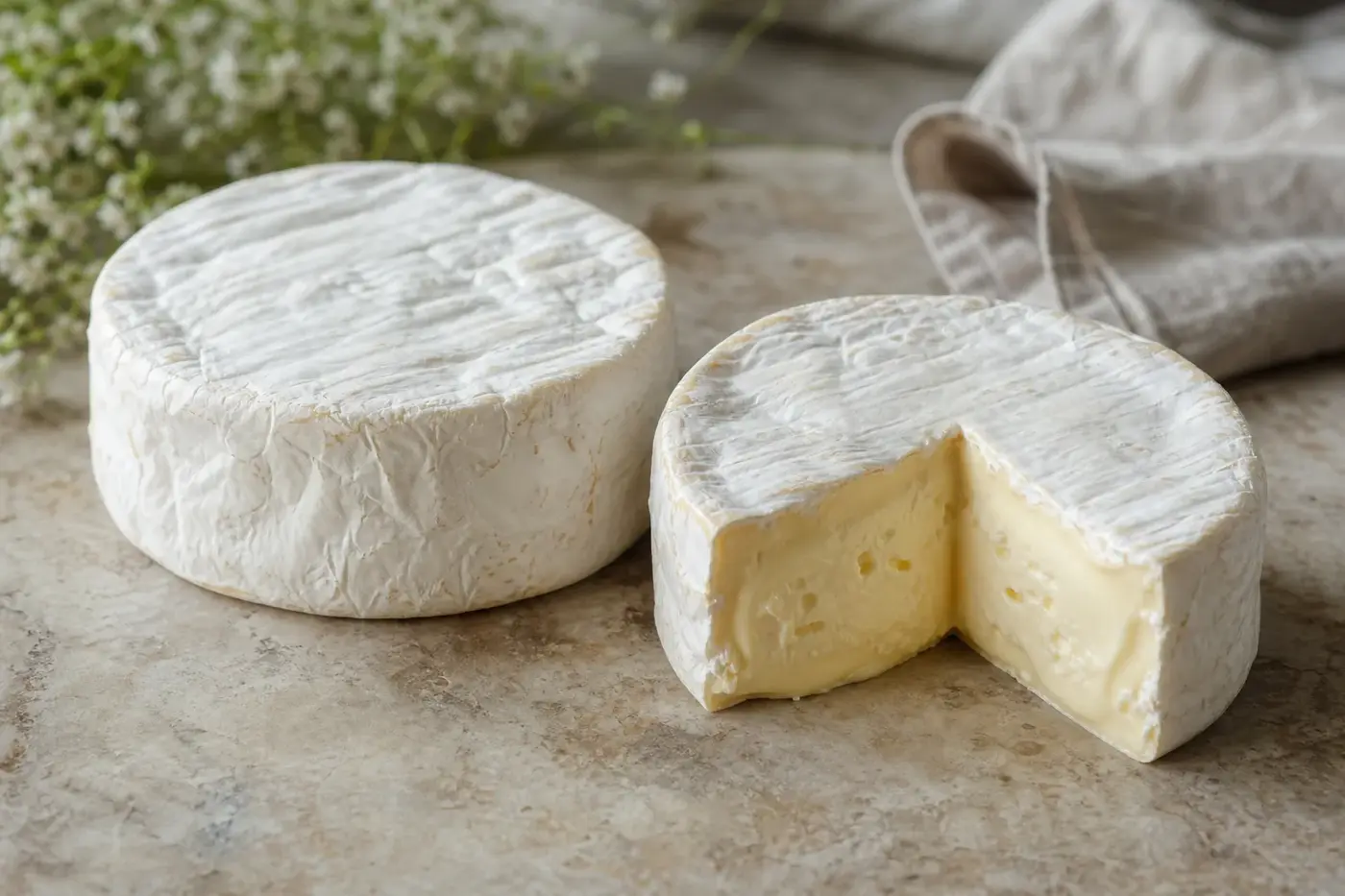
Picture Normandy’s pastures, then follow the milk towards the Loire’s goat dairies, the Jura’s shared cheesemaking traditions and the sheep country of the Pyrenees. You have the beginnings of a French cheese journey, with rather better stops than the average road trip. Follow the milk, the method and the place, and familiar names open the door to a much wider range of cheeses. [1,2,3,4]
Meet the landscapes behind the cheese
France’s cheese regions are working agricultural places, not merely names for your cheeseboard. Atlantic Normandy, the drier pastoral country of Haute-Provence and Savoie’s mountain valleys support different ways of farming. The agriculture ministry connects Banon with goats browsing scrubland, and Beaufort with herds moving between valley farms and high summer pastures. These details give you something tangible to taste your way towards. [5,9,19]
The people organising the milk matter just as much. Comté’s fruitières are dairies associated with pooling local milk; Chaource’s documented production includes farms, an artisan maker and larger dairies. French traditions take in shared equipment, milk collection and specialist maturation, alongside cheese made on one holding. That maturation has a name: affinage, the managed ripening through which an affineur develops a cheese’s condition for eating. [2,7]
Follow the milk first
Cow’s milk threads through the Normandy, Burgundy, Jura and Auvergne cheeses below. Goat’s milk gives you a particularly rewarding route through the Loire, while sheep’s milk connects Ossau-Iraty and Roquefort despite their very different methods. Mixed milk belongs here too: Corsican Brocciu can use sheep’s milk, goat’s milk or both, combining whey, the liquid separated during cheesemaking, with added milk. [1,4,8,17]
Raw milk is unpasteurised milk; pasteurisation is a heat treatment used to kill harmful bacteria. Check whether the cheese you choose uses raw or pasteurised milk: Comté is a raw-milk example, but another cheese needs its own label read. Treat milk treatment as a separate question from species, place and maturity. You can find the fuller explanation in raw and pasteurised cheese. [2,16]
Six styles to help you find your favourites
A style gives you a way to compare cheeses before learning all their names. Here, “cooked” means heating the curd, the coagulated milk solids, during manufacture. It does not mean cooking the finished cheese in a dish. [2,5]
| Style | What to look for | French example |
|---|---|---|
| Fresh | Eaten without extended ripening | Brocciu frais [8] |
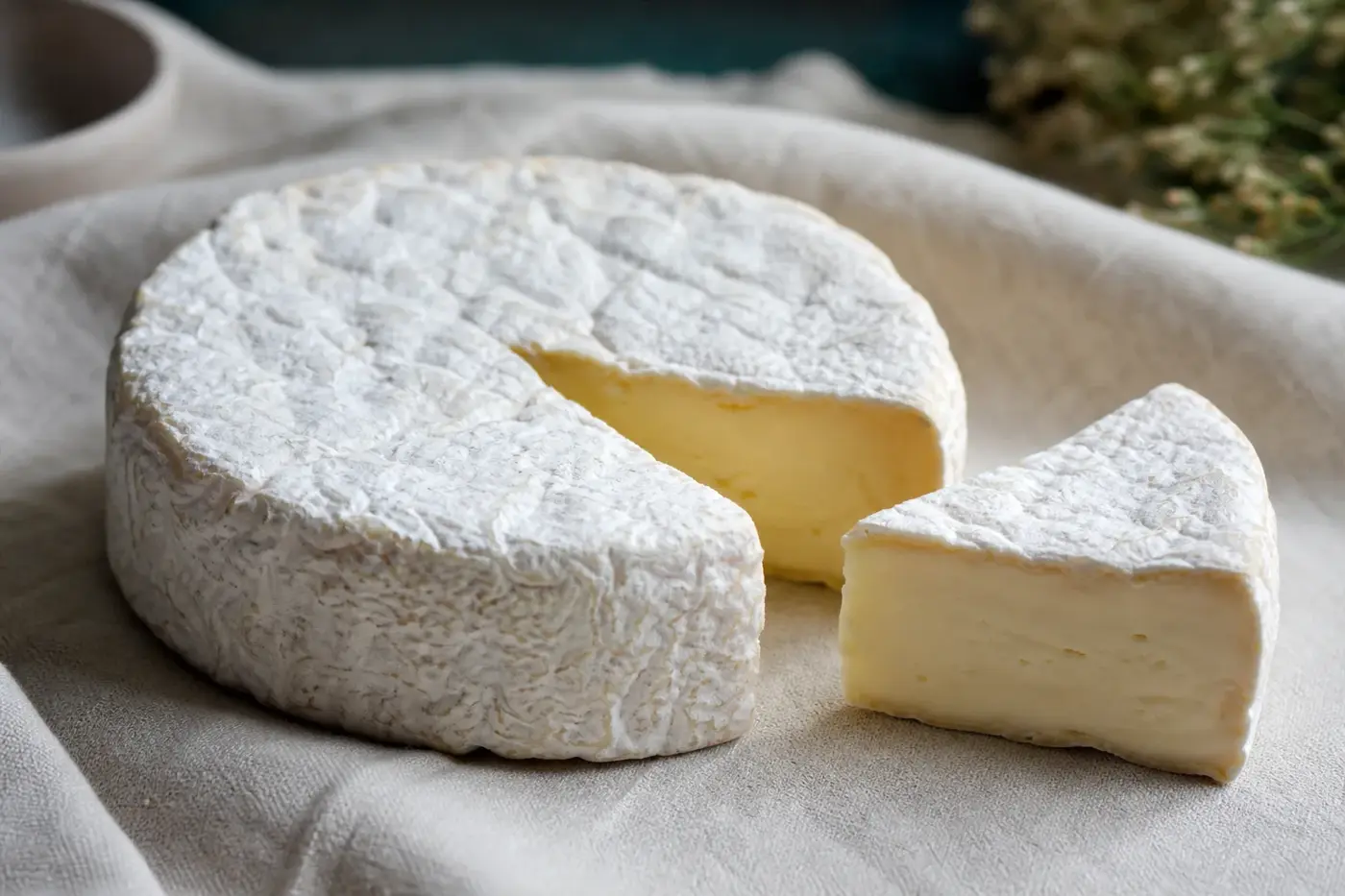
| Soft, bloomy rind | Soft cheese with a white surface bloom | Camembert de Normandie [1] |
| Washed rind | A surface washed during ripening | Époisses [6] |
| Blue | Blue mould developing inside the cheese | Roquefort [17] |
| Pressed, uncooked | Curd pressed without the cooked-pressed method | Ossau-Iraty [4] |
| Cooked pressed | Curd heated, then pressed | Comté; Beaufort [2,5] |
Think of these as starting points, not instructions for a tasting order. A young goat’s cheese beside a much drier example can tell you more than two unrelated soft cheeses. The guide to cheese styles takes you through the methods behind the categories. [3]
Normandy and the Loire: change the milk, change the mood
Start in Normandy with Camembert de Normandie, then try Livarot or Pont-l’Évêque, which the agriculture ministry places among washed-rind cheeses. You will learn more that way than by treating every soft round as interchangeable. Keep an eye on the full name: the ministry’s designation is Camembert de Normandie, while Camembert is the broader name you will encounter on many different cheeses. [1,19]
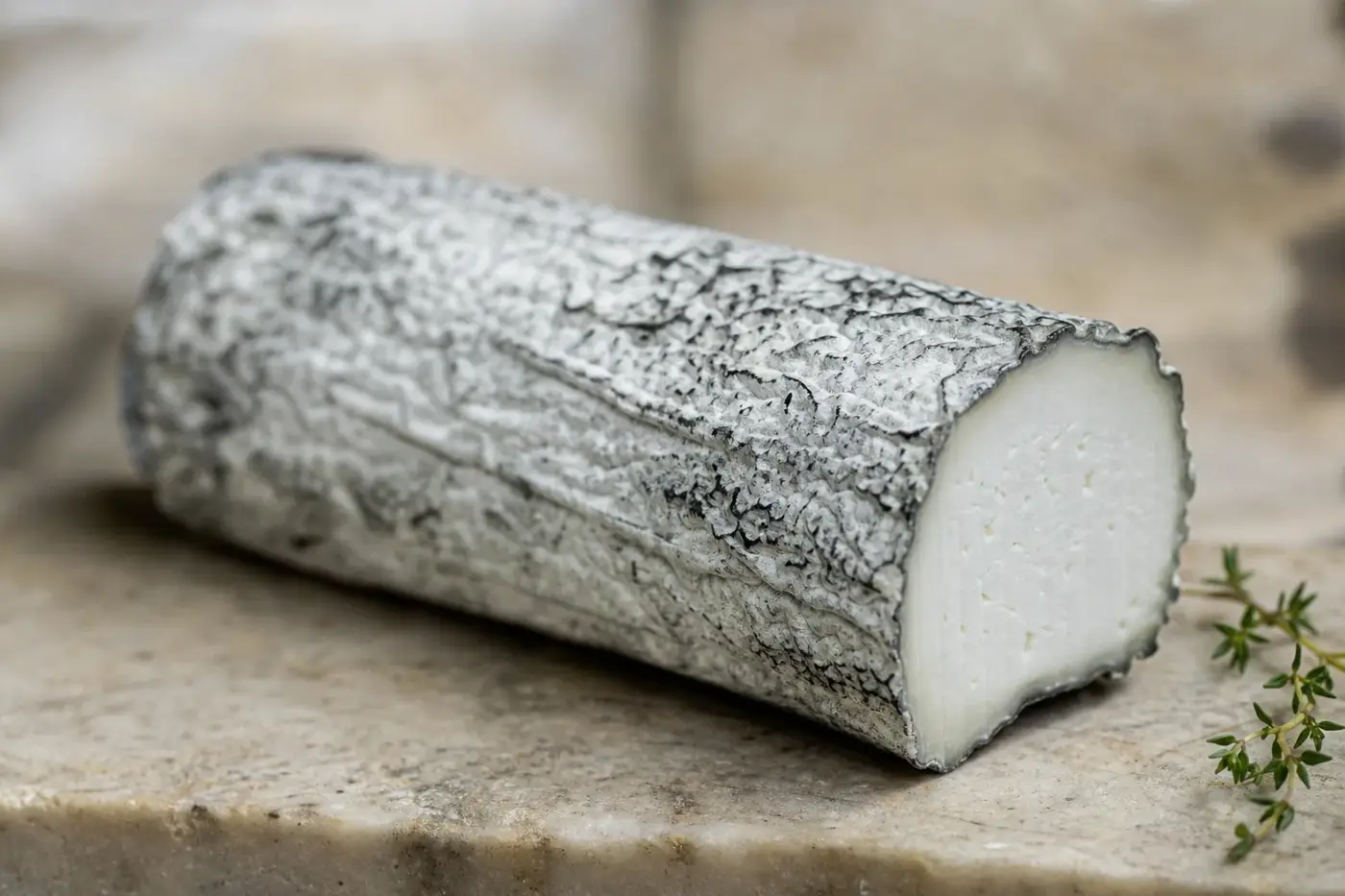
In the Loire, both the scale and the milk change. Compare Sainte-Maure de Touraine, with its identifying straw, and Crottin de Chavignol at different maturities; the ministry describes the latter’s rind moving from white towards blue as it ages. Pouligny-Saint-Pierre offers another comparison, with its published account distinguishing a tangier white-ripened version from stronger goat character when blue develops on the surface. Ask your cheesemonger for contrasting maturities rather than expecting every goat’s cheese to be fresh, white and mild. [3]
Burgundy and Champagne: two sides of soft cheese
Burgundy brings you face to face with washed rinds through Époisses. The agriculture ministry describes a supple paste and light dried-fruit notes, with washes progressively enriched with marc de Bourgogne accompanying the orange-red surface development. Across the Burgundy and Champagne border country, Chaource takes cow’s milk in another direction: a white-bloomed cheese made in an area spanning parts of Aube and Yonne. Its identity crosses today’s administrative boundary, so read the designation’s geography rather than letting a regional shelf sign do all the navigating. [6,7]
Savoie, the French Alps and the Jura: time in the mountains
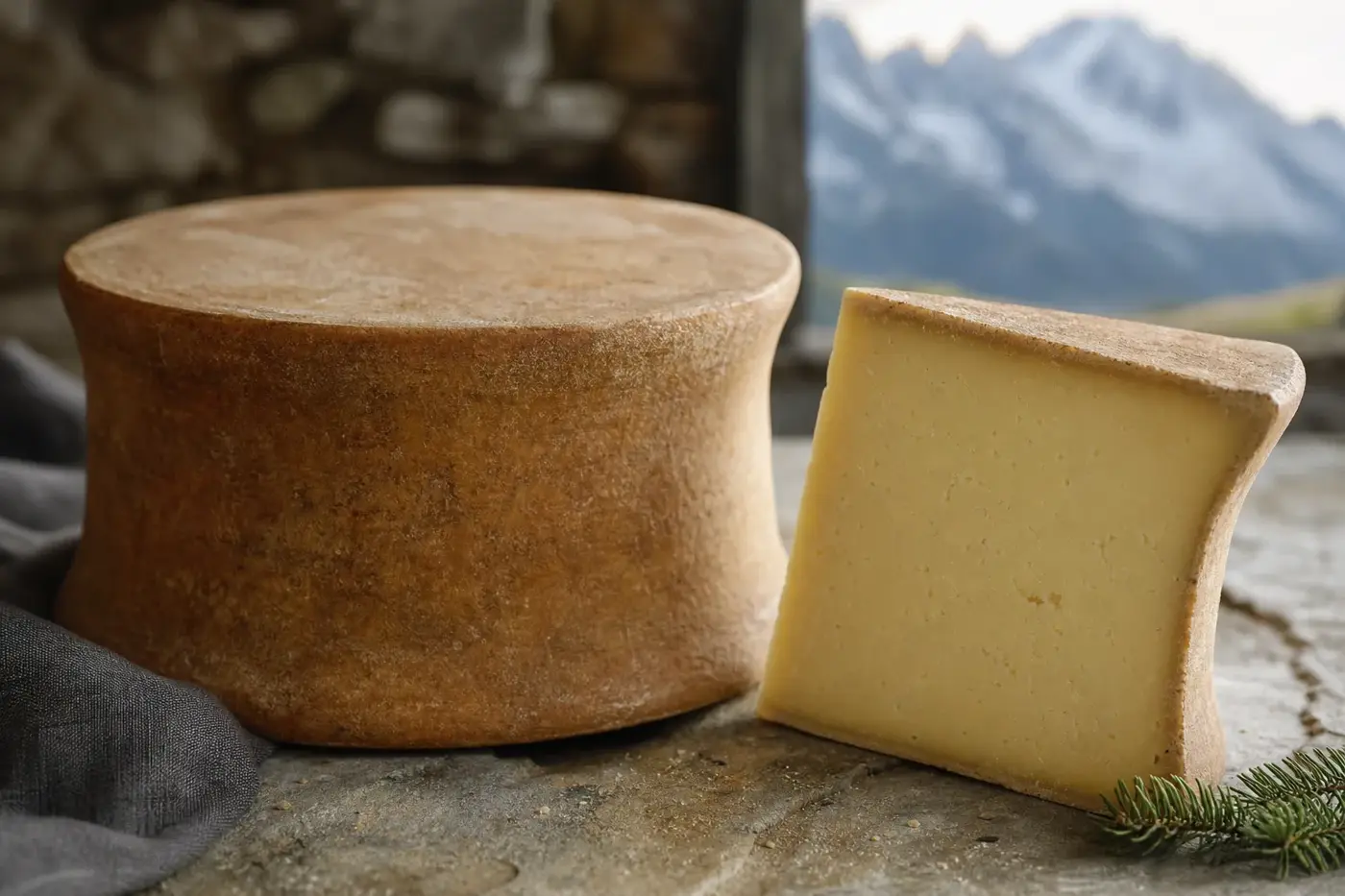
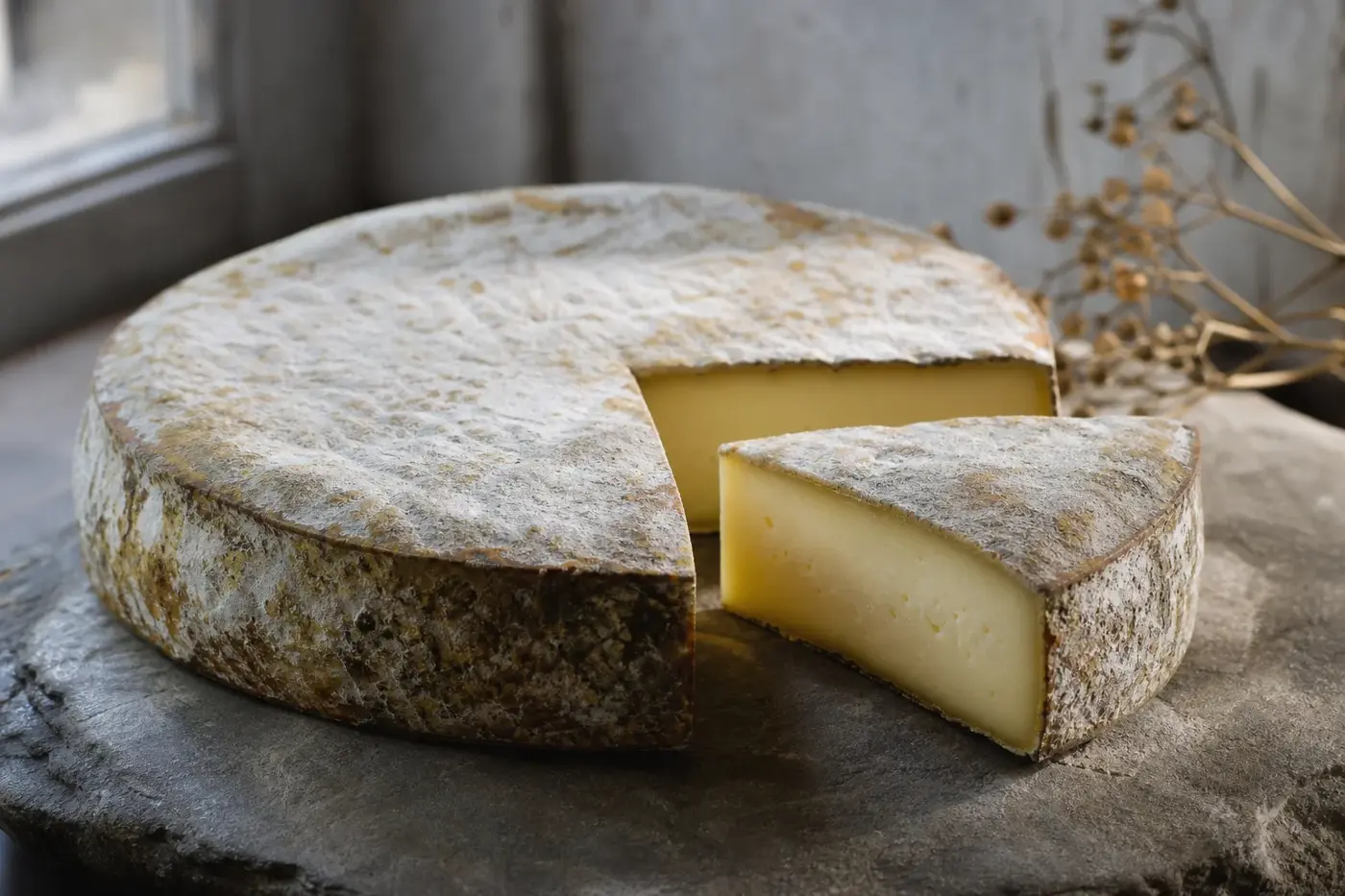
Mountain cheese makes more sense when you separate the pasture season from the eating season. In Savoie, Beaufort connects summer grazing, winter hay and large cooked-pressed wheels, with the ministry describing summer Beaufort reaching the table after maturation. A cheese made from summer milk may therefore be yours to enjoy in winter: ask about production season and the individual wheel’s maturity, not simply whether it is “summer cheese”. Reblochon gives you a contrasting, uncooked pressed style from the same broad Alpine world. [1,5]
Head north into the Jura for Comté. Its raw cow’s milk and cooked-pressed method make a useful comparison with Beaufort, while the fruitière tells a different story of collective production. The ministry reports aromas ranging from hazelnut to pepper and coffee, influenced by feeding and maturation. Ask for two pieces of Comté with different recorded ages, and compare their textures before turning to their aromas. [2]
Auvergne, the Southwest and the Causses: make room for contrast
Auvergne gives you a compact introduction to the variety of cow’s-milk cheese. Cantal, Saint-Nectaire, Bleu d’Auvergne and Fourme d’Ambert share a regional itinerary despite their very different appearances. Compare a blue with a non-blue first, then come back for the differences within each family. Further southwest, Rocamadour brings goat’s milk into the journey, reminding you that the southwest has more than one pastoral system and a regional board need not stick to one milk species. [1]
In the Causses, Roquefort brings sheep’s milk into blue cheese, with maturation linked to Roquefort-sur-Soulzon. Try it beside cow’s-milk Bleu des Causses: blue veins alone will not tell you which milk you are eating. Westwards, Ossau-Iraty spans Béarn and the French Basque Country in the Pyrenees, offering an uncooked pressed sheep’s-milk counterpoint to Roquefort. The ministry describes its texture firming with maturation and suggests black cherry preserve or quince jelly alongside it. [1,4,17]
North, east, Provence and Corsica: keep exploring
Leave room on your map for the north and east. Maroilles in Hauts-de-France, plus Munster and Langres in the Grand Est, carry the washed-rind route beyond Burgundy and Normandy. For an exploratory board, choose one instead of automatically adding another bloomy-rind cheese. That change in surface treatment gives your comparison a purpose. [1]
Provence and Corsica deserve a proper stop, not a hurried final glance. Banon’s chestnut-leaf wrapping connects a small goat’s cheese with Haute-Provence’s pastoral traditions, while Corsican Brocciu changes the method again, using whey with added sheep’s or goat’s milk and appearing fresh or ripened. The ministry describes fresh Brocciu as supple and soft, with a preferred eating season from November to June. Together, these cheeses take you beyond white discs and mountain wheels, showing why the making method matters as much as the animal. [8,9]
AOP, IGP and farm labels: read beyond the seal
In France, AOP stands for appellation d’origine protégée, the French expression for the EU’s protected designation of origin, or PDO; IGP means indication géographique protégée, equivalent to PGI. The European Commission explains that PDO requires production, processing and preparation within the defined area. PGI requires at least one of those stages there, plus a geographical link through quality, reputation or another characteristic. These are EU designations, so protection elsewhere must be considered separately. [11]
French law reserves fromage fermier, and wording suggesting farm origin, for cheese made by a farmer using traditional techniques, only the holding’s own milk and manufacture on that holding. Dairy production is a different arrangement, commonly involving collected milk, as Chaource’s published account illustrates. If a seller uses laitier, ask which dairy made the cheese and who matured it. [7,10]
Origin protection helps you understand a cheese’s identity; your palate still gets a say. My recommendation is to ask about maturity and texture before choosing by a seal alone. The guide to protected names explains the schemes in more detail.
At the counter and in the fridge
Tell your cheesemonger when you plan to eat the cheese and which textures you enjoy. “Ready for tonight” or “firmer, for later this week” gives them something useful to work with; then follow the product’s date and storage instructions. Look at the cut face where possible and ask what to expect at that maturity. A firmer centre may be exactly what you want, while a flowing paste suits another preference.
At home, the Food Standards Agency advises consumers in England, Wales and Northern Ireland to keep a fridge at 5 °C or below, refrigerate dairy products and follow packaging instructions. Keep each cheese identifiable, retain its label and buy only as much cut cheese as you expect to use. Check the use-by date before serving. For wrapping and fridge organisation, turn to storing cheese at home. [14]
Ask which rind is intended to be eaten and whether it has any treatment or coating. Remove packaging, straw, leaves, wax and plastic before serving. Follow the maker’s instructions on rinds rather than relying on colour alone.
Build a French cheeseboard with something to say
My suggested starting board has four contrasting cheeses. Choose each for its role, then adapt to your guests, what is available and the official precautions below. Four gives you plenty to explore without turning the table into a cheese census.
- Start with a Loire goat’s cheese, asking for a maturity that contrasts with the others.
- Add Camembert de Normandie or Chaource for a bloomy-rind cheese.
- Choose Comté or Beaufort for a cooked-pressed cheese, or Ossau-Iraty for pressed sheep’s milk.
- Finish with Roquefort for blue, or choose Époisses instead if you want to explore washed rinds. [1,2,3,4,5,6,7,17]
I would start with plain bread, fresh pear or apple and water, offering preserves separately. Black cherry preserve with Ossau-Iraty follows the ministry’s suggestion. For adults of legal drinking age who want wine, offer a small serving of dry white alongside water or an alcohol free alternative; people who are pregnant, driving, taking medicines that interact with alcohol or recovering from alcohol dependence should not drink. Treat the pairing as a starting preference, comparing combinations rather than expecting one drink to suit every cheese. [4]
Begin with small slices and offer more once everyone has tried the selection. This is a hosting suggestion, not a fixed measure. The right amount depends on whether cheese follows a meal or forms its main part.
Serving well, through the seasons
For Beaufort, the agriculture ministry suggests taking it out of the fridge about thirty minutes before eating. Bring out only what you intend to serve, losing the refrigerator chill rather than warming the whole supply. FSA guidance for England, Wales and Northern Ireland says chilled food should spend the shortest possible time out during preparation, with a maximum of four hours; in hotter than usual weather, UK official advice says to discard perishables left unrefrigerated for more than two hours. Keep serving periods short and replenish from the fridge. [5,14,15]
Ask what is in season, but also when it was made. Fresh Brocciu follows a different rhythm from a mountain cheese matured for months. Your seasonal choice might be a fresh arrival, a wheel newly ready to eat or a different maturity of a cheese you already know. [5,8]
This page summarises published guidance from the official sources it cites. It is not medical advice. Guidance differs between countries and changes over time, so check the current source for where you live, and ask your doctor, midwife, pharmacist or dietitian about your own circumstances.
Pregnancy and vulnerable guests: follow UK guidance
The NHS’s November 2026 UK pregnancy guidance lists hard cheeses made with pasteurised or unpasteurised milk among choices that can be eaten. It says mould-ripened soft cheeses with a white coating, and soft blue-veined cheeses, must be thoroughly cooked until steaming hot, whether made from pasteurised or unpasteurised milk. It also lists pasteurised goat’s cheese without a white rind among permitted soft cheeses. Read the current NHS guidance for the full categories and exceptions before choosing a board during pregnancy. [12]
The NHS also identifies older people, newborn babies and people with weakened immunity as groups at greater risk of serious listeriosis. Its advice and the FSA’s guidance should inform your choices for those guests. Ask about milk treatment and handling, follow current official advice for the person concerned, and seek individual guidance from their healthcare professional. Keep the relevant packaging available when serving. [13]
Sources
[1] French Ministry of Agriculture. Les fromages AOP, le savoir-faire des terroirs. Page dated 3 November 2026. Regional associations, milk species and broad style classifications.
[2] French Ministry of Agriculture. Le Comté AOP, un fromage à la tradition millénaire. 17 December 2025. Raw milk, cooked-pressed manufacture, fruitières and attributed aroma descriptions.
[3] French Ministry of Agriculture. Les fromages de chèvre de la région Centre-Val de Loire. 19 September 2025. Loire examples, identifying straw, rind development and attributed maturation descriptions.
[4] French Ministry of Agriculture. L’Ossau-Iraty, l’unique fromage de brebis AOP des Pyrénées. 28 October 2025. Béarn and Basque associations, sheep’s milk, uncooked pressed method, texture and accompaniments.
[5] French Ministry of Agriculture. Le Beaufort AOP, le fromage aux mille fleurs. 23 June 2022. Pastures, winter feeding, cooked curd, production seasons and the ministry’s serving suggestion, attributed there to the designation’s industry website.
[6] French Ministry of Agriculture. L’Époisses AOP, le fromage rouge-orangé de Bourgogne. 16 March 2026. Washed rind, regional association, surface development and attributed sensory description.
[7] French Ministry of Agriculture. À la découverte de l’AOP Chaource. 28 April 2021. Aube and Yonne production geography, milk, white surface bloom and documented production arrangements.
[8] French Ministry of Agriculture. Le Brocciu, le fromage AOP corse. 11 December 2025. Milk species, whey-based manufacture, fresh and ripened forms, texture and suggested eating season.
[9] French Ministry of Agriculture. Le Banon AOP, un savoir-faire ancestral de Haute-Provence. 16 March 2026. Goat farming, regional environment and chestnut-leaf wrapping.
[10] Légifrance. Décret n°2007-628 du 27 avril 2007 relatif aux fromages et spécialités fromagères. Consolidated text retrieved November 2026, Article 9-1, version effective from 1 September 2015.
[11] European Commission, Directorate-General for Agriculture and Rural Development. Geographical indications and quality schemes explained. Current online edition retrieved November 2026, sections on PDO and PGI.
[12] NHS. Foods to avoid in pregnancy. Current online edition retrieved November 2026, “Cheese, milk and other dairy”.
[13] NHS. Listeriosis. Current online edition retrieved November 2026, “How you get listeriosis” and “Risks of listeriosis”.
[14] Food Standards Agency. How to chill, freeze and defrost food safely. Published 18 December 2017; current GOV.UK edition retrieved November 2026. Applies to England, Northern Ireland and Wales.
[15] UK Health Security Agency. Food safety in a heatwave: advice for consumers. Current online edition retrieved November 2026. The two-hour disposal advice specifically concerns hotter than usual weather.
[16] NHS. Dairy and alternatives in your diet. Online edition retrieved November 2026, sections discussing raw milk and pasteurisation.
[17] French Ministry of Agriculture. Le Roquefort AOP, le fromage emblématique de l’Aveyron. 23 June 2025. Sheep’s milk, blue mould development and maturation associated with Roquefort-sur-Soulzon.
[18] Food Standards Agency. Alerts. Live official alert index retrieved November 2026, used for the editorial recall screening recorded below.
[19] French Ministry of Agriculture. Sur la route des fromages français AOP. Online article retrieved November 2026, Normandy and Savoie passages. Historical numerical totals were excluded.
This desk-researched guide combines official regional accounts into a milk-and-method route, with French legislation, European Commission explanations and separately attributed UK consumer guidance.
Last checked: November 2026
Last checked November 2026.
The cheeses of France
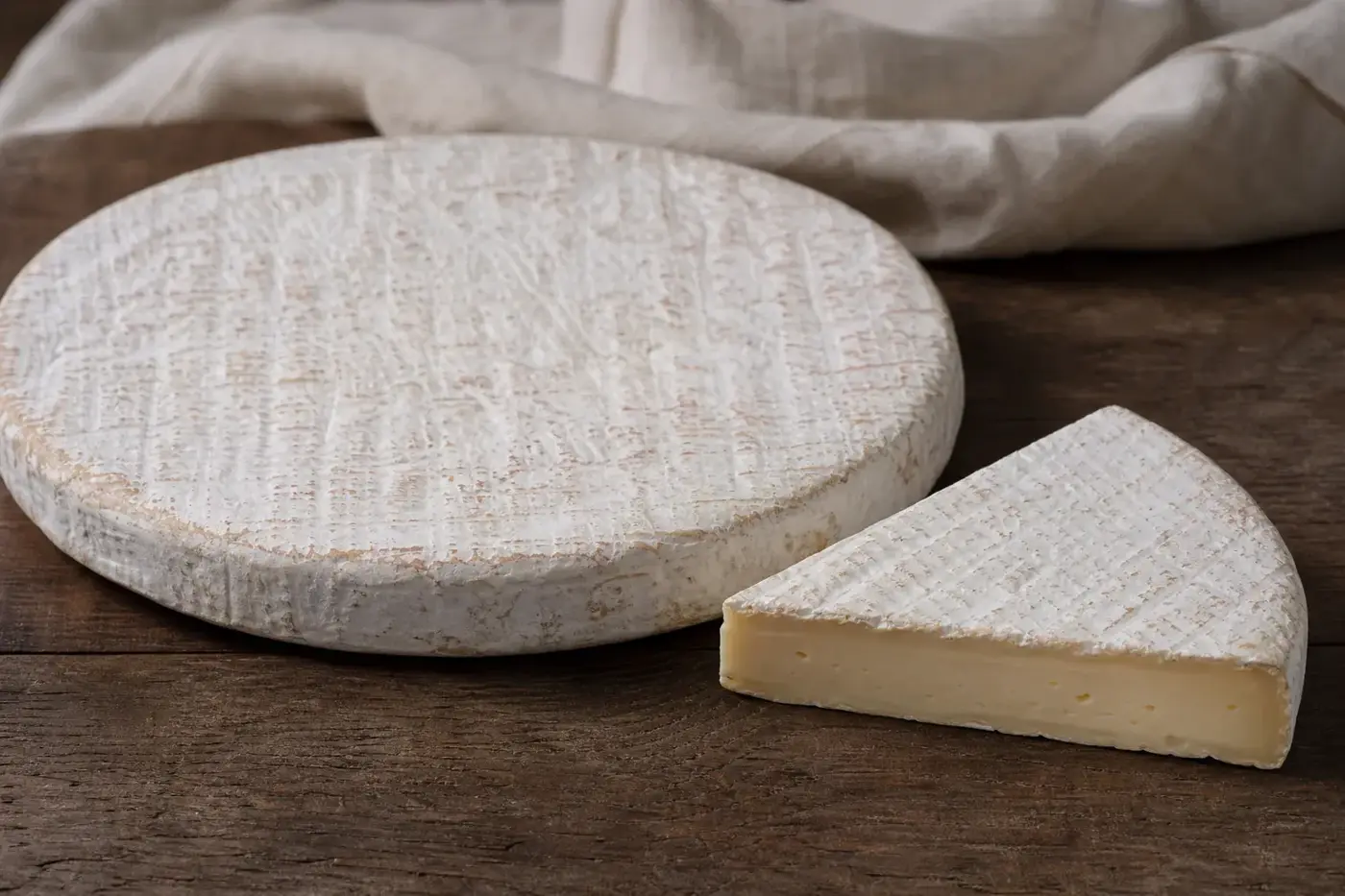
Brie de Meaux
A broad, perforated pelle à brie rises with another scoop of curd.
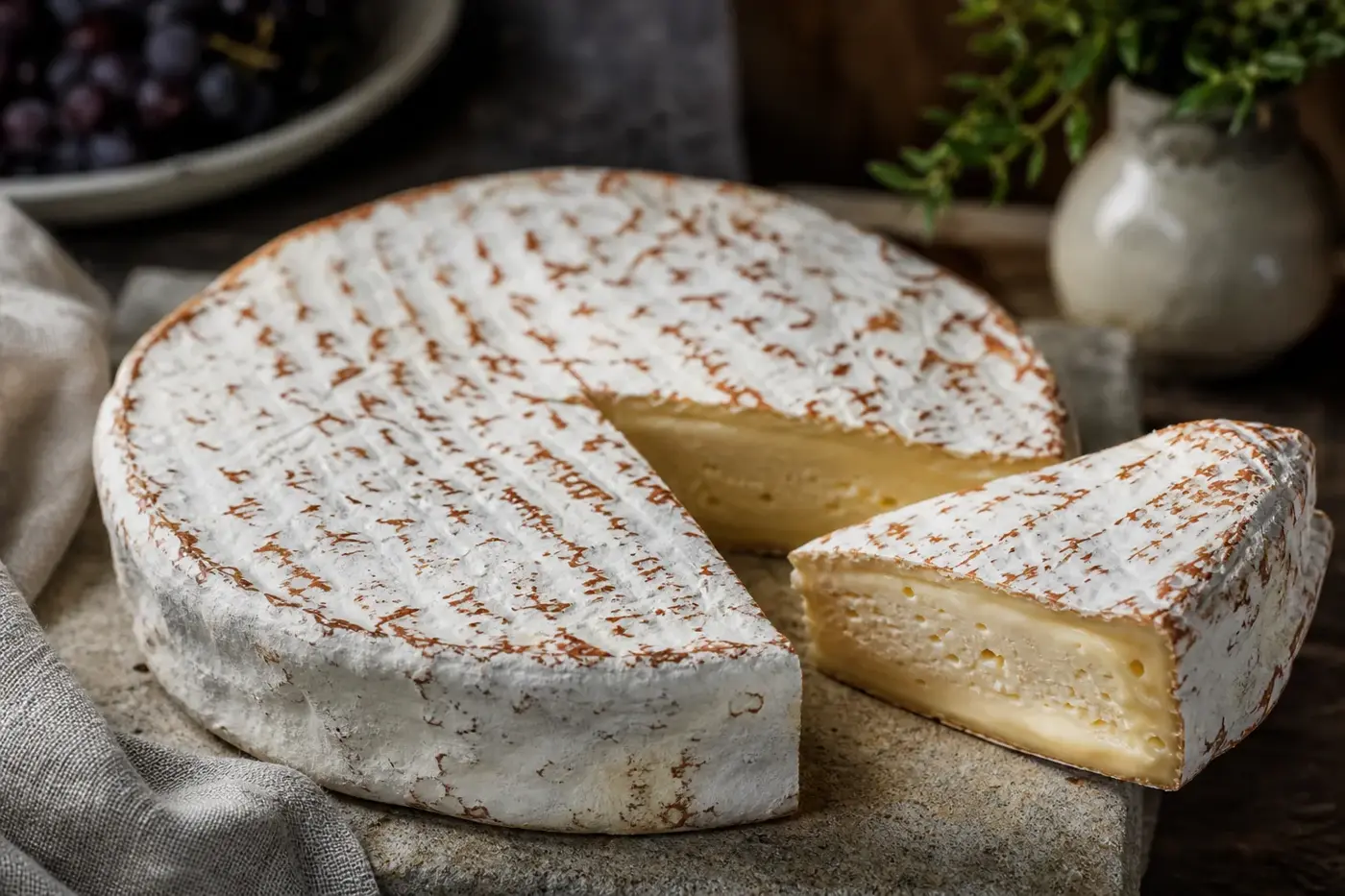
Brie de Melun
Your knife passes through a white rind streaked red or brown, into a centre slowly giving up its firmness.
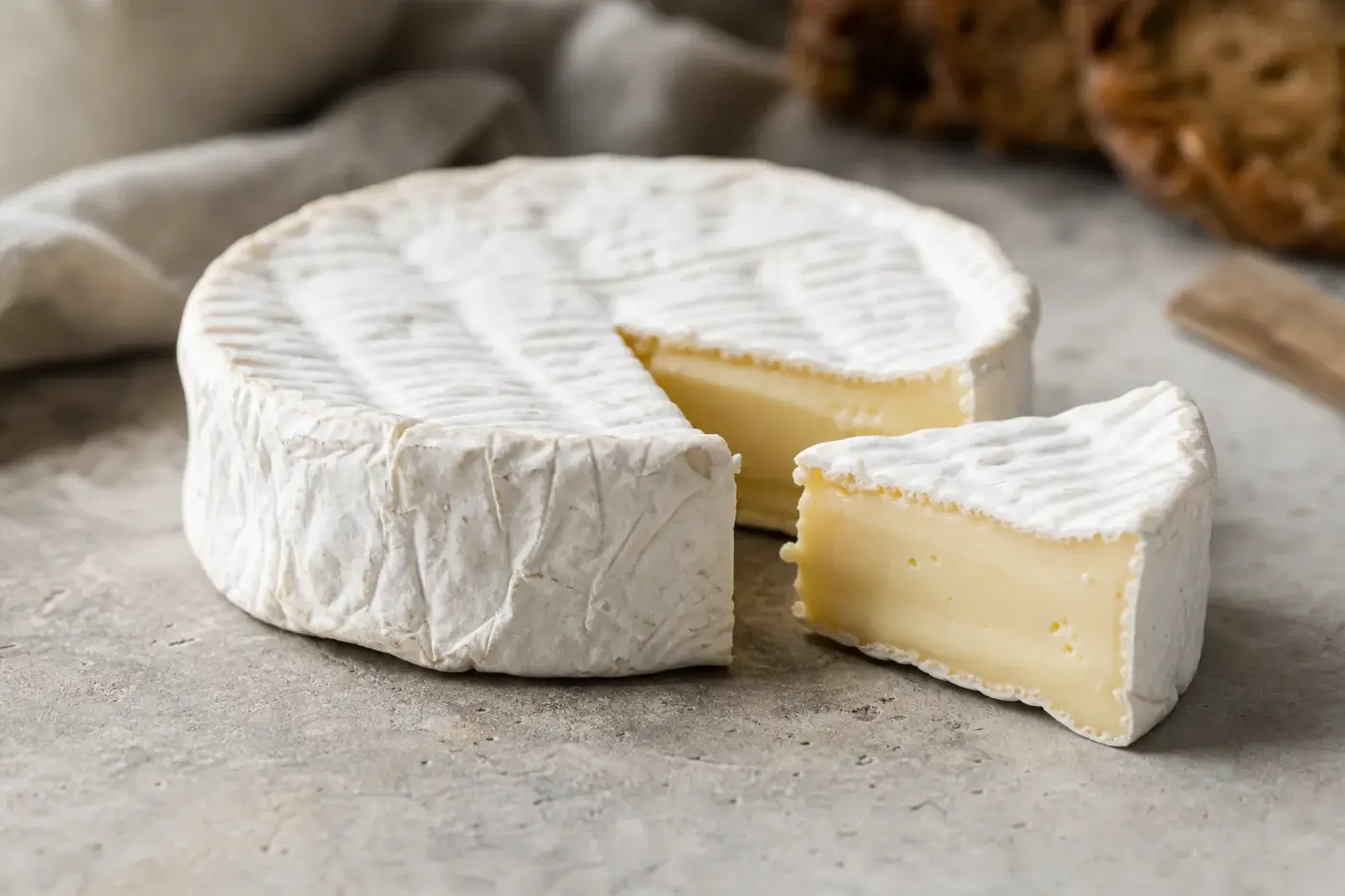
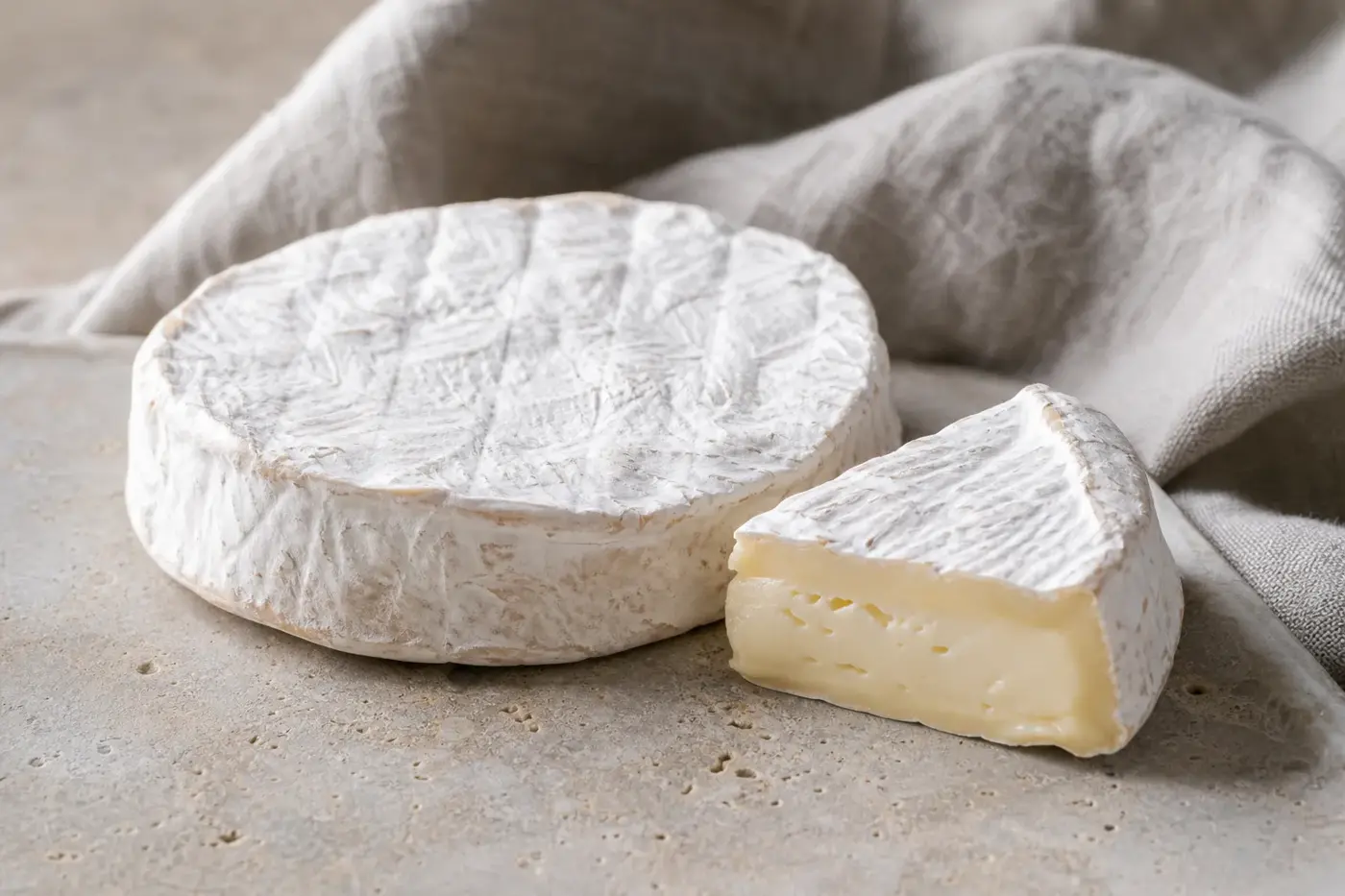
Camembert de Normandie
A hand, a ladle, then a pause.
Coulommiers
Look up into the metal framework of Coulommiers’ cheese hall, built in 1887, and picture the surrounding farms bringing their cheeses to market.
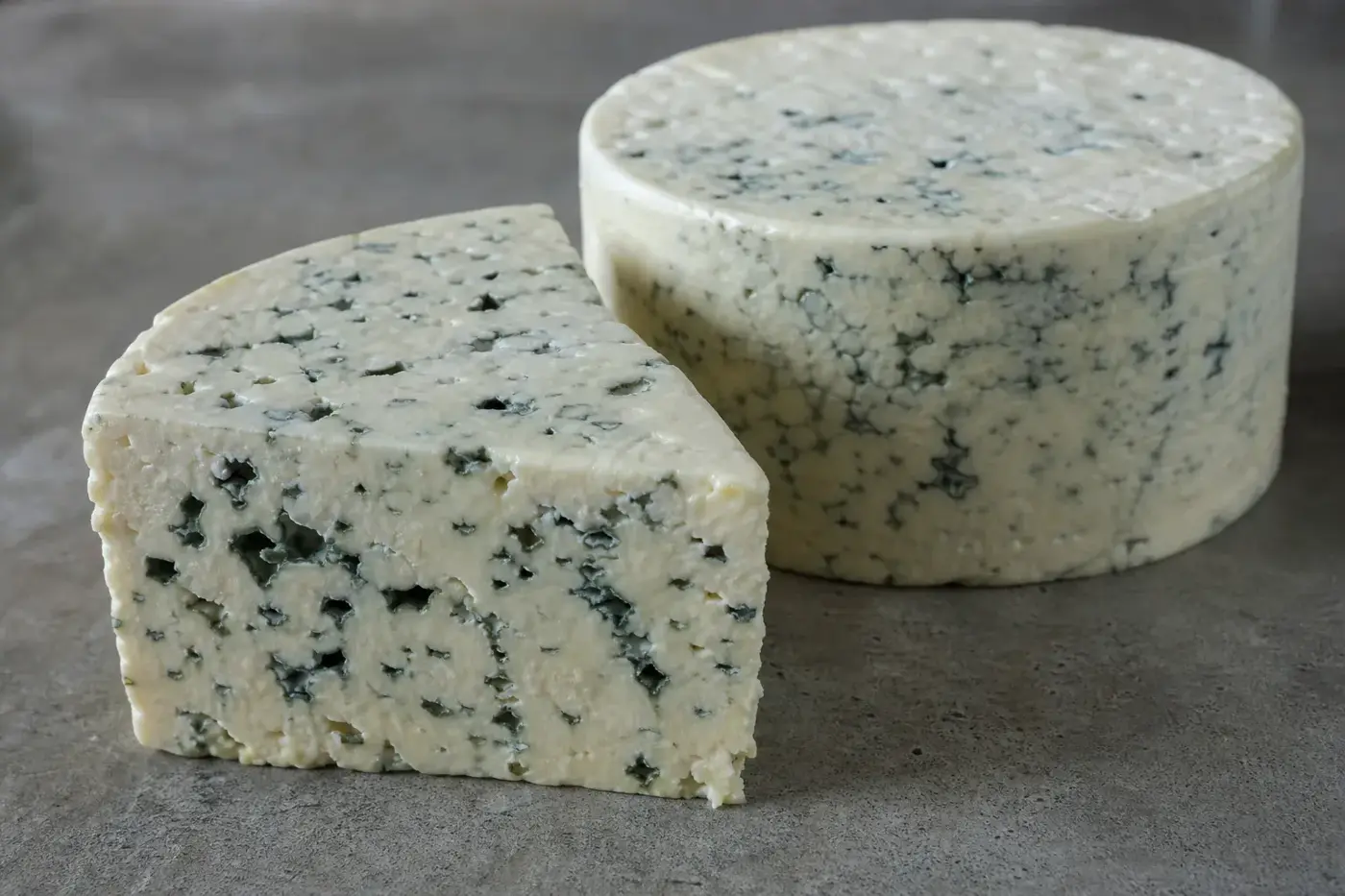
Roquefort
Step into the cool, humid air beneath Roquefort-sur-Soulzon.
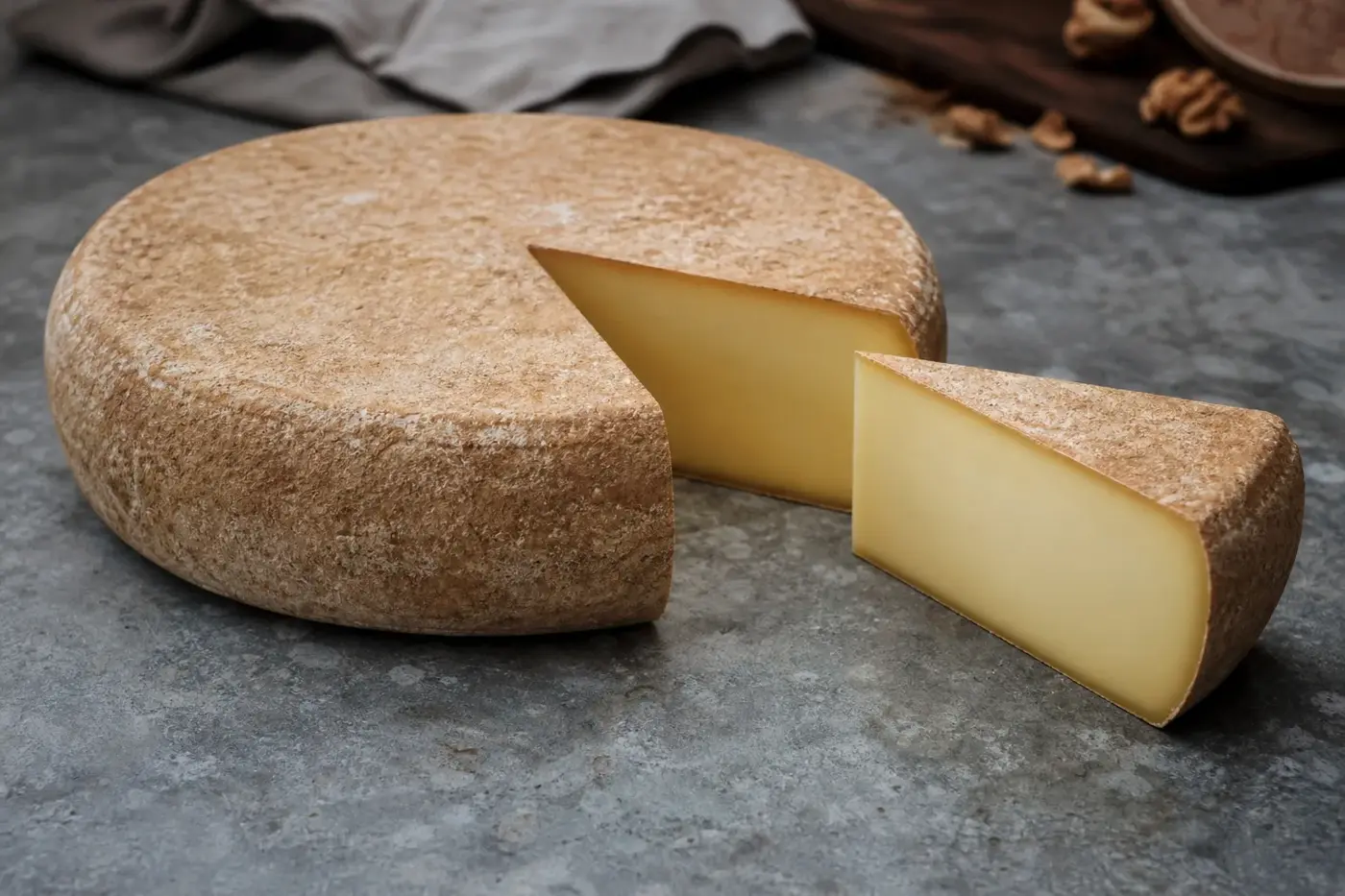
Comté
Picture a wheel of Comté at the cheese counter: 32 to 45 kg, with the Jura massif tucked into its flavours.
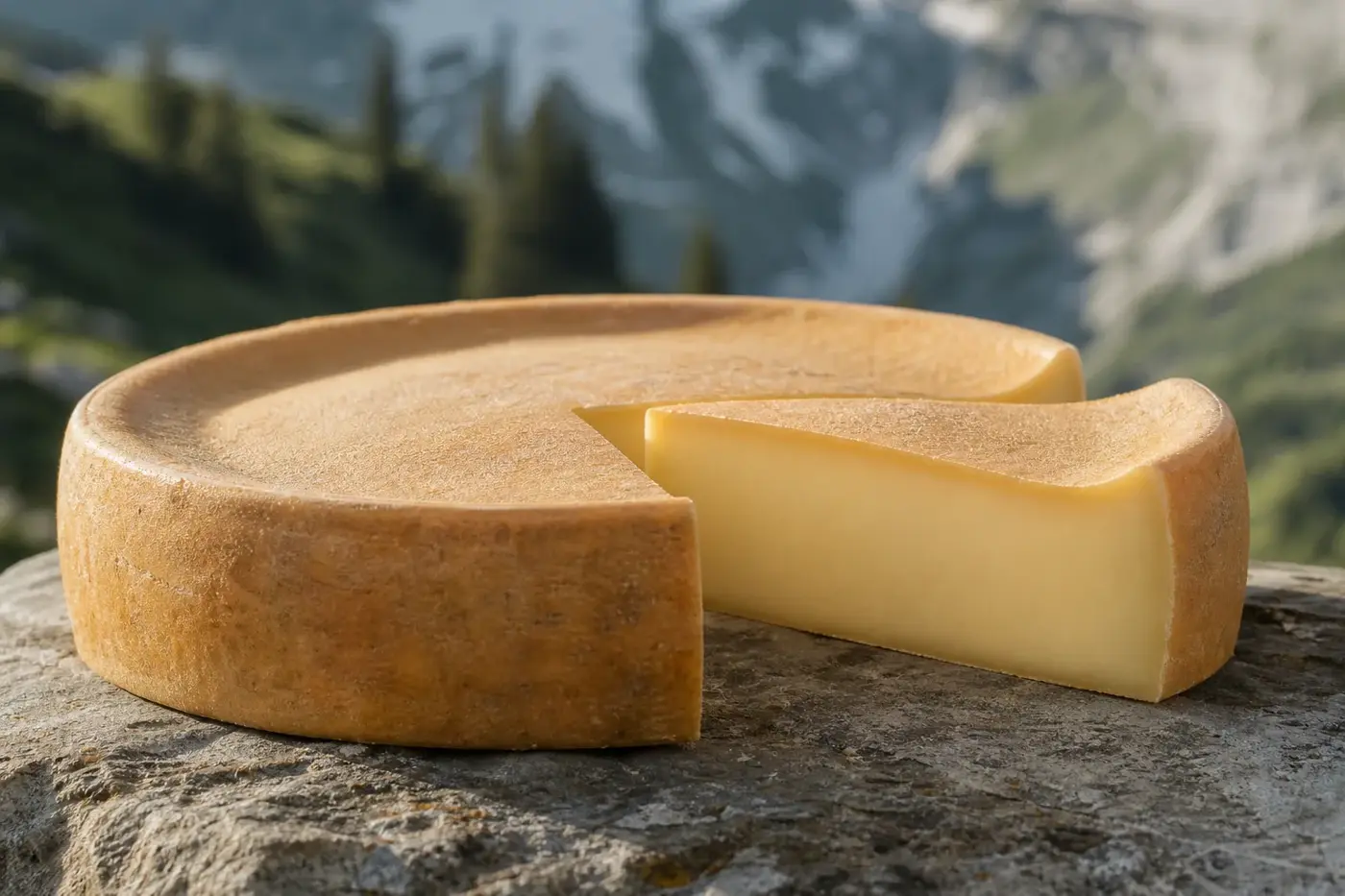
Beaufort
Follow the curve of a Beaufort wheel with your eye.
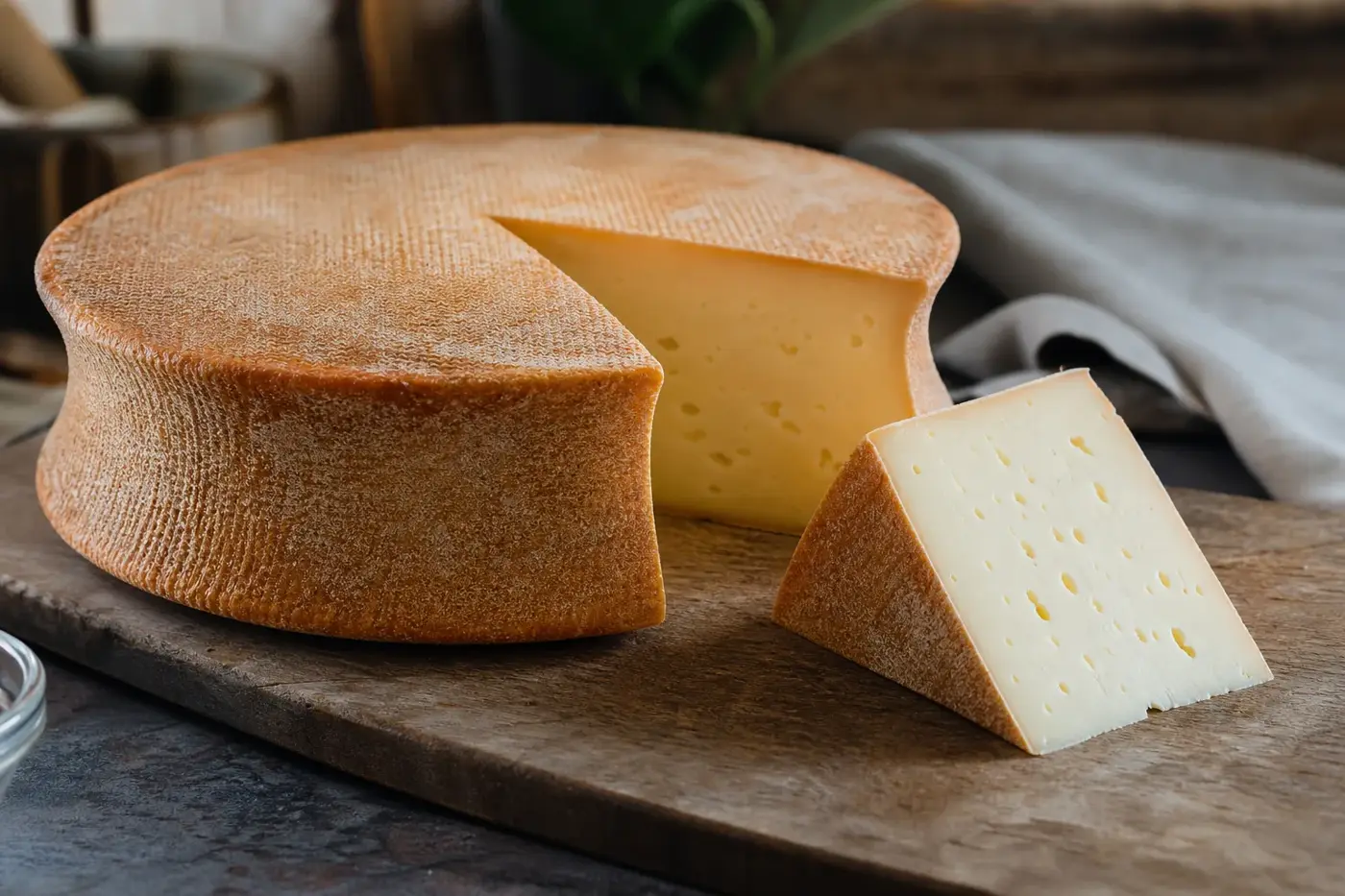
Abondance
Let your eye follow the inward curve of an Abondance wheel, then look beneath its cloth-marked rind, golden yellow to brown.
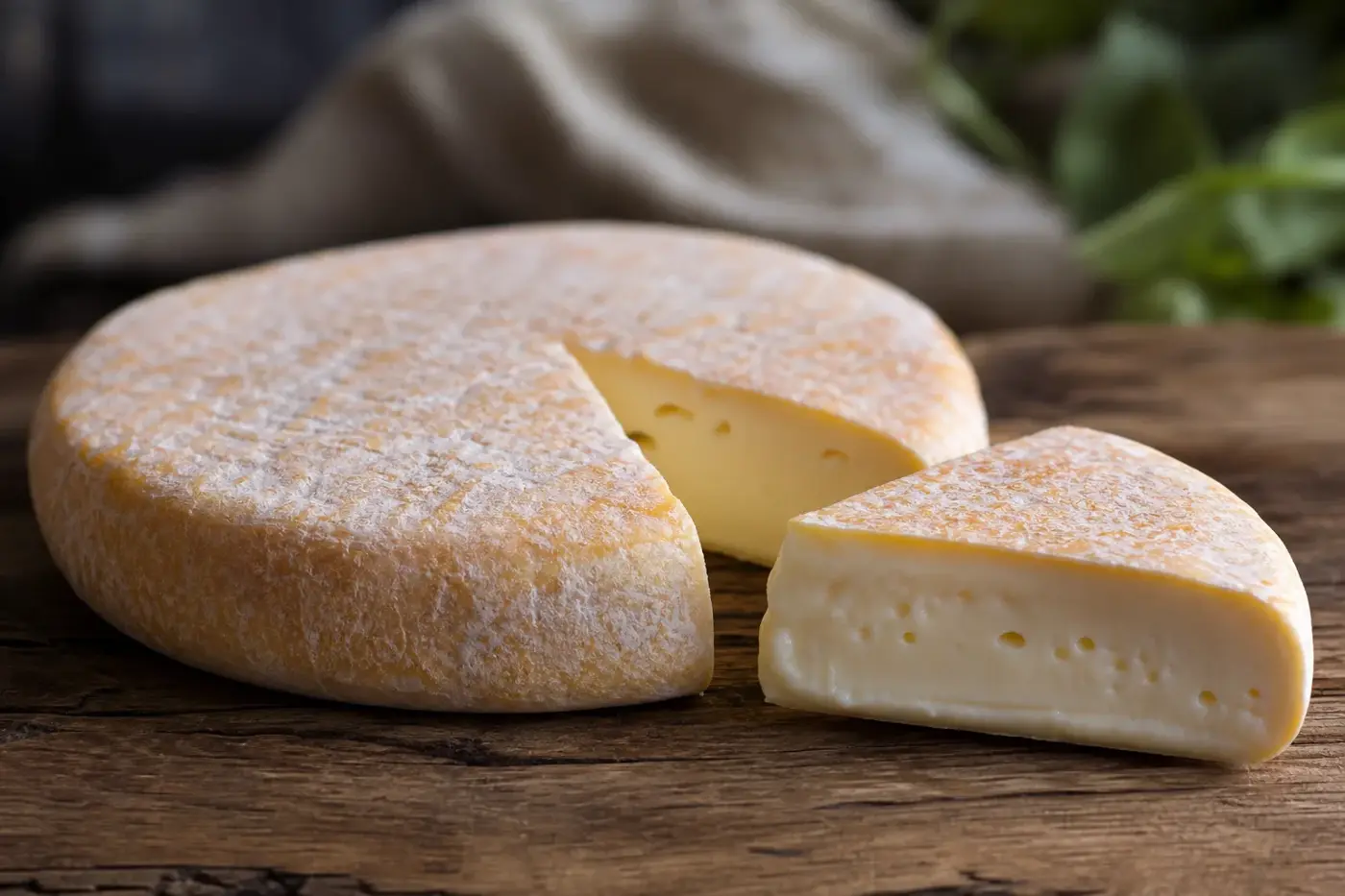
Reblochon
Your knife slips through a thin yellow to orange-yellow rind into a supple, ivory centre, sometimes dotted with small openings.
- Tomme de Savoie
- Raclette de Savoie
- Mont d'Or ou Vacherin du Haut-Doubs
- Morbier
- Époisses
- Munster
- Langres
- Chaource
- Maroilles
- Pont-l'Évêque
- Livarot
- Neufchâtel
- Saint-Nectaire
- Cantal
- Salers
- Laguiole
- Bleu d'Auvergne
- Fourme d'Ambert
- Bleu des Causses
- Ossau-Iraty
- Crottin de Chavignol
- Sainte-Maure de Touraine
- Valençay
- Selles-sur-Cher
- Pouligny-Saint-Pierre
- Chabichou du Poitou
- Rocamadour
- Banon
- Pélardon
- Picodon
- Brillat-Savarin
- Saint-Marcellin
- Mimolette
- Brocciu
- Tomme des Pyrénées
- Bleu de Gex Haut-Jura
- Fourme de Montbrison
- Chevrotin
- Saint-Félicien
- Cancoillotte
- Charolais
- Mâconnais
- Soumaintrain
- Saint-Paulin
- Rigotte de Condrieu
- Tome des Bauges
- Bleu du Vercors-Sassenage
- Brousse du Rove
- Mothais sur Feuille
- French Gruyère
- Emmental de Savoie
- Pérail
- Petit-Suisse
- Emmental Français Est-Central
- Tome Fraîche de l'Aubrac
The editors suggest you read next