Cheeses of Savoie and the French Alps
Run your eye along a Beaufort wheel and notice how its sides curve inwards.
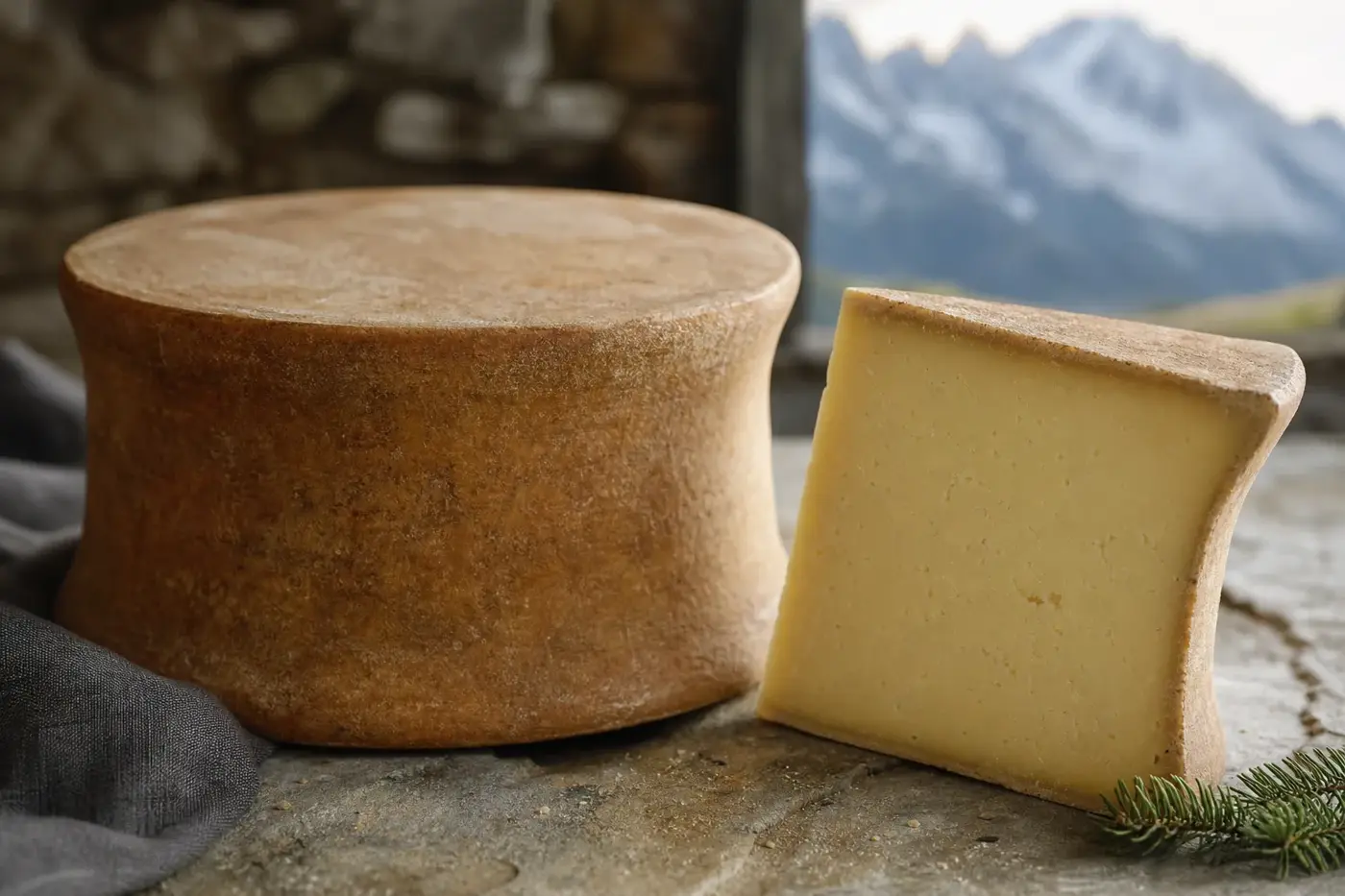
Run your eye along a Beaufort wheel and notice how its sides curve inwards. That distinctive shape comes from moulding; inside is a cooked pressed cheese made from raw, whole cow’s milk, matured for at least five months. Here is the mountain year on your plate: summer grazing above the valleys, winter hay in the barns, and cheese maturing long after the herds have headed downhill. [1]
Beaufort is only the beginning. Supple Abondance, soft Reblochon, grey-rinded tommes and goat’s milk Chevrotin each offer another way into these mountains. Two very different Alpine blues widen the view, so let your curiosity lead you from cheese to cheese and valley to valley. [1][2]
Let the valleys show you the way
Savoie and Haute-Savoie sit side by side in the northern French Alps. Their cheeses belong to more particular places: the Beaufortain, Tarentaise and Maurienne valleys; the Aravis and Chablais; and the Bauges massif, which crosses the departmental boundary. Each brings its own grazing, dairying and cheesemaking traditions to the table. [1][3][4]
Travel further south and the wider French Alps have more for you to discover. The Vercors spans parts of Isère and Drôme, bringing blue cheese into a landscape you might associate with pale, pressed cow’s milk cheeses. Its pastures and dairies deserve a place on your itinerary alongside Savoie’s. [5]
Think in valleys and massifs rather than one grand “Alpine” style. A small washed-rind goat’s cheese, an enormous cooked-curd wheel and a crumbly blue all tell you about mountain farming. Their makers take strikingly different routes to get there. [1][3][6]
Follow the herd up to the pasture
Summer grass draws animals uphill to the alpage, a high mountain pasture used for seasonal grazing. Making cheese near those pastures turns their milk into something that can mature beyond the short season. Beaufort and Bleu de Termignon make that link between grazing and cheesemaking particularly clear. [1][6]
Winter changes the feed. Beaufort’s ordinary specification centres the basic ration on grazed grass and hay; Chevrotin’s industry description similarly connects its goats with grazing and hay. These are particular production systems, not a description of every cheese made in the Alps. [1][3]
At the counter, ask about season as well as maker and maturity. When was your cheese made, were the animals grazing, and how long has it matured? A summer-made wheel may reach you months later, so the season you buy it is not necessarily the season you taste. [1][6]
The regional association AFTalp describes these cheeses on behalf of their industries. The flavour notes below come from its published descriptions, rather than a fromage.co.uk tasting.
Get to know the names on the label
Those little abbreviations have a substantial job. AOP is French for protected designation of origin, or PDO; IGP means protected geographical indication, or PGI. They tell you how a cheese connects to its place.
For a PDO, every production step must happen within the defined area, and the product’s characteristics must be essentially due to that area. For a PGI, at least one production step must happen there, with a characteristic, quality or reputation attributable to it. The current EU regulation is the reference for these definitions; Chevrotin gives you a concrete example, with INAO recording milk production, cheesemaking and maturation within its defined area. [3]
The November 2026 picture for the cheeses here includes AOP designations for Beaufort, Reblochon, Abondance, Tome des Bauges and Chevrotin. Tomme de Savoie, Emmental de Savoie and Raclette de Savoie carry IGP designations. These are EU designations described by the French official and regional sources. [1][3][7]
Read the whole name when you shop. “Raclette de Savoie” identifies a particular cheese, while “raclette” can also mean the meal. For more on what the labels mean, explore the guide to protected names.
Beaufort: spend a moment with that magnificent wheel
Beaufort’s territory stretches through the Beaufortain, Tarentaise and Maurienne, taking in part of the Val d’Arly too. INAO specifies raw, whole cow’s milk from Tarine or Abondance cattle, a cooked pressed paste and at least five months of maturation. Its inward-curving sides come from moulding, giving you something distinctive to spot before the first taste. [1]
“Cooked paste” means the curd is heated during cheesemaking. It does not mean the milk was pasteurised beforehand. A firm, cooked-curd cheese can still use raw milk, a useful distinction when you compare Beaufort with softer regional cheeses; see milk treatments explained. [1]
Before you melt Beaufort and Abondance into fondue, give them a side-by-side tasting. Notice how each resists the knife, breaks or bends, and how long its finish lasts. This is research with unusually good refreshments.
If mountain pasture draws you in, ask about the production season. Read the precise label wording, including any chalet d’alpage designation. Note the maker and maturation details alongside your tasting impressions, so you can connect what you taste with how it was made. [1]
Reblochon, Abondance and Tome des Bauges: find your favourite
Cream-like flavour, fruit and citrus, an uneven grey rind: these three cow’s milk cheeses offer very different introductions to the region. AFTalp describes Reblochon through cream, Abondance through fruity and citrus notes, and Tome des Bauges through lactic, vegetal and toasted notes. You have plenty to explore before adding anything else to the plate. [4][8][9]
| Cheese | Texture and rind, as AFTalp describes them | Flavours to look for | Where to begin |
|---|---|---|---|
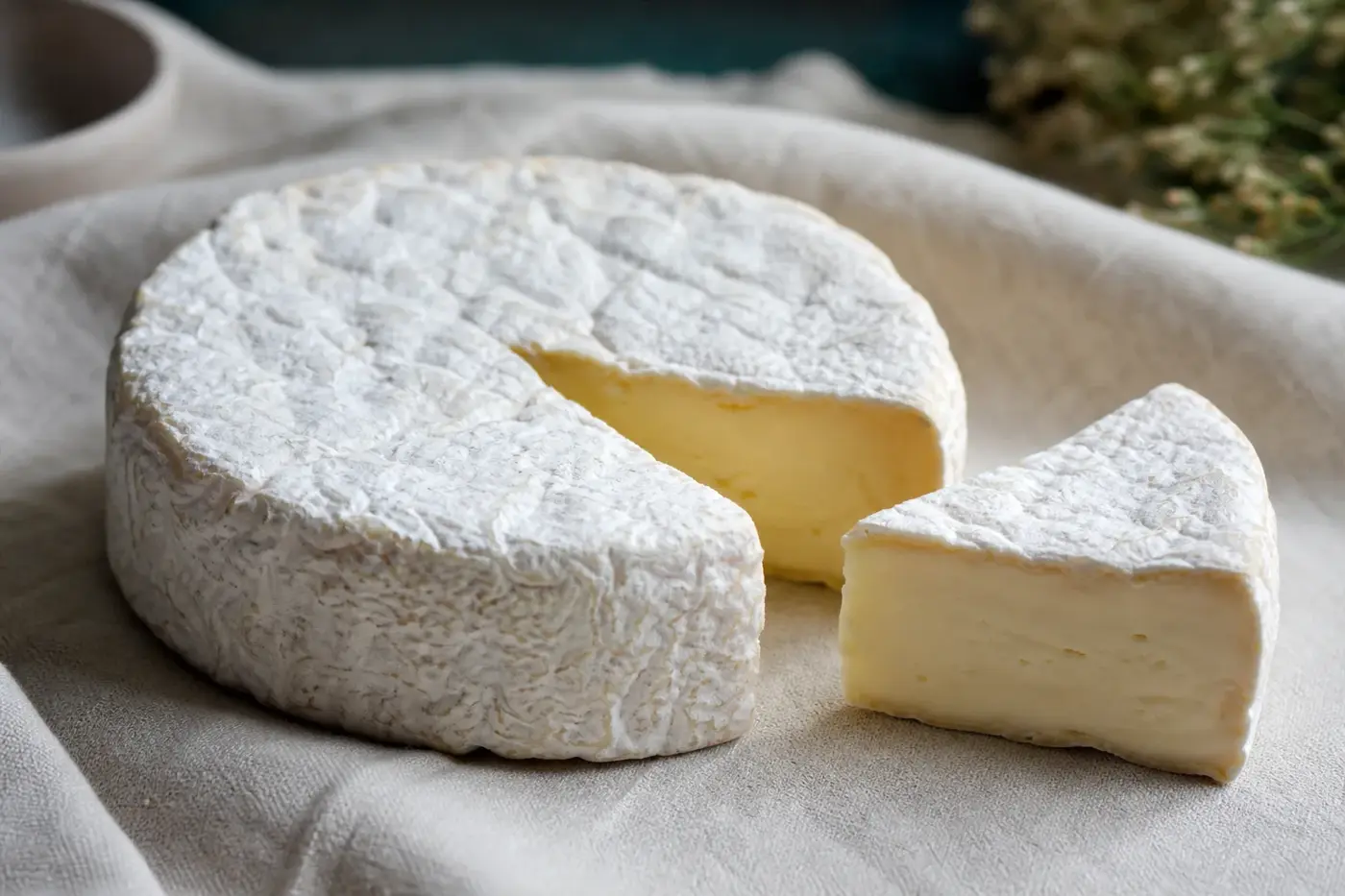
| Reblochon | Supple, soft paste; thin yellow-orange rind with white bloom | Cream; hints of hazelnut or peanut | Taste a wedge before making tartiflette |
| Abondance | Supple paste; amber rind | Fruit; possible hazelnut, pineapple or citrus | Try it beside Beaufort |
| Tome des Bauges | Supple paste; uneven grey rind | Lactic, vegetal and toasted | Start simply, with bread |
Sources: AFTalp’s published descriptions, November 2026. Serving suggestions are editorial. [4][8][9]
Reblochon’s heartland is the Aravis, though its production area reaches across much of Haute-Savoie and into the Val d’Arly. AFTalp distinguishes farm-made and dairy-made versions, both using raw whole milk. Its suggested maturation is three to four weeks. [8]
Abondance comes from Haute-Savoie, with a partly cooked pressed paste. AFTalp recommends at least 100 days of maturation, with four months advised. That gives you a different starting point from a small, relatively quickly matured Reblochon. [4]
Tome des Bauges belongs to the Bauges massif in both departments. It uses raw whole or lightly skimmed milk, with five to eight weeks of maturation suggested in AFTalp’s description. Keep an eye on the spelling: Tome des Bauges has one “m”, while Tomme de Savoie has two. [9]
Chevrotin: a goat’s milk cheese with a washed rind
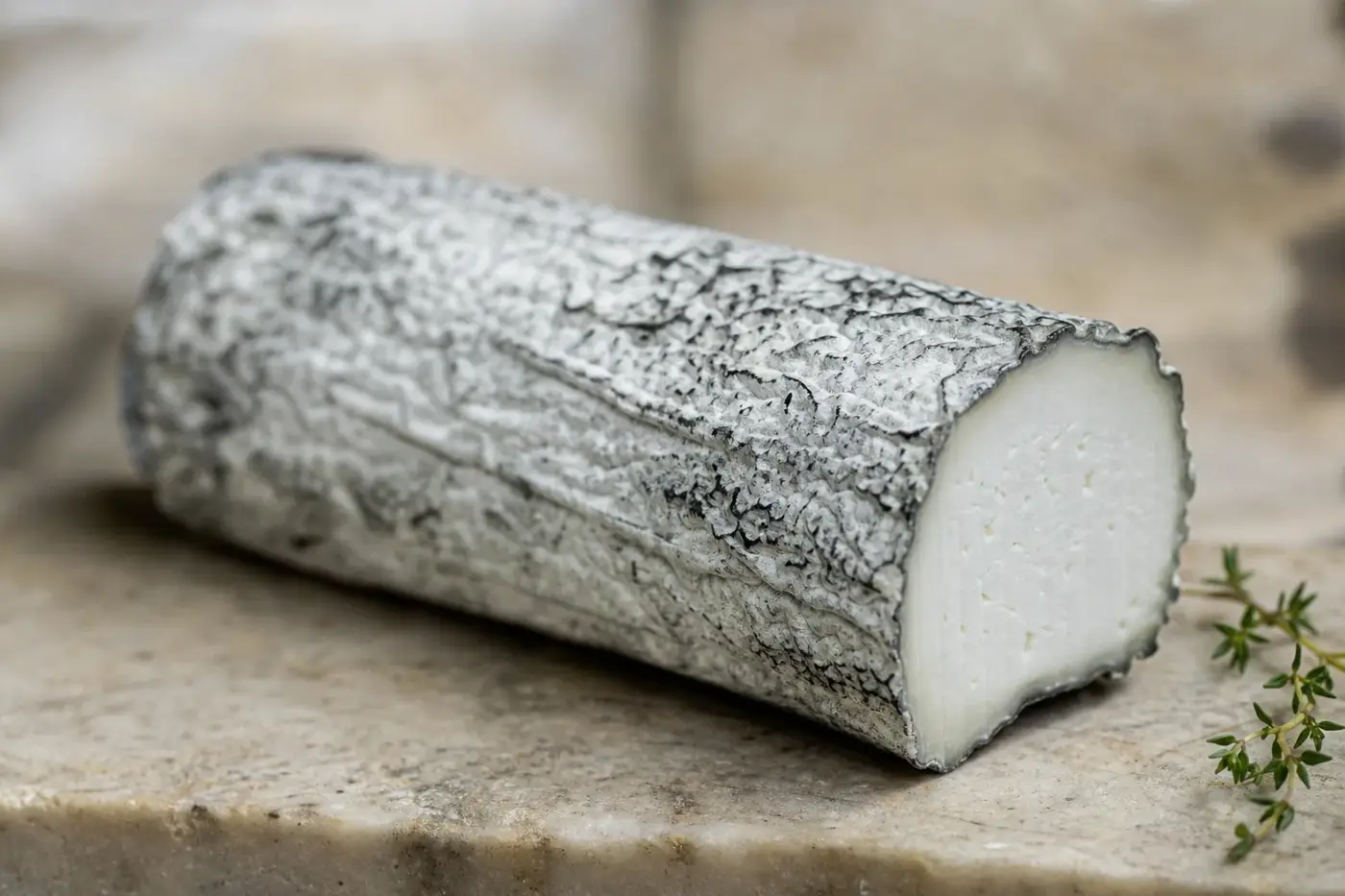
Chevrotin brings goat’s milk to the region’s washed-rind tradition. INAO describes a pressed, uncooked goat’s milk cheese with a washed rind, made in defined parts of the Chablais, Mont-Blanc, Aravis and Bauges massifs. That single name takes you through several mountain landscapes. [3]
According to AFTalp, it is exclusively farm-made, using raw whole goat’s milk. Look for a thin, slightly pink rind with a fine white covering. The association’s flavour notes highlight delicate goat’s milk character, lactic notes and flowers. [10]
Try Chevrotin beside Reblochon, looking at the rinds before comparing pastes and aromas. If your picture of goat’s cheese is mostly dry, crumbly little chèvres, this gives you something different to get to know.
Three IGP cheeses to linger over
Tomme de Savoie: discover the differences
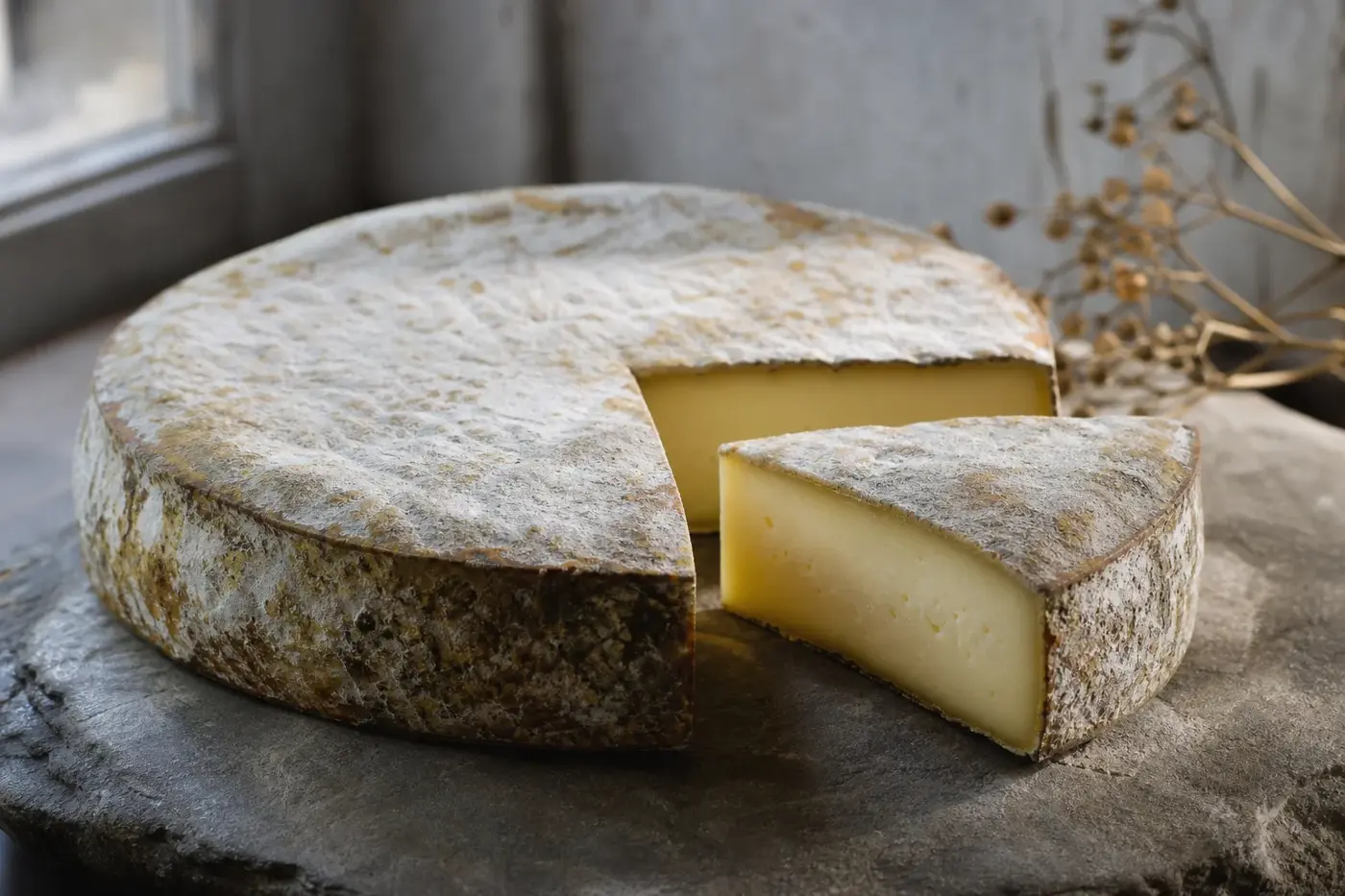
Tomme de Savoie rewards a little comparison shopping. AFTalp describes different fat levels, farm and dairy production, a mottled grey rind and a paste that is firm yet supple. Its published flavour range stretches from mild to powerful as maturation progresses, with lactic and animal notes. [11]
Ask about the individual cheese’s milk treatment and age. If you can, taste two examples with a clear difference in maturity. The name gives you a starting point, but the particular cheese still has plenty to say.
Emmental de Savoie: take a closer look at those eyes
You cannot miss Emmental de Savoie’s conspicuous holes, traditionally called eyes. This raw cow’s milk, cooked pressed cheese has a supple paste and a mild, fruity flavour in AFTalp’s description. It matures for at least 75 days. [12]
Give it a place on your tasting board before taking it into the kitchen. Beside Beaufort, its open paste makes the variety within cooked pressed cheeses immediately visible. “Hard mountain cheese” starts to look like a rather blunt description. [1][12]
Raclette de Savoie: taste it before you melt it
Before the melting begins, meet Raclette de Savoie as it is. AFTalp describes an uncooked pressed cow’s milk cheese, made with raw or thermised milk, with a supple paste and milky aromas. Its specified minimum maturation is eight weeks. [13]
Thermisation is a heat treatment distinct from pasteurisation, so read the particular product’s declaration. Then taste a little unmelted, followed by a little melted. You have a simple comparison that lets you explore what heat changes in the cheese. [13]
Leave a little space for the blues
Bleu du Vercors-Sassenage carries an EU protected designation of origin, or PDO, name. INAO places its production area entirely within the Vercors massif, across parts of Isère and Drôme. Here, your Alpine cheese journey moves beyond Savoie. [5]
Bleu de Termignon belongs to a much smaller-scale pasture tradition around Termignon in Haute Maurienne. The local tourism authority’s producer reporting describes raw milk from Tarine and Abondance cows grazing in the Vanoise. It records a friable, granular paste with naturally developing, irregular blue veining. [6]
Do not let the veins make your whole decision. The same account explains that younger cheeses may show little blue, while their character strengthens with maturation. Ask about maker and age; for a simple local accompaniment, take your cue from the potatoes recorded in the account. [6]
Meet the people behind the wheel
Individual farms are only part of this mountain story. Shared cheesemaking facilities matter too: INAO records Beaufort producers developing directly managed cooperatives during the industry’s recovery around the 1960s. AFTalp also documents cooperative and farm production for Tome des Bauges. [1][9]
Farm-made and dairy-made cheeses give you different production arrangements to explore. Ask who made the cheese, who matured it, when it was produced and how mature it is now. Those questions help bring the people behind your cheese into focus.
Keep milk treatment as a separate question. The sources describe Beaufort, Reblochon and Abondance as raw-milk cheeses, while Raclette de Savoie may use raw or thermised milk. Heating the curd later does not tell you how the milk was treated beforehand. [1][4][8][13]
Take your taste buds on a mountain tour
You do not need every cheese to make a revealing first board, however persuasive the cheese counter becomes. Choose four contrasting ones: start with Emmental de Savoie, move to Abondance or Beaufort, then Reblochon or Chevrotin, and finish with one blue. Adjust that suggested order to suit the strength of your particular cheeses.
Taste each cheese alone first. Bread and water give you a simple baseline; afterwards, try apple, pear or walnuts as optional pairings and decide whether they improve the combination. Keep the accompaniments restrained so you can still pick out the differences between cheeses.
For storage, follow your product’s instructions. The Food Standards Agency’s household guidance for England, Wales and Northern Ireland advises a fridge temperature of 5 °C or below; consult its current guidance for where that advice applies. You will find more handling advice in the home cheese storage guide. [15]
Bring the Alps to your table
Choose your dish first, then its cheese. For raclette, start with Raclette de Savoie and potatoes, keeping sharp pickled accompaniments separate so everyone can adjust the balance. For fondue, Beaufort with Emmental de Savoie is a suggested starting combination: grate the cheeses, then follow a complete, sourced recipe.
For tartiflette, choose Reblochon and a recipe built around potatoes, onions and bacon. Taste the cheese before cooking, so you know what it contributes beyond simply melting. These are menu suggestions, not independently tested recipes.
If your fondue recipe includes wine, cooking reduces the alcohol but does not reliably remove it. Choose a specifically alcohol-free recipe when that matters. [16] At the table, water is an alcohol free option.
General information only, not medical advice: follow the official guidance where you live.
Questions people ask
Is Beaufort made from raw milk?
Yes. Beaufort is made from raw, whole cow’s milk from Tarine or Abondance cattle. Its curd is heated during cheesemaking, but that does not mean the milk was pasteurised.
What is the difference between AOP and IGP cheese?
For an AOP, all production steps must take place in the defined area, and the product’s characteristics must be essentially due to that area. For an IGP, at least one production step must take place there, and a characteristic, quality or reputation must be attributable to it.
Which Savoie cheese is used in tartiflette?
The page suggests Reblochon for tartiflette, using a recipe with potatoes, onions and bacon. AFTalp describes Reblochon as having a supple, soft paste and a cream flavour, with hints of hazelnut or peanut.
Is there a goat’s milk cheese from Savoie?
Chevrotin is a pressed, uncooked goat’s milk cheese with a washed rind. According to AFTalp, it is exclusively made on farms using raw, whole goat’s milk.
How should I store Savoie cheese?
Follow the product’s storage instructions. For England, Wales and Northern Ireland, the Food Standards Agency advises keeping the fridge at 5 °C or below; check its current household guidance for where that advice applies.
Sources
- INAO, Beaufort, product record, and French Ministry of Agriculture, Cahier des charges de l’appellation d’origine « Beaufort », published in Bulletin officiel No. 15, 10 April 2025. Product overview and specification retrieved November 2026.
- AFTalp, Un terroir d’exception, undated regional industry account, retrieved November 2026.
- INAO, Chevrotin, product record, including geographical and production overview; specification publication dated 11 June 2015, retrieved November 2026.
- AFTalp, AOP Abondance, undated product account, retrieved November 2026.
- INAO, Bleu du Vercors-Sassenage, product record, including links to the December 2025 specification and April 2026 EU communication, retrieved November 2026.
- Haute Maurienne Vanoise Tourism, Le Bleu de Termignon : un fromage rare au cœur de la Vanoise, producer reporting, 2026, retrieved November 2026.
- AFTalp, Les 8 Fromages de Savoie AOP, IGP, regional industry index, retrieved November 2026.
- AFTalp, AOP Reblochon, undated product account, retrieved November 2026.
- AFTalp, AOP Tome des Bauges, undated product account, retrieved November 2026.
- AFTalp, AOP Chevrotin, undated product account, retrieved November 2026.
- AFTalp, IGP Tomme de Savoie, undated product account, retrieved November 2026.
- AFTalp, IGP Emmental de Savoie, undated product account, retrieved November 2026.
- AFTalp, IGP Raclette de Savoie, undated product account, retrieved November 2026.
- European Commission, Publication of the communication of an approved standard amendment to a product specification of a geographical indication, Bleu du Vercors-Sassenage, C/2026/2145, 16 April 2026. Search extract retrieved November 2026; full-text examination outstanding.
- Food Standards Agency, How to chill, freeze and defrost food safely, GOV.UK guidance, published 18 December 2017, retrieved November 2026.
- USDA, Table of Nutrient Retention Factors, Release 6, December 2007. Source supplied in the master brief; original document retrieval outstanding.
This desk-researched draft combines official French product records with attributed regional industry descriptions and local producer reporting; outstanding verification and publication holds are recorded below.
Last checked: November 2026
Last checked November 2026.
The editors suggest you read next
French Cheese: The Complete Guide
Picture Normandy’s pastures, then follow the milk towards the Loire’s goat dairies, the Jura’s shared cheesemaking traditions and the sheep country of the Pyrenees.