Arzúa-Ulloa
Fresh milk, yoghurt, butter: take a bite of Arzúa-Ulloa at six days and those gentle flavours greet you first.
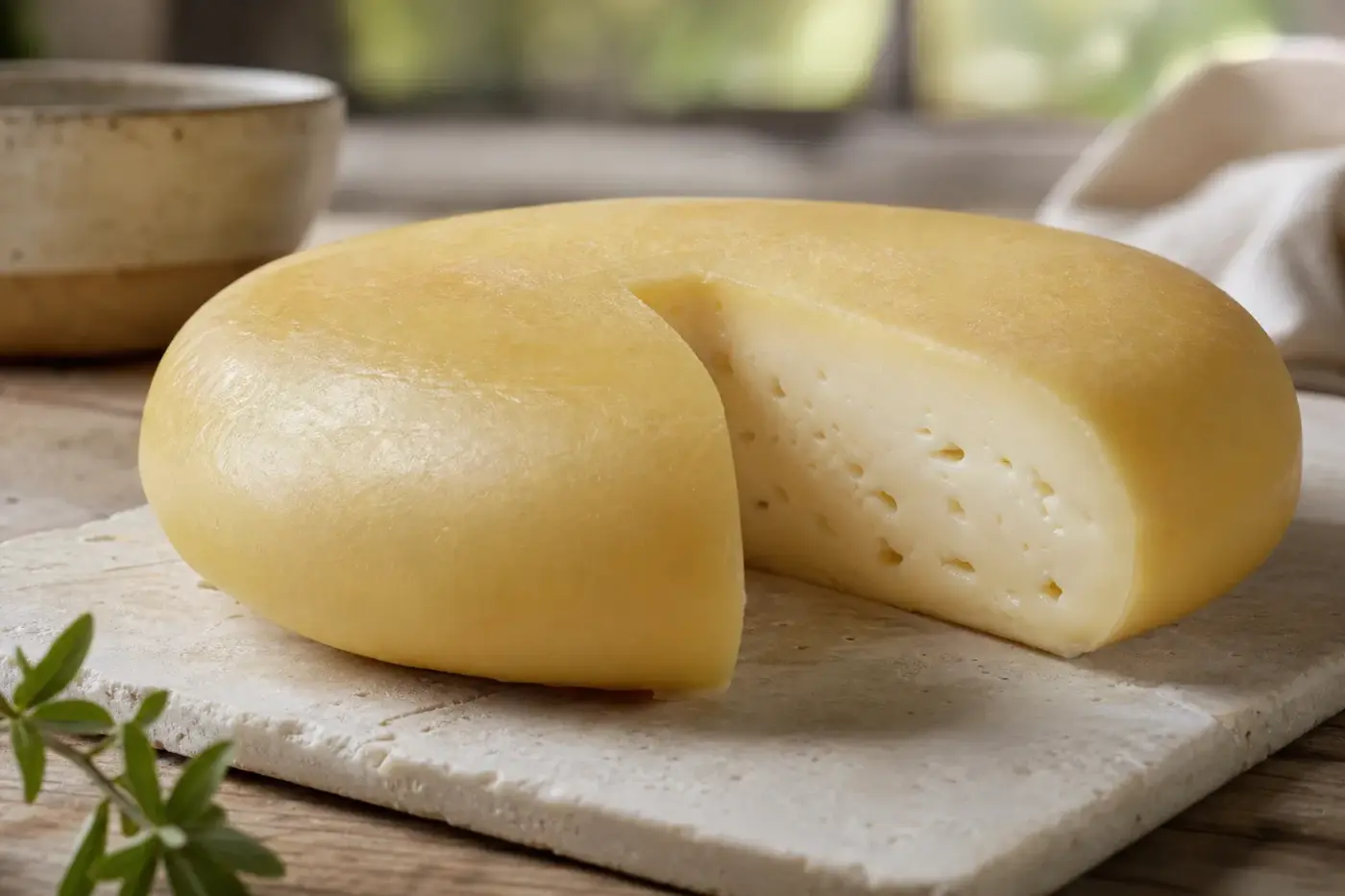
Fresh milk, yoghurt, butter: take a bite of Arzúa-Ulloa at six days and those gentle flavours greet you first. Give its curado variety at least six months and the mood changes. The paste is hard, intensely yellow and liable to splinter at its drier edges.[1][2]
Both are expressions of Galicia’s rounded, low-sided cow’s milk cheese. One invites a soft landing; the other asks you to pay a little more attention.[1][2]
| Your quick guide | What to know |
|---|---|
| The familiar, registered Spanish name | Arzúa-Ulloa.[1] |
| EU registration authority and identifier | European Commission; PDO-ES-0497.[4] |
| Registration instrument | Commission Regulation (EU) No 20/2010, identified in the Galician government’s technical sheet.[2] |
| Great Britain | Registered PDO; “Arzùa-Ulloa” in the GB register, with registration dated 31 December 2020. November 2026 register reference.[5] |
| Where it must come from | Specified municipalities in central Galicia, across A Coruña, Lugo and Pontevedra.[1] |
| Milk the makers can use | Whole cow’s milk, raw or pasteurised.[2] |
| Coagulant the makers can use | Animal rennet or other legally permitted coagulating enzymes authorised under the quality manual.[1] |
| Varieties to look for | Arzúa-Ulloa; farmstead Arzúa-Ulloa de Granxa; Arzúa-Ulloa curado.[2] |
| Minimum time to mature | Six days for young cheese; six months for curado.[2] |
| Pregnancy guidance | UK NHS guidance, November 2026 reference: see Sources [8]. |
Into Galicia, where your slice begins
Picture the meadows of central Galicia, in north-western Spain. Dairy cattle feed principally on their own farm’s forage, grazing when the weather permits. Those meadows and forage crops sustain the local dairy farming at the heart of the cheese’s specification.[1]
The production area includes Arzúa and neighbouring municipalities, the A Ulloa district around Antas de Ulla, Monterroso and Palas de Rei, and further defined areas towards Chantada and Deza.[1] The name on your cheese points to a place, but also to the farming behind it.
Age tells you something different. First establish where the milk and cheesemaking belong, then decide which stage of the cheese’s life you fancy tasting. This one regional name embraces both a gentle table cheese and a much more assertive aged one.[1][2]
Read the label, meet the place
At the cheese counter, give the label a moment of your attention. Spain’s agriculture ministry lists Arzúa-Ulloa as a protected designation of origin, or PDO, under identifier PDO-ES-0497.[4] The designation identifies a defined product and origin; PDO, PGI and TSG explains how the schemes differ.
Look for the denomination’s name, official logo and coded certification label alongside the maker’s commercial label. Under the specification, that commercial label must also tell you whether the milk was raw or pasteurised.[1]
If you are buying a cut portion, ask to see the original label. Keep the variety and milk treatment details with your purchase. They will help you make sense of another maturity or producer next time, since the name alone cannot tell you everything.
The cows behind the cheese
Rubia Gallega, Pardo Alpina and Friesian cattle, or crosses between those breeds, provide the whole milk for Arzúa-Ulloa. Makers may use raw or pasteurised milk. That applies to the farmstead variety too, so “farmstead” does not answer the milk treatment question.[2]
Read the declaration on your particular cheese. If the counter ticket leaves out the milk treatment, ask directly. Do the same if you are choosing by coagulant, because the specification permits more than one option.[1]
For a little help with the language, turn to raw, thermised and pasteurised cheese. Milk treatment describes processing; farmstead tells you where the milk comes from. Each gives you a different part of the story.[1][2]
Wash the curd, then let time work
Drinking water has an important job in making Arzúa-Ulloa. The cheesemaker uses it to wash the curd, reducing its acidity. The specification sets out this sequence.[1]
- Set the milk: rennet or an authorised coagulating enzyme turns the milk into curd.
- Cut and wash: the curd is cut into grains approximately 5 to 10 mm across, then washed with drinking water.
- Shape and press: cylindrical moulds give the cheese its shape, while pressing brings the curd together.
- Add salt: salt goes into the curd, the cheese goes into brine, or both methods are used.
- Give it time: the cheeses are turned and cleaned as they mature.[1]
If curd and whey still sound like words everyone else somehow knows, here is the useful distinction. Curd is the coagulated part of the milk; whey is the liquid separated from it. Follow the stages in more detail in how cheese is made.
Young Arzúa-Ulloa deserves the first bite
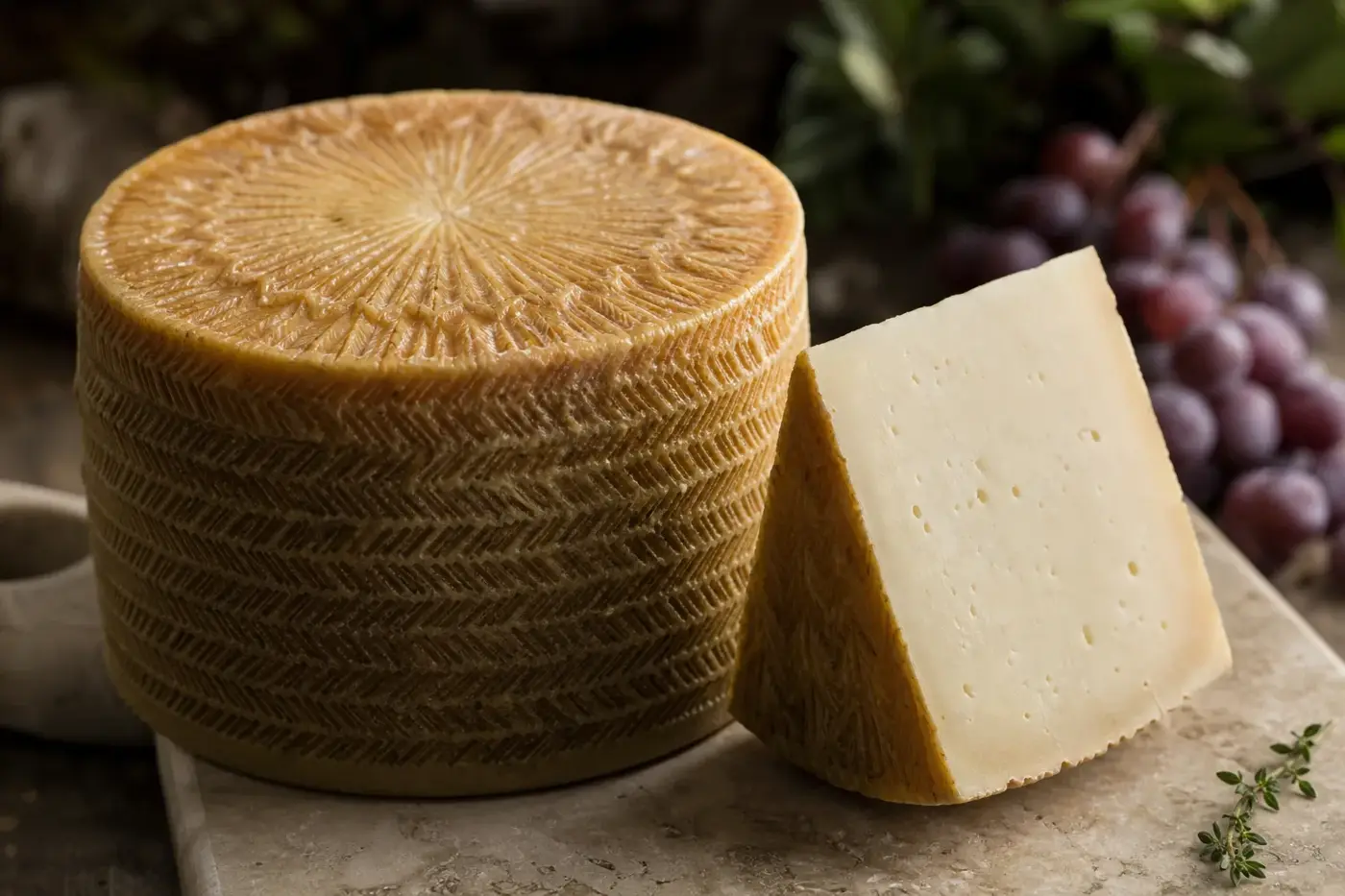
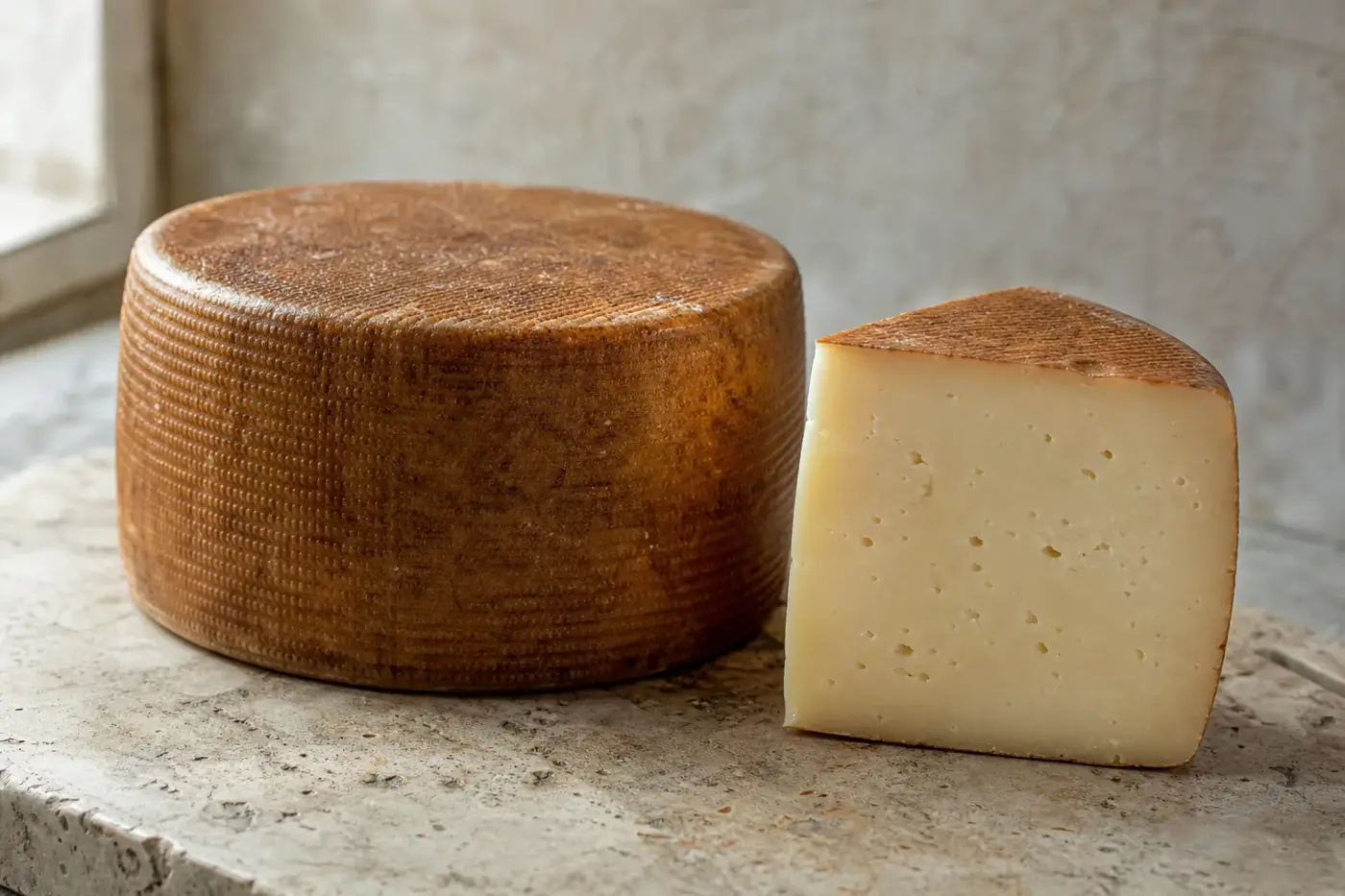
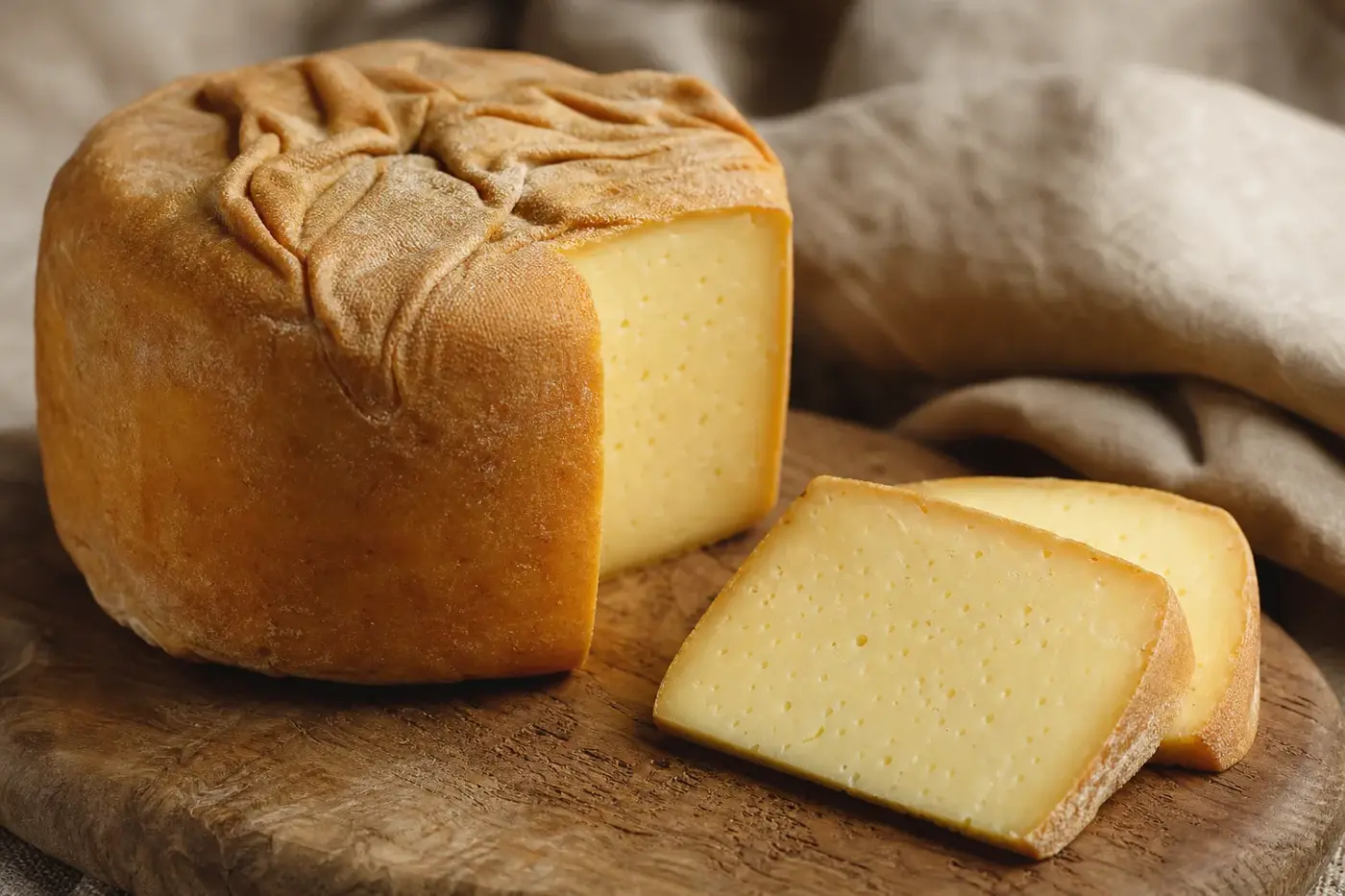
Cut through the thin, elastic, smooth yellow rind and you find glossy paste. The Galician government describes an ivory to pale yellow interior, scattered with relatively few small, irregularly distributed holes. The cheese is lentil-like or cylindrical, with rounded edges.[2]
The local cheese festival describes an unctuous texture, lightly acidic and lightly salted, with flavours of butter and yoghurt. As the cheese matures, sweeter impressions of dried fruit or nuts emerge. Its account also notes those few, unevenly distributed holes.[3]
Give your first piece a moment on its own. Then bring in bread, followed by fruit or quince paste, so you taste the cheese before sweetness joins it. If you are comparing two makers or ages, keep that first bite plain: the quince can wait its turn.
Farmstead or curado? Ask two different questions
Farmstead tells you where the milk comes from. Curado tells you the cheese has matured substantially longer. They describe different things, rather than positions along a single scale.[2]
| Your choice | What makes it distinct | Character described by the Galician government |
|---|---|---|
| Arzúa-Ulloa | At least six days’ maturation | Soft paste; fresh dairy aromas developing towards butter.[2] |
| Arzúa-Ulloa de Granxa | Milk entirely from cows on the cheesemaking farm | Broadly shares the young cheese’s characteristics.[2] |
| Arzúa-Ulloa curado | At least six months’ maturation | Hard, compact, intensely yellow paste; stronger butter-like aroma and a pungent finish.[2] |
Curado announces itself before you take a bite. The official account describes a cheese that is difficult to cut and may splinter near its drier edges. Its penetrating aroma recalls slightly rancid butter, alongside notes of vanilla and nuts.[2]
Choose young Arzúa-Ulloa for softness and gentle dairy character. Choose curado for a firmer piece to savour in small cuts. Better still, taste a little of each with identical accompaniments: age changes the experience, but it is not a score for quality.
Invite Tetilla and San Simón to the board
Arzúa-Ulloa has Galician neighbours worth getting to know: Queso Tetilla and San Simón da Costa. Each has its own PDO record. Spain’s ministry lists these identifiers and EU registration dates.[4]
| Galician cheese | EU identifier | EU registration date recorded by Spain’s ministry |
|---|---|---|
| Arzúa-Ulloa | PDO-ES-0497 | 13 January 2010 |
| Queso Tetilla / Queixo Tetilla | PDO-ES-0088 | 21 June 1996 |
| San Simón da Costa | PDO-ES-0359 | 11 December 2008 |
Ask your monger for contrasting examples and keep the labels. Start with Arzúa-Ulloa alone, then move between the cheeses. Their shared regional home gives your tasting a starting point, not a promise that every bite will taste alike.
Set out the bread, fruit and Spanish wine
Quince paste, enriched breads and nuts are among the cheese festival’s recommended companions. It also reports that Arzúa-Ulloa melts well in gratins, fillings and cheese-based sauces.[3] For a simple plate, try Galician bread, a few slices of pear or apple, and a small piece of quince paste.
Let bread take the main supporting role. Keep sweeter additions beside the cheese, so you can choose your own balance. Start young Arzúa-Ulloa with plain bread; with curado, alternate small pieces of cheese with fresh fruit and take your time.
For wine, try Spanish Albariño or Godello with the young cheese, and Mencía with curado. Treat these as starting points: compare a small sip with a bite, then keep the combination you enjoy. Alcoholic pairings are for adults of legal drinking age, in small servings.
If you prefer an alcohol-free option, try still or sparkling water, or an unsweetened apple drink. Opening wine is not a requirement for exploring the cheese.
In the kitchen, start with its documented ability to melt.[3] Try young Arzúa-Ulloa on toast, over cooked vegetables or in a savoury filling. Use few strong ingredients for your first attempt, so you can taste what the cheese contributes before building something more elaborate.
Before including the rind, check the maker’s advice on rind treatment. If you are buying a cut piece, ask the monger to pass that information on with the wrapping.
Buy your portion, give it a good home
Before buying, check the variety, milk treatment, certification label, date marking and storage instructions. Choose a portion you expect to use within the pack’s instructions. Keep those instructions after opening, particularly when your cheese was cut from a larger piece.
Cheesemaker Hoxe recommends waxed paper to help protect cheese from drying and absorbing the odours of surrounding foods.[9] Use clean food-grade wrapping and replace it when soiled. For the broader practical choices, see storing cheese at home.
Your fridge matters too. The UK Food Standards Agency advises keeping household fridges between 0 and 5 °C (32 to 41 °F) and following the food’s storage instructions. This consumer storage advice applies to England, Northern Ireland and Wales.[6]
When you prepare the table, bring out only the portion you intend to eat. Leave the rest chilled.
Take extra care for the people at your table
Before serving anyone following specific food-safety guidance, check the cheese’s actual milk treatment. For pregnancy, consult the current UK NHS guidance on cheese and discuss the particular product with a healthcare professional.[8]
The NHS also identifies older people and people with weakened immunity as being at increased risk of serious listeriosis.[7] Direct those diners to current official guidance and their healthcare professional for advice suited to their circumstances. Keep the product label available, so that discussion concerns the cheese you are serving, including its declared milk treatment.
General information only, not medical advice: follow the official guidance where you live.
Questions people ask
Where does this cheese come from?
It comes from specified municipalities in central Galicia, in northwestern Spain. The area spans parts of A Coruña, Lugo and Pontevedra.
Is it made with raw or pasteurised milk?
Both are permitted, including for the farmstead variety. The commercial label must state which milk treatment was used.
Is it made with animal rennet?
Animal rennet is permitted, but the specification also allows other authorised coagulating enzymes. Check the product’s declaration if the coagulant matters to you.
What is the difference between young cheese and curado?
Young cheese matures for at least six days and has a soft paste and fresh dairy aromas. Curado matures for at least six months and has a hard, intensely yellow paste and a pungent finish.
Does it melt well, and what can I serve with it?
The local cheese festival reports that it melts well in gratins, fillings and cheese sauces. The festival recommends quince paste, enriched breads and nuts as accompaniments.
Sources
- Spain, Ministerio de Agricultura, Pesca y Alimentación. Denominación de Origen Protegida “Arzúa-Ulloa”: Pliego de condiciones, January 2009, ministry-hosted specification. Sections B to E and H. Product specification.
- Xunta de Galicia, agricultural quality authority. Ficha técnica: Denominación de Orixe Protexida Arzúa-Ulloa, undated document containing figures through 2010. Product descriptions on pages 3 and 4 only used here. Technical sheet.
- Festa do Queixo de Arzúa. Queixo, web edition retrieved November 2026. Sensory descriptions and culinary uses; a cheese-promoting festival source, not an independent tasting. Cheese description.
- Spain, Ministerio de Agricultura, Pesca y Alimentación. Listado de denominaciones de origen e indicaciones geográficas protegidas, 2024 edition, Galicia entries. Ministry listing.
- Department for Environment, Food & Rural Affairs. Arzùa-Ulloa, Great Britain protected food names register, published 4 January 2021; live entry retrieved November 2026. GB register entry.
- Food Standards Agency. How to chill, freeze and defrost food safely, published 18 December 2017, current web edition retrieved November 2026. Official refrigeration guidance.
- NHS. Listeriosis, reviewed 10 November 2023, current web edition retrieved November 2026. Official listeriosis guidance.
- NHS. Foods to avoid in pregnancy, current web edition retrieved November 2026. Official pregnancy guidance.
- Hoxe. Conservación do queixo, 16 August 2017. Maker’s wrapping and serving suggestions, with a commercial interest in cheese production; its other safety statements are not adopted here. Maker’s guidance.
Researched through official product documentation, government registration records, published national food-safety guidance and attributed regional and maker accounts.
Last checked: November 2026
Last checked November 2026.
The editors suggest you read next