San Simón da Costa
Cut through the golden exterior and birch smoke gives way to a pale, firm but yielding heart.
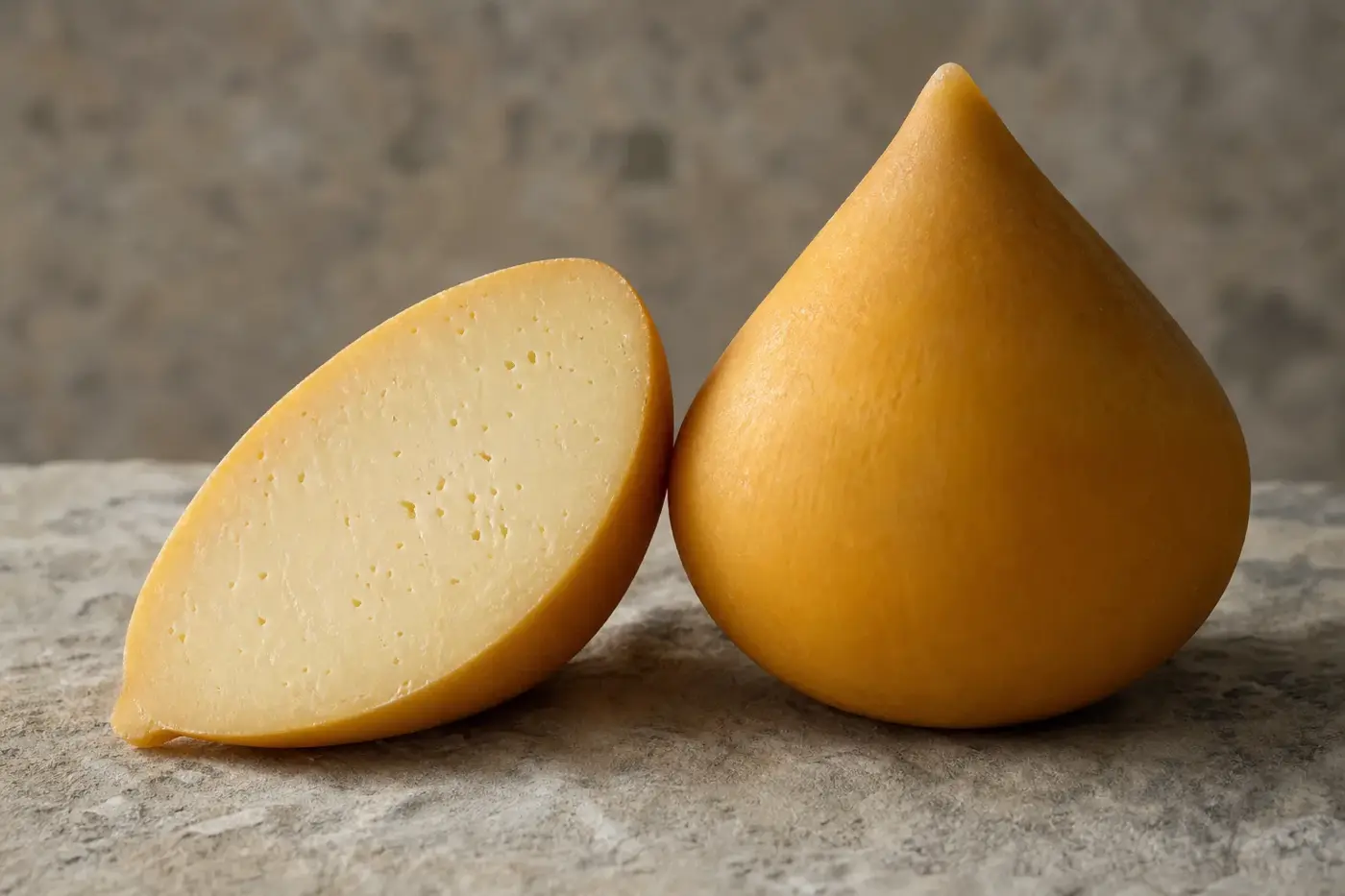
Cut through the golden exterior and birch smoke gives way to a pale, firm but yielding heart. Tall and pointed, San Simón da Costa is not a cheese you easily mistake for another. Its cow’s milk comes from local dairy farms in Terra Chá, in Galicia’s province of Lugo, and beneath the smoke, you can still taste that dairy character. [1][2]
| What to know | The detail |
|---|---|
| Name to look for | San Simón da Costa, its familiar and registered name. [3][4] |
| EU registration authority | European Commission; registration instrument: Commission Regulation (EC) No 1229/2008, Article 1 and Annex. [3] |
| EU application identifier | ES/PDO/005/0359/19.08.2004, as printed in the official application summary. Current register record ID: not supplied here. [5] |
| EU protection | Protected designation of origin, PDO, listed by Galicia’s food quality agency; November 2026 status. [6] |
| Great Britain protection | Registered PDO; UK scheme registration dated 31 December 2020; November 2026 status. [4] |
| Where it must be made | Nine municipalities in Terra Chá, Lugo, Spain. [5] |
| Milk allowed | Whole cow’s milk, raw or pasteurised. [5] |
| The finishing touch | Smoking with birch wood. [1][2] |
Follow the smoke home to Terra Chá
From the milk to the final smoke, every stage belongs to Terra Chá. The official specification places milk production, cheesemaking, maturation and smoking within nine municipalities: Vilalba, Muras, Xermade, Abadín, Guitiriz, Begonte, Castro de Rei, Cospeito and A Pastoriza. All are in Lugo. [5]
So “Galician smoked cheese” gives you only part of the story. In the EU and Great Britain, San Simón da Costa’s PDO binds this particular place to a prescribed method and a recognisable finished cheese. [3][4] You can explore the differences between schemes in protected cheese names.
The regulatory council describes a district with a strong dairy tradition, where cattle farming underpins cheesemaking. Birch has its own part to play. Its wood supplies the smoke that gives the finished rind its characteristic colour and aroma. [2]
On Spanish labels, you will see DOP, short for denominación de origen protegida. It identifies the same category as PDO. Look for the full registered name, San Simón da Costa, with its accent and “da Costa” intact. [3][5]
Get to know that point and golden rind
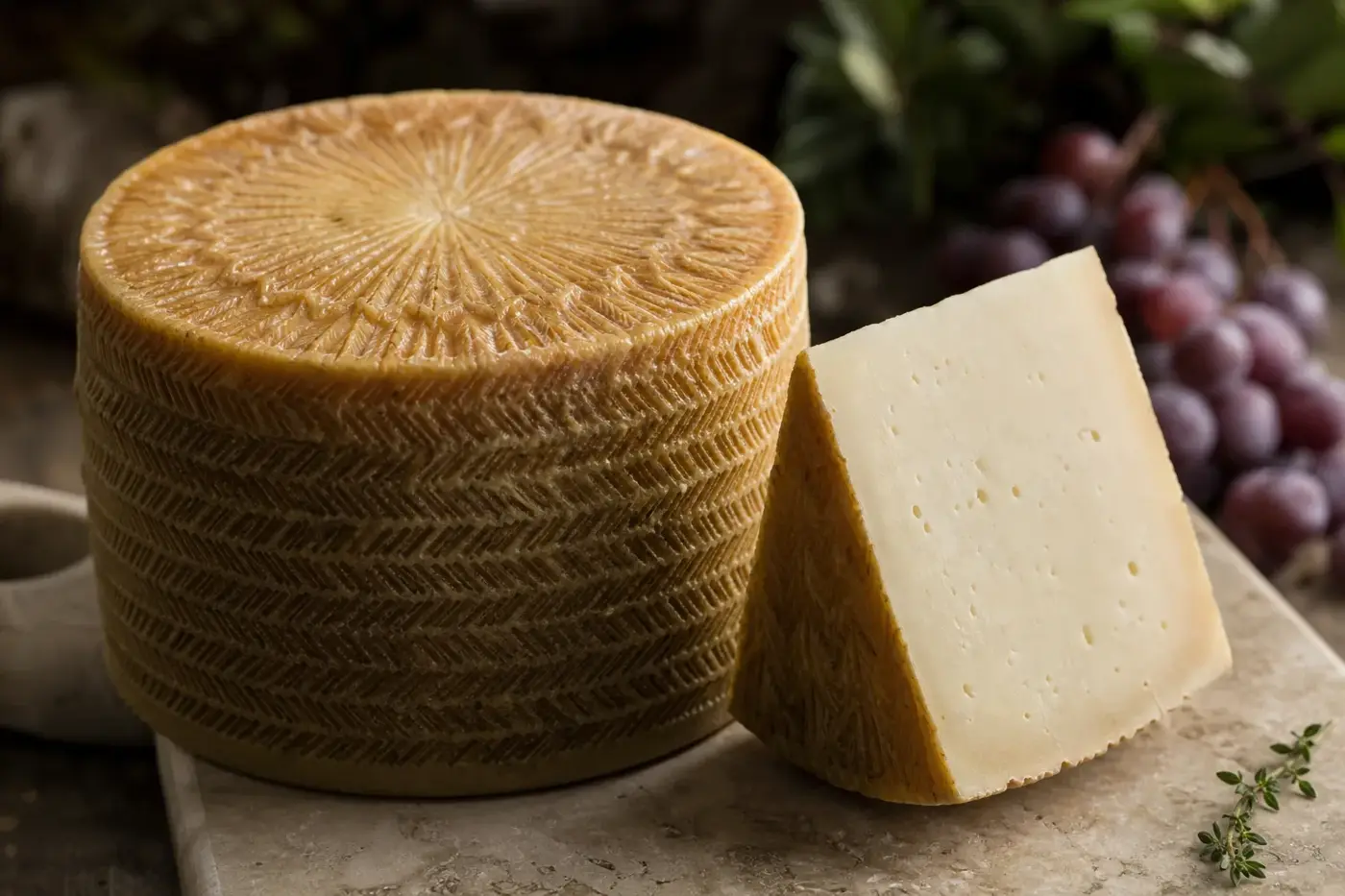
Start with the silhouette: a broad lower body rising to a pronounced point. The council compares it with both a spinning top and a bullet, capturing its height and elongated outline. [2] This is a cheese with rather better posture than most of us.
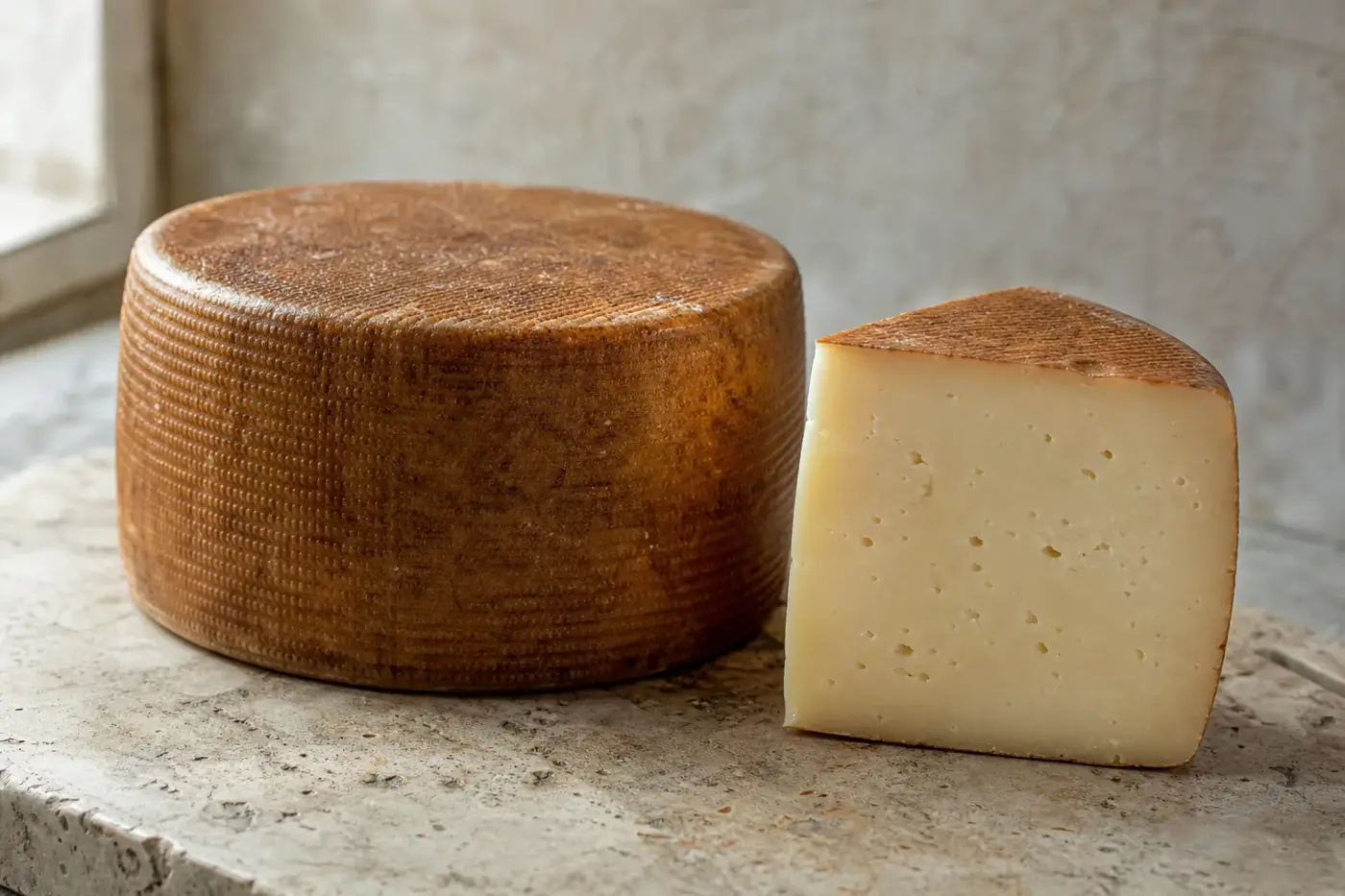
Lugo’s provincial authority describes a hard, inelastic, yellow-ochre rind, slightly oily and 1 to 3 mm thick. Inside, the paste, the cheesemaker’s word for the body of the cheese, is fine-textured, dense and semi-elastic. Its colour runs from white to yellow. [1]
Look at a cut face and you should see relatively few eyes, the council says. These little openings can be rounded or irregular, each smaller than half a pea. [2] As you choose your piece, take in that contrast between the darker exterior and the pale heart.
From whole milk to the birch smoke
The milk comes from Rubia Gallega, Pardo Alpina and Frisona cows, or crosses between those breeds. Both raw and pasteurised whole milk are permitted. If milk treatment matters to your choice, ask about the particular cheese in front of you. [5]
The making follows a sequence: coagulation, cutting the curd, moulding, pressing, salting, maturation and smoking. Rennet sets the milk, with chymosin and pepsin as its active components. The official summary also identifies lactic starter cultures. [5]
Moulds give the cheese its pointed outline. During pressing, cotton cloths help drain the curd and smooth the rind, before the cheese goes into brine for salting. Turning and cleaning continue through maturation. [7]
Only then comes the smoke. The wood must be birch without bark, and the cheese must stay away from close contact with the fire. There is no single prescribed smoking time: the specification calls for smoking until the characteristic colour develops. [7]
If you want to follow the whole journey, read how cheese is made. For the distinctions between milk treatments, turn to raw, thermised and pasteurised cheese.
Meet Bufón, the little one with the same profile
San Simón da Costa comes in two prescribed formats. Bufón is the smaller one, keeping the characteristic pointed shape and belonging to the same cheese style. [2] You get the familiar outline, just on a smaller scale.
San Simón da Costa PDO formats, Spain, November 2026. [2][7]
| Format to ask for | Finished weight | Height | Minimum maturation |
|---|---|---|---|
| Large or standard | 0.8 to 1.5 kg | 13 to 18 cm | 45 days |
| Small, called Bufón | 0.4 to 0.8 kg | 10 to 13 cm | 30 days |
The maturation clock starts at the end of salting. [7] These are minimum periods, so the piece you take home may have matured for longer.
Ask your cheesemonger for its actual maturation period when comparing pieces. The format tells you the size; the maker’s information tells you the age. A whole Bufón suits a smaller gathering, while a cut portion of the standard format lets you choose just the quantity you need.
Let milk and nuts have their say
Fresh milk, nuts, plant-like notes and delicate hearth smoke: that is how Agacal describes San Simón da Costa. Galicia’s food quality agency also identifies butter-like aromas in its published pairing account. The strongest smoke character sits at the exterior, while subtler milk-derived aromas predominate inside. [6][8]
Treat those descriptions as a starting point, not a promise that every batch will taste identical. Smell a freshly cut piece first. Then taste the interior paste before taking a bite closer to the rind.
Notice where the smoke becomes more evident, and how much of what you taste remains recognisably dairy. The agency’s milk, butter and nut notes give you something specific to seek beneath the smoke. [6][8] Tasting interior and exterior separately makes the contrast easier to follow than one large, enthusiastic bite.
When you ask for recommendations, describe the balance you enjoy. Would you prefer a gentle smoky accent, or a more evident smoked exterior? That gives your cheesemonger a much clearer starting point than “something nice”, tempting though that brief may be.
Birch shavings and stories from the newspapers
The smoke leads you to an unexpected neighbour: wooden-clog making. The specification’s historical section reproduces a newspaper article dated 10 August 1932, linking the birch shavings used for smoking with that craft. Cheesemaking and woodworking shared a practical household material. [7]
The regulatory council also records a legend connecting the cheese with the area’s ancient hillfort culture. Alongside it sits a dated reference from September 1857. That newspaper item, reproduced by the council, names San Simón cheeses among products represented at an exhibition in Madrid. [2]
These are two different kinds of history. The ancient connection belongs to folklore; the newspaper references place the cheese in the written record. The birch shavings account brings the smoking process back to the everyday work of the region, where one craft supplied another.
Nor is this a tradition confined to old newspapers. The council’s website announced the thirtieth San Simón da Costa cheese festival in Vilalba for April 2026. [2] The pointed cheese belongs to local life as well as local history.
Choose a good piece and look after it
Begin with the labels. The council says the finished cheese carries both the producer’s label and its control counter-label. [2] If you are buying a cut portion, ask to see the original identification and keep the information supplied with it.
For a closer look at those details, see reading a cheese label. Then ask three useful questions: which dairy made it, was the milk raw or pasteurised, and how long did it mature? Those answers tell you more than rind colour alone.
Use the published appearance as your reference: a hard, golden-ochre exterior around a dense, pale interior. [1] If the cut face looks dried or damaged, ask the seller about its condition before buying. You need not make the decision on appearances alone.
At home, follow the maker’s storage directions, including instructions for after opening. For England, Wales and Northern Ireland, the Food Standards Agency advises keeping dairy products refrigerated, setting the fridge between 0 and 5 °C, and following packaging instructions. [9]
Keep the wrapping and date information together, so the instructions stay with your cheese. You will find broader handling advice in storing cheese at home.
Make room on the board and in the kitchen
Start simply: bread, cheese and water, with accompaniments offered separately. That gives you room to explore the contrast Agacal describes between the smoked exterior and the milk-derived aromas. [8] Let the cheese have the first word.
Cut manageable wedges of the interior paste, then offer smaller pieces from them. Before eating the rind, consult the maker’s guidance. On a cheese board, give San Simón da Costa its moment after a delicately flavoured fresh cheese and before a forceful blue.
Keep the label’s storage and serving instructions close at hand. Follow them when preparing your cheese for the table.
If you would rather cook, the council’s published recipe collection includes sandwiches, cheese sauces, meatballs and a dish combining octopus with San Simón da Costa. [2] A simple toasted sandwich makes a useful first outing. You can judge how much smoke you want before moving on to a more elaborate dish.
For an alcohol free pairing, begin with water. Then try an unsweetened apple drink as a second comparison. Taste it with your particular piece and decide whether the fruit character complements the cheese.
Pull up a chair for Tetilla and Idiazabal
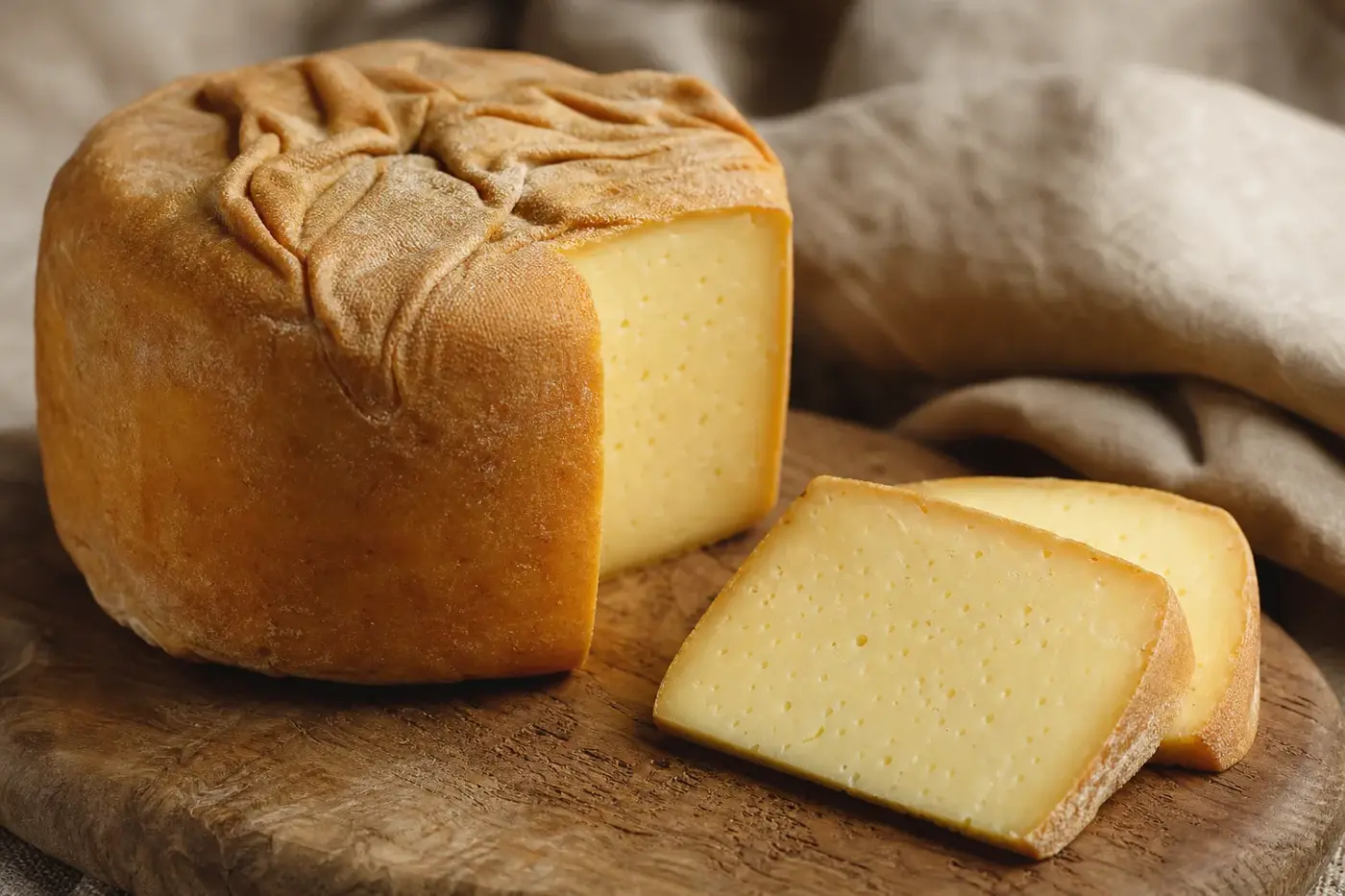
Queso Tetilla shares San Simón da Costa’s Galician cow’s milk connection, but look at the shape and interior. Lugo’s provincial authority describes Tetilla as conical or conical convex, with a softer interior. Its straw yellow rind contrasts with San Simón da Costa’s darker smoked surface. [1]
For your Tetilla comparison, concentrate on those differences in shape, rind and interior. Keep them separate from the question of what Tetilla’s specification permits about smoking. [1]
Idiazabal takes you in another direction. Its specification requires raw sheep’s milk from Latxa and Carranzana breeds and cylindrical moulds, while allowing optional smoking. [10] Milk and shape clearly distinguish it from San Simón da Costa; smoke can provide a connection.
For a tasting, choose a documented smoked Idiazabal and keep the accompaniments simple. Compare the milk character, the firmness and where the smoke appears in each bite. The pleasure lies in those differences, not in expecting smoked cheeses to be interchangeable.
General information only, not medical advice: follow the official guidance where you live.
Questions people ask
Where is San Simón da Costa made?
It comes from Terra Chá in Lugo, Galicia. Milk production, cheesemaking, maturation and smoking all take place within nine specified municipalities.
What does San Simón da Costa taste like?
Galicia’s food quality agency describes notes of fresh milk, nuts, plants and delicate hearth smoke, as well as butter like aromas. It says the smoke is strongest at the exterior, while subtler milk aromas predominate inside.
Is San Simón da Costa made with raw milk?
It can be made with either raw or pasteurised whole cow’s milk. Check which treatment was used for the particular cheese you are buying.
What is Bufón cheese?
Bufón is the smaller format of San Simón da Costa. It weighs 0.4 to 0.8 kg and must mature for at least 30 days after salting.
How is San Simón da Costa smoked?
It is smoked after maturation using birch wood without bark, while the cheese is kept away from close contact with the fire. The specification calls for smoking until the characteristic colour develops rather than for a fixed time.
Sources
- Diputación de Lugo, Productos con Denominación de Origen, undated live edition, sections on San Simón da Costa and Queso Tetilla. Official page.
- Consello Regulador DOP San Simón da Costa, official website, undated live edition with news dated March 2026; sections “Origen”, “Historia”, “Elaboración” and published recipe collection. Council website.
- European Commission, Commission Regulation (EC) No 1229/2008 of 10 December 2008, Official Journal L 333, 11 December 2008, Articles 1 and 2 and Annex. Official regulation.
- Department for Environment, Food & Rural Affairs, San Simón da Costa, protected food and drink names register, published 2021, live entry checked November 2026. GB register entry.
- European Commission, Publication of an application pursuant to Article 6(2) of Council Regulation (EC) No 510/2006: San Simón da Costa, Official Journal C 85, 4 April 2008, pages 13 to 16. Historical application summary, cross-checked against the later specification. Official Journal.
- Axencia Galega da Calidade Alimentaria, Queixos, undated live edition, San Simón da Costa section. Official agency page.
- Ministerio de Agricultura, Pesca y Alimentación, Pliego de condiciones DOP San Simón da Costa, December 2016, especially sections B, E, F and H. Official product specification.
- Axencia Galega da Calidade Alimentaria, San Simón da Costa y Ribeiro, undated published pairing account. Official pairing account.
- Food Standards Agency, How to chill, freeze and defrost food safely, published 2017, live edition checked November 2026; applies to England, Northern Ireland and Wales. Official guidance.
- Ministerio de Agricultura, Pesca y Alimentación, Pliego de condiciones: Idiazabal, official live PDF, revision date not verified, sections B and E. Official specification.
This desk-researched article brings together official specifications, registration records, regional accounts and published food storage guidance; serving suggestions are identified as editorial suggestions.
Last checked: November 2026
Last checked November 2026.
The editors suggest you read next