Cabrales
Step into a limestone cave in the Picos de Europa and Cabrales makes its presence known.
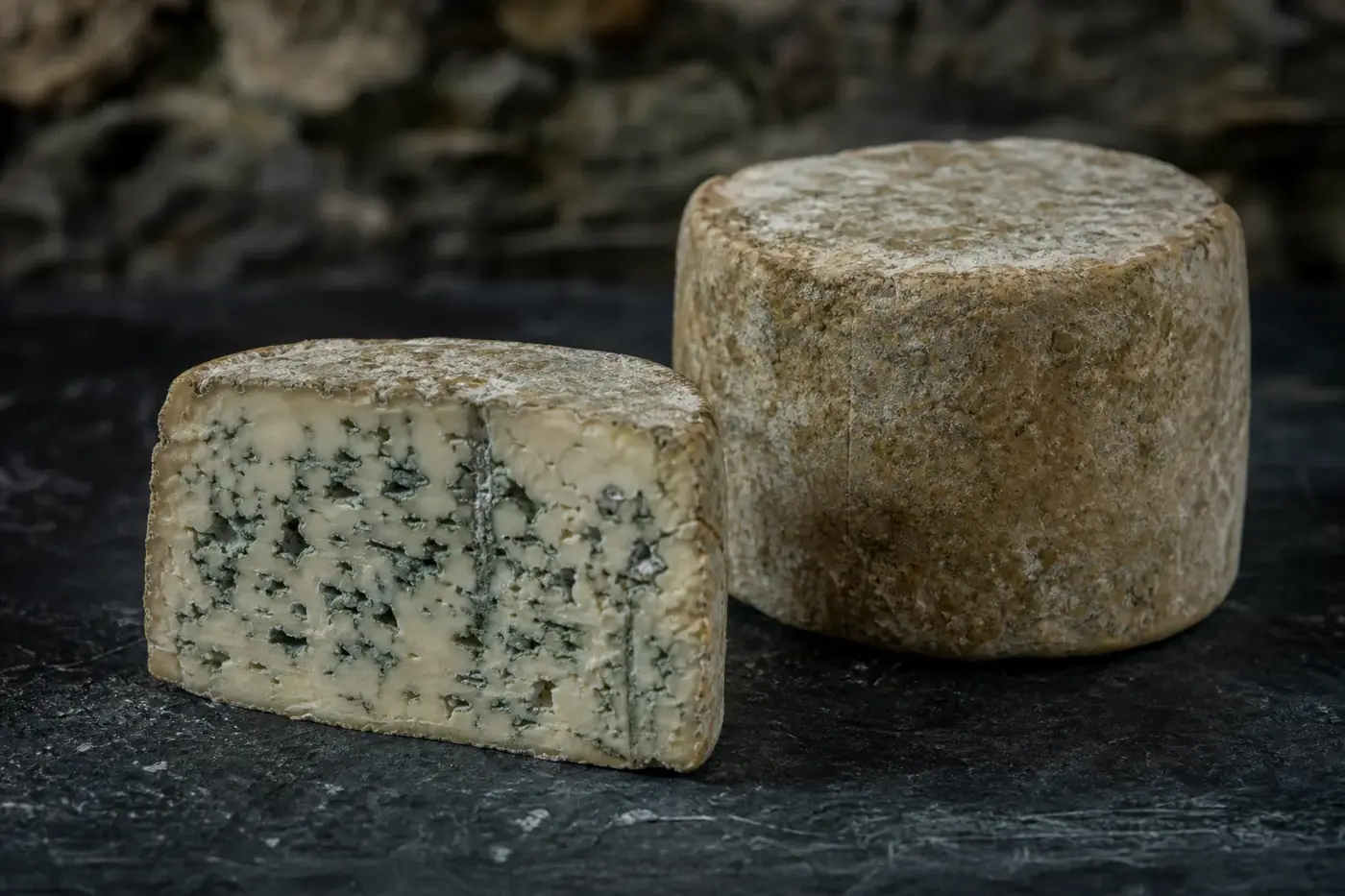
Step into a limestone cave in the Picos de Europa and Cabrales makes its presence known. There is the aroma first, then the ivory paste threaded with green-blue mould. Even the spot where a cheese sits may come with rights passed down through generations. This is ripening with a sense of belonging. [3][7]
In each piece, you taste the work of mountain livestock farmers, small dairies and people who know these caves intimately. Cabrales is made from raw milk in a defined part of Asturias. Its name holds protected designation of origin, or PDO, status in the EU and Great Britain. [1][2][3]
| Cabrales at a glance | What you need to know |
|---|---|
| Familiar and registered name | Cabrales. [1][2] |
| Who registers it | EU: European Commission, register identifier unspecified here. Great Britain: Defra register entry, Cabrales; register identifier unspecified here. [1][2] |
| Protection and dates | EU: PDO, originally registered 21 June 1996. Great Britain: registered PDO from 31 December 2020. Status dated November 2026. [1][2] |
| Where it must come from | Cabrales municipality and three specified villages in Peñamellera Alta, Asturias, Spain. [1][4] |
| Milk | Whole, raw cow’s, sheep’s or goat’s milk, alone or in combinations of two or three. [1] |
| What sets the curd | Animal rennet. [1] |
| Minimum maturation | Two months from production of the curd, mostly in caves; final ripening in registered caves. [1] |
| Usual maturation | Two to four months, according to the Consejo Regulador. [5] |
| Rind and centre | Natural, thin, soft rind; pale paste with green-blue mould. [3][6] |
| Milk allergen | Contains milk. [1] |
| Pregnancy guidance | UK: NHS guidance on thoroughly cooking soft blue-veined cheese, November 2026. [10] |
Find Cabrales among its Asturian villages
Cabrales belongs to a tightly drawn corner of Asturias, not the whole region or the wider Picos de Europa. Its authorised area covers the municipality of Cabrales and three villages in neighbouring Peñamellera Alta: Oceño, Cáraves and Rozagas. Milk production, cheesemaking and maturation must all stay within that boundary. [1][4]
On a maker’s label, you may also find Arenas, Bulnes, Carreña, Sotres and Tielve. All feature in the Consejo Regulador’s production-area guide. These names place your cheese among a network of settlements, rather than pointing to one particular dairy or cave. [4]
The designation’s origin story starts with summer mountain grazing and a practical question: how do you turn milk into cheese far from the people who will eat it? Herd management, haymaking and cheesemaking were connected parts of village life. That relationship still anchors the designation’s account of its geographical character. [1]
The caves have a human geography of their own. According to the Consejo Regulador, people may use them individually or collectively, with rights sometimes covering particular positions inside. Those rights can pass between generations, alongside the knowledge needed to care for the cheeses. [7]
One milk, two or three? Ask at the counter
Expecting three milks in every Cabrales? The current EU single document allows cow’s, sheep’s or goat’s milk alone, any two together, or all three. Whatever the combination, the milk must be raw and whole. [1]
The production specification links mixed-milk cheesemaking particularly with spring and summer. Cow’s-milk production takes place throughout the year. Ask which milks went into your piece: the name Cabrales does not promise a particular blend. [3]
Animal rennet turns the liquid milk into curd, the solid material that becomes cheese. You can explore milk treatments in raw milk, thermised and pasteurised cheese. For the different coagulants cheesemakers use, try the rennet guide. [1]
Follow the curd from dairy to cave
Cabrales begins gently. The specification describes animal rennet being added to raw milk, followed by careful cutting of the curd. Whey, the liquid released as that curd forms, drains away before the curd goes into cylindrical moulds. [3]
Only the cheeses’ own weight presses them. Turning helps them drain and take shape, then their faces are dry-salted. After airing, they move into natural caves for final maturation, with turning and cleaning continuing along the way. [1][3]
The maturation clock starts when the curd is produced. Current wording requires at least two months, mostly spent in caves. The 2025 amendment makes the sequence clear: ripening finishes in caves, but not every stage after coagulation has to happen there. [1]
What you are following is a protected production method, with requirements at each stage. For the broader journey that many cheeses share, see how cheese is made.
This page summarises published guidance from the official sources it cites. It is not medical advice. Guidance differs between countries and changes over time, so check the current source for where you live, and ask your doctor, midwife, pharmacist or dietitian about your own circumstances.
Let limestone, air and mould set the scene
Deep caves, ventilation openings and flowing water shape Cabrales’ blue development. Within the limestone formations of the Picos de Europa, the specification describes gentle air movement and very high humidity. These conditions support the mould associated with the cheese. [3]
The designation names Penicillium roqueforti as the principal mould on the cave walls, with spores travelling on air currents. Cheesemakers need not add mould spores because colonisation can happen naturally during cave maturation. You have something rather more tangible here than a vague promise of “mountain flavour”. [3]
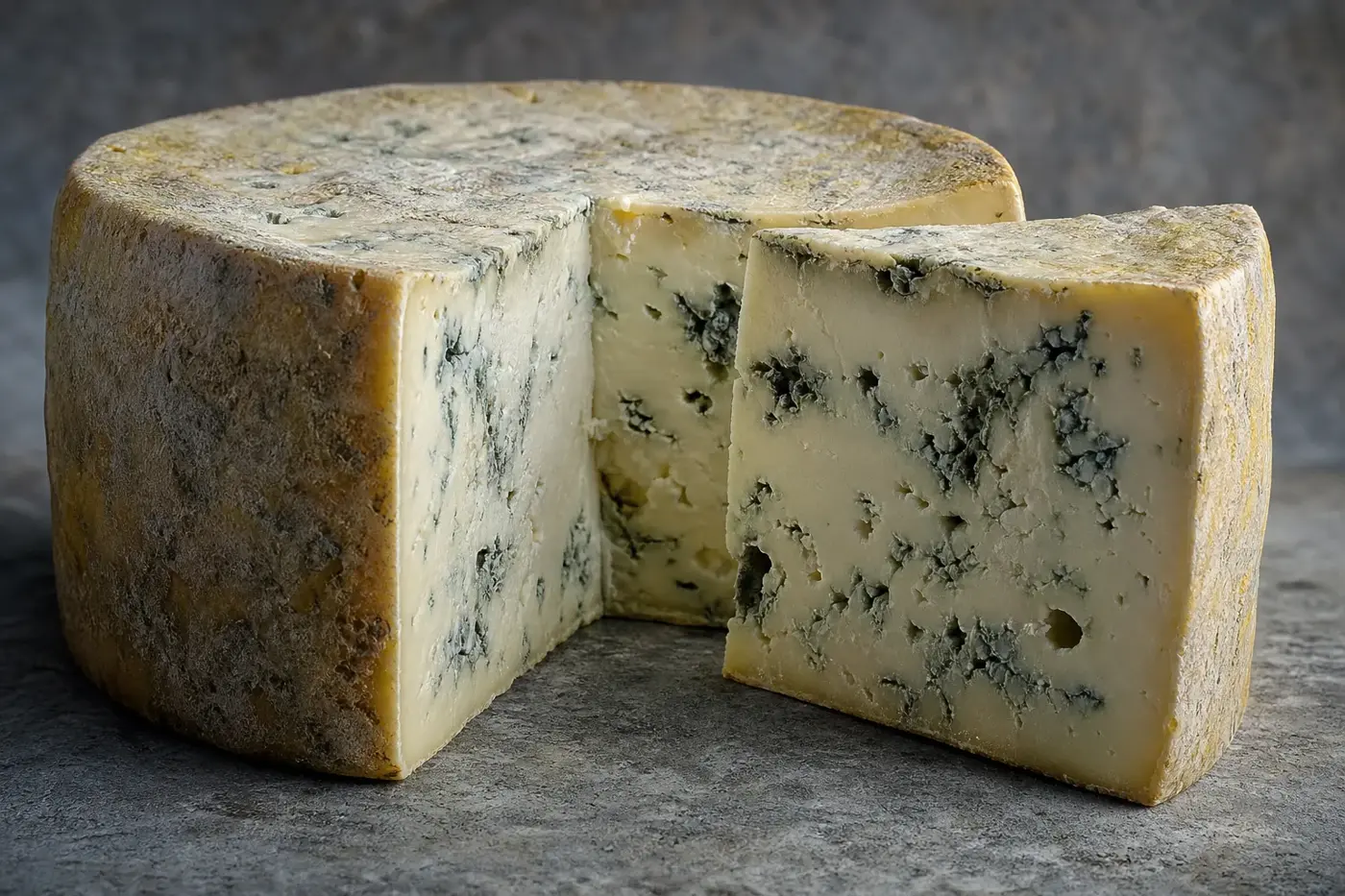
According to the Consejo Regulador, cave conditions encourage the green-blue areas and veins within the cheese. Time works on the texture too. Its tasting manual links the desired soft, spreading consistency to sufficient ripening in the cave. [5][6]
Still, a cave cannot make Cabrales alone. Cheesemakers produce, salt, handle and assess each cheese as it develops. The cave provides the ripening environment, not a licence to put their feet up.
Discover the rind, the blue and the bite
A whole Cabrales is cylindrical, with relatively flat faces. If you picture the dry, firm exterior of some mountain cheeses, think again. The Consejo Regulador describes a thin, soft rind, grey with yellowish-red areas, around a spreading paste whose cohesion varies. [8]
Inside, its tasting manual describes an ivory background crossed by green-blue mould. Look for blue running through the paste, rather than gathered in one isolated patch. Small openings belong to the structure; large holes are not a defining feature. [6]
Expect a pronounced aroma, saltiness and sharpness. Cabrales is not inclined to introduce itself quietly. The Consejo Regulador assesses aroma, flavour and finish separately, while its production account notes that sheep’s and goat’s milk can make that sharpness more marked. [5][6]
This profile comes from the designation body’s publications, rather than a fromage.co.uk tasting. At the counter, ask which milks were used, how long the cheese matured and how the cheesemonger describes it. Correctly identified examples can vary in firmness and intensity, so those questions help you find the Cabrales you want.
Look for the name, then the numbered label
Start with the name and certification details. The current EU document requires “Denominación de Origen Protegida Cabrales”, the EU PDO logo and a secondary label with its own serial number. These certification labels are supplied and controlled so they cannot be reused. [1]
The Consejo Regulador’s specification describes the distinctive secondary label as a red band between green bands. If you are buying a cut portion without visible identification, ask to see the original label. [3]
Leaves tell you less. The Consejo Regulador records an older practice of wrapping Cabrales in sycamore leaves, but today’s protected presentation uses food-grade packaging. Its account also explains how leaf wrapping could conceal the identity of other blue cheeses. [1][7]
A geographical designation and a maker’s brand tell you different things. Find your way through the distinction in protected names explained.
Get to know the neighbours: Cabrales, Queso de Valdeón and Gamonéu
These neighbouring cheeses have identities and production rules of their own. Begin with where they come from, then look at milk, ripening and texture. The differences become much easier to follow.
| Cheese | Where it comes from | What makes it distinctive |
|---|---|---|
| Cabrales | Defined area of eastern Asturias | Raw milk; final maturation in natural caves; green-blue development through the paste. [1][6] |
| Queso de Valdeón | Posada de Valdeón, León | Described by the regional authority as a PGI; current EU register status unspecified here. [9] |
| Gamonéu | Cangas de Onís and Onís, Asturias | Smoking required; firm, friable paste, with possible blue-green development near the edges. [12] |
For Gamonéu, smoking is a useful distinction to keep in mind. Its specification describes a toasted rind and restrained smoky character. Cabrales’ defining descriptions centre instead on soft paste and blue development. [8][12]
Give Cabrales a little room on your plate
Begin with a small piece, plain bread and fresh pear or apple. Taste the cheese before bringing in more flavours. On a shared board, keep accompaniments separate so everyone can find their own balance.
Asturian natural cider gives you a pairing rooted in the same place. A published promotion involving the Cabrales Consejo Regulador and a cider producer explicitly brings the two together. It is a promotional recommendation, rather than independent sensory research; for an alcohol-free option, try apple juice diluted with sparkling water. [13]
Prefer wine? A small serving of sweet white alongside a little cheese offers a deliberate contrast to Cabrales’ sharpness. Keep water handy too, and turn to the cheese and wine pairing guide for a broader framework.
Alcoholic suggestions are for adults of legal drinking age. During pregnancy, the NHS advises avoiding alcohol, so choose an alcohol-free accompaniment instead. [10]
In the kitchen, add a little Cabrales and taste before deciding whether you need more. The NHS specifically suggests strongly flavoured cheeses, including blue cheese, when a smaller amount will flavour a dish. A little can do the job. [11]
For inspiration, the Consejo Regulador publishes recipes developed by hospitality-school students. They pair Cabrales with rice, mushrooms, apples, pasta and meat. Follow those directions when you want the cheese as an accent rather than the main event. [14]
Keep Cabrales chilled and know when to cook it
Keep Cabrales refrigerated and follow its storage instructions and date marking. The NHS advises refrigerating chilled foods containing cheese and observing their use-by dates. Save the wrapper or label so you retain the maker, batch and handling instructions. [10]
For serving temperature, follow any guidance supplied with your cheese. Take out only what you intend to serve and leave the rest chilled. For wrapping and refrigerator organisation, see how to store cheese at home.
During pregnancy, UK NHS guidance says soft blue-veined cheeses must be thoroughly cooked, whether pasteurised or unpasteurised. The endpoint is steaming hot throughout. Stirring Cabrales into a warm sauce does not establish that it has reached that point. [10]
The NHS identifies infants and young children, people over 65, pregnant people, and people with a long term medical condition or weakened immune system as being at higher risk of food poisoning. Consult its current guidance on cheese and cooking. Speak to your healthcare professional about your circumstances. [11]
Finally, leave the folklore behind. The Consejo Regulador explicitly rejects stories that Cabrales needs maggots or maturation in manure. Its intentional blue ripening comes from milk, cheesemaking and cave mould. With those caves and the people who tend them, you already have plenty of story. [7]
Questions people ask
Where is Cabrales made?
Cabrales is made in the municipality of Cabrales and the villages of Oceño, Cáraves and Rozagas in Peñamellera Alta, Asturias. Milk production, cheesemaking and maturation must all take place within this area.
What milk and rennet are used in Cabrales?
Cabrales can be made from whole, raw cow’s, sheep’s or goat’s milk, either alone or in combinations of two or three. Animal rennet is required.
How long is Cabrales matured?
Cabrales must mature for at least two months from production of the curd, mostly in caves. The Consejo Regulador says typical maturation takes two to four months.
How can I identify genuine Cabrales?
The current EU document requires the wording “Denominación de Origen Protegida Cabrales”, the EU PDO logo and a secondary label with its own serial number. If a cut portion has no visible identification, ask to see the original label.
Can I eat Cabrales during pregnancy?
The NHS advises that soft blue cheeses, whether pasteurised or unpasteurised, must be thoroughly cooked until steaming hot throughout during pregnancy. Check the current NHS guidance and speak to your healthcare professional about your circumstances.
Sources
- European Commission. Publication of the communication of an approved standard amendment to a product specification of a geographical indication, C/2025/5117, 19 September 2025. Amendment communication and updated single document for Cabrales. Official document.
- Department for Environment, Food & Rural Affairs. Cabrales, GB protected food and drink names register, published 4 January 2021; accessed November 2026. Register entry.
- Consejo Regulador DOP Cabrales. Expediente de la Denominación de Origen Protegida “Cabrales”, undated specification hosted by the Consejo; read alongside source 1, which supersedes parts of its production and presentation wording. Specification.
- Consejo Regulador DOP Cabrales. Zona de producción del Queso Cabrales, undated; accessed November 2026. Production-area guide.
- Consejo Regulador DOP Cabrales. Elaboración del queso de Cabrales, undated; accessed November 2026. Production account.
- Consejo Regulador DOP Cabrales. Manual de cata del Queso Cabrales, undated; accessed November 2026. Tasting manual.
- Consejo Regulador DOP Cabrales. ¿Sabía que...?, undated; accessed November 2026. Published account.
- Consejo Regulador DOP Cabrales. Características del queso de Cabrales, undated; accessed November 2026. Characteristics.
- Instituto Tecnológico Agrario de Castilla y León. «Queso de Valdeón» (IGP), undated; accessed November 2026. Official regional account.
- NHS. Foods to avoid in pregnancy, current page accessed November 2026. Official pregnancy guidance.
- NHS. Dairy and alternatives in your diet, current page accessed November 2026. Official dairy guidance.
- Ministerio de Agricultura, Pesca y Alimentación. Pliego de condiciones de la Denominación de Origen Protegida “Gamonéu”, specification dated 12 January 2024. Specification.
- Consejo Regulador DOP Cabrales and participating cider promotion partners. Queso quiere sidra, promotional leaflet, undated. Commercial participants have an interest in promoting the pairing. Leaflet.
- Consejo Regulador DOP Cabrales. Recetas de cocina con Queso Cabrales, recipes attributed to students of the hospitality and tourism school in Gijón; undated, accessed November 2026. Recipe collection.
Researched through official designation documents, the designation body’s published accounts, regional agricultural sources and current NHS guidance; serving suggestions are identified as editorial recommendations.
Last checked: November 2026
Last checked November 2026.
The editors suggest you read next