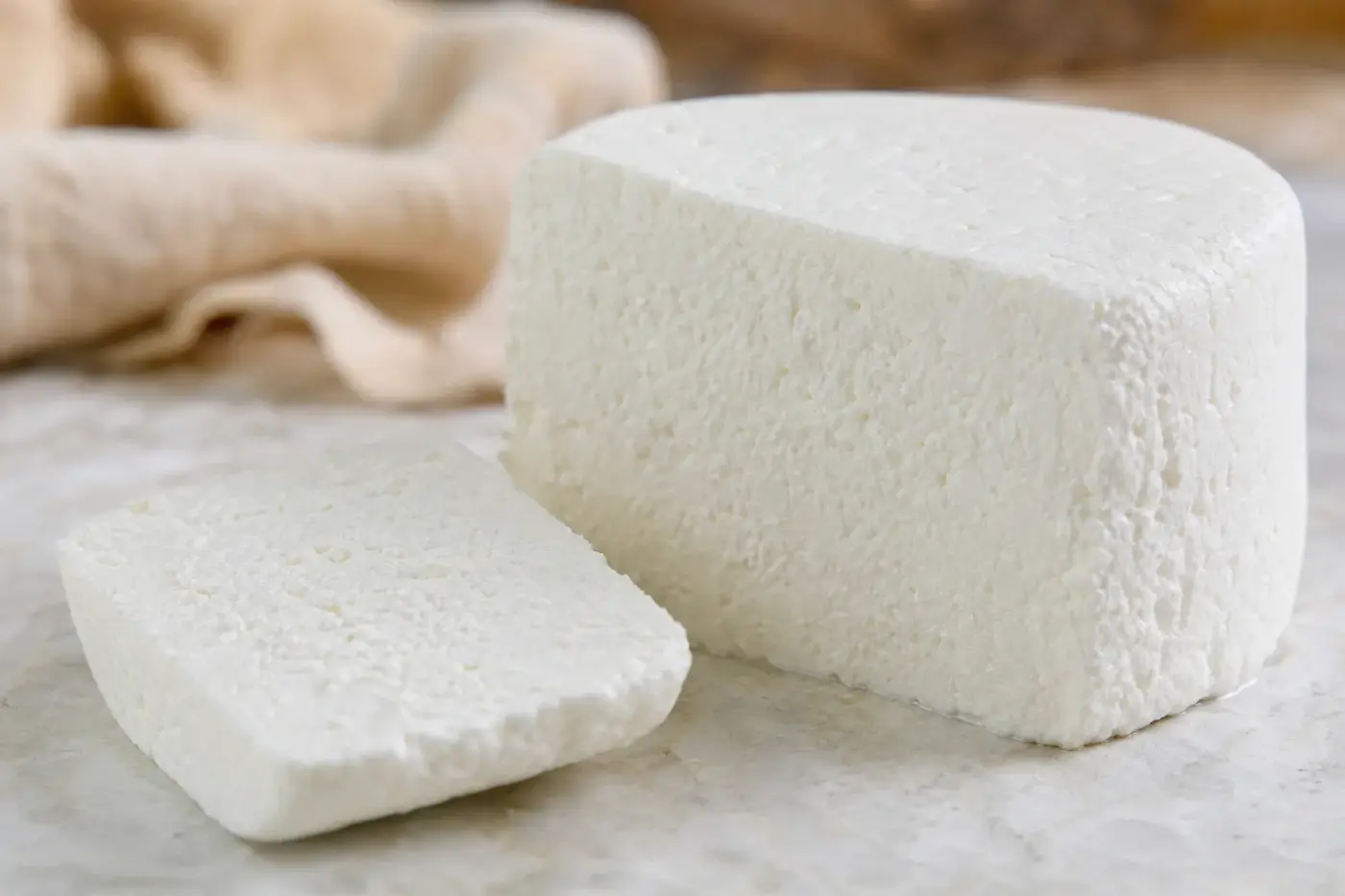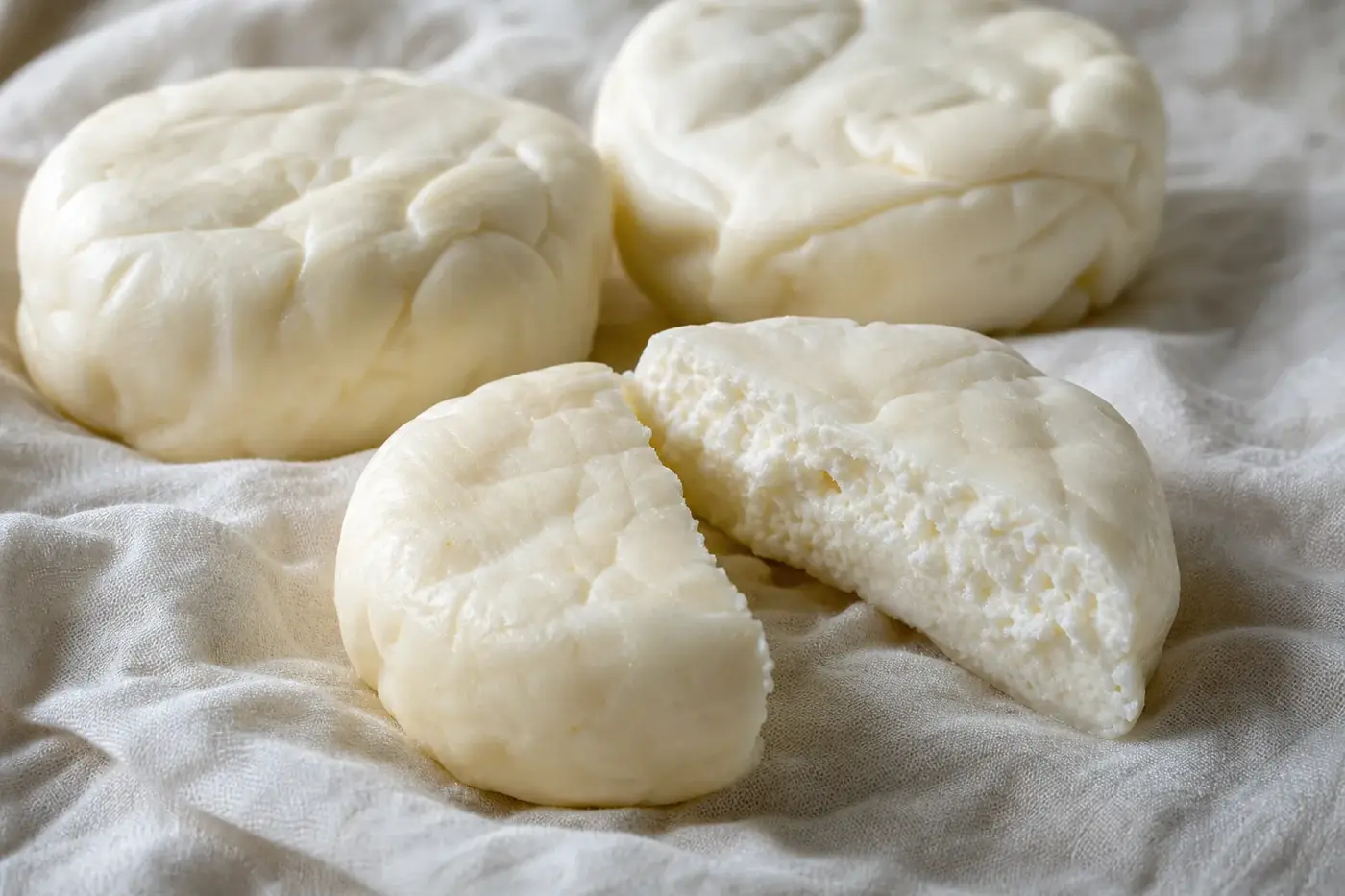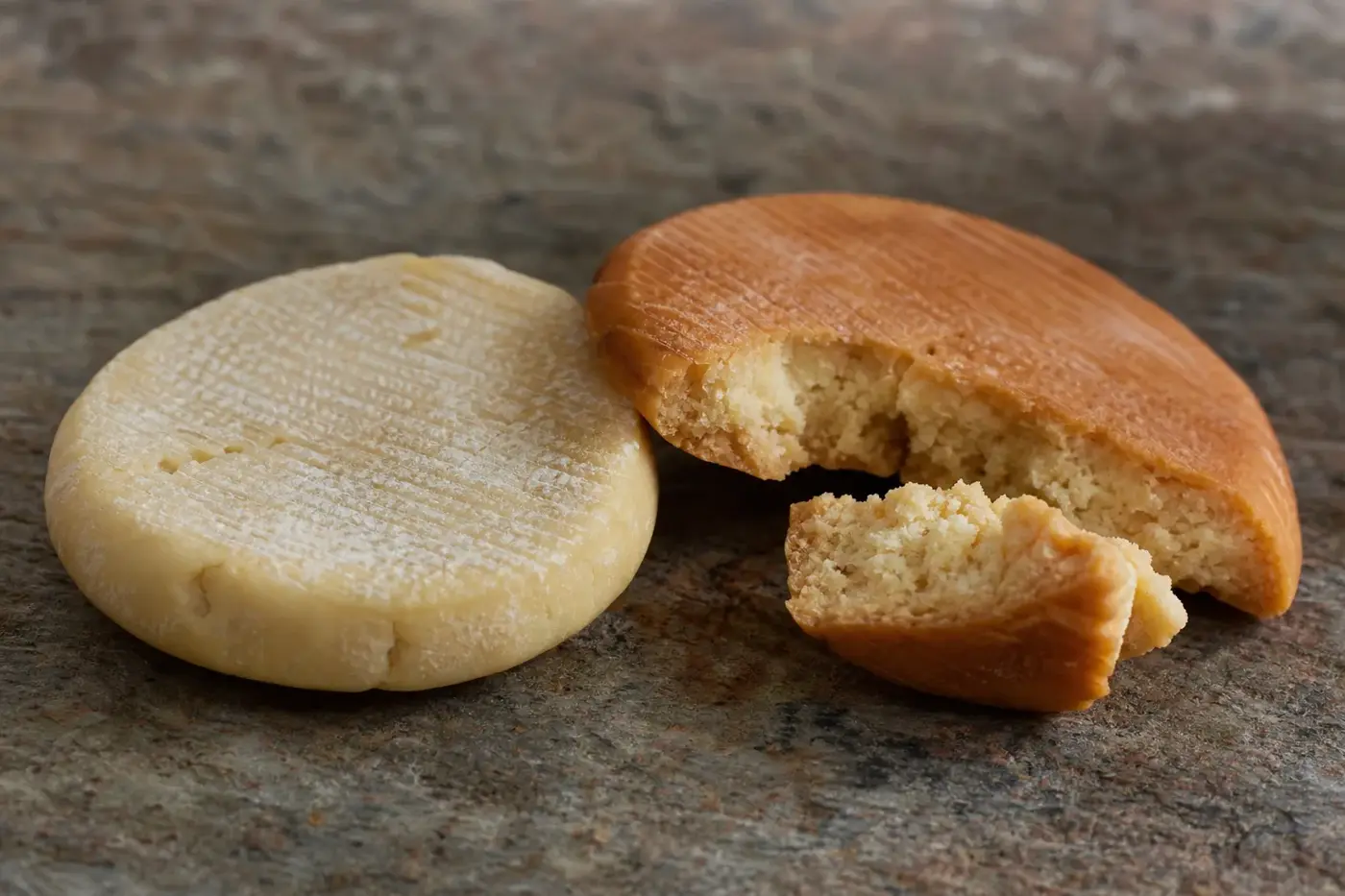
Break open a small, flattened disc of Bandel. It crumbles in your fingers, then delivers a pronounced hit of salt. Choose the smoked version and a brown exterior and smoky aroma join in: this Bengali cow’s milk cheese is not inclined to go unnoticed, with roots in accounts of Bandel town and a continuing place in Kolkata’s markets.[1][2][3]
| What you might want to know | A little detail |
|---|---|
| Familiar name | Bandel.[1] |
| Cheese style | Unripened, salted cheese.[1] |
| Places associated with it | West Bengal, India, particularly Bandel and Kolkata.[1][4] |
| Milk used in published accounts | Cow’s milk.[1] |
| Shape | Flattened circular discs.[1] |
| Varieties you may encounter today | Plain and smoked.[3] |
| Milk treatment of your purchase | Product-specific information needed |
| Typical dimensions and weight | Further information needed |
| Registered name, registration authority and register ID | Registration details needed |
| Protection status by jurisdiction | Jurisdiction-specific information needed |
Meet a little disc with plenty to say
Pale or smoked, Bandel invites you to break off a piece. The FAO’s 1990 account calls it a soft, salted cheese shaped into flattened circles. Later research describes its crumbly texture, giving you a clearer sense of what happens in your hand.[1][2]
Contemporary descriptions distinguish the pale, unsmoked version from its darker, smoked companion. Smoking brings that brown exterior and smoke character; salt makes its presence felt in both. A 2025 qualitative study, based on stakeholder interviews, describes Bandel as unripened, smoky and crumbly.[2][3]
Think of the disc as an ingredient to portion, not an individual helping. Break off a little and judge its intensity before scattering it through your dish. Give each version its own consideration: does smoke belong among the flavours you are preparing?
Follow Bandel from town to market
Bandel’s name points you towards a town associated with Portuguese settlement in the Hooghly area of West Bengal. The FAO recorded the cheese in and around Bandel in 1990. More recent scholarship places its small smoked roundels in Kolkata’s New Market.[1][4]
The town and the market tell different parts of the story. One is associated with the name; the other is somewhere you can encounter the cheese. Neither tells you who made the particular disc in front of you, or where.
The Locavore’s November 2025 account takes you to Chak Chand village, in Bankura district. It identifies small-batch production there supplying Kolkata vendors. That records a production connection at that time, not a single origin for every disc sold as Bandel.[3]
Ask where yours was made. A maker’s name, production address and clear product description tell you more than “Bandel” alone. That matters especially if the place of production is part of what you want to know.
Portuguese connections, Bengali hands
Bandel’s Portuguese connection belongs within Bengal’s history of culinary exchange. Portuguese settlement in the Hooghly area gives a credible geographical setting to the widely repeated story of the cheese’s origins. The precise link to its invention is less certain.
A 2025 historical study explores Bandel through the cultural exchanges of the Hooghly settlements. It draws on similarities with Portuguese fresh cheese and on Bengali collective memory to support a history of exchange. Its discussion builds on earlier food scholarship, rather than a contemporary Portuguese recipe for Bandel.[4]
The strongest story, then, is about contact, adaptation and techniques travelling. You can consider Portuguese involvement in Bengal alongside the later tradition linking them with milk curdling. Neither gives the cheese a proven inventor or foundation date.
Bengali makers belong at the centre of this story, not at its edges. If a technique travelled into Bengal, local milk, handling, preservation and eating habits may have shaped how it was used. Bandel’s cultural significance rests as much in that continuing practice as in the question of when and how it arrived.
From milk to a small salted round
Behind the little disc lies a sequence of acidification, drainage, shaping and salting. Acidification makes milk more acidic, causing its proteins to gather into curd, the solid portion separated from liquid whey. You can follow the wider sequence in how cheese is made.
The Locavore’s 2025 account describes cow’s milk curdled with lemon juice or another souring agent. Kneading, straining, shaping and salting follow. It also records a production description involving an undisclosed acidic agent and salt-dipped cloths.[3]
Turn to the FAO’s older description and you find perforated pots. The equipment and level of detail differ between the accounts, but the purpose is shared. Both describe draining the curd and forming it into small cheeses.[1]
| Step | What happens in the accounts |
|---|---|
| Setting the milk | Acid coagulation in the contemporary ingredient account.[3] |
| Draining | Straining in the contemporary account; perforated pots in the FAO account.[1][3] |
| Shaping | Forming flattened rounds.[1] |
| Finishing | Salting, then smoking for the smoked version.[3] |
These accounts give you a picture of the craft, not a dependable making method. Reproducing it would also require established controls for milk treatment, acidification, hygiene and storage.
Salt, smoke and the changing Bandel name
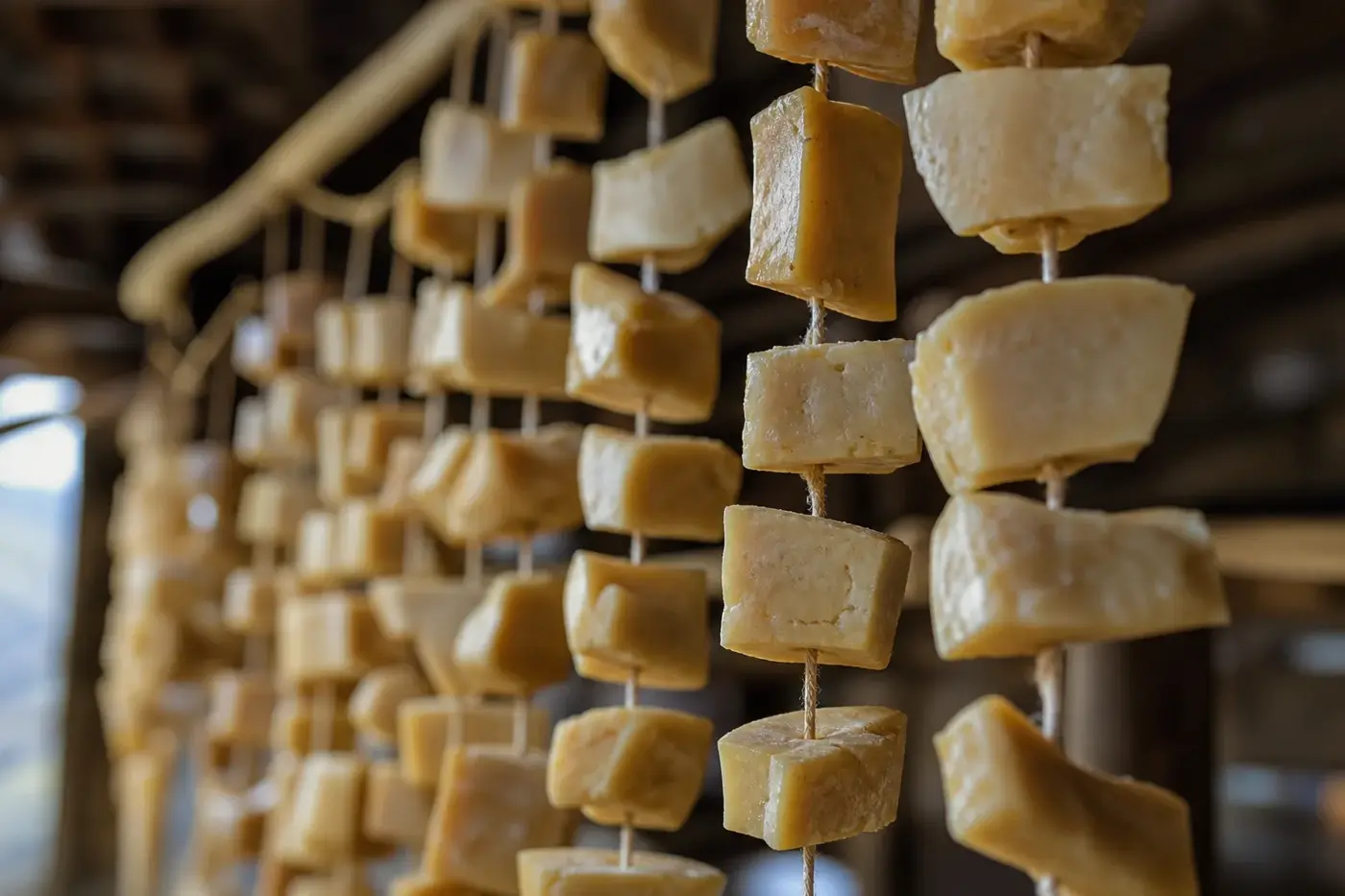
Salt is fundamental to Bandel, not just a finishing flourish. Published accounts connect its heavy salting with preservation. Smoke adds another layer, bringing the smoked version its darker surface and characteristic aroma.[3]
The older names have a wrinkle worth knowing. In its 1990 entry, the FAO describes Bandel separately from “Dacca”, a similar flat, round cheese distinguished there by smoking. Contemporary accounts put both smoked and unsmoked products under the Bandel name, so the date of a description matters when you compare regional cheese names.[1][3]
At home, follow the instructions for your particular product and the applicable food safety guidance. The UK guidance discussed below calls for dairy products to be refrigerated and stored according to their package instructions.[6]
Let a little Bandel do the work
According to the FAO, Bandel is ready for sale after shaping. It is unripened, not a cheese that needs long maturation. Contemporary accounts describe soaking it before eating to moderate the salt, then using it in salads, sandwiches or as a finishing crumble.[1][3]
Its uses are still developing. The 2025 interview study considers Bandel’s cultural value alongside its adoption in modern recipes. That is a useful reminder to distinguish a regional food tradition from assumptions about what every household cooks.[2]
In your cooking, treat Bandel as a concentrated accent. Scattered pieces bring contrast, while a finer crumble spreads the cheese more widely; a small amount can also be folded into a filling. This is one occasion when a cheese lover’s instinct to add just a little more deserves a pause.
Timing changes the result, too. Mix it through during preparation and its contribution spreads throughout the dish; add it at the table and you meet it in separate mouthfuls. Neither approach calls for a large quantity, so let its intensity guide you.
Before soaking, get advice for your disc
A contemporary account records soaking heavily salted Bandel before eating to moderate its saltiness.[3] For appropriate handling during and after soaking, ask the maker or retailer for instructions for your particular disc.
Prepare the quantity you need for the meal, and ask specifically about handling after soaking. Add the cheese before adjusting the dish’s other seasoning. Its saltiness needs to be part of that decision.
The ideas below are editorial serving suggestions, not traditional recipes or preparations tested by the site. Use them as starting points for deciding where you want that salty accent:
- Tomato and cucumber salad: scatter a fine crumble over the vegetables, then decide whether your dressing needs more salt.
- Roasted vegetables: add small broken pieces at serving. Choose smoked Bandel when a smoke accent suits the dish.
- Warm lentils: scatter cheese over individual portions so each diner can control the amount.
- A sandwich filling: combine small pieces with sliced vegetables and herbs, rather than making cheese the whole filling.
- A vegetable tart: use Bandel as one seasoning component, tasting the rest of the filling before adding salt.
For your first encounter, keep the accompaniment simple. Several elaborate preparations at once make it harder to pick out the cheese’s own qualities. Give yourself room to notice what the Bandel brings.
Find your Bandel, then care for it properly
Kolkata’s New Market is a documented point of sale in scholarship. Check availability directly before you make the journey. Ask the retailer about the maker, milk treatment, production date, storage conditions and instructions after opening or soaking.[4]
In England, Wales and Northern Ireland, the Food Standards Agency advises keeping your refrigerator between 0 and 5 °C (32 to 41 °F) and storing dairy products refrigerated. Follow the product’s storage instructions, including any shorter period after opening. Scottish official guidance likewise recommends keeping refrigerated food below 5 °C (41 °F).[6][7]
The date label matters, but so does how you store the cheese. UK government guidance distinguishes use-by dates, which concern safety, from best-before dates, which concern quality. Correct storage is necessary throughout either stated period; for broader practical advice, see how to store cheese at home.[8]
Ask the supplier directly about milk treatment. Food Standards Scotland states that raw milk can contain harmful bacteria and explains that pasteurisation uses controlled heat treatment to destroy pathogens.[9] You can explore the distinctions in raw milk, thermised and pasteurised cheese.
If you are pregnant, the NHS advises cooking some soft cheeses until steaming hot all the way through. These include soft cheeses with a white outer coating and soft blue cheeses, whether made with pasteurised or unpasteurised milk. Check the current UK NHS guidance against your particular product.[10]
Bandel or fresh paneer? Let your dish decide
Bandel and fresh paneer share the broad territory of milk curd that is drained and shaped. At the stove, though, they have different jobs. The FAO describes paneer as an acid-coagulated product and identifies Bandel separately by its cow’s milk, salting and small round format.[1]
Choose fresh paneer when your dish is built around substantial pieces of fresh curd. Consider Bandel when you want a smaller, strongly seasoned addition. Swap one for the other and you need to rethink the seasoning of the whole dish, not automatically exchange equal quantities.
Milk, setting method, drainage, salting and finishing give you a useful framework for comparing these two cheeses and others beyond them. Once you look at those details, their different roles become easier to understand. The guide to telling cheese styles apart explains those distinctions.
General information only, not medical advice: follow the official guidance where you live.
Questions people ask
What does Bandel cheese taste like?
Bandel is pronouncedly salty and crumbly. The smoked version also has a brown exterior and a smoky aroma.
How is Bandel cheese made?
One account describes cow’s milk curdled with lemon juice or another souring agent, then kneaded, strained, shaped and salted. The smoked version is smoked after salting.
Why is Bandel cheese soaked before eating?
A contemporary account describes soaking Bandel to moderate its saltiness. Ask the maker or retailer for instructions on handling the particular cheese during and after soaking.
Was Bandel cheese invented by the Portuguese?
Bandel is associated with a town in an area of West Bengal where Portuguese people settled. The precise link to the cheese’s invention is uncertain, and no inventor or foundation date has been proven.
How should Bandel cheese be stored?
In England, Wales and Northern Ireland, the Food Standards Agency advises storing dairy products in a refrigerator kept between 0 and 5 °C. Follow the product’s storage instructions and check the agency’s current guidance.
Sources
[1] Food and Agriculture Organization of the United Nations. The technology of traditional milk products in developing countries. FAO Animal Production and Health Paper 85, 1990. Chapter 7, particularly sections 7.5.1 to 7.5.4. Retrieved chapter.
[2] Manipal Academy of Higher Education. Institutional record and abstract for Preserving Authenticity and Heritage: Culture of Bandel Cheese. In Gastronomic Tourism: Discovering the World through Culinary Journeys, CABI, 2025, pages 9 to 16. The accessible abstract describes qualitative stakeholder interviews; the full chapter was not retrieved. Retrieved institutional record.
[3] The Locavore. Bandel Cheese. Ingredient account, 19 November 2025. Used as an attributed contemporary account of production and culinary practice, not as a food safety authority. Retrieved account.
[4] Global Food History. Confecting Creole Bengal, from Sandesh to Rosogolla: Textural Transformations and Sonic Recall. Published online 6 November 2025. Published version retrieved from the University of Helsinki repository. Retrieved paper.
[6] Food Standards Agency. How to chill, freeze and defrost food safely. Published 18 December 2017, live guidance checked November 2026. Applies to England, Northern Ireland and Wales. Retrieved guidance.
[7] Food Standards Scotland. Storing Food Safely. Live consumer guidance, checked November 2026. Retrieved guidance.
[8] UK Government. Understanding food labelling: Best before and use-by dates. Live guidance, checked November 2026. Retrieved guidance.
[9] Food Standards Scotland. Know the food facts: Raw milk. Live consumer guidance, checked November 2026. Retrieved guidance.
[10] NHS. Foods to avoid in pregnancy. Live guidance, checked November 2026. Retrieved guidance.
This desk-researched article compares an older technical account, contemporary research and food documentation, historical scholarship and current UK official food safety guidance.
Last checked: November 2026
Last checked November 2026.
The editors suggest you read next