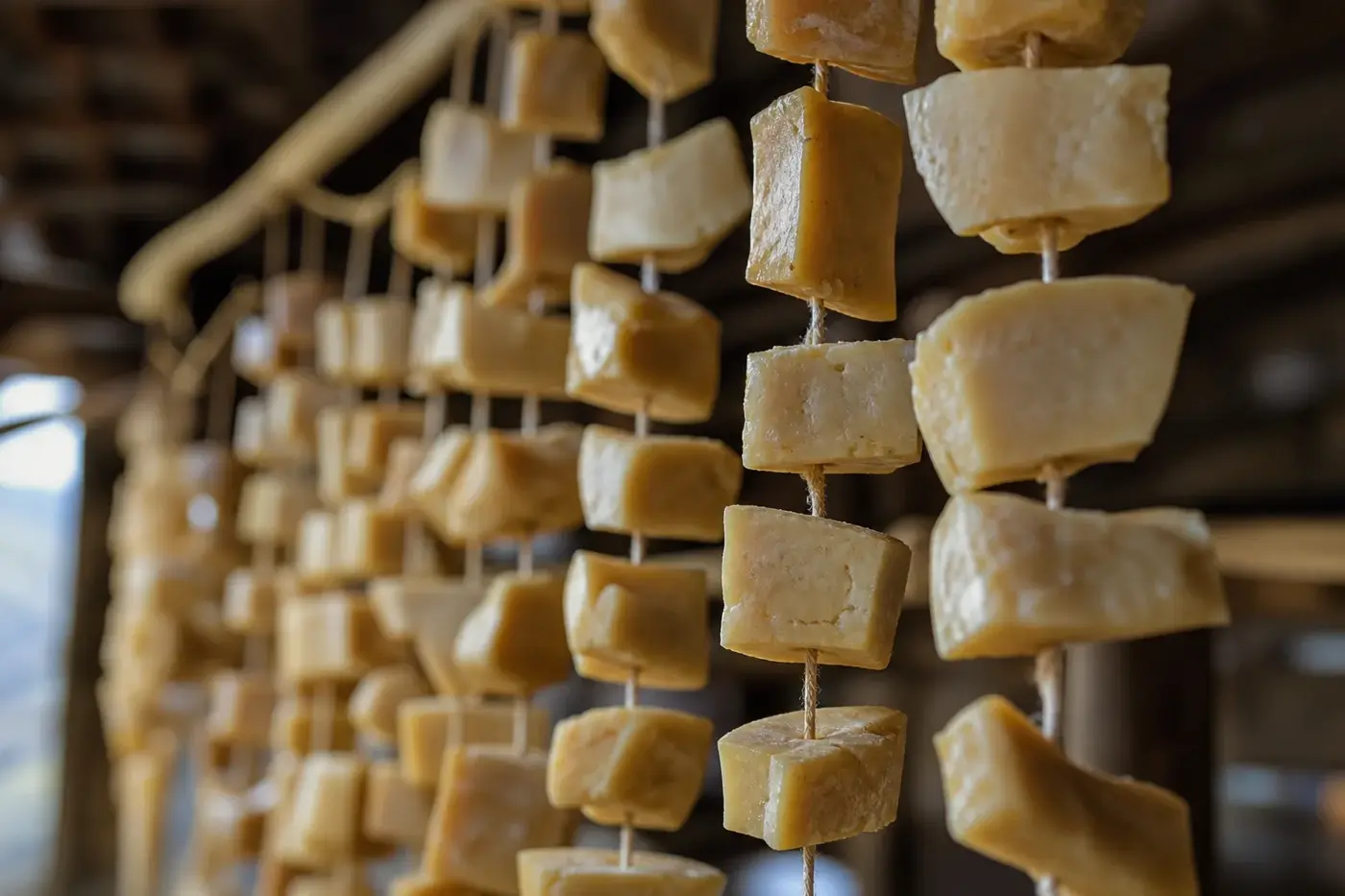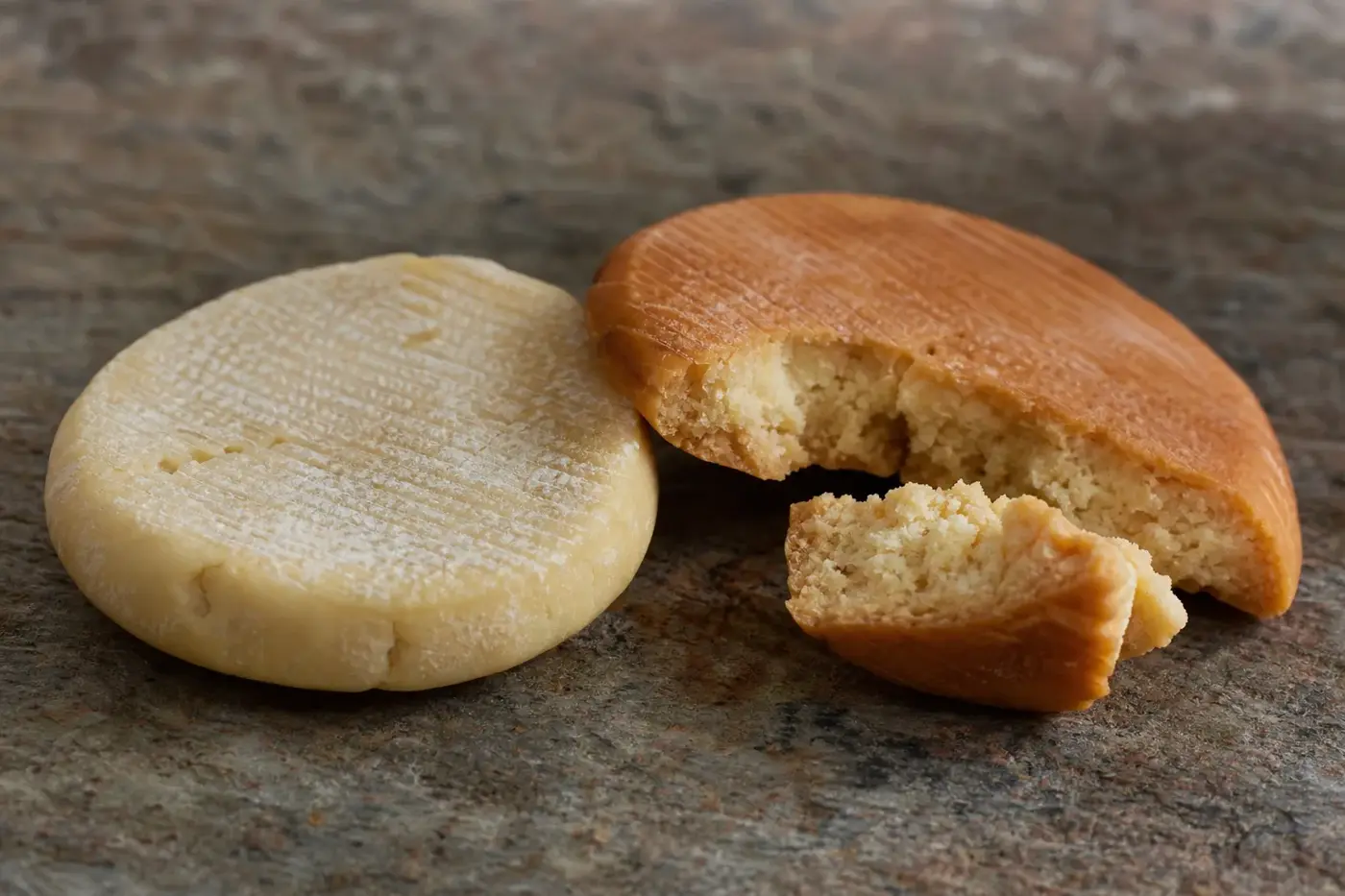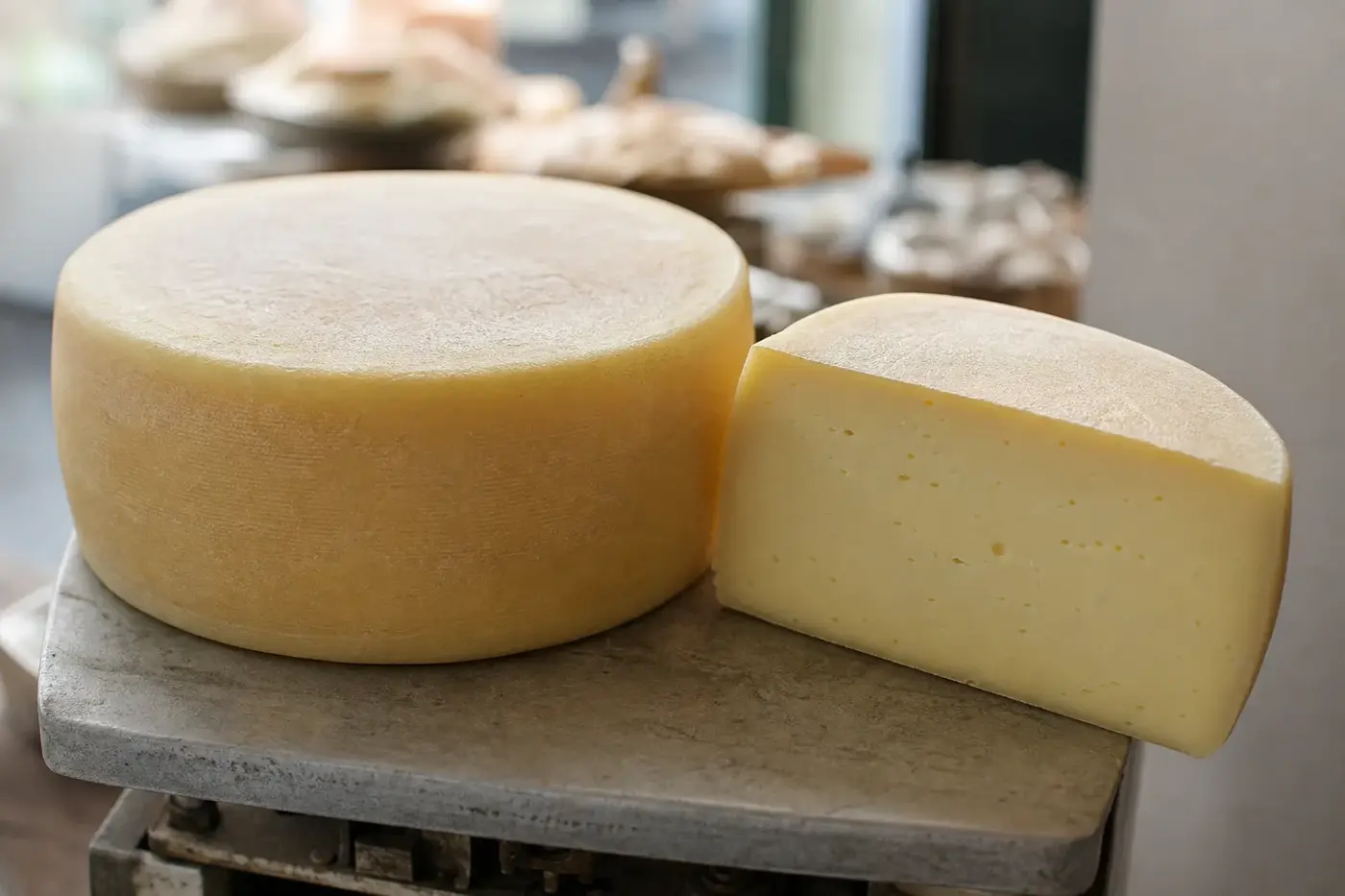
Watch a cube of paneer brown in a hot pan. Its surface turns golden, but the cube stays put. This mild, milky South Asian cheese gives you something distinct to bite into, rather than melting away into your curry. It is reassuringly good at minding its own business. [2,3,4]
Behind that firmness is a short sequence: curdle hot milk with acid, drain the whey and press the curds into a block. Paneer stays fresh and unripened. Its close relative, the less firmly drained curd called chhena, takes another delicious route: into sweets. [2,3,4]
Your quick introduction to paneer
| What you want to know | The essentials |
|---|---|
| Name | Paneer [1] |
| Style | Fresh, unripened cheese formed with heat and acid [5] |
| Milk | Commonly cow's milk, buffalo milk or a mixture [7] |
| What brings the curds together | Heat and permitted acidulants [1] |
| Rind | None [2] |
| Ageing | Unripened [5] |
| Indian standard | Regulation 2.1.16, Standard for Chhana and Paneer, in FSSAI's 2022 compendium [1] |
A closer look at that milky block
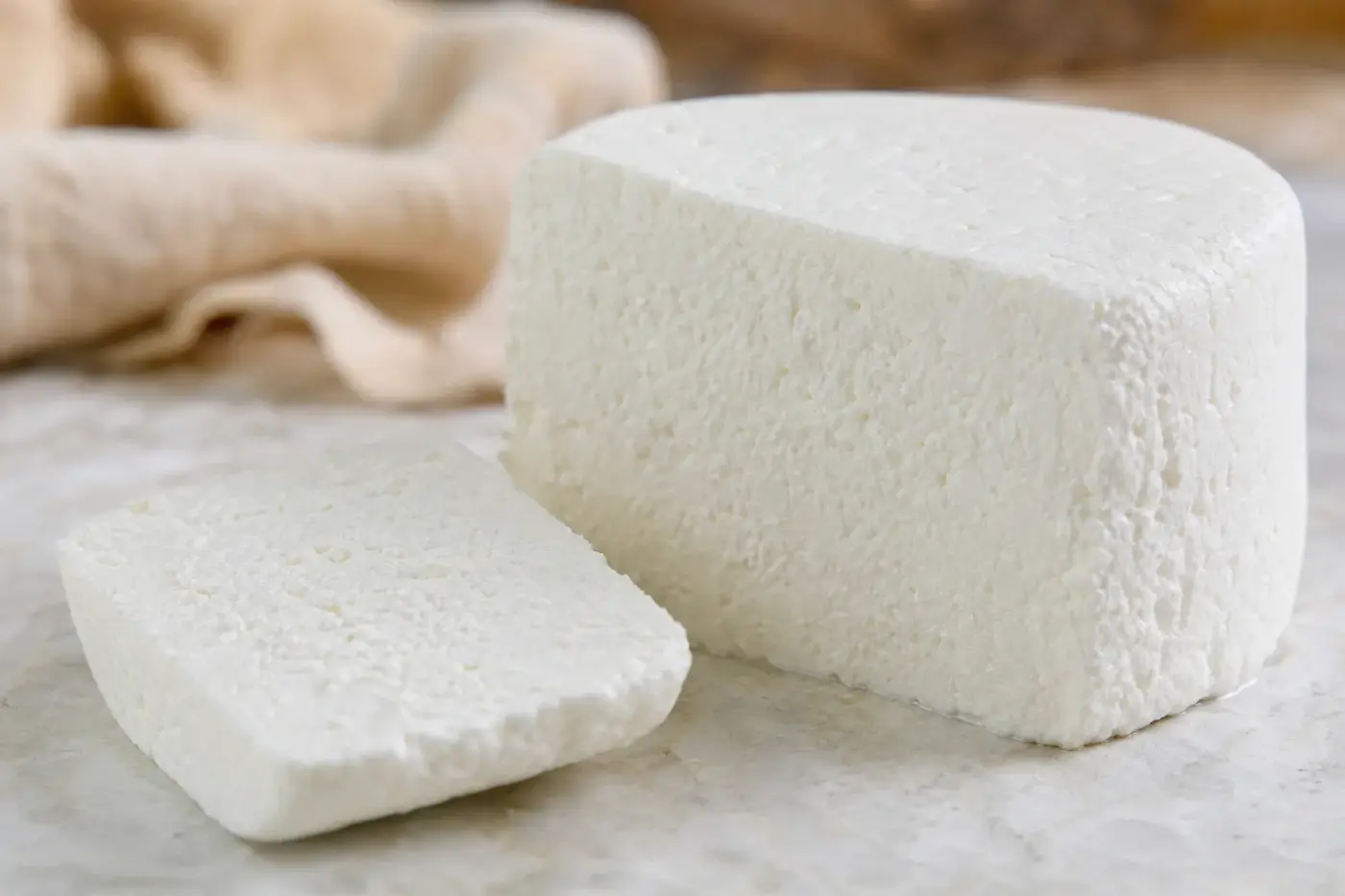
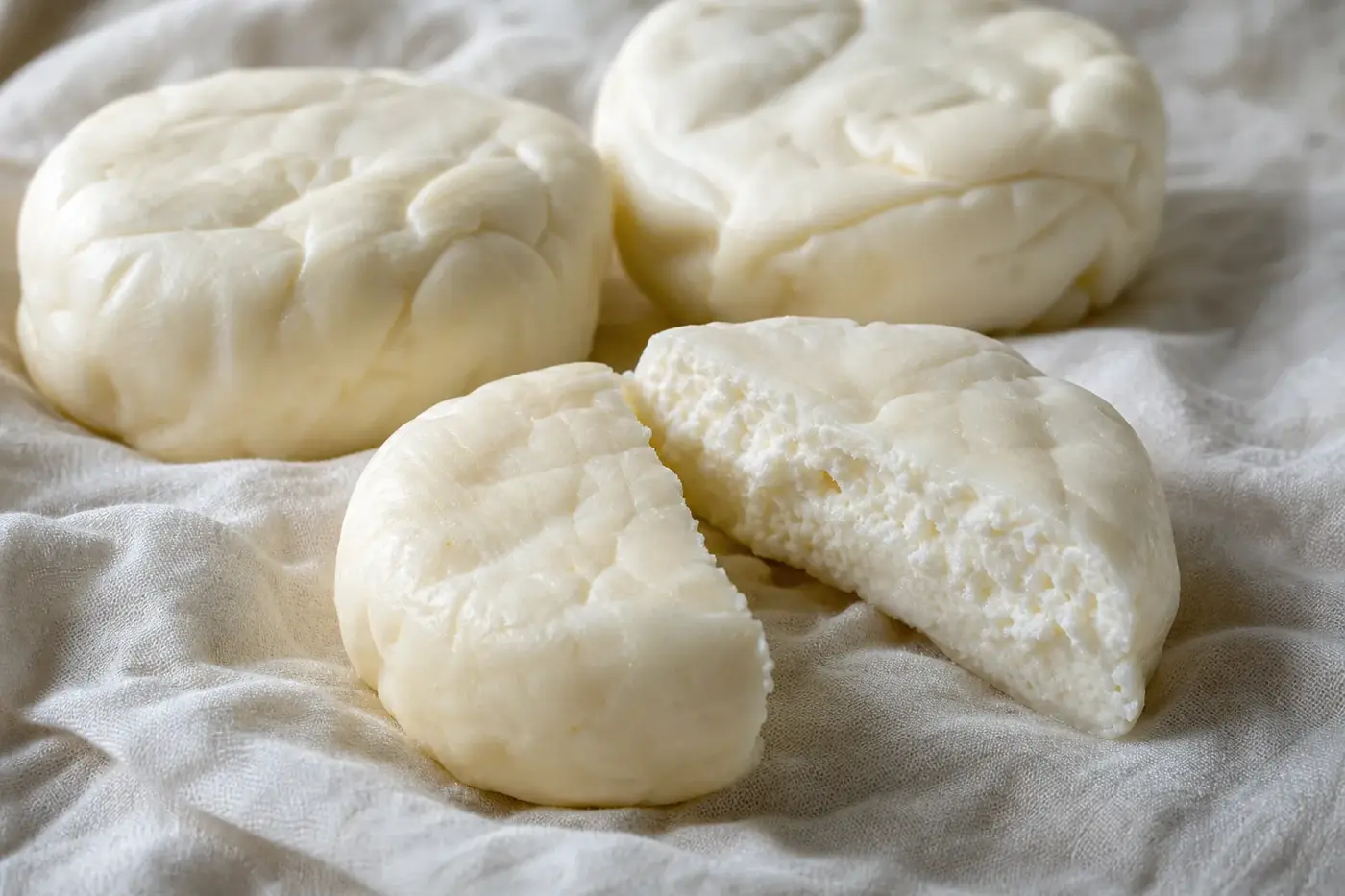
Cut into paneer and you find a compact, slightly spongy cheese. Dairy teaching sources describe it as white, though the milk has a say. Cow's milk can give it a pale cream or light yellow hue; buffalo milk produces a whiter cheese. Either way, the curds hold together in a cohesive block. [2]
There is no developed rind to work around: from the cut face to the outside, it is all cheese. A substantial block under your knife can still be fresh. Paneer's firmness tells you about its cooking qualities, not its age. For the wider distinction, see how to tell cheese styles apart. [2]
Hot milk, a little acid, a remarkable change
Heat and acid have different jobs in the vat. Heating changes milk proteins, including whey proteins. Acid then makes casein particles, milk's main structural proteins, less stable, allowing them to gather into curds. The watery liquid that separates from them is whey. [2,5]
Drain away much of that liquid, then press out more, and the curds draw together. What began as a loose mass becomes a block you can slice or cube. The sequence sounds simple, but milk, acidification and pressure all help decide the texture you get. [5,6]
Similar looking blocks can have quite different structures inside. In a controlled paneer experiment, researchers compared citric acid with lemon and amla juices, measuring composition, texture and structure with a scanning electron microscope. Each coagulant created different protein networks and moisture retention. Those differences help explain what happens under your knife and in your pan. [5]
Want to follow the wider journey from milk to cheese? See how cheese is made, including methods that use cultures and rennet.
Why your paneer stays put in the sauce
Paneer is already a protein gel formed by heat and acid. Warming its fat does not automatically make the surrounding protein network flow. Many rennet cheeses soften and flow as heat changes their structure; paneer's structure keeps your pieces distinct. [2,4,7]
The details matter as much as the basic method. Research published in 2025 compared heat and acid gels made with three acidifiers at four coagulation temperatures. Higher temperatures generally produced harder, more cohesive gels that held less moisture. Acid type and processing temperature help explain cooking behaviour alongside the difference between acid and rennet coagulation. [4]
Holding its shape does not mean staying unchanged. An electron microscopy study found that frying compacted paneer's structure, while cooking it afterwards in salted water partly restored it. A browned cube and a gently simmered one give you different bites, even though neither disappears into the sauce. [7]
Chhena takes the sweet route
For sweets, the story turns at the draining stage. Chhena, also written chhana, belongs to the same heat and acid coagulated family as paneer, but is less firmly drained. Instead of becoming a firm block, it remains curd that can be worked for sweetmaking. [3]
For rasogolla, that curd is worked into smooth balls and cooked in sugar syrup. Sandesh calls for chhena worked with sugar and shaped, with cooking varying between styles. Rasmalai brings flattened chhena sweets together with sweetened concentrated milk. Each asks something different of the curd. [3]
Drainage, handling, moisture and kneading all shape the final texture. Start with the curd your sweet recipe specifies. Crumbling a firmly pressed block gives you broken paneer, not necessarily the sweetmaker's starting material: that depends on moisture, milk and coagulation history as well as a loose form. [3,5]
Familiar dishes, a less settled history
You may meet paneer tucked among peas in matar paneer, or spinach in palak paneer. Dairy teaching materials document both dishes, alongside fried snacks, reflecting this mild cheese's substantial savoury role in South Asian cooking. Chhena sweetmaking has a particularly strong documented presence in eastern India, including Bengal and Odisha. [2,3]
Its history is less neatly settled than its place at the table. Historical research on Bengali sweets examines the account of a Portuguese origin for chhena through collective memory, colonial encounters and nineteenth century cultural material. The origins of paneer and chhena remain contested, with no single agreed origin for the two cheeses. [8]
Find your favourite bite in the pan
Choose your texture before your technique. Plain cubes added to sauce give you a softer contrast; browning them separately creates a firmer surface. Frying changes the protein structure as well as the colour, so that extra step changes the bite of your finished dish. [7]
In a curry, you want paneer coated and heated through, not dissolved. The established pea and spinach preparations show how sauce can bring sharpness, spice or leafy depth around the relatively mild cheese. Let the pieces stay distinct and give the sauce room to do its work. [2]
For grilled skewers, choose a cohesive block and cut substantial, evenly sized pieces. Thin slivers are awkward to thread. For quick pan cooking, cubes or slabs of similar size get comparable contact with the pan. Both approaches make the most of paneer's ability to hold its shape. [4,6]
Turn the pieces gently rather than repeatedly breaking them apart. Making a scramble? Do the opposite and crumble the cheese: you can change its format without needing it to melt.
Have your sauce or vegetables ready before the paneer needs them. Give the cheese the cooking your dish calls for, rather than an unnecessary extra simmer.
Homemade paneer: press for texture, not miracles
Pressing does more than finish the draining: it controls texture. Research with an automated paneer machine tested coagulation temperature, pressure, milk type and coagulant together. The combination determined the block's texture. A heavier weight cannot reliably put every earlier difference right, however persuasive it looks. [6]
For your home batch, choose a specialist reviewed method using pasteurised milk. Note the milk, coagulant, temperature and pressing conditions. When adjusting texture, change one variable at a time, so you have one clear explanation to compare rather than several competing possibilities.
A crumbly block may owe as much to acidification and its protein network as to pressing. The fruit juice experiment found coarser structures with stronger acidity. Toughness or dryness can also reflect lost moisture: in the controlled temperature study, gels became harder as coagulation temperature rose. [4,5]
Let a crumbly block join a dish that welcomes loose curds. Give a firm one a moist preparation rather than drying it further in the pan. These are texture choices for properly handled cheese; save method changes for your next batch. Pressing an already dry block will not make it tender. [6,7]
Pick the block that suits your supper
For skewers, look for cohesion; for frying, clean slices; for a loose filling, a block that crumbles readily. Milk and processing create different textures. Compare the product description with your previous cooking results, rather than expecting every paneer to behave exactly alike. [5,6]
Freshly made paneer and sealed packaged paneer share the same basic identity, but packaging and handling shape how they reach your kitchen. For an unpackaged block, ask the seller about ingredients, production date and storage instructions. On a sealed pack, read the milk description, ingredients, use by date and instructions after opening. [2,9]
FSSAI's 2022 compendium included a standard for chhana and paneer under regulation 2.1.16. Consult the current requirements rather than relying on the 2022 compendium alone. [1]
For help separating ingredients, composition and nutrition, see how to read a cheese label. Each tells you something different about the block you are buying.
Keep it chilled and plan your homemade batch
Follow your paneer's storage instructions and use by date. For households in England, Wales and Northern Ireland, the Food Standards Agency's advice, as at November 2026, is a fridge temperature of 5 °C or below. Cover opened paneer and follow the pack's limit after opening. [9]
Plan homemade paneer for the meal you are preparing, and refrigerate it promptly according to your reviewed method. For cooked food, the FSA advises cooling and refrigerating within one to two hours. Eat cooked leftovers within 48 hours or freeze them; those leftover instructions apply to cooked paneer dishes. [9]
In Scotland, Food Standards Scotland recommends a fridge between 0 and 5 °C. It also advises cooling food without leaving it at room temperature for longer than one to two hours, and eating leftovers within two days. Follow the official advice where you live. [10]
Choose a soft block for curry or a firm one for skewers, but keep texture decisions separate from storage decisions. Your cooking choices sit alongside the manufacturer's handling instructions. For the wider household routine, see how to store cheese at home.
General information only, not medical advice: follow the official guidance where you live.
Questions people ask
Why does paneer hold its shape when heated?
Paneer is a protein gel formed by heat and acid. Warming its fat does not automatically make the surrounding protein network flow, so it stays in distinct pieces.
How is paneer made?
Hot milk is curdled with acid, causing the proteins to gather into curds and separate from the whey. The curds are then drained and pressed into a firm block.
What is the difference between paneer and chhena?
Chhena is paneer’s less firmly drained relative. Instead of being pressed into a firm block, it is left as a curd that can be worked for sweets.
Where did paneer originate?
The origins of paneer and chhena remain contested. Historical research on Bengali sweets examines an account of a Portuguese origin for chhena, but a single agreed origin remains unresolved.
How should paneer be stored?
The Food Standards Agency advises households in England, Wales and Northern Ireland to keep their fridge at 5 °C or below. Food Standards Scotland recommends a fridge between 0 and 5 °C. Check the current guidance from the agency for where you live, as well as the pack’s storage instructions and use by date.
Sources
- Food Safety and Standards Authority of India. Food Safety and Standards (Food Products Standards and Food Additives) Regulations, 2011, compendium version XXV, 23 September 2022, regulation 2.1.16. Historical consolidated edition retrieved; current amendment verification remains an editorial hold. Official PDF.
- INFLIBNET Centre, e-PG Pathshala. Technology of Milk and Milk Products, chapter 11, Technology of Paneer, undated online teaching module. Used for sensory characteristics, production principles and documented culinary examples, not its outdated legal or storage passages. Teaching module.
- INFLIBNET Centre, e-PG Pathshala. Technology of Milk and Milk Products, chapter 9, Traditional Indian dairy products: Chhana based sweetmeats, undated online teaching module. Used for chhena processing and sweetmaking, not its historical legal definition. Teaching module.
- International Dairy Journal. Combined effect of acidification temperature and different acids on microstructure and textural properties of heat and acid-induced milk gels, volume 161, article 106117, February 2025. Publisher's abstract retrieved; full article access unsuccessful. Publisher record.
- Journal of Food Science and Technology. Composition, texture and microstructure appraisal of paneer coagulated with sour fruit juices, January 2019 issue, accepted October 2018. Experimental comparison using composition measurements, texture analysis and scanning electron microscopy. Full text.
- Journal of Food Quality. Influence of Machine Parameters and Coagulant on the Textural Properties of Paneer (Indian Cottage Cheese), article 6529064, 2022. Publisher's abstract retrieved; full article access unsuccessful. DOI record.
- Food Structure, Utah State University repository. Development of Microstructure in Raw, Fried, and Fried and Cooked Paneer Made From Buffalo, Cow, and Mixed Milks, volume 7, issue 1, article 10, 1988. Repository abstract retrieved. Research record.
- Global Food History. Confecting Creole Bengal, from Sandesh to Rosogolla: Textural Transformations and Sonic Recall, 2025. Historical research analysing material production and cultural memory. Article PDF.
- Food Standards Agency. How to chill, freeze and defrost food safely, published 18 December 2017, live guidance retrieved November 2026; applies to England, Northern Ireland and Wales. Official guidance.
- Food Standards Scotland. Chilling food, undated live consumer guidance, retrieved November 2026. Official guidance.
Researched through official Indian standards, dairy teaching materials, experimental research, historical scholarship and official household food safety guidance.
Last checked: November 2026
Last checked November 2026.
The editors suggest you read next
Kalari
In the hills around Udhampur, surplus household milk became small cheeses under women’s hands when selling it fresh was difficult.