Kalari
In the hills around Udhampur, surplus household milk became small cheeses under women’s hands when selling it fresh was difficult.
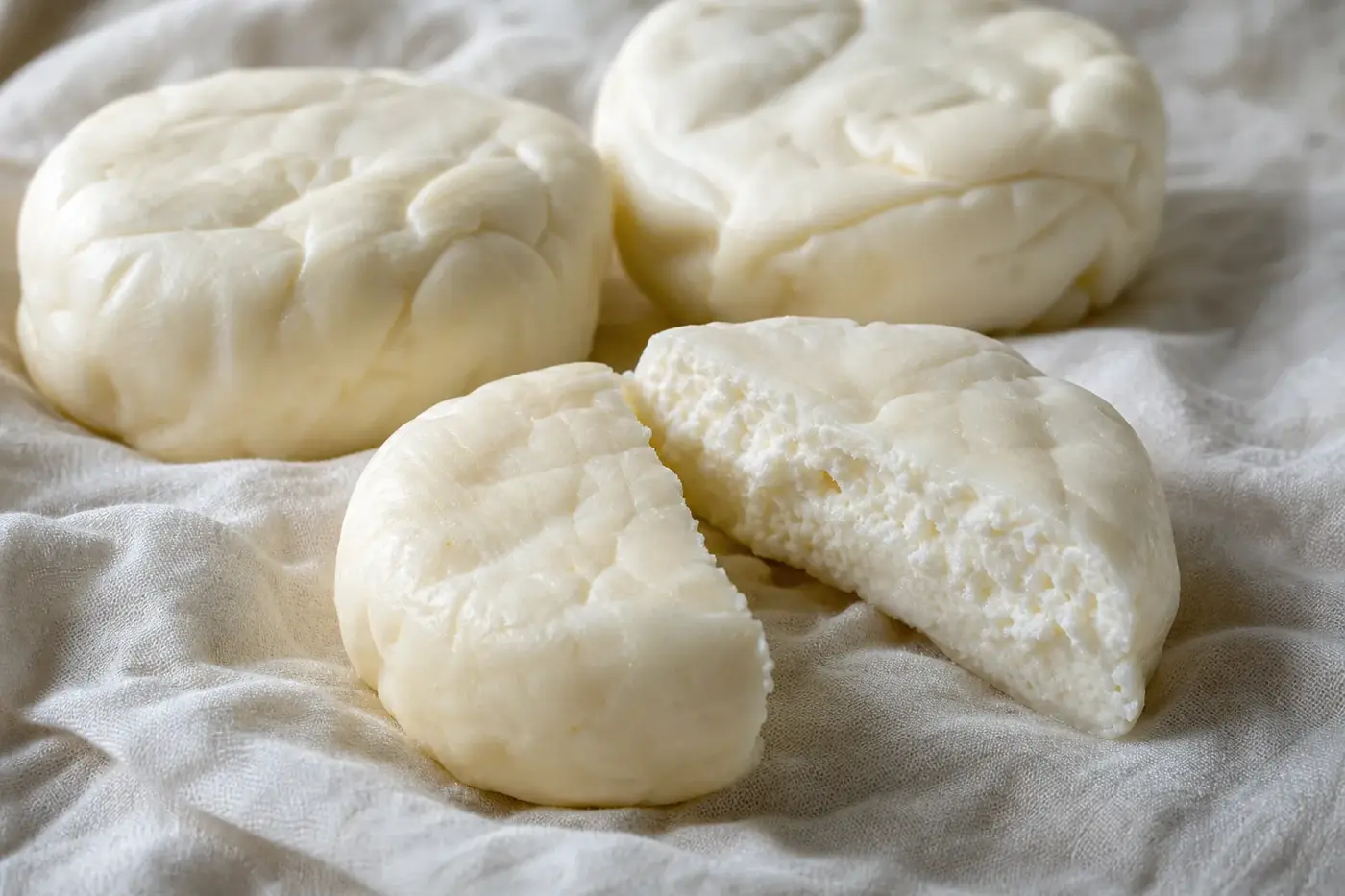
In the hills around Udhampur, surplus household milk became small cheeses under women’s hands when selling it fresh was difficult. Follow those cheeses to the town sellers, as a 2009 field study did, and you find Kalari, a traditional speciality of India’s Jammu region. Household ingenuity gives you a good place to begin. [2,3]
| Your quick guide | What to look for |
|---|---|
| Names you will encounter | Kalari, also written Kaladi. [2,3] |
| Exact Indian registered name | Udhampur Kaladi. [1] |
| Registration authority and numbers | Intellectual Property India, Geographical Indications Registry, application number 807, certificate number 510. [1] |
| Indian protection | Geographical indication, registered in India; November 2026 record. Certificate dated 3 October 2023; filing dated 22 December 2021. [1] |
| Where it belongs | Jammu region, particularly Udhampur and its hill dairy communities. [2,3] |
| Documented milk sources | Cow’s, buffalo’s and goat’s milk in the regional industry account; buffalo’s milk in a published storage experiment. [4,5] |
| How the curd traditionally forms | Souring or acidification; sour whey documented in field research. [2,3] |
| Shape to look for | Small, hand-shaped circular cheeses. [3] |
| Milk treatment of your particular cheese | Read the label or ask the producer or seller. |
| UK pregnancy guidance | NHS, Foods to avoid in pregnancy, November 2026. [7] |
Meet the households at Kalari’s heart
Kalari’s story takes you through hill dairy households, village traders and town sellers. The 2009 Centre for Civil Society field study followed its production and movement through Udhampur, Ramnagar and the Chenani area. Through interviews and group discussions, smallholder dairy farming came into focus, especially the processing done at home. [3]
For the women in that study, cheesemaking gave surplus milk a route to market when fresh milk was difficult to sell. This is a portrait of production in 2009, not a date for Kalari’s invention. The people make it compelling: those shaping the cheese and the traders carrying it between villages and towns. [3]
Udhampur has a place in the official record, too. India’s GI registry names The Shyam Kaladi Cooperative Limited, at Dharmthal in Udhampur district, as the applicant for Udhampur Kaladi. A January 2026 government account places Kaladi firmly alongside both Udhampur and Dogra cuisine. [1,2]
Get acquainted before the pan gets hot
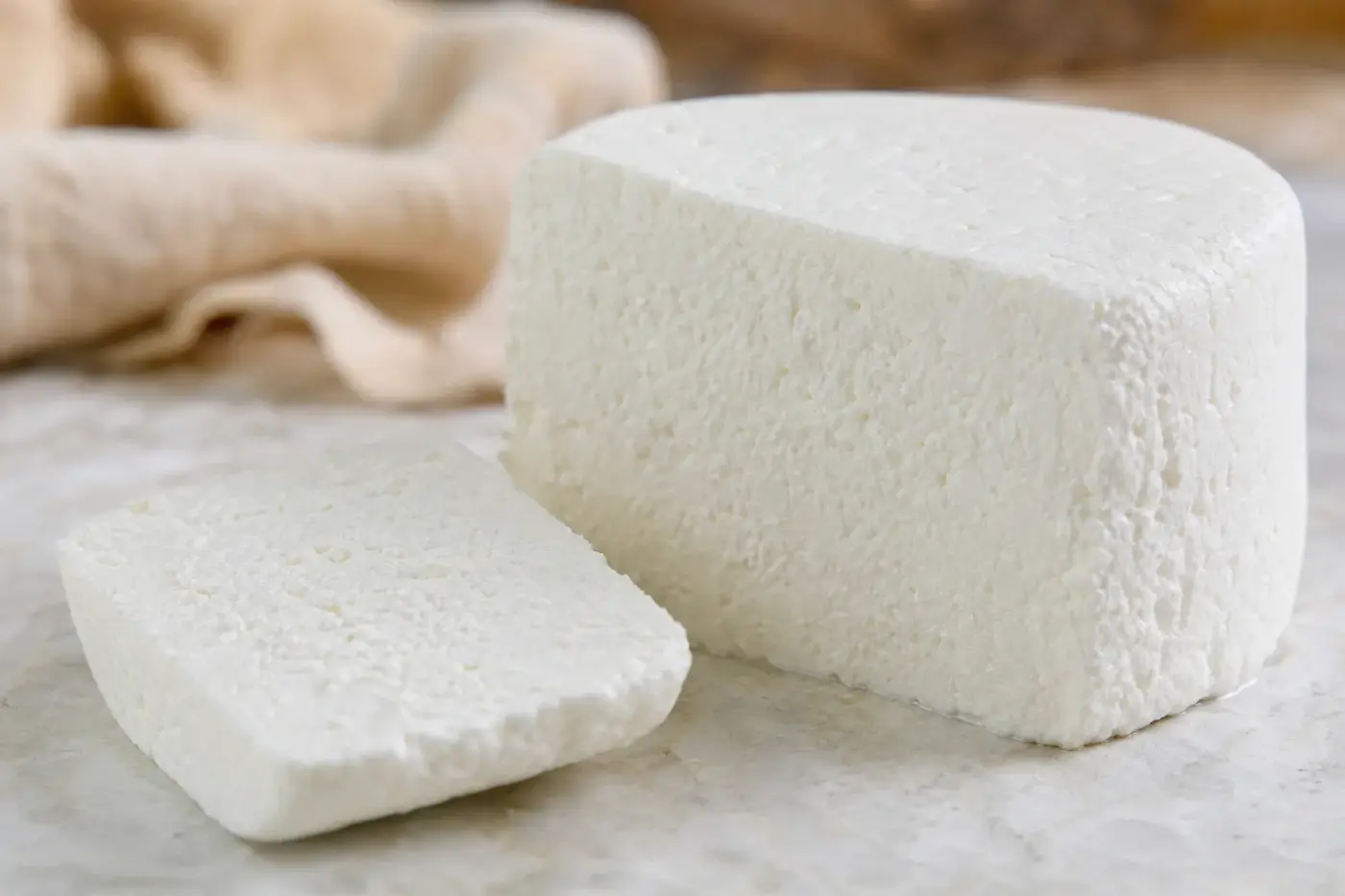
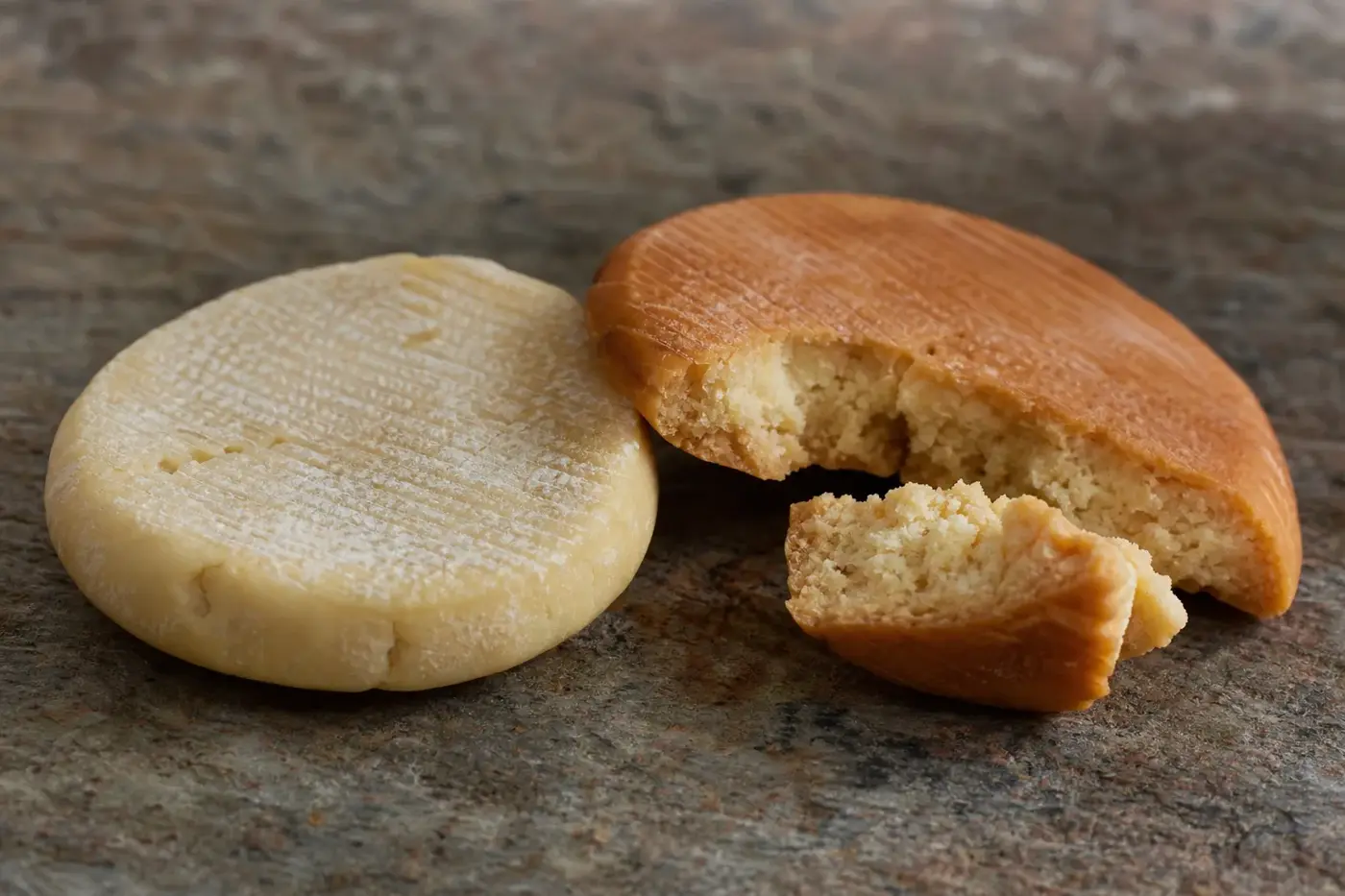
Picture a small circular cheese, shaped by hand into the palm-sized portions described in the field study. Newly prepared Kalari is soft, according to the Confederation of Indian Industry’s regional account. As moisture escapes, it grows harder; that account also records whitish versions made with goat’s milk. [3,4]
That change matters when you pick up a disc. A newly formed cheese and a firmer, dried one have reached different stages of handling. Freshness, drying and the maker’s method help explain why two purchases can feel different. Kalari has little interest in fitting one tidy description of texture. [4]
For flavour and character, the government’s 2026 account gives you two useful words: milkiness and stretchability. It identifies both as qualities worth preserving during further product development. Start there, rather than reaching straight for a comparison with another cheese, and leave room for differences between producers. [2]
Find out which milk is in your Kalari
Cow’s and buffalo’s milk are the usual sources in the regional industry account, which also records goat’s milk versions. A scientific storage study made three experimental batches from raw buffalo’s milk. There is no single documented blend shared by every maker. [4,5]
Before buying, ask two straightforward questions: which milk was used, and was it pasteurised? The government’s account describes traditional production from raw full-fat milk. That tradition does not tell you the milk treatment of a particular packaged cheese, so read its label or ask the producer or seller. [2]
If those terms leave you hesitating, the guide to raw, thermised and pasteurised cheese explains the treatments. Let the regional name lead you to Kalari. Then let the actual product information guide your choice.
Follow the sour whey to the curd
Sour whey has work to do here. The 2009 field account records it as a commonly used coagulating ingredient, alongside citric acid in some production. Acidification makes milk more acidic, bringing its proteins together into curd, the solid part of cheese. Whey is the liquid that separates. [3]
A later research abstract describes natural acidification followed by heat coagulation. The government’s 2026 account likewise names whey water as the traditional coagulant. Together, these accounts describe related acidification and heating practices, leaving room for household differences rather than setting out one rigid recipe. [2,6]
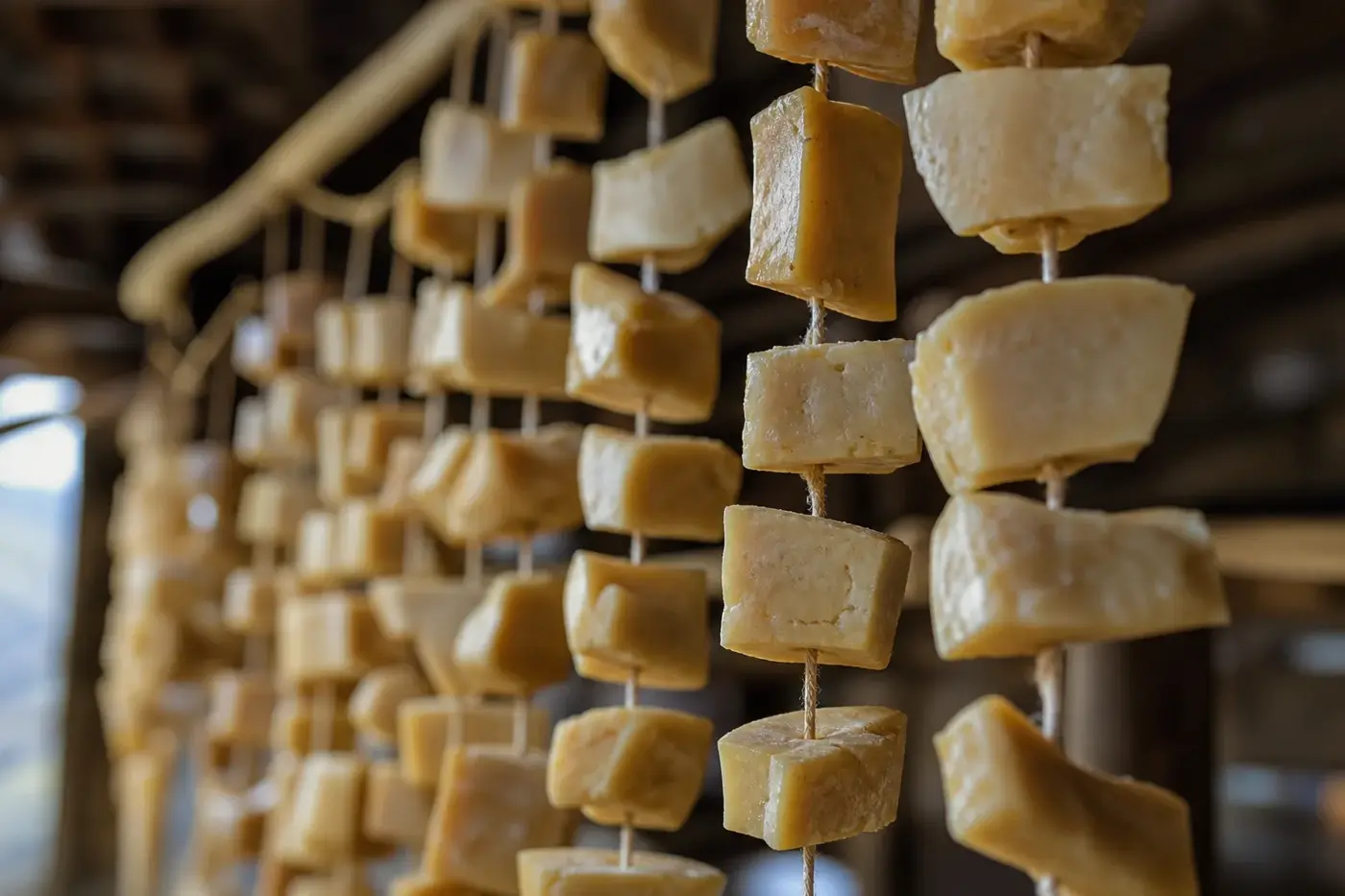
Once the curd forms, the field account describes cooling it and shaping it by hand into circular portions. Drainage and drying follow, using leaves or cloth, with differences between villages. You are looking at the production researchers observed, not instructions for making Kalari at home. [3]
Curious about the broader journey from milk to curd and whey? You can follow it in how cheese is made.
Watch drying change the cheese
As moisture leaves, Kalari changes. Field research records shade drying and different materials beneath the portions, while the regional industry account describes cheese growing firmer as it ages after preparation. Drying belongs to its identity, though the conditions differ between accounts and places. [3,4]
Storage has drawn scientific attention, too. A published study examined Kalari’s physicochemical and microbiological properties under different conditions, using three batches made from raw buffalo’s milk. Those findings belong to those experimental cheeses and treatments. For your purchase, follow the storage instructions supplied with it. [5]
“Fresh” and “dried” give you a starting point, not the whole handling story. Ask how the batch was made, packed and kept, and what preparation it needs. Those answers tell you more than the description alone; for household advice, follow the country-specific guidance in how to store cheese at home.
Give your Kalari the cooking it needs
Keep that stretchability in mind when you choose Kalari for cooking. It is one of the characteristics the government’s account says future processing work should retain. Here, texture deserves your attention just as much as flavour. [2]
Begin with the maker’s directions, not guesswork. Establish the disc’s thickness and moisture, and whether it comes chilled or frozen, before choosing your cooking method. A seller’s description of traditional preparation is most useful when it also explains how to handle the particular cheese you are taking home.
Follow the packet’s cooking instructions. UK Food Standards Agency guidance says to cook or reheat food until steaming hot right through, checking the centre as well as the browned surface. Keep utensils and preparation areas clean, and separate ingredients you will eat without further cooking from raw foods. [8]
Let Kalari kulcha introduce itself
Kalari kulcha brings cooked cheese and kulcha bread together. The cheese supplies the hot, yielding centre, putting its cooked texture at the heart of the dish. Local accounts place Kalari kulcha within Jammu’s food culture. [9]
Before ordering, establish what you are getting. A seller might offer uncooked discs, cooked Kalari on its own, or Kalari assembled with bread and accompaniments. The familiar name may sit above all three. Your enthusiasm for cheese may be constant, but your next step will be rather different.
For your first encounter, choose a preparation that leaves the hot cheese recognisable. Ask what accompanies it and what goes in during cooking. Check the whole dish, including bread, sauces and garnishes, rather than leaving everything beyond the cheese out of the conversation.
Kalari and paneer: the curd is only the beginning
In the production observed by the field study, Kalari’s individual portions were not pressed like paneer. That gives you a useful distinction between two cheeses understood through acid coagulation. A shared starting point does not tell you how they are handled afterwards, or what roles they take in cooking. [3]
For Kalari, shaping and drying matter. So does the stretchability recorded in the government account. If your dish depends on that texture, ask the seller before substituting another acid-coagulated cheese. What happens after the curd forms deserves just as much attention. [2,3]
Keep the comparison practical: what will each cheese do in the dish you intend to make? Establish your product’s milk treatment, moisture, format and cooking instructions. The two names are not interchangeable entries on your shopping list.
Find your Kalari and give it a good home
Search for both Kalari and Kaladi. For the Indian geographical indication, the exact registered name is Udhampur Kaladi. The registry records its registration in India, with the certificate date and application filing date marking two separate events. [1]
Choose a seller who can identify the producer and explain milk treatment, packing information and storage requirements. For packaged cheese, reading a cheese label helps you make sense of the details. Buying loose discs? Ask for handling instructions rather than assuming your last purchase needed the same treatment.
For UK household storage, the Food Standards Agency advises refrigerating food promptly after purchase and keeping chilled food below 5 °C. Follow the label; where opened ready-to-eat food has no specific instructions, its guidance is to use it within two days. Eat, cook or freeze food by its use-by date. [8]
Buying raw-milk Kalari? Read the UK guidance
Ask about milk treatment, especially given Kalari’s traditional raw-milk production. The UK Food Standards Agency lists products made from unpasteurised milk among foods associated with Listeria risk. It identifies pregnant people, people with weakened immune systems and older people among those at greater risk of serious illness. [8]
Pregnancy advice is not identical for every cheese. The NHS distinguishes between hard cheeses, soft cheeses and cooked cheese. Consult its current pregnancy guidance for the category and preparation concerned; the reference here is November 2026. [7]
For further UK information, turn to the NHS guidance on listeriosis, with a November 2026 reference here. For a fuller explanation of contamination and handling, see Listeria and cheese safety. [10]
General information only, not medical advice: follow the official guidance where you live.
Questions people ask
What is Kalari cheese?
Kalari, also written Kaladi, is a traditional cheese from India’s Jammu region, particularly associated with Udhampur. It is typically shaped by hand into small circular portions.
What milk is Kalari made from?
Cow’s and buffalo’s milk are the usual sources in the regional industry account, which also records versions made with goat’s milk. Traditional production uses raw milk, but the treatment of a particular product should be checked with the producer or seller.
How is Kalari different from paneer?
In the production observed by the field study, individual Kalari portions were not pressed like paneer. Kalari is shaped and dried, and a government account identifies stretchability as one of its qualities.
What is Kalari kulcha?
Kalari kulcha is a hot snack that brings cooked Kalari together with kulcha bread. Local accounts document it as part of Jammu’s food culture.
Can you eat Kalari during pregnancy?
The NHS gives different pregnancy advice for hard cheeses, soft cheeses and cooked cheese. Consult the current Foods to avoid in pregnancy guidance on the NHS website for the category and preparation concerned.
Sources
- Intellectual Property India, Geographical Indications Registry. Application details: Udhampur Kaladi, application 807, certificate 510. Live register checked November 2026. Official register entry.
- Government of India, Ministry of Science & Technology, Press Information Bureau. Udhamapur’s GI-tagged “Kaladi” to be upscaled for diverse food recipes using advanced food technologies, 21 January 2026. Official statement.
- Centre for Civil Society. Sustainable Livelihood for Hills: Policy and Institutional Arrangements for Kalari Cheese in the Hills of Jammu and Kashmir, Working Paper 207, 2009. Field research, particularly sections 5.2 and 5.3. Retrieved report copy.
- Confederation of Indian Industry. A Booklet on Geographical Indications of Jammu & Kashmir, 2024 edition, Udhampur Kaladi entry. Regional industry account.
- Himalayan cheese (Kalari/kradi): Effect of different storage temperatures on its physicochemical, microbiological and antioxidant properties. LWT: Food Science and Technology, 2015. Indexed abstract retrieved; full text unavailable during this research.
- Physicochemical Attributes and Dynamic-Mechanical Properties of a Traditional Himalayan Cheese, Kalari, 2024. Indexed abstract retrieved; full text unavailable during this research.
- NHS. Foods to avoid in pregnancy. Live guidance checked November 2026. Official guidance.
- Food Standards Agency. Listeria. Live guidance, PDF version retrieved November 2026. Official guidance.
- Daily Excelsior. KULCHA, the culinary pride of Dogras, 3 April 2021. Local account retrieved; detailed passage verification remains outstanding. Local account.
- NHS. Listeriosis, reviewed 10 November 2023, live text checked November 2026. Official guidance.
This desk-researched draft brings together the Indian registration record, regional field research, published research abstracts and UK official food safety guidance.
Last checked: November 2026
Last checked November 2026.
The editors suggest you read next