Beecher's Handmade Cheese
Through the windows at Seattle’s Pike Place Market, you can watch milk becoming cheese.
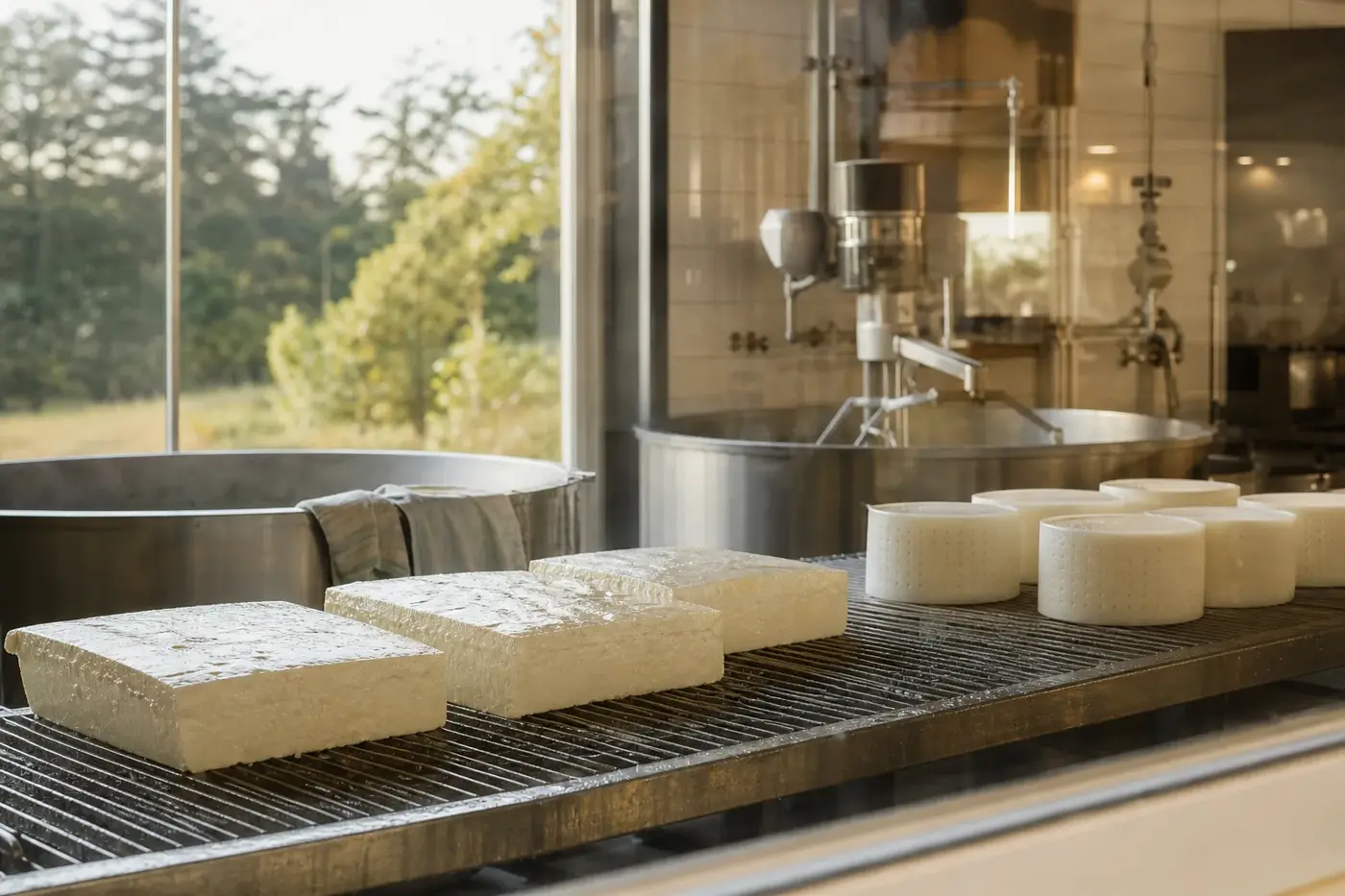
Through the windows at Seattle’s Pike Place Market, you can watch milk becoming cheese. Then your attention turns to a rather pressing question: a wedge for later, or lunch now? Kurt Beecher Dammeier founded Beecher’s Handmade Cheese in 2003, bringing production, cheese and prepared food within sight of one another. That connection remains at the heart of the business.[1,2]
Get to know Beecher’s at a glance
| What you might wonder | What to know |
|---|---|
| Country and original location | United States, 1600 Pike Place, Seattle.[2] |
| Founded | 20 November 2003, by Kurt Beecher Dammeier.[1] |
| Cheeses to know | Flagship, Flagship Reserve, Just Jack and Marco Polo.[4,5,6,7] |
| Where the milk comes from | Farms near production locations, according to Beecher’s.[3] |
| Seattle visitor access, November 2026 | A café and cheese counter, according to the company.[2] |
| Official website | Beecher’s Handmade Cheese.[13] |
An empty shop, a family name and a very good view
An empty shop caught Dammeier’s eye in Pike Place Market. In his account, he was walking through the market in 2002 when he noticed a tenant had left, so he contacted the landlord. Beecher’s opened on 20 November 2003, taking its name from his great-grandfather, whose first name was Beecher.[1]
Those windows were part of the plan. The company’s history describes a kitchen almost encircled by glass, giving passers-by a view of milk becoming cheese. You were looking into a working food business, rather than simply admiring finished wedges arranged for sale.[1]
The counter also makes room for other people’s work. Its current Seattle page specifies cheeses made west of the Mississippi, particularly those from the Pacific Northwest. Alongside the house range, you get a glimpse of neighbouring American cheese traditions and the makers behind them.[2]
Meet the cows behind your cheese
Behind the cheese are Jersey and Holstein cows. Beecher’s says it works with family-owned farms near its cheesemaking locations. Before the milk reaches the vat, it undergoes high-temperature, short-time pasteurisation.[3]
Flagship, Just Jack, Marco Polo and Smoked Flagship all list pasteurised milk in their ingredients.[4,6,7,8] The name alone does not tell you everything, though: a producer FAQ dated December 2020 identifies Raw Milk Flagship separately as an exception.[9] Check the particular product’s label, because the Beecher’s range includes more than one milk treatment.
If you want to understand those differences, start with raw milk, thermised and pasteurised cheese. Knowing the distinction helps you make sense of what is on the label before you choose your cheese.
Follow the curd from vat to hoop
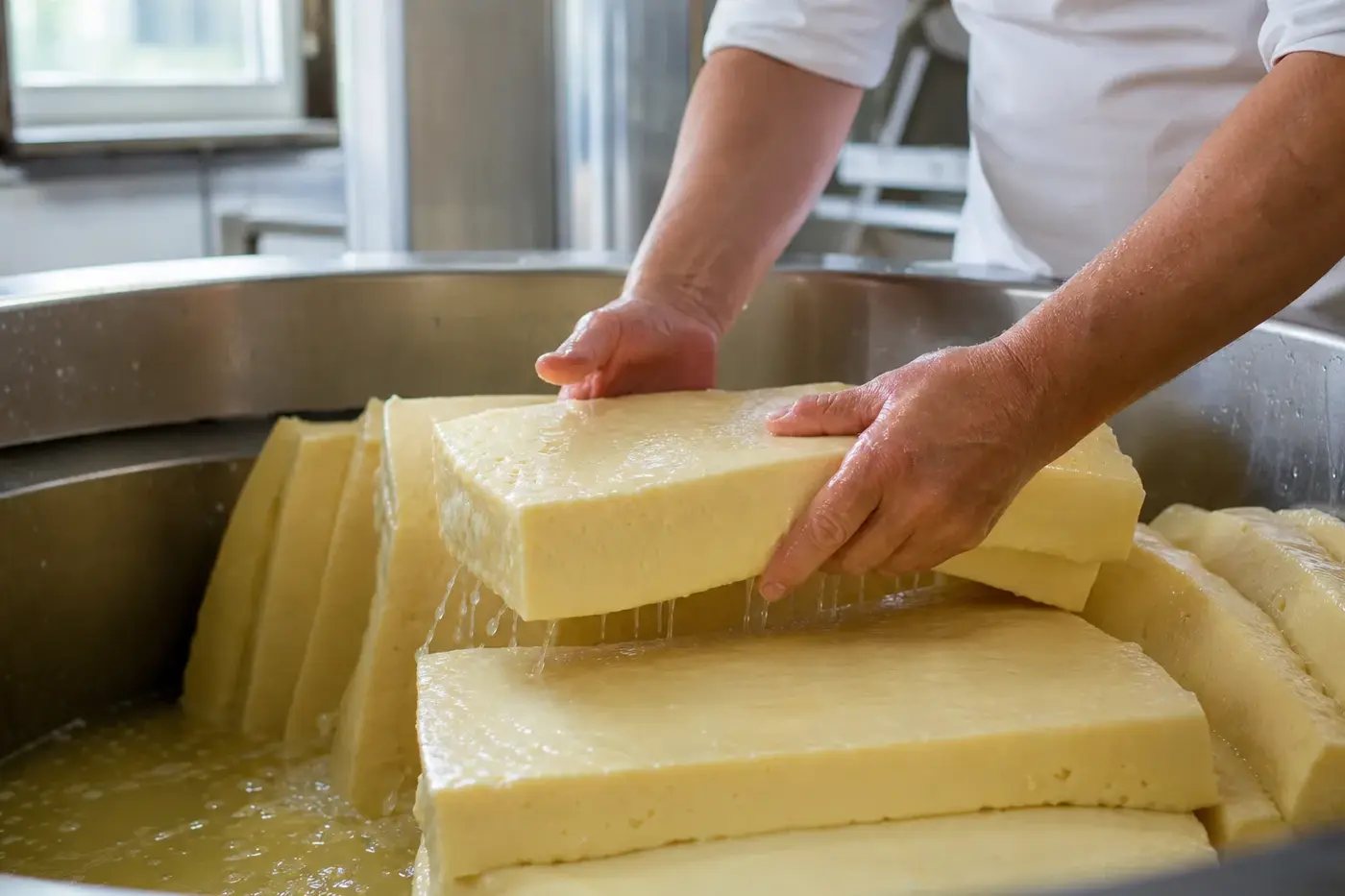
First a slab, then loaves, then smaller pieces ready for salt. Beecher’s published process follows the recognisable stages of Cheddar-making. Cultures go into the milk, followed by rennet, the coagulant that sets it into curd. The curd is cut, then moved with its liquid whey onto a draining table.[3]
Here, it knits into a slab. Cheesemakers cut that slab into loaves, then stack and turn them to release more whey: this is cheddaring. Next come milling into smaller pieces, salting and pressing in moulds called hoops. Ageing, also called affinage, follows.[3]
For most of its cheeses, Beecher’s says it combines cultures associated with Cheddar and Gruyère. The method may look familiar, but the choice of cultures and the maturation help shape the finished cheese. You can follow that wider journey from milk to finished wedge in how cheese is made.[3]
Let Flagship make the introductions
If you are wondering where to begin, choose Flagship. Beecher’s describes this semi-hard cow’s milk cheese as robust and nutty, with a slight crumble after 15 months of ageing. Those are the maker’s tasting notes, giving you a few things to look for as you take your first bite.[4]
The ingredient list is short: pasteurised milk, salt, culture and enzymes. Those 15 months describe this particular product’s ageing period. They are not a maturity grade shared by American Cheddar-style cheeses.[4]
There is no need to reserve it for a cheese plate. Beecher’s also recommends crumbling Flagship into eggs or adding it to macaroni cheese.[4] Taste a wedge first, then meet it again in a familiar meal. It is a useful way to explore the connection between the cheesemaking and the prepared food.
Find your way through cloth, cream, pepper and smoke
Flagship Reserve begins with a decision at the draining table. Beecher’s says it makes Reserve only when the milk composition suits, selecting the last curds for lower moisture and higher salt. Those curds become cylindrical truckles, clothbound and aged in the open air. The maker credits that handling and maturation with concentrated flavour and a long finish.[3,5]
For a different direction, try Just Jack. Made with whole cow’s milk, it is described by Beecher’s in terms of fresh cream, while the wholesale catalogue adds a buttery texture. The producer suggests melting it over tortillas or tucking it into a sandwich with chutney.[6,12] Beside Flagship, it gives you a useful contrast.
Marco Polo brings cracked green and black peppercorns into the picture. Beecher’s describes savoury umami and butter notes, and recommends it over a burger or grated into a baked potato.[7] Here, seasoning changes the cheese, rather than simply giving it more time in the ageing room.
Smoked Flagship takes the 15-month cheese and smokes it over apple and cherry wood. The maker describes fruity hardwood smoke alongside the underlying Flagship flavour.[8] Across these cheeses, you can trace four different choices: curd selection, milk composition, seasoning and smoke.
Lunch first, something for the fridge afterwards
At the Seattle café, the cheese moves straight into lunch. You can choose grilled sandwiches, soups and macaroni cheese, then visit the counter for something to take home.[2] A perfectly reasonable sequence of events, even if you originally came in “just to look”. The windows connect that familiar food with the work behind it.
The cheeses travel beyond the company’s own counters, too. Wholesale information updated in April 2026 addresses retailers, restaurants and distributors, with product sheets for wedges, sticks, sliced cheese and other formats.[10] The public catalogue shows how the range fits both your kitchen and food-service preparation.[12]
On Beecher’s current website, frozen macaroni cheese, baked ziti and soups sit alongside the cheeses.[13] The business has several connected roles in American cheesemaking. It produces cheese, introduces it through cafés, sells it through shops and supplies products for wider distribution.
New York gets a window on cheesemaking
In 2011, the glass-fronted cheesemaking idea reached New York. A Columbia University profile, based on an interview with a Beecher’s sales representative, records the opening of the Flatiron operation. It describes a factory, shop, café and restaurant, with customers once again watching cheesemakers through glass.[14]
Recreating the view was only part of the work. According to the same profile, finding and training cheesemaking staff in a new city presented a practical challenge.[14] The expansion called for skills behind the windows, not just a shop that looked like Seattle’s.
Beecher’s current café directory includes Seattle, Bellevue, Overlake and airport locations.[11] Before you set off, consult the company’s location information.
New York operation, November 2026
| What you might want to know | What is listed |
|---|---|
| Opening | Flatiron district, 2011, according to Columbia University; company or official confirmation unestablished.[14] |
There is more to the story than “handmade”
Beecher’s April 2026 wholesale policy states that its products contain no artificial preservatives, flavour enhancers or colouring agents. It also states that its cheese milk has no added rBST.[10] Those ingredient and sourcing commitments help explain the range it chooses to make and how it describes it.
“Handmade” belongs to the name, but it does not tell you which stages happen by hand. Nor does the word establish superior quality. For more useful detail, turn to Beecher’s descriptions of making and maturation, alongside each product’s milk treatment and ingredients.[3,4,5]
What makes the business distinctive is how these pieces fit together. There is visible skilled work, a range of clearly differentiated cheeses and several ways for you to encounter them. The windows make the process memorable. The specifications let you compare the milk, the handling of the curd and the time spent ageing.
Choose a wedge and give it your attention
Start with what you want the cheese to do. Flagship offers the maker’s stated aged character and slight crumble; Just Jack is the cream-focused choice for sandwiches and melting. Marco Polo brings pepper, while Smoked Flagship brings wood smoke.[4,6,7,8] For a first comparison, buy small pieces of Flagship and Just Jack before moving on to the flavoured cheeses.
When buying, look at the exact product name, ingredient list and pack instructions. How to read a cheese label explains the distinctions worth your attention. For wrapping and everyday handling, turn to how to store cheese at home. For United States storage and serving advice, consult the FDA guidance in the sources.[15]
Taste Just Jack first, then Flagship, followed by the peppered or smoked cheese, with plain bread and water alongside. Notice how each piece breaks, which flavour arrives first and what stays after you swallow. Give the cheese your first bite on its own, so you can distinguish its character from its accompaniments. The elaborate extras can wait until bite two.
General information only, not medical advice: follow the official guidance where you live.
Questions people ask
Can you visit Beecher’s in Seattle?
Beecher’s describes a Seattle café and cheese counter at Pike Place Market. The page says current Seattle production and the site itself have not been verified, so check the company’s location information before travelling.
Is Beecher’s cheese made with pasteurised milk?
Flagship, Just Jack, Marco Polo and Smoked Flagship list pasteurised milk among their ingredients. A producer FAQ dated December 2020 identifies Raw Milk Flagship as an exception, so check the particular product’s label.
What does Beecher’s Flagship taste like?
Beecher’s describes Flagship as robust and nutty, with a slight crumble after 15 months of ageing. It recommends the cheese on a cheese plate, crumbled into eggs or added to macaroni cheese.
How is Flagship Reserve different from Flagship?
Beecher’s selects the last curds for Flagship Reserve, producing a cheese with lower moisture and higher salt. The cylindrical truckles are clothbound and aged in the open air, which the maker credits with their concentrated flavour and long finish.
Did Beecher’s open in New York?
A Columbia University profile reports that the Flatiron operation opened in 2011, with a factory, shop, café and restaurant. Current cheesemaking, café access and the physical site status have not been verified.
Sources
[1] Beecher’s Handmade Cheese. Our Story. Undated company history and timeline, current web edition retrieved November 2026.
[2] Beecher’s Handmade Cheese. Pike Place Market. Undated location and visitor information, current web edition retrieved November 2026.
[3] Beecher’s Handmade Cheese. How Beecher’s Makes Cheese. Undated producer process account, current web edition retrieved November 2026.
[4] Beecher’s Handmade Cheese. Flagship Cheese. Product description, ingredient declaration and serving suggestions, current web edition retrieved November 2026.
[5] Beecher’s Handmade Cheese. Flagship Reserve Cheese. Product description, current web edition retrieved November 2026.
[6] Beecher’s Handmade Cheese. Just Jack Cheese. Product description, ingredient declaration and serving suggestions, current web edition retrieved November 2026.
[7] Beecher’s Handmade Cheese. Marco Polo Cheese. Product description, ingredient declaration and serving suggestions, current web edition retrieved November 2026.
[8] Beecher’s Handmade Cheese. Smoked Flagship Cheese. Product description and ingredient declaration, current web edition retrieved November 2026.
[9] Beecher’s Handmade Cheese. Are Beecher’s Cheeses Pasteurized?. Producer support article, 11 December 2020, retrieved November 2026.
[10] Beecher’s Handmade Cheese. Wholesale Information. Updated April 2026, retrieved November 2026.
[11] Beecher’s Handmade Cheese. Cafés. Current location directory, retrieved November 2026.
[12] Beecher’s Handmade Cheese. Wholesale catalogue. Undated PDF, retrieved November 2026. Commercial producer literature.
[13] Beecher’s Handmade Cheese. Home. Current product overview, retrieved November 2026.
[14] Columbia University Mailman School of Public Health, Age Smart Employer. Spotlight Business: Beecher’s Handmade Cheese (Flatiron District). Undated interview-based business profile, retrieved November 2026.
[15] United States Food and Drug Administration. Refrigerator Thermometers: Cold Facts about Food Safety. Current consumer guidance retrieved November 2026.
[16] United States Food and Drug Administration. Recalls, Market Withdrawals, & Safety Alerts. Live recall index retrieved November 2026, used for the editorial check recorded below.
This desk-researched account compares Beecher’s published history, production descriptions and product information with an interview-based historical record and United States FDA consumer guidance.
Last checked: November 2026
Last checked November 2026.
The editors suggest you read next
Farmhouse, Artisan and Industrial Cheesemakers Explained
Slabs of curd are turned and stacked by hand.