Chanco
Picture sieves, vats and cheese moulds in a rural dairy, with adobe buildings keeping the cheeses in storage.
Picture sieves, vats and cheese moulds in a rural dairy, with adobe buildings keeping the cheeses in storage. You are looking into Chanco’s past, where the surprise is in the milk: it came mainly from sheep. Today, agricultural accounts describe a cow’s milk cheese named after Chanco, a coastal town in Chile’s Maule region, but made well beyond it. The name has stayed put while the milk and methods have moved on. [1,2,4]
| What to know | The short version |
|---|---|
| Name | Chanco; queso Chanco. [3] |
| Milk | Cow’s milk; pasteurised in the INIA descriptions. [3,4] |
| What to expect | Semi-soft to semi-hard, with irregular openings and often a thin, dry rind. [3,5] |
| Where it is made | Historical roots in Maule; documented modern production in southern Chile. [1,3] |
| Chilean legislation | General cheese provisions: Decreto 977, Articles 234 to 242. [6] |
| Chilean GI or DO, registered name and ID | No registration details provided here. [7] |
| Time to mature | INIA describes short-matured and longer-matured versions separately. [4] |
Follow Chanco out into the countryside
Chanco’s cheesemaking story stretches beyond the town, across territory between the Maule and Itata rivers. Archival research published in 2014 traced its development between 1750 and 1860. The researchers examined inventories from eight cheesemaking establishments alongside contemporary documents, finding evidence of substantial nineteenth-century trade. [1]
The cheese travelling through that trade was not quite the Chanco you meet in modern agricultural accounts. The historical study describes a cooked, matured cheese made mainly from sheep’s milk, although cow’s milk also went into production. The connection is the name and regional history, not a milk supply preserved unchanged through the centuries. [1,4]
Estate inventories offer you a glimpse inside those working dairies. Research published in 2016 records milk-filtering sieves, vats, cheese moulds and adobe storage buildings; an inventory from Chanco in 1828 lists moulding equipment. These were established rural cheesemaking operations, equipped to take milk all the way through to maturation. [2]
Step into the dairy, from milk to press
Modern Chanco begins with prepared milk, followed by coagulation, curd handling, moulding and ripening. INIA’s account of southern Chilean production describes pasteurised cow’s milk with calcium chloride, starter cultures and rennet added. Calcium chloride helps coagulation, cultures develop acidity and character, and rennet acts on casein, the main milk protein, to form curd. [3]
Curd is the coagulated milk; whey is the liquid that separates from it. Cutting and working the curd, then draining the whey, help determine how moist or firm your cheese becomes. INIA calls Chanco a pressed, cooked cheese. Here, “cooked” means the curd is heated during manufacture, not that you must cook the finished cheese before eating it. [5]
Pressing brings the curd together into a cohesive cheese, but the press does not get the last word on firmness. Milk composition, acid development, whey drainage and ripening all shape the texture. Each stage affects the next, giving makers several ways to influence the cheese you eventually slice. [5]
An industrial study covering 30 manufacturing trials recorded pasteurised milk, cultures, salt, calcium chloride and annatto colouring among the ingredients. That gives you one specific picture of commercial production, not a recipe every maker follows. For the wider journey from milk to cheese, see how cheese is made. [8]
Let the ripening room tell its story
Ask how old a Chanco is, and you have a useful place to begin. INIA’s 2022 account describes southern production as generally short-matured, while recognising makers who leave their cheeses longer in the ripening room. An actual age tells you more than a word such as traditional. [4]
The industrial study followed rectangular cheeses weighing about 9.5 to 10 kg, ripened for 20 to 28 days. In that operation, Chanco matured before sale rather than leaving the dairy as fresh curd straight after manufacture. Those weights and timings give you a concrete example of the commercial style. [8]
Age is only part of what you taste. INIA describes mixtures of starter bacteria and offers its production outline as a reference, with producers adding or leaving out stages according to their practices. When you compare two cheeses, consider cultures and handling alongside maturation time. The calendar cannot take all the credit. [3]
Cut a slice and get acquainted
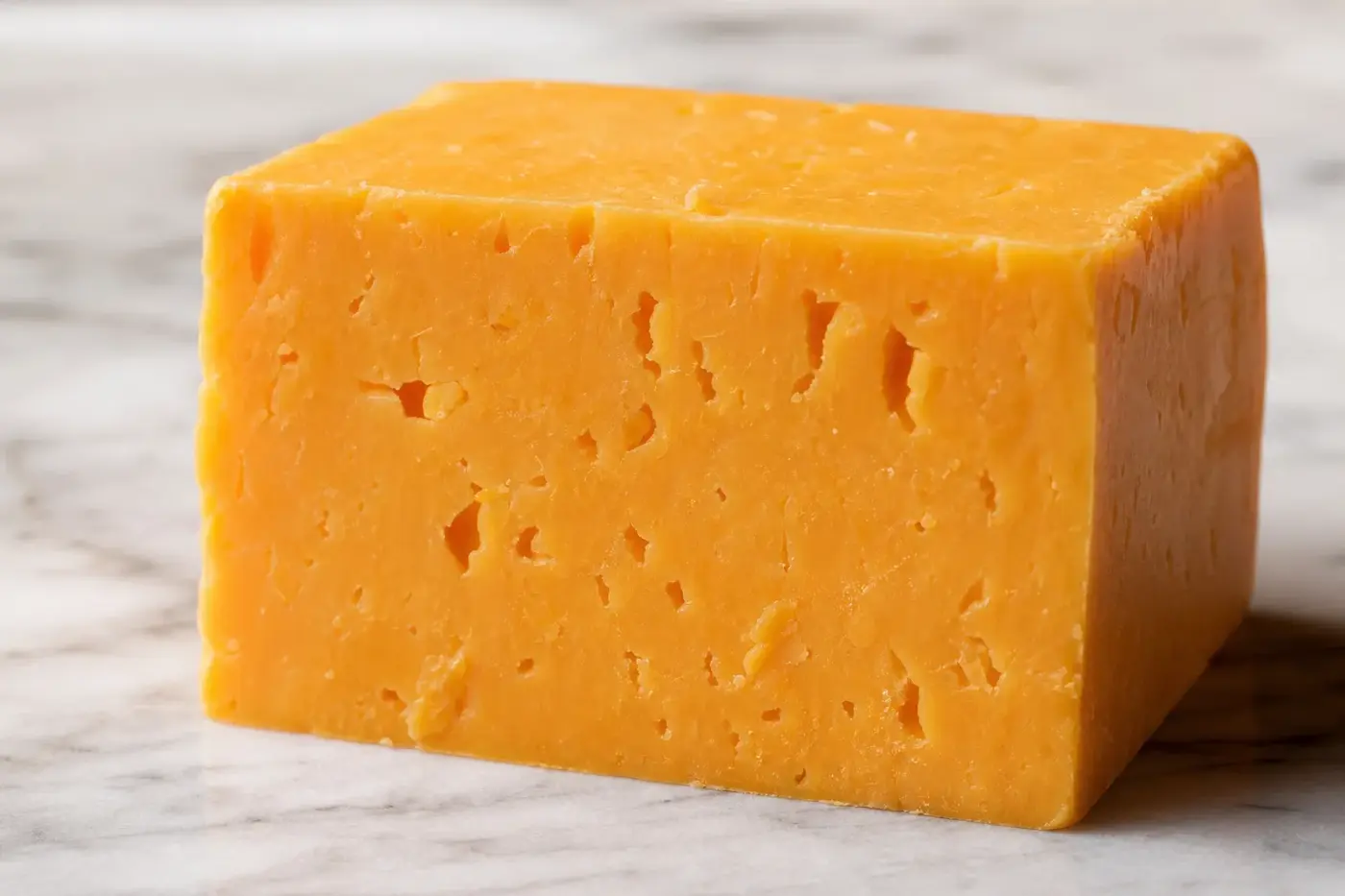
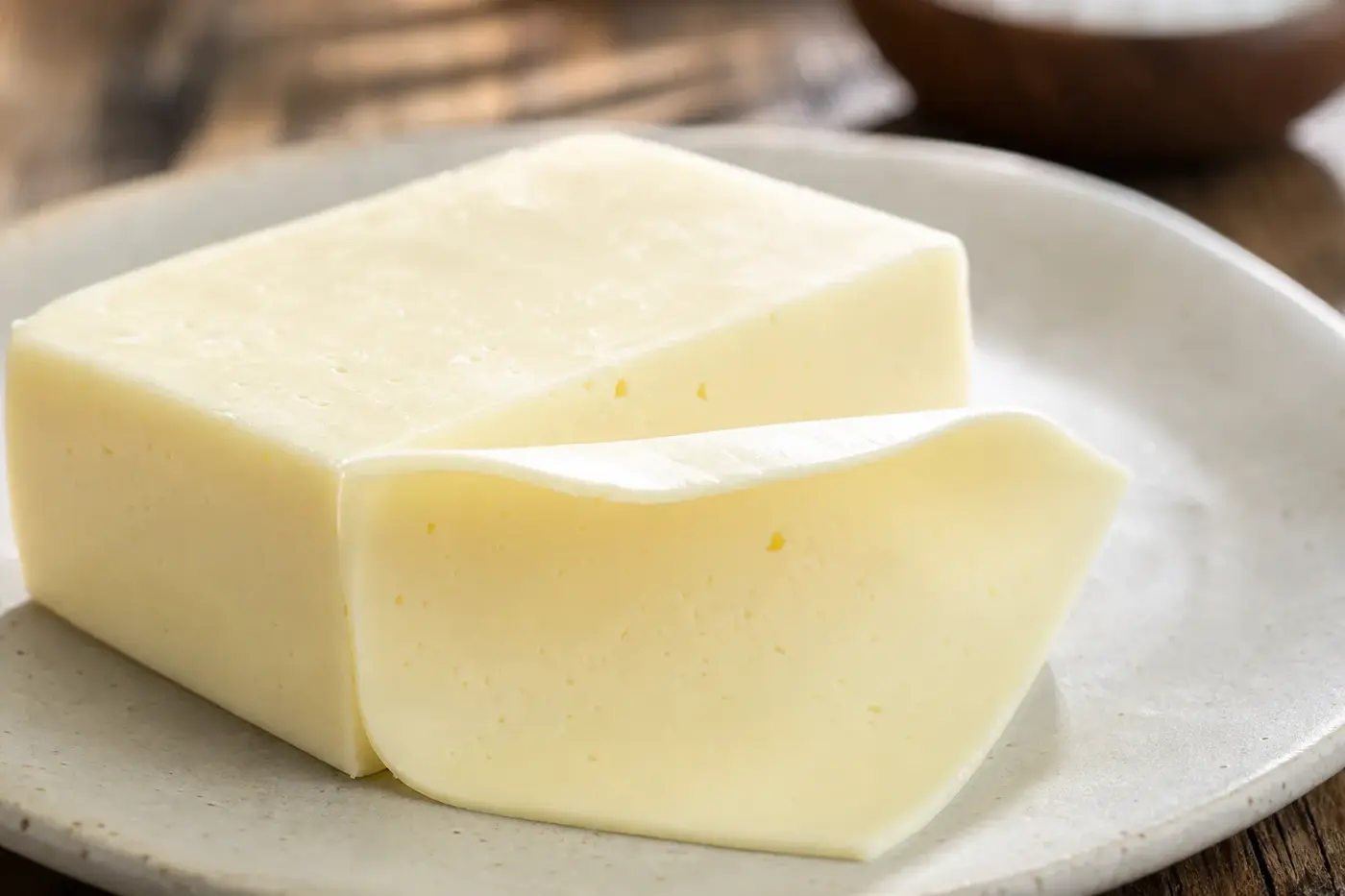
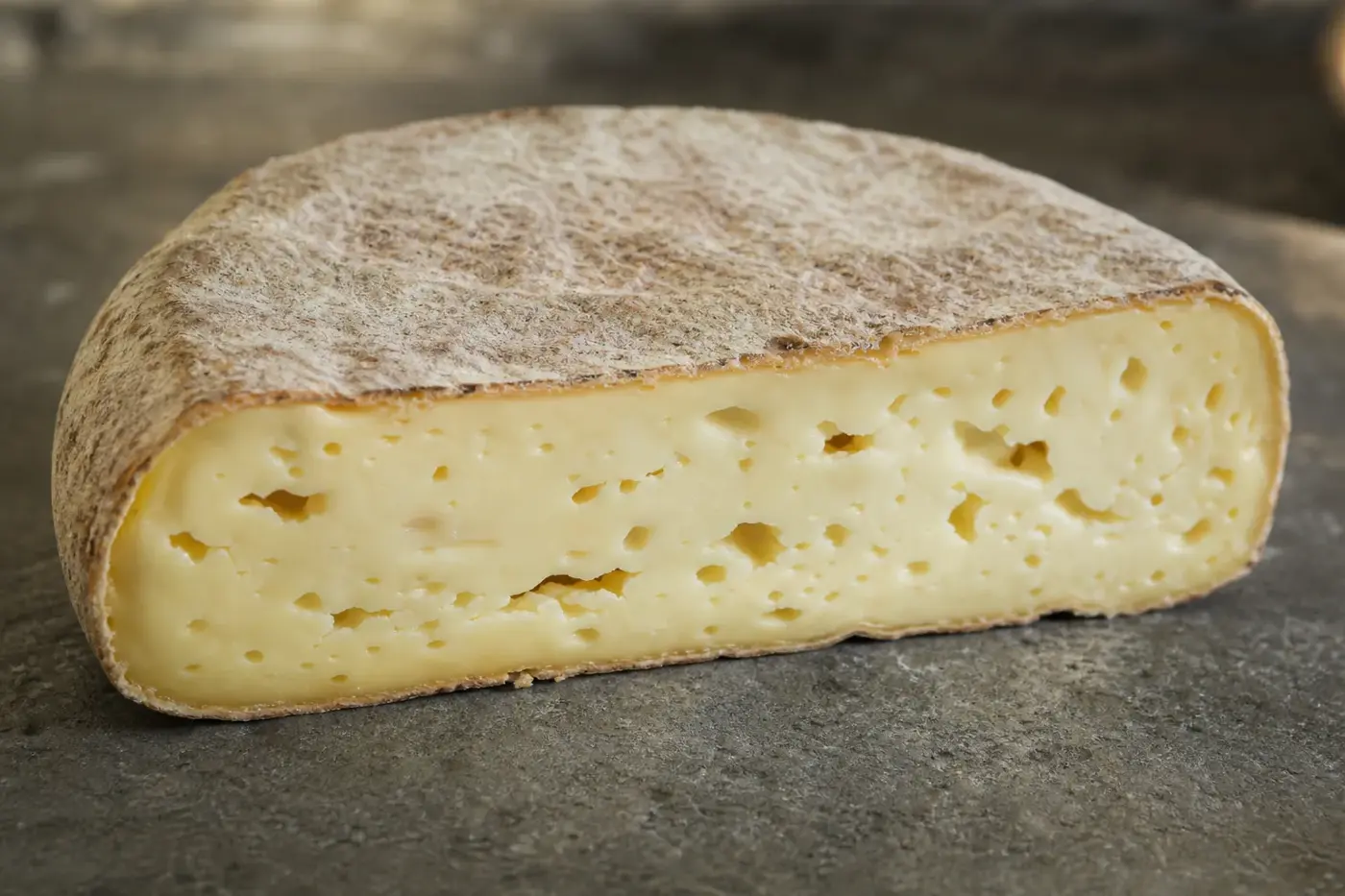
Cut into Chanco and you can expect a pale interior, irregular openings and a consistency somewhere between semi-soft and semi-hard. INIA describes a semi-soft or buttery texture with a thin, dry rind; another INIA overview notes a slightly acidic flavour. Think supple cheese and a gentle tang, with space for the maker’s choices to come through. [3,5]
Shape and surface vary too. Traditional accounts describe moulded cheeses matured with a developing rind, while modern documentation includes rectangular blocks and packaged slices. One producer’s technical sheets describe pale yellow cheese with irregular openings and plastic surface coatings on some formats. Remove plastic coatings and packaging before serving, and ask the maker about any unfamiliar rind treatment. [2,8,9]
Take a moment with the cut face. Is the paste close-textured or visibly open, and does your slice bend or break? Taste a piece plain before adding bread or condiments, noticing the milk flavour and looking for the acidity described in the agricultural accounts. You will have something more useful than “nice cheese” to tell a cheesemonger, though that remains an understandable first response. [5]
Look beyond the place name on the label
A Chanco label does not necessarily mean your cheese was made in Chanco. Its historical connection is with Maule, while INIA documents production of the style in southern Chile. If you want cheese from the town itself, ask for the manufacturer’s name and production address. [1,4]
Chile’s Decreto 977 sets out the general legal framework. Article 234 defines cheese through coagulation and partial separation of whey; Article 238 defines matured cheese through the biochemical and physical changes that happen during ripening. These provisions sit alongside the production choices that distinguish individual makers’ cheeses. [6]
There is another distinction to keep in mind when you read a place name on a label. INAPI separates geographical indications from designations of origin within Chile’s intellectual property system. For the broader difference between a cheese style and a registered geographical name, see protected names explained. [7]
Chanco or queso mantecoso? Get to know the slice
Chanco and queso mantecoso overlap in commercial language, so the names alone cannot tell you everything. An industry interview published in an ODEPA dairy-chain study distinguished them by milk fat standardisation and moisture. A producer’s technical sheets, meanwhile, use the combined description Chanco mantecoso for certain products. [9,10]
Ask how firm the cheese is, how long it has matured and how the maker describes it. Comparing the actual products is more useful than treating the two names as interchangeable. That matters especially when you want neat slices or a substitute that behaves predictably in a cooked dish.
Start with a slice, then bring out the bread
Give your first slice a moment on its own, then add bread. Tomato, a little avocado or a crisp apple keeps things simple while you decide what you enjoy about that particular cheese. Stronger sauces and chilli can wait their turn.
If you want to serve it nearer room temperature, take out only the portion you intend to eat. Leave the rest refrigerated. UK Food Standards Agency guidance says to minimise time outside refrigeration, with a maximum of four hours during preparation. [11]
Commercial producer documentation recommends Chanco for slicing, grating and melting in sandwiches and cooking. Try thin slices with tomato in a sandwich, or a modest layer over cooked potatoes or vegetables. Before you commit a whole dish, test a small amount to see how it softens and whether it releases much liquid. [9]
Keep your drink simple enough to leave room for the cheese. Sparkling water or unsweetened apple juice alongside a plain slice gives you an easy starting point.
Ask a little at the counter, take care at home
Start with the producer’s details, milk treatment and storage instructions. Look for pasteurised milk explicitly stated on the pack or confirmed by the maker. A traditional appearance cannot tell you how the milk was treated.
Read the ingredients too. The industrial example above used colouring, while other documented products list milk, cultures, calcium chloride, rennet and salt. Those details help you understand the particular cheese you are buying, rather than asking its name to tell you everything. [8,9]
At a cheese counter, ask for the product’s identity, date and storage information to stay with your portion. Whether you choose a wheel or a block, enquire about age and rind treatment as well as shape. For help separating the manufacturer’s details from other addresses, see how to read a cheese label.
At home, the UK FSA advises keeping your fridge between 0 and 5 °C (32 to 41 °F), refrigerating dairy products and following the packaging’s storage and date instructions. Cover the cheese in suitable food packaging or put it in a clean container. Keep the label so the instructions for use after opening remain to hand. [11]
An unopened shelf life belongs to that particular product under its stated storage conditions. Once you open it, follow the separate instructions. Choose a portion that suits your plans, and see how to store cheese at home for wider handling guidance. [9,11]
General information only, not medical advice: follow the official guidance where you live.
Questions people ask
Where does Chanco cheese come from?
Chanco takes its name from a coastal town in Chile’s Maule region. Its historical cheesemaking territory stretched between the Maule and Itata rivers, and the style is also made in southern Chile.
What milk is Chanco made from?
Modern agricultural accounts describe Chanco made from cow’s milk. INIA describes southern Chilean production using pasteurised cow’s milk.
What does Chanco taste like, and how can you use it?
INIA describes a buttery texture and a slightly acidic flavour. Producer documentation recommends it for slicing, grating and melting in sandwiches and cooking.
Is Chanco the same as queso mantecoso?
The names overlap in commercial language. An industry interview distinguished the cheeses by milk fat standardisation and moisture, while a producer uses the combined description Chanco mantecoso for certain products.
How should Chanco be stored?
The UK Food Standards Agency advises keeping dairy products refrigerated, with the fridge between 0 and 5 °C, and following the packaging’s storage and date instructions. See the UK Food Standards Agency’s guidance for current advice.
Sources
-
Universidad de Santiago de Chile, published in Ciencia e Investigación Agraria. Génesis e identidad del queso Chanco (Chile 1750-1860). Una contribución al estudio de las denominaciones de origen en América Latina, volume 41, number 3, 2014, pages 317 to 325. Original historical research using estate inventories and contemporary documents. Read the paper.
-
RIVAR. Historical study of queso de Chanco, volume 3, number 8, 2016. Document title not verified; the retrieved text includes archival references for equipment, moulds and adobe maturation buildings. Read the article.
-
Instituto de Investigaciones Agropecuarias, INIA Remehue. Importancia del uso de cultivos lácticos sobre los parámetros productivos y de calidad de queso Chanco madurado a 30 días, Informativo 255, 2020. Read the technical publication.
-
Instituto de Investigaciones Agropecuarias, INIA Remehue. Estimación de costos productivos para la elaboración de tres variedades de quesos: Fresco, Chanco y Chanco madurado en el sur de Chile, Informativo 299, 2022. Only the descriptive production material was used. Read the publication.
-
Instituto de Investigaciones Agropecuarias. Mercado de quesos, chapter 1, Boletín INIA 507, particularly section 1.5. Publication year not verified from the retrieved extract. Read the chapter.
-
Chile, Ministerio de Salud, official text published by Biblioteca del Congreso Nacional. Decreto 977: Aprueba Reglamento Sanitario de los Alimentos, adopted 6 August 1996, published 13 May 1997; consolidated version dated 19 June 2026. Cheese provisions, Articles 234 to 242. Read the consolidated regulation.
-
Instituto Nacional de Propiedad Industrial, INAPI. Sello de Origen, live product listings and regulations, undated. The retrieved regional listings do not establish a definitive register result for Chanco. Centro listings, Sur listings and regulations.
-
Universidad Austral de Chile, Facultad de Ciencias Agrarias. Estudio del Rendimiento Quesero Teórico a través de Ecuaciones Predictivas y su Correlación con el Rendimiento Práctico, en Queso Chanco Industrial, thesis, 2002, particularly sections 3.2.1 and 3.2.2. Read the thesis.
-
Lácteos Rafulco. Technical-sheet compilation for mantecoso formats, including products described as Chanco mantecoso; relevant sheets marked revision 01, effective 2019. A commercial producer’s account of its own products. Read the technical sheets.
-
Oficina de Estudios y Políticas Agrarias, ODEPA. Estudio de caracterización de la cadena de producción y comercialización de la industria de lácteos: estructura, agentes y prácticas, 2018, appendix A.3, industry interview dated 10 November 2017. Read the study.
-
UK Food Standards Agency. How to chill, freeze and defrost food safely, live guidance published on GOV.UK, checked November 2026, particularly the recommendations and chilling section. Read the official guidance.
This desk-researched article combines Chilean agricultural publications, original historical research, legislation, producer documentation and UK official storage guidance; serving and drink suggestions are editorial judgements.
Last checked: November 2026
Last checked November 2026.
The editors suggest you read next
American Cheese: The Processed Slice Explained
Watch a slice of American cheese soften over your burger.