Chilean Cheese
Follow the cheese trail along the Maule coast into Chanco, with Pahuil and the town’s quesería on your list.
Follow the cheese trail along the Maule coast into Chanco, with Pahuil and the town’s quesería on your list. The municipality points you towards both. But the name has travelled: queso chanco belongs in modern Chilean kitchens even when it comes from elsewhere, including Panguipulli in the southern dairy country. Your cheese may have covered more ground than you have. [1,2]
| Your first look at Chilean cheese | What to know |
|---|---|
| The main traditions | Southern cow’s milk dairying and goat’s milk cheeses from the north-central regions. [3,4] |
| Names to get you started | Queso chanco, queso mantecoso, queso fresco, quesillo and regional goat’s milk cheeses. [2,5,6] |
| Where much of the milk comes from | Los Lagos and Los Ríos lead by origin of milk received by surveyed dairy plants in November 2025. [3] |
| The national cheese rules | Reglamento Sanitario de los Alimentos, Decreto 977, including Articles 234 to 238 on cheese. [6,7] |
| Who handles geographical protection | Instituto Nacional de Propiedad Industrial, INAPI. [8] |
Follow chanco’s name back through time
That slice of modern chanco has a surprising ancestor. Older Chanco cheese was principally made from sheep’s milk, though cow’s milk had a place too. Research into colonial and nineteenth-century inventories describes a cooked, matured cheese, quite different from the semi-soft cow’s milk products now associated with the name. The town, the historical cheese and the modern style each have their own story. [9]
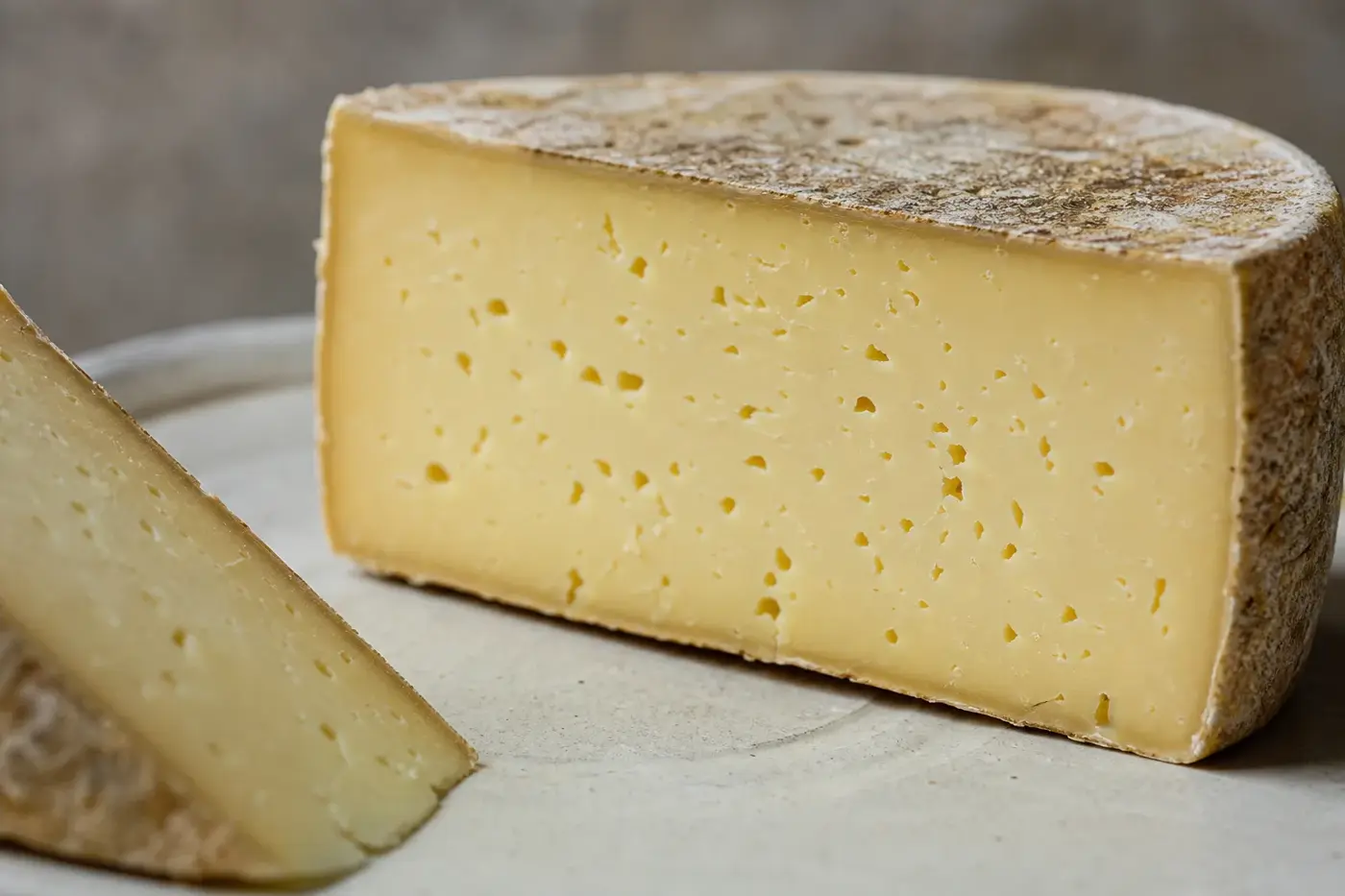
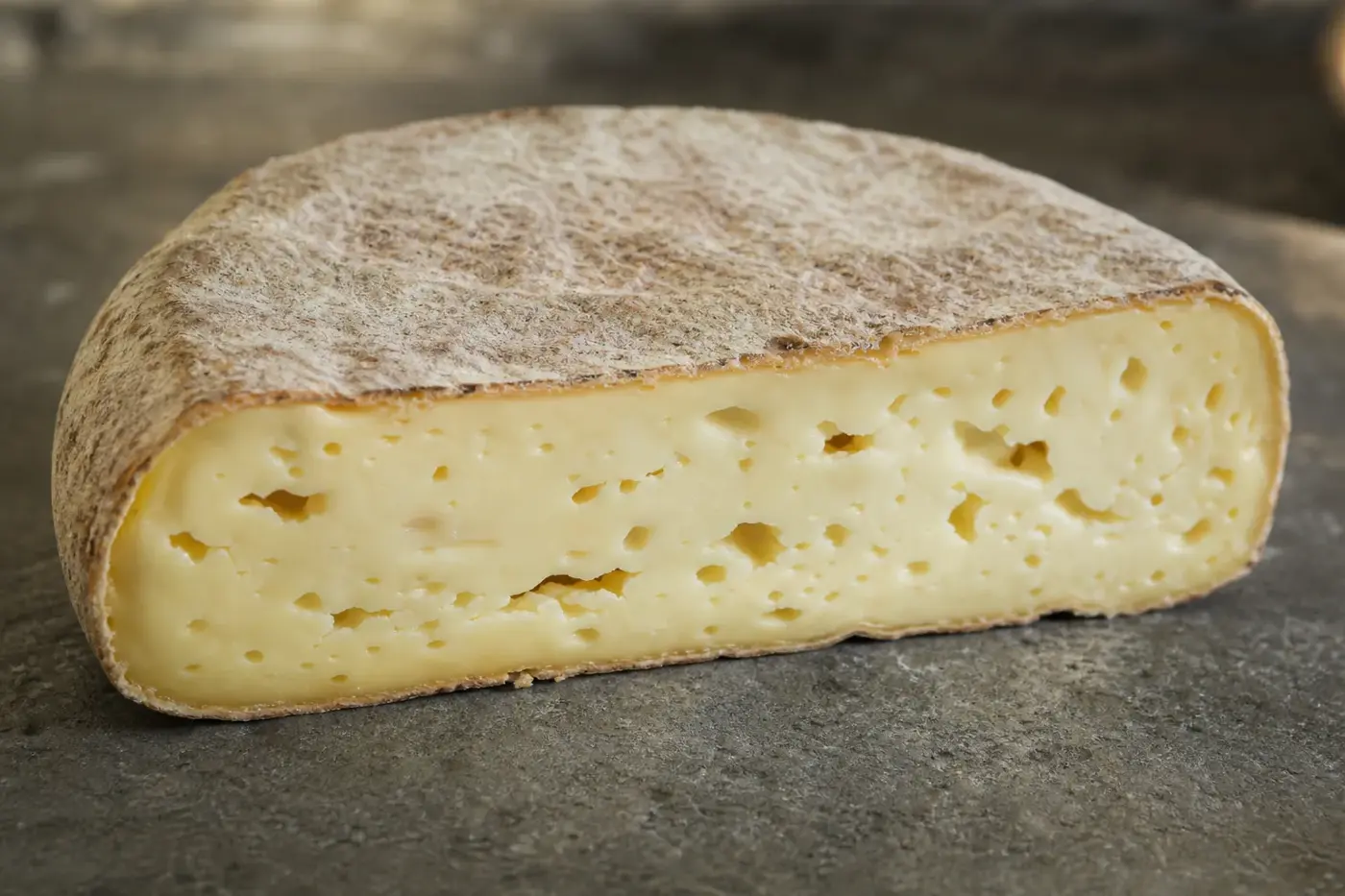
A cheese name can hold on to a district long after its milk, methods and customers have changed. In Panguipulli, Lácteos Chauquén describes its chanco mantecoso as matured, yellow and semi-soft, with regularly distributed eyes, the openings within the paste. What you see is a contemporary cheese carrying a much older name. [2]
Rather than ask one wedge to represent Chile, give yourself a few to compare. Put a chanco or mantecoso beside a fresh cheese, then add a goat’s milk cheese whose maker and locality you can identify. Together, they introduce you to modern southern dairying and the smaller-scale northern traditions documented by agricultural and cultural institutions. [2,4,5]
Follow the milk through Chile’s landscapes
Find your bearings in the dairy south
Los Lagos and Los Ríos have a large part in Chile’s dairy story. In Odepa’s November 2025 survey, they supplied 47.7% and 38.8% respectively of the milk received by surveyed plants that month. Cow’s milk anchors the modern industry, but those figures have boundaries: they cover one reporting system and period, not every farm or cheesemaker. [3]
The milk’s journey deserves as much attention as the factory address. Odepa records both its origin and its processing destination, showing how milk moves between regions before processing. When you compare a production address with a claim about milk source, keep them separate. They need not point to the same place. [3]
Farther north, the picture changes. Chile’s agricultural development agency, INDAP, links caprine dairying closely with small-scale family farming, in contrast with the concentrated southern industry. Its account also notes the continuing limits of detailed, continuous official statistics for goat’s milk production. [4]
Travel with Coquimbo’s goats
In Coquimbo, cheese draws on the working knowledge of crianceros, livestock keepers skilled in pasture, seasonal movement and milk. The national heritage service records families from the Choapa valley taking goats into the Andes for summer grazing, then bringing cheese down to sell. Follow the cheese and you begin to trace the herd’s journey. [10]
Not every farm takes the mountain route. Coquimbo’s regional government also documents housed, closely managed goat systems producing milk and cheese throughout the year. Seasonal movement and farms with controlled feeding and milking facilities both belong to this region’s dairy life. [11]
Sheep’s milk has an important historical place too, particularly in older Chanco cheese. The evidence gives you firmer ground for exploring that past than for assigning any present national share to sheep’s milk cheese. [9]
Meet the cheeses, one bite at a time
Start with chanco and a piece of bread
Slide modern chanco into bread and you have a useful introduction. Chauquén describes its chanco mantecoso as yellow and semi-soft, with visible eyes, and recommends it for sandwiches. Its range includes oregano and merkén versions, with the producer crediting merkén with smoky heat. That tells you about this maker’s cheeses, rather than every chanco you might encounter. [2]
Look beyond the familiar name to the maker, production address and ingredients. A cheese from southern Chile can belong to the modern chanco style without having any production connection to Chanco itself. [1,2]
Let mantecoso make its creamy case
Creaminess is the attraction here. Mantecoso suggests a buttery character, but the individual cheese has more to tell you than the name alone. Chile’s national statistical classification groups “queso chanco o mantecoso” together, while producers use the names across their own ranges. [5]
Colun highlights its mantecoso’s creamy texture; Chauquén joins both names in “chanco mantecoso”. Read the maker’s description, then ask the questions that matter at your table. Does it cut cleanly, soften readily and make a good sandwich filling? Those answers take you further than the name. [2,12]
Make room for queso fresco and quesillo
With this pair, freshness matters more than maturation. Article 237 of the Ministry of Health’s published May 2024 text groups queso fresco and quesillo together. It describes recently made cheeses with no transformation or fermentation other than lactic fermentation, prepared from pasteurised whole, partly skimmed or skimmed milk. Both names share that regulatory description. [6]
On producers’ shelves, you will still meet distinctions. Colun lists fresco and quesillo separately and suggests its fresco for salads. Coquimbo’s recorded food traditions give quesillo another role: a relatively neutral ingredient comfortable in sweet or savoury preparations. [12,13]
| Cheese to try | What to look for | A good first taste |
|---|---|---|
| Queso chanco | Maker and production locality; modern examples include semi-soft matured cheese. [2] | Sliced in bread. |
| Queso mantecoso | Stated texture and ingredients; the name overlaps with chanco in Chilean usage. [2,5] | A sandwich filling. |
| Queso fresco | Fresh rather than matured under the cited Chilean provision. [6] | A salad, as the producer suggests. [12] |
| Quesillo | The same cited regulatory category as queso fresco; compare individual products. [6] | Bread, or sweet or savoury preparations. [13] |
Want to place those differences in a wider picture? Take a look at cheese styles and textures.
Taste Coquimbo, from coast to cordillera
When you meet a “queso de cabra”, ask where it was made. The Fundación para la Innovación Agraria’s regional food heritage research records cheeses connected with the coast, mountain summer pastures and different household methods. Interviewees explain how feeding, pressing, maturation and the cheesemaker’s handling of milk shape the result. A locality gives you a richer conversation than the milk alone. [13]
Among those records is queso cordillera, associated with mountain summer grazing, alongside oreado or matured cheeses. Some interviewees describe mountain cheeses as more yielding or oily than lowland examples. These are local observations about differences people recognise within Coquimbo, not a tasting template to lay over the entire region. [13]
Keep your questions specific: which commune made the cheese, did the herd move seasonally, and is it fresh or matured? A university directory entry for Cooperativa Trashumantes records a maturation room and matured goat’s cheese, showing how shared facilities can support the regional trade. Before you travel, confirm present sales arrangements directly. [14]
Know when a place name has legal weight
A registered name does more than bring a place to mind. Through its Sello de Origen programme, Chile’s INAPI distinguishes geographical indications, denominations of origin, collective marks and certification marks. A denomination of origin connects qualities or reputation to geographical origin, taking relevant natural and human factors into account. [8,15]
For you as a buyer, a regional description and a registration mean different things. “From Coquimbo” identifies a region, cordillera signals a mountain association, and “chanco” appears on contemporary cheeses made beyond its historical locality. A registration adds a specific legal instrument, exact wording and defined conditions. The name alone does not supply those details. [2,8,13]
| Name or description | Chilean GI or denomination of origin status, November 2026 | Register identifier |
|---|---|---|
If provenance matters to your choice, ask for the producer and production locality as well as any claimed registration. Explore the distinction between a style and a legally registered name in protected cheese names.
Pull up a chair at the Chilean table
Bread makes a revealing first companion for cheese. Coquimbo’s food heritage study records fresh goat’s cheese eaten with bread and tea, including churrasca, at breakfast and once, the evening tea meal. Cheese also appears with olives and pickles. These straightforward combinations give you room to notice what is on your plate. [13]
For your own tasting, begin with plain bread before reaching for accompaniments. Compare an unadorned slice of chanco or mantecoso with the same cheese in a sandwich. Try goat’s cheese with bread and olives before adding a strongly seasoned dressing. Your first mouthful need not audition the entire condiment cupboard.
An empanada de queso offers another way in. Order one and ask which cheese fills it, rather than assuming every establishment uses the same variety. At home, ask your cheesemonger which available cheese suits the filling and what its moisture will mean for the result.
Everyday cooking leaves plenty more room to compare. Colun suggests fresh cheese for salads, while Chauquén recommends its seasoned chanco for sandwiches and melting. Treat those as starting points for those particular products. Taste first, then decide how much seasoning their companions need. [2,12]
Step into Chanco’s past, from adobe to market
Open Chanco’s cheese records and you find yourself in colonial Chile. A 2014 archival study examined inventories from eight cheese-producing establishments alongside judicial, notarial and contemporary descriptive sources. It found a sheep-led tradition with established production and distribution during the eighteenth and nineteenth centuries. This rural trade left a substantial paper trail. [9]
A separate historical study preserves the detail of cheese maturing in adobe buildings. Its evidence includes moulds and equipment listed in nineteenth-century inventories, setting Chanco cheese within a wider rural economy. Land, river and sea routes connected the trade, with the Maule playing an important part. You can follow the cheese well beyond the maturing room. [16]
These accounts take you beyond later European-style product names. Chanco already had an established trade with its own materials, methods and transport networks. The studies differ over the outer boundaries of its production territory, but both describe a broader rural district. Neither confines the trade tightly to one town. [9,16]
Today, diversified dairies and national product ranges belong in the picture too. Chauquén’s published history follows a small dairy becoming a cheesemaking business, supplied partly by local milk producers. Colun’s catalogue brings fresh, matured and processed categories together in a single contemporary range. [2,12]
Plan a cheese stop worth the journey
If the name has caught your imagination, Chanco is a natural first stop. The municipality recommends the cheeses of Pahuil and the town’s quesería. Sernatur’s domestic tourism itinerary also points to a small central market selling local foods, including fresh cheeses. Check current market days and individual sellers before you set off. [1,17]
Panguipulli offers a documented southern dairy stop with a public-facing sales room. Chauquén’s website describes a roadside shop and restaurant. Contact the producer about current arrangements and accessibility, and ask whether an organised visit includes the farm or production area. A shop door does not necessarily open into a dairy. [2]
In Coquimbo, look for sellers who can name the producing commune and tell you whether a cheese is fresh or matured. Specialist shops let you compare several makers without travelling between dispersed farms. If you want a farm visit, arrange it with the producer beforehand. Ask exactly what you will be able to see.
Keep your first tasting modest. A chanco or mantecoso, a fresh cheese and a goat’s cheese with an identified locality make a manageable comparison. Contrasting types tell you more than a crowd of very similar wedges.
Look beyond the artisan or industrial label
Begin with the maker, milk and method, rather than the size of the business. Ask who made the cheese and where its milk came from. Look for treatment and ingredients on the label, and ask the seller about maturation. Those answers give you a more useful comparison than production scale alone. [2,6]
Small-scale cheesemaking can keep a close connection with a herd, household or district. A larger dairy may offer a more standardised product and wider distribution. INDAP’s account of caprine farming and published producer ranges reveal several Chilean models, sometimes linked through cooperatives and supplies of local milk. There is more than one route from farm to cheese counter. [2,4,14]
Choose with your next meal in mind. For bread, concentrate on the texture and flavour you enjoy; for cooking, ask about moisture and melting. For a regional tasting, put documented origin and a maker who can explain the cheese first. Scale alone cannot answer those questions for you. [2,12]
Before you compare, separate the product name from the manufacturer and ingredient information. Turn to how to read a cheese label for help finding your way around them.
Let your next cheese take you further
- How to Tell Cheese Styles Apart: Milk, Rind, Texture and Method: find a place for Chile’s fresh and matured cheeses in the wider cheese world.
- Protected Names Explained: PDO, PGI and TSG: explore what separates a familiar name from formal protection.
- How to Read a Cheese Label: find the details that help establish a cheese’s origin and composition.
General information only, not medical advice: follow the official guidance where you live.
Questions people ask
What is queso chanco like?
Modern chanco includes semi-soft cow’s milk cheeses. In Panguipulli, Chauquén describes its chanco mantecoso as matured and yellow, with regularly distributed eyes.
What is the difference between queso fresco and quesillo?
Chile’s regulations give them a shared description as recently made cheeses with no transformation or fermentation other than lactic fermentation. Producers still list them separately, and Coquimbo’s food traditions record quesillo in sweet and savoury preparations.
Where does Chilean goat’s cheese come from?
Goat’s milk cheeses come from Chile’s north and central regions, including Coquimbo. The region’s traditions include cheese associated with mountain summer grazing and cheese made on farms producing throughout the year.
How is cheese eaten in Chile?
Coquimbo’s food heritage study records fresh goat’s cheese eaten with bread and tea at breakfast and once, the evening tea meal. Cheese also appears with olives and pickles.
Is queso chanco a protected geographical name?
The page lists its Chilean geographical indication or denomination of origin status as not verified in November 2026. Chile’s geographical protection authority is INAPI, which distinguishes several types of registration under its Sello de Origen programme.
Sources
-
Municipalidad de Chanco, Turismo, undated municipal visitor information, accessed November 2026. Section “Productos Locales y Artesanía”.
Read at chanco.cl -
Lácteos Chauquén, Quienes somos and Productos, undated producer statements, accessed November 2026. Commercial sources for the maker’s own products, descriptions and visitor facilities.
Read at lacteoschauquen.cl
Read at lacteoschauquen.cl -
Oficina de Estudios y Políticas Agrarias, Odepa, Boletín de la leche: avance de noviembre 2025, Table 10, monthly milk origin and reception.
Read at odepa.gob.cl -
Instituto de Desarrollo Agropecuario, INDAP, Estudio de Consumidores: Rubro Caprino Lechero, document hosted in its February 2026 directory, Sections 3.1.4 and 3.1.5. Publication date not independently established.
Read at indap.gob.cl -
Instituto Nacional de Estadísticas, INE, CCIF 2018.CL, Chilean classification of individual consumption, product categories for chanco or mantecoso, quesillo and fresh cheeses.
Read at ine.gob.cl -
Ministerio de Salud de Chile, Reglamento Sanitario de los Alimentos, Decreto 977/96, consolidated ministry edition, May 2024, Articles 234 to 238.
Read at minsal.cl -
Biblioteca del Congreso Nacional de Chile, Decreto 977: Aprueba Reglamento Sanitario de los Alimentos, legal database record identifying a version running from 19 June 2026 to 4 February 2027. Full current consolidation requires editorial verification.
Read at bcn.cl -
INAPI, Denominación de Origen, undated official explanation, accessed November 2026.
Read at inapi.cl -
Ciencia e Investigación Agraria, Génesis e identidad del queso Chanco (Chile 1750-1860): Una contribución al estudio de las denominaciones de origen en América Latina, volume 41, issue 3, 2014, pages 317 to 325. Archival research using eight establishment inventories and associated records.
Read at scielo.cl -
Subdirección Nacional de Patrimonio Cultural Inmaterial, Encuentro ancestral, viaje a las alturas, official heritage account, accessed November 2026.
Read at patrimonioinmaterial.gob.cl -
Gobierno Regional de Coquimbo, Promueven proceso de estabulado para aumentar producción en ganado caprino, official regional account, accessed November 2026.
Read at gorecoquimbo.cl -
Colun, Quesos, undated producer catalogue, accessed November 2026. Commercial source for its own product categories and suggested uses.
Read at colun.cl -
Fundación para la Innovación Agraria and Universidad de Chile, Patrimonio alimentario de Chile. Productos y preparaciones de la región de Coquimbo, 2018, principally pages 59 to 64. Fieldwork and recorded local accounts.
Read at opia.fia.cl -
Universidad de Chile, Cooperativas Agroalimentarias, Cooperativa Trashumantes, undated directory entry, accessed November 2026.
Read at cooperativasagroalimentarias.uchile.cl -
INAPI, Sello de Origen, official programme information, accessed November 2026.
Read at inapi.cl -
RIVAR, El queso de Chanco: un producto típico de la industria popular de Chile (siglos XVIII y XIX), volume 3, issue 8, May 2016, pages 41 to 63. Original documentary historical research.
Read at revistarivar.cl -
Sernatur, Chile es Tuyo, Chanco, Pelluhue y Curanipe: sorpresas únicas del Maule Sur, undated official tourism itinerary, accessed November 2026.
Read at chileestuyo.cl
This piece was researched from Chilean institutional publications, agricultural statistics, documentary historical studies and attributed producer information.
Last checked: November 2026
Last checked November 2026.
The cheeses of Chile
The editors suggest you read next
French Cheese: The Complete Guide
Picture Normandy’s pastures, then follow the milk towards the Loire’s goat dairies, the Jura’s shared cheesemaking traditions and the sheep country of the Pyrenees.