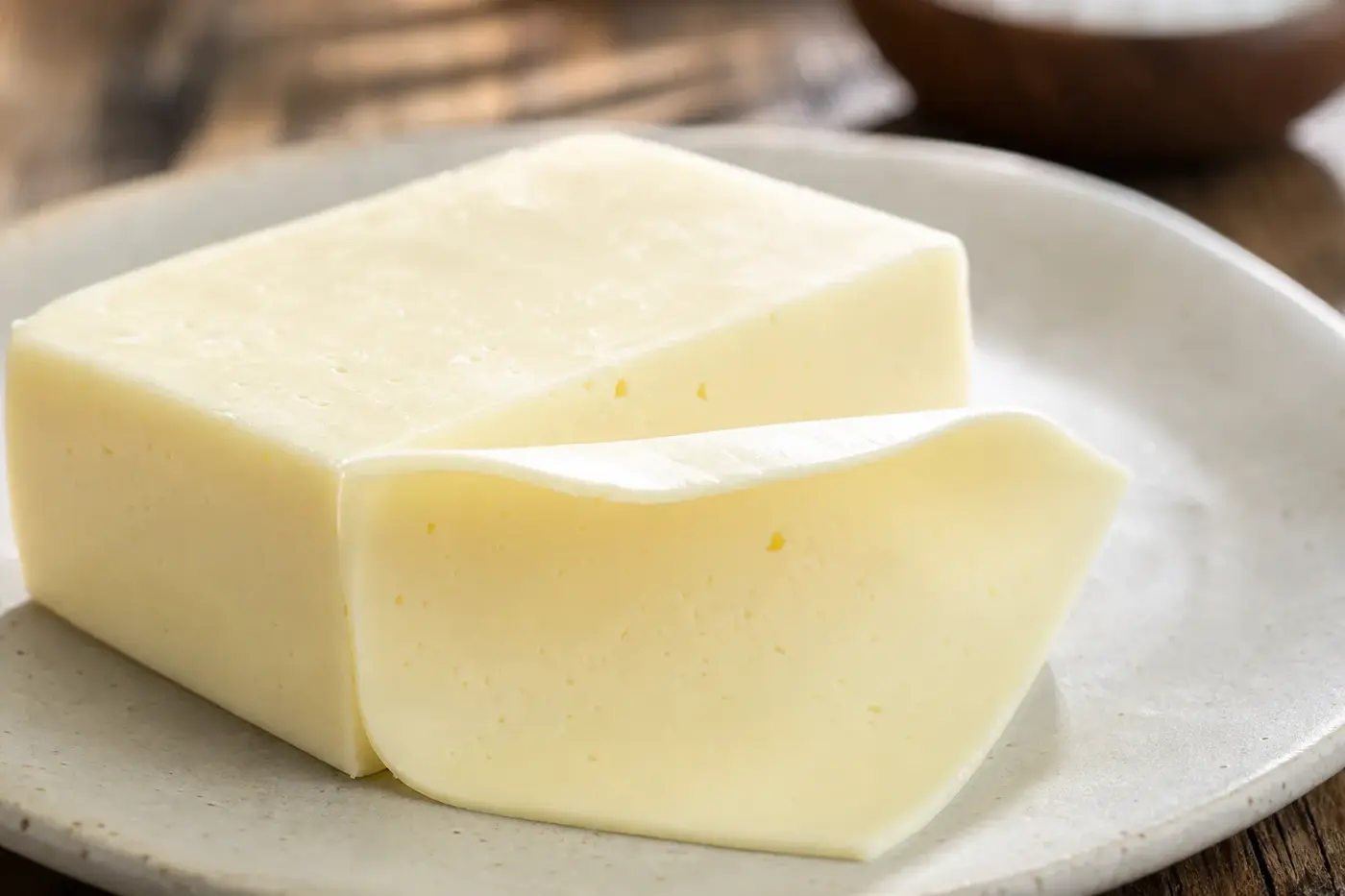
Slide a knife through Colby and notice how readily it yields. Beneath that familiar colour is a supple, moist cheese, closer in texture to young Monterey Jack than to firm, sharp Cheddar.[4][7] Its story turns on a cold-water curd wash, developed by Joseph Steinwand in 1885 at his father’s factory near Colby, Wisconsin.[1][2] There is more going on here than an orange resemblance.
| Get to know Colby | What you need to know |
|---|---|
| Familiar name | Colby.[1] |
| US standard name | Colby cheese, under 21 CFR 133.118.[3] |
| Where the story starts | Near Colby, Wisconsin, United States.[1][2] |
| Milk | Cow’s milk; the US standard permits pasteurised or unpasteurised milk.[3] |
| What sets the milk | Rennet or other suitable milk-clotting enzymes.[3] |
| The distinctive step | Washed curd, cooled before final draining.[5] |
| What you’ll find in a slice | Mild, moist and open-textured.[4][7] |
| US composition limits, November 2026 | Maximum 40% moisture in the whole cheese; minimum 50% milkfat in dry matter.[3] |
| US legal minimum ageing | No fixed minimum for pasteurised-milk Colby. Unpasteurised-milk Colby requires at least 60 days at a minimum of approximately 1.7 °C (35 °F).[3] |
| A guide to maturation | The University of Guelph describes curing for one to three months.[4] |
Meet Joseph Steinwand, Colby’s original maker
To find Colby’s beginnings, head to the Wisconsin town whose name it carries. The City of Colby’s historical account credits Joseph Steinwand with creating the cheese in 1885. He was working just outside town, at the cheese factory established by his father, Ambrose.[1]
The local newspaper remembered his contribution too. Steinwand’s obituary in the Colby Phonograph, published on 5 September 1946, says he began making cheese in Colby in 1885 and names him as its originator.[2]
The decisive moment came in the vat. The city’s account describes draining the whey, then washing and cooling the curd before salting, mixing and pressing. This departure from Cheddar making was intended to hold on to moisture and produce a milder flavour.[1]
That is the detail to remember when you meet Colby. It may look rather like orange Cheddar, but its character begins with a different treatment of the curd.
Look beyond the orange
Cut yourself a piece and the differences become easier to see. Dairy Farmers of Wisconsin, an industry organisation, describes Colby as softer, milder and moister than Cheddar. The two may share a yellow appearance, but they feel quite different in a slice.[6][7]
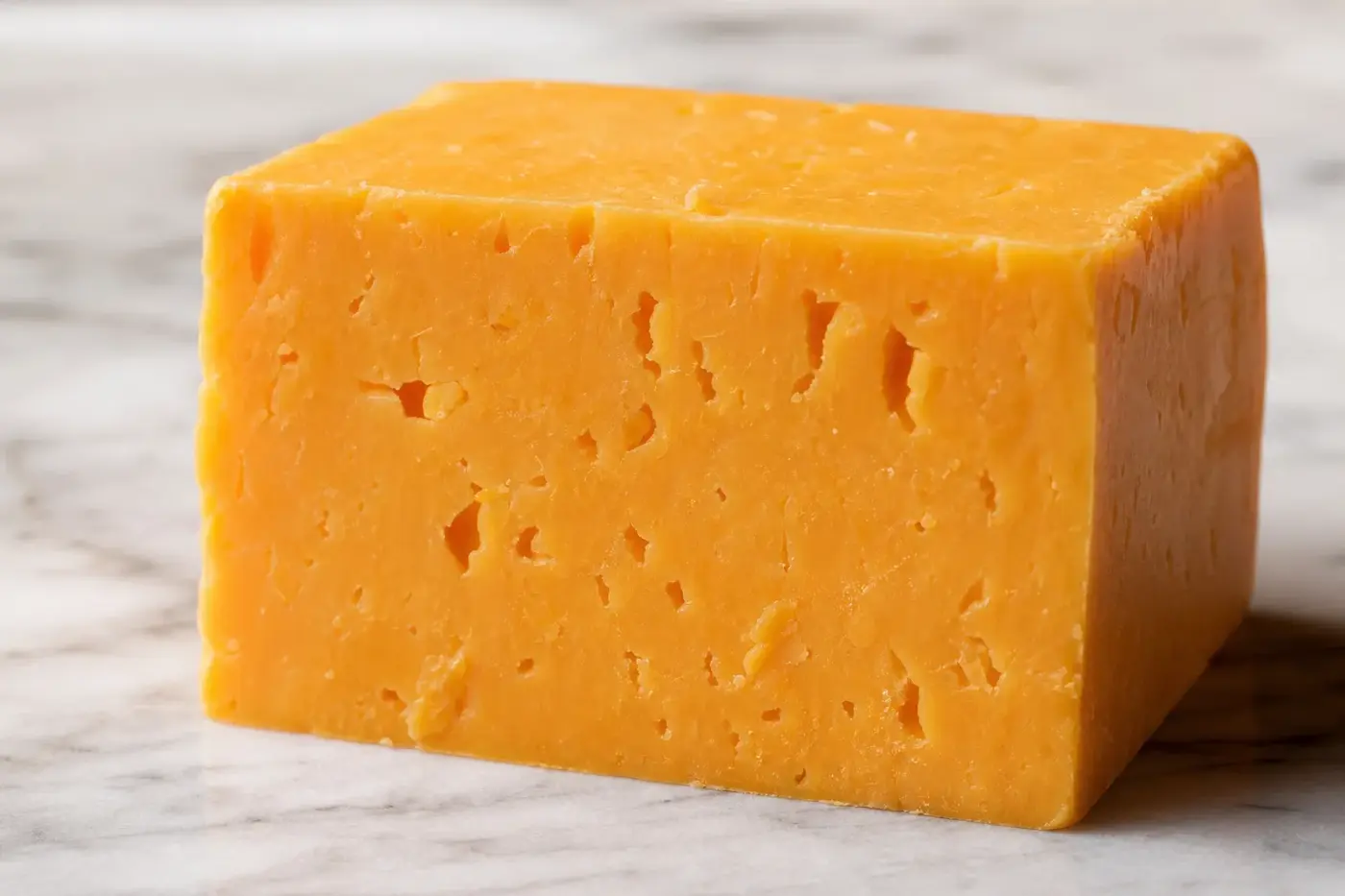
Look for small, irregular gaps across the cut face. These are mechanical openings: spaces within the cheese body, rather than a pattern of large, round eyes. The Cheese Science Toolkit describes that openness as a desirable feature of Colby, not something the maker should have tidied away.[6]
The familiar yellow to orange colour comes from annatto, a colouring preparation derived from seeds and added during manufacture. In the University of Guelph’s production account, annatto is optional and adjustable. Your Colby’s depth of colour therefore reflects the maker’s choice.[4][6]
Give the cut face as much attention as the colour when you choose a piece. A supple, moist slice with small openings tells you more about Colby’s characteristic body than a particularly enthusiastic shade of orange.[4][6]
Into the vat: why the curd wash matters
The wash is central to Colby’s mild character. To picture what happens, think of curd as the solid material formed when milk sets, and whey as the liquid that separates from it. Cheesemakers remove whey and add water, keeping the curd pieces moving throughout.[3][5]
Washing reduces the supply of lactose, the milk sugar that starter bacteria turn into lactic acid. With some lactose removed, less remains for later acid production. When the Cheese Science Toolkit describes the result as “sweeter”, it means lower acidity, not sugary sweetness.[6]
Cold water also changes the curd’s moisture and temperature. The American Cheese Society’s manufacturing guide explains that warm curds can absorb water during cold-water washing, increasing moisture. Cooling slows lactic acid bacteria too, helping Colby develop its moist body and restrained acidity.[5]
How you wash the curd matters. A University of Wisconsin-Madison study published in 2011 compared four treatments: batch and continuous washing, each with and without stirring. Measurements during ripening showed differences in residual lactose, lactic acid, calcium behaviour and melting properties.[9]
That gives you a useful clue to why different makers’ Colby may behave differently in your sandwich or saucepan. Washing defines the style. The cheesemaker’s handling of that wash helps shape the cheese you eventually eat.[9]
Follow the milk from starter to press
Colby begins with cow’s milk and acid-producing starter bacteria. The University of Guelph describes mesophilic cultures, bacteria suited to moderate cheesemaking temperatures. These normally include Lactococcus lactis and related cremoris cultures.[4]
Rennet, a milk-clotting enzyme preparation, then sets the milk into a gel. The cheesemaker cuts this into curd particles, stirring and heating them to encourage whey to escape. You can follow the wider process in how cheese is made.[4][5]
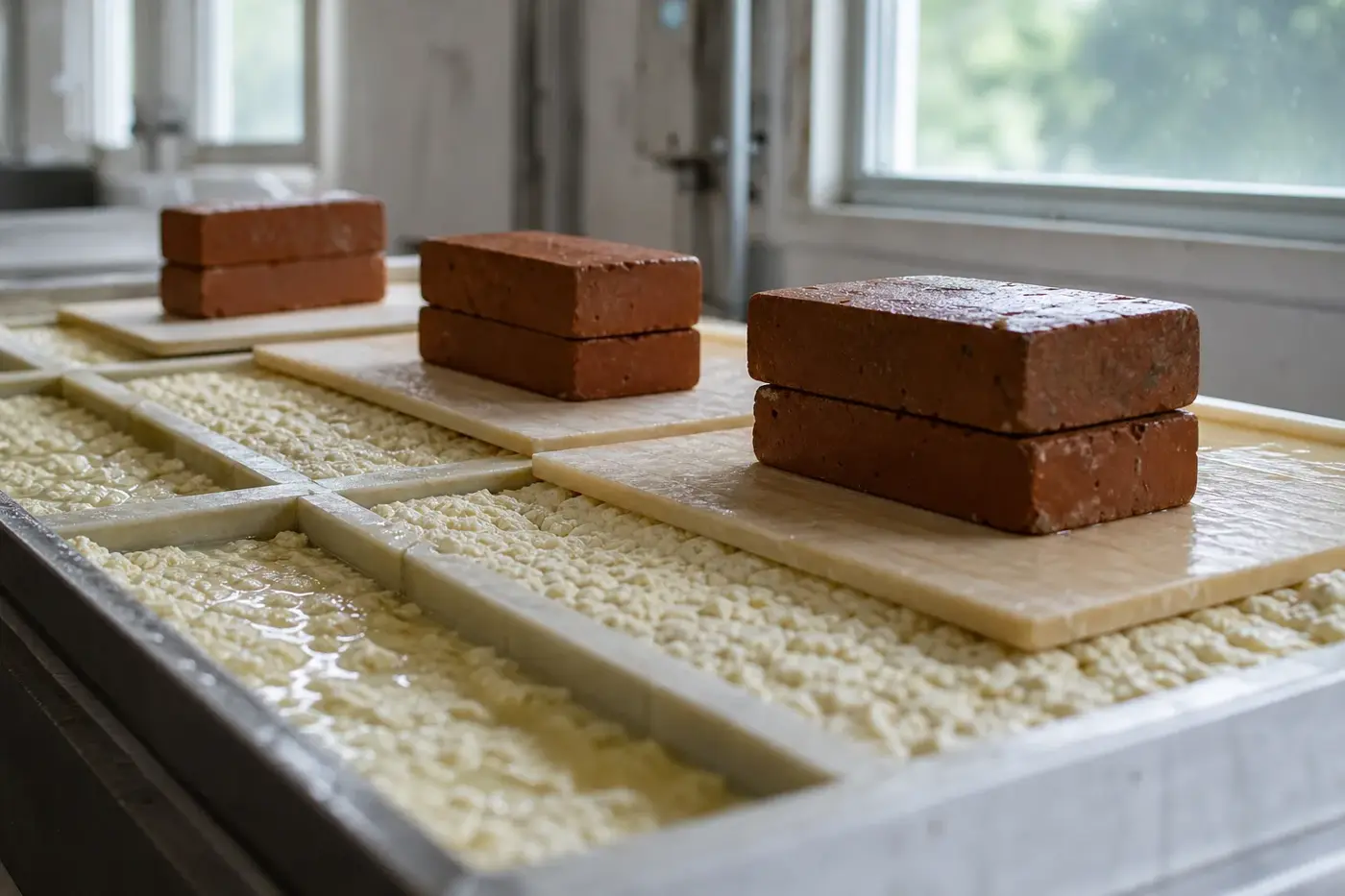
Then comes Colby’s distinctive wash. The maker controls cooling, drainage and agitation to keep the curd particles separate, rather than allowing the slabs associated with traditional cheddaring to form. Once the wash water has drained away, salt is mixed through the curd before it goes into forms for pressing.[3][5]
Pressing turns those separate particles into a cheese you can handle and slice. The American Cheese Society calls this joining curd knitting: the particles fuse as whey is expelled.[5] The skill lies in bringing the cheese together while keeping Colby’s expected openness, rather than producing Cheddar’s closed body.[6]
Choosing between Colby, Cheddar and Monterey Jack
Colby starts out much like Cheddar, then takes a different route at the curd stage. Traditional cheddaring allows curd to join into a mass, which is cut into slabs. Turning and stacking those slabs develops acidity and drains whey; Colby uses washing to help control its final acidity instead.[4][5]
For your everyday eating, young Monterey Jack is a closer neighbour. Dairy Farmers of Wisconsin describes it as a mild, white, semi-hard cheese with good melting properties.[8] You can readily distinguish white Jack from familiar coloured Colby by sight, although the production method and label tell you more.
For this November 2026 comparison, the figures below are US legal limits. They are not measurements of every product you might pick up.[3]
| US standard of identity | Maximum moisture in the whole cheese | Milk treatment |
|---|---|---|
| Colby, 21 CFR 133.118 | 40% | Pasteurised or unpasteurised, with the specified ageing requirement |
| Cheddar, 21 CFR 133.113 | 39% | Pasteurised or unpasteurised, with the specified ageing requirement |
| Monterey Jack, 21 CFR 133.153 | 44% | Pasteurised dairy ingredients required |
Colby and Cheddar’s legal moisture ceilings are only a little apart. Their different textures also reflect acid development, washing and curd handling.[4][5] To follow that other route through manufacture and maturation, take a look at Cheddar.
And where does Colby Jack fit?
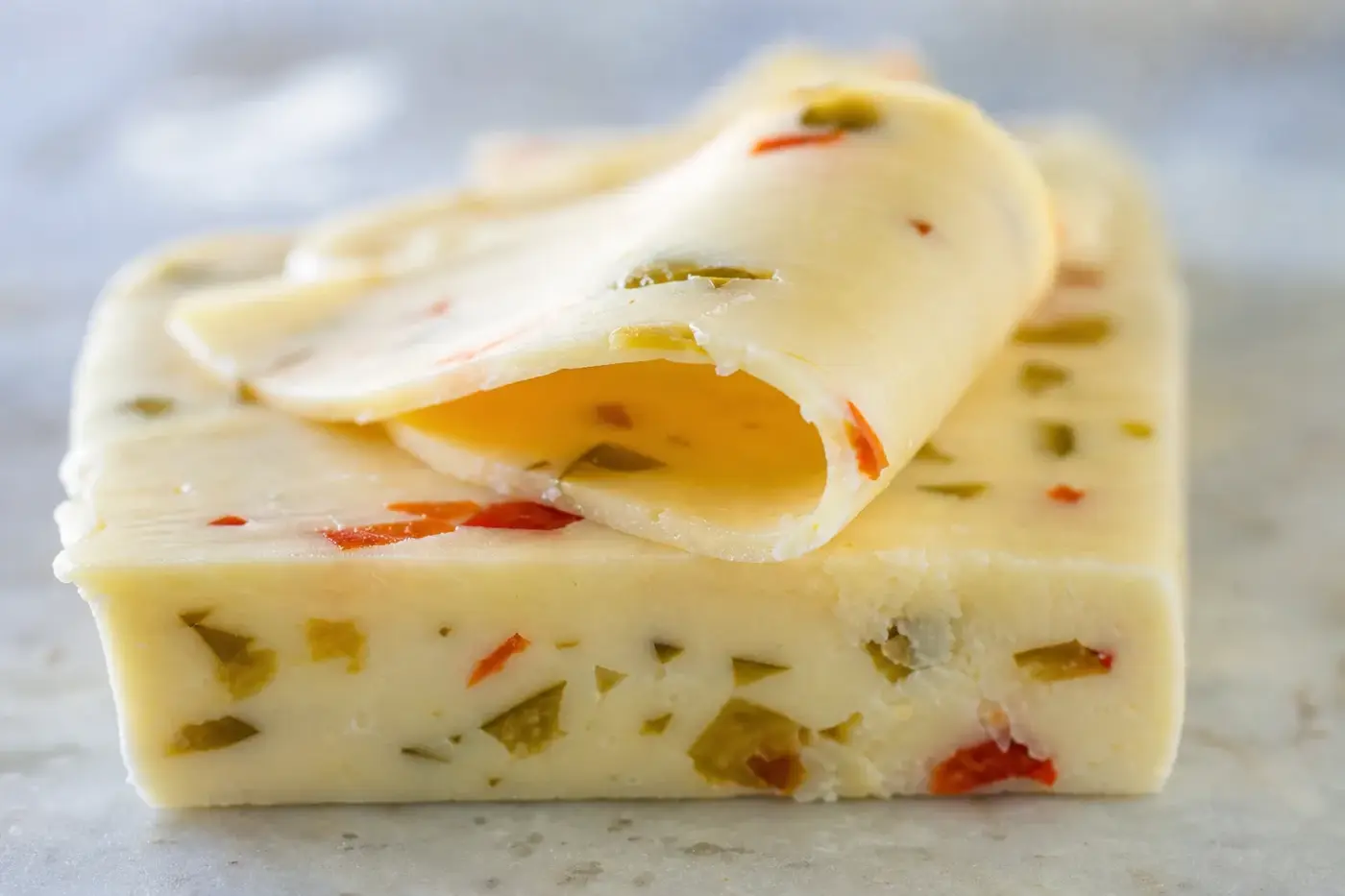
Colby Jack brings Colby and Monterey Jack together. Dairy Farmers of Wisconsin records the two cheeses being mixed for snack and shredded products.[7] What you get is a combination of two mild cheeses, rather than mature Cheddar’s sharper character.
When choosing a packaged product, read the actual food name and ingredient declaration. “Colby Jack” names the combination, but an orange-and-white appearance alone tells you little about how something was made. Processed products have their own naming, making reading a cheese label particularly useful here.
A shorter wait, a milder cheese
Colby is made for slicing, portioning and everyday cooking. Makers press it into forms, and it is sold in portions that may include slices and cuts. The University of Guelph describes manufacture in cheese hoops, followed by vacuum packaging in film.[3][4]
Its maturation is generally short compared with cheeses developed for prolonged ageing. Guelph gives a curing period of one to three months, describing Colby as quick-curing and soft-bodied.[4] That manufacturing reference is separate from the US legal ageing requirement for cheese made with unpasteurised milk.
If maturity matters to you, look for an actual age statement on the pack. Cheese lovers can turn an ageing period into a competitive sport, but the longest wait is not automatically the best choice here. Mild flavour and moist texture are Colby’s defining pleasures, and more useful guides to its appeal.[4][7]
Make room for Colby at the table
Reach for Colby when you want softness and mild flavour without cheese taking over the dish. Dairy Farmers of Wisconsin suggests serving it sliced or cubed as table cheese, stacking it in sandwiches, or melting it in a toasted cheese sandwich. Crisp, slightly sour apples are another recommended companion.[7]
On a cheeseboard, give Colby the opening slot alongside apple slices and plain bread. Tasting it before a sharper cheese gives its quieter character room to register. That suggestion follows the industry’s description of the cheese: start with the mild flavour so you can appreciate it.[7]
For your sandwich, choose Colby when mildness is the point, or mature Cheddar when you want more assertiveness. If melting is your main concern, young Monterey Jack is another option. It offers the white colour and mild flavour described by the Wisconsin industry body.[8]
Take only the portion you need from the fridge. Follow the storage instructions on the packaging for the rest.
Keep your Colby in good condition
Keep Colby refrigerated. For home storage in England, Wales and Northern Ireland, the Food Standards Agency advises keeping dairy products in a fridge between 0 and 5 °C (32 to 41 °F). Check the temperature with a fridge thermometer, and follow the storage instructions on the packaging.[10]
After opening, keep the pack’s instructions and follow any stated use-within period. The appropriate limit depends on the product and its packaging. Follow the maker’s directions rather than applying a single number of days to every Colby.[10]
Pay attention to the date wording too. UK government guidance distinguishes between a use-by date, which concerns safety, and a best-before date, which concerns quality. Do not eat food after its use-by date.[11]
For help with wrapping and managing cut pieces, see storing cheese at home. Use that advice alongside the pack’s own instructions.
Two questions to ask beyond the name
The name “Colby” does not tell you whether the milk was pasteurised. The US standard permits both pasteurised and unpasteurised milk under their respective conditions, so check the individual product when milk treatment matters to you.[3] You can explore the distinctions in raw, thermised and pasteurised cheese.
Vegetarian suitability also depends on the individual cheese, its ingredients and the maker’s enzymes. If the pack has no clear suitability statement, ask the producer which coagulant and other enzymes it uses. For the different sources, turn to Rennet explained.
General information only, not medical advice: follow the official guidance where you live.
Questions people ask
How is Colby different from Cheddar?
Colby is softer, milder and moister than Cheddar, despite their similar yellow appearance. Colby's curds are washed, while traditional cheddaring involves cutting, turning and stacking slabs of curd.
Is Colby made with pasteurised milk?
The US standard permits both pasteurised and unpasteurised cow's milk. Colby made with unpasteurised milk must be aged for at least 60 days, while pasteurised milk Colby has no fixed US legal minimum ageing period.
Is Colby suitable for vegetarians?
Suitability depends on the individual cheese, its ingredients and the maker's enzymes. If the pack has no clear suitability statement, ask the producer which coagulant and other enzymes it uses.
How should Colby be stored?
For England, Wales and Northern Ireland, the Food Standards Agency advises keeping dairy products in a fridge between 0 and 5 °C and following the packaging instructions. See the Food Standards Agency's guidance for more information.
What is Colby Jack?
Colby Jack combines Colby and Monterey Jack. Dairy Farmers of Wisconsin records the two cheeses being mixed for snack and shredded products.
Sources
- City of Colby. Our History: The Development of Colby Cheese. Undated municipal historical account, accessed November 2026. Source.
- Colby Phonograph. Joseph F. Steinwand obituary, 5 September 1946. Transcription held by Clark County History. Source.
- US Food and Drug Administration. 21 CFR Part 133: Cheeses and Related Cheese Products, particularly §§ 133.113, 133.118 and 133.153. Operative eCFR text checked November 2026. Source.
- University of Guelph. Colby manufacturing source and relevant passages: Not verified.
- American Cheese Society. Best Practices Guide for Cheesemakers, second edition, February 2017, chapter 6, especially page 64 and the following discussion of draining and cheddaring. Source.
- Cheese Science Toolkit. Colby Cheese: 3 Fun Facts. Undated explanatory infographic, accessed November 2026. Source.
- Dairy Farmers of Wisconsin. Colby Cheese. Undated industry account, accessed November 2026. Source.
- Dairy Farmers of Wisconsin. Monterey Jack. Undated industry account, accessed November 2026. Source.
- University of Wisconsin-Madison researchers. “Effect of different curd-washing methods on the insoluble Ca content and rheological properties of Colby cheese during ripening.” Journal of Dairy Science, 94(6), 2692 to 2700, June 2011. DOI: 10.3168/jds.2010-3753. Abstract consulted. Source.
- Food Standards Agency. How to chill, freeze and defrost food safely. Published 18 December 2017; live guidance checked November 2026. Applies to England, Wales and Northern Ireland. Source.
- UK government. Understanding food labelling: Best before and use-by dates. Live guidance checked November 2026. Source.
Researched from municipal and historical records, US standards, university and industry production references, a peer-reviewed study abstract and official consumer guidance.
Last checked: November 2026
Last checked November 2026.
The editors suggest you read next
American Cheese: The Processed Slice Explained
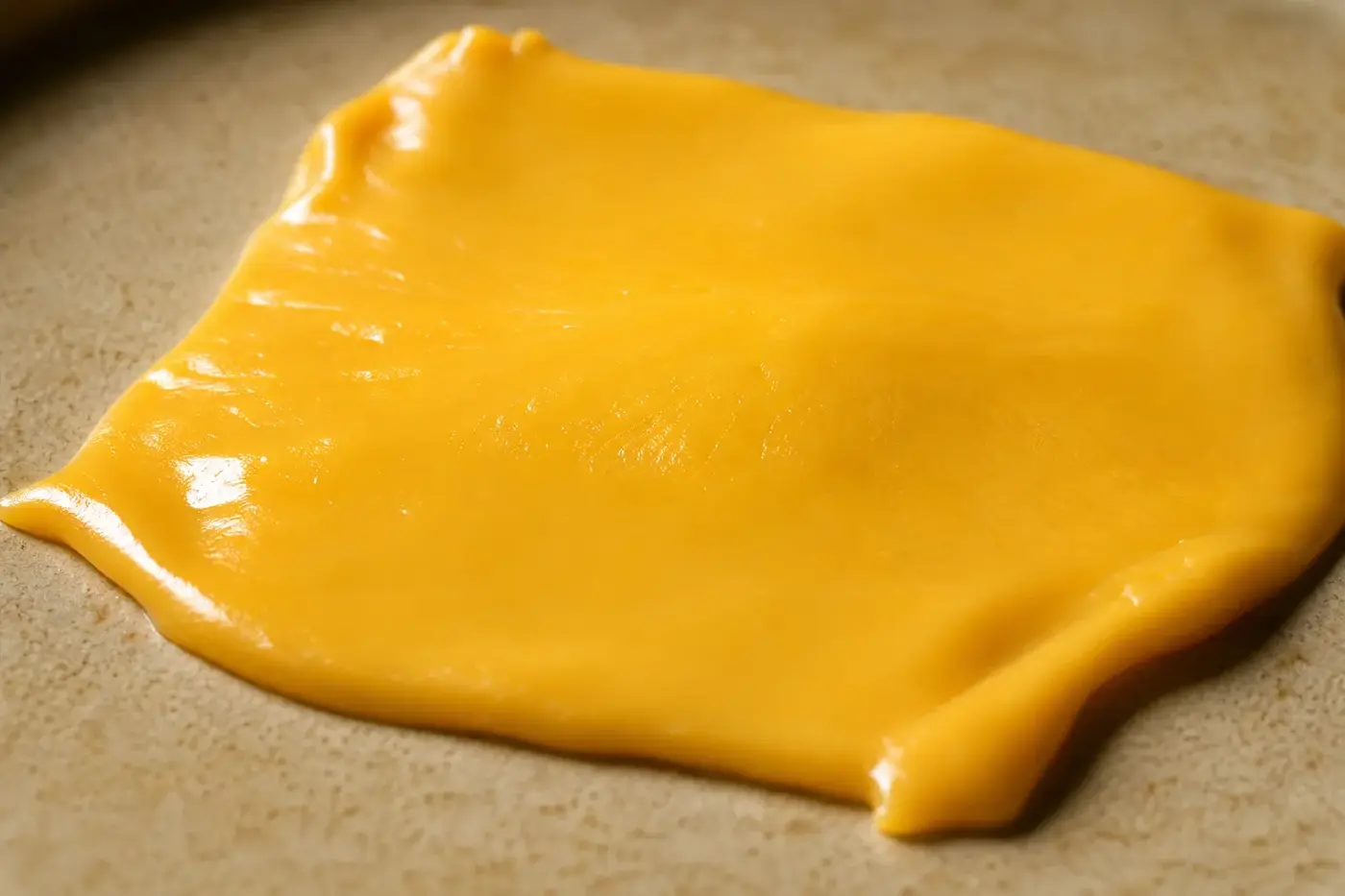
Watch a slice of American cheese soften over your burger.