Pepper Jack
Bend a pale ivory slice and watch the pepper pieces catch your eye.
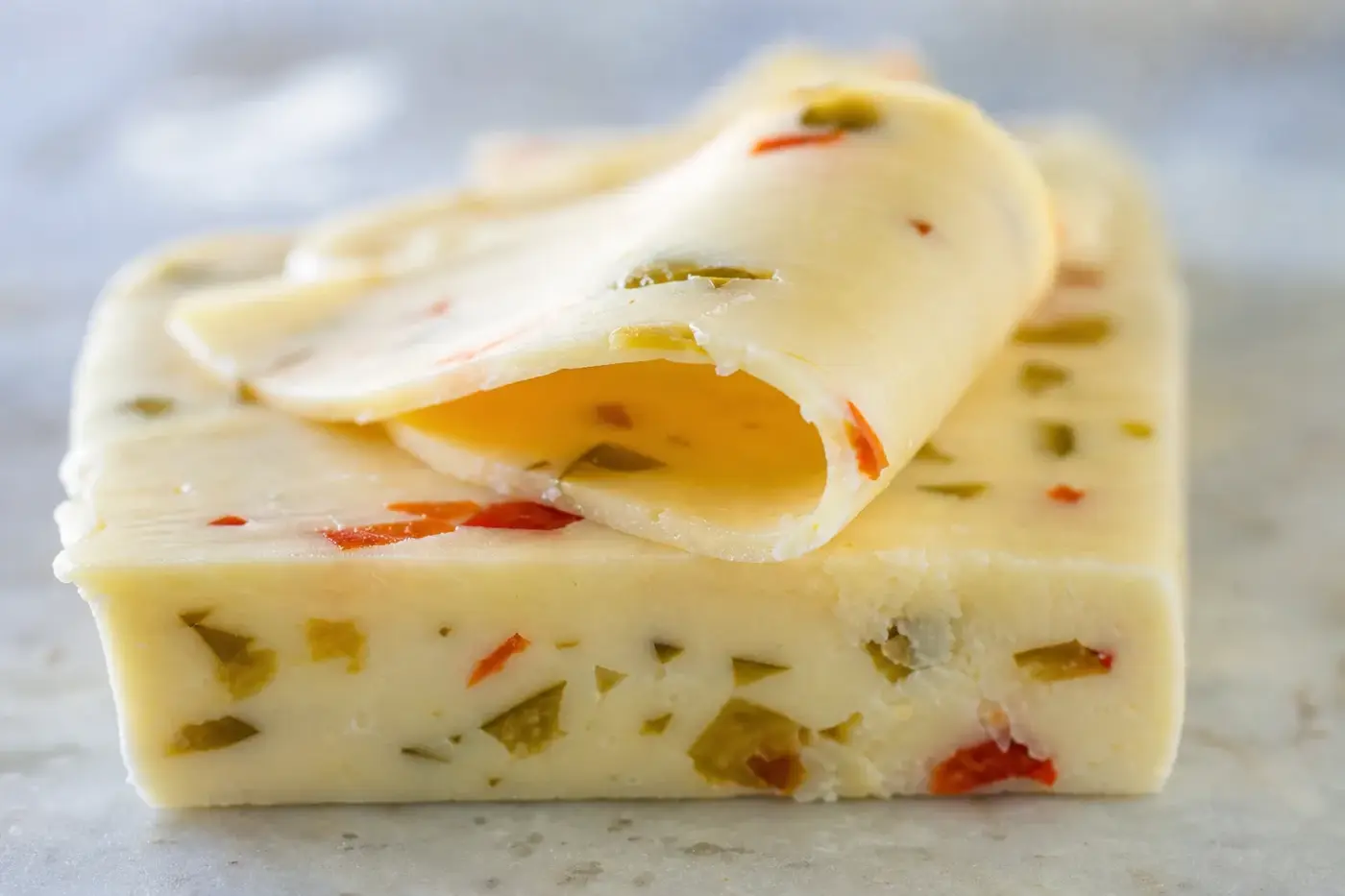
Bend a pale ivory slice and watch the pepper pieces catch your eye. The cheese is supple, the promise of heat unmistakable. Pepper Jack brings chillies into Monterey Jack’s mild, creamy world, giving a gentle cheese a little more to say.
Commonly made from cow’s milk, it slips into cold sandwiches as happily as it melts over burgers and quesadillas. Tillamook describes its version as smooth, compact and flexible, with moderately hot jalapeño flavour.[2,4,5]
| Field | What you need to know |
|---|---|
| Style | Jack cheese with a chilli kick.[2,4] |
| Milk | Cow’s milk in the cited producer specification.[5] |
| Milk treatment | The cited products use pasteurised milk.[2,4] |
| Peppers | Jalapeño, or blends including serrano, habanero and red bell pepper.[2,4] |
| Coagulant | It varies by product; “enzymes” does not tell you its source.[1] |
| Typical ageing | No established period to give here. |
| Relevant US standard | Monterey cheese and monterey jack cheese: 21 CFR 133.153.[1] |
| Allergen | The cited products contain milk.[2,4] |
Meet the creaminess behind the kick
The pleasure comes in stages: gentle dairy flavour first, then peppers stepping forward. You’ll find a pale ivory paste scattered with pepper pieces and a body that bends rather than crumbles. Tillamook describes a smooth, compact, flexible cheese with moderately hot jalapeño flavour; Sargento calls the Monterey Jack base of its Fiesta version creamy and mildly sweet.[4,5]
Let the maker’s description guide you towards your preferred balance. Those colourful flecks promise pepper flavour, not a particular level of heat. The finished cheese’s description tells you more than its appearance alone.[2,4,5]
Pull up a chair for Monterey’s story
By December 1950, local correspondents were already debating where Jack cheese began. A newspaper column preserved by a Monterey historical archive records their memories of dairies and different pressing arrangements from earlier decades.[6]
Pepper Jack belongs to that American Monterey Jack tradition, although the column follows the parent cheese, not its peppered descendant. Today’s makers document their pepper flavoured products. Pepper Jack’s inventor and introduction date remain open questions.[2,4,6]
Follow the milk all the way to the press
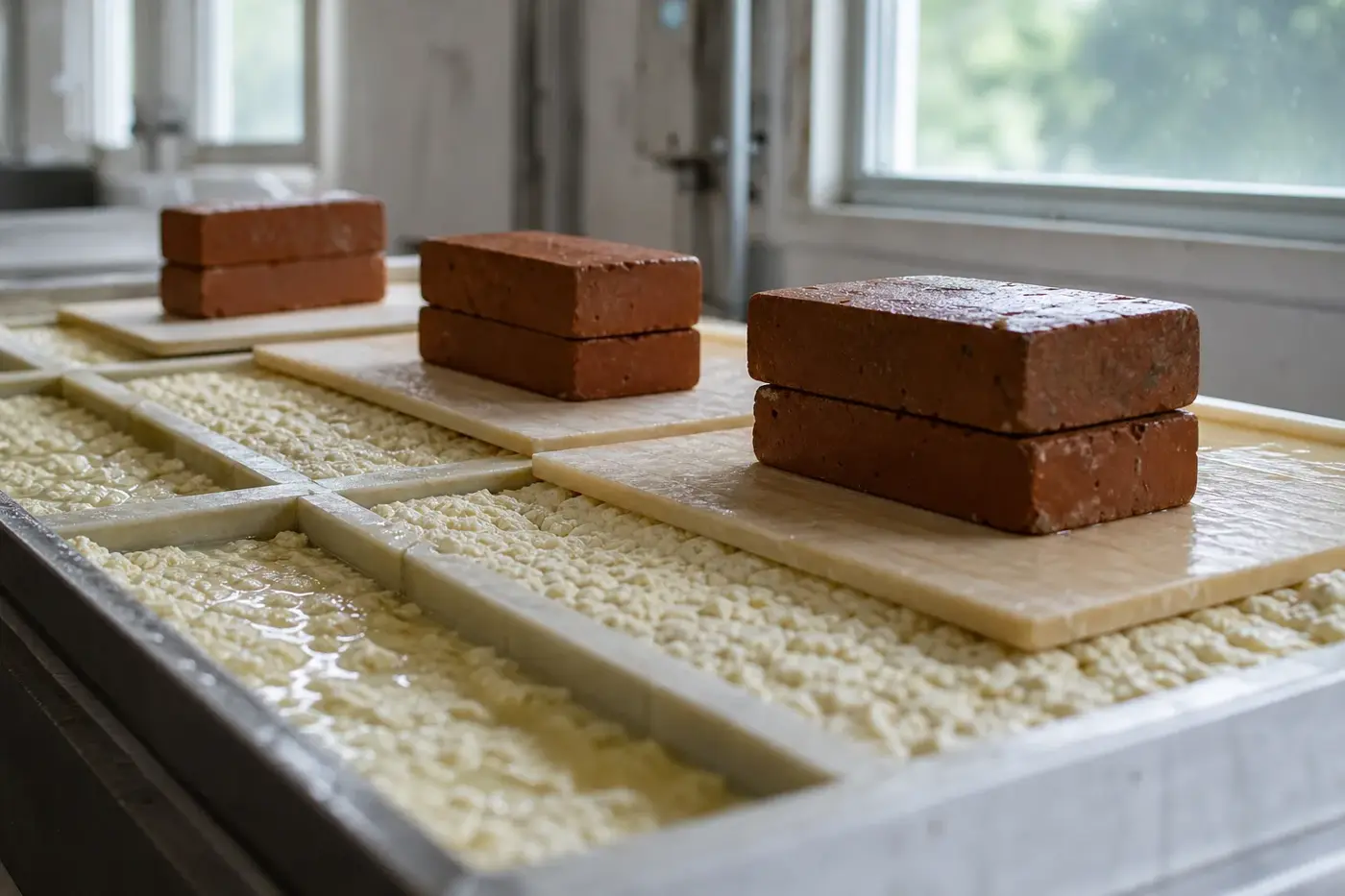
Milk, bacterial cultures and a clotting enzyme begin the transformation. Cultures produce lactic acid, while rennet, the clotting enzyme, sets the milk into solid curd and liquid whey. The Monterey Jack procedure in US law then describes cutting, stirring and heating the curd, draining the whey, and finally salting and pressing.[1]
Tillamook describes a stirred curd process followed by salting and pressing. Exactly when its peppers join the mixture remains unclear.[5] If you’d like to follow the wider journey, see how cheese is made.
Choose your peppers, not just the prettiest flecks
Jalapeño is a starting point, not a universal recipe. Tillamook lists jalapeño peppers, while Sargento’s Fiesta block brings together red bell peppers, jalapeños, serranos and habaneros. Both list cultures, salt and enzymes alongside pasteurised milk.[2,4]
That gives you something useful to consider at the cheese counter. Pepper Jack is a family of cheeses, not a fixed chilli strength: pepper varieties, their proportions and the amount added all shape the result. A red fleck might be bell pepper, so colour alone says little about heat. The flecks have not, unfortunately, agreed on a dress code.[2,4]
Look beyond the peppers, too. Some recipes include acetic acid and calcium chloride; a Sargento foodservice ingredient declaration lists both, while its Fiesta retail block has a different list. Compare the exact products, even when they come from the same maker.[4,7]
Meet the neighbours on the American cheese shelf
A square slice won’t tell you which cheese you’re holding. Recipe and manufacturing method make the difference: Pepper Jack adds peppers, plain Monterey Jack and Colby have their own identities, and processed American cheese takes a different manufacturing route.[1,2,4]
| Cheese | What sets it apart | What to look for |
|---|---|---|
| Pepper Jack | Cheese with added peppers.[2,4] | The pepper blend and declared milk treatment. |
| Plain Monterey Jack | US standard: 21 CFR 133.153.[1] | The mild base, without Pepper Jack’s additions. |
| Colby | Separate US standard: 21 CFR 133.118.[1] | A cheese in its own right, not simply Pepper Jack without peppers. |
| Processed American cheese | Cheese heated with emulsifying agents under the relevant US standard.[1] | The full product name and ingredient list. |
The United States standard for Monterey cheese and Monterey Jack cheese appears in 21 CFR 133.153. Which requirements apply to a particular pepper flavoured product remains a separate question.[1]
Find your texture before you turn up the heat
More chilli does not mean a more mature cheese. Pepper heat and dairy flavour are separate choices, so consider age alongside the recipe rather than treating heat as a clue.
Moisture, fat, acidity and the state of the protein network help determine whether cheese feels firm, supple or fragile. They also affect how it responds to heat. During ripening, proteins break down and that network changes.[8]
Choose by the maker’s description of the finished cheese, rather than assuming an ageing period. You might want a flexible sandwich slice or a firmer piece for a board. Start with the texture your meal needs, then find your preferred pepper character.
Bring home the right piece for your plate
For burgers or toasted sandwiches, choose evenly cut slices that cover the filling. For quesadillas, a block gives you control over the thickness and spread of the grated cheese. For a board, look for a piece that cuts neatly into small portions.
Next, read the pepper list and the maker’s heat description. If you’re feeding people with different preferences, combine plain Monterey Jack with Pepper Jack and offer extra chilli separately. You’ll have more control than if you commit the whole dish to the hottest available blend.
The guide to reading a cheese label helps you separate the product name from the descriptions on the front of the pack. Keep that distinction in mind as you choose.
Take your Pepper Jack from lunch to supper
In a cold sandwich, try Pepper Jack with turkey, tomato and crisp lettuce, or with avocado and roasted peppers. On a burger, reach for it when you want chilli flavour as well as a melted cheese layer. Sargento suggests turkey sandwiches and breakfast burritos for its pepper blend.[4]
For quesadillas, spread a thin, even layer of grated cheese with beans or cooked vegetables, keeping wet salsa alongside. On a board, offer modest pieces with plain crackers, apple, cucumber or grapes. These combinations give the peppers room without asking them to shout over another strongly seasoned accompaniment.
For an alcohol free drink, start with still or sparkling water, or unsweetened iced tea. Put out a small amount of cheese at a time. In the United States, the FDA advises refrigerating perishables within two hours, or within one hour when the air temperature exceeds 32.2 °C, equivalent to 90 °F.[9]
Give a good melt a gentle hand
Pepper Jack works as a melting cheese, although recipes behave differently. Heat changes the protein structure, letting cheese soften and flow; moisture and fat also play their parts. A 2025 study of commercial Cheddar and processed slices used several tests to measure melting, showing why a single melting temperature is a poor shopping shortcut.[8]
Grate or slice your cheese evenly, then spread it across the dish instead of piling it in one spot. Use gentle heat. Add the cheese towards the end of preparing a hot filling.
For a sauce, lower the heat before adding small handfuls, stirring between additions. Avoid prolonged boiling. If you change products, test a small amount first to see how your new cheese behaves.
Keep your Pepper Jack fresh in the fridge
Keep refrigerated food at 4 °C (40 °F) or below. This handling advice follows United States FDA guidance as of November 2026. Refrigerate perishables within two hours, or within one hour when the air temperature exceeds 32.2 °C, equivalent to 90 °F.[9]
For a cut block, Tillamook advises pressing wrap over the cut end, then putting the cheese in a sealed bag or airtight container. Leave sliced and grated cheese in their original resealable packaging, handling only what you need. Tillamook specifically recommends using Pepper Jack by the printed code date.[3]
Follow the pack’s storage instructions, including those for after opening. Pepper Jack has no single refrigerator life that suits every product, so write the opening date on the wrapper. For more detail, see storing cheese at home.
Discard cheese that looks or smells suspicious. The FDA describes discarding mouldy food as the safest practice, so discard mouldy Pepper Jack rather than trimming it. Looks and smell cannot establish safety: follow recall instructions even when the cheese appears normal.[9,11]
Make room for a closer look at the label
Pepper Jack contains milk in the cited producer ingredient lists. In the United States, the FDA advises people with food allergies to read labels and avoid their allergens. Check your whole sandwich, sauce or accompaniment, not just the cheese, and discuss individual allergy questions with your healthcare professional.[2,4,10]
If you’re vegetarian, “enzymes” alone will not tell you the rennet source. Tillamook currently states that its Pepper Jack is vegetarian, but that declaration applies to its own cheese. Look for a statement about your particular product or ask the maker; rennet explained covers the different sources.[1,3]
Both Tillamook’s block and Sargento’s Fiesta block list pasteurised milk. Read the actual pack, especially when comparing cheeses made or sold in different countries.[2,4] See raw milk, thermised and pasteurised cheese for the distinction.
If you’re serving a shared board, keep the packaging until the meal is over. You’ll then have the ingredient declaration and batch information to hand if someone needs to check an allergen or match the cheese to an official recall notice.[10,11]
General information only, not medical advice: follow the official guidance where you live.
Questions people ask
What is Pepper Jack cheese?
Pepper Jack is a chilli flavoured Jack cheese, commonly made from cow’s milk. It has a mild, creamy background and can be eaten cold or melted.
How hot is Pepper Jack?
There is no fixed chilli strength. Pepper varieties, their proportions and the amount added all influence the heat, so check the maker’s description.
Is Pepper Jack vegetarian?
It depends on the product: the word “enzymes” alone does not identify the rennet source. Tillamook states that its Pepper Jack is vegetarian, but that declaration applies only to its own cheese.
Is Pepper Jack made with pasteurised milk?
Both Tillamook’s block and Sargento’s Fiesta block list pasteurised milk. Check the actual pack, particularly when comparing cheeses made or sold in different countries.
How should Pepper Jack be stored?
The FDA advises keeping refrigerated food at 4 °C or below and refrigerating perishables within two hours, or within one hour when the air temperature exceeds 32.2 °C. Check the FDA’s guidance and follow the pack’s storage and after opening instructions.
Sources
- US Food and Drug Administration, 21 CFR Part 133: Cheeses and Related Cheese Products, current eCFR collection retrieved November 2026. Relevant provisions: § 133.118, Colby; § 133.153, Monterey cheese and monterey jack cheese; § 133.169, pasteurised process cheese. Official text.
- Tillamook, Pepper Jack Cheese Block, current product page, undated, retrieved November 2026. Ingredients and milk allergen declaration. Product information.
- Tillamook, Frequently asked questions about our cheese, current webpage, undated, retrieved November 2026. Milk treatment, vegetarian status, wrapping and code-date advice. Producer guidance.
- Sargento Foods Incorporated, Sargento Fiesta Pepper Jack Block Cheese, 7 oz., current webpage, undated, retrieved November 2026. Ingredient list, attributed flavour description and suggested uses. Product information.
- Tillamook County Creamery Association, Pepper Jack Cheese, specification version 3.1a, effective 24 May 2019, producer document hosted by a distributor. Specification.
- Monterey historical archive, Peninsula Diary: Here Is More on Jack Cheese, newspaper column dated 11 December 1950, archived transcript. Historical document.
- Sargento Foods Inc., Pepper Jack, item 14514, supplier ingredient declaration on TraceGains Gather, undated, retrieved November 2026. Supplier declaration.
- Thermal imaging for estimating melting point in cheese: A cost-effective alternative to rheology, original research article, 2025, full text deposited in PubMed Central. Research article.
- US Food and Drug Administration, Are You Storing Food Safely?, current consumer guidance, retrieved November 2026. Official storage guidance.
- US Food and Drug Administration, Food Allergies: What You Need to Know, Food Facts CFS26, 2024. Official allergy guidance.
- FoodSafety.gov, Recalls and Outbreaks, and US Food and Drug Administration, Recalls, Market Withdrawals, & Safety Alerts, current official indexes, retrieved November 2026. Recall and outbreak information; FDA recall index.
This piece was researched from US regulations, official consumer guidance, producer ingredient declarations, a dated historical document and published dairy research; serving combinations are identified as editorial suggestions.
Last checked: November 2026
Last checked November 2026.
The editors suggest you read next
American Cheese: The Processed Slice Explained
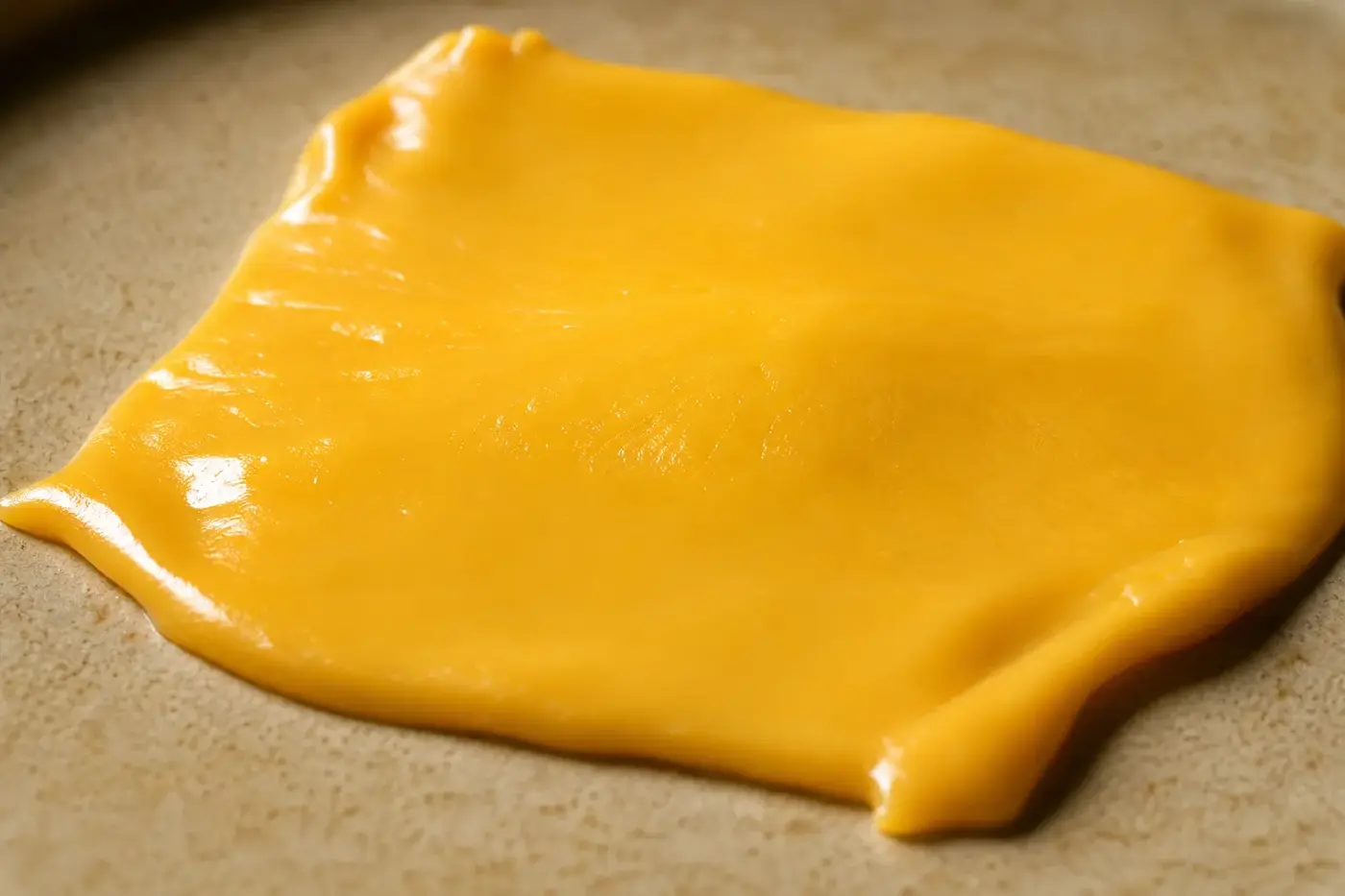
Watch a slice of American cheese soften over your burger.