Cheese and Charcuterie
A crumble of mature Cheddar, a tender fold of cooked ham, then a crisp bite of apple to sharpen your appetite for the next mouthful.
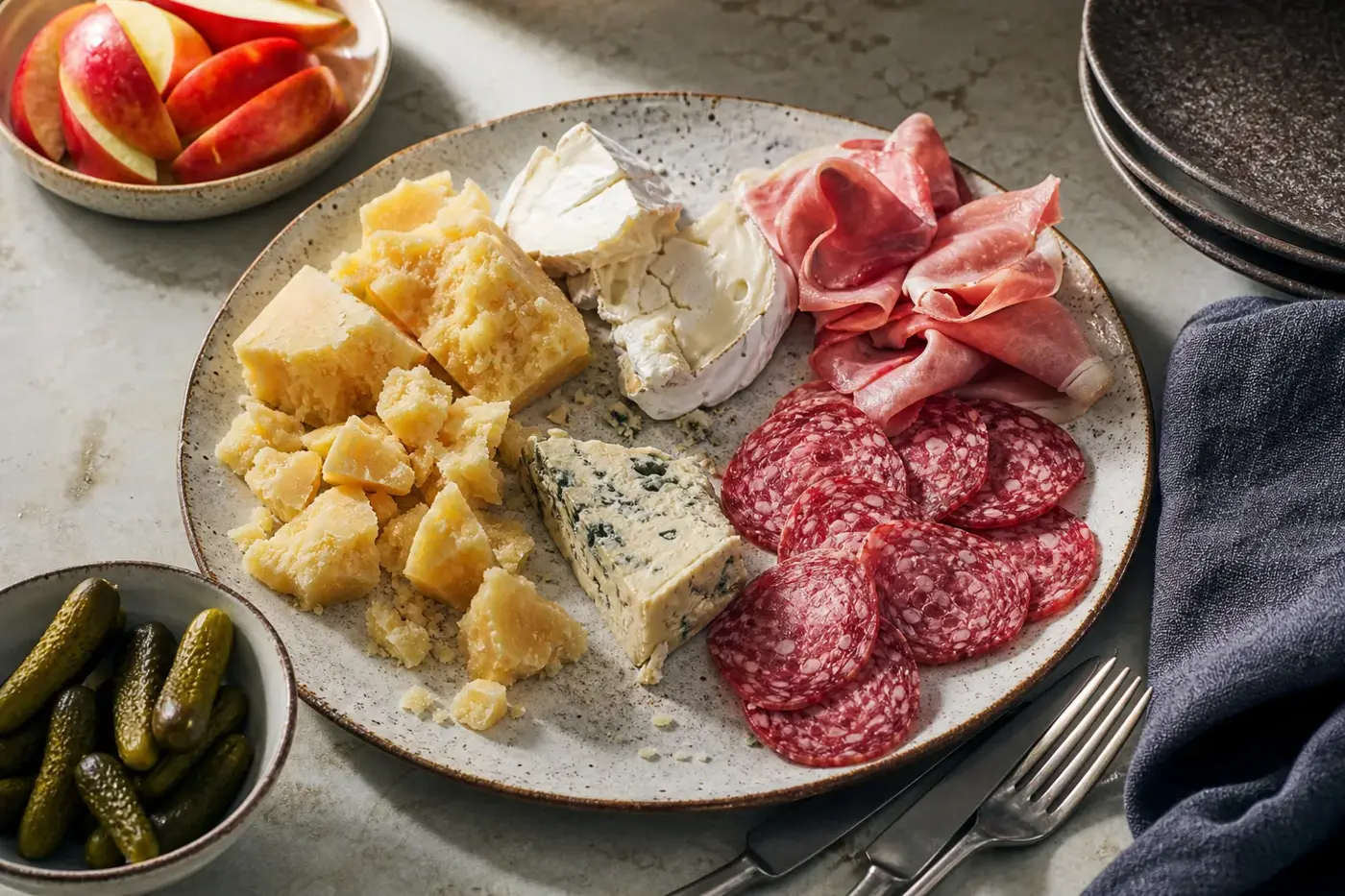
A crumble of mature Cheddar, a tender fold of cooked ham, then a crisp bite of apple to sharpen your appetite for the next mouthful. Try soft goat's cheese against thin, delicate cured ham, too. The pleasure is in the contrast.
Start with three cheeses and two meats, each with a different texture. Give the strongest flavours smaller portions. You want each mouthful to have character, without every ingredient demanding the last word.
Meet your meats: something to fold, slice and spread
Charcuterie means the prepared meat, rather than everything sharing its board. Think cooked ham, pâté, salami and other cured sausages, plus whole cuts of cured meat served in thin slices. Each brings something different: a tender fold, a neat slice or a generous spread.[1][3][6]
For a cold board, buy ready-to-eat products and follow their storage and serving labels. A sausage intended for cooking belongs in a cooked dish. Ask for sliced meat that separates easily, rather than a compressed stack your guests must wrestle apart.[5]
Choose character, not a cheese collection
Begin with one firm cheese, one soft cheese and, if you fancy it, one stronger cheese. Mature cheddar, fresh goat's cheese and a small piece of blue give you three distinct characters. Nobody likes blue? Choose a supple, mild cheese instead: texture and strength matter more than a well-travelled board.[4]
Add cooked ham, then either delicate cured ham or salami. Bring in pâté if you would like something spreadable. For two people, two cheeses and one meat can feel more generous than tiny amounts of everything.
Give chilli-heavy or strongly smoked items their own space. That way, your guests can choose how much intensity they want in each bite.
Take a bite before you reach for the pickle
Taste the cheese and meat separately, then together, before adding fruit or a pickle. You will soon discover what each accompaniment brings to the mouthful. These suggestions follow the contrast principle in the University of California's cheeseboard notes.[2]
| Cheese and meat | Enjoy the contrast | Try alongside | What makes it work |
|---|---|---|---|
| Mature Cheddar with cooked ham | Crumbly cheese against tender slices | Apple or a little mustard | Familiar flavours with a sharp accent |
| Soft goat's cheese with delicate cured ham | Soft, tangy cheese and thin, yielding meat | Pear and plain bread | Delicate ham gives both elements room |
| Mild, supple cheese with peppery salami | Gentle cheese beside assertive meat | Cucumber or a mild pickle | The salami supplies the seasoning |
| Blue cheese with cooked ham | A little blue beside milder meat | Fresh pear | Begin with a modest bite |
If both cheese and meat taste very salty, choose plain bread rather than olives. Fat brings richness; apple or a drained pickle adds a sharp, acidic contrast. Taste before adding mustard or chilli, which can quickly overwhelm mild cheese.
Blue cheese, smoked meat, hot relish and heavily seasoned crackers need not compete in every mouthful. Leave a little room for the quieter ingredients. They have something to say, too.
How much should you put on the table?
Plan per adult, then adjust for appetite, bread and other courses. The cheese ranges and main-meal meat range below come from the University of California's workshop. The starter meat range follows cheesemaker Gardner's guidance, and metric amounts are rounded conversions.[2][4]
| What you're serving | Cheese per person | Meat per person |
|---|---|---|
| A light starter before another course | 45 to 60 g | 30 to 60 g |
| A board as the main meal | 115 to 170 g | 60 to 85 g |
Divide the cheese allowance between your chosen cheeses. That is the total, not an allowance for each variety. If the board is your main meal, add a basket of bread and a substantial vegetable accompaniment.
Keep some meat and cheese in the fridge as a reserve. You do not need to put the entire quantity on the table at once.
Arrange a board people can actually share
Leave room for a knife to do its work. Your board or platter should let guests take cheese without nudging neighbouring food. Put the cheeses down first, spaced apart, then add small bowls for pâté, pickles and condiments.[3]
Loosely fold cooked ham and separate thin cured ham into manageable pieces. Fan out salami slices instead of piling them high. You are making lunch easy to reach, not building a monument.[3]
Cut a few starter pieces from each firm cheese, leaving a larger piece with its own knife. Give soft cheese a spreader and pâté a separate utensil. Turn knife handles towards the edge, clear of food, and leave a small landing space beside each cheese: taking one item should not dismantle the arrangement.[3]
At a larger table, put bread and pickles at both ends. Keep strongly flavoured meats in separate groups, with wet accompaniments in bowls. Add crackers just before serving, away from cut fruit and brine.[3]
Keep your reserve chilled and your platters small
The Food Standards Agency's home guidance for England, Wales and Northern Ireland recommends a fridge between 0 and 5 °C. Keep cheese and ready-to-eat meats covered and refrigerated according to their labels. Store raw meat separately below them, and read use-by dates and opened-pack instructions before assembling your board.[5]
For flavour, the California workshop suggests taking cheese out 30 to 60 minutes before serving.[2] Count that warming period towards its total time out of refrigeration. NHS guidance in England says to eat chilled ready-to-eat foods within four hours of taking them out of the fridge.[7] Leave meat chilled until serving.
Set out small platters, replacing them with fresh chilled portions. Promptly refrigerate anything you retain rather than leaving leftovers on display, and follow its pack instructions. For opened ready-to-eat foods, the NHS advises use within two days unless the packaging says otherwise.[7] Find wrapping and storage detail in how to store cheese at home.
Let bread and pickles earn their place
Plain bread has a proper job here. Choose slices sturdy enough to carry soft cheese or pâté without breaking. Add one fresh fruit, such as apple, pear or grapes, and one sharp accompaniment, such as drained cornichons.
The California workshop recommends plain bread or crackers to avoid competing flavours.[2] Offer a little mustard with cooked ham, and leave sweet chutney as an option. Spoon condiments into bowls rather than over the cheese.
Keep a separate plate of unadorned bread within reach. Your guests should be able to make a straightforward bite of ham and cheese without picking up honey, chilli or pickle juice along the way.
Pour a drink that welcomes the whole board
Dry cider with Cheddar and cooked ham is a useful place to start. So is a crisp white wine with goat's cheese and delicate cured ham. If salami leads your selection, a light red is another option.
Offer a small serving and choose one drink for the board. You need not provide a different glass for every cheese.
For an alcohol free table, try sparkling water with apple slices, unsweetened iced tea or a sparkling apple drink. Put these out from the start, in the same glassware. Find more ideas in cheese and wine pairing.
Alcoholic pairings are for adults of legal drinking age. People who are pregnant, driving, taking medicines that interact with alcohol, or recovering from alcohol dependence should not drink. Consult the NHS or the equivalent national authority for guidance.
Make vegetarian guests a plate to enjoy
Build a separate vegetarian plate with cheeses labelled suitable for vegetarians, hummus, roasted vegetables, olives and crisp radishes. Give it its own knives and serving spoons. Rather than imitating every meat, offer something spreadable, something substantial and something crisp.
Ask your guests what they eat before you shop. The rennet guide explains a useful cheese-label check.
This page summarises published guidance from the official sources it cites. It is not medical advice. Guidance differs between countries and changes over time, so check the current source for where you live, and ask your doctor, midwife, pharmacist or dietitian about your own circumstances.
Ask about allergies before you start slicing
Ask about allergies before preparing your board. In November 2026, the FSA advice for people preparing food in England, Wales and Northern Ireland is to ask guests about allergies, read ingredient lists and keep allergens separate. Give meats, bread, pickles and dips as much attention as cheese, and retain the packets.[8]
Clean your hands, surfaces and equipment before preparation. Give an allergy-specific portion its own clean plate and utensils, away from the shared board.[8]
Simply removing an offending food from a plate is not enough: the FSA says tiny traces can cause a reaction.[8] Plan with your guest rather than assuming a vegetarian alternative meets their allergy needs. For the distinction between milk allergy and lactose intolerance, see cheese allergy versus lactose intolerance.
Plan separately for higher-risk guests
For pregnancy, NHS advice in England lists hard cheeses, including Cheddar, and pasteurised soft goat's cheese without a white rind among foods that can be eaten. White-rinded, mould-ripened soft cheeses and soft blue cheeses should be thoroughly cooked until steaming hot. Keep cooked ham chilled and eat it before its use-by date; cold cured meats should be cooked until steaming hot before eating.[6]
In November 2026, the NHS's listeriosis page advises avoiding all pâté during pregnancy, including vegetable pâté.[7] Its pregnancy food page gives different advice for meat pâté.[6] This discrepancy requires specialist review before publication.
The NHS identifies pregnancy and a weakened immune system as circumstances in which listeriosis can be more serious.[7] If your guest follows a medically supervised diet, ask them to confirm suitable foods with their clinical team before you choose the menu. Prepare the agreed portion separately, then bring it out when they are ready to eat.
Questions people ask
What counts as charcuterie?
Charcuterie means prepared meat products, not everything on a sharing board. It includes cooked ham, pâté, salami, other cured sausages and thin slices of whole cuts of cured meat.
How much cheese and meat should I serve per person?
For a light starter, plan 45 to 60 g of cheese and 30 to 60 g of meat per adult. For a main meal, plan 115 to 170 g of cheese and 60 to 85 g of meat per adult. The cheese allowance is the total across all the cheeses, not the amount for each variety.
Which cheese and charcuterie pairings work well?
Try mature Cheddar with cooked ham and apple or a little mustard. Soft goat's cheese can be paired with delicate cured ham, pear and plain bread. Mild, supple cheese can sit alongside peppery salami with cucumber or a mild pickle.
How long can a cheese and charcuterie board stay out of the fridge?
NHS guidance in England says to eat chilled ready to eat foods within four hours of taking them out of the fridge. Include any time spent warming cheese before serving, and leave meat chilled until serving. The NHS also advises using opened ready to eat foods within two days unless the packaging says otherwise; check its food guidance.
What cheese and charcuterie can be eaten during pregnancy?
The NHS pregnancy food page says hard cheeses, including Cheddar, and pasteurised soft goat's cheese without a white rind can be eaten, while white rinded, mould ripened soft cheeses and soft blue cheeses should be thoroughly cooked until steaming hot. It says to keep cooked ham chilled and eat it before its use by date, and to cook cold cured meats until steaming hot. The NHS listeriosis page advises avoiding all pâté during pregnancy, including vegetable pâté, while its pregnancy food page gives different advice for meat pâté. Check both NHS pages and ask your doctor, midwife, pharmacist or dietitian about your circumstances.
Sources
- City of Milwaukee, hosting Froedtert & Medical College of Wisconsin Workforce Health, Charcuterie Board Basics, undated edition, retrieved 2026. Definition and examples of prepared meats. Source document.
- University of California Agriculture and Natural Resources, UC Master Food Preservers of Sonoma County, Craft the Perfect Cheeseboard: A Holiday-Ready Workshop!, Gifts from the Kitchen 2024, particularly printed pages 5 to 8. Workshop document.
- Love Cheese, How to Make a Charcuterie Board: A Cheesemonger's Guide, 24 October 2026. Commercial cheesemonger's published assembly advice. Published guide.
- Gardner's Wisconsin Cheese and Sausage, How to Make a Charcuterie Board: The Wisconsin Cheesemaker's Guide, undated online edition, retrieved 2026. Commercial producer's selection and portion guidance. Published guide.
- Food Standards Agency, How to chill, freeze and defrost food safely, published 18 December 2017, live edition retrieved November 2026; applies to England, Northern Ireland and Wales. Official guidance.
- NHS, Foods to avoid in pregnancy, live edition retrieved November 2026. Cheese and meat sections. Official guidance.
- NHS, Listeriosis, last reviewed 10 November 2023, live edition retrieved November 2026. Prevention, higher-risk groups and foods to avoid. Official guidance.
- Food Standards Agency, Eating in and preparing an allergy-safe meal, undated PDF edition, retrieved November 2026. Planning, separation, cleaning and allergen traces. Official guidance document.
Researched from official food safety guidance, a university workshop and attributed trade guidance, with pairing suggestions presented as editorial judgement.
Last checked: November 2026
Last checked November 2026.
The editors suggest you read next
What Goes with Cheese? Fruit, Honey and Other Accompaniments
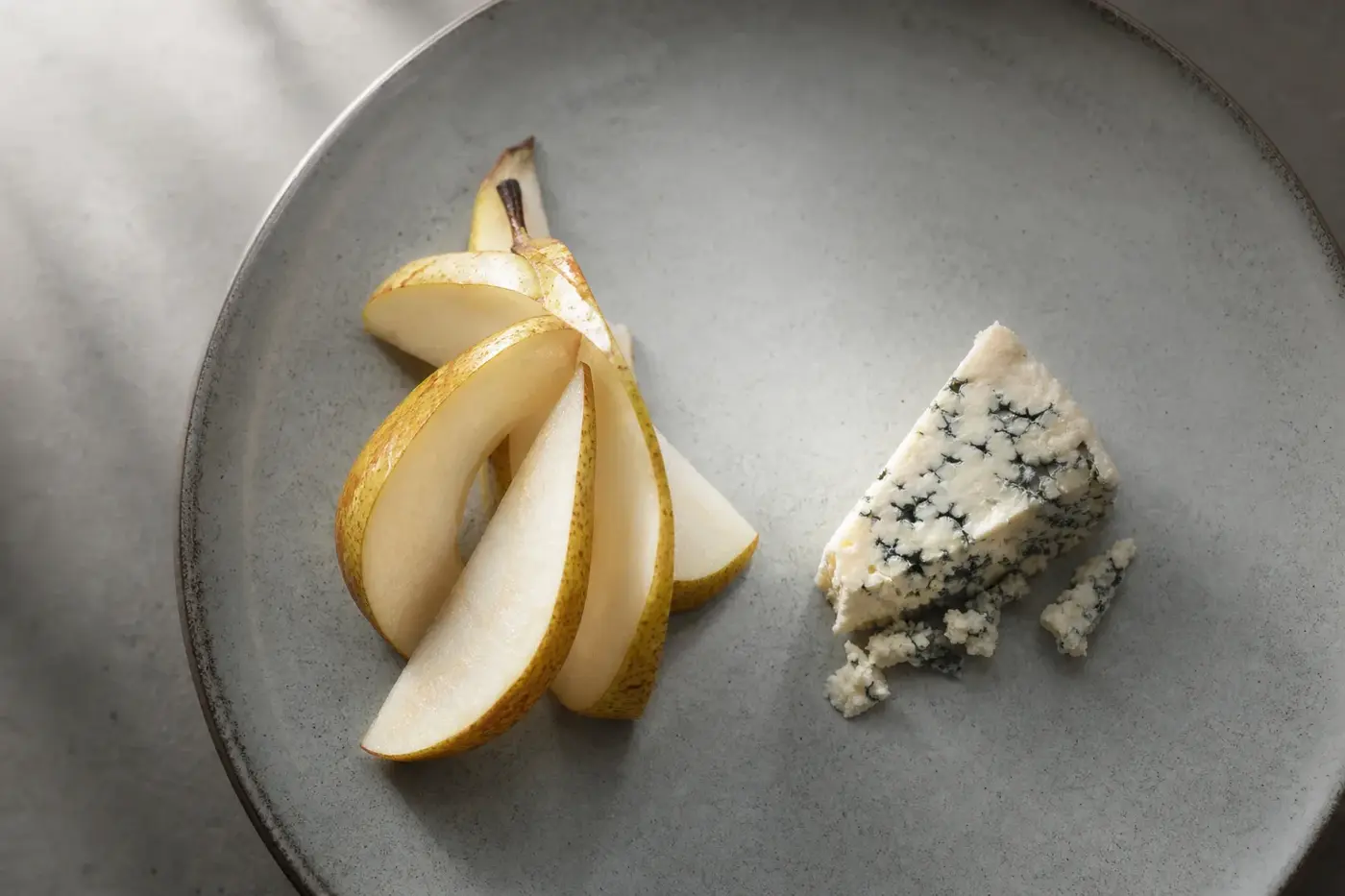
First, the salt of blue cheese.