Chutneys, Pickles and Quince Paste
A thin sliver of sweet quince paste, a firm piece of Manchego, and that first mouthful.
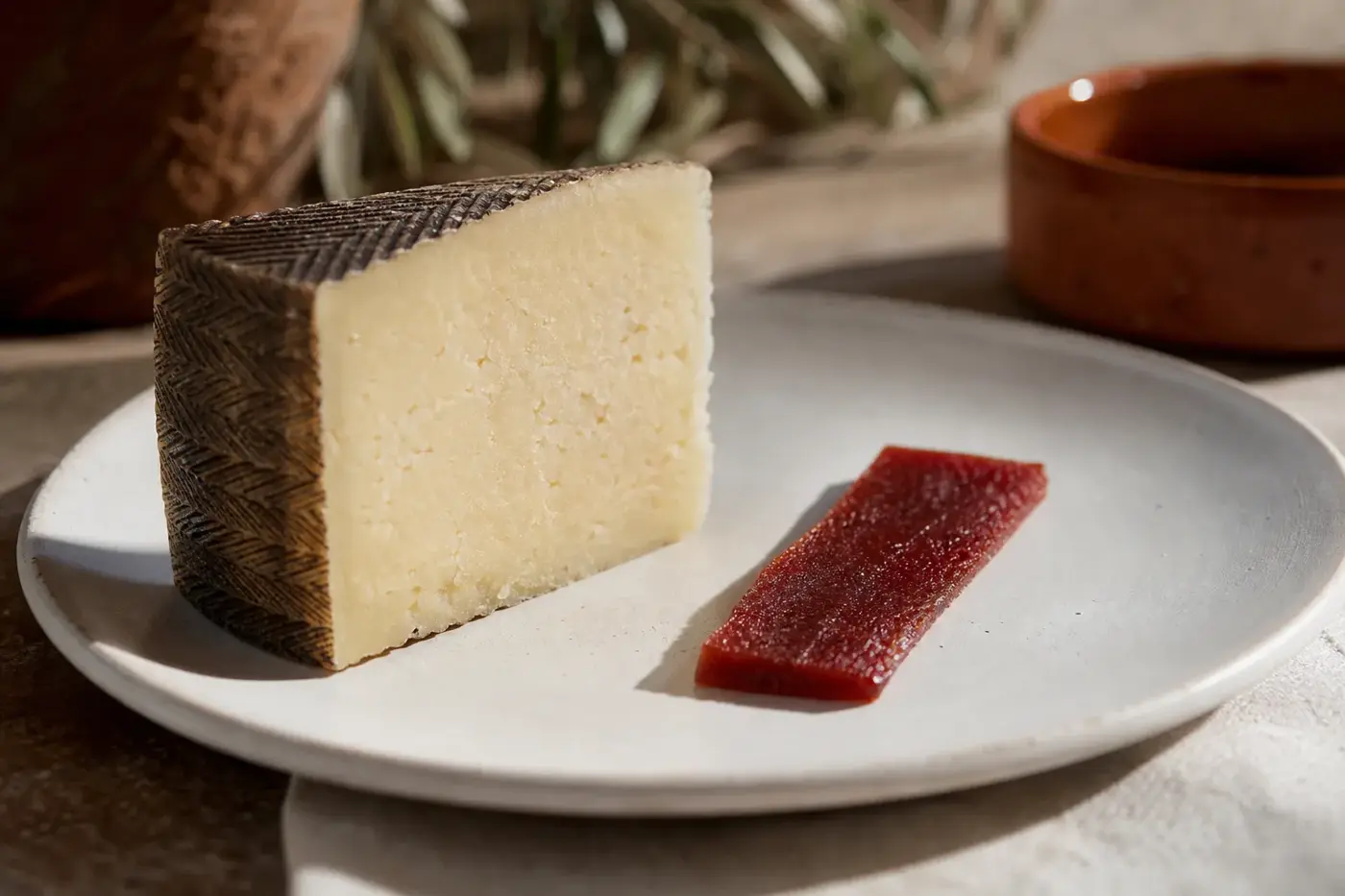
A thin sliver of sweet quince paste, a firm piece of Manchego, and that first mouthful. The fruit meets the cheese's slightly acidic flavour, which becomes spicy with ageing, according to its EU specification.[4] Now try a fruity chutney or a crisp pickle. What does your next bite want: sweetness beside salt, sharpness beside richness, gentle spice, or a change of texture?
Meet your cheese board's supporting cast
Fruit chutney occupies the spoonable middle ground. The National Center for Home Food Preservation describes the familiar cooked version as chopped fruit or vegetables simmered with spices, onion, sugar and vinegar. The word also covers fresh herb and other preparations, though. Read beyond the name to find out what will actually land on your plate.[1]
With pickles, the preserved pieces take centre stage. The same centre distinguishes fermented pickles from quick-process pickles made with vinegar, and describes fruit pickles as fruit heated in an acidified, seasoned syrup. Relishes have smaller pieces that spread more easily through a bite. Smaller need not mean softer: those vegetables can still crunch.[2]
Quince paste asks for a knife rather than a spoon. You will also find it sold as quince fruit cheese, the name Tracklements uses for its product. For this board, choose a plain paste and leave heavily spiced versions for a separate comparison.[3]
Take a bite before you choose a side
Taste the cheese alone, then add a little accompaniment. These pairings are starting points: sweetness contrasts with salt, acidity interrupts richness, and spice needs a cheese with enough presence to remain recognisable. Trust what happens in your mouth. There is no examination requiring you to name the correct jar.
Now taste the cheese again. If vinegar, chilli or clove is all you notice, reduce the condiment before changing the cheese. Fewer competing flavours usually make a gentler match: plain quince paste, fruit chutney with restrained spice, or a pickle without a forceful mustard dressing. Keep a plain cracker handy for an easy comparison.
Make room for Manchego and quince
Let Manchego take the larger share of your bite, with a thin piece of quince paste alongside. The European Commission's published single document for the EU PDO Queso Manchego describes its firm, compact character and slightly acidic flavour, becoming spicy with ageing. That sweet fruit gives you a contrast worth lingering over.
Behind this mouthful is a precise specification. The milk must come from Manchega ewes, with none from other animal species, and may be raw or pasteurised. The defined production area covers specified municipalities in Albacete, Ciudad Real, Cuenca and Toledo, in Spain's La Mancha region. Those details distinguish the EU protected cheese from one carrying a similar everyday name elsewhere.[4]
Fancy another route? Ask for a firm sheep's milk tomme or a firm, aged pecorino whose label confirms sheep's milk, then let its actual firmness and strength guide your portion of paste. Each has its own identity; you are pairing the cheese in front of you. See protected names explained for the distinction between a style and a registered name.
Give mature Cheddar a little fruit
Start with apple, pear or plum chutney beside mature Cheddar, choosing one where you can still distinguish fruit from seasoning. NCHFP lists all three fruits among common chutney ingredients, with possibilities including ginger, garlic and mustard seed. Those seasonings give you clues to intensity. Two apple chutneys can make quite different company.
Put a dab at the edge of your cheese, not a blanket over it. If the Cheddar already has a pronounced tang, try a fruitier chutney before reaching for the sharpest pickle. When chilli heat or sweetness takes over, use less and leave the rest alongside. The cheese should not need rescuing from its own accompaniment.[1]
Find a pickle for creamy, washed-rind and blue cheeses
Read the label for clues to texture and seasoning, then use this table to plan a few mouthfuls. NCHFP describes distinct categories of vegetable pickles, fruit pickles and relishes.[2] Start small with each combination and adjust to the cheese you have.
| Your cheese | Try beside it | What it brings | Find your balance |
|---|---|---|---|
| A creamy-textured cheese | Drained cucumber pickle | Crispness beside softness | Begin with a small piece; add more if you enjoy the acidity. |
| A strongly flavoured washed-rind cheese | Pickled onion or mild vegetable relish | Sharp, savoury contrast | Go gently with mustard and chilli; keep the pickle separate. |
| A salty blue cheese | A sweet-sharp fruit pickle | Fruit sweetness beside salt | Taste a small, drained piece before adding syrup. |
Pay as much attention to salt as acidity when choosing between jars. If your cheese already tastes salty, choose a less salty accompaniment rather than another emphatically salty element. Drain pickles so you can control how much dressing reaches each bite. Keep that liquid away from cut cheese and crackers.
Listen for the crunch
Crisp pickled vegetables give you a deliberate crunch beside soft cheese. A softer fruit pickle lets fruit and cheese yield together, while finely chopped relish spreads more evenly through your mouthful. Have a good look at the pieces before choosing. The vegetables, fruit and preparation tell you more about texture than the word 'pickle' alone.[2]
Small portions, a spoon apiece
Begin with a small spoonful of chutney or a few drained pickle pieces per person, keeping more available separately. Cut quince paste into thin pieces your guests can divide. That gives everyone room to adjust the balance, rather than committing the whole table to the same sweet or sharp mouthful.
Give each accompaniment a little dish and its own spoon or fork. Keep cheese knives out of jars, and arrange dishes within reach without making guests pass over another cheese. If a guest has an allergy, follow their requirements for separate preparation and serving. Retain the packaging so you can check ingredients.[5]
No quince? Find a substitute with purpose
Another firm fruit paste can stand in for quince paste, or you can offer a little fruit preserve in a dish. Tracklements' range includes damson and spiced pear fruit cheeses, whose seasoning and fruit character differ from quince. Check ingredients and choose for what the substitute brings to your bite. Fruit pastes are not all interchangeable.[3]
If you are missing a pickle, think about its job. Choose another crisp vegetable for crunch, a softer fruit preserve for sweetness, or a mild relish for something spoonable. If every available jar is heavily spiced, leave it aside and offer plain bread or crackers. Cheese needs no accompaniment when nothing makes a pleasing match.
Read the label, right to the end
Check every jar, including a familiar product you have bought again. Look specifically for mustard, celery and sulphites, and read the vinegar, spice mixtures and added ingredients as well as the fruit name. Keep any precautionary 'may contain' statement available to your guest. FSA consumer guidance explains how ingredient information and cross-contamination affect choices for people with food allergies.[5]
For allergen labelling guidance in England, Wales and Northern Ireland, consult the FSA.[6] Take that same care across the whole plate. Cheese, crackers and accompaniments all matter.
Keep the label and date the lid
Your actual jar's instructions govern refrigeration and how long you can keep it after opening. Write the opening date on the lid, return the jar to its stated storage conditions, and serve from a separate dish. Instructions vary between products. Keep the label even if you transfer the contents to another container.[7]
For household chilling, FSA guidance applying to England, Wales and Northern Ireland recommends a fridge between 0 and 5 °C. It also advises keeping chilled food out of the fridge for the shortest possible time. Follow any stricter product instructions, and see how to store cheese at home for the cheese itself.[7]
Making preserves? Start with a tested recipe
For home preservation, you need a tested recipe. Those published by the US National Center for Home Food Preservation specify ingredients, jar size and processing instructions: follow all three. Its pickling guidance says not to alter the proportions of vinegar, food or water, or use vinegar of unknown acidity. Fermented pickles also need the specified salt, not an improvised reduction.[2]
The US FDA describes acidified foods as low-acid foods with acid added, a finished equilibrium pH of 4.6 or below and water activity above 0.85. That threshold belongs to a wider system of controls. Neither a sour taste nor a home pH reading replaces a tested preservation method. Follow every control in your chosen recipe, including heat processing where specified.[8][1]
This page summarises published guidance from the official sources it cites. It is not medical advice. Guidance differs between countries and changes over time, so check the current source for where you live, and ask your doctor, midwife, pharmacist or dietitian about your own circumstances.
Plan with care for guests at higher risk
Before choosing a cold cheese board, check the current official advice for the person and country concerned. In its pregnancy guidance for England, the NHS advises avoiding soft cheeses with a white coating and soft blue cheeses unless cooked until steaming hot all the way through.[9] Its listeriosis guidance identifies pregnant people, newborn babies, older people and people with weakened immunity as groups at greater risk of serious illness.[10]
Ask your doctor, midwife, pharmacist or dietitian about individual circumstances. For the distinctions behind the guidance, read listeria and cheese safety; for ingredient questions, see cheese allergy versus lactose intolerance.
Questions people ask
What cheese goes well with quince paste?
The page suggests starting with Manchego and a thin piece of plain quince paste. Keep the cheese as the larger part of the bite.
What chutney goes with mature Cheddar?
Apple, pear or plum chutney is a useful starting point. Begin with a dab at the edge of the cheese, and use less if the sweetness or chilli dominates.
What pickle goes with blue cheese?
The page suggests a sweet and sharp fruit pickle with salty blue cheese. Try a small, drained piece before adding syrup.
How should I store chutney or pickles once opened?
Follow the storage instructions and time limit on the jar. The FSA recommends a fridge between 0 and 5 °C and advises keeping chilled food out of the fridge for the shortest possible time.
Can I eat soft cheese during pregnancy?
In its pregnancy guidance for England, the NHS advises avoiding soft cheeses with a white coating and soft blue cheeses unless cooked until steaming hot all the way through. Consult the current NHS pregnancy guidance and ask your doctor or midwife about your circumstances.
Sources
- National Center for Home Food Preservation, University of Georgia. Preservation Principles in Chutney, November 2005. Sections defining chutney, describing ingredients and explaining preservation controls. Source.
- National Center for Home Food Preservation, University of Georgia. General Information on Pickling, undated online guidance, retrieved November 2026. Sections on pickle types, acidity, ingredients and reduced-salt products. Source.
- Tracklements. Quince Fruit Cheese and Fruit Cheeses, undated product and category pages, retrieved November 2026. Commercial manufacturer sources used for product terminology and examples of alternative fruit pastes. Quince product and fruit cheese range.
- European Commission. Publication of the communication of an approved standard amendment to a product specification of a geographical indication in accordance with Article 5(4) of Commission Delegated Regulation (EU) 2025/27, Official Journal C/2025/3216, 16 June 2025. Queso Manchego single document, sections 3.2, 3.3, 3.4 and 4. Source.
- Food Standards Agency. Food allergy and intolerance advice for consumers, online publication, retrieved November 2026. Source.
- Food Standards Agency. Allergen guidance for food businesses, online publication, retrieved November 2026. Source.
- Food Standards Agency. How to chill, freeze and defrost food safely, published 18 December 2017, retrieved November 2026. Recommendations and sections 1 and 4. Source.
- US Food and Drug Administration. Acidified & Low-Acid Canned Foods Guidance Documents & Regulatory Information, online guidance index, retrieved November 2026. Definition of acidified food. Source.
- NHS. Foods to avoid in pregnancy, current online version retrieved November 2026. “Cheese, milk and other dairy” section. Source.
- NHS. Listeriosis, reviewed 10 November 2023, current online version retrieved November 2026. “Risks of listeriosis” section. Source.
This piece was researched from official preservation and food-safety guidance, the European Commission's published cheese specification and attributed manufacturer records, with pairing suggestions presented as editorial recommendations.
Last checked: November 2026
Last checked November 2026.
The editors suggest you read next
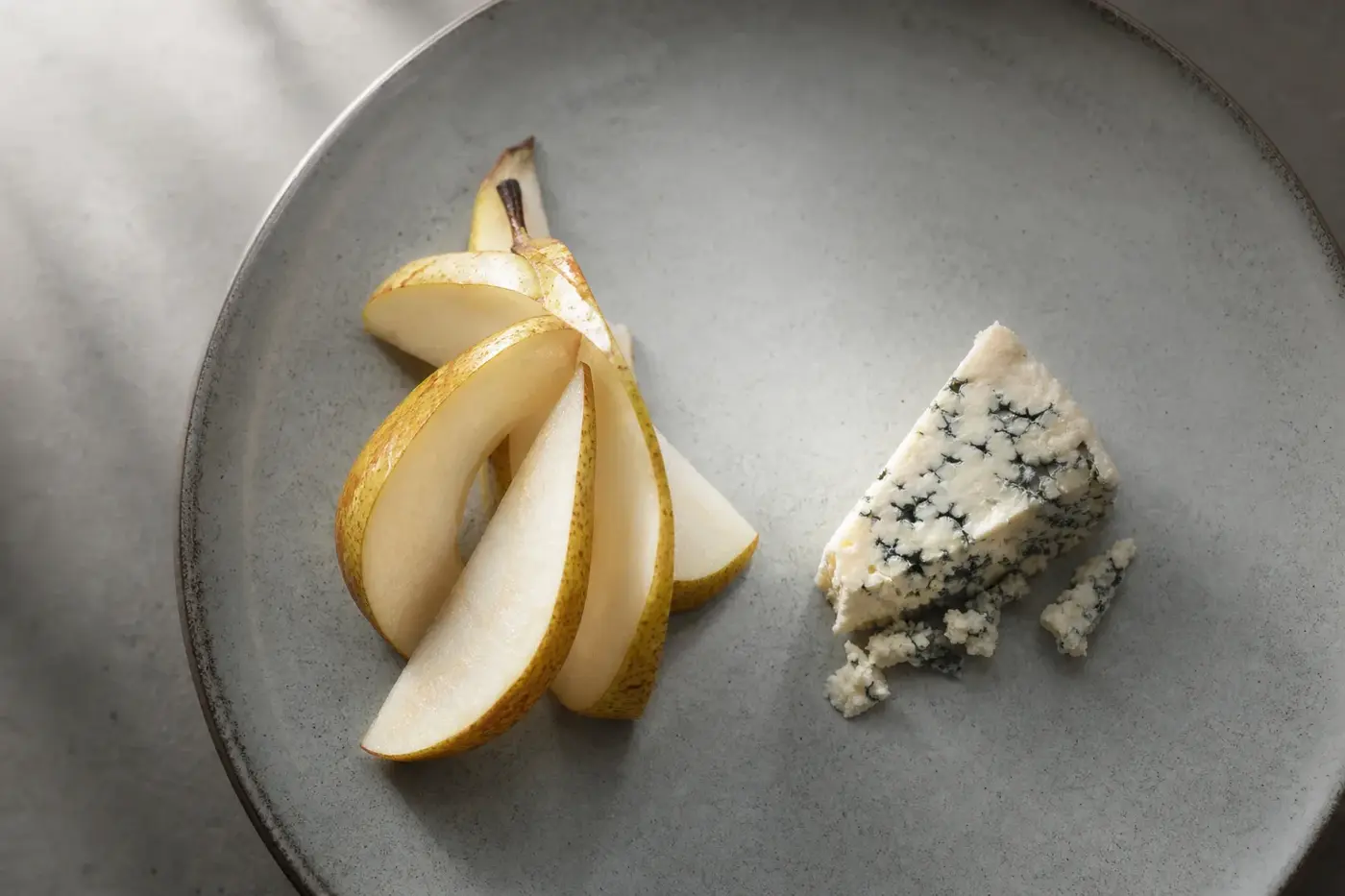
What Goes with Cheese? Fruit, Honey and Other Accompaniments
First, the salt of blue cheese.