What Goes with Cheese? Fruit, Honey and Other Accompaniments
First, the salt of blue cheese.
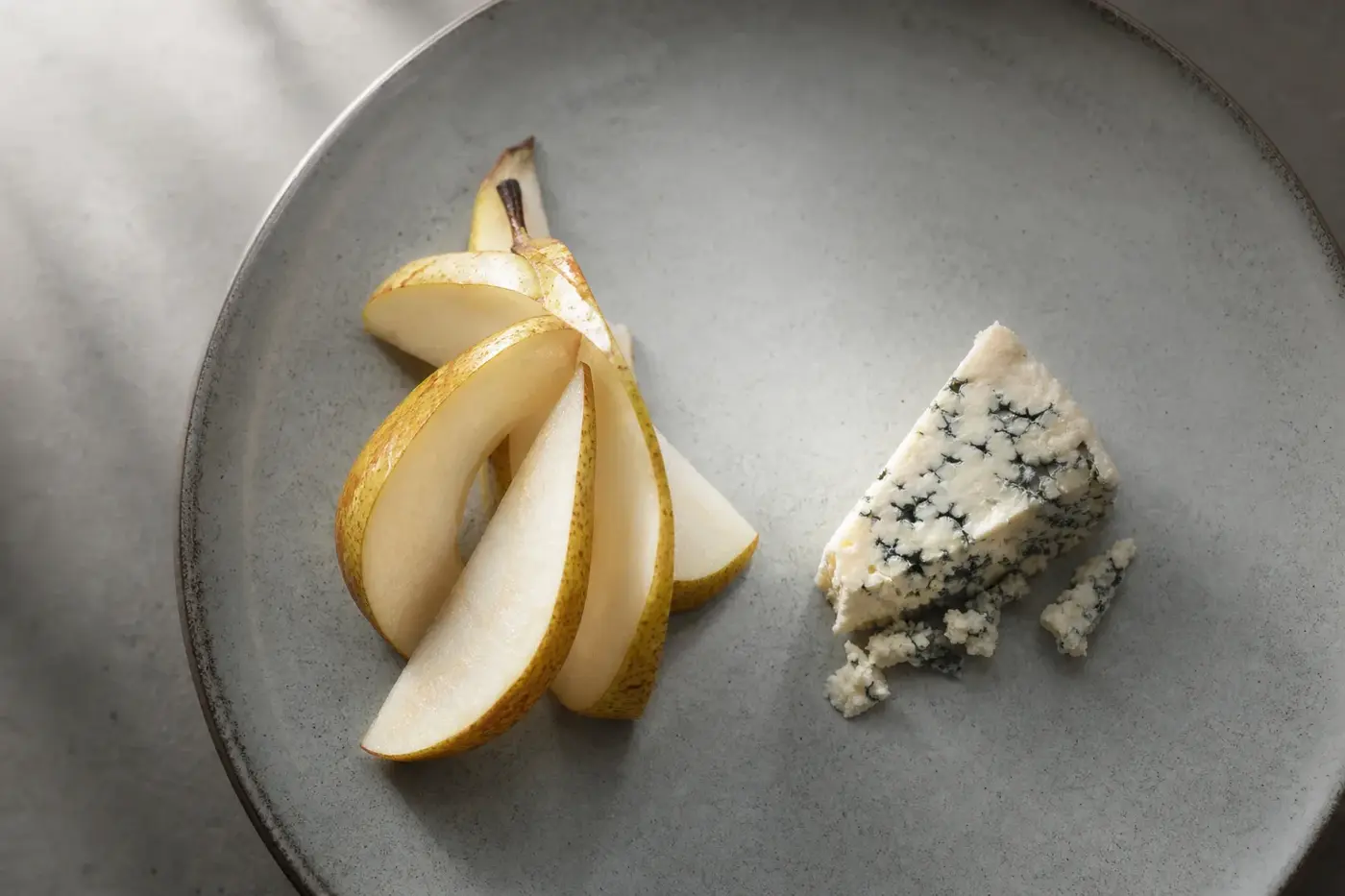
First, the salt of blue cheese. Then a sliver of sweet pear, and suddenly the next bite looks rather inviting. Try crisp apple after soft cheese, or a little honey with fresh goat’s cheese: the pleasure lies in that shift of texture and flavour. The American Cheese Society recommends balancing both so neither partner overwhelms the other: let the cheese keep its voice.[1][2]
Find your balance, one bite at a time
Sweetness gives salty or sharp cheese something to play against. Acidity brings tartness; something crisp or crunchy changes a soft mouthful. Before you reach for another accompaniment, remember the American Cheese Society’s advice: balance flavour and texture rather than letting one element dominate.[1][2][3]
Taste your cheese alone, then add one partner. If all you notice is honey, use less; if olives make everything overwhelmingly salty, try fresh fruit. Adjust the quantity before abandoning the combination. Not sure what is on your board? Start with how to tell cheese styles apart.
Give pears, apples, grapes and figs their moment
You do not need to empty the fruit bowl onto the board. One well-chosen fruit can accompany several cheeses, and pears, apples, grapes and figs all feature among the American Cheese Society’s suggested board accompaniments.[1]
Treat the combinations below as editorial starting points, not rules. They draw on that guidance and published pairing suggestions from cheese and honey businesses, whose commercial interests are identified in the sources.[1][2][3]
| Fruit | Try it with | Why they get along | How to serve it |
|---|---|---|---|
| Pears | Soft white-rind or blue | Sweetness balances stronger flavours | Cut slim wedges; add honey if you like |
| Apples | Cheddar-style or soft white-rind | Crispness and acidity contrast with softness | Start with a small slice |
| Grapes | Firm aged or washed-rind | Juiciness contrasts with a denser texture | Keep small bunches separate |
| Fresh figs | Blue or aged hard | Softness and sweetness balance salt | Quarter them; leave the cheese uncovered |
Pairing sources: American Cheese Society, Ames Farm and Sacco System.[1][2][3]
Before adding a second fruit, give the first a proper outing. Your pear might suit both the soft cheese and the blue, so taste both before deciding what else you need. Keep fruit beside the cheese, not piled over it. Your guests can find their own balance without conducting an excavation.
Let a little dried fruit go a long way
Dried fruit packs sweetness into a small mouthful. Think condiment, rather than matching cheese bite for bite. Published cheesemonger guidance in The Splendid Table recommends dates and dried figs with strongly flavoured cheeses; Sacco System suggests dried apricots with blue cheese.[3][4]
Try a sliver of pitted date with blue or an assertive aged cheese. Cut apricots into strips, letting a little fruit accompany a larger piece of cheese. Too sweet? Switch to fresh apple or pear before reaching for another sweet preserve.
Give dried fruit a small bowl of its own. That keeps its sticky surface away from your cheese knives.
Choose honey with a taste, not a glance
A honey can be quiet or decidedly assertive. Honey producer Ames Farm recommends light honey with fresh cheese, floral honey with soft white-rind cheese, and robust honey with aged hard or blue cheese. The principle is intensity: sweetness contrasts with salt and tang, while similar flavour notes can reinforce one another.[2]
Begin with mild honey beside ricotta or plain fresh goat’s cheese. With salty blue or firm, long-aged cheese, try something stronger, using only a trace at first. Sacco System suggests chestnut honey with aged sheep’s milk cheeses.[2][3]
Taste the honey before choosing its partner. Let its aroma and strength guide you, rather than trusting colour alone.
Serve it in its own dish, with its own spoon, instead of coating the board. You can explore the sweetness while someone else enjoys the cheese plain. Keeping it separate also stops a forceful honey overwhelming a delicate cheese’s flavour.
With caviar and other roe, give the eggs centre stage
Start simply: plain cream cheese or a small spoonful of mascarpone, with the roe added last. Keep the cheese layer thin, and offer the roe separately first so you can decide how much dairy it needs. Leave garlic, chilli, powerful honey and sharp pickles for another plate.
Choose by species and ingredients, not egg colour. Sturgeon caviar and salmon, trout or lumpfish roe are different products. The CITES caviar system covers sturgeon and paddlefish, both belonging to the order Acipenseriformes, so its scope reaches beyond sturgeon alone.[5]
Follow the label’s storage directions, including those for after opening. Keep the product refrigerated as directed, and bring out only what you intend to serve.
Buying caviar? Let the label guide you
Before choosing your pairing, look at traceability. In Great Britain, applicable wildlife-trade rules require relevant caviar containers to carry non-reusable labels. If the label itself does not seal the container, tampering must be evident. The European Commission’s CITES reference guide explains the same universal system, covering farmed and wild caviar.[5][7]
Look for the species code, source code, country of origin, relevant year and registered plant code. Other details depend on whether the container is original or repackaged. Ask the seller to explain the code, and keep the original container.
Commercial imports into Great Britain, and exports or re-exports from it, must have the applicable CITES permits and certificates accompanying them for the regulated trade.[5][8]
Then read the food labelling separately. In Great Britain, Article 17 of the food information regulation requires the food’s legal, customary or descriptive name; a brand name cannot take its place. Read that name alongside the ingredients to establish which roe you are buying.[9] You will find the same distinction for cheese in reading a cheese label.
Take a savoury turn with nuts, olives and herbs
Your board need not lean sweet. Published cheesemonger guidance pairs olives, olive oil and nuts with goat’s and sheep’s milk cheeses. Sacco System suggests basil with mozzarella, while the American Cheese Society includes walnuts and almonds among its board accompaniments.[1][3][4]
Try unsalted almonds beside firm cheese, walnuts beside blue, or a few basil leaves with fresh mozzarella. Drain olives and put them in a bowl. Offer herbs as small leaves rather than a blanket of chopped greenery, so your guests can choose whether to add them.
Build a board with room for the cheese
Start with three contrasting cheeses, one fresh fruit, and either honey or dried fruit. Add nuts or olives in a separate bowl, and give the caviar pairing its own small plate. The American Cheese Society advises leaving cutting space, separating pungent cheeses from delicate ones, and providing individual knives.[1]
Put out small pieces and replenish from chilled reserves instead of presenting everything at once. Begin with a few fruit slices or a little dried fruit, with more available separately. How much you need depends on the occasion: a taste before dinner, a course afterwards, or the centre of the meal.
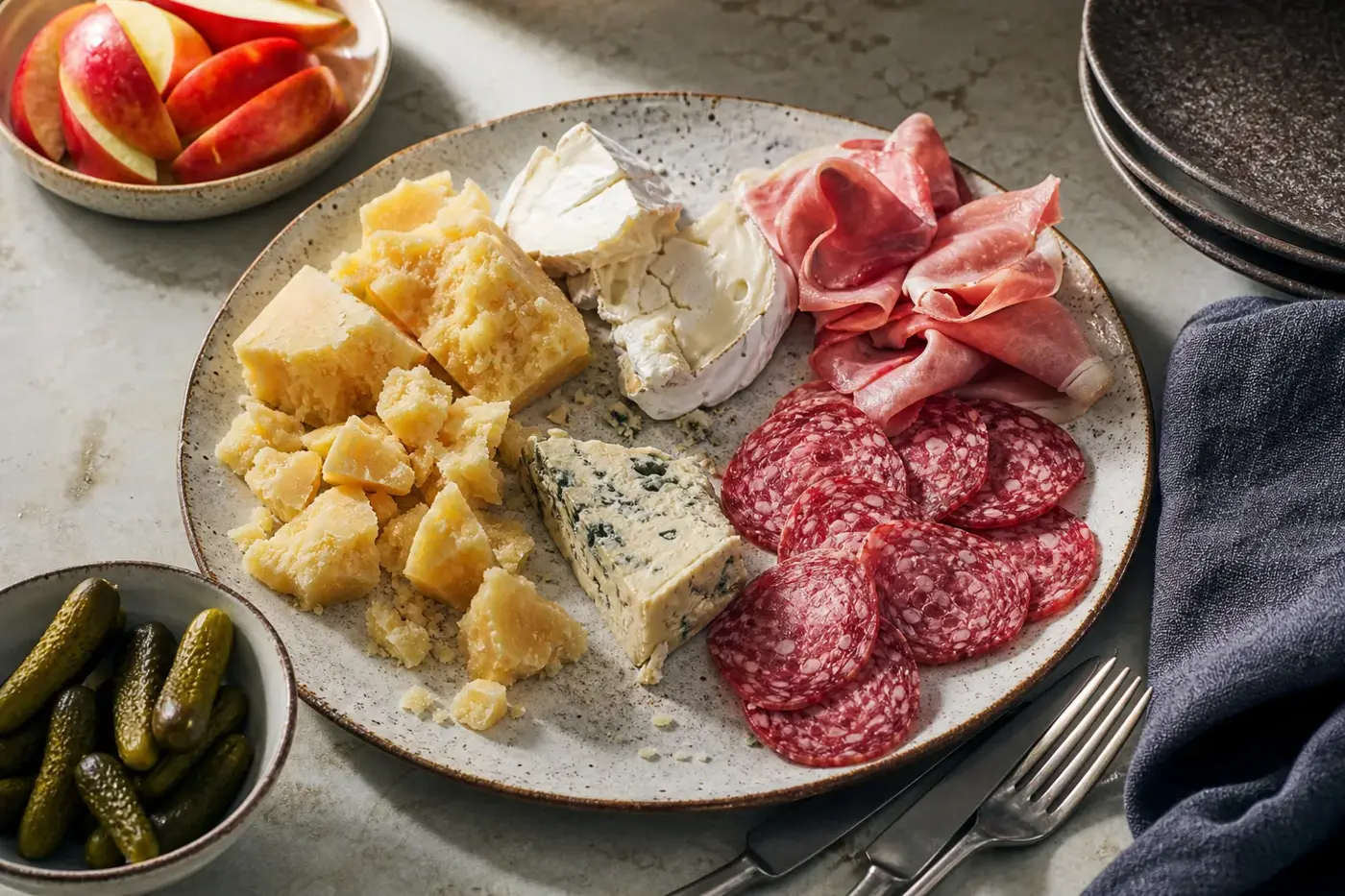
Place bread and plain crackers alongside, with chutneys and charcuterie on separate dishes. This gives quieter fruit and honey combinations a chance to be noticed, rather than asking them to compete with the entire pantry. If chutneys, bread or charcuterie are central to your board, turn to their separate accompaniment guides.
Serve with care, and keep chilled food chilled
Keep chilled food out for as little time as possible. For home handling in England, Wales and Northern Ireland, the Food Standards Agency advises a fridge between 0 and 5 °C (32 to 41 °F), following storage instructions and use-by dates. During preparation, chilled food should be out for the shortest possible time, with a maximum of four hours.[10]
Keep fresh cheeses and roe chilled until needed, following any stricter product instructions. Serve modest amounts and replenish them rather than applying one warming time to every cheese. For individual cheeses and wrapping advice, see how to store cheese at home.
Give honey its own spoon, olives their own fork, and each cheese its own knife. In England, Wales and Northern Ireland, the Food Standards Agency advises preventing cross-contamination and checking ingredient information: milk, fish and tree nuts are among the regulated allergens.[11] Discuss your guests’ needs before preparing anything. Separate utensils alone do not resolve every allergy requirement.
This page summarises published guidance from the official sources it cites. It is not medical advice. Guidance differs between countries and changes over time, so check the current source for where you live, and ask your doctor, midwife, pharmacist or dietitian about your own circumstances.
Plan carefully for young children and pregnancy: November 2026 guidance
Keep honey completely off the menu until a baby is 12 months old because of infant botulism, according to UK NHS guidance. Its weaning guidance also advises against whole nuts for children under five.[12] Keep your adult board separate from food prepared for babies and young children.
For pregnancy, UK NHS guidance lists hard cheeses made with pasteurised or unpasteurised milk among its permitted choices. It also lists specified pasteurised soft cheeses, including cream cheese, mozzarella and ricotta. It advises avoiding soft cheeses made from unpasteurised milk.[13]
Mould-ripened soft cheeses with a white rind and soft blue-veined cheeses should be thoroughly cooked until steaming hot. That applies whether their milk was pasteurised or not.[13]
If you are pregnant and considering roe, consult the current UK NHS advice on fish and ask your midwife about the particular product before choosing it.[13] For the wider handling questions, read cheese food safety.
Questions people ask
Which fruits go well with cheese?
Pears can accompany soft white rind cheese or blue cheese, while apples pair with Cheddar or soft white rind cheese. Grapes can sit beside firm aged or washed rind cheeses, and fresh figs can accompany blue or aged hard cheese.
What kind of honey goes with cheese?
Ames Farm recommends light honey with fresh cheese, floral honey with soft white rind cheese, and robust honey with aged hard or blue cheese. Start with just a trace of stronger honey and adjust the amount after tasting.
What cheese goes with caviar?
Try plain cream cheese or a small spoonful of mascarpone, keeping the cheese layer thin. Offer the roe separately first and add it last.
How long can a cheese board stay out of the fridge?
For home handling in England, Wales and Northern Ireland, the Food Standards Agency advises keeping chilled food out for the shortest possible time during preparation, with a maximum of four hours. Consult its current guidance and follow any stricter product instructions.
Which cheeses can I eat during pregnancy?
UK NHS guidance lists hard cheeses made with pasteurised or unpasteurised milk, and specified pasteurised soft cheeses including cream cheese, mozzarella and ricotta, among its permitted choices. It advises avoiding soft cheeses made from unpasteurised milk and thoroughly cooking mould ripened soft cheeses with a white rind and soft blue cheeses until steaming hot. Consult the current UK NHS guidance for details.
Sources
- American Cheese Society. Tips for Cheese Lovers, current web edition retrieved November 2026. Industry association guidance, particularly “Serving Cheese” and the pairing introduction.
- Ames Farm. How to Pair Honey With Cheese, current web edition retrieved November 2026. Commercial honey producer’s pairing suggestions, attributed as such.
- Sacco System. Cheeses and other delicacies: pairings on the table!, current web edition retrieved November 2026. Dairy-ingredients business’s culinary suggestions. Historical anecdotes on this page were not used.
- The Splendid Table. 6 tips for pairing cheese and food, 2010. Published cheesemonger guidance, particularly points 3 to 5.
- European Commission, Directorate-General for Environment, and TRAFFIC. EU Wildlife Trade Reference Guide, Annex XIV: Caviar labelling, October 2026 web edition. Universal labelling system and original and repackaged container codes.
- US Department of Agriculture, Food Safety and Inspection Service. Mail Order Food Safety, archived publication, publication year not established from the retrieved text. Seafood storage table, fresh unpasteurised caviar row.
- legislation.gov.uk. Commission Regulation (EC) No 865/2006, Article 66, amended Great Britain text retrieved November 2026, paragraphs 6 and 7.
- legislation.gov.uk. Council Regulation (EC) No 338/97, amended Great Britain text retrieved November 2026: Article 4, imports; Article 5, exports and re-exports.
- legislation.gov.uk. Regulation (EU) No 1169/2011, Article 17, amended Great Britain text retrieved November 2026, paragraphs 1 and 4.
- Food Standards Agency. How to chill, freeze and defrost food safely, 2017, current official web text retrieved November 2026. Applies to England, Northern Ireland and Wales.
- Food Standards Agency. Food allergy and intolerance advice for consumers, updated 7 August 2026. Regulated allergens, ingredient information and cross-contamination guidance.
- NHS. Safe weaning: food and drinks to avoid, current web edition retrieved November 2026. Honey and whole-nut advice.
- NHS. Foods to avoid in pregnancy, current web edition retrieved November 2026. Cheese and fish sections.
Researched through official food-safety guidance, legislation and wildlife-trade documentation, with attributed culinary sources synthesised into practical editorial pairing suggestions.
Last checked: November 2026
Last checked November 2026.
The editors suggest you read next
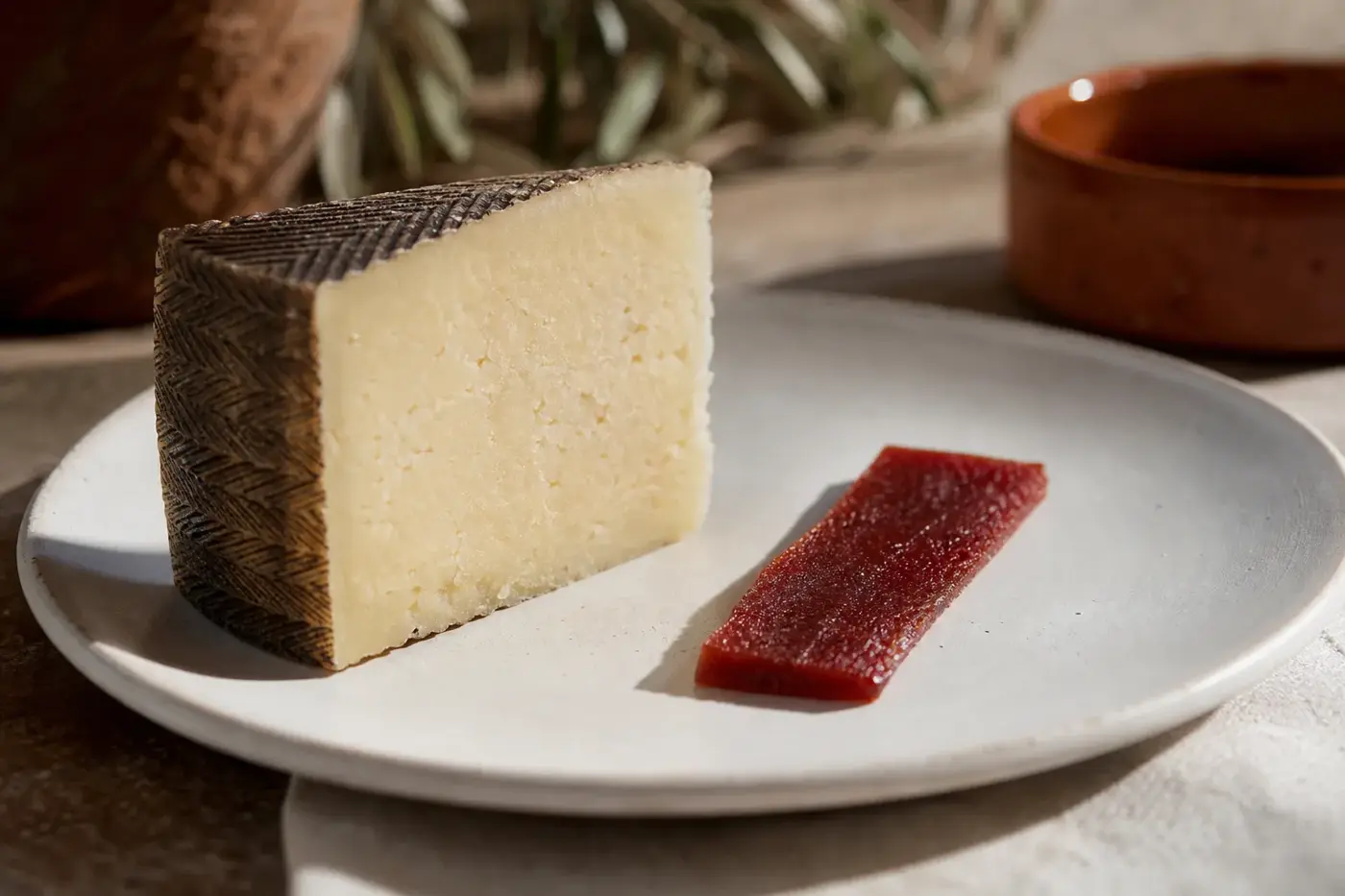
Chutneys, Pickles and Quince Paste
A thin sliver of sweet quince paste, a firm piece of Manchego, and that first mouthful.