Cheese Courses and Qualifications
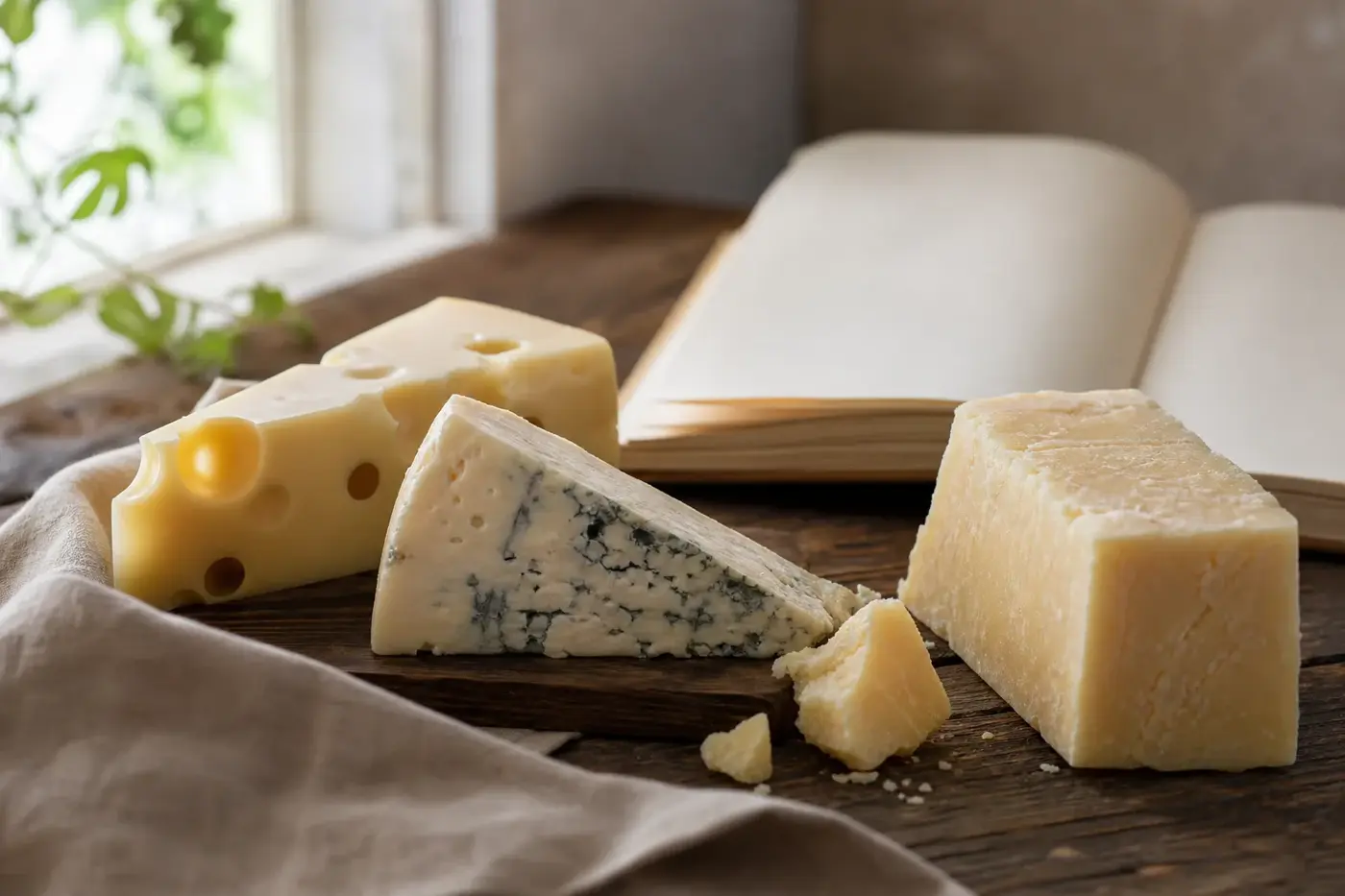
Twenty-five cheeses in front of you, each with something to teach your palate.

Twenty-five cheeses in front of you, each with something to teach your palate. That is where Level 1 students at the Academy of Cheese begin: tasting, finding the words and exploring production and provenance. [2] Your next step might be a confident tasting, a job behind a cheese counter or making cheese yourself. Choose teaching and assessment that take you there, not just a certificate to admire over breakfast.
What has that certificate earned you?
A certificate might record attendance, completed coursework, a passed knowledge test or practical competence someone has observed. Find out which before you enrol. In England, Ofqual excludes attendance-only courses that make no judgement about attainment from its regulatory scope. If you have a career in mind, ask prospective employers which learning they recognise. [10]
Leisure courses offer enjoyment and discovery; professional qualifications should set out learning outcomes and assess skills relevant to work. Certification means meeting a particular organisation’s requirements. ACS, for example, requires both eligibility and an examination. These categories overlap, so read the award’s rules, not just its title. [8]
Follow your appetite: tasting, selling or making
If curiosity has brought you here, start with a guided tasting or introductory course. You can decide afterwards whether assessment appeals. The Academy of Cheese’s Level 1 is open to all, introducing structured tasting alongside production and provenance. Give yourself a head start with how to tell cheese styles apart. [2]
Behind a cheese counter, study becomes more useful when someone helps you put it into practice. Ask a supervisor for feedback on explaining, cutting, wrapping and presenting cheese, and look for gaps rather than another run through familiar tasks. The Academy covers buying, distribution, serving and communication, making its pathway worth exploring for cheesemongering work. [1]
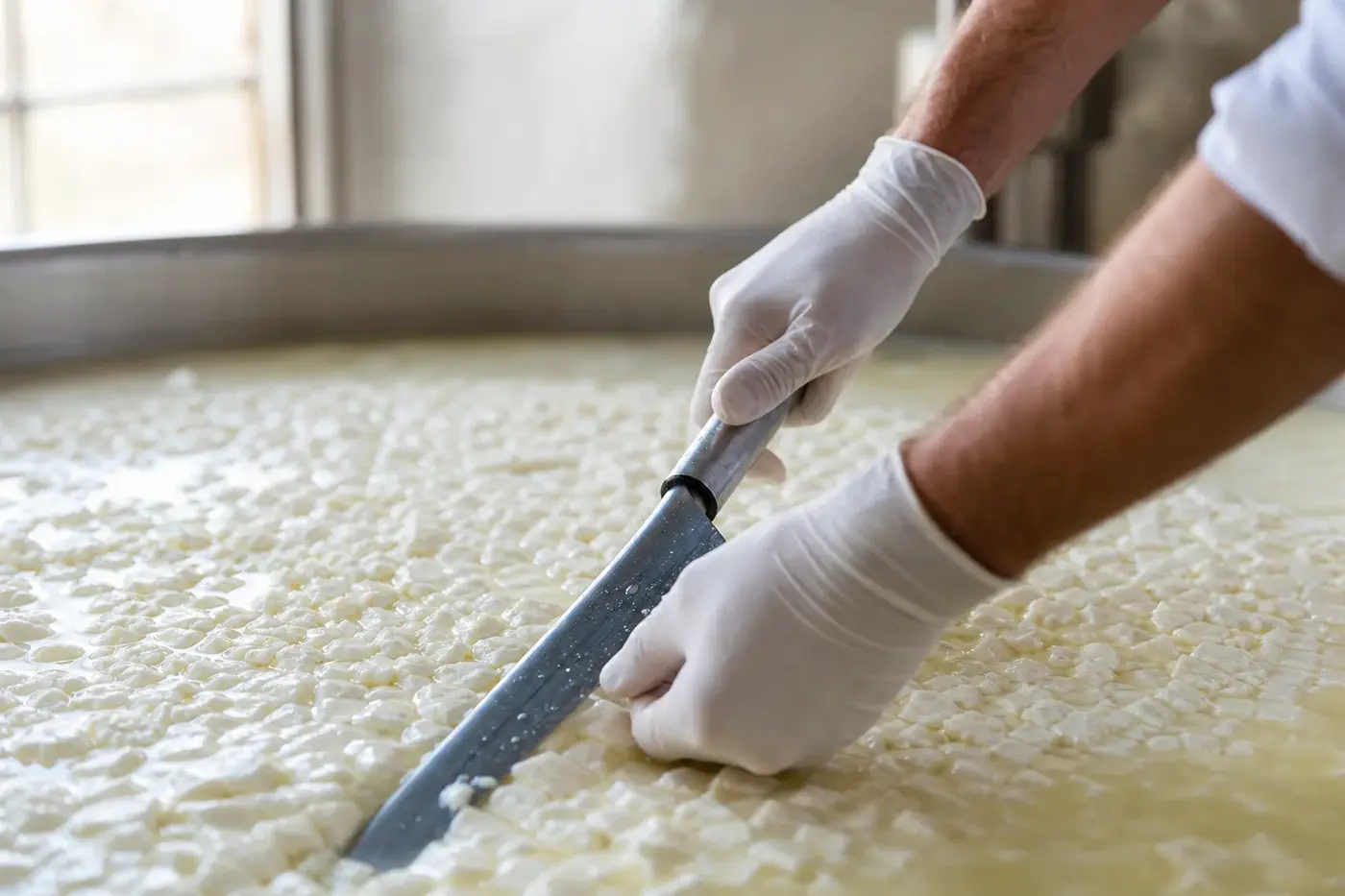
If you want to make cheese, put supervised making first, backed by teaching that explains your decisions. Will you handle the curd, the solids separated from liquid whey, or mostly watch demonstrations? That question tells you plenty about a practical course. Read how cheese is made before comparing syllabuses.
From your first tasting to Master of Cheese
The Academy describes four stages: Level 1 Associate, Level 2 Member, Level 3 Fellow and Master of Cheese. Start with its study pages and Training Partner directory, then explore each provider’s delivery and inclusions. Advertised routes include classroom, live virtual and self-study learning. Assessment requirements sit with the relevant Academy level. [1]
Level 1 brings together study and tasting of 25 specified cheeses, followed by an online assessment. You get 30 minutes for 30 multiple-choice questions and need 24 correct answers to pass. The Academy describes 6 to 8 classroom hours plus 12 to 24 hours of home study, including tasting. Finally, homework your cheese drawer can help with. [2]
Level 2 requires completion of Level 1 and takes you through 100 cheeses. Its online examination mixes multiple-choice and short written answers, with 40 questions in 40 minutes. Allow for the published commitment of 18 to 24 classroom hours and 54 to 72 additional hours, including a cheesemaker visit. [3]
For Level 3 certification, you need Levels 1 and 2 plus eight passed modules: four core and four supplementary. You can also study individual modules without those earlier awards. The Academy specifies online module assessments combining multiple-choice and short written answers, with an 80% pass mark. [4]
Master of Cheese asks more of you, including the remaining Level 3 supplementary modules, a portfolio, research and practical tasting assessment. In November 2026, the Academy describes its General Paper assessment as still being finalised. Request the current pathway documents before mapping out your progression. [5]
Into the dairy at the School of Artisan Food
At Welbeck in Nottinghamshire, England, the School of Artisan Food offers beginners a practical one-day introduction to cheesemaking. You get hands-on making alongside teaching about soft, semi-hard and hard cheeses. In the school’s dairy listings, this Introduction to Artisan Cheesemaking is distinct from Foundations of Professional Cheesemaking. [6]
If the professional course appeals, request the detailed current syllabus and entry requirements directly from the school. Ask how teaching divides between making, production theory and business practice. Find out whether you work individually or in groups, and what assessment follows. Those answers should fit the role you want.
Even a short practical course needs a clear timetable: which stages will happen while you attend, and which need later maturation? Request written information about anything you take home. If commercial production is your goal, discuss further workplace training with the tutor before treating a short course as complete preparation.
Turn your experience into an ACS credential
For the American Cheese Society’s Certified Cheese Professional credential, your documented experience comes first. Eligibility requires either 4,000 hours of cheese-profession work during the previous six years, or 2,000 such work hours plus 2,000 hours combining work and eligible education or professional development. You must meet those requirements when you apply. [7]
The examination gives you three hours for 150 multiple-choice questions. For its 2026 cycle, ACS described conference-based, remotely proctored and Prometric testing-centre options. If you are outside the United States, ask directly about the next cycle’s location and technical arrangements. Ask intended employers how they regard the credential, too. [8]
Renewal comes every three years, supported by 1,000 hours combining cheese work, education or professional development during that period. ACS may also require continuing education credits at its discretion. Keep records from the start, including dates, providers and the cheese-related proportion of your work. Make those hours easy to account for later. [9]
Find your place: classroom, screen or workplace
Do you learn best through immediate discussion around shared samples? A classroom offers that, while live online teaching gives you scheduled contact without travel. Self-study offers flexibility, but you will need regular tasting and someone who can challenge your descriptions. Choose the format that suits how you learn, not simply the one that fits first into your diary.
Pay close attention to the cheese itself. The Academy says its Level 1 classroom study route includes class tasting cheese, while its direct self-study route excludes cheese. Ask individual providers about arrangements, including whether virtual students source their own samples. Find out how to obtain the required range locally and what tutors do when samples are unavailable. [2]
At work, request protected learning time and feedback against explicit tasks. If you are making cheese, establish who observes your technique; in retail, find out who reviews your product explanations. Pair practical experience with reading on milk treatment and label interpretation. Your study can then answer questions that arise during the working day.
Give “accredited” a closer look
“Accredited” deserves three questions: by whom, for which award and against what standard? The Academy uses the term for its own certification. For a claim of regulated qualification status, use the official qualification service to confirm the exact award and awarding organisation. [1,11]
GOV.UK’s qualification finder covers England and Northern Ireland, with links to separate services for Wales and Scotland. Follow the national service for the relevant jurisdiction. Compare the published qualification title and identifier with the provider’s paperwork, and ask for clarification if the wording differs. [11]
Treat industry certification and regulated status as separate questions. First, does the teaching and assessment develop the skills you need? Then establish whether any claim about formal recognition holds. Keep the provider’s written answers with your enrolment documents, especially if an employer expects a particular award.
Make room for separate food hygiene training
Learning to appreciate cheese is not the same as learning to handle food safely at work. Food hygiene training addresses what you need to do your job properly. The Food Standards Agency’s guidance for England, Wales and Northern Ireland says food handlers must receive food hygiene and safety training, including allergens, before starting work. It also requires suitable training for those developing and maintaining food safety management procedures. [12]
The same FSA guidance recognises workplace learning, self-study and relevant previous experience, and recommends keeping training records. Ask your employer or local authority what training suits your duties. Elsewhere, consult the relevant local authority or national agency. For further reading, start with cheese food safety guidance. [12]
Before you enrol, put these questions on paper
- Entry and assessment: confirm prerequisites, teaching language, examination format, pass requirements and resit arrangements. Ask whether someone observes your practical skills and who awards the final certificate.
- The full time commitment: add independent reading, tasting, travel, visits and assessment preparation to classroom hours. Find out when online access expires and whether you can pause your study.
- Everything included: request an itemised list covering samples, learning materials, equipment, protective clothing, assessment entry and tutor contact. Establish who organises any required workplace visit.
- Access and support: discuss step-free access, seating, standing time, accessible facilities, captions, document formats and examination adjustments. Describe the support you need and obtain confirmation for the specific venue or platform.
- Getting there and taking part: establish the exact venue, transport connections, accommodation needs, start and finish times and cancellation arrangements. For remote teaching, confirm time zones, recording access and technology requirements.
- What happens afterwards: ask when results arrive, how certificates can be verified, what progression requires and whether continuing development or renewal applies. Keep a copy of the terms current when you enrol.
Let your next step be a useful one
Choose one action: attend an introductory class, discuss structured learning with your manager or request a practical course syllabus. Changing careers? Ask a working cheesemonger or dairy which everyday tasks a beginner should understand before applying.
For professional connections, explore the Academy’s learning network and the American Cheese Society’s education resources and job board. [1,8] Take one prospectus to that conversation. Then ask a concrete question: which part would help you become useful in this workplace?
General information only, not medical advice: follow the official guidance where you live.
Questions people ask
Can beginners take Academy of Cheese Level 1?
Yes, Level 1 is open to all. Its online assessment has 30 multiple choice questions, with 30 minutes allowed and 24 correct answers needed to pass.
What comes after Academy of Cheese Level 1?
Level 2 requires completion of Level 1 and covers 100 cheeses. Level 3 certification requires Levels 1 and 2 plus eight passed modules, although individual modules can be studied without the earlier awards.
How do I qualify as an ACS Certified Cheese Professional?
The American Cheese Society requires either 4,000 hours of cheese profession work in the previous six years, or 2,000 such work hours plus 2,000 hours combining work and eligible education or professional development. Applicants must meet the requirements when applying and pass an examination.
How can I check whether a cheese qualification is regulated in the UK?
Use the official qualification service to verify the exact award and awarding organisation. The GOV.UK qualification finder covers England and Northern Ireland and links to separate services for Wales and Scotland.
Does a cheese course replace food hygiene training?
Cheese appreciation and food hygiene training serve different purposes. Food Standards Agency guidance for England, Wales and Northern Ireland says food handlers must receive food hygiene and safety training, including allergens, before starting work.
Sources
- Academy of Cheese, Study Cheese, current web edition, checked November 2026. Pathway, study formats, subject areas and Training Partner navigation.
- Academy of Cheese, Level 1: Associate, current web edition, checked November 2026. Entry, tasting, assessment, study hours and delivery inclusions.
- Academy of Cheese, Level 2: Member, current web edition, checked November 2026. Progression, cheese library, assessment and study commitment.
- Academy of Cheese, Level Three: Fellow, current web edition, checked November 2026. Certification prerequisites, modular study and assessment.
- Academy of Cheese, Master of Cheese, current web edition, checked November 2026. Prerequisites and assessment pathway.
- The School of Artisan Food, Dairy and Cheesemaking, current course listings, checked November 2026. Course names, introductory practical content and venue.
- American Cheese Society, Eligibility Criteria, current web edition, checked November 2026. Work, education and professional development requirements.
- American Cheese Society, Certified Cheese Professional® Exam, 2026 application-cycle information, checked November 2026. Examination, delivery options and organisational resource navigation.
- American Cheese Society, Recertification, 2026 web edition, checked November 2026. Renewal period and continuing requirements.
- Ofqual, Apply to have your qualifications regulated, updated 2 September 2025, checked November 2026. Scope of regulation and distinction from attendance-only training.
- GOV.UK, Find a regulated qualification, current web edition, and its linked Ofqual qualification search service, checked November 2026. Register scope, awarding-organisation checks and national services.
- Food Standards Agency, Managing food safety, updated 21 August 2026, particularly “Training”, checked November 2026. Applies to England, Northern Ireland and Wales.
Researched through official education-provider descriptions, certification requirements, government qualification guidance and FSA guidance, with editorial recommendations based on matching learning goals to teaching and assessment.
Last checked: November 2026
Last checked November 2026.
The editors suggest you read next