Careers in Cheese: Cheesemaker, Affineur and Cheesemonger
Turn the cheese.
Turn the cheese. Wash it. Clean the boards beneath it. Neal's Yard Dairy's maturation recruitment material brings you close to the working day, right down to the cleaning. The cheese gets the attention; the boards still need doing. [3]
Follow that cheese from make room to maturation store to counter, and three professions come into view. Cheesemakers turn milk into cheese, affineurs guide its maturation, and cheesemongers select, care for and sell it. If you want to join the British trade, supervised work in production, maturation or retail is a practical place to begin. [1,2,3]
Follow the cheese beyond the job title
A small dairy may make, mature and sell its own cheese. A specialist business may buy young cheeses and care for them before sale. If you are looking for work, the title tells you only part of the story. [2,3]
Neal's Yard Dairy describes its work as selection, maturation and sales. Its recruitment material uses “maturation cheesemonger” for a role that combines cheese care, deliveries and stock movement. Before you fall for a title, get acquainted with the duties. [2,3]
Every handover matters. The maker supplies the cheese and its production information; the affineur assesses its development; the monger selects stock for customers. Each person's observations need to be useful to the next, so ask a prospective employer how those conversations happen and how information travels with the cheese. [1,2,3]
In the make room, careful hands count
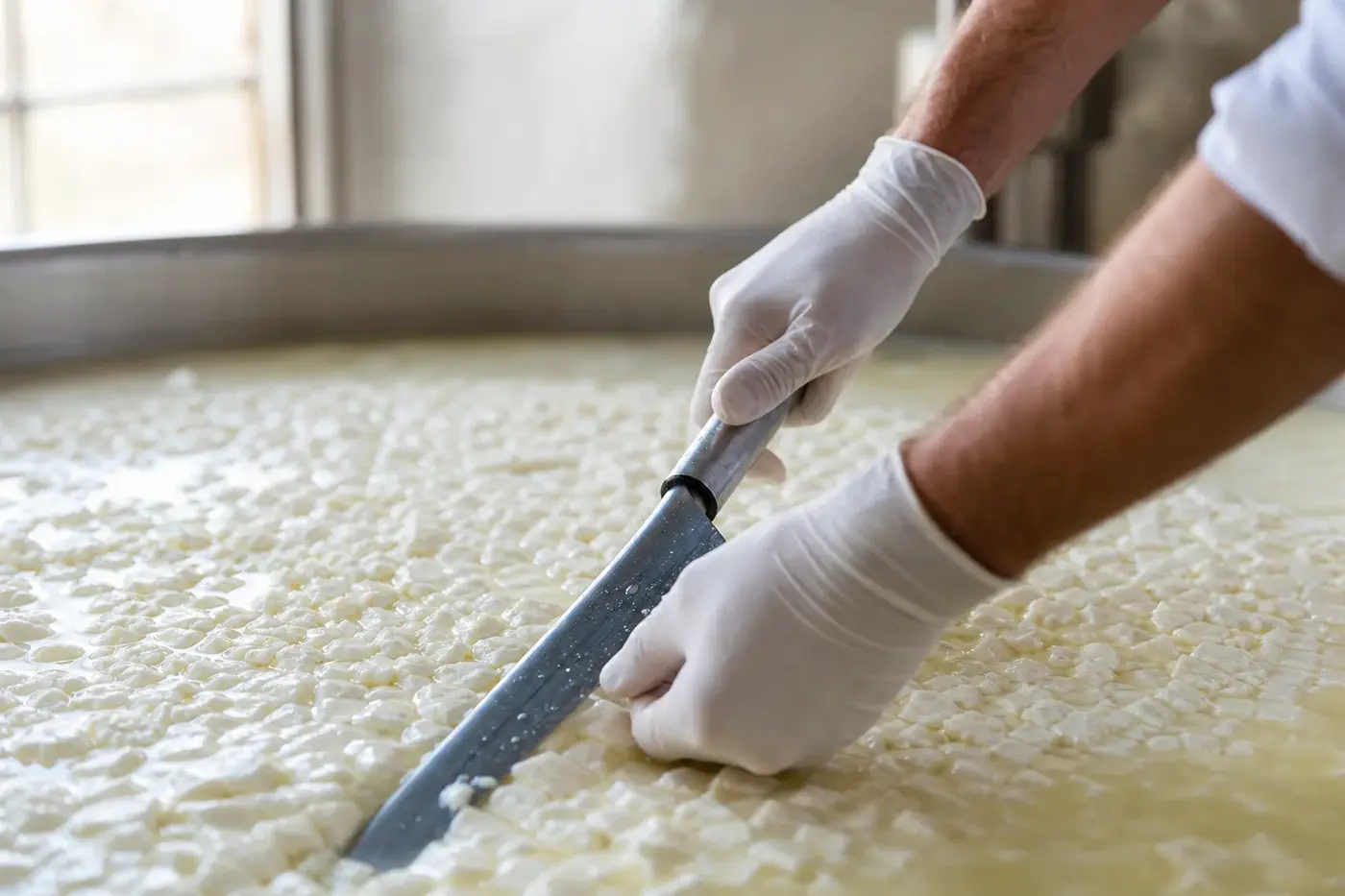
In the make room, milk becomes curd and whey. Curd is the solid part that will form the cheese; whey is the liquid separated from it. Milk preparation, starter cultures that help develop acidity, and curd handling all belong here, though the sequence depends on the cheese. For the background, explore how cheese is made.
Skilful hands are only part of the picture. The National Careers Service's broader food factory worker profile includes equipment checks, accurate ingredient additions, instrument monitoring and quality checks. Reporting faults and cleaning machinery for the next run matter too. In a dairy, what you notice and record counts as much as dexterity. [1]
Depending on the cheese and dairy, you may check and prepare milk, add starter cultures, then cut and handle curd. Draining, moulding, salting or pressing may follow. Equipment cleaning, batch records and information for the next shift belong to the job too, so ask which tasks trainees observe first and which they learn under supervision. [1,4]
Look beyond the curd to the cleaning schedules, records and shift handovers. England's process operator apprenticeship standard explicitly includes hygiene activities, recording information and preparing for the incoming shift. If careful, repeatable work gives you satisfaction, production deserves a closer look. [4]
Affinage: learn to read a maturing cheese
A calendar cannot do an affineur's job. Affinage is the care of cheese during maturation, and you are managing its development, not simply waiting. Neal's Yard Dairy describes changes involving fat, protein, moisture, bacteria, enzymes, yeasts, moulds and salt, shaped by storage conditions and surface treatments. [2]
You monitor conditions such as temperature and humidity, then assess rind condition, texture and flavour as the cheese matures. Depending on the cheese, care may include turning or washing, with observations recorded for colleagues. Ask how the team recognises an expected change and decides when different care is needed. [2,3]
That judgement comes with substantial physical work. A September 2026 maturation recruitment notice from Neal's Yard Dairy lists receiving deliveries, turning and washing cheese, and cleaning racks, boards, crates and floors. It describes repetitive tasks and physically demanding work, with comprehensive training provided. If you picture occasional tasting in a quiet cellar, leave plenty of room for the cleaning kit. [3]
At the counter, start a good conversation
A cheesemonger's selection can begin with an individual batch, not just a familiar cheese name. Neal's Yard Dairy describes assessing cheeses from different makes before bringing them into its maturation stores. Its account also stresses careful cutting, wrapping and packing: care that follows the cheese towards the person who will eat it. [2]
If a counter role appeals, ask who receives deliveries, checks condition, stores and rotates stock, prepares the display, cuts orders and cleans. Then ask how newcomers learn the customer conversation. What does the customer enjoy, when will the cheese be eaten, and how will it be served? Which information needs checking rather than guessing?
Your task is to explain differences without making anyone feel examined. “Firm and crumbly” gives a customer more to work with than “excellent”. Learning how to tell cheese styles apart builds useful vocabulary, while learning how to read a cheese label helps you find the product information behind a recommendation.
Picture your working day before you apply
The employer and job description matter more than the title. Use these examples to shape your questions about a vacancy. Across the trade, there is no single timetable you can count on.
| Role | Where you might work | Questions about your hours | Physical work to expect |
|---|---|---|---|
| Cheesemaking | Dairy or production room | Ask about make days, shifts and weekend cover | Equipment work, cleaning, handling materials. [1,4] |
| Affinage | Maturation stores | Ask about daily cheese care and seasonal rotas | Turning cheese, moving stock, cleaning racks. [3] |
| Cheesemongering | Shop, market or wholesale operation | Ask about opening shifts, weekends and dispatch deadlines | Standing, cutting, wrapping, moving orders. [5,6] |
Christmas looms large in the published employer examples. Neal's Yard Dairy's October 2026 retail notice includes regular weekend work and extra Christmas demand; its maturation notice also identifies Christmas as the busiest period. Its wholesale notice describes early starts, cold working conditions and prolonged standing. Dated adverts give you a feel for working patterns, but ask about the terms of the particular vacancy you are considering. [3,5,6]
Show what you can do, not just what you love
Attention to detail sounds abstract until it becomes part of your working day. The National Careers Service highlights it alongside working with your hands, teamwork, observation, recording and basic digital skills in food production. England's process operator standard adds following instructions, stock control, problem solving and clear communication. You can learn these skills, then show how you use them. [1,4]
To build sensory judgement, compare cheeses rather than hunt for elaborate adjectives. Keep a notebook of appearance, aroma, texture and flavour, using the same headings each time. In a workplace, ask an experienced colleague to compare your observations with theirs and explain what action follows from a difference.
Clear communication includes admitting a gap. Practise saying that you will consult a product record or ask a supervisor. When you apply, give examples of accuracy, reliable attendance, careful cleaning, customer service or following a procedure. Loving cheese gets you interested; those examples show what you can bring to the work.
Find your first foothold in British cheese
You do not necessarily need cheese experience to begin. The National Careers Service lists direct application for food factory work. Neal's Yard Dairy's retail recruitment describes cheese experience as advantageous rather than essential and recognises retail or hospitality experience; its wholesale notice also recognises warehouse and production experience. [1,5,6]
If making appeals to you, look for dairy assistant, production assistant and trainee opportunities. Ask how much of the job involves cheesemaking rather than packing. Farm work is worth exploring if you want to understand milk production, but ask explicitly whether the position includes dairy processing.
A cheese counter offers a different test: do you enjoy service as much as the product? Direct applications and trainee roles are realistic starting points. Read the duties closely so you can picture what you would actually be learning. [1,5,6]
In England, the Food and drink process operator apprenticeship, ST0199 version 1.2, was listed as approved for delivery in November 2026. It is Level 2, with a stated duration of 12 months, and covers manufacturing operations rather than providing a dedicated cheesemaking qualification. Ask an employer and training provider whether a proposed dairy role fits the standard and whether they are recruiting. [4]
For Scotland and Wales, consult their national apprenticeship services for routes and vacancies. Wherever you apply, look closely at the training plan. Who will supervise you, what will you learn, and how much time is set aside for learning? Those answers matter as much as the opportunity's title.
This page summarises published guidance from the official sources it cites. It is not medical advice. Guidance differs between countries and changes over time, so check the current source for where you live, and ask your doctor, midwife, pharmacist or dietitian about your own circumstances.
Get to know the work behind safe cheese
Food hygiene training needs to fit the job. In England and Wales, food handlers must be supervised and instructed or trained in food hygiene in line with their duties. The Food Standards Agency says a food hygiene certificate is not compulsory, although an employer may require a qualification. [7,8]
Ask what instruction and supervision you would receive. For Scotland, consult Food Standards Scotland and the local authority about the operation's requirements. Keep your questions focused on what the work requires of you. [7,8]
Traceability means being able to follow food through the supply chain. The FSA says businesses must keep records of their food suppliers and the businesses they supply, allowing withdrawals and recalls to be managed. As a trainee, ask how batch identity stays connected to cheese when it moves, is cut or is repacked. [7]
Bring the same practical curiosity to workplace safety. For Great Britain, HSE identifies dairy hazards including wet floors, manual handling, machinery, cleaning chemicals, hot water and steam; its guidance also addresses knife injuries and repetitive handling. When considering a role, ask about lifting aids, safe cutting instruction, machine isolation, cleaning procedures and protective equipment. [9,10,11]
Choose where you want the work to lead
Production experience can lead towards supervision and quality control, both identified in the National Careers Service profile. As Tasty Careers explains, a production manager's responsibilities extend to organising people, scheduling production and meeting orders. Look for training that develops those organisational skills alongside practical ability. [1,12]
In maturation, ask how you might progress from routine cheese care to assessing batches, planning stock and taking responsibility for particular cheeses. In retail, explore routes from the counter towards buying, training colleagues or shop management. Ask what evidence an employer needs before handing over those responsibilities. Time served alone does not establish readiness.
Running your own business brings a separate set of responsibilities. In England and Wales, a new food business generally needs to register with its local authority at least 28 days before trading, unless it needs approval instead. Some establishments handling dairy products and supplying other establishments require approval, depending on the operation and applicable exceptions. [7,8,13]
Before you start, ask the local authority which route applies. For Scotland, consult Food Standards Scotland and the local authority. The business you plan to run determines the questions you need to ask. [7,8,13]
Meet the ordinary day before choosing a course
Ask a cheese professional about an ordinary day, not just a favourite cheese. Arrange a visit where access is offered, attend an organised tasting or cheese event, and talk to people in the trade when they have time. Find out what beginners struggle with, which tasks fill most of a shift, how training works and what they wish applicants understood.
The Academy of Cheese offers structured study, including self-study, virtual and classroom options at introductory level. Match the syllabus to your aim: recognising and describing cheese, working at a counter and operating a dairy involve different learning needs. Ask what practical work is included, how learning is assessed and who the course is designed for. [14]
Use Learning About Cheese as your starting point for the site's courses, organisations and other learning resources. For workplace hygiene questions, begin with cheese food safety, then follow the official business guidance for the country where you plan to work.
Keep your next step small and specific. Speak to one employer, read one complete job description and identify one skill you can demonstrate. Could you enjoy the cleaning, repetition, records and customer conversations as well as the cheese? Your answer will help you choose which part of its journey to join.
Questions people ask
What is the difference between a cheesemaker, an affineur and a cheesemonger?
Cheesemakers turn milk into cheese, while affineurs guide its maturation. Cheesemongers select, care for and sell cheese.
Do I need cheese experience to become a cheesemonger?
Neal's Yard Dairy describes cheese experience as advantageous rather than essential for its retail roles. It also recognises retail or hospitality experience.
Is there a cheesemaking apprenticeship in England?
The Food and drink process operator apprenticeship covers manufacturing operations rather than providing a dedicated cheesemaking qualification. Ask an employer and training provider whether a proposed dairy role fits the standard and whether they are recruiting.
Do I need a food hygiene certificate to work with cheese?
In England and Wales, food handlers must be supervised and instructed or trained in food hygiene in line with their duties. The Food Standards Agency says a food hygiene certificate is not compulsory, although an employer may require a qualification.
Do I need to register a cheese business before trading?
In England and Wales, a new food business generally needs to register with its local authority at least 28 days before trading, unless it needs approval instead. Ask the local authority which route applies before starting.
Sources
- National Careers Service. Food factory worker. Current online job profile, retrieved November 2026. Sections on entry routes, skills, daily tasks and progression.
- Neal's Yard Dairy. Our Work. Undated company account, retrieved November 2026. Sections on selection, maturation and sales. This is the employer's description of its own practices.
- Neal's Yard Dairy. Seasonal Maturation Cheesemonger (Temporary, Full-Time). Recruitment notice, 28 September 2026. Used as a dated account of duties and working conditions.
- Skills England. Food and drink process operator. Apprenticeship standard ST0199, version 1.2, and official apprenticeship listing, retrieved November 2026.
- Neal's Yard Dairy. Retail Cheesemonger (3 days per week, Permanent), BARONS COURT. Recruitment notice, 12 October 2026.
- Neal's Yard Dairy. Wholesale and Ecommerce Cheesemonger, Permanent, Full Time. Recruitment notice, 9 October 2026.
- Food Standards Agency. Starting a food business. Current GOV.UK guidance, retrieved November 2026. Sections on registration, hygiene training and traceability.
- Food Standards Scotland. Starting a new food business and Running a food business. Current online guidance, retrieved November 2026.
- Health and Safety Executive. Common risks in food and drink manufacturing industries. Current online guidance, retrieved November 2026, dairy products section.
- Health and Safety Executive. Safety hazards in food and drink manufacturing. Current online guidance, retrieved November 2026.
- Health and Safety Executive. Occupational health risks in food and drink manufacturing. Current online guidance, retrieved November 2026.
- Tasty Careers. Job Descriptions: Production Operations. Current industry careers resource, retrieved November 2026, production manager description.
- Food Standards Agency. Applying for approval of a meat or food establishment. Current GOV.UK guidance, retrieved November 2026, local authority approval section.
- Academy of Cheese. Level 1 and official study information. Current provider material, retrieved November 2026.
This piece was researched through official careers, apprenticeship, food-business and workplace-safety guidance, alongside dated employer accounts and training-provider information.
Last checked: November 2026
Last checked November 2026.
The editors suggest you read next