Cheese Documentaries: An Annotated Viewing Guide
Look closely at a cheese rind.
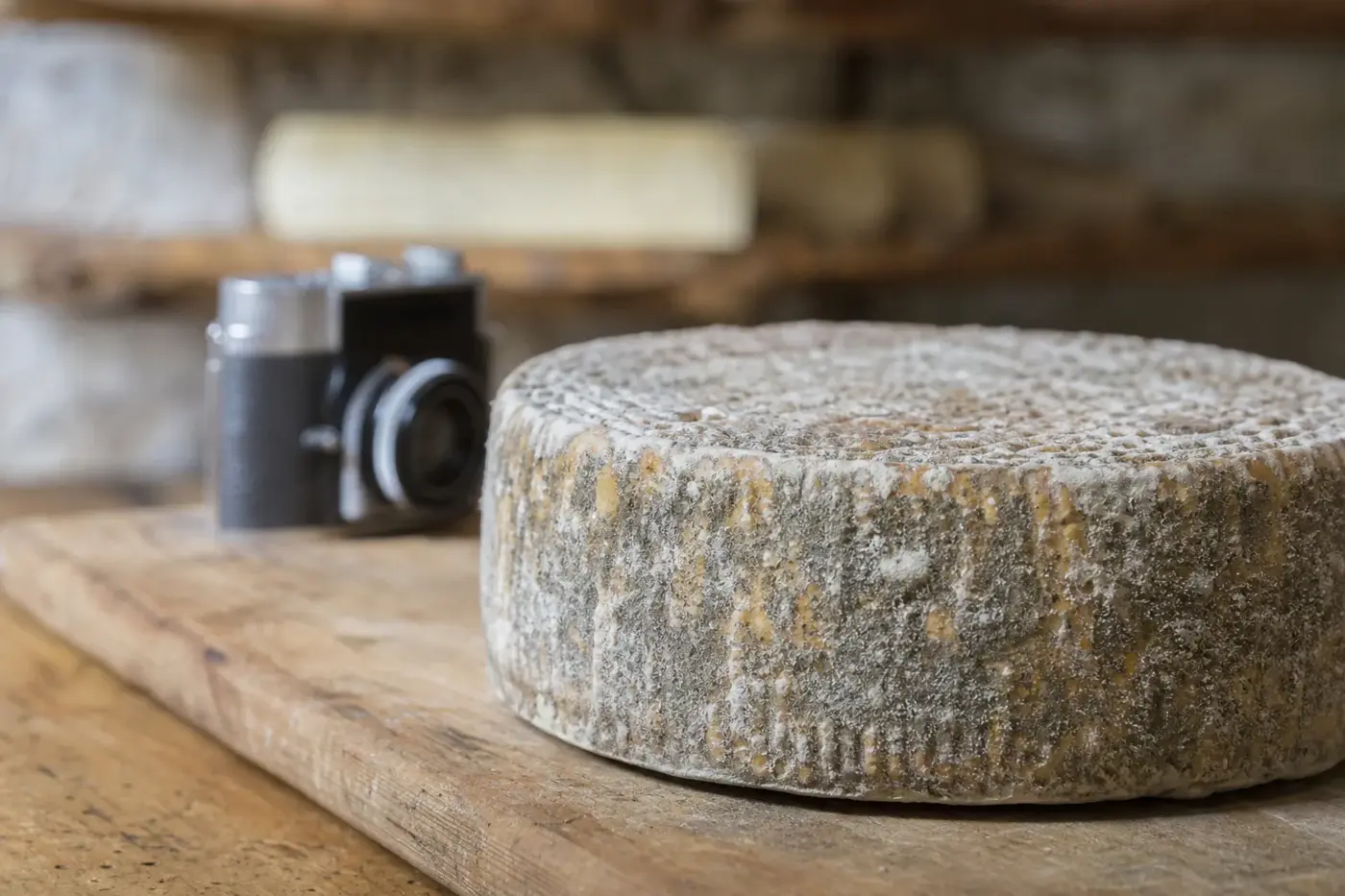
Look closely at a cheese rind. For Sister Noella Marcellino, the fungi growing there opened a path from the dairy into graduate research in microbial ecology. The Cheese Nun follows that curiosity into a world you might otherwise pass straight over on your way to the cheese board. The rind, it turns out, has rather more going on than its supporting role suggests. [1][2]
You can take other routes into cheese on screen, too. Cheese Slices carries you between regional cheesemakers; Cheese: A Love Story explores the culture connecting producers, shops and kitchens. These programmes offer three rewarding ways in: follow someone’s curiosity, travel between makers, or investigate the dairy industry around them. [3][6]
Find a film to match your appetite for discovery
A good cheese documentary gives you more than lovely wheels to admire. You should come away understanding something, too. These selections favour factual programmes with clear subjects, identifiable production records and something useful to teach about cheese or its wider world.
Start with the question you want answered. A portrait lets you settle into one person’s story; a presenter’s travel series carries you between places and practices. An investigation of the milk supply chain asks a different set of questions.
If you are a beginner, people and places give you an easy foothold. If you already know your cheese, watch who explains a technique, how much work you actually see and where the programme’s sympathies lie. Let your curiosity set the pace.
Looking for fictional cheese appearances? Those belong on the hub’s separate film and television page. Here, you meet real people sharing their work and experience, with programme details and recommendations to help you find a subject and format that suit you.
The Cheese Nun: discover a whole world on the rind
In The Cheese Nun, a cheese rind becomes a scientific question. You follow Sister Noella Marcellino of the Abbey of Regina Laudis, whose cheesemaking led towards scientific study and the preservation of traditional practice. The abbey’s programme page names Pat Thompson as director and producer, with PBS Home Video as distributor; the original production and broadcast dates remain an open question. [1]
The connection between bench and cellar gives this portrait its pull. In its account of the dairy, the abbey describes observations of fungi developing on cheese rinds as the basis for graduate research in microbial ecology. A familiar food becomes an invitation to look at a whole living community. [2]
The distributor’s synopsis, reproduced by the abbey, describes journeys through French cheesemaking regions. It also traces an emerging commitment to artisanal makers on both sides of the Atlantic. You follow practical work, place and investigation as they come together in one person’s intellectual journey. [1]
Choose this if you want to understand why a rind can hold a researcher’s attention as firmly as a cheesemaker’s. Beginners have a human story to follow; experienced viewers can consider how practical knowledge becomes a research question. Give this single portrait your attention, then try a regional series when you fancy a wider view.
Cheese Slices: meet the families behind the cheese
Visits to the Keen and Montgomery families put people at the heart of the farmhouse Cheddar episode of Cheese Slices. You also get an explanation of cheddaring and a discussion of grading at Neal’s Yard Dairy. A familiar cheese comes into focus through the work, decisions and families behind it. [8]
Elsewhere, the official synopsis for the Parmigiano Reggiano and Grana Padano episode follows production and maturation. It also introduces the specialist who selects and ripens cheese. You get another role to consider, beyond the making itself. [9]
Will Studd presents the series and serves as executive producer. His official biography dates its premiere to 2002. ABC’s distribution catalogue credits Fromagent Australia and Squid Ink Media, listing eight series, mostly made up of half-hour programmes with some longer specials. [3][4]
The first series gives you an inviting place to begin. Its official guide takes you through Italy, France and England, including farmhouse Cheddar, French goat cheeses and Italian blue cheeses. Studd’s catalogue explicitly emphasises artisanal and raw-milk cheesemaking, making its enthusiasm clear from the outset. [5][7]
Choose this when you want cheese itself to stay centre stage. Watch a cheese you recognise, then one you do not. That contrast gives you something concrete to notice, rather than a procession of unfamiliar names; keep how cheese is made nearby if curds, draining or ripening need unpacking.
If you are an experienced viewer, comparison is the pleasure here. What does the maker control, what does the maturer contribute, and what does the presenter celebrate? Studd’s stated advocacy for traditional raw-milk cheeses gives you a clear perspective to consider alongside the work on screen. [3]
Cheese: A Love Story: get to know the people around the wheel
Farmers, cheesemakers, shop owners, affineurs and chefs all appear in the announced itinerary for Cheese: A Love Story. If your curiosity reaches beyond the cheesemaking room, you have an appealing cast to meet. An affineur matures cheese, linking the work of making it with the decision about when to sell or serve it. [6]
Cheesemonger Afrim Pristine hosts this six-part food travel documentary series. Its destinations are Switzerland, France, Greece, Toronto, Quebec and British Columbia. Corus’s launch announcement scheduled its Food Network Canada debut for 9 June 2021, crediting Proper Television with production in association with Corus Studios. [6]
Choose it for the people who select, cook and share cheese. The announced range of occupations is its strongest attraction: beginners can follow the relationships, while experienced enthusiasts can consider how a shopkeeper’s priorities differ from a farmer’s or chef’s. For detailed technique, pair it with a more narrowly focused Cheese Slices episode.
Carry one question with you between destinations. Who decides a cheese is ready, who introduces it to new customers, or how does a chef choose to use it? Following that question through different working lives gives your journey a satisfying thread, with each destination offering a fresh comparison.
Rotten: take a wider look at the food supply chain
With Rotten, your attention turns towards the food supply chain and the forces shaping what people eat, as Netflix describes it. [10] Keep the broader series separate from the proposed dairy episode: that episode and its contents remain an open question here.
Enjoy the beautiful shots, then look a little closer
Three questions can sharpen almost anything you watch: who is speaking, what work can you follow, and what evidence supports the explanation? An interview gives you someone’s experience. Practical footage lets you inspect actions, while a presenter’s summary connects them through an interpretation.
Notice which of those you are watching. Each contributes something different, and the transitions between them deserve your attention. A cut can carry you a long way.
Fresh milk becomes a finished wheel on screen: what happened between those images? A maker explains a tradition: which parts are their account, and which have an independently documented history? Several interviewees agree: whose experience might still be missing?
Time matters as much as place. You might be following one batch, seeing stages filmed separately, or watching general footage illustrate an explanation. Telling those apart helps you understand the process, rather than simply recognise its outline.
Keep the programme’s date beside any claim about a producer or practice. If that claim matters to what you do next, look for a current record. Give a dated account the context of its own moment.
On a second viewing, make three short notes: one observed action, one attributed claim and one question to pursue afterwards. Compare the explanation with cheese styles and methods. You can enjoy meeting the makers and still give your curiosity a precise direction for further reading.
Settle in: finding your way to a UK viewing
Use the official routes below as your starting points for 7 November 2026. Rotten has a UK Netflix catalogue listing, but access to individual selections is a separate question. Availability changes with territory and time, so look at the particular episode, language options and device support before settling down to watch.
| Programme | Your starting point | UK viewing picture on 7 November 2026 |
|---|---|---|
| The Cheese Nun | Abbey of Regina Laudis: excerpts and DVD information. [1] | UK streaming and DVD delivery: uncertain. |
| Cheese Slices | Will Studd’s official episode catalogue and video links. [7][9] | Individual UK playback: uncertain. |
| Cheese: A Love Story | Corus’s original broadcaster announcement. [6] | UK viewing and purchasing: uncertain. |
| Rotten | Netflix’s UK programme page lists two seasons. [10] | UK catalogue listing present; Milk Money playback: uncertain. |
Buying an older physical edition? Match the disc’s region and video standard to your player, and read the full title and edition details rather than relying on the cover artwork alone. For a club screening, ask the distributor about permission for that use as well as access to the film.
Let one evening lead you somewhere new
Begin with something familiar, then widen your view. Move from making cheese to the people and systems around it, adapting this learning path to the official access available to you. A notebook beside the remote is entirely reasonable behaviour.
- Start with a Cheese Slices episode about a cheese you recognise. The first series offers several familiar entry points. Connect the name with a place and a kind of work before heading into less familiar territory. You will have something solid to compare with what comes next. [5]
- Move on to Cheese: A Love Story. Shift your attention from a production method to the relationships between farmers, makers, maturers, retailers and cooks. Follow how those different jobs connect around the same food. Notice what each person brings to it. [6]
- Turn to The Cheese Nun when the rind and research start raising questions. After the travel programmes, its concentrated portrait offers a welcome change of scale. You return to one person’s curiosity and work, with room to consider how they connect. [1][2]
- Finish with Rotten for a wider food supply chain investigation. Take your questions about speakers, evidence and omitted stages into this investigative format. The frame is broader, but those viewing habits still have a job to do.
Want something to read alongside the films? Turn to Cheddar or Parmigiano Reggiano after the relevant Cheese Slices episode, and compare the named cheese’s documented production with the programme’s dated account. Then jot down the questions the film leaves you wanting to pursue. Your next viewing can begin right there.
Questions people ask
What is The Cheese Nun about?
The film follows Sister Noella Marcellino of the Abbey of Regina Laudis, whose cheesemaking led her into scientific study and the preservation of traditional practice. It also describes her travels through French cheesemaking regions.
Who presents Cheese Slices, and when did it begin?
Will Studd presents the series and is also its executive producer. His official biography dates its premiere to 2002.
What is Cheese: A Love Story about?
Hosted by cheesemonger Afrim Pristine, the series follows people working around cheese, including farmers, cheesemakers, shop owners, affineurs and chefs. Its itinerary covers destinations in Europe and Canada.
Can I watch these cheese documentaries in the UK?
The page found a UK Netflix listing for Rotten, but UK access to the individual selections remains unverified. It recommends checking the particular episode, language options and device support.
Does Rotten have an episode about dairy?
The proposed dairy episode and its contents remain unverified against the episode record or the programme. Netflix describes Rotten as examining the food supply chain and the forces shaping what people eat.
Sources
[1] Abbey of Regina Laudis. The Cheese Nun, undated programme page, crediting a 2006 edition and reproducing the distributor’s synopsis. Programme information, excerpts and DVD enquiry route.
[2] Abbey of Regina Laudis. Dairy, undated, section “Dairy products”, describing rind observations and graduate research. Abbey dairy account.
[3] Will Studd. About Will Studd, undated official biography. Presenter and production background.
[4] Australian Broadcasting Corporation, ABC Content Sales. Cheese Slices, undated distribution catalogue. Production credits and series formats.
[5] Will Studd. Season 1, undated official series guide. First-series subjects.
[6] Corus Entertainment Inc. Love at First Bite: Food Network Canada Delves into Cheese: A Love Story, Hosted by the World’s Youngest Maître Fromager, Afrim Pristine, 10 May 2021, company announcement distributed by Cision. Original programme announcement.
[7] Will Studd. Cheese Slices, undated official programme catalogue. Official viewing catalogue.
[8] Will Studd. England, Farmhouse Cheddar, undated official synopsis, series 1, episode 6. Episode information.
[9] Will Studd. Italy, Parmigiano Reggiano & Grana Padano, undated official synopsis, series 1, episode 3. Episode information and embedded video link.
[10] Netflix. Rotten, UK programme listing, undated current catalogue page. UK programme route.
Researched through official programme catalogues, broadcaster and distributor records, a contemporary commissioning announcement and the abbey’s published accounts, with recommendations developed as desk research.
Last checked: November 2026
Last checked November 2026.
The editors suggest you read next