Gorgonzola
Spread a little Gorgonzola Dolce, then break off a piece of Piccante.
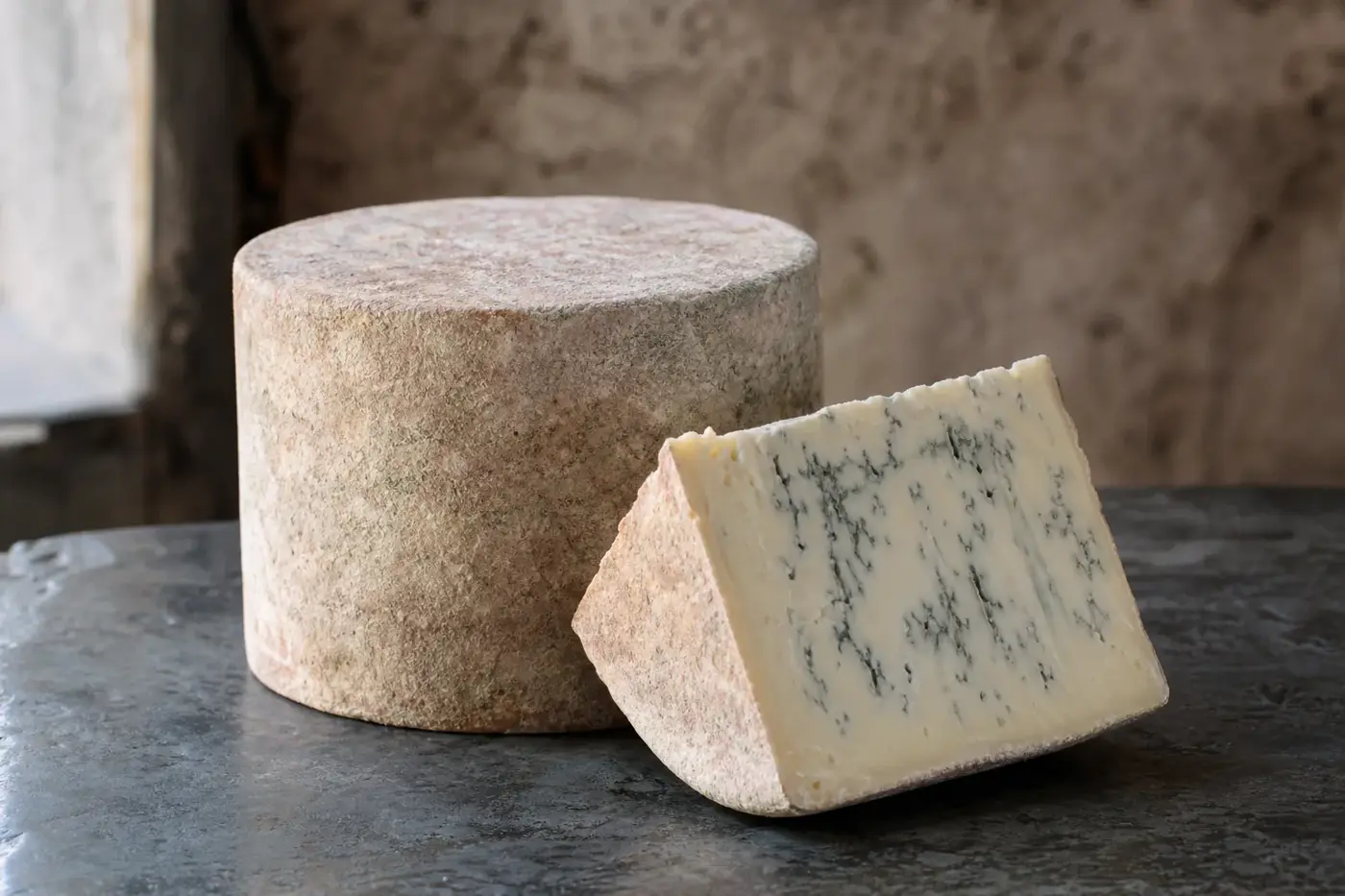
Spread a little Gorgonzola Dolce, then break off a piece of Piccante. The first is soft and gentle; the second firmer, more crumbly and distinctly sharper. Choosing between them is easier if you put both on your plate. Follow their blue veins back to the beginning and you reach pasteurised whole cow’s milk in northern Italy, where mould and maturation create two characters under a name registered as a PDO in Great Britain. [2,3,5,7]
Follow the milk through Lombardy and Piedmont
Gorgonzola’s home stretches across Lombardy and Piedmont in northern Italy. Its authorised territory includes the provinces of Bergamo, Biella, Brescia, Como, Cremona, Cuneo, Lecco, Lodi, Milano, Monza, Novara, Pavia, Varese, Verbano-Cusio-Ossola and Vercelli. Named municipalities around Casale Monferrato in Alessandria province belong too, but the specification lists them individually. The boundary does not include the whole of Alessandria. [1]
For you, that boundary means more than an address on the wrapping. Cheesemaking and maturation must happen inside it, and the dairy farms supplying the milk must be there too. Milk, dairy and maturing operation all belong to this defined area. Pick up a piece at the counter and its geographical connection reaches right back to those farms. [1,3]
A closer look beneath the rind
Cut through the natural grey or pink rind, sometimes a mixture of both, and you find white to straw-coloured cheese. Blue-green or grey-blue veins run through it. You may hear this body of the cheese called the “paste”, a useful word when you are talking about its colour or texture. [2]
A whole wheel is cylindrical, with flat faces and straight sides. The specification gives it a diameter of 20 to 32 cm and a height of at least 13 cm. Your modest slice has some substantial relatives. [2]
Dolce or Piccante: which suits your appetite?
Would you rather spread your cheese or break it into pieces? Dolce is soft and mild, with a slight piquancy; Piccante is stronger, firmer and crumbly. Those descriptions come from the Consortium for the Protection of Gorgonzola Cheese, and they give you a useful starting point. Both styles carry that characteristic blue veining. [7]
The Italian PDO specification sets out these whole wheel weights and maturation limits. The figures below are presented as at November 2026. [2]
| Style | Weight of a whole wheel | Minimum maturation | Maximum maturation |
|---|---|---|---|
| Dolce | 9 to 13.5 kg | 50 days | 150 days |
| Piccante | 9 to 13.5 kg | 80 days | 270 days |
| Small Piccante | 5.5 kg to less than 9 kg | 60 days | 200 days |
Small Piccante has a maturation range of its own, so age alone cannot tell you everything about the piece in front of you. Ask the seller about that particular wheel. Its character matters as much to your choice as the figures do. [2]
Choose Dolce when you fancy the softer expression described by the consortium. Choose Piccante when a stronger taste and firmer texture suit your plate. Neither is the superior version: strength is not a quality contest. The pleasure lies in finding the character you want for the occasion. [7,11]
The needles behind those blue veins
The story starts with pasteurised whole cow’s milk. Lactic cultures, selected yeasts and Penicillium mould spores go in, then calf rennet sets the milk into curd. The specification calls this pasta cruda, meaning uncooked curd. That does not mean raw milk: Gorgonzola’s milk must be pasteurised. [3]
In the consortium’s account, the curd goes into moulds while the liquid whey drains away. The wheels are turned, identified and dry salted before maturation. Milk cultures and blue mould are already part of the process, but the conspicuous coloured veins develop later, inside the formed cheese. [8]
Then come the needles. After about three weeks, the consortium describes the wheels being pierced with metal needles, allowing air into the paste. With that air, the introduced mould can grow into its coloured network. The blue you see develops through the cheese; it is neither painted on nor supplied by added blue colouring. [8]
Maturation helps the two styles develop within their permitted ranges. Pale paste, developed mould and a soft or crumbly texture come together as Dolce or Piccante. To follow the wider journey through setting, draining and ripening, explore how cheese is made. [2,7,8]
What the protected name tells you
PDO means protected designation of origin; DOP is the Italian abbreviation. Gorgonzola is registered as a PDO in Great Britain. The Italian specification published in 2017 distinguishes Dolce and Piccante and sets rules for milk supply, production area, method, appearance and maturation. Current specification status: unconfirmed. [1,2,3,5]
Defra records Gorgonzola’s UK scheme registration as 31 December 2020. Its guidance separates the Great Britain scheme from the EU scheme applying in the EU and Northern Ireland. You encounter the same name, but separate jurisdictions; November 2026 is the reference point for both official sources. [5,6]
The practical benefit for you is traceability. The specification requires production records and identification, while certification arrangements use distinctive embossed aluminium wrapping. Prepacked portions have their own provisions, including an allowance for certified portions without a piece of that foil. [3,4,6,8]
Read the product name and packaging together rather than relying on foil alone. Each gives you part of the picture. For the difference between an origin designation and a brand, turn to protected names explained. [3,4,6,8]
A town, some caves and a long regional memory
One tradition takes you to the town of Gorgonzola outside Milan in 879. Another leads towards Pasturo in Valsassina and its caves. The consortium records both accounts, giving you competing origin traditions rather than one firmly established invention date. [9]
The regional story also follows milk from herds returning from mountain pastures in autumn. The consortium describes Gorgonzola spreading through the Milanese, Como, Pavia and Novara dairy areas. Those places help you picture its regional past. The modern specification draws the precise production boundary. [9]
The legal milestones come with firmer dates. Defra records the original EU registration as 21 June 1996. Following EU approval of an amendment that September, Italy’s official gazette published a revised production specification on 18 October 2017. Those documents establish the modern designation and its rules, while the much earlier beginnings remain part of Gorgonzola’s recorded tradition. [1,5]
Choose your piece, then keep it cool
Start with what you want to do with the cheese. Ask for Dolce if you fancy a soft style for bread or a sauce; choose Piccante for a firmer piece with a more pronounced taste. At the counter, asking which style has been cut tells you more than counting its visible blue veins. [7,10,11]
The consortium suggests buying only what you can use within a few days, because Gorgonzola keeps maturing. That is quality advice, not a replacement for the pack’s storage instructions and use-by date. For wrapping, it recommends aluminium foil or the original preserving tray, kept refrigerated. [8,10,14]
If you follow Food Standards Agency consumer guidance in England, Wales and Northern Ireland, keep your fridge between 0 and 5 °C (32 to 41 °F). Follow packaging instructions, including date marks. Take out a portion to serve and leave the rest chilled, rather than warming your whole supply each time. [14]
Keep the label with your cheese after opening, so the date and handling instructions stay close by. For wrapping and refrigerator organisation, turn to how to store cheese at home. To make sense of the information on the pack, see how to read a cheese label.
Give your serving a little time
About half an hour out of the fridge is the consortium’s serving suggestion. It gives Gorgonzola’s texture and flavour a chance to become more expressive. Put out only what you need, cover that portion while it warms and leave the rest refrigerated. [7,10]
Keep the food safety limit in mind too. FSA guidance for England, Wales and Northern Ireland says chilled food should stay out for the shortest possible time, with a maximum of four hours during preparation. Your warming period counts towards that time. Elsewhere, follow your country’s official advice. [14]
Begin with bread, then try a little fruit
Bread and a little of each style make a lovely, straightforward introduction. Taste the cheese alone first, then bring in an accompaniment. You will soon discover whether softer Dolce or more forceful Piccante appeals most. Plain bread also lets you notice the difference between their textures. [7,11]
For another direction, look to fruit. The consortium’s recipes pair Gorgonzola with green apple in an endive salad and with citrus in risotto. On a simple plate, try sliced apple beside bread and cheese, letting the fresh fruit contrast with the soft or crumbly paste. Water gives you an alcohol-free accompaniment that keeps your attention on the cheese. [12]
The consortium emphasises matching accompaniments to each style’s intensity. Choose your cheese first, then decide how much contrast you want beside it. Dolce and Piccante share a protected name, but they need not receive identical treatment at your table. Let their different textures and strengths guide you. [11]
Make room for Gorgonzola in your cooking
Gorgonzola has plenty to offer beyond the cheeseboard, assuming any makes it that far. The consortium suggests sauces combining it with cream or butter for pasta, rice and gnocchi. Its published recipes include cauliflower with Gorgonzola sauce, pumpkin with a cheese sauce and several risotti. [10,12]
If you want a soft cheese to fold through a sauce, Dolce is a practical choice. For a stronger blue character, consider Piccante, but begin with whichever style your recipe specifies. Swapping styles changes both flavour and texture. The consortium publishes recipes for both expressions of the cheese. [7,11,12]
Its risotto collection includes peas, mint and lemon, as well as citrus and pistachios. These combinations take you beyond a heavy blue-cheese sauce. Herbs, vegetables and fruit can all share a dish with Gorgonzola, giving you several directions to explore. Follow the full source recipe for quantities and method. [12]
This page summarises published guidance from the official sources it cites. It is not medical advice. Guidance differs between countries and changes over time, so check the current source for where you live, and ask your doctor, midwife, pharmacist or dietitian about your own circumstances.
Leave the rind and follow UK pregnancy guidance
Remove the rind before you eat Gorgonzola or cook with it. The production specification explicitly describes it as inedible. The natural outside rind and the blue veins inside have quite different roles on your plate. [2]
UK NHS pregnancy guidance, as at November 2026, specifically lists Gorgonzola among soft blue-veined cheeses that must be thoroughly cooked, whether made with pasteurised or unpasteurised milk. During pregnancy, you can eat cheese cooked until steaming hot. That instruction applies to the finished food. Simply softening the cheese is not enough. [13]
The NHS explains that soft ripened dairy foods may contain Listeria bacteria, which can cause listeriosis. Read its current pregnancy guidance before choosing or cooking the cheese, and ask your midwife or doctor about your individual circumstances. Outside the UK, consult the equivalent official source where you live. [13]
Find your next stop at the cheese counter
- How to Store Cheese at Home: choose your wrapping and organise refrigerated storage.
- Protected Names Explained: PDO, PGI and TSG: discover what an origin designation controls.
- Cheese Food Safety: The Complete Guide: find broader country-specific handling guidance.
Questions people ask
What is the difference between Gorgonzola Dolce and Piccante?
Dolce is soft and mild, with a slight piquancy. Piccante is stronger, firmer and crumbly.
Is Gorgonzola made with pasteurised milk?
Gorgonzola is made with pasteurised whole cow’s milk. Its specification describes the curd as uncooked, but that does not mean the milk is raw.
Can you eat the rind of Gorgonzola?
No. The production specification describes the natural rind as inedible and says to remove it before eating or cooking with the cheese.
Can you eat Gorgonzola during pregnancy?
The NHS advises that Gorgonzola must be thoroughly cooked during pregnancy, whether it is made with pasteurised or unpasteurised milk. It says cheese cooked until steaming hot can be eaten, and recommends checking its current pregnancy guidance at https://www.nhs.uk/pregnancy/keeping-well/foods-to-avoid/.
How should you store Gorgonzola?
The consortium suggests refrigerating it in aluminium foil or its original preserving tray and buying only what you can use within a few days. The Food Standards Agency advises keeping the fridge between 0 and 5 °C and following packaging instructions, including date marks.
Sources
-
Italian Ministry of Agricultural, Food and Forestry Policies. Provvedimento 27 settembre 2017: Modifica del disciplinare di produzione della denominazione «Gorgonzola», published in Gazzetta Ufficiale, Serie Generale No. 244, 18 October 2017; accompanying specification, Article 2. Official publication.
-
Italian Ministry of Agricultural, Food and Forestry Policies. Disciplinare di produzione della denominazione di origine protetta «Gorgonzola», Article 3, 2017 edition: product description, wheel formats and maturation limits. Official specification article.
-
Italian Ministry of Agricultural, Food and Forestry Policies. Disciplinare di produzione della denominazione di origine protetta «Gorgonzola», Article 4, 2017 edition: milk, cultures, rennet, production and packaging. Official specification article. The complete specification supplied by the consortium was also consulted.
-
Italian Ministry of Agricultural, Food and Forestry Policies. Disciplinare di produzione della denominazione di origine protetta «Gorgonzola», Article 6, 2017 edition: evidence of origin and traceability. Official specification article.
-
Department for Environment, Food & Rural Affairs. Gorgonzola, protected food name register entry, published 4 January 2021; live entry checked November 2026. Register entry.
-
Department for Environment, Food & Rural Affairs. Protected geographical food and drink names: UK GI schemes, updated 8 March 2024; checked November 2026. Official guidance.
-
Consorzio per la Tutela del Formaggio Gorgonzola. The Gorgonzola, undated web edition, checked November 2026. Style descriptions are the consortium’s own. Cheese description.
-
Consorzio per la Tutela del Formaggio Gorgonzola. Gorgonzola PDO: secrets of production and storage, 15 December 2020. Production account.
-
Consorzio per la Tutela del Formaggio Gorgonzola. The origins of Gorgonzola cheese, undated web edition, checked November 2026. Attributed historical account.
-
Consorzio per la Tutela del Formaggio Gorgonzola. Conservation And Service, undated web edition, checked November 2026. Storage, serving and culinary suggestions.
-
Consorzio per la Tutela del Formaggio Gorgonzola. Pairings, undated web edition, checked November 2026. Pairing principles.
-
Consorzio per la Tutela del Formaggio Gorgonzola. Recipes, live collection, checked November 2026. Recipe collection and collection filtered for pairings. The consortium promotes the designation; its recipes are cited as culinary examples.
-
NHS. Foods to avoid in pregnancy, reviewed 15 June 2026; checked November 2026. Official pregnancy guidance.
-
Food Standards Agency. How to chill, freeze and defrost food safely, published 18 December 2017; live guidance checked November 2026. Applies to England, Northern Ireland and Wales. Official chilling guidance.
Researched through official specification texts, Defra’s register and guidance, NHS and FSA advice, with attributed consortium descriptions and culinary examples.
Last checked: November 2026
Last checked November 2026.
The editors suggest you read next
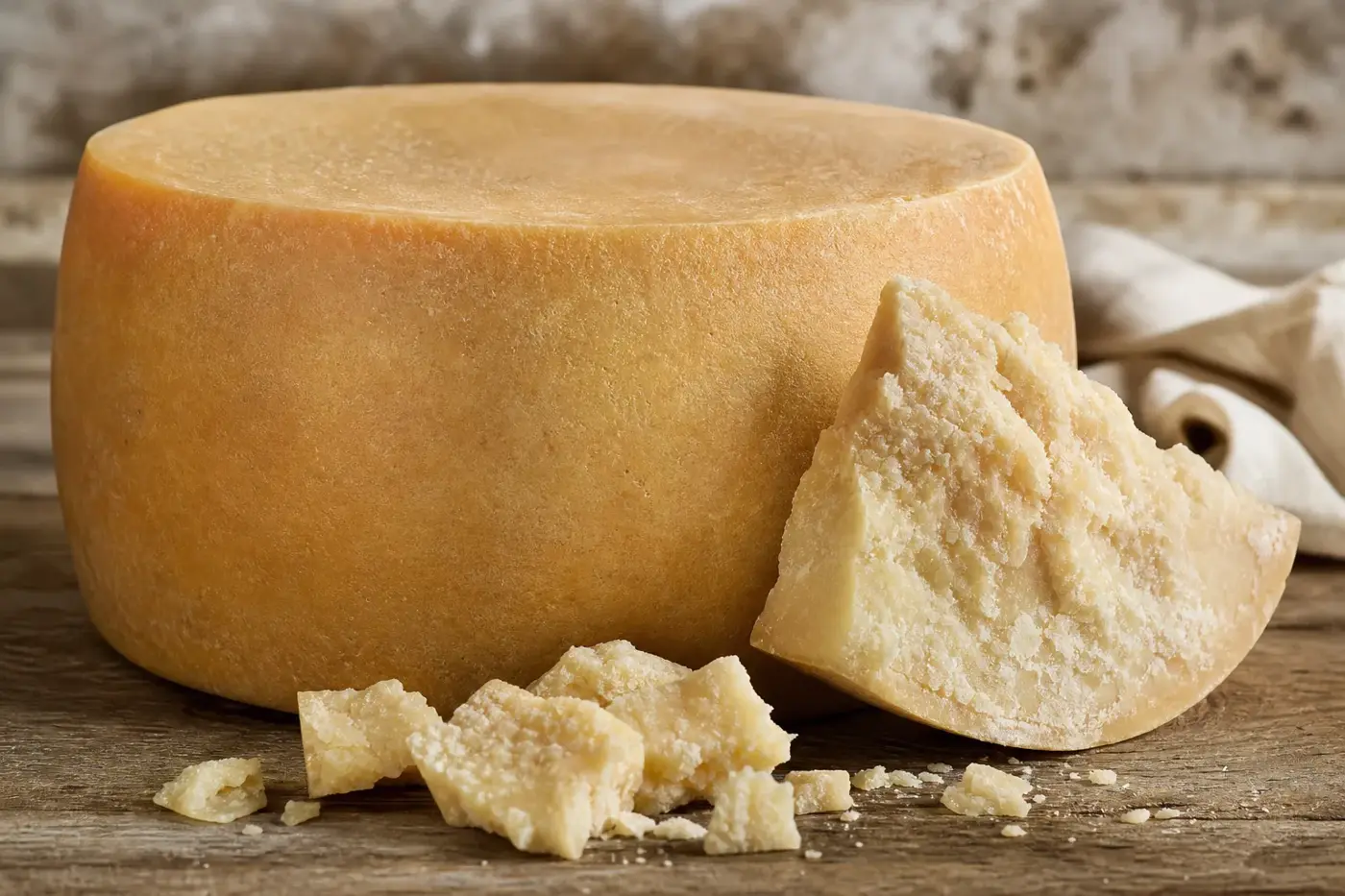
Parmigiano Reggiano
Break into a wheel of Parmigiano Reggiano and flakes fall away, revealing a finely granular cheese, pale straw to straw in colour.