UK Protected Cheese Names After Brexit
A piece of Cheddar in your hand, four extra words on the packet: West Country Farmhouse Cheddar Cheese.
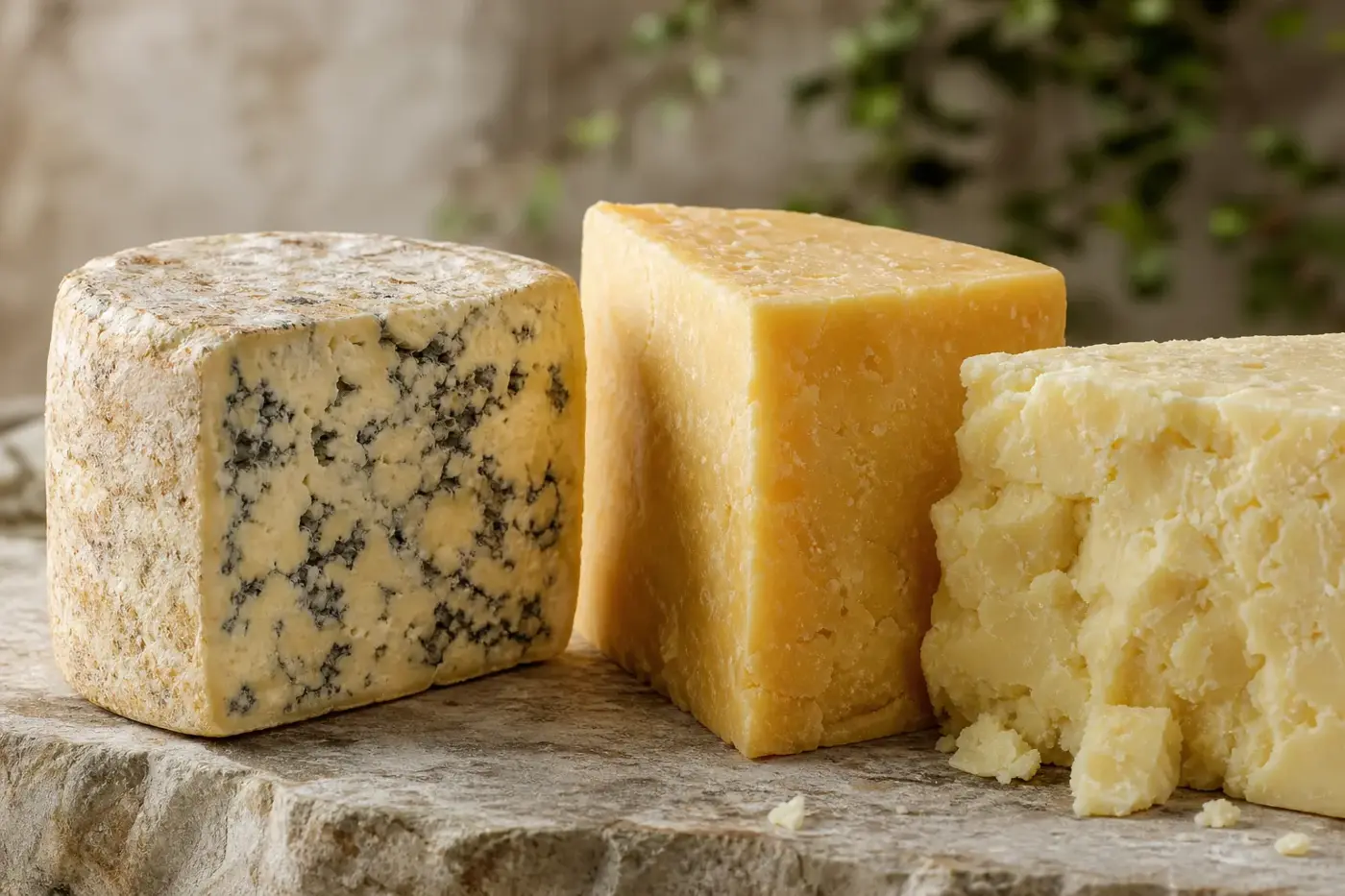
A piece of Cheddar in your hand, four extra words on the packet: West Country Farmhouse Cheddar Cheese. You pause before cutting. That familiar cheese has a more particular story to tell, through a protected name originally registered in the EU on 21 June 1996.[3,5]
Those words earn their space. Cheddar is generic, but the complete name identifies a legally defined product. The registered names for Blue Stilton and Yorkshire Wensleydale do the same job, connecting cheeses you may know well to particular requirements.[4,5,6]
Brexit changed the map behind those labels. Great Britain has its own geographical indication schemes; Northern Ireland follows the EU schemes.[1,7] Whether you make cheese, buy it for a business or choose it for supper, start with three questions: which name is registered, where is it protected, and what belongs on the packaging?
Follow your cheese back to its roots
A protected name connects your cheese to a defined place or food tradition through a set of requirements. A protected designation of origin, or PDO, links its qualities and characteristics to its geographical environment. Production, processing and preparation must all happen within the defined area.[3]
A protected geographical indication, or PGI, requires at least one relevant production stage in that area. A traditional speciality guaranteed, or TSG, protects a traditional composition or production method. It does not tie production to one geographical area.[3]
Think different connections, not different rungs on a tasting ladder. There is no podium here, however competitively you arrange your cheeseboard. These categories are not grades of deliciousness: protected name categories explains the fuller distinction between place, reputation and tradition.[3]
The names that kept their place after Brexit
When the transition period ended on 31 December 2020, existing protected names retained protection. Article 54(2) of the Withdrawal Agreement provided for continued UK protection of the relevant names already protected in the EU. Article 55(2) removed the need for a fresh application or particular administrative procedure to secure it.[2]
That continuity covered UK names and names from EU countries alike. It preserved existing rights rather than requiring a new application for every cheese name. If you produce cheese, keep these inherited registrations distinct from applications submitted under the separate schemes after the transition.[2]
For all three cheeses here, the GB register records the UK scheme registration as 31 December 2020, at 23:00. Each entry also gives its original EU registration date. You are reading two moments in the name’s history, not two versions of the same event.[4,5,6]
Put your finger on the cheese map
Before you buy or sell, establish the territory. Great Britain means England, Scotland and Wales; Northern Ireland remains within the EU geographical indication system under the Windsor Framework. The Northern Ireland Assembly’s scrutiny report identifies Regulation (EU) 2024/1143 as a replacement EU act applying there.[1,7]
| Where you sell the cheese | Protection scheme | Where to start | Source and date |
|---|---|---|---|
| Great Britain | UK GI schemes | GB register and the entry’s specification | Defra [1]; November 2026 |
| Northern Ireland | EU GI schemes under the Windsor Framework | EU registration and applicable specification | Assembly report [7]; November 2026 |
| European Union | EU GI schemes | EU registration and applicable specification | Regulation (EU) 2024/1143 [8]; November 2026 |
Regulation (EU) 2024/1143 is now the EU framework, replacing Regulation (EU) No 1151/2012. Great Britain has its own rules for protecting registered names. Before you rely on a legal quotation, establish its territory: an EU amendment does not automatically change the GB position.[1,7,8]
Three familiar cheeses, three names to read closely
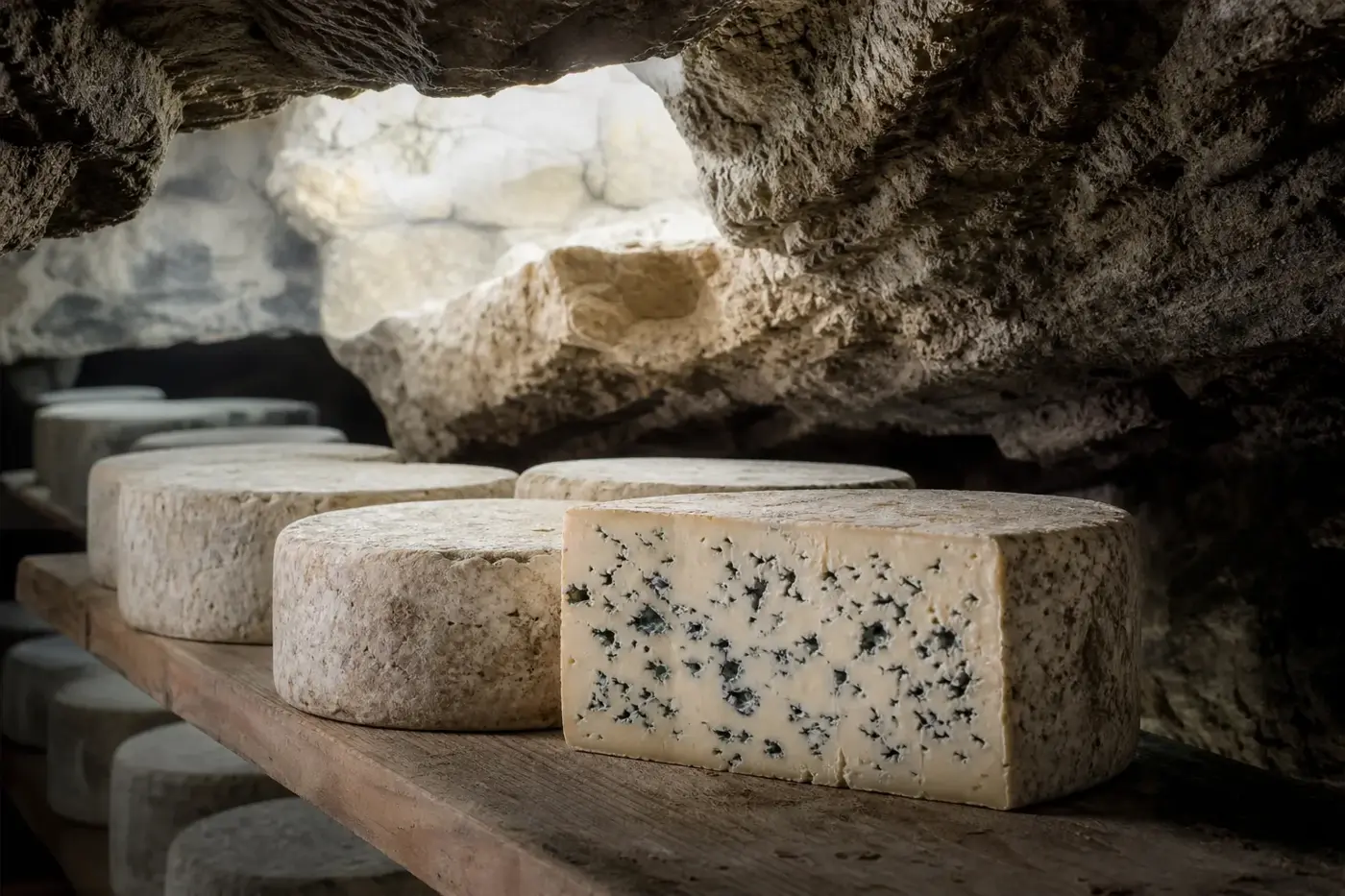
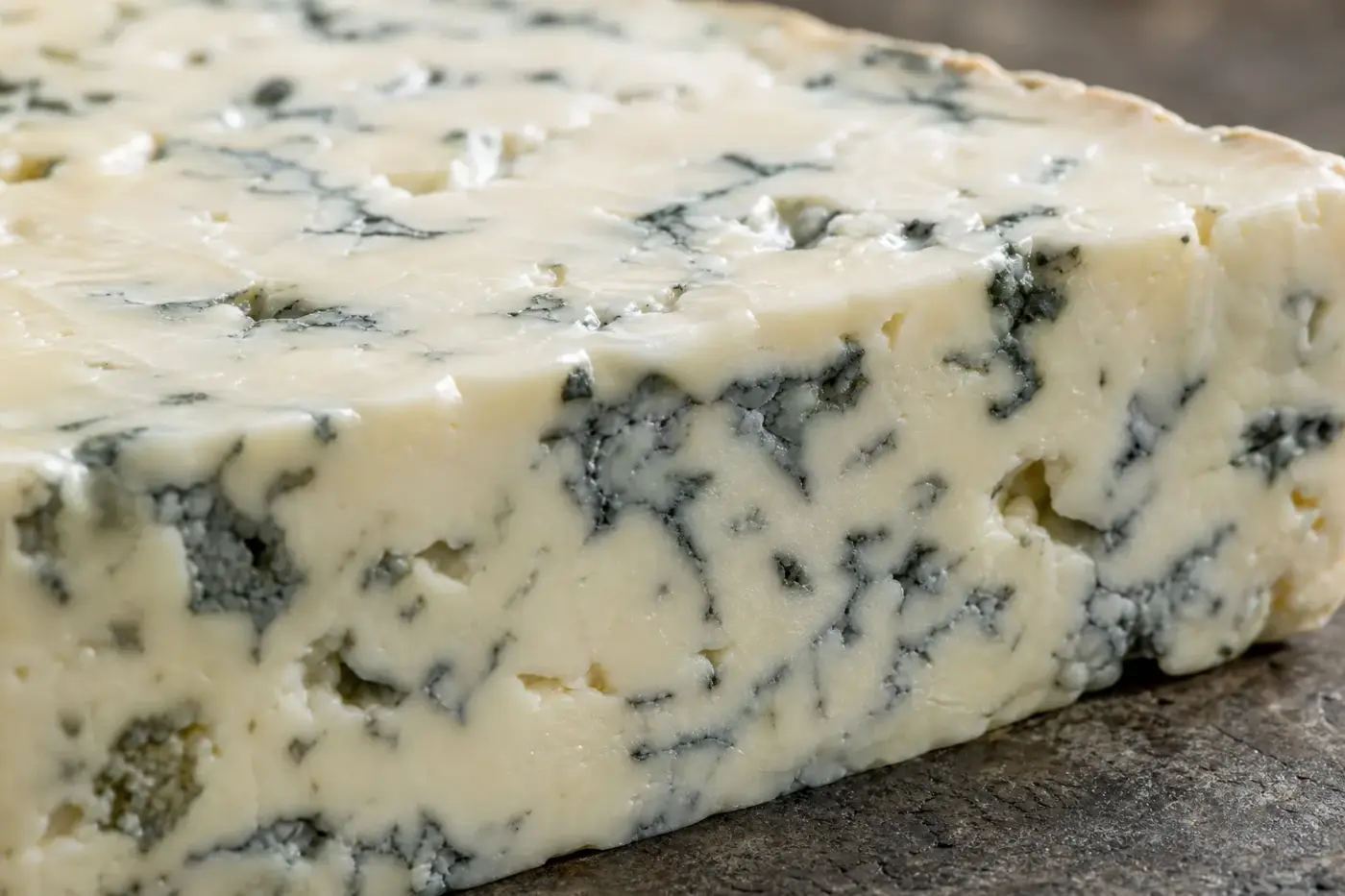
You may know it as Blue Stilton, but its registered name in Great Britain is Stilton Blue Cheese. Its category is PDO, and its original EU registration dates to 21 June 1996. Your familiar name is the starting point; the register supplies the exact protected name and category.[4]
West Country Farmhouse Cheddar Cheese is also a PDO in Great Britain, with the same original EU registration date of 21 June 1996. Defra’s application guidance explicitly gives cheddar cheese as an example of a generic product type. The complete registered name protects a particular product, not every cheese called Cheddar.[3,5]
For a closer look at the wider style, turn to the guide to cheddar. For a protected claim, keep the full name beside the register entry. Shorten it in a buying specification and you can lose precisely the words that identify the protected origin.[3,5]
Yorkshire Wensleydale has a different connection: its GB registration is PGI, not PDO. Its original EU registration date is 21 December 2013. Read its geographical link and production requirements on their own terms, rather than borrowing the rules from either PDO.[3,6]
All three GB entries showed Registered in November 2026, and each links to a product specification. A county name, an old recipe or a familiar style on a packet may catch your eye. The register tells you which name has protection and leads you to the requirements behind it.[4,5,6]
Open the specification: the detail matters
The product specification turns a protected name into practical requirements. For a PDO or PGI application, Defra requires a product description, ingredients, production methods and proof of origin. You also need a defined geographical area and evidence connecting the product to that area; the nominated independent control body checks compliance.[3]
Read the geographical boundary alongside the production method. A producer’s address tells you where the business is, but the specification defines the permitted production area and the steps required there. For an inspection or purchasing decision, note the relevant requirement rather than relying on a broad regional description.[3,9]
Next, put the specification beside the individual producer’s product information. One sets the conditions for using the registered name; the other describes that producer’s cheese. If an ingredient or production choice matters to you, consult both: a permitted option need not appear in every product.[3,9]
Bringing a new name to both markets
If you are seeking protection for a new name, consider Great Britain and Northern Ireland or the EU separately. Defra says GB producers must secure UK scheme protection before applying to the EU scheme. To protect your name across both markets, plan for both routes and their requirements.[1]
Northern Ireland producers can apply to the EU scheme and seek UK scheme protection for Great Britain without obtaining UK protection first. Defra handles applications through its process. It asks Northern Ireland applicants to say whether they want one scheme or both.[1]
Begin with the people making the product alongside you. Where others make the same product, Defra expects a producer group, although its guidance explains when individual applications are possible. Prepare the specification, the shorter single document and the evidence supporting the geographical link.[3]
For EU applications concerning a geographical area outside the Union, Article 14(2) of Regulation (EU) 2024/1143 allows submission to the Commission directly by the applicant or through the relevant country’s authorities. That establishes your EU submission route. GB registration and verification remain separate requirements for your plan.[8]
Allow time for assessment and consultation: submission starts the process, rather than granting approval. Registration of a name and permission for a producer to use it are separate checks, too. Before selling cheese under that name, the producer must obtain verification against the specification.[3,9]
Choose the right logos for your packet
Before choosing a logo, ask two questions: where does the cheese originate, and where is it sold? The table sets out Defra’s protected food name guidance for November 2026. To use either logo, you need registration under the relevant scheme.[10]
| Where your cheese comes from and where you sell it | UK GI logo | EU GI logo |
|---|---|---|
| GB cheese sold in GB | You must use it | Optional if EU-registered |
| GB cheese sold in Northern Ireland or the EU | Optional | Optional if EU-registered |
| Northern Ireland cheese sold in Northern Ireland or the EU | Optional if UK-registered | You must use it if EU-registered |
| Northern Ireland cheese sold in GB | Optional if UK-registered | Optional if EU-registered |
| EU-origin cheese sold in GB | Optional if UK-registered | Optional if EU-registered |
| EU-origin cheese sold in Northern Ireland | Optional if UK-registered | You must use it if EU-registered |
For GB products registered before 1 January 2021, 1 January 2024 was the deadline to add the mandatory UK logo for GB sales. Newly registered GB products must carry it when first sold there as a GI product. Optional use elsewhere still depends on local rules.[10]
A qualifying product can carry both logos if it is registered under both schemes. Equally, the absence of an optional logo does not mean protection is absent. You cannot always establish the full position from a glance at the packet.[10]
Meet the people behind the checks
Defra is the UK competent authority for geographical indication schemes, supported by the devolved administrations. The relevant control body carries out product verification. For protected food names, Defra identifies local authority inspection services, typically trading standards, and UKAS-accredited bodies as verification options.[1,9]
Verification begins with whether a producer can make the cheese to its specification. Continuing checks follow that initial assessment. Defra says UK producers must renew verification at least every three years; if the product falls short, they must correct it or stop using the protected name.[9]
The rules follow your cheese to the point of sale. Defra describes powers to inspect premises, seize evidence and issue compliance notices requiring misuse to be corrected. Failure to follow a notice, or obstruction of an officer, can lead to a penalty, so retailers need accurate descriptions as well as traceable supplies.[9]
In the EU, Article 26 of Regulation (EU) 2024/1143 protects registered geographical indications against misuse, imitation and evocation. Adding words such as “style” or “type” does not remove that protection. The provision also covers misleading indications in packaging, advertising and information supplied online.[8]
When a cheese name becomes a dispute
If a naming dispute catches your attention, begin with the exact name, territory and date. Keep the registration record beside any relevant decision. If a trade mark enters the discussion, identify that right separately: a brand and a geographical name are not interchangeable.[8,11]
Separate individual disputes from the schemes’ everyday workings. The reference pages for feta and Le Gruyère offer starting points for those cheeses. Here, your practical focus is the registration system after Brexit.
Take a closer look at your next cheese purchase
Look up the complete cheese name in the register for the market where you are buying. The GB register lets you search and filter, and gives each entry a status. Registered and Cancelled mean different things, so finding a name in the results is only your first step towards establishing whether protection remains in force.[11]
For the EU and Northern Ireland, the relevant legal record is the EU registration. Keep the manufacturer’s brand separate from the geographical name. EU legislation treats trade marks and geographical indications as distinct rights, so a familiar company name cannot replace a look at the protected product name.[1,8]
Read the specification to understand the connection being protected, then follow your own taste. Protection establishes defined requirements, not a guarantee of personal preference or superiority over another cheese. A geographical indication answers a different question from “Will I like this?”.[3]
If the name, origin or description seems inconsistent, keep the packaging and purchase details and ask the seller for clarification. Be specific: give the exact wording and the market where it appeared. For everything else on the packet, how to read a cheese label explains the different kinds of information.[9,11]
Let your curiosity lead you to the next label
- Protected Names Explained: PDO, PGI and TSG: get to know the differences between the protection categories.
- How to Read a Cheese Label: make sense of the other information alongside a protected name.
Questions people ask
Is Cheddar a protected name in the UK?
Cheddar is a generic cheese type. West Country Farmhouse Cheddar Cheese is a protected name with PDO status in Great Britain.
What is the difference between PDO, PGI and TSG?
For a PDO, production, processing and preparation must all take place in the defined area. A PGI requires at least one relevant production stage there. A TSG protects a traditional composition or production method without tying production to one geographical area.
Did protected cheese names lose protection after Brexit?
Relevant names already protected in the EU when the transition period ended on 31 December 2020 received continued UK protection under the Withdrawal Agreement. They did not need a fresh application or particular administrative procedure to secure it.
Which cheese protection scheme applies in Northern Ireland?
Northern Ireland follows the EU geographical indication schemes under the Windsor Framework. Great Britain has its own schemes.
Does protected cheese have to display a UK GI logo?
GB cheese sold in GB must carry the UK GI logo. For GB products registered before 1 January 2021, the deadline to add it for GB sales was 1 January 2024. Logo rules vary according to the cheese’s origin and where it is sold.
Sources
- Department for Environment, Food & Rural Affairs. Protected geographical food and drink names: UK GI schemes. Updated 8 March 2024, online edition checked November 2026.
- European Commission, Directorate-General for Agriculture and Rural Development. Notice to stakeholders: Withdrawal of the United Kingdom and EU rules in the field of geographical indications. 6 July 2020, particularly Part B and its references to Withdrawal Agreement Articles 54 and 55.
- Department for Environment, Food & Rural Affairs. Protect a geographical food or drink name. Updated 6 January 2021, online edition checked November 2026.
- Department for Environment, Food & Rural Affairs. Stilton Blue Cheese. GB register entry, published 4 January 2021, checked November 2026.
- Department for Environment, Food & Rural Affairs. West Country Farmhouse Cheddar Cheese. GB register entry, published 4 January 2021, checked November 2026.
- Department for Environment, Food & Rural Affairs. Yorkshire Wensleydale. GB register entry, published 4 January 2021, checked November 2026.
- Northern Ireland Assembly, Windsor Framework Democratic Scrutiny Committee. Inquiry into Regulation (EU) 2024/1143. 2024 report, particularly paragraphs 2 and 3.
- European Parliament and Council. Regulation (EU) 2024/1143. Consolidated version dated 18 March 2026; Articles 14(2), 26 and 31.
- Department for Environment, Food & Rural Affairs. Using a protected geographical food or drink name: UK GI scheme rules. Online edition checked November 2026; protected food name inspection and enforcement sections.
- Department for Environment, Food & Rural Affairs. Adding a logo to a protected food or drink name: follow the rules. Online edition checked November 2026; protected food name provisions by origin and registration date.
- Department for Environment, Food & Rural Affairs. Protected geographical food and drink names. Searchable GB registers, live edition checked November 2026.
Researched through official government guidance, GB register entries, European Commission material, the EU regulation and Northern Ireland Assembly scrutiny records.
Last checked: November 2026
Last checked November 2026.
The editors suggest you read next
Cheese Law Around the World: The Complete Guide
GRUYERE reached an American legal border and lost its exclusivity.