Cheese Museums of the World
Picture a wheel of cheese waiting for its train in Monroe, Wisconsin.
Picture a wheel of cheese waiting for its train in Monroe, Wisconsin. Before it could leave town, it might sit in the railway depot's freight room. Step into the restored depot today and you find cheesemaking equipment, factory replicas and railway memorabilia. The dairy door was only the beginning of its journey. [6]
Follow that wheel and a cheese museum becomes much more than a room of old tools. In Alkmaar, you meet the market; in Monroe, dairy families and transport; at La Maison du Gruyère, an exhibition sits beside working production. The Italian and Portuguese stops need a little extra attention to names and locations before you pack your bag. [1,6,7,9]
Find the cheese museum that speaks to you
An old implement becomes interesting when you start asking questions. Who used it, what did it do, and how did that job fit into farming, household life or trade? A museum explores those connections, while a working dairy tour takes you through today's production site and daily routine. [1,6,9]
Sometimes you get both. La Maison du Gruyère pairs an interpretive exhibition with views of cheesemakers at work; Monroe preserves a historic cheese factory and records occasional demonstrations. Think about whether you want historic objects, a regional story or live production. A documented collection offers something different from a shop where a few nostalgic tools keep the cheese company. [7,9]
Alkmaar: step into the world of the cheese market
You meet the cheese trade before you reach the first display. Alkmaar's Dutch Cheese Museum occupies the Waaggebouw, the weigh house overlooking Waagplein. Inside, historic cheesemaking artefacts sit alongside paintings of the cheese market and rural life, and information about Edammer and Gouda. Here, cheese has a working life as merchandise as well as food. [1]
Give those paintings as much attention as the equipment. Who handles the cheese, which tasks take centre stage, and how does the market bring countryside and town together? Once you can picture that working world, the implements have a story to tell. For background on one featured cheese, read gouda. [1]
The practical details are refreshingly specific: a lift through the tourist information shop, an accessible toilet and a wheelchair lift in the cinema. The museum also lists group guides in English, German and French. When arranging a guided visit, name your preferred language and ask which other forms of interpretation you can use in it. [2]
Museo del Parmigiano Reggiano: get to know the story, then the address
At Corte Castellazzi in Soragna, the museum's historic home was part of the attraction. Italy's Ministry of Culture describes the former installation as a teaching collection inside a nineteenth-century dairy. Equipment, period photographs and drawings followed milk processing, maturation and marketing. A salting room gave you the building's own working spaces to explore, too. [3]
Before you set off, there is an important address wrinkle. Visit Salsomaggiore reports a move to the former Capuchin church in Fontevivo on 13 June 2026, describing historic copper vats, objects, documents and digital interpretation. [4] The operator's English page and homepage still give Soragna, so ask the operator for the current address before arranging transport. [5]
Whichever setting you are asking about, follow the equipment through production and trade. You begin to see the organisation behind a wheel of cheese, rather than just its finished form. Read parmigiano reggiano for the cheese itself, then let the museum introduce you to the objects and working practices around it. [3,4,5]
Monroe: follow the cheese beyond the dairy door
Making the cheese was not the end of the job. At Monroe's National Historic Cheesemaking Center, the railway depot brings its onward journey into focus. Green County's tourism body describes the restored building's cheesemaking equipment, factory replicas, railway memorabilia and local history. Its former freight room once held local cheese awaiting onward rail transport. [6]
The Imobersteg factory takes you back to hands, tools and coordinated effort. The centre's October 2025 publication records an anniversary cheesemaking event there, with stirring, dipping, a hoist and a cheese hoop. You start to appreciate the physical work behind a finished wheel. Hearing experienced cheesemakers explain an object can bring it to life in ways a label alone cannot. [7]
If you are drawn to people and the infrastructure around production, Monroe is a strong choice. The county lists an introductory audio tour and docents ready to answer questions. Ask the centre about the current visiting season, factory access and demonstration programme. That recorded anniversary event was a special occasion, not a daily attraction. [6,7]
Serpa: take the cheese centre's name with you
In Serpa, ask for the Centro Interpretativo do Queijo. The regional museum network's guide places it inside the municipal market at Largo Catarina Eufémia and describes a small introduction to the area's cheese heritage. You could make it a stop within a wider exploration of southern Portuguese food culture. [8]
A municipal market is an inviting setting for thinking about how everyday regional food becomes something a community chooses to preserve and explain. Before making a dedicated journey, ask the municipality about current public access and the exhibition. Use the Portuguese name, and ask whether interpretation or a guided explanation is available in a language you understand. [8]
La Maison du Gruyère: follow the cowbells to the cheesemakers
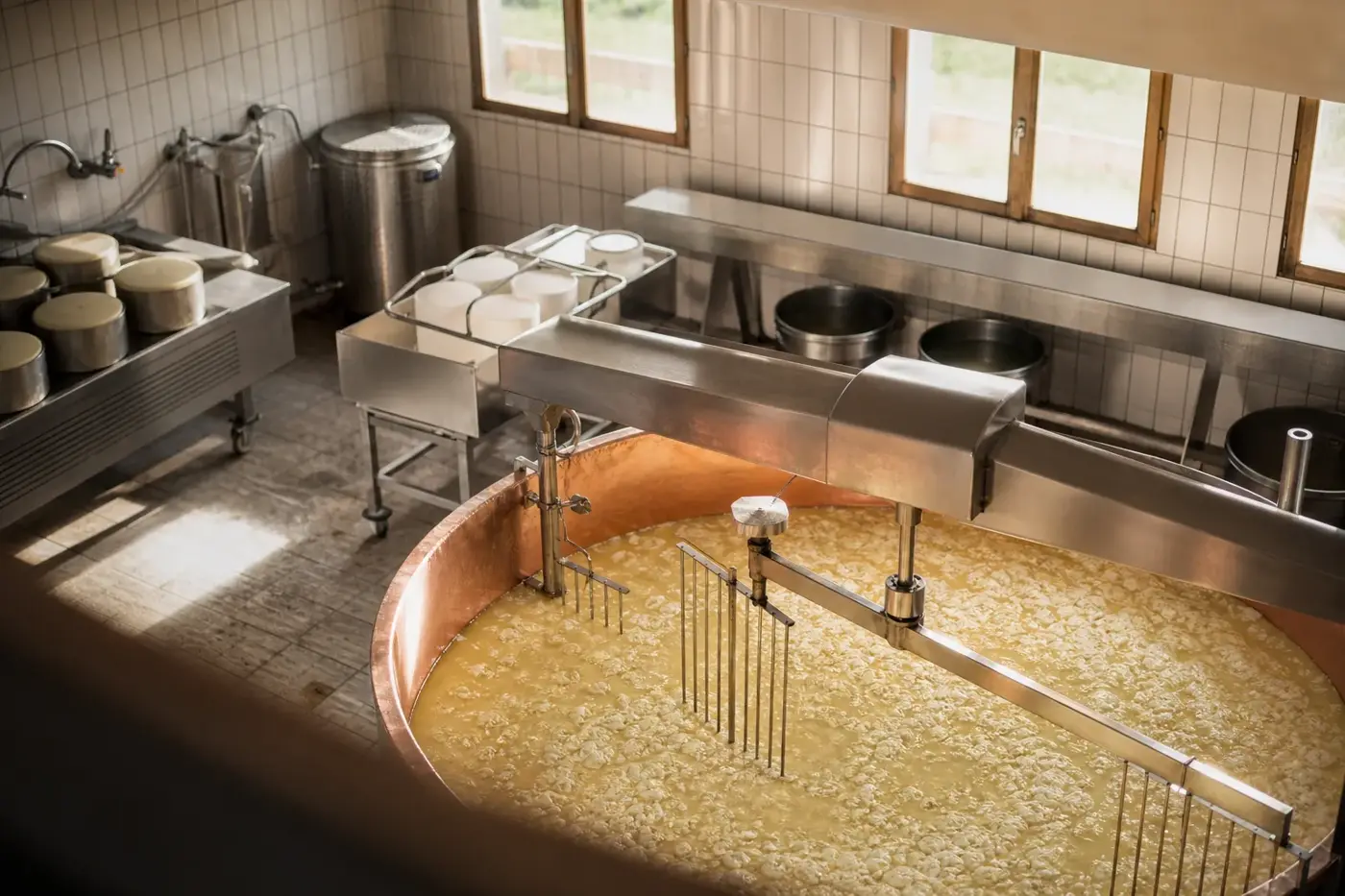
At Pringy, your ears and nose join your eyes and hands in the exhibition. La Maison du Gruyère's operator describes recordings of cowbells and cattle, scents of alpine plants and hay, and objects including a cheese probe, brush and milk containers. Then you can look into production from a gallery. The equipment is not all enjoying a comfortable retirement. [9]
The exhibition information includes samples at three ages: 6, 8 and 10 months. If maturation fascinates you, this is your chance to compare it directly. Taste the samples against one another and notice the differences. Keep your conclusions tied to the cheese served, rather than every wheel of the same age. [9]
For live production, check the current manufacturing schedule separately from exhibition admission. The operator's visitor information places cheesemaking in the morning and lists audio interpretation in thirteen languages, including English, French, German, Italian and Portuguese. Written translations cover additional languages. For the cheese's background, read le gruyère. [10,11]
Follow the milk, the wheel and the people behind them
Take three questions into these collections: what held the milk, what shaped the cheese, and what moved it towards a customer? Alkmaar's market paintings, the Italian museum's copper vats and Monroe's depot each reveal a different part of that chain. Together, they give you a richer cultural itinerary than several visits following the same production sequence. [1,4,6]
Look for the connection between a tool and the person using it. Who had to reach across the vat, and how was a mould or hoop filled, handled and emptied? In photographs, look beyond the principal cheesemaker to the people collecting milk, cleaning equipment and moving cheese. Those observations make excellent questions for museum staff.
Before travelling, how cheese is made will help you recognise the stages. Once you arrive, look for what belongs to that place: a building's layout, a family's factory, a route to market or the local word for an implement. Technology tells you far more when you keep its people and setting in view.
Tastings and demonstrations: make room for the right experience
Before booking, find out exactly what your visit includes. La Maison du Gruyère explicitly describes three maturity samples, while the Fontevivo tourism listing describes guided tastings and workshops. Ask whether these come with ordinary admission, need a separate reservation or happen only on selected dates. [4,9]
“Demonstration” can mean current commercial production, a special heritage event or a recorded explanation. Choose the experience you actually want. At a working dairy, ask which stages your arrival time will catch; for a museum event, ask whether you watch, participate or hear a commentary. Check the language of films and captions separately from the guide's language. [7,9,10]
Plan the visit that suits you
Look at the venue's official website immediately before travelling, then contact it about anything essential to your visit. Ask about the operating season, holiday closures, last admission and booking conditions. Monroe's county listing explicitly describes seasonal opening, and the centre's October 2025 publication records that year's autumn closure. For a future trip, use the current calendar. [6,7]
| Your planning question | What to ask before you set off |
|---|---|
| Season and booking | Confirm your date, exhibition access and any tour or workshop booked separately. |
| Accessibility | Ask about the whole route: entrance, lifts, toilets, seating and where you can watch demonstrations. |
| Languages | Check captions, films, audio and live guides separately, especially for a group. |
| Public transport | Plan your outward and return journeys, the final walk and access at the stop. |
| Tastings and demonstrations | Find out what is included, what needs reserving and what happens if production changes. |
Travelling by rail? Alkmaar's museum publishes walking directions from the station to Waagplein. Check current connections with the transport operator and allow time for that final approach. Confirm every venue's destination address before planning the last leg, especially the Italian museum while its online listings differ. [2,4,5]
Alkmaar gives unusually concrete access information, and La Maison du Gruyère states that it accommodates visitors with reduced mobility. Use those details to start a conversation about what you need, including lift dimensions, step-free routes, accessible toilets, audio support or a suitable seat. Ask other venues for the same specifics. Then, when you arrive, you can give the cheese and its story your full attention. [2,10]
Questions people ask
Where is the Museo del Parmigiano Reggiano?
Visit Salsomaggiore reports that it moved from Soragna to the former Capuchin church in Fontevivo on 13 June 2026. The operator’s English page and homepage still give Soragna, so confirm the address directly with the operator before travelling.
Can you watch cheesemakers at work at La Maison du Gruyère?
Yes, visitors can look into production from a gallery. The operator places cheesemaking in the morning, but advises checking the manufacturing schedule separately from exhibition admission.
What can you see at Alkmaar’s Dutch Cheese Museum?
The museum displays historic cheesemaking artefacts, paintings of the cheese market and rural life, and information about Edammer and Gouda. It occupies the Waaggebouw overlooking Waagplein.
Does Monroe’s National Historic Cheesemaking Center hold demonstrations?
The centre’s October 2025 publication records an anniversary cheesemaking event at the Imobersteg factory, but this was a special occasion rather than a daily attraction. Check the current demonstration programme and factory access with the centre.
Is Alkmaar’s Dutch Cheese Museum accessible?
The museum lists a lift through the tourist information shop, an accessible toilet and a wheelchair lift in the cinema. Contact the museum about the full route and any specific requirements before visiting.
Sources
-
Dutch Cheese Museum. Things to do, undated web edition, retrieved November 2026. The museum identifies its Waaggebouw setting, historic artefacts, market and rural paintings, and coverage of Edammer and Gouda.
-
Dutch Cheese Museum. Plan your visit, Groups and Address and route, undated web editions, retrieved November 2026. These give access facilities, guided-tour languages and directions from Alkmaar station.
-
Ministero della Cultura, Italy. Museo del Parmigiano-Reggiano, undated revised web entry, retrieved November 2026. The entry describes the historic Soragna installation and carries a notice about relocation to Fontevivo.
-
Visit Salsomaggiore, official tourist information service. Fontevivo, Museo del Parmigiano, undated web edition recording a move on 13 June 2026, retrieved November 2026. Its account describes the former Capuchin church, copper vats, interpretation, tastings and workshops.
-
Musei del Cibo della provincia di Parma. Parmigiano Reggiano Museum, undated English homepage, retrieved November 2026. The page still displays the Corte Castellazzi address in Soragna.
-
Green County Wisconsin Tourism. National Historic Cheesemaking Center, undated visitor listing, retrieved November 2026. It describes the depot, collections, audio introduction, docents and seasonal opening.
-
National Historic Cheesemaking Center. Culture, Curds, and Cheesy Chatter, October 2025, especially pages 1, 3, 4 and 8. This records the 2025 seasonal closure and anniversary cheesemaking at the Imobersteg factory.
-
Rede de Museus do Baixo Alentejo. Guia dos Museus do Baixo Alentejo, undated edition hosted by Museu de Mértola, pages 47 and 48, retrieved November 2026. It identifies Serpa's Centro Interpretativo do Queijo and its municipal-market location.
-
La Maison du Gruyère. L’Exposition interactive et ludique, undated web edition, retrieved November 2026. This describes the sensory interpretation, objects, production film and samples aged 6, 8 and 10 months.
-
La Maison du Gruyère. Informations générales, undated web edition, retrieved November 2026. It describes live morning production, thirteen audio languages, written translations and access for visitors with reduced mobility.
-
La Maison du Gruyère. Horaires d’ouvertures, revision dated 13 October 2026, retrieved November 2026. Exhibition arrangements and the production programme are published separately.
Researched from museum and attraction publications, official tourism information and the regional museum network's guide, with current arrangements separated from historical descriptions.
Last checked: November 2026
Last checked November 2026.
The editors suggest you read next
Cheese Travel: Visiting Dairies and Caves
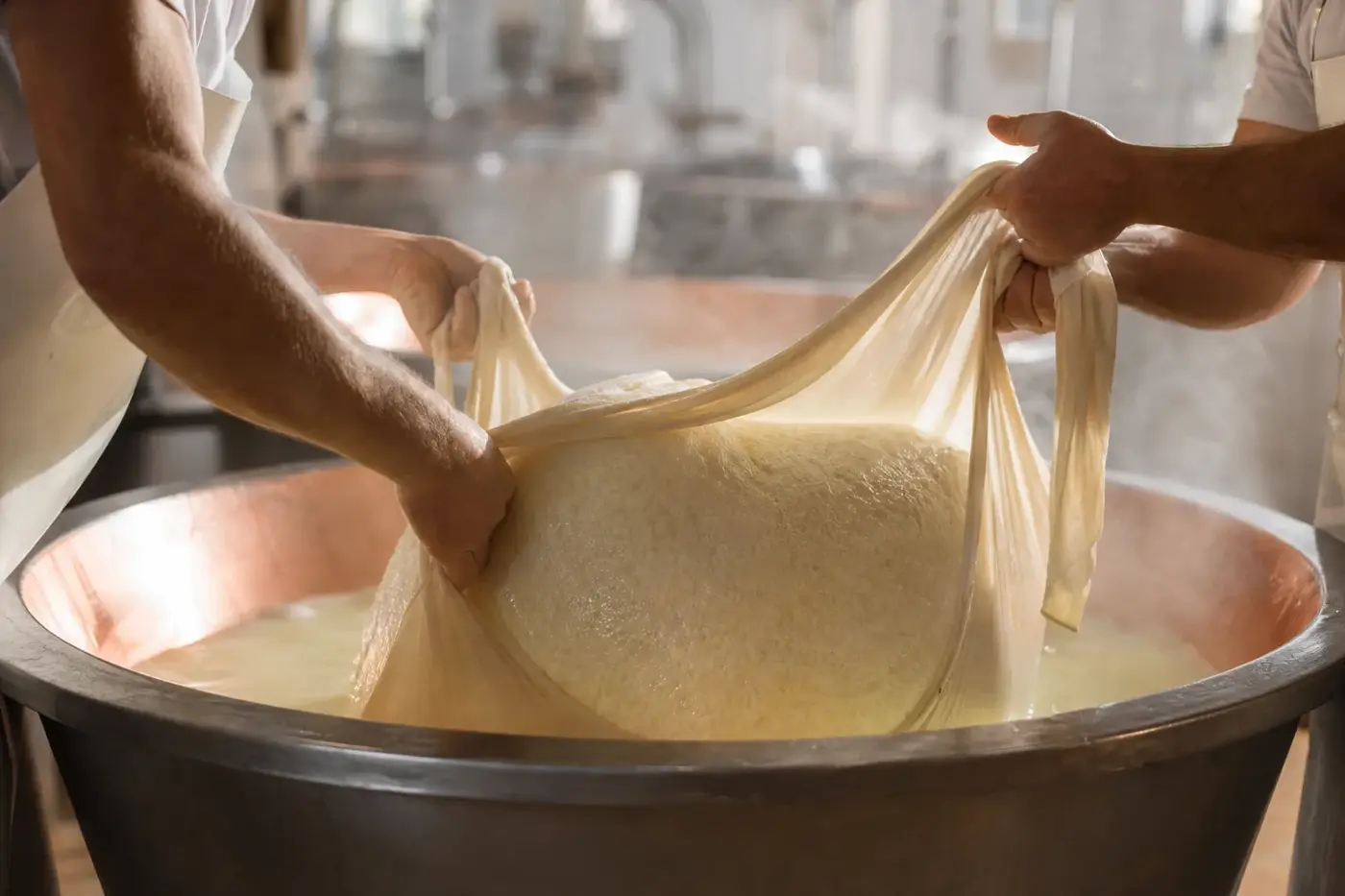
Milk moves through the vats at La Maison du Gruyère in Pringy, Switzerland.