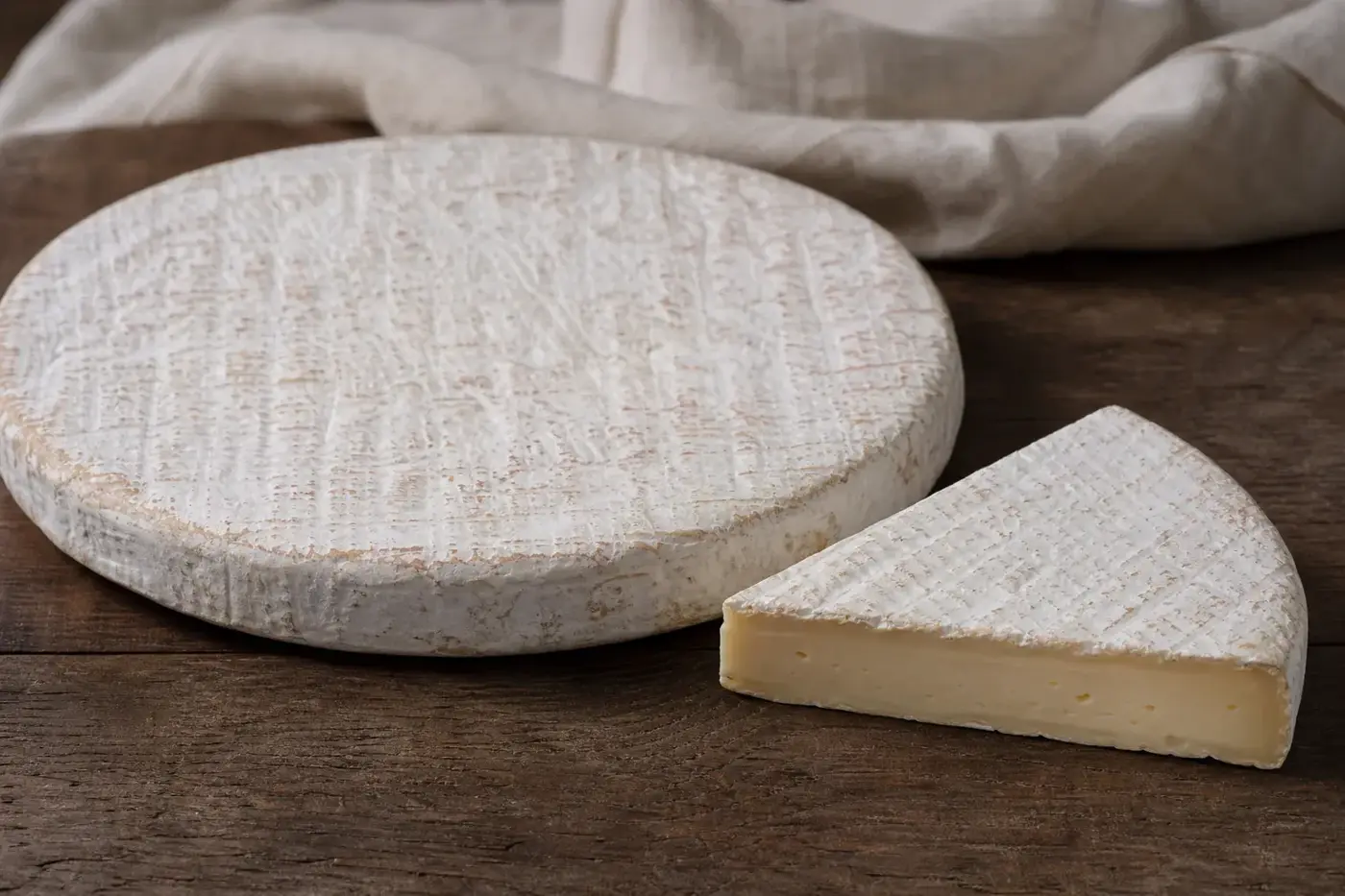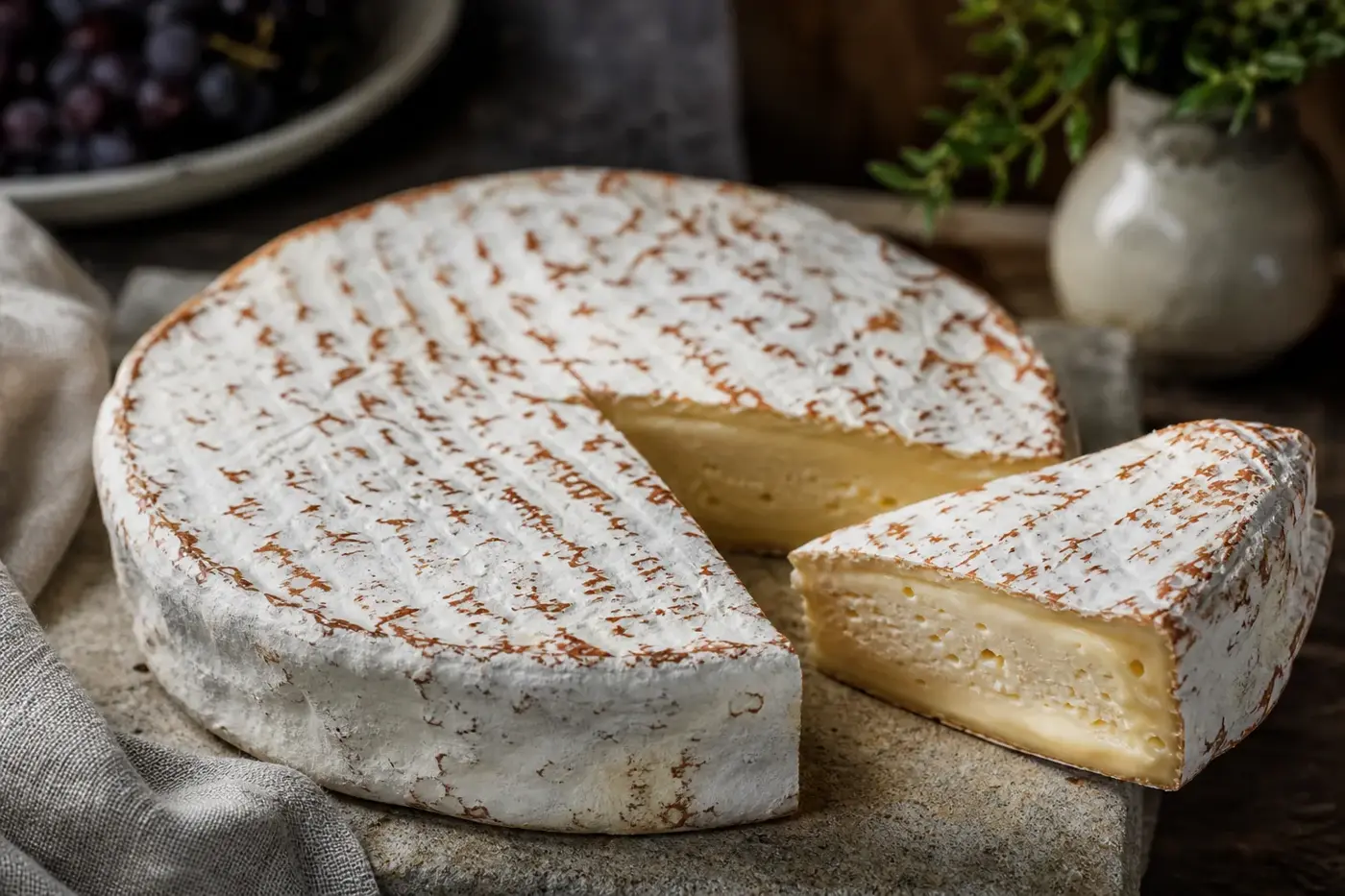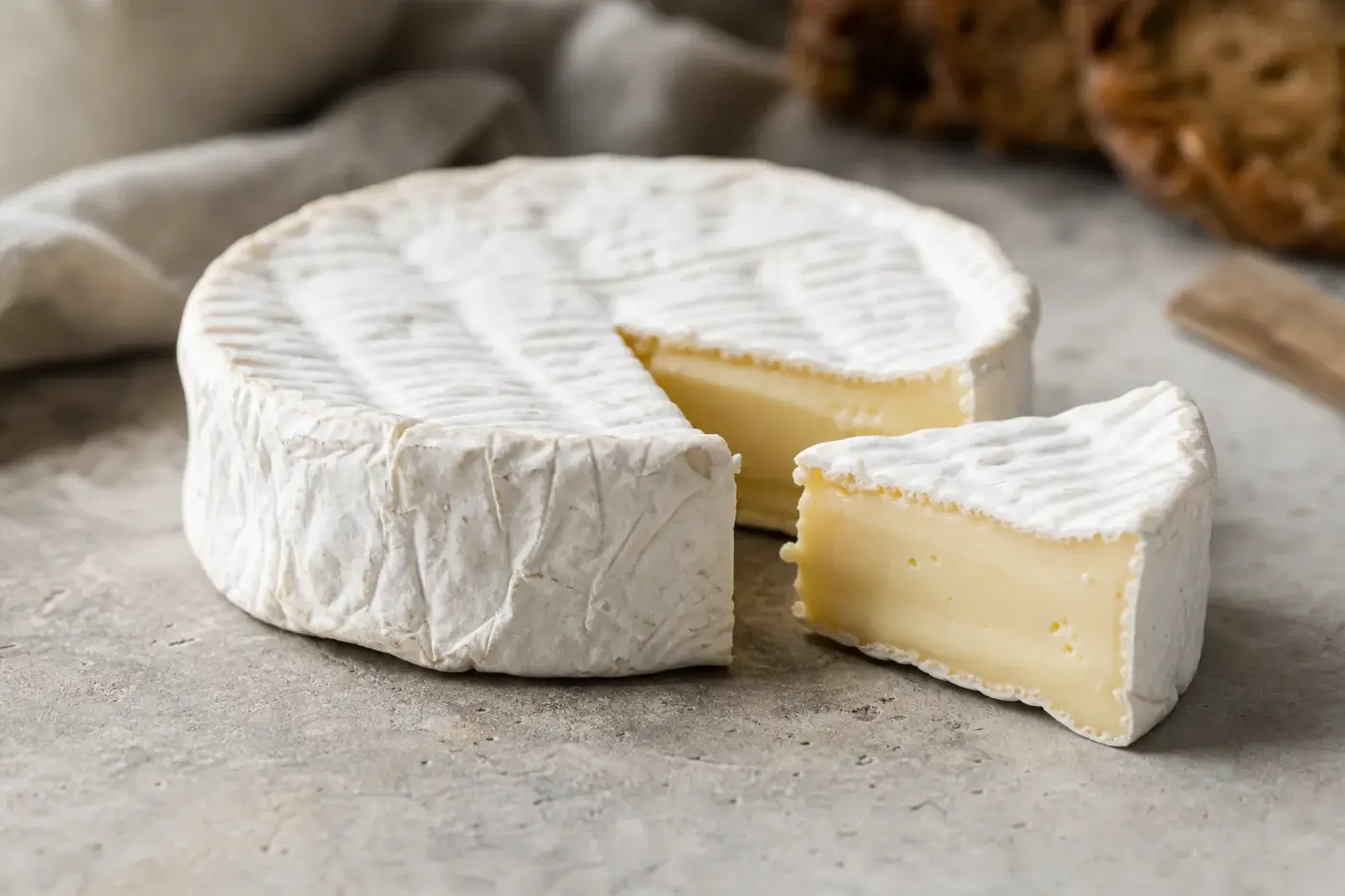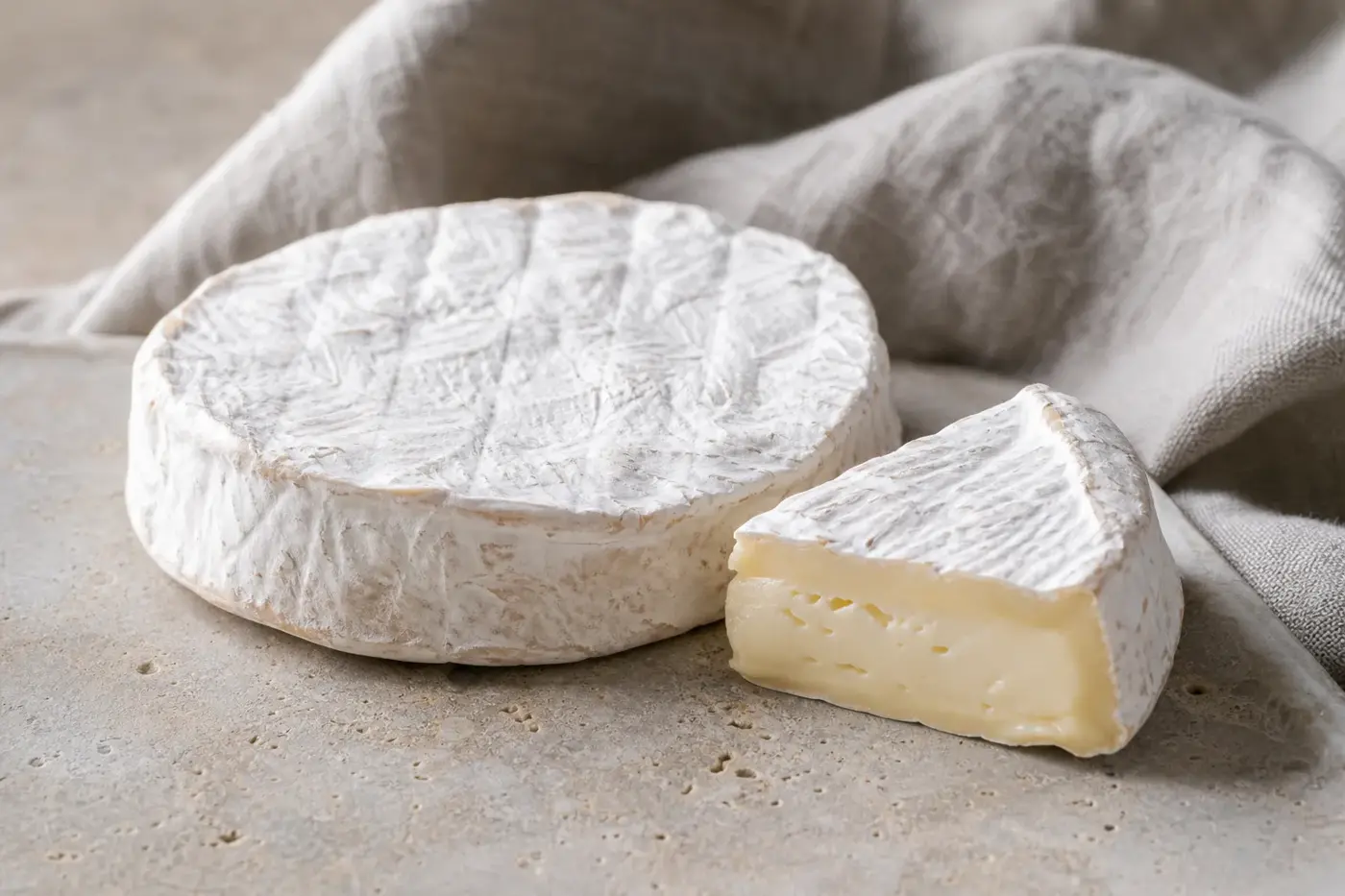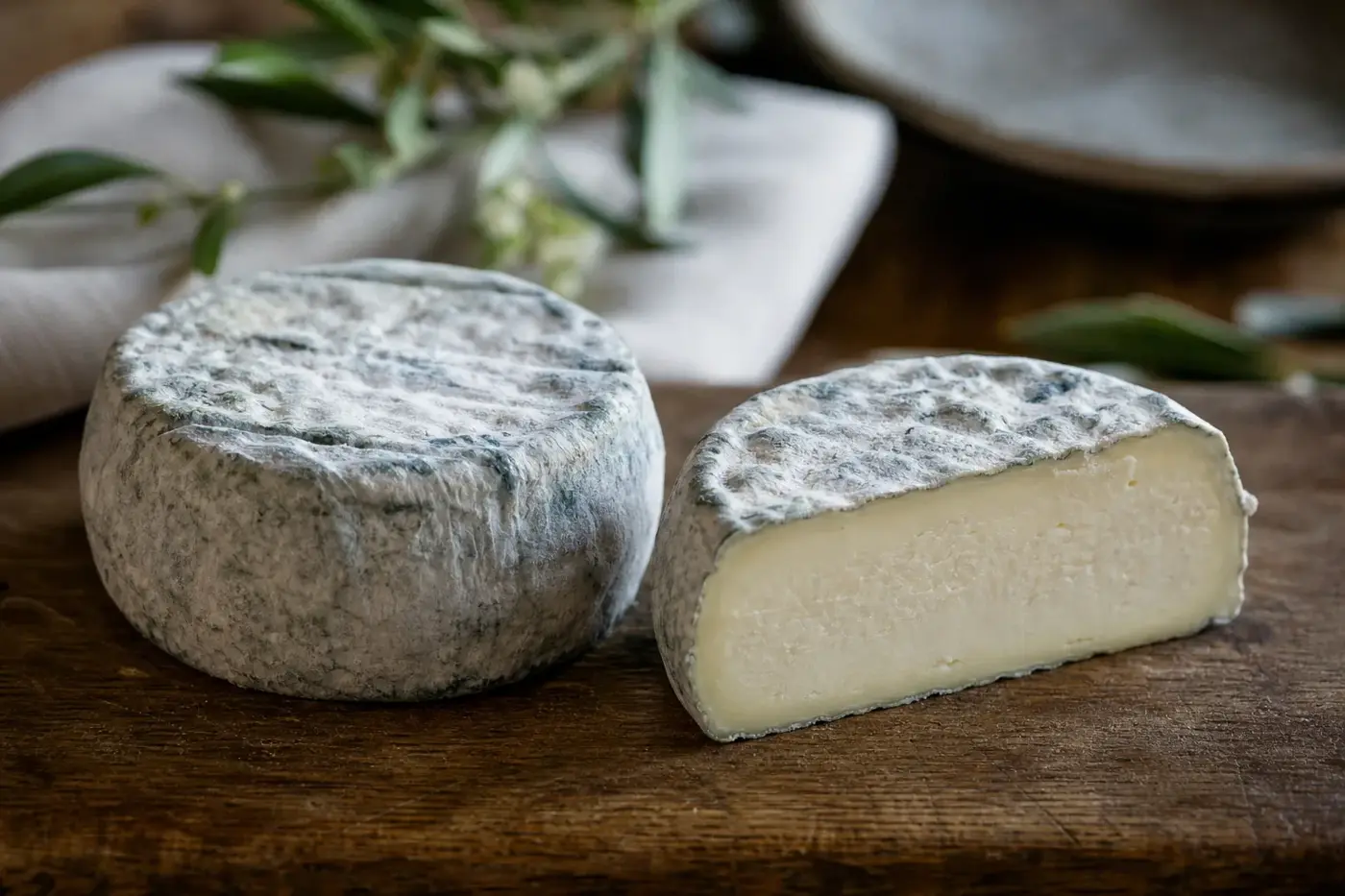
A mouthful of mushrooms and woodland. Then, with a drier cheese, walnut and hazelnut. Follow the producers’ syndicate’s tasting descriptions and a small Crottin de Chavignol takes you on quite a walk.[5]
Meet it young and you get a fresh, gentle goat flavour. Made from raw goat’s milk around Sancerre in France’s Loire Valley, it develops a natural rind that may bloom white or blue as it matures. Quite a range for something that takes up so little plate.[1][5]
| Your quick guide | What to know |
|---|---|
| Familiar name | Crottin de Chavignol.[1] |
| Registered name | Crottin de Chavignol / Chavignol.[2] |
| Authority and identifier | European Commission; register identifier unspecified here. The 2023 amendment record is PDO-FR-0117-AM04.[2] |
| EU designation | PDO; originally registered 21 June 1996.[1][3] |
| Great Britain designation | Registered PDO from 31 December 2020 at 23:00; status as of November 2026.[3] |
| Northern Ireland designation | Unspecified here. |
| Switzerland designation | Unspecified here. |
| United States rights | Unspecified here. |
| Legally defined production area | Specified territory in Cher, Loiret and Nièvre, France.[2][4] |
| Milk | Exclusively raw whole goat’s milk; Alpine goats.[2] |
| Coagulation | Mainly lactic, helped by a small addition of rennet.[2][4] |
| Minimum maturation | 10 days from moulding.[4] |
| Shape and size | Rounded flat cylinder; 60 to 90 g when leaving the business.[2] |
| Rind and centre | Thin natural rind, sometimes white or blue; white or ivory paste.[2][5] |
| Fat requirement | At least 45% fat in dry matter.[2] |
| Pregnancy guidance | Unspecified here. |
Follow the hills to Chavignol
Goats, vineyards and mixed farming have long shared the Sancerrois hills. Among them you find Chavignol, the village that gives the cheese its name, within the commune of Sancerre. You are in historic Berry, in today’s Centre-Val de Loire region.[1][6]
The village is the heart of the story, but the appellation reaches considerably further. Centred on the Pays-Fort Sancerrois, it takes in neighbouring country, including the Champagne berrichonne, Loire slopes and Sologne. Its legal boundary covers specified territory in three departments, not the whole Loire Valley.[2][4]
That distinction is worth remembering when you read a label. Chavignol gives you the village name; the specification sets out the wider territory entitled to make the cheese. Milk production, cheesemaking and maturation must all happen inside that boundary.[2]
At the counter, the full name matters
“Crottin” alone is not the protected name. European registration expressly excluded protection of that word by itself. Look for “Crottin de Chavignol” or “Chavignol”, the designation identifying the geographical origin and production requirements described here.[7]
Small goat cheeses with white rinds can bear a family resemblance. The full name points you towards the particular milk, place and method governed by this appellation. For the broader distinction between a cheese style and a registered designation, see protected names explained.[2][7]
Protection also depends on jurisdiction. French and European official sources identify Chavignol as an AOP, the French abbreviation corresponding to PDO. Great Britain’s own registered entry dates from 31 December 2020; publication on 4 January 2021 was a separate event.[1][3]
Get to know that little rounded drum
Look for a short cylinder with rounded edges and a gently swollen middle. Slightly wider at its centre than at either end, it resembles a small rounded drum rather than a sharply edged disc. Turning the cheese as it drains in its mould helps give it that outline.[2][4]
Beneath any surface growth is a thin, ivory-coloured rind. The product description permits white or blue mould, so an entirely white coat is only one recognised appearance. Inside, the producers’ syndicate describes smooth, firm paste, white or ivory in colour.[2][5]
The specified 60 to 90 g is its weight when it leaves the business. That is a dispatch weight, not a promise that every cheese at the counter will be identical. Take in the shape, then ask about maturation: there is more to this cheese than its portrait.[2]
From raw goat’s milk to Chavignol
The starting point is whole raw goat’s milk. The specification requires milk that has not been homogenised, heat-treated or subjected to an equivalent process. This belongs to the protected method; milk treatments explained explores the broader differences between raw, thermised and pasteurised milk.[4][8]
A little rennet lends a hand
Acidification does most of the work in this mainly lactic-set cheese. It forms the curd, the milk’s solid gel, while a small quantity of rennet helps coagulation. Rennet is the milk-clotting ingredient used in many cheeses; here, its role is a supporting one.[2][4]
Picture each Chavignol taking shape in its own mould. This is not a small piece cut from a large pressed wheel. Milk becomes curd, then comes drainage, individual shaping and maturation, with that moulded format set out in the specification.[4]
Cloth, moulds and the rhythm of farm life
First, the curd drains on cloth, releasing whey, the liquid fraction of milk. It then goes into truncated cone moulds and is turned at least once. Drainage, mould shape and turning help create the rounded outline; salting and maturation follow.[4][8]
Behind that technique is the working day of a mixed farm. The official account explains that preliminary drainage allowed moulding to wait while other responsibilities took priority. A practical arrangement became part of the cheese’s recognised identity, alongside its small size.[2]
The first 10 days are only the beginning
Affinage means controlled cheese maturation. Chavignol must mature for at least 10 days from moulding, with temperature and humidity managed throughout. For repassé cheeses, a further period of confinement follows that minimum.[2][4]
Those 10 days mark the legal starting point, not one ideal finishing line. INAO records demi-sec, bleuté, bleu, sec and repassé forms. Take those words to your cheesemonger and you have the beginnings of a useful conversation about texture and flavour.[1]
Find your favourite stage
“Which stage is this?” is a good opening question at the counter. The syndicate describes several paths, from fresh and yielding to dry, or towards a softer, more assertive repassé. Age matters, but it cannot tell you everything.[5]
| Stage to ask for | What the producers’ syndicate describes | A reason to choose it |
|---|---|---|
| Young or mi-sec | Mild, fresh and yielding, with a discreet goat flavour.[5] | Start here for a gentle introduction. |
| Bleuté | Light white or blue surface growth; developing maturity.[5] | Try it for a more developed rind. |
| Bleu | Mushroom and woodland aromas; supple interior.[5] | Give it a place on your cheese plate. |
| Sec | Walnut and hazelnut aromas.[5] | Ask for a firm cheese to shave or grate.[9] |
| Repassé | Softened through confinement; assertive character.[5] | Choose it for a stronger expression. |
Begin with texture, then follow your nose. Do you fancy gentle and yielding, supple and mushroom-led, dry and nutty, or soft and pronounced? That is a more rewarding approach than trying to find one perfect age for every occasion.[5]
Local producer Chèvrerie des Gallands also presents Chavignol at several stages. It says its cheeses change with the weather and the goats’ feed. Its serving advice gives them different roles: younger cheeses for cooking, blue examples for the cheese board, and dry ones among those suitable for grating.[9]
White rind, blue rind, plenty to discover
White and blue surface growth both have a place in Chavignol’s recognised appearance. The specification describes a thin ivory rind, with or without these moulds, and identifies blue Penicillium on repassé cheeses. Read the colour alongside the intended maturation, rather than treating it as the whole story.[2]
Repassé takes a distinctive route. Confinement after conventional maturation softens the cheese, while its rind may darken, even turning brown. Older does not necessarily mean harder here: the way a cheese matures matters too.[2][5]
Ask your seller to explain the intended rind and maturity of the cheese you are buying. Unexpected changes during storage at home are a separate matter. The guide to mould on cheese helps you distinguish deliberate maturation from a storage problem.
Meet the farm households behind the cheese
Chavignol’s history leads you to farms, rather than a single inventor. INAO describes an economy combining goats, vines and cereal crops. The appellation’s published geographical account also connects local grassland and clay or clay-limestone soils with fodder production.[1][2]
Women are central to the heritage account published by the producers’ syndicate for its anniversary. They tended the goats, made the cheese and sold it. In that account, the small, individually moulded cheese belongs firmly to the work of the household farm.[6]
French appellation recognition came in 1976, followed by European PDO registration in 1996. The 2026 anniversary celebrated 50 years of French recognition. Those dates tell the story of the protected designation; local goat cheesemaking was there before them.[1][3][6]
Shop with a plan, then keep it cool
For a first comparison, ask for a young mi-sec and one more developed cheese. Tell the cheesemonger whether you have bread, a warm dish or a dry cheese in mind. “A good one” is understandable, but it does leave them quite a lot of detective work.[5][9]
At home, follow the product’s refrigeration and date instructions. Food Standards Scotland’s consumer guidance, as of November 2026, advises keeping your domestic fridge between 0 and 5 °C. Use a thermometer, and return food to refrigeration promptly.[10]
Take out only the portion you intend to eat. Let the refrigerator chill soften while you prepare bread or salad, counting that preparation in the food’s total time outside refrigeration. Food Standards Scotland advises that food put out for a party should stay out for no more than four hours.[10]
For longer-term handling questions, turn to how to store cheese at home. Keep the instructions on the pack alongside that advice.
Set out bread, a warm salad or Loire wine
Begin with a piece of cheese on its own, then add bread. Taste the rind and centre separately. If you have two maturations, start with the gentler one so you can appreciate its quieter character before moving to the stronger cheese.[5]
For a warm goat cheese salad, choose a younger Chavignol and follow a suitable published recipe. Chèvrerie des Gallands recommends younger cheeses for cooking, including on bread. A dry example has another useful role: finely grated over a finished dish.[9]
Sancerre blanc is the producers’ syndicate’s local wine recommendation. It also suggests Menetou-Salon, Pouilly-Fumé, Quincy and Reuilly.[5] If you are an adult of legal drinking age and choose wine, you can use a small serving.
The NHS advises people who are pregnant not to drink alcohol. People who are driving, taking medicines that interact with alcohol or recovering from alcohol dependence should not drink either. Consult the NHS or equivalent guidance for your country.
Still or sparkling water gives you an alcohol-free accompaniment. Keep the first mouthful simple, then decide whether bread, salad or wine belongs beside it. The most revealing comparison is still the cheese itself: Chavignol, tasted at two different stages of maturation.
General information only, not medical advice: follow the official guidance where you live.
Questions people ask
Where is Crottin de Chavignol made?
It is made in a defined area of Cher, Loiret and Nièvre in France. Milk production, cheesemaking and maturation must all take place within that area.
What milk is used to make Crottin de Chavignol?
It is made exclusively from raw whole milk from Alpine goats. The milk must not be homogenised, heat treated or subjected to an equivalent process.
What does Crottin de Chavignol taste like?
Young cheese is mild and fresh, with a gentle goat flavour. Bleu has mushroom and woodland aromas, while sec has walnut and hazelnut notes.
How long is Crottin de Chavignol matured?
It must mature for at least 10 days from moulding. Repassé cheeses then undergo a further period of confinement.
How should Crottin de Chavignol be stored?
Follow the refrigeration and date instructions on the product. Food Standards Scotland advises keeping a domestic fridge between 0 and 5 °C, checking it with a thermometer and returning food to refrigeration promptly.
Sources
- Institut national de l’origine et de la qualité, Chavignol, current official product page, retrieved November 2026. Official product record.
- European Commission, Publication of an approved standard amendment to a product specification: Crottin de Chavignol/Chavignol, 2023/C 174/13, including the single document, 16 May 2023. Official Journal document.
- Department for Environment, Food & Rural Affairs, Crottin de Chavignol / chavignol, GB protected food name register entry, published 4 January 2021, retrieved November 2026. GB register entry.
- French Ministry of Agriculture, Cahier des charges de l’appellation d’origine « Crottin de Chavignol » ou « Chavignol », Bulletin officiel No. 14, 31 March 2022. Official specification.
- Syndicat du Crottin de Chavignol, Le goût du terroir, undated producer-body descriptions of maturation and wine accompaniments, retrieved November 2026. Published tasting descriptions.
- Syndicat du Crottin de Chavignol and Destination Grand Sancerrois, Le Crottin de Chavignol célèbre en 2026 un demi-siècle d’excellence et de terroir, press dossier dated 15 December 2025. Anniversary dossier.
- European Commission, Commission Regulation (EC) No 1107/96, Annex, France, cheese entry and footnote 2; consolidated version dated 20 November 2008, consulted for the original registration wording. Registration text.
- INAO, Cahier des charges de l’appellation d’origine « Crottin de Chavignol » ou « Chavignol », version dated 13 May 2013, consulted only for production provisions corroborated by the later official documents. Earlier specification.
- Chèvrerie des Gallands, La fabrication des crottins de Chavignol, tout un art!, undated producer account, retrieved November 2026. The source sells its own cheeses; its observations and serving suggestions are attributed accordingly. Producer account.
- Food Standards Scotland, Chilling, current consumer guidance, retrieved November 2026. Official storage and display guidance.
This desk-researched article compares official appellation documents with attributed producer descriptions and Scottish consumer food-storage guidance.
Last checked: November 2026
Last checked November 2026.
The editors suggest you read next