Brie de Meaux
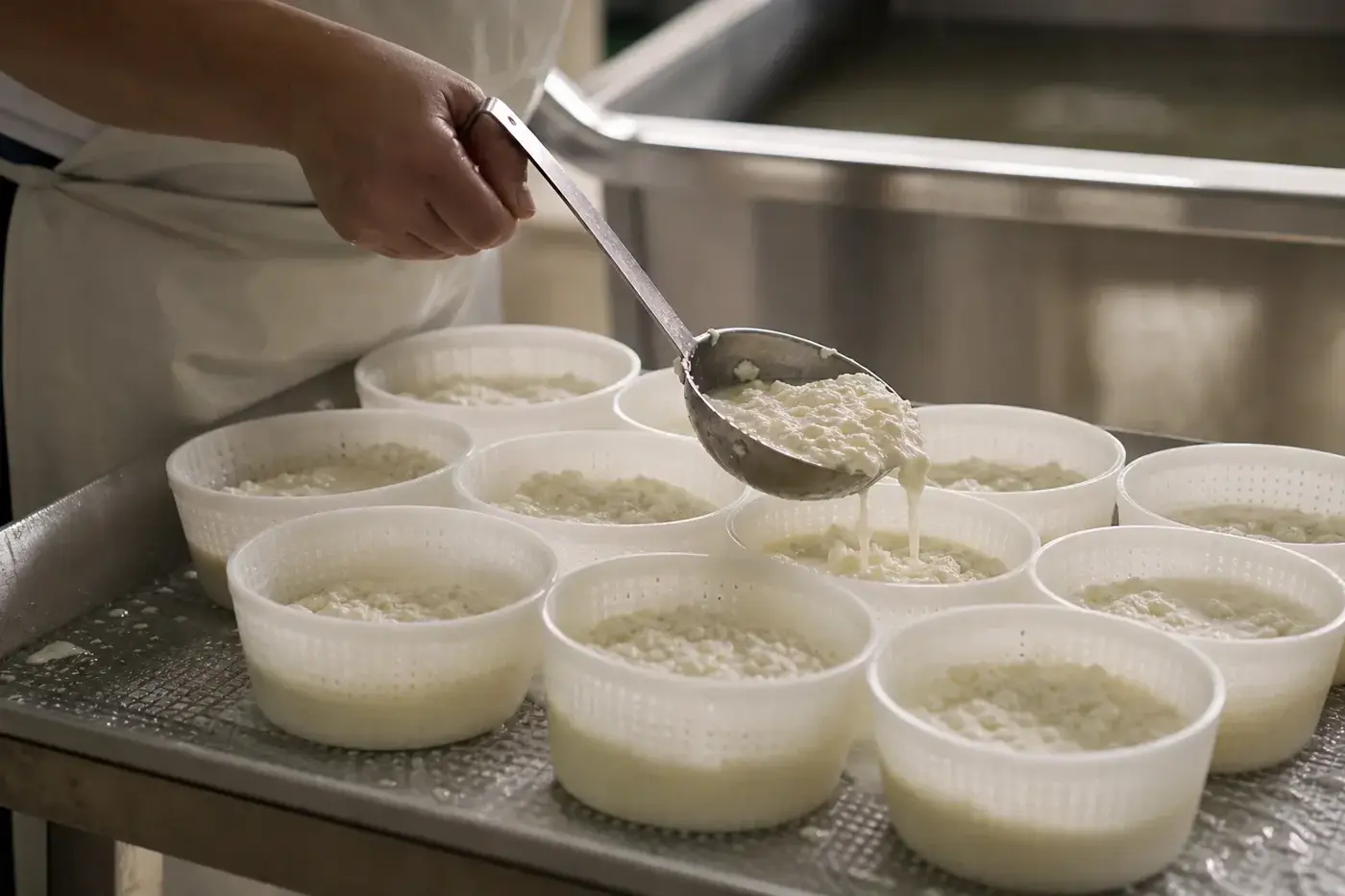
A broad, perforated pelle à brie rises with another scoop of curd.
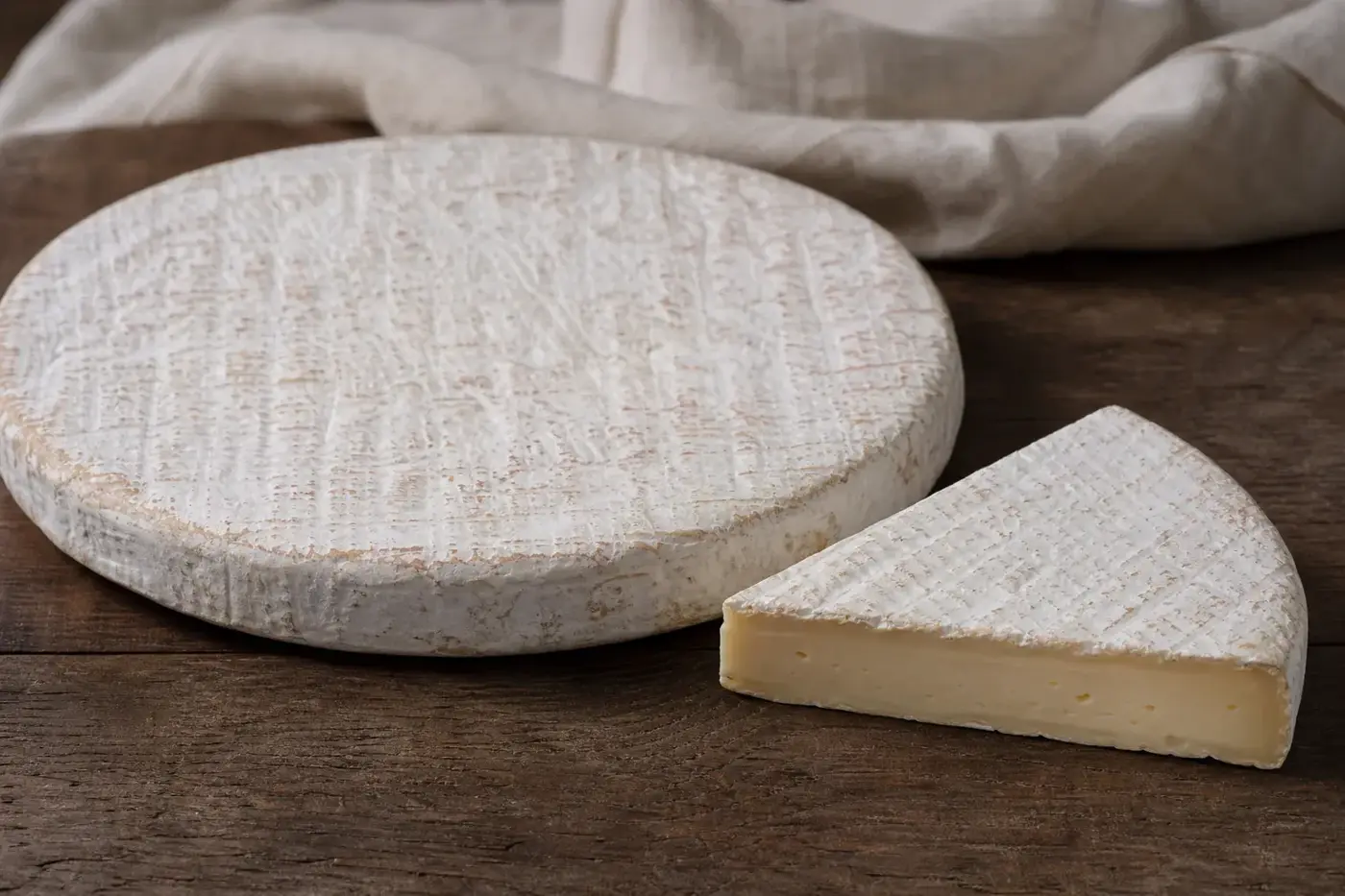
A broad, perforated pelle à brie rises with another scoop of curd. Into the mould it goes, by hand, one thin layer after another. Every Brie de Meaux begins with this patient handling of raw cow’s milk curd. Ripening turns it into a large, flat French soft cheese, with a delicate white rind and a supple centre that sometimes flows a little when mature. [1][2]
| What you might want to know | The detail |
|---|---|
| Name to look for | Brie de Meaux. [2][3] |
| French recognition | Appellation d’origine recognised in 1980. [1] |
| EU protection | Current EU register status unconfirmed. |
| Great Britain protection | Registered PDO; UK scheme registration dated 31 December 2020 at 23:00. November 2026 position. [3] |
| Production rules | French agriculture ministry specification published with BO AGRI 2020-30; temporary feeding amendment applies during 2026 and 2027. [2][4] |
| Milk and coagulant | Raw cow’s milk; bovine rennet. [1][2] |
| Shape and size | Flat cylinder; mould internal diameter 36 to 37 cm; cheese weight 2.6 to 3.3 kg. [1][2] |
| Minimum ripening time | Four weeks from the day rennet is added. [2] |
| Usual ripening time | Four to eight weeks, according to the producers’ interprofessional body. [5] |
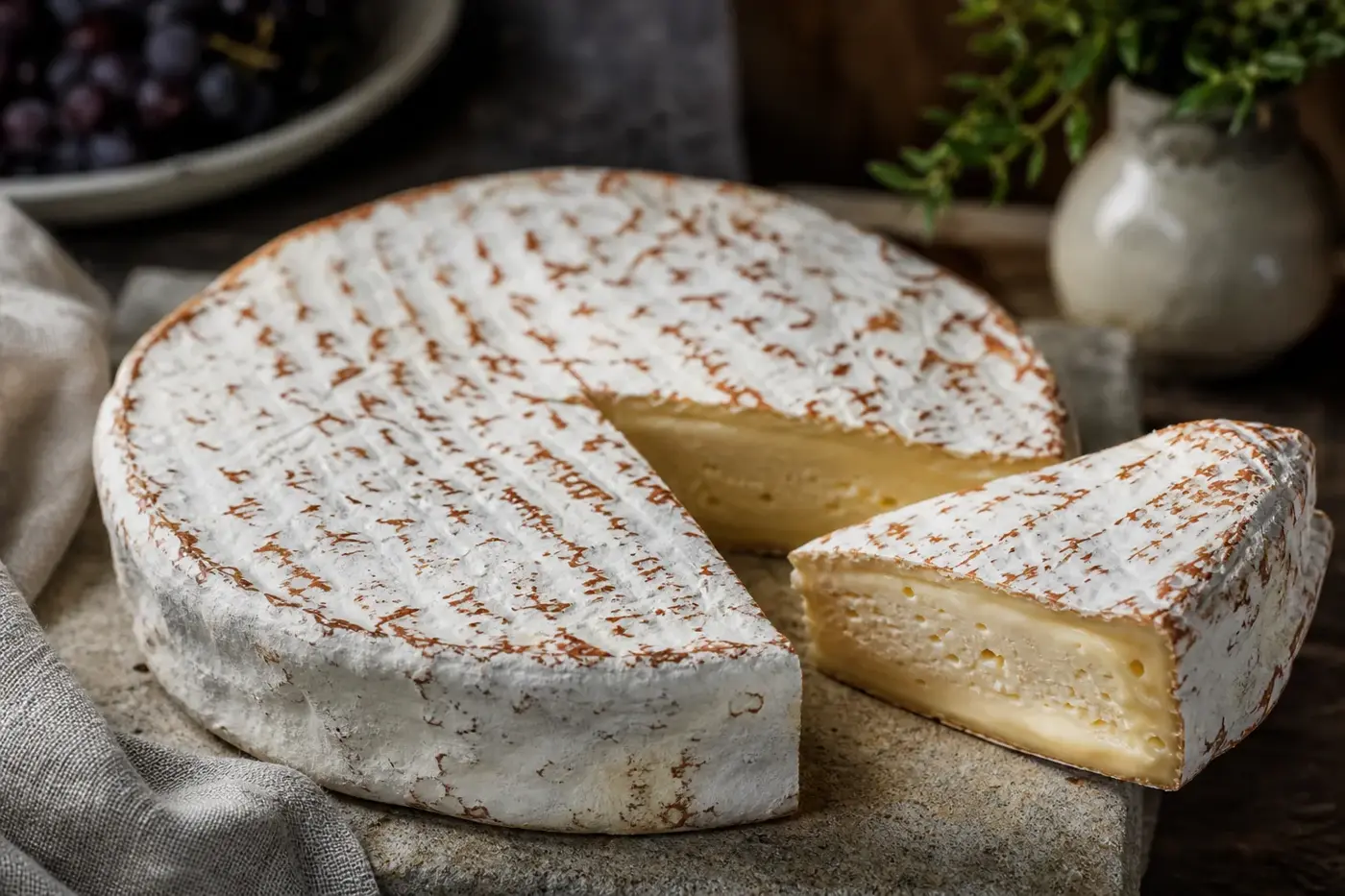
| Rind and centre | Thin white bloomy rind, sometimes with reddish streaks or spots; supple paste when ripe. [1][5] |
| Allergen | Contains milk. [1] |
| Pregnancy guidance | UK NHS and US CDC advice, November 2026, appears below. [7][9] |
Follow Brie de Meaux beyond its namesake
Meaux lends the cheese its name, but you need a much wider map to find its home. INAO, France’s official institute responsible for origin and quality schemes, describes a production area stretching from Seine-et-Marne, north-east of Paris, towards the Meuse. [1]
Milk production and cheesemaking take place in Seine-et-Marne and authorised parts of neighbouring departments farther east. Certain historically established locations around Paris also have permission to mature the cheese. If you want the precise boundaries, the specification lists the communes. [1][2]
At the cheese counter, there is another small journey to unravel: the maker and the affineur may be different people. An affineur is the person or business responsible for maturing cheese. The name on your wedge may belong to the specialist who brought it to ripeness, rather than the dairy that made it.
Ask, “Where was this made?” Then, “Who matured it?” When you find a wheel you love, note both names. A wrapper colour is a rather unreliable address book for your next purchase.
Take a closer look at that generous wheel
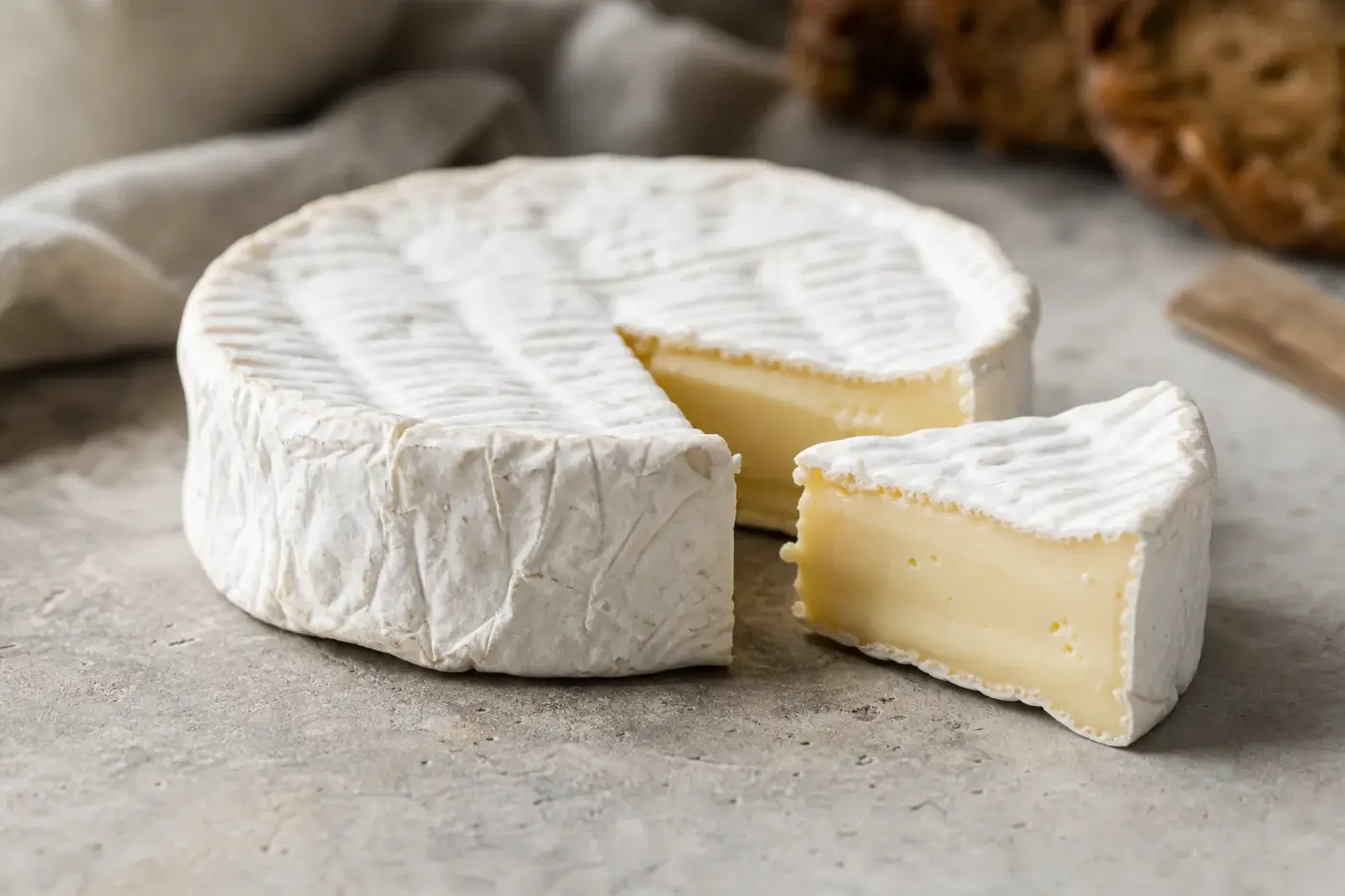
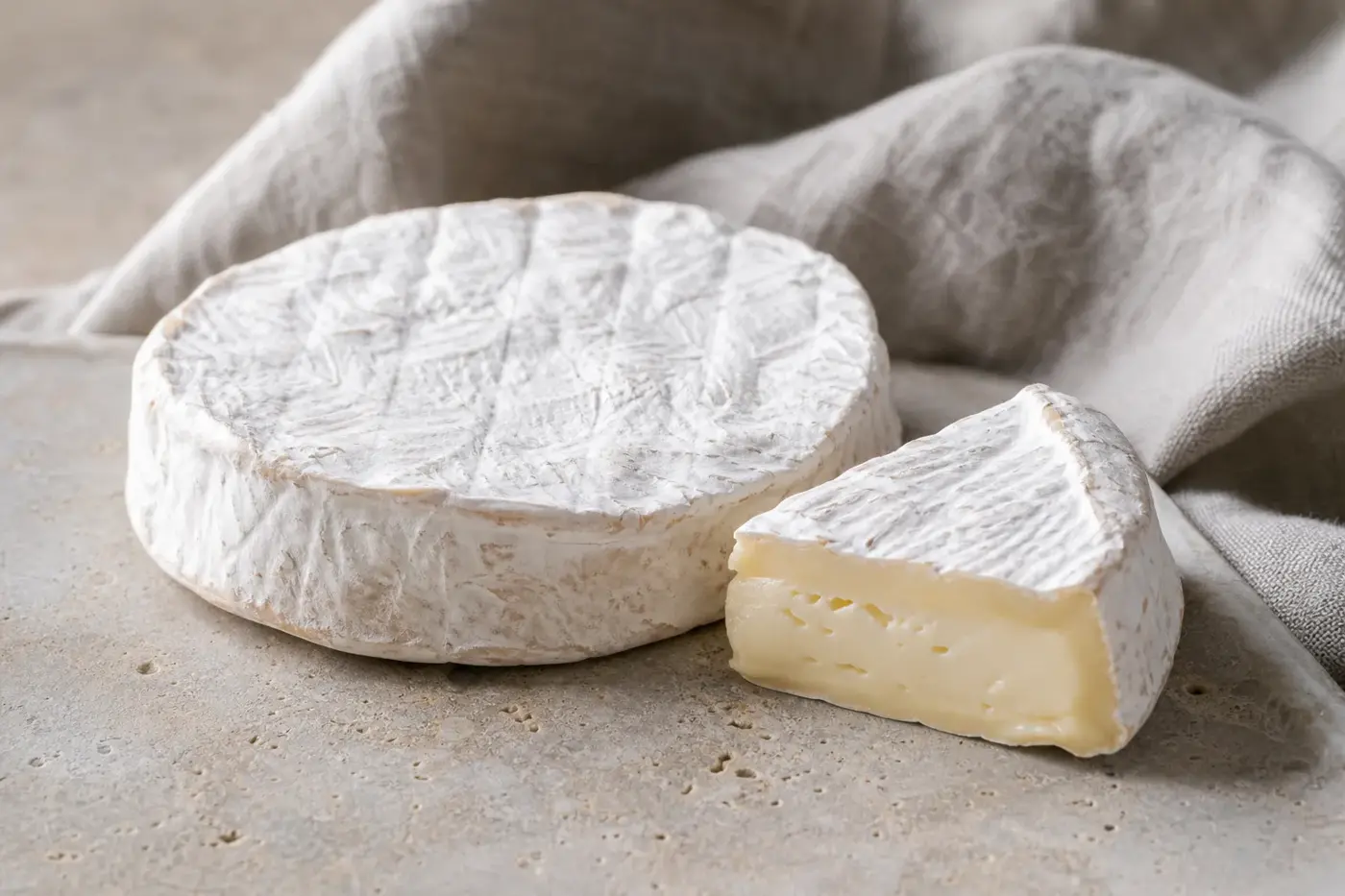
Cream, butter, hazelnut, sometimes woodland undergrowth: INAO’s aromas for ripe Brie de Meaux give your nose plenty to explore. Beneath the rind of that broad, shallow wheel, the paste is supple to slightly flowing. You will usually buy a triangular portion cut from the centre towards the outside edge. [1]
The producers’ interprofessional body describes a lustrous, supple interior under a thin white rind, occasionally marked by reddish streaks or spots. Those touches of colour are part of the cheese’s documented appearance. You need not make brilliant white from edge to edge your shopping goal. [5]
Look across the whole cut face, rather than judging it by the softest corner. Ask your cheesemonger what the texture tells you and whether it suits your meal. “Supple enough to spread on bread” is a more useful brief than “the strongest piece, please”.
Meet the scoop behind every Brie de Meaux
The pelle à brie earns its place beside the moulds: it is the only permitted moulding tool for Brie de Meaux. Its broad, perforated head allows whey to escape as the cheesemaker transfers curd by hand. Each thin layer is laid over the last. [2]
Before that work begins, bovine rennet coagulates the milk in less than two hours. Rennet is the milk-coagulating preparation; curd is the soft solid that separates from liquid whey. In the mould, the curd drains spontaneously, with at least two turns before unmoulding. Salting uses dry salt only. [2]
Next comes surface inoculation with Penicillium, followed by attentive maturation, according to the producers’ interprofessional body. This surface mould creates the bloom that gives the rind its name. The body represents participants in the cheese’s production chain, so you are hearing the producer’s account of the work. [5]
Handmade does not mean left to its own devices. From filling the moulds to turning and tending the developing wheels, cheesemakers guide the transformation. Draining and ripening take time, but deliberate handling helps shape what reaches your plate.
To follow the wider journey from milk to finished cheese, explore how cheese is made.
Choose your own moment of ripeness
Four weeks is the legal minimum maturation, not a deadline for your ideal wedge. The specification describes younger Brie de Meaux as milky, potentially slightly salty, with a little bitterness. As maturation progresses, its texture softens. [2]
Longer ripening brings increasing flavour, according to the interprofessional body. INAO describes hazelnut and occasional woodland notes alongside the dairy aromas of fully ripe cheese. You can follow that progression from a milder, milk-led character to something fuller and more savoury. [1][5]
For your first taste, ask for a piece that is supple through the centre. It lets you experience developed flavour and texture together. If you prefer a firmer bite, choose an earlier stage. Ripeness is not a competitive sport.
Tell the monger when you plan to serve it, too. “For lunch today” and “for guests later in the week” call for different conversations. Ask what this particular wedge is like now, how to store it, and which date or opening instructions apply.
Meaux or Melun? Let the full name guide you
“Brie” opens the conversation; “Brie de Meaux” tells you which cheese you mean. Ask for the complete registered name and look at the original packaging or counter information. It identifies a specified combination of origin and production requirements. [2][3]
Brie is a broader cheese style, rather than another name for Brie de Meaux. You can get to know the family in the guide to Brie. Brie de Melun has its own specification, and the rhythm of its production is distinctly different. [6]
| What sets them apart | Brie de Meaux | Brie de Melun |
|---|---|---|
| Milk | Raw cow’s milk. [1] | Raw cow’s milk. [6] |
| Mould internal diameter | 36 to 37 cm. [2] | 27 to 28 cm. [6] |
| Time for coagulation | Less than two hours. [2] | At least 16 hours. [6] |
| Hand moulding tool | Pelle à brie. [2] | Ladle, or louche. [6] |
| Minimum ripening time | Four weeks from renneting. [2] | Five weeks from renneting. [6] |
Melun’s specification describes a predominantly lactic character: acid development plays a particularly important role in forming its curd. At an earlier eating stage, it records milky, yeasty and slightly acidic flavours. With maturation, that flavour becomes more persistent. [6]
The smaller wheel, then, is not simply Meaux in miniature. Keep those differences in method and maturation in mind as you choose. Your preference for texture and flavour is the useful guide here.
Read the label, then ask about tonight
In France, the specification requires the label to carry both the name Brie de Meaux and the EU AOP symbol. If the commercial brand differs from the manufacturer or affineur, identifying information about the manufacturer or affineur must appear too. [2]
If you are buying a freshly cut wedge, ask to see the wheel’s label. Note the exact cheese name, then ask who made or matured it. Finish with the question that brings the conversation back to supper: “Would you choose this piece for eating tonight?”
Origin and eating condition answer different questions. The protected name helps establish which cheese you are buying. A conversation about the particular wheel helps you find the texture you enjoy, whether that means a firmer bite or a more supple centre.
For the wider information you might encounter, turn to reading a cheese label.
Give your first wedge room to shine
Start simply: cheese, plain bread and one fresh accompaniment. Baguette or a lightly flavoured country loaf keeps the first serving restrained; sliced pear, apple or a few grapes provide contrast. Before you assemble a mouthful, taste the cheese on its own.
Alongside it, you could try alcohol free cider, sparkling water or gently brewed black tea. Keep the accompaniments separate. That way, you and anyone sharing can find your own balance.
Strong chutney, heavily flavoured crackers and several sweet preserves can leave the cheese struggling to get a word in. Save those experiments for later. For this first taste, give yourself a chance to enjoy what you came for.
If you let a portion lose its refrigerator chill before serving, keep its time on display brief. US FDA guidance limits food requiring refrigeration to two hours at room temperature, or one hour above 32 °C (90 °F). Bring out a small portion, not your entire purchase. [10]
Care for your wedge, and know when to discard it
Keep Brie de Meaux refrigerated and follow the packaging or cheesemonger’s storage instructions, including any for after cutting or opening. FSA guidance for England, Wales and Northern Ireland recommends a home refrigerator between 0 and 5 °C. US FDA guidance recommends 4 °C (40 °F) or below. [10][11]
Cover the cheese, protecting its cut surface with suitable food packaging or a covered container. Choose a portion that fits your plans rather than relying on a general number of days after purchase. Your piece’s label and handling history matter. [10][11]
The documented white bloom and occasional reddish markings belong to the cheese’s appearance; a suspicious change is different. If it looks or smells wrong, discard it rather than trying to rescue it by trimming or cooking. FDA also warns that food carrying harmful bacteria can look, smell and taste normal. [5][10]
An ordinary-looking rind cannot replace proper refrigeration, date instructions or a recall notice. Follow any applicable recall instructions for the exact product and batch. For broader practical advice, see storing cheese at home.
This page summarises published guidance from the official sources it cites. It is not medical advice. Guidance differs between countries and changes over time, so check the current source for where you live, and ask your doctor, midwife, pharmacist or dietitian about your own circumstances.
Serving someone at higher risk? Start here
Brie de Meaux is both a raw milk cheese and a soft, mould-ripened cheese. Before you serve it to someone at higher risk, consult the relevant official advice.
United Kingdom, NHS, November 2026: during pregnancy, mould-ripened soft cheeses such as Brie must be thoroughly cooked until steaming hot, whether made from pasteurised or unpasteurised milk. Letting a wedge warm to serving temperature does not meet that advice. [7]
The NHS identifies pregnant people, newborn babies, people with weakened immunity and older people as groups at increased risk of serious listeriosis. Its general page does not give every group an identical cheese restriction. Use the relevant advice and ask the person’s clinician about individual circumstances. [8]
United States, CDC, November 2026: pregnant people, adults aged 65 or older and people with weakened immune systems should avoid unheated cheese made from raw milk. CDC lists heating these cheeses to 74 °C (165 °F), or until steaming hot, as an alternative. It also recommends that everyone choose pasteurised milk and dairy products. [9][12]
Use the linked official guidance for where you live. Ask your doctor, midwife, pharmacist or dietitian about your own circumstances.
Questions people ask
What is Brie de Meaux and where is it made?
Brie de Meaux is a large, flat French soft cheese with a thin white rind and a supple interior. Its production area stretches from Seine et Marne, north east of Paris, towards the Meuse.
Is Brie de Meaux vegetarian?
Brie de Meaux is made with bovine rennet. It is made from raw cow’s milk and contains milk.
How is Brie de Meaux different from Brie de Melun?
Brie de Meaux has a larger mould and its milk coagulates in less than two hours, while Brie de Melun takes at least 16 hours. Meaux is matured for at least four weeks and Melun for at least five weeks.
Can you eat Brie de Meaux during pregnancy?
The NHS advises that during pregnancy, soft cheeses such as Brie must be thoroughly cooked until steaming hot, whether made from pasteurised or unpasteurised milk. See the NHS pregnancy guidance for current advice.
How should Brie de Meaux be stored?
Keep it refrigerated and follow the packaging or cheesemonger’s storage instructions, including any instructions after cutting or opening. The Food Standards Agency recommends a home refrigerator temperature between 0 and 5 °C in England, Wales and Northern Ireland.
Sources
- Institut national de l’origine et de la qualité, Brie de Meaux, current product page, accessed November 2026. Official description, territory, sensory account and French recognition history. Official product page.
- French Ministry of Agriculture, Cahier des charges de l’appellation d’origine « Brie de Meaux », specification associated with BO AGRI 2020-30, retrieved through INAO’s notice published in October 2020. Sections 2, 3, 5.2 and 8. Official specification and notice.
- Department for Environment, Food & Rural Affairs, Brie de Meaux, GB protected food names register entry, published 2021, accessed November 2026. Official register entry.
- French Republic, Arrêté du 11 septembre 2026 relatif à la modification temporaire du cahier des charges de l’appellation d’origine protégée (AOP) « Brie de Meaux », published 18 September 2026, Article 1. Temporary feeding provisions apply from 1 October 2026 to 30 September 2027. Official legal text.
- Union interprofessionnelle de défense, de gestion et de contrôle du Brie de Meaux et du Brie de Melun, Fabrication du Brie de Meaux et de Melun, undated, accessed November 2026. Producer-side account of manufacture, appearance and typical maturation. Interprofessional body’s account.
- French Ministry of Agriculture, Cahier des charges de l’appellation d’origine « Brie de Melun », BO AGRI 2020-32, 2020. Sections 2 and 5.2. Official specification and notice.
- NHS, Foods to avoid in pregnancy, current online guidance, accessed November 2026, “Cheese, milk and other dairy”. Official pregnancy guidance.
- NHS, Listeriosis, reviewed 10 November 2023, accessed November 2026, “Risks of listeriosis” and prevention advice. Official listeriosis guidance.
- Centers for Disease Control and Prevention, Preventing Listeria Infection, current online guidance, accessed November 2026. Higher-risk groups and food-choice table. Official prevention guidance.
- US Food and Drug Administration, Are You Storing Food Safely?, current online guidance, accessed November 2026, “Storage Basics” and “Refrigeration Tips”. Official storage guidance.
- Food Standards Agency, How to chill, freeze and defrost food safely, published 18 December 2017, current page accessed November 2026. Applies to England, Northern Ireland and Wales. Official chilling guidance.
- Centers for Disease Control and Prevention, How Listeria Spread: Soft Cheeses and Raw Milk, current online guidance, accessed November 2026. Official dairy guidance.
Researched from official French specifications and legal texts, Defra’s register, published interprofessional descriptions and national food safety guidance; serving and pairing suggestions are identified as editorial recommendations.
Last checked: November 2026
Last checked November 2026.
The editors suggest you read next
Brie de Melun
Your knife passes through a white rind streaked red or brown, into a centre slowly giving up its firmness.