Brie de Melun
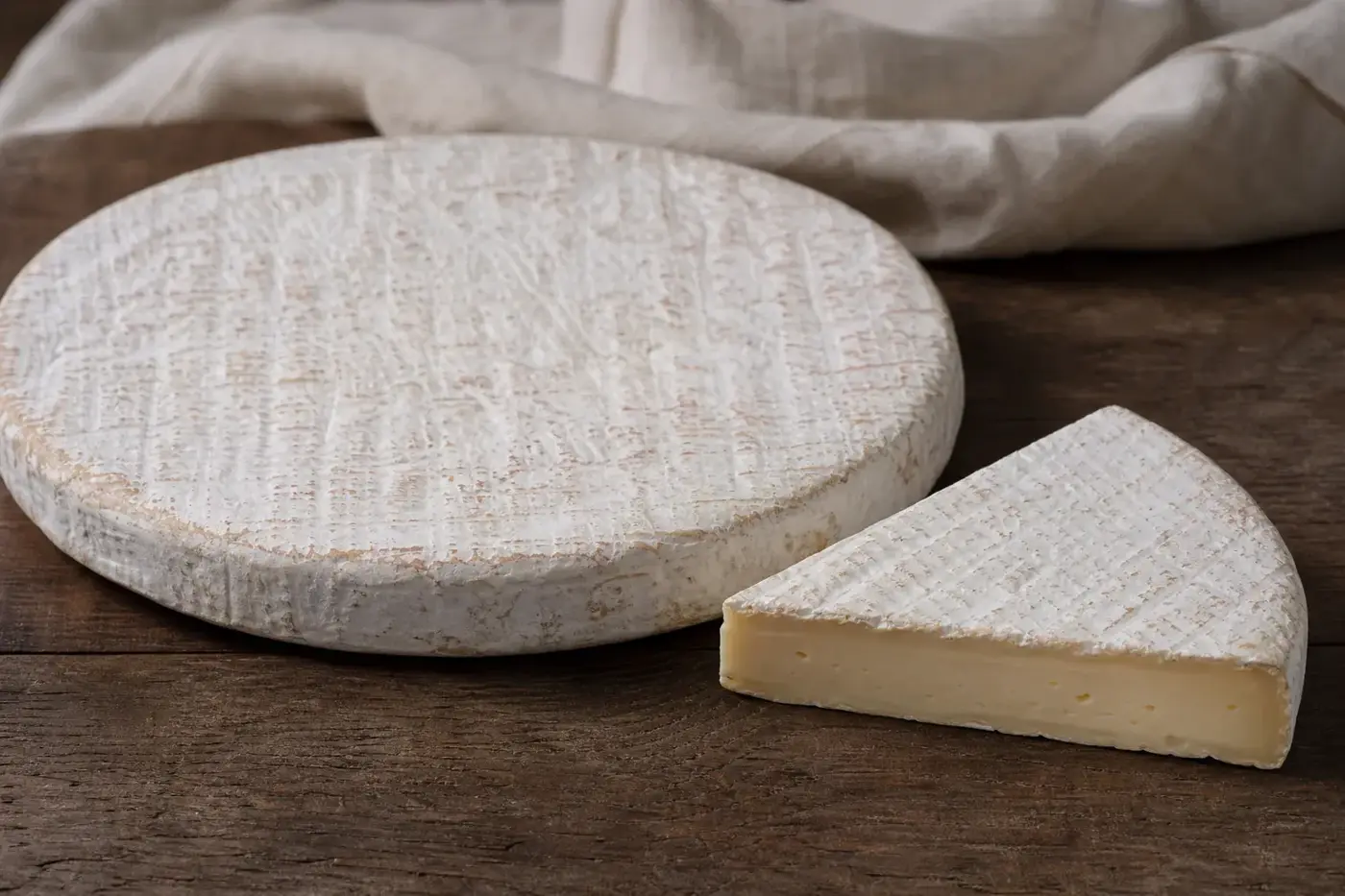
Your knife passes through a white rind streaked red or brown, into a centre slowly giving up its firmness.
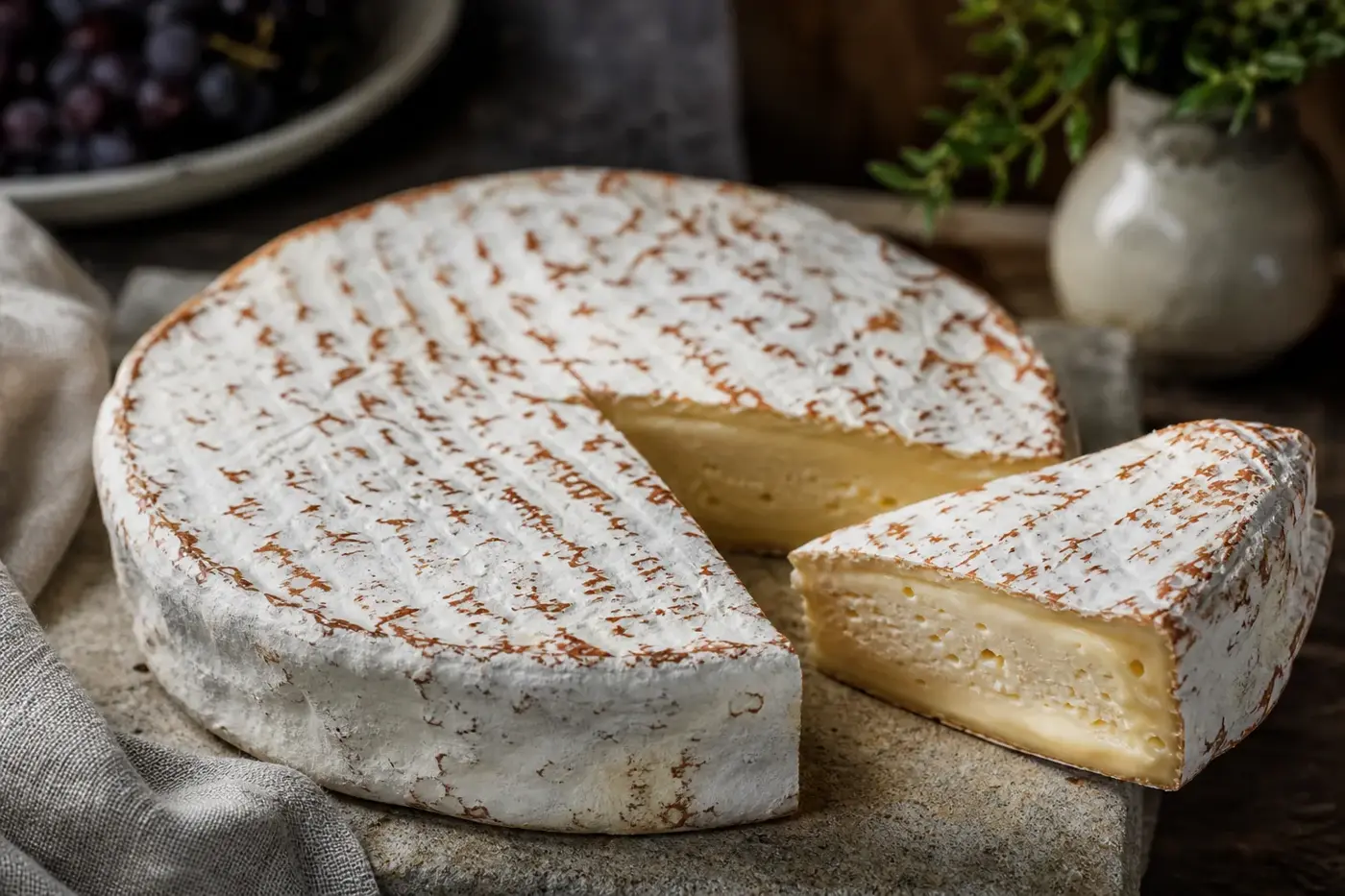
Your knife passes through a white rind streaked red or brown, into a centre slowly giving up its firmness. Brie de Melun takes hours to set, not minutes. That patient, predominantly lactic beginning gives this small Brie a pronounced character, with milk and yeast yielding to persistent, earthy savouriness. Its roots are around Melun in the Brie region, where texture and method are part of its protected identity. [1][2][3]
| Brie de Melun at a glance | What you need to know |
|---|---|
| Name to look for | Brie de Melun. [4] |
| EU designation | Protected designation of origin, PDO; original registration dated 21 June 1996. EU amendment dossier: PDO-FR-00111-AM01. [2][4] |
| Great Britain designation | Registered PDO; UK scheme registration dated 31 December 2020 at 23:00. Status as at November 2026. [4] |
| Where it must be made | Seine-et-Marne and specified neighbouring territory in Aube and Yonne; milk production, cheesemaking and maturation all take place within this area. [1] |
| Milk and coagulant | Raw cow’s milk; bovine rennet. [1] |
| Shape and size | Flat cylinder; mould internal diameter 27 to 28 cm; cheese weight 1.5 to 2.2 kg. [1] |
| Minimum maturation | Five weeks from renneting under the specification published in 2020. [1] |
| Maturity described by INAO | Five weeks for younger character; eight to ten weeks for maturation through the centre. [3] |
| UK pregnancy guidance | NHS guidance says soft cheeses with a white rind, such as Brie, can be eaten in pregnancy if cooked until steaming hot all the way through. Guidance as at November 2026. [7] |
Meet Melun at the vat
To understand Melun, start at the vat rather than the cheeseboard. The EU amendment document describes it as predominantly lactic, linking that character directly to its texture and aromas. Rennet plays its part, but the slow development of acidity is central to what you eventually taste. [2]
There are two patient stages to follow: coagulation and drainage. Curd is the coagulated solid portion of milk; whey is the liquid that drains away. Keep those jobs separate and the timings become clearer, because different hour counts can refer to different stages. [1][2]
The wider Brie family includes cheeses with different origins and methods. Brie de Melun has its own protected name, geographical boundary and production specification. At the counter, look for the full name: those extra words earn their place.
The countryside behind your wedge
Brie de Melun’s recognition came in stages. INAO dates its French appellation recognition to 1980, followed by EU registration in 1996. The Great Britain register records entry into the UK scheme at the end of 2020: separate milestones, rather than competing birthdays. [3][4]
Its territory centres on Seine-et-Marne, home to Melun, and reaches into specified neighbouring parts of Aube and Yonne. Milk production, cheesemaking and maturation must all remain inside that boundary. You may hear maturation called affinage: an affineur develops cheese through controlled ripening. [1][3]
Picture the countryside described in the specification. Cultivated plateaux sit alongside valleys and slopes historically associated with livestock and pasture. Farming and cheesemaking meet in this landscape, so the geographical name tells you more than which town appears on the label. [1]
If AOP and PDO leave you pausing over the label, protected names explained unpicks the French term and English abbreviation. Great Britain registration is recorded separately from EU registration. For protection elsewhere, consult the relevant jurisdiction. [4]
A slow set and a steady hand
Raw milk, long coagulation and patient drainage set the pace here. The specification lays out the sequence below for commercial production. Read it as a glimpse into the cheesemaker’s working day, not instructions for making Brie de Melun at home. [1]
| Step in the cheesemaking | What the specification published in 2020 requires |
|---|---|
| Milk | Exclusively raw cow’s milk. |
| Coagulation | Bovine rennet; at least 16 hours. |
| Moulding | By hand with a ladle. |
| Drainage | Slow and spontaneous; at least 18 hours, with at least two turns before unmoulding. |
| Salting | Dry salt on both faces and the side, within 48 hours of unmoulding. |
| Drying | At least ten days at 6 to 12 °C. |
| Maturation | At least five weeks from renneting; 4 to 14 °C, with hand-turning at least weekly. |
Every requirement in this table comes from the official specification. [1]
That 16 hours is the legal minimum setting time. The approved amendment replaced the former minimum of 18 hours. The producers’ organisation still describes an approximately 18-hour set in its general account, leaving room above the revised legal minimum. [2][5]
The clock does not decide everything. After coagulation, the specification requires a pH below 4.8, or the stated equivalent acidity. The EU document explains that the revised minimum reflects the time by which those required parameters can be reached. [2]
If the milk has caught your interest, follow it a little further. Raw, thermised and pasteurised cheese explains the differences between treatments.
Taste your way from rind to centre
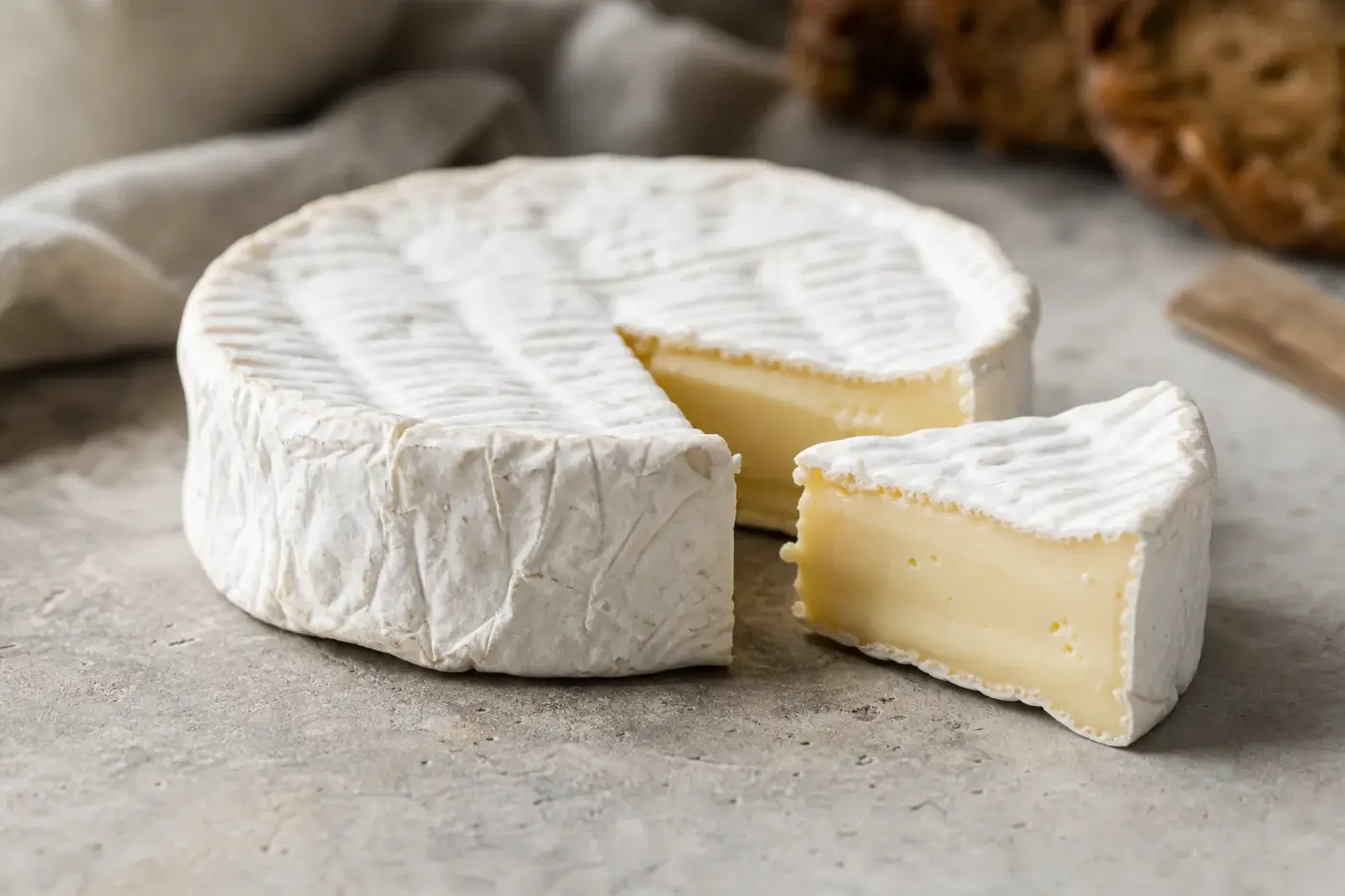
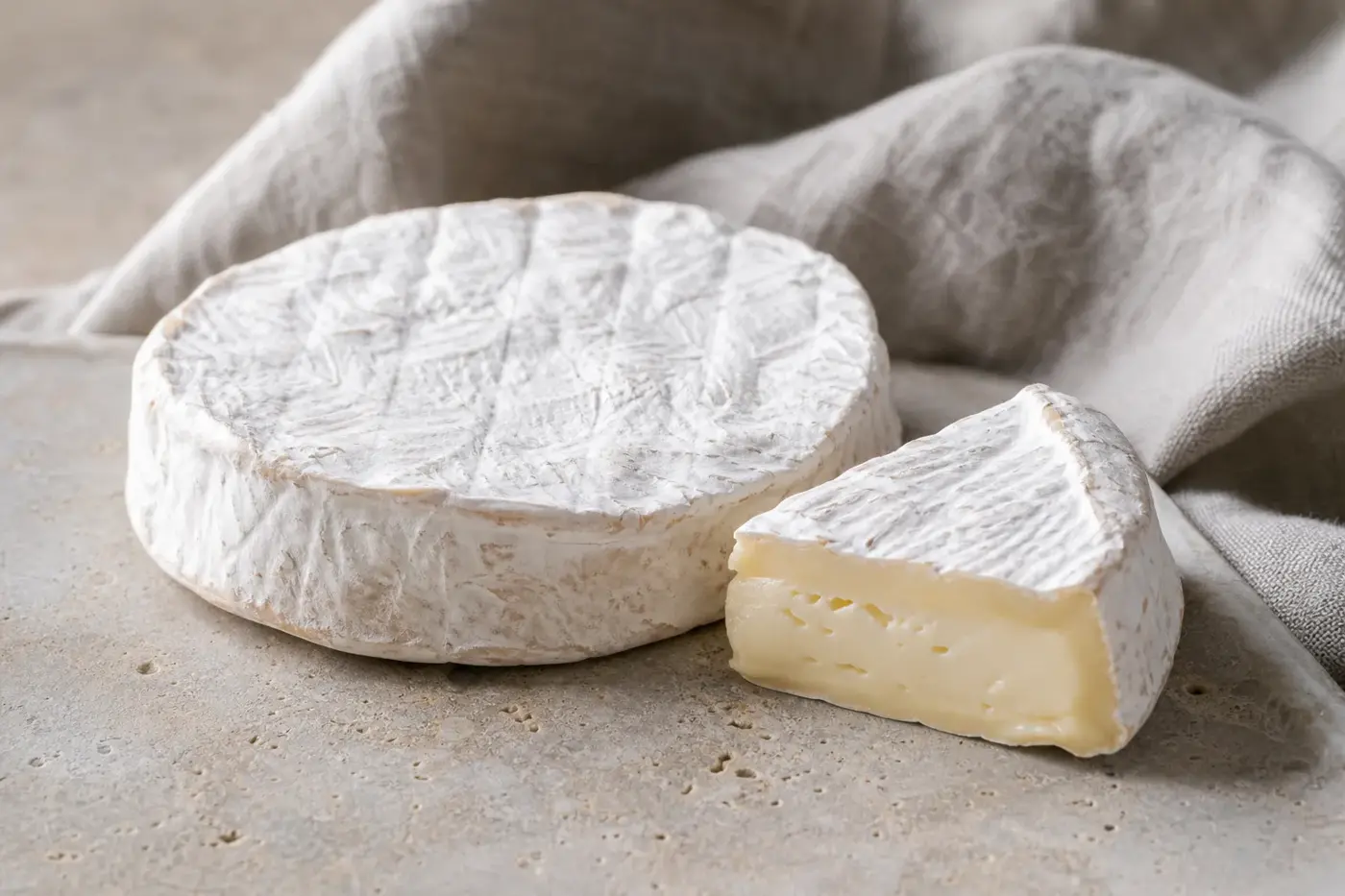
Look for a fine white bloom, broken by reddish or brownish streaks and patches. Those markings belong to Brie de Melun’s documented appearance. Beneath them, the producers’ organisation describes a firmer paste with openings and a pronounced lactic flavour. [5]
Age changes the relationship between rind and centre. At five weeks, INAO describes milk, yeast and a little acidity. At eight to ten weeks, its account moves towards a supple paste, a continuing milk flavour and a persistent finish. [3]
Softening travels inwards from the rind, as the specification explains. Its fully ripened cheese has slight bitterness and an aroma balanced between animal and vegetal notes. That makes “earthy” a little more precise; a strong mushroom aroma is not the defining expectation. [1]
The affineur Hennart describes its Brie de Melun as slightly yellow, soft and strongly flavoured. These are the supplier’s published product notes, rather than a fromage.co.uk tasting. They give you another way to picture the cheese at the counter. [6]
Choose the experience you want, not simply the oldest piece available. Cheese buying need not become a contest in advanced ripeness. Ask for a younger piece for milk and yeast, or a more evenly softened piece for developed aroma and a longer finish; telling your cheesemonger what you enjoy is the useful part.
Melun or Meaux? Follow your appetite
Brie de Melun is smaller than Brie de Meaux and takes much longer to coagulate. Both use raw cow’s milk, but their specifications set out distinct sizes and methods. They are two particular cheeses within the broader Brie family, not interchangeable names. [1][8]
| Where they differ | Brie de Melun | Brie de Meaux |
|---|---|---|
| Mould internal diameter | 27 to 28 cm | 36 to 37 cm |
| Cheese weight | 1.5 to 2.2 kg | 2.6 to 3.3 kg |
| Coagulation requirement | At least 16 hours | Less than two hours |
| Hand-moulding tool | Ladle | Pelle à brie, a shallow Brie scoop |
| Minimum maturation | Five weeks from renneting | Four weeks from renneting |
The comparison comes from the two official specifications published in 2020. [1][8]
The producers’ organisation describes Melun as more pronounced and lactic. INAO’s mature Meaux offers cream, butter and hazelnut, sometimes woodland notes, with a paste that is supple to slightly flowing. Each gives you a different reason to reach for the bread. [5][9]
Choose Melun for lactic emphasis and developing savouriness. Try Meaux if cream, butter and hazelnut appeal. For a useful comparison, ask your cheesemonger for pieces at similar stages of ripeness; otherwise, a young centre beside a fully softened paste can make age look like identity.
Find the wedge that suits your plans
Start with the full designation, Brie de Melun. If you are buying a cut portion, ask to see the original label and look for the producer’s identity beside the cheese’s name. The specification requires the designation and EU PDO symbol on the labelling. [1][2]
Tell the cheesemonger when you plan to eat it. Is this piece ready now, and how far has the centre softened? Ask what storage instructions apply to this particular cut, too: those answers tell you more than rind colour alone.
Ask for a wedge that includes the centre, the paste beneath the rind and the outer edge. The specification’s portioning rule calls for cuts from centre to heel. That gives you a cross-section of the wheel, rather than only one part of its story. [1]
Keep ripeness and food safety as separate questions. “Is this the ripeness I want?” concerns eating quality; the use-by date, storage history and any recall notice also need your attention. For more label terminology, turn to how to read a cheese label.
From the fridge to your plate
Keep chilled ready-to-eat foods at 5 °C or below, following UK NHS advice. Follow the label and use opened food within two days unless the packaging says otherwise. Eat, cook or freeze food by its use-by date. [10]
Keep the supplied wrapping and ask the retailer how to rewrap your cut piece. Serve only what you intend to eat, leaving the rest refrigerated. A small wedge is easier to manage than repeatedly bringing out the whole purchase.
When serving, follow current NHS advice on how long ready-to-eat food should remain out of the fridge. Let that guidance determine your time at the table. [10]
Cut successive portions along the wedge so each includes some centre and rind-side paste. Taste a little paste first, then try it with the rind and notice what changes. For wrapping and refrigerator organisation, see how to store cheese at home.
Leave room to taste the Brie
Begin with plain bread, cheese and water. Give yourself a moment to notice the milk, yeast and developing savoury character before sweetness or another strong aroma joins in. The first mouthful does not need an entourage.
Try fresh baguette or an unseeded country loaf, then a slice of pear or apple. These are starting points, so add accompaniments one at a time. Keep strongly flavoured chutney separate, allowing everyone to choose their own level of contrast.
For a drink, water gives you the clearest starting point. A restrained apple drink is another possibility.
This page summarises published guidance from the official sources it cites. It is not medical advice. Guidance differs between countries and changes over time, so check the current source for where you live, and ask your doctor, midwife, pharmacist or dietitian about your own circumstances.
Before your first bite: UK health guidance
NHS guidance identifies soft mould ripened cheeses and dairy products made from unpasteurised milk among foods associated with listeriosis. Its pregnancy guidance says soft cheeses with a white rind, such as Brie, can be eaten if cooked until steaming hot all the way through. [7][10]
If you need advice on cheese for babies, young children or people with weakened immunity, consult the current NHS guidance on dairy and alternatives. These circumstances deserve their own guidance. [11]
Consult the dated official sources below for your circumstances, and ask your doctor, midwife, pharmacist or dietitian for individual advice. For wider context on handling and country-specific guidance, see the cheese food safety guide.
Questions people ask
What does Brie de Melun taste like?
At five weeks, INAO describes flavours of milk and yeast with a little acidity. At eight to ten weeks, it describes a supple paste, a continuing milk flavour and a persistent finish.
How is Brie de Melun different from Brie de Meaux?
Brie de Melun is smaller and takes much longer to set. Both use raw cow’s milk, but Melun is described as more pronounced and lactic, while mature Meaux is associated with cream, butter and hazelnut.
Where is Brie de Melun made?
Its protected area centres on Seine-et-Marne and includes specified neighbouring parts of Aube and Yonne. Milk production, cheesemaking and maturation must all take place within that boundary.
Can you eat Brie de Melun during pregnancy?
NHS guidance says soft cheeses with a white rind, such as Brie, can be eaten during pregnancy if cooked until steaming hot all the way through. Check the current NHS pregnancy guidance and ask a health professional about your own circumstances.
How should I store Brie de Melun?
The NHS advises keeping chilled ready-to-eat foods at 5 °C or below. Follow the label and use opened food within two days unless the packaging says otherwise. Eat, cook or freeze it by its use-by date.
Sources
- French Ministry of Agriculture and Food. Cahier des charges de l’appellation d’origine « Brie de Melun », associated with Bulletin officiel n°2020-32, 2020. Includes product description, geographical boundary, production and labelling requirements.
- European Commission. Publication of an application for approval of a non-minor amendment to a product specification: Brie de Melun, Official Journal C 83, 13 March 2020; amendments approved by Commission Implementing Regulation (EU) 2020/1103 of 22 July 2020.
- Institut national de l’origine et de la qualité. Brie de Melun, product and designation account, undated, retrieved November 2026.
- Department for Environment, Food & Rural Affairs. Brie de Melun, protected food and drink names register, published 4 January 2021; registered status retrieved November 2026.
- Union interprofessionnelle de défense, de gestion et de contrôle du Brie de Meaux et du Brie de Melun. Fabrication, undated, retrieved November 2026. Producer-group account, used for its descriptions rather than to override the specifications.
- Hennart. Brie de Melun AOP, product information sheet, undated, retrieved November 2026. Commercial supplier’s tasting and pairing notes.
- NHS. Foods to avoid in pregnancy, current page retrieved November 2026.
- French Ministry of Agriculture and Food. Cahier des charges de l’appellation d’origine « Brie de Meaux », specification accompanying the official approval and correction notices, 2020.
- Institut national de l’origine et de la qualité. Brie de Meaux, product and designation account, undated, retrieved November 2026.
- NHS. Listeriosis, reviewed 10 November 2023; current page retrieved November 2026.
- NHS. Dairy and alternatives in your diet, current page retrieved November 2026.
This piece was researched from official specifications, designation records and NHS guidance, with attributed producer-group and supplier descriptions; the comparison and practical suggestions are desk research.
Last checked: November 2026
Last checked November 2026.
The editors suggest you read next