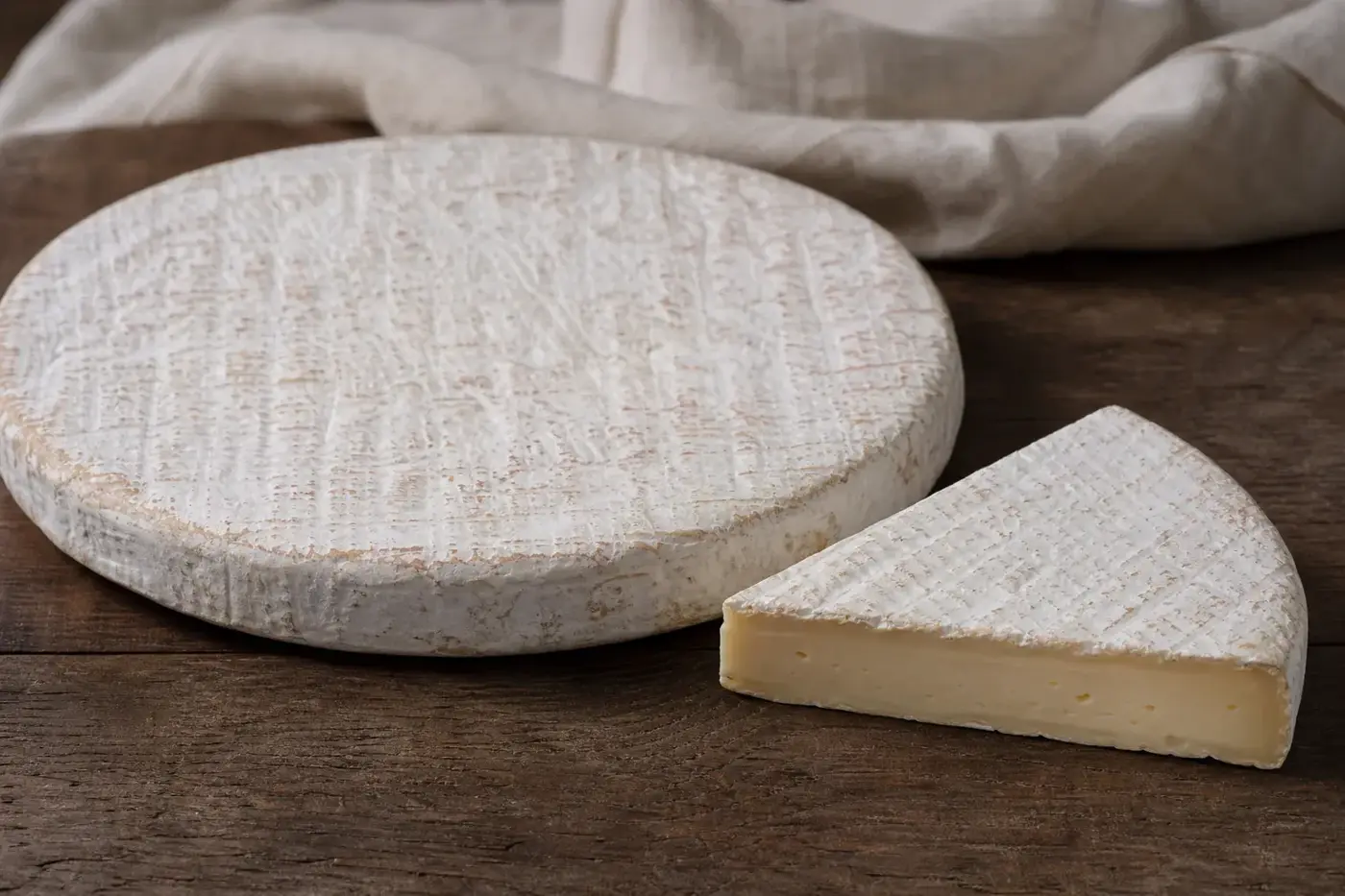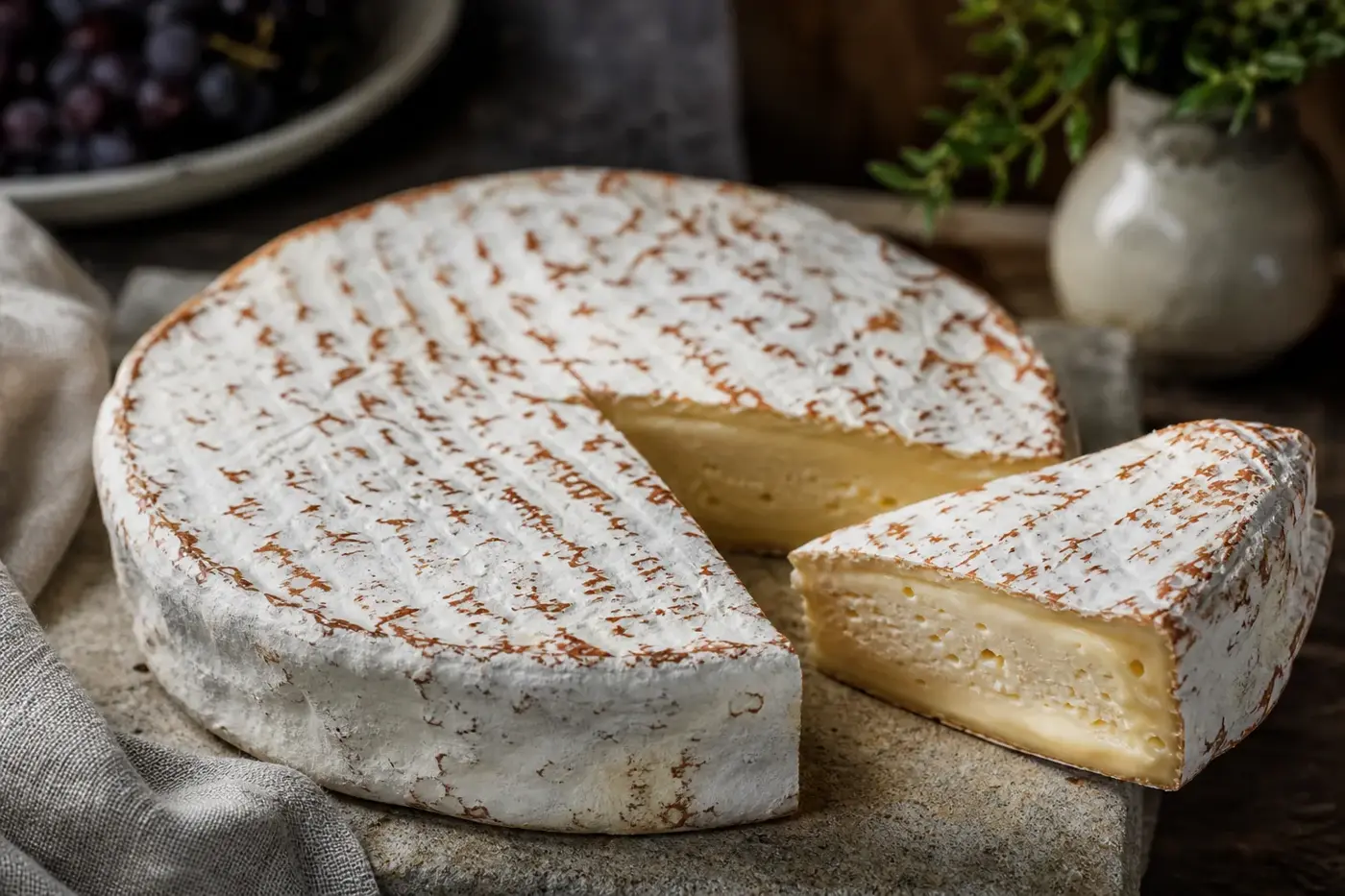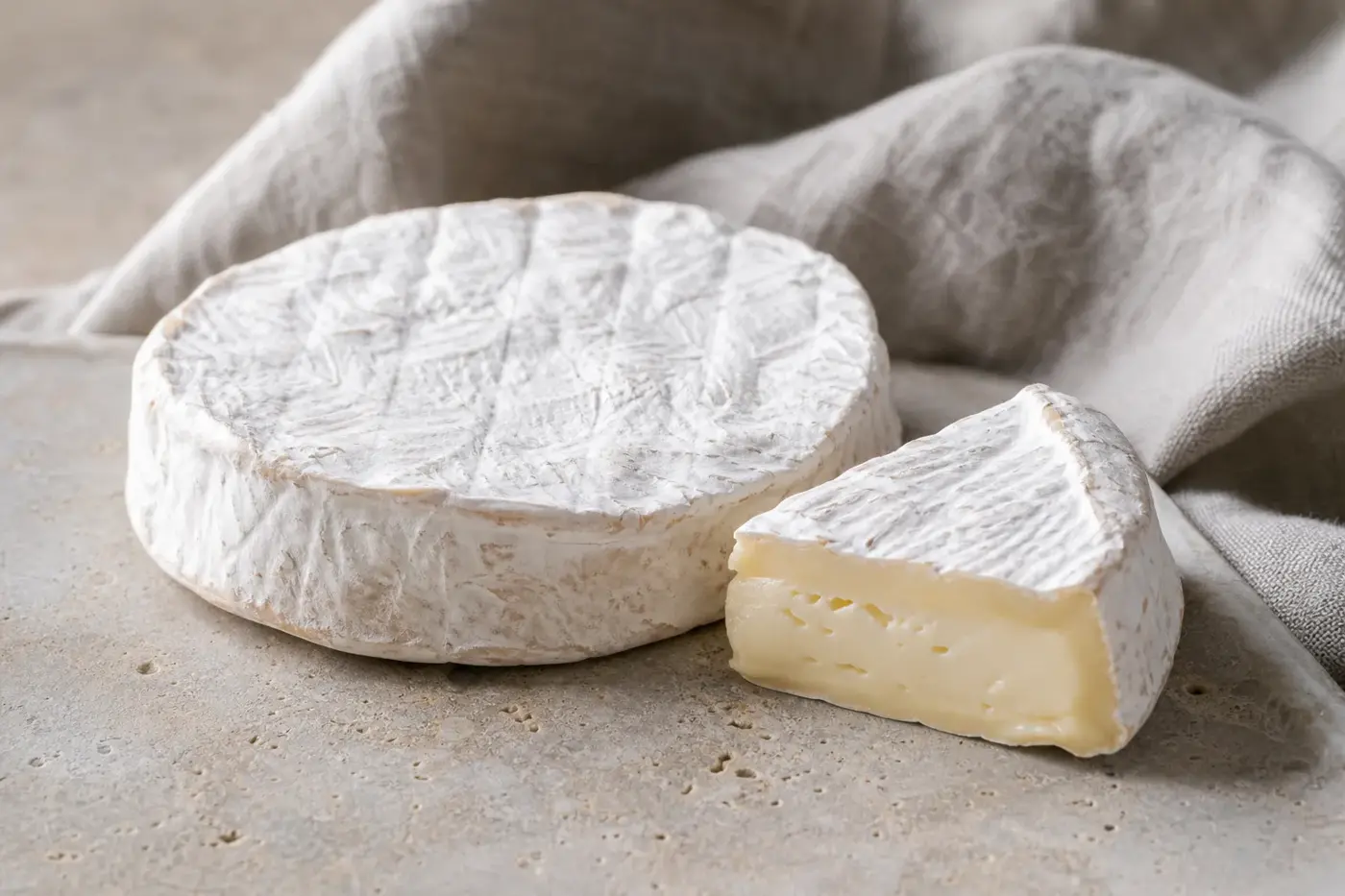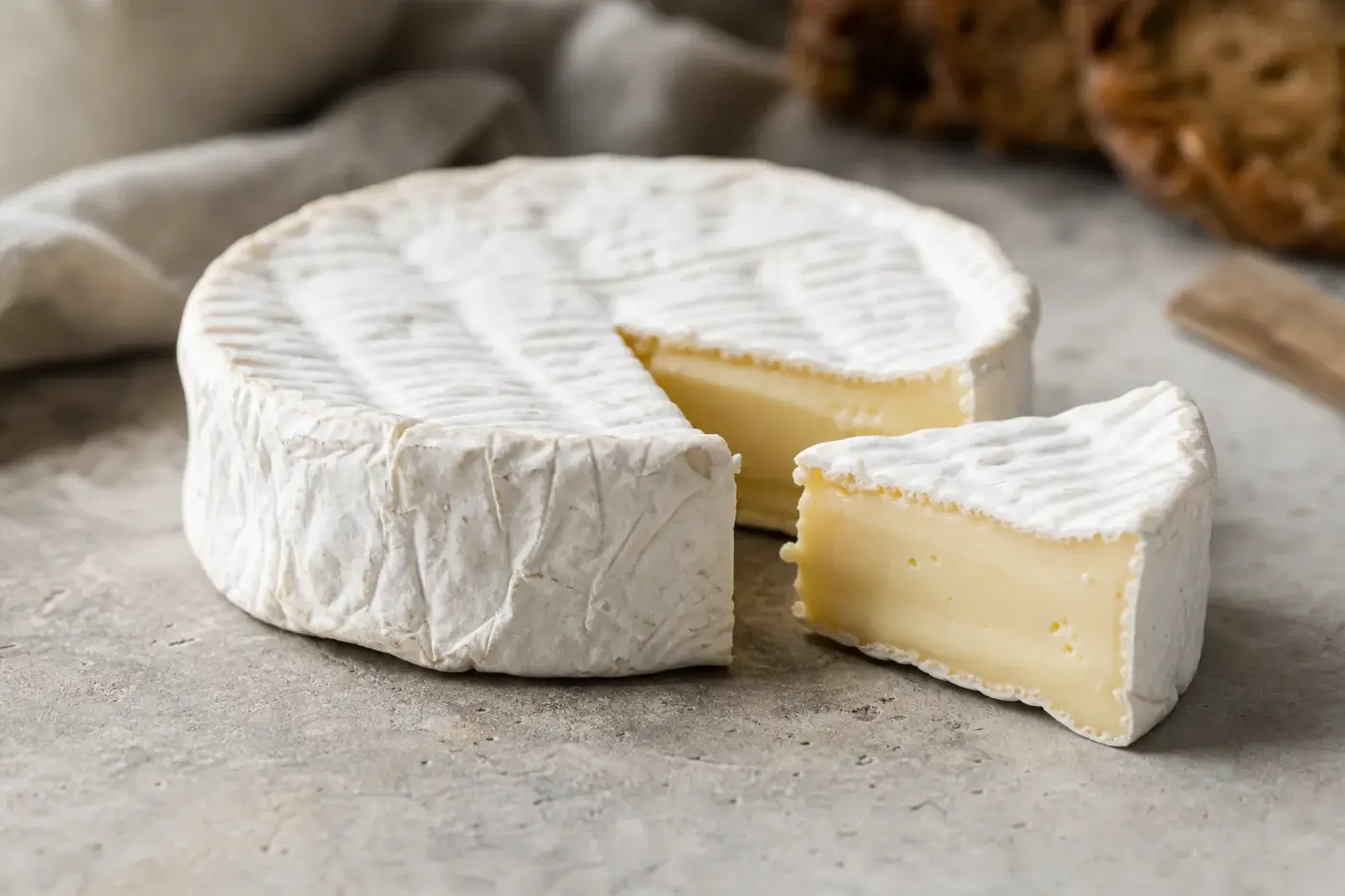
A hand, a ladle, then a pause. Curd traditionally enters a Camembert de Normandie mould in at least five additions, each at least 40 minutes apart. This is not a cheese you can coax along by looking impatiently at the clock. [1,2]
Behind that patient rhythm are Normandy’s pastures and raw cows’ milk. The protected designation of origin, or PDO, ties the name to a defined Norman production area and a specified method. What happens at the mould is part of that promise. [1,2]
Get to know your cheese
| What to look for | The details |
|---|---|
| Familiar and registered name | Camembert de Normandie. [1] |
| Who protects the name | INAO, France; EU PDO scheme. [1] |
| EU register ID | Not established here. |
| Binding specification | France, Décret n° 2013-1059, 22 November 2013. [2] |
| Great Britain registration | Registered PDO, 31 December 2020, 23:00. [3] |
| Where it is made | Defined communes in Calvados, Manche, Orne and Eure, France. [2] |
| Milk | Raw cows’ milk. [1] |
| What sets the milk | Animal rennet. [2] |
| Shape and size | Flat cylinder, 10.5 to 11 cm diameter; labelled net weight at least 250 g. [2] |
| Rind | White bloom; red patches permitted. [2] |
| Fat | At least 45% fat in dry matter. [2] |
| Earliest customer delivery | From day 22 after renneting. [2] |
| Typical age at sale | Not established here. |
| Allergen | Milk. [1] |
| Pregnancy guidance | United Kingdom: NHS advice, November 2026. [6] France: Ministry of Agriculture advice, 16 March 2026. [8] |
Three words to find on the box
Look for the full name: Camembert de Normandie. INAO, France’s origin and quality institute, distinguishes this appellation from generic Camembert and directs you to the red and yellow AOP logo. AOP is the French abbreviation for the protected designation of origin known in English as PDO. [1]
Normandy means more here than an address on a box. Milk production, cheesemaking, ripening and packaging must all take place within the specification’s area. Choose by the complete protected name and logo, rather than a village illustration, a wooden box or the word Normandy alone. [1,2]
Defra’s Great Britain register records PDO registration on 31 December 2020 at 23:00, and original EU registration on 21 June 1996. These are separate jurisdictional records. For the wider story, explore the guides to generic Camembert and protected names. [3]
Out to pasture with the Normande cows
At least half the herd must be Normande cows, and the dairy cows must graze for at least six months each year. INAO describes Normandy as well suited to growing grass. It also singles out the Normande breed for milk particularly suited to cheesemaking. [1]
The connection to the farm continues at feeding time. At least 80% of the basic ration, measured as dry matter, must come from the holding. Outside the grazing period, hay must be available daily. [2]
When you compare labels, keep one distinction in mind. At least 50% Normande cows describes the herd, not the breed composition of the milk in an individual wheel. It does not mean every cheese is made exclusively from that breed’s milk. [1,2]
A ladleful, a pause, then another
First comes animal rennet, an enzyme preparation that helps the milk set into a gel: the curd. The liquid that drains away is whey. The curd, meanwhile, has time to settle between additions to the mould. [2,4]
Before moulding, light vertical cutting is permitted, with no more than two passes of the cutting tool. Then come at least five additions to the mould, at least 40 minutes apart. From the first addition, the curd drains spontaneously for at least 18 hours. [2]
Hand ladling is traditional, but articulated automated moulding heads are also permitted by the specification. If hand moulding matters to you, ask specifically. Afterwards comes dry salting, ripening and individual boxing, a shared sequence even when the dairy equipment differs. [2,4]
Beneath the bloom: find your favourite texture
Cut through the white bloomy rind and you reach an ivory to pale yellow paste. Once the cheese has ripened to its centre, the specification describes a smooth, supple texture. INAO describes a lightly salted flavour, moving from milky and mild towards more pronounced, fruity notes as maturation progresses. [1,2,8]
At the counter, ask about texture before asking whether a cheese is “strong”. Is the centre still firm, or has it softened throughout? If there is a cut example, compare the middle with the layer beneath the rind, then ask which stage suits how you like to eat it. [1,8]
Marie Harel, a priest and a lasting story
The familiar origin story gives Camembert a creator: Marie Harel, in 1791. It tells of advice from a priest sheltered during the French Revolution. The Norman cheese industry’s own account calls the priest episode a legend, while presenting the 1791 invention story more confidently elsewhere on the same page. [4]
The protected name follows a separate path. The French agriculture ministry dates national AOC recognition to 1983 and European PDO protection to 1996. Those milestones explain today’s label; Harel belongs to the cheese’s cultural history, a distinction worth keeping when a telling moves straight from her story to the present appellation. [8]
Find the wheel for your evening
Start with when you want to eat it. Tell the cheesemonger whether you prefer a firmer centre or paste softened right through, then ask which available cheese fits. Tonight’s cheese and one for later need not be the same choice.
Read the full label for the protected name, producer, date and refrigeration instructions. Ask how long the cheese has been ripening. The wooden box is part of its specified presentation, but the complete name and AOP marking tell you more about the appellation than packaging style alone. [1,8]
Look at the rind and wrapper where possible, without unnecessarily opening a sealed product. Expect white bloom; red patches are permitted by the specification. A seller’s cut example lets you discuss the rind, softer outer paste and firmer centre without auditioning every box with a squeeze. [2]
Keep the wrapper until you finish the cheese. The maker, batch and dates help you match your pack to current recall notices. France’s RappelConso and the UK Food Standards Agency publish product alerts; follow any instructions affecting your pack. [9,10]
From the fridge to your first wedge
At home, follow the pack’s refrigeration instructions. UK NHS advice is to keep your fridge at 5 °C or below, separate raw foods from ready-to-eat foods and use opened food within two days unless the packaging says otherwise. Keep the cheese covered, with both its box and identifying wrapper. [5,12]
Put out only what you intend to eat, letting it lose its fridge chill while you prepare the table. UK NHS advice is to eat ready-to-eat food within four hours of taking it from the fridge. In unusually hot weather, the FSA advises no longer than two hours outside refrigeration. [5,11]
Cut wedges from centre to edge, so each serving has both rind and paste. Notice the aroma before you taste, then compare the texture near the rind with the middle. Choose earlier ripeness for a milder serving; for more pronounced flavour, ask for further maturation. [1]
Ripeness is not a food safety test. An appealing appearance cannot replace the use-by date or storage history: discard food past its use-by date and follow recall instructions for affected packs. If you think the cheese may be unsafe, do not eat it. [5,9,10]
For help with wrapping or finding the right place in your fridge, see how to store cheese at home.
Good company for your Camembert
Begin with plain bread, slices of apple or pear, and a little space on the plate. Taste the cheese alone, too. Without a heavily seasoned accompaniment taking over, you can explore the milkier character or more pronounced mature flavour described by INAO. [1]
If you are an adult of legal drinking age and want alcohol, a small serving of Norman cider is one option, with still or sparkling water alongside. Apple juice diluted with sparkling water offers an alcohol-free alternative. Choose what you enjoy: a regional pairing is not compulsory, and for pregnancy the NHS advises avoiding alcohol. [6]
In the kitchen, think of dishes that welcome the rind and developing flavour, such as a savoury tart or cheese on toast. Choose a recipe written for a soft bloomy-rind cheese and follow its handling instructions. For pregnancy, the NHS advises eating this cheese only when cooked until steaming hot all the way through. [6]
Before you serve: find the guidance for you
UK guidance, November 2026: the NHS advises pregnant people to eat white-rind mould-ripened soft cheeses, including Camembert, only when cooked until steaming hot all the way through. That applies whether the milk is pasteurised or unpasteurised. Consult the current NHS guidance and discuss your circumstances with your midwife or doctor. [6]
The NHS also identifies older people and people with weakened immune systems as being at increased risk of serious listeriosis. If you are in either group, consult its current listeriosis guidance and your healthcare professional about suitable food choices. The cheese food safety guide brings related advice together. [5]
France, November 2026: the agriculture ministry reports advice that pregnant people, immunocompromised people and young children, particularly those under five, should avoid raw milk and raw-milk cheeses. Camembert de Normandie is made from raw milk. Consult that guidance when deciding what to serve guests in these groups. [8]
General information only, not medical advice: follow the official guidance where you live.
Questions people ask
How can I tell Camembert de Normandie from generic Camembert?
Look for all three words Camembert de Normandie on the label and the red and yellow AOP logo. A Norman address, village illustration or wooden box alone does not identify the appellation.
Is Camembert de Normandie vegetarian?
The cheese is made with animal rennet. It is made from raw cows’ milk.
How does Camembert de Normandie change as it ripens?
Its flavour moves from milky and mild towards more pronounced, fruity notes. When ripened to the centre, its texture is described as smooth and supple.
Can I eat Camembert de Normandie during pregnancy?
The NHS advises pregnant people to eat Camembert only when it is cooked until steaming hot all the way through. See the current NHS pregnancy guidance on foods to avoid and discuss your circumstances with your midwife or doctor.
How should I store Camembert de Normandie?
Follow the pack’s refrigeration instructions and keep the cheese covered, retaining its box and identifying wrapper. The NHS advises keeping the fridge at 5 °C or below and using opened food within two days unless the packaging says otherwise.
Sources
- Institut national de l’origine et de la qualité. [Camembert de Normandie](../camembert-de-normandie/), live product record, undated. Product identity, breed, grazing, sensory description and recognition of the appellation.
- French Ministry of Agriculture. Cahier des charges de l’appellation d’origine « Camembert de Normandie », approved by Décret n° 2013-1059 of 22 November 2013, Bulletin officiel n° 48, 2013.
- Department for Environment, Food & Rural Affairs. [Camembert de Normandie](../camembert-de-normandie/), Great Britain protected food names register, published 4 January 2021, live record.
- Fromages AOP de Normandie. Le Camembert de Normandie, undated industry account. This organisation promotes the regional appellations.
- NHS. Listeriosis, reviewed 10 November 2023, live guidance checked November 2026.
- NHS. Foods to avoid in pregnancy, reviewed 15 June 2026.
- Archives départementales de l’Orne. Exhibition catalogue, file CAT77.pdf, publication year not verified. Search-indexed passage concerning Camembert, Harel and the 1928 monument; full document retrieval was unsuccessful.
- French Ministry of Agriculture. Camembert de Normandie AOP : le goût unique du lait cru et des pâturages, 16 March 2026.
- RappelConso. Camembert recall results, live official notices, checked November 2026.
- Food Standards Agency. Alerts, live official alerts index, checked November 2026.
- Food Standards Agency. Food safety in a heatwave: advice for consumers, live consumer guidance, checked November 2026.
- Food Standards Agency. How to chill, freeze and defrost food safely, consumer guidance, originally published 2017, live version checked November 2026.
Researched through official product records, the published specification, national guidance and an attributed industry account, with serving suggestions supplied as editorial judgement.
Last checked: November 2026
Last checked November 2026.
The editors suggest you read next