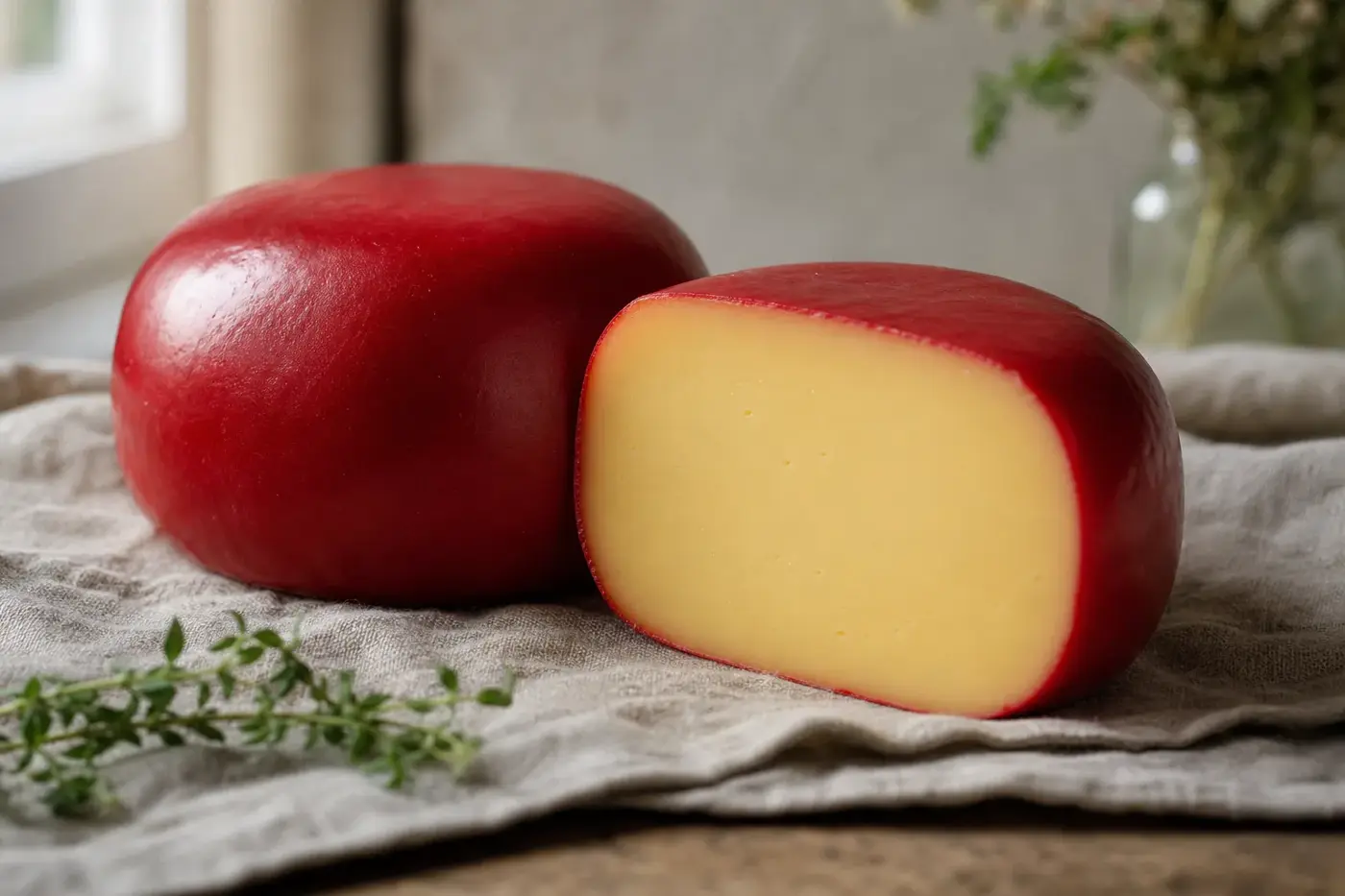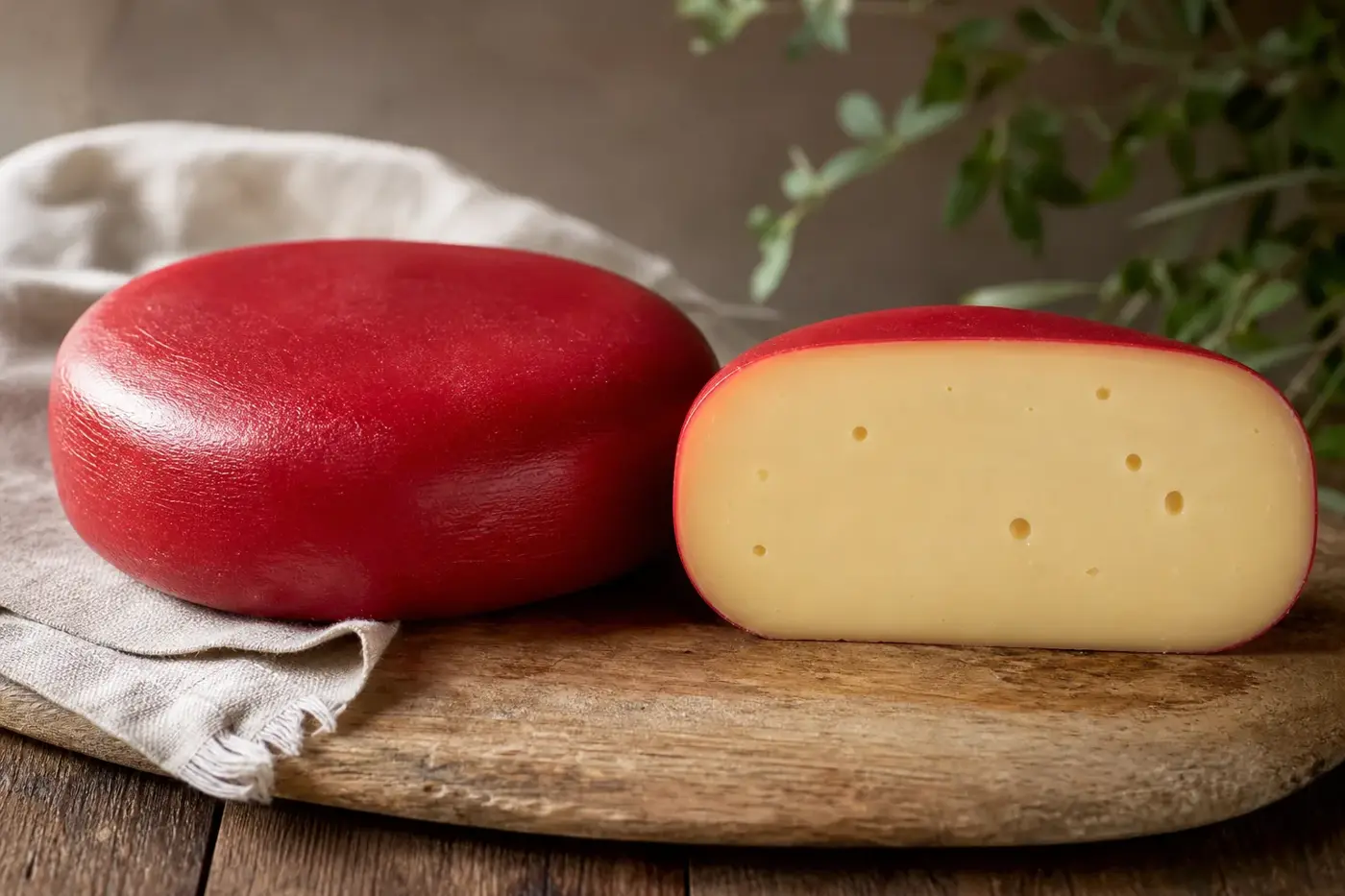
Small boats arrive laden with cheeses. Carriers lift them onto wooden stretchers and carry them through Edam’s market, sending the surrounding countryside’s produce on its way. You can picture the bustle of a town built into the cheese trade, with that familiar red coated ball as its travelling ambassador. [6]
You probably know this rounded Dutch cow’s milk cheese for its mild, savoury character. Its label deserves a closer look, too. Edam is the wider cheese name; Edam Holland is a Dutch geographical name registered in Great Britain as a protected geographical indication, or PGI. A small addition to the label, with rather a lot behind it. [3][5]
Your Edam essentials, at a glance
| What to look for | What it tells you |
|---|---|
| Name | Edam: wider cheese name. Edam Holland: registered geographical name. [1] |
| EU authority and dossier | European Commission; NL-PGI-0005-0329-27.11.2003 in the 2010 registration act. [1] |
| Great Britain | Edam Holland: registered PGI; UK scheme registration 31 December 2020, 23:00. Register snapshot: November 2026. [3] |
| Where it is made | Edam Holland: European part of the Kingdom of the Netherlands. [1][2] |
| Milk and treatment | Edam Holland: Dutch cow’s milk, pasteurised before cheesemaking. [2] |
| Coagulant | Edam Holland: calf rennet, with an exceptional alternative provision. [2] |
| Earliest maturity | Edam Holland: 28 days; Baby Edam Holland: 21 days. [2] |
| Time to develop | Depends on the product; the specification describes maturation beyond a year. [2] |
Follow the cheese through Edam’s port
Picture the Zuiderzee, the surrounding lakes and the inland countryside. Edam sat between them, neatly placed to connect dairy farms with distant tables. The regional visitor guide describes cheeses made in and around the town being stored, weighed and resold in warehouses before export to Germany, England and France. You are looking at a collecting and shipping centre, not simply the name of one dairy. [5]
The cheese market foundation traces the market’s move to its later square to around 1680, and dates the weighing house to 1778. Farmers and merchants traded directly until 1922. Its account brings the work into focus: small boats bringing cheeses, carriers moving them on wooden stretchers. [6]
The revived market began in 1989, preserving the trading performance after the commercial market had closed. Those dates belong to the story of the town’s cheese trade. They do not mark the invention of Edam. [6]
Get to know the cheese beneath the red coat
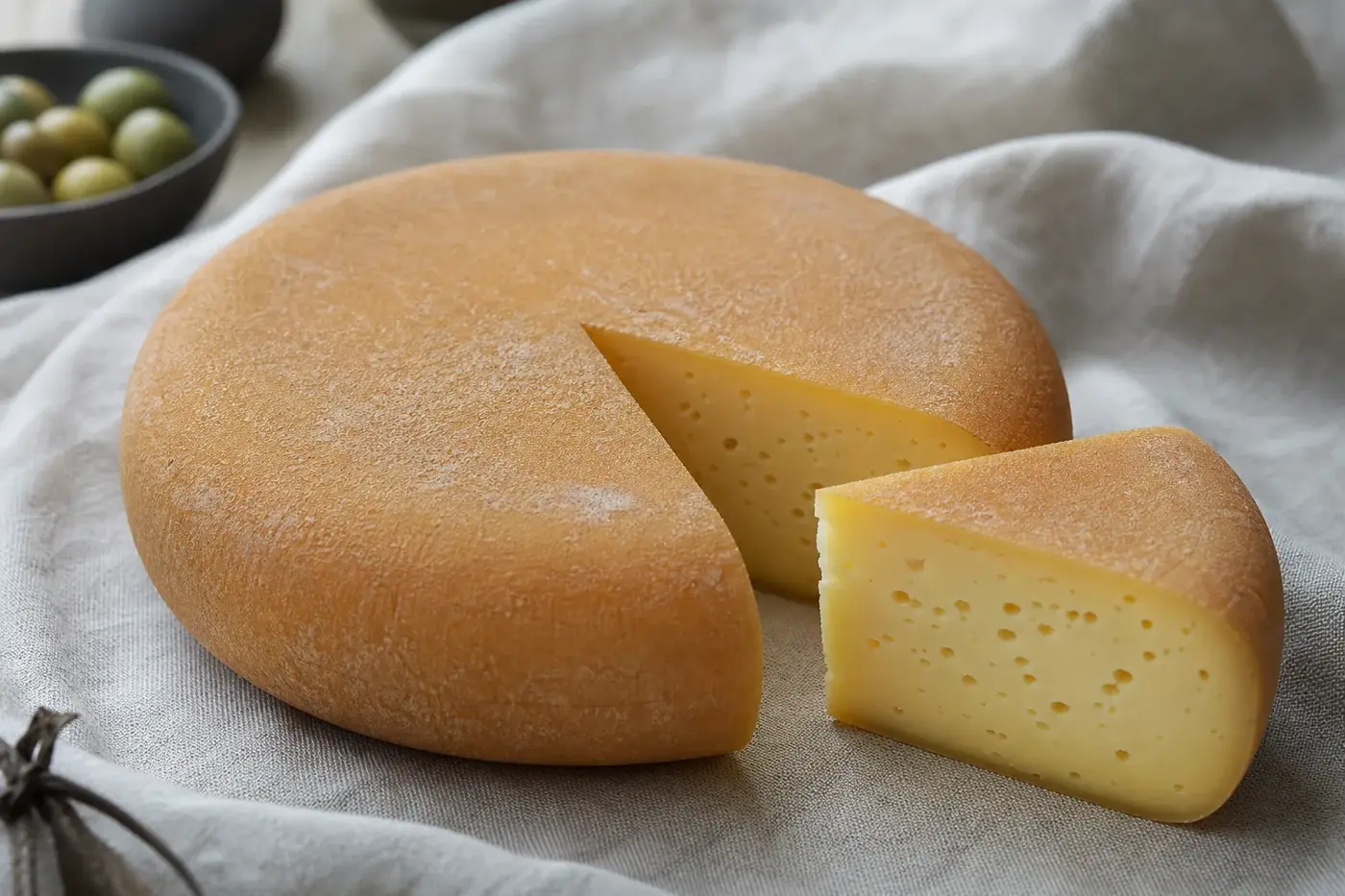
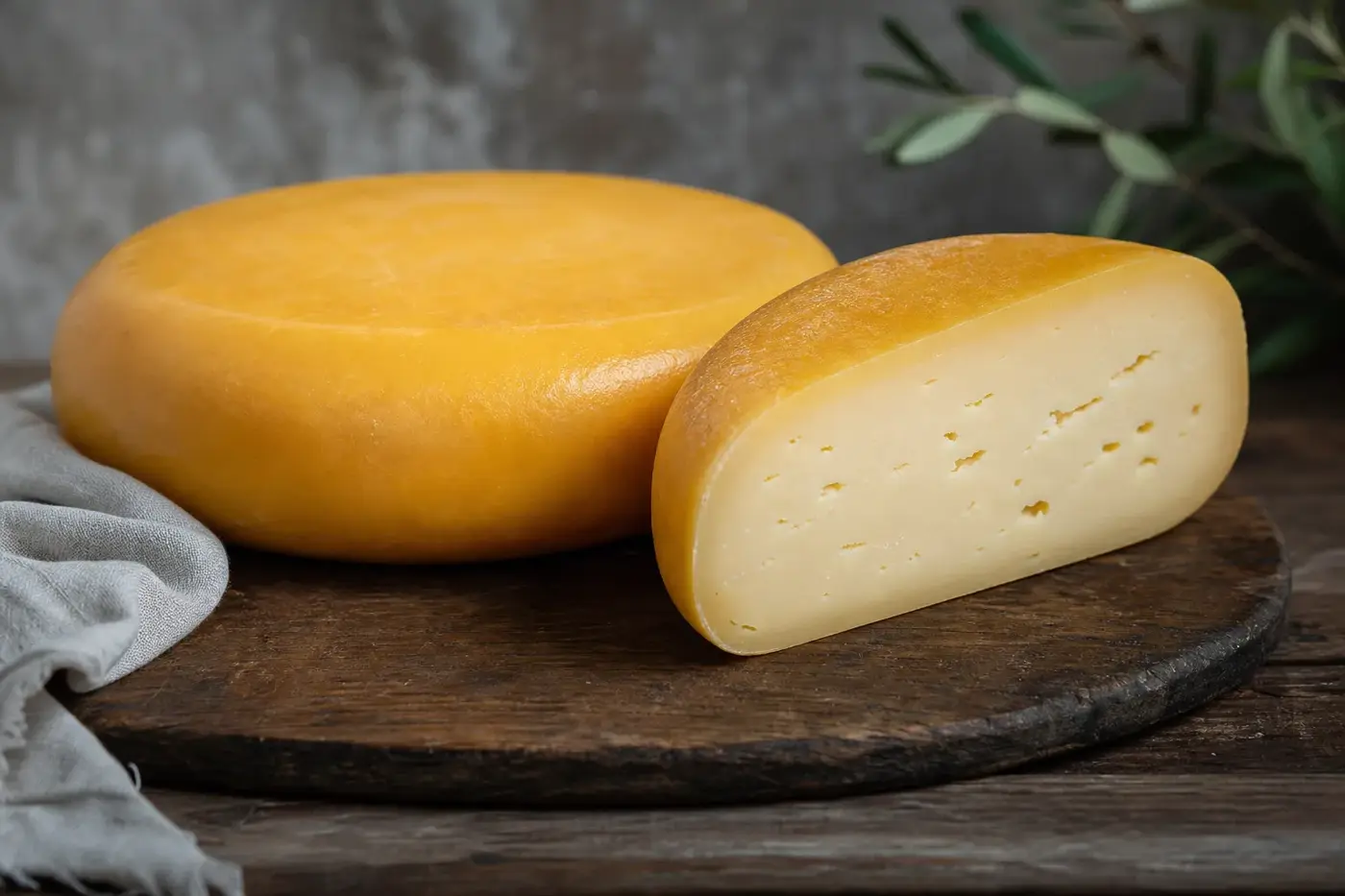
The familiar Edam ball has slightly flattened ends, but Edam Holland also comes in loaves and blocks. A rectangular piece has just as much right to the geographical name; roundness is not an entrance requirement. The standard ball weighs 1.5 to 2.5 kg; Baby Edam Holland may weigh up to 1.5 kg. For its origin, read the full name rather than trusting the silhouette. [2]
Cut inside and you will find the specification describes an ivory to yellow paste, with a few small, round holes. The natural rind is dry, smooth and firm, without fungal growth. That rind is different from the familiar red outer surface. [1][2]
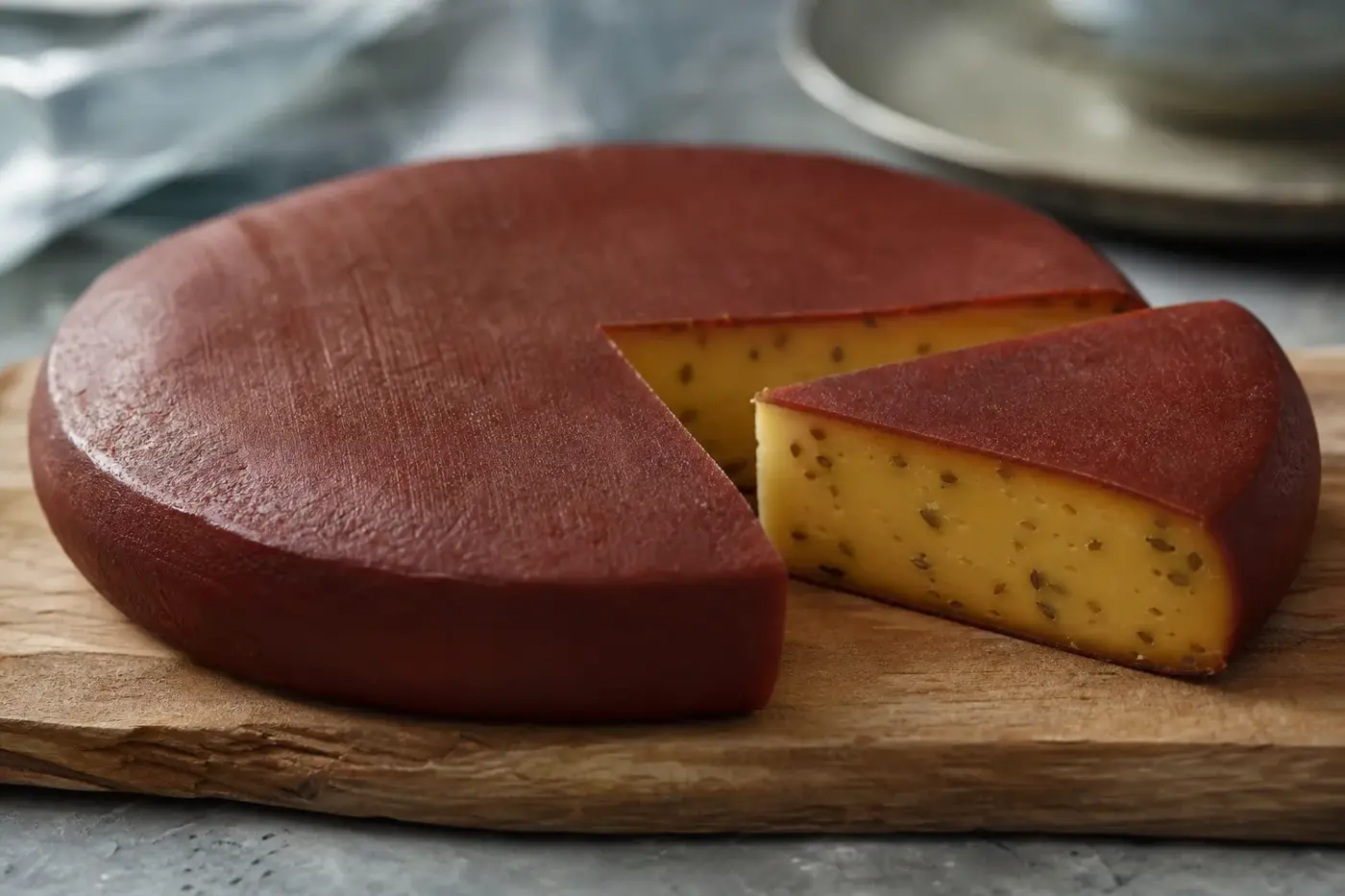
Before serving, look for wax, plastic or another removable covering, and remove coatings that are not food. Colour cannot tell you how mature the cheese is. Nor does a red coat prove that you have Edam Holland. [1][2]
Meet the makers’ method, from milk to rind
Edam Holland begins with cow’s milk from Dutch dairy farms. The maker adjusts its fat content relative to its protein so the finished cheese meets the required composition. All raw materials must be pasteurised immediately before cheesemaking. [1][2]
Then the cultures and rennet get to work. Starter cultures include Lactococcus and Leuconostoc, bacteria that develop acidity and aroma. Rennet is an enzyme preparation that coagulates the milk into curds, the solids that separate from the liquid whey. [1][2]
The maker separates, works and washes those curds to reach the required moisture and acidity. Next come pressing into shape and immersion in brine, a salt solution. As the cheese matures and its dry rind forms, it needs regular turning and checking. [1][2]
The specification requires natural maturation open to the air, and excludes maturation in foil. Afterwards, cutting and prepacking are allowed, including outside the Netherlands, provided traceability is maintained. So if you spot a packing address abroad, that need not mean the cheese was made there. [1][2]
The finished cheese must contain 40 to 44% fat in dry matter. This measures fat after excluding water, not the fat percentage of the slice you eat. For the standard ball, maximum moisture in the whole cheese is 45.5%, assessed 12 days from the first day of preparation; other permitted formats have their own limits. For the bigger picture, explore how cheese is made. [2]
Let age lead you to your next slice
Young Edam Holland is firm enough to cut, with flavour at the mild end of a range extending to piquant. More time gives it a firmer, tighter structure. Choose younger cheese for easy slicing; ask for an older one when you fancy a firmer bite and more pronounced flavour. Age tells you more here than the red covering. [2]
The minimum maturation periods in the quick guide tell you when the cheese qualifies, not exactly how it will taste. Depending on the desired result, maturation can sometimes exceed a year. Ask for the actual age when it is available, and do not assume a small ball must be young. [2]
At the cheese counter, ask about firmness and flavour too. A clear description can be more useful than a maturity word with no stated age attached. It gives you a better sense of what will end up on your plate. [2]
Read the promise in “Edam Holland”
Edam Holland ties your cheese to a place and a method. Its defined area is the European part of the Kingdom of the Netherlands, not just Edam itself or the two provinces named Holland. The milk comes from Dutch farms, cheesemaking takes place in the Netherlands, and maturation there brings it to a state ready for the consumer. A Dutch address belonging only to a seller or packer offers no such guarantee. [1][2]
The dates need a little untangling. The European Commission adopted the registration regulation on 2 December 2010 and published it on 3 December. Article 3 provided for entry into force on the twentieth day after publication: 23 December 2010. [1]
Defra’s register records 3 December 2010 as the original EU registration date. Separately, it records entry into the UK scheme on 31 December 2020 at 23:00. Publication, the regulation’s operative date and UK scheme entry are three distinct events. [1][3]
Protection covers Edam Holland as a whole. The registration act expressly allows continued use of Edam within the EU under the applicable rules, so Edam alone makes a different statement on a label. You need the whole name for the geographical promise. [1]
There is also Noord-Hollandse Edammer, a third, distinct registered name. It has PDO rather than PGI status in the British register, with an original EU registration recorded as 21 June 1996. Keep these three names separate when you choose cheese or compare labels. [4]
| Name on your cheese | What the scheme records | Where it comes from |
|---|---|---|
| Edam | Wider name; EU registration does not reserve Edam alone. [1] | Read the product’s stated origin. |
| Edam Holland | PGI, registered in Great Britain; register snapshot: November 2026. [3] | European Netherlands. [2] |
| Noord-Hollandse Edammer | PDO, registered in Great Britain; register snapshot: November 2026. [4] | Production geography pending review of the current registered specification. |
Take a few good questions to the counter
Start with the full name, then think about age and how you want to eat it. Under the specification, a cut, prepacked portion of Edam Holland must carry that name on its packaging. At a counter, ask to see the information identifying the original cheese. [2]
Read the cheese name and declared origin together. Packing in another country is permitted with traceability, so the packing location need not be the place of manufacture. An address tells you only part of the story. [2]
If you buy vegetarian cheese, pay particular attention to the coagulant. Edam Holland’s published specification calls for calf rennet. A switch is allowed only in exceptional circumstances, such as an animal disease outbreak, and must still meet the specified requirements. [2]
For other cheeses sold as Edam, look for an explicit vegetarian declaration or ask the maker to confirm the coagulant. The general name alone cannot answer that question. The guide to rennet types explains the terminology. [2]
Ask about milk treatment too. Edam Holland requires pasteurisation; Edam alone tells you less. If the label is unclear, ask the supplier rather than applying the protected cheese’s specification to another product. See milk treatments explained. [2]
Make room for Edam at your table
Start simply: thin slices of young Edam on bread, or small wedges on a cheese board. Try cucumber and mustard in a sandwich, or apple and plain crackers beside a wedge. Taste the cheese alone first, then follow the combinations you enjoy.
With a more mature piece, try pear or a little fruit chutney. Keep the accompaniments separate at first. Let the cheese introduce itself before the chutney takes over the conversation.
For something warm, try Edam in a cheese toastie, tucked into a baked potato or over cooked vegetables. Remove the coating before slicing or grating. Choose younger or older cheese according to how prominent you want its flavour to be; age and the particular product will shape the result.
To drink, try sparkling apple juice or a light, unsweetened tea. You are giving a mild cheese room on your palate. Strongly flavoured accompaniments need not take over.
Keep your next slice in good shape
Protect the cut face and keep the storage instructions handy. For England, Wales and Northern Ireland, the Food Standards Agency advises a fridge between 0 and 5 °C (32 to 41 °F), with dairy products refrigerated and pack instructions followed. Rewrap your cheese in suitable food packaging or put it in a clean, covered container. Keep the label with it, so you have the storage instructions and date close by. [7]
Take out only what you intend to serve, shortly before eating. For England, Wales and Northern Ireland, the Food Standards Agency advises keeping chilled food out of the fridge for the shortest possible time during preparation. Follow its current guidance and the pack’s storage instructions. [7]
For wrapping choices and a better organised fridge, see how to store cheese at home.
General information only, not medical advice: follow the official guidance where you live.
Questions people ask
What is the difference between Edam and Edam Holland?
Edam is a wider cheese name, while Edam Holland is a protected geographical indication registered in Great Britain. Edam Holland is made in the Netherlands from Dutch cow’s milk and matured there; its raw materials must be pasteurised immediately before cheesemaking.
Is Edam suitable for vegetarians?
The Edam Holland specification calls for calf rennet, with an alternative allowed only in exceptional circumstances. For other cheeses sold as Edam, look for an explicit vegetarian declaration or ask the maker to confirm the coagulant.
Does Edam Holland have to be round?
No. Edam Holland also comes in loaves and blocks, so a rectangular piece can carry the geographical name.
Can you eat the red coating on Edam?
The natural rind and the red outer surface are different things. Check whether the cheese has wax, plastic or another removable covering, and remove non-food coatings before serving.
How should I store Edam?
For England, Wales and Northern Ireland, the Food Standards Agency advises a fridge between 0 and 5 °C, with dairy products refrigerated and pack instructions followed. See its current guidance and keep the cheese’s label with its storage instructions and date.
Sources
-
European Commission. Commission Regulation (EU) No 1121/2010 of 2 December 2010 entering a designation in the register of protected designations of origin and protected geographical indications [Edam Holland (PGI)]. Official Journal L 317, 3 December 2010, pages 14 to 21. Registration provisions and Annex II specification summary. Official text.
-
European Commission. Publication of an application for approval of a minor amendment, Edam Holland, 2015/C 310/08. Official Journal C 310, 19 September 2015. The opening paragraph confirms Commission approval; the publication includes the amended single document. Official publication.
-
Department for Environment, Food & Rural Affairs. Edam Holland. Protected food and drink names register, published 4 January 2021; live record consulted November 2026. Register entry.
-
Department for Environment, Food & Rural Affairs. Noord-Hollandse Edammer. Protected food and drink names register, published 4 January 2021; live record consulted November 2026. Register entry.
-
Laag Holland regional visitor information. Welkom in Edam, 2024 edition. Sections “Handelsverleden” and “Edammer kaas”. Visitor guide.
-
Stichting Kaasmarkt Edam. De geschiedenis van de kaasmarkt. Undated foundation account, consulted November 2026. Sections on the historical market, weighing house, revived market and Edammer cheese. Foundation history.
-
Food Standards Agency. How to chill, freeze and defrost food safely. Published 18 December 2017; live guidance consulted November 2026. Applies to England, Northern Ireland and Wales. Official guidance.
-
Food Standards Agency. Alerts. Live official alert listing consulted November 2026 for editorial recall screening. Official alert listing.
This piece was researched from official registration documents, British register entries, published local historical accounts and official food handling guidance, with serving combinations presented as editorial suggestions.
Last checked: November 2026
Last checked November 2026.
The editors suggest you read next