Noord-Hollandse Gouda
An ivory to yellow cut face, a smooth yellow rind, and a decision to make at the counter.
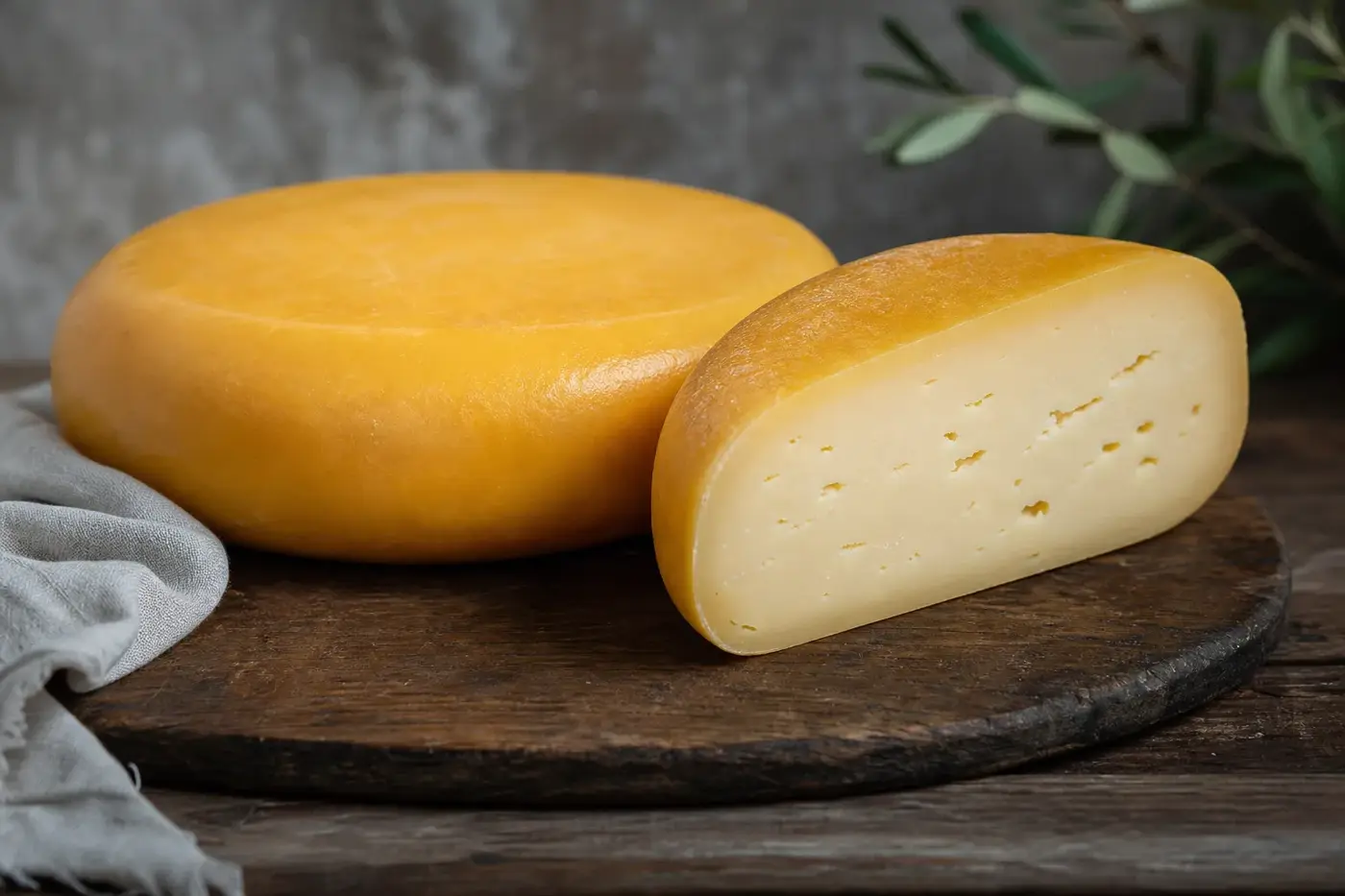
An ivory to yellow cut face, a smooth yellow rind, and a decision to make at the counter. Do you want a young piece, supple and mild, or something that months of maturation have made firmer and sharper? Noord-Hollandse Gouda brings North Holland’s milk, grass pastures, dairy farms and prescribed cheesemaking method into that choice. First ask where it comes from, then how old it is: cheese is unusually comfortable with both questions. [1, 2]
| What to know | The useful detail |
|---|---|
| Registered name | Noord-Hollandse Gouda. [1, 3] |
| EU authority and identifier | European Commission; PDO-NL-0314. [1] |
| EU protection | PDO; originally registered 21 June 1996. [2, 3] |
| Great Britain protection | Registered PDO; UK scheme registration 31 December 2020. [3] |
| Where the story starts | Province of North Holland, Netherlands. [1] |
| The milk | Cow’s milk from farms in the province; pasteurised before cheesemaking. [1] |
| Minimum time to mature | Four weeks under the published EU specification. [1] |
| How far ageing can go | The specification describes maturation beyond 18 months. [1] |
Follow the milk into North Holland’s pastures
Before your lunch comes the cows’ dinner. At least half the lactating cows’ annual feed dry matter must be roughage from the production area, including grass and silage. Silage is preserved forage, bringing the pasture harvest into winter. The regional name has its roots in everyday farming, not simply in a handsome label. [1]
The European Commission sets Dutch dairying in a maritime landscape, with grass growing on sandy and clay soils. Its account connects those pastures with the milk used for these cheeses. Noord-Hollandse Gouda brings that wider Dutch story down to the farms of one province. [2]
That milk is only part of what you taste. The specification attributes the cheese’s qualities to regional milk combined with its recipe, while the Commission highlights maturation time and temperature. Place, cheesemaking and ageing each contribute, so two wheels with the same protected name can develop differently. [1, 2]
At the counter, turn that landscape into a useful question. How old is this piece, and what is its texture like? Those answers will tell you more about lunch than a pastoral picture on the pack.
What the protected name promises you
Under the published EU specification, milk production, processing and initial cheese preparation must take place within North Holland. Ageing, cutting and pre-packing may then happen outside the province. A required traceability system keeps the link to the original cheese intact, carrying its protected origin beyond those first stages. [1]
So an address elsewhere on the pack need not mean the milk or cheesemaking came from elsewhere. It may identify where your cheese was handled or packed, rather than the dairy. Read it alongside the complete protected name, rather than treating it as the whole story.
PDO means protected designation of origin. To untangle the differences between that, a protected geographical indication and a traditional speciality guaranteed, visit protected names explained.
Great Britain also lists Noord-Hollandse Gouda as a registered PDO. Its scheme’s registration date is separate from the original EU registration. The protection described here covers those two jurisdictions, each with its own register. [3]
A curd wash, a brine bath, then time
Washing curd sounds more like tidying up than making lunch. Yet it helps give Noord-Hollandse Gouda its mild rather than sour character. The European Commission describes the recognisable Gouda sequence: pasteurise the milk, coagulate it, separate curd from whey, wash the curd, press and brine. Curd is the coagulated material that becomes cheese; whey is the liquid drained away. [2]
The regional specification connects curd processing and washing with that mild result. Pressing gathers the curd into the intended cheese format, and the brine bath supplies salt. Each stage, from handling the curd to forming the pressed cheese, helps shape the piece you take home. [1, 2]
Then the pace changes to natural maturation. The cheeses are turned and checked while their rind and character develop. That patient care helps explain how a young piece and an older one can give you quite different eating experiences beneath the same regional name. [2]
If you would like to follow coagulation and whey drainage more closely, read how cheese is made. When choosing Noord-Hollandse Gouda, keep three things together in your mind: regional milk, the prescribed method and maturity. All three matter to your plate.
Look beyond that smooth yellow rind
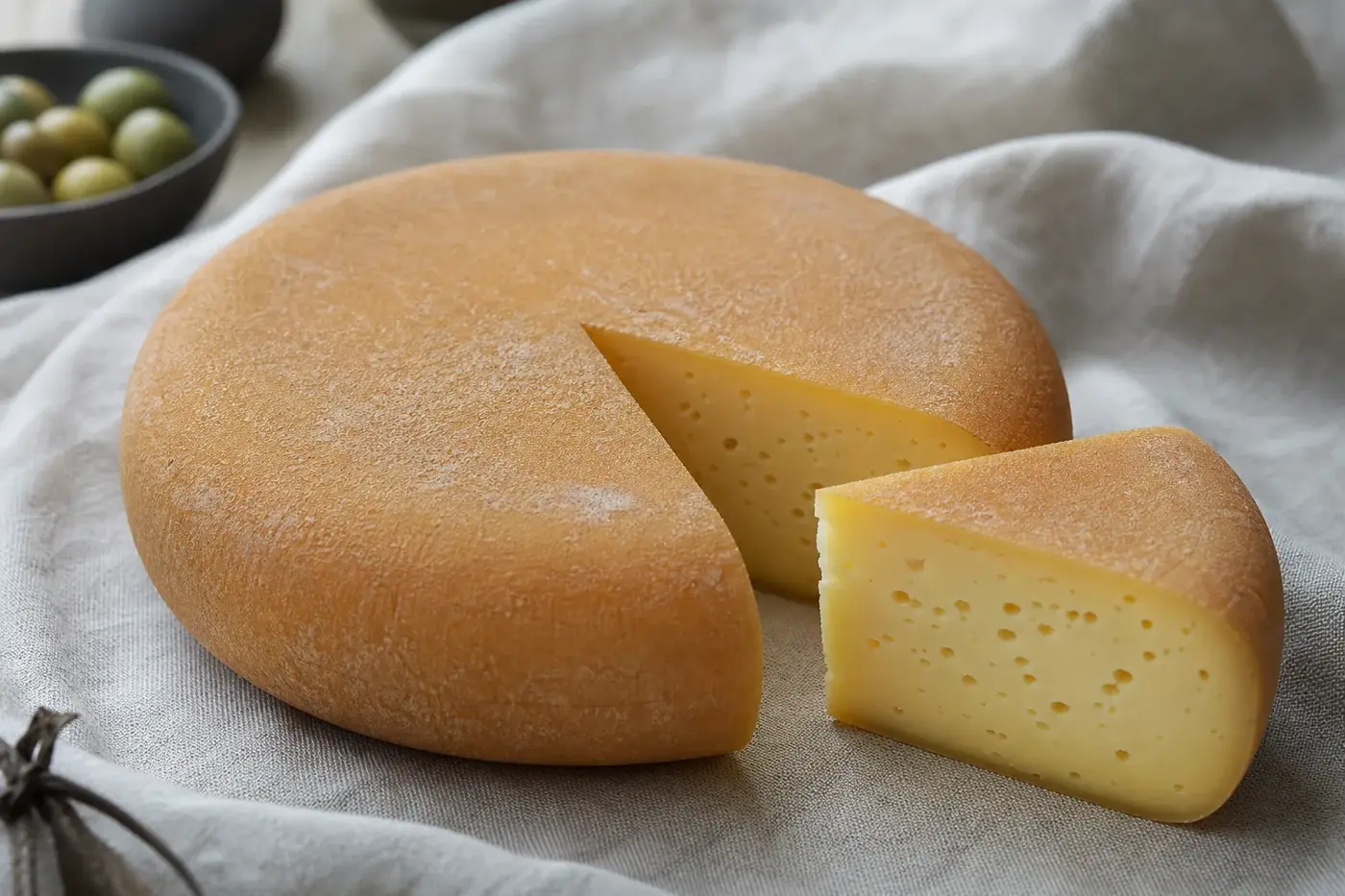
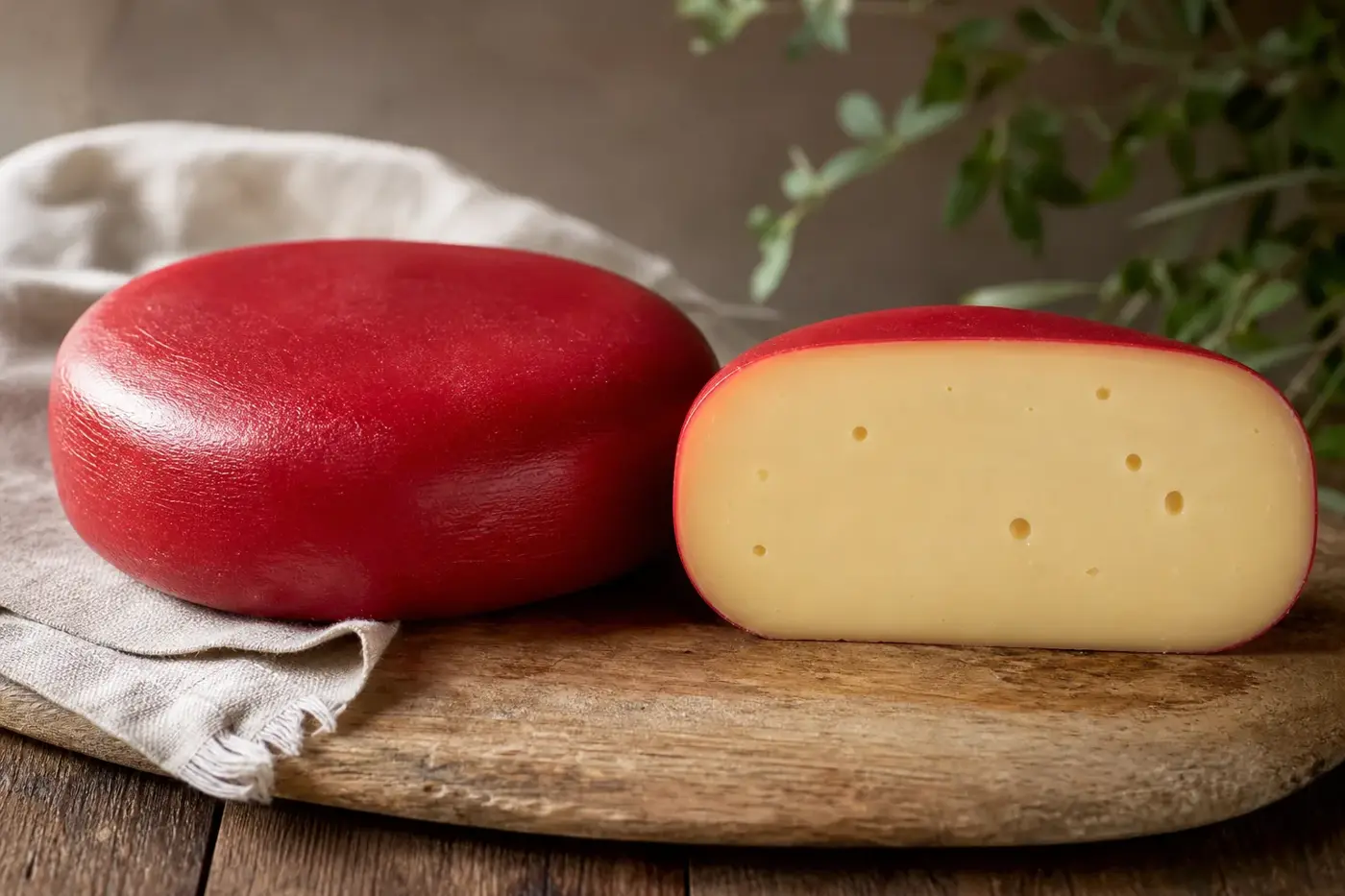
Cut into the cheese and you find an ivory to yellow interior, with openings that need not be evenly distributed. The rind is smooth, closed and yellow. A whole cheese is familiarly a flattened cylinder with rounded sides, though the specification also permits blocks. Shape alone will not identify this protected cheese for you. [1]
Ask to see the cut face when comparing portions. Do you want thin slices for bread, substantial wedges or small pieces for a board? The outside colour tells only part of the story, so bring maturity into your choice of serving format.
The Commission describes young examples as soft and sweet, becoming firmer and more deeply golden with age. The regional product description follows the flavour from mild to sharp. Put those descriptions together and you get a useful sense of just how much this cheese can change. [1, 2]
Find the age that fits your lunch
Start with texture, not bragging rights. A younger, more supple piece suits sandwiches and bread, especially when the cheese is the centre of a simple lunch. Something firmer and longer matured lends itself to smaller portions, fewer accompaniments and a little more time between mouthfuls.
Maturation changes strength as well as feel. The official descriptions chart a firmer texture and stronger aromatic flavour as ageing progresses. Use that as your starting point, then ask about the particular wheel: how does it cut, how firm is it, and how pronounced is its flavour? [1, 2]
Ask for the age in weeks or months wherever possible. “Mature” tells you much more when someone adds a maturation period and describes the texture. Left on its own, it is an adjective trying to do a cheesemonger’s job.
Choose age for purpose rather than prestige. If you want something mild to slice for sandwiches, say so. If small pieces of firmer, sharper cheese sound more appealing, ask for those instead. The right maturity is the one that suits your meal.
Gouda, Gouda Holland or Boerenkaas: read the difference
These names answer different questions, so give yourself a moment with the label. Gouda names a broader cheese type, while Gouda Holland identifies a Dutch geographical origin. Boerenkaas describes a traditional farm-based method. Noord-Hollandse Gouda has its own regional PDO.
| Name on the cheese | What it identifies in the EU | What that means for you |
|---|---|---|
| Gouda | A name whose continued use is expressly allowed by the Gouda Holland registration regulation. [4] | The word alone does not establish North Holland origin. |
| Noord-Hollandse Gouda | A regional PDO. [1] | Look for the complete name. |
| Gouda Holland | A PGI made from Dutch milk, produced and matured to a consumer-ready product in the Netherlands. [5] | Its geographical scope is broader. |
| Boerenkaas | A traditional speciality guaranteed, made on the farm from raw milk obtained mainly from its own herd. [6] | It identifies a traditional production method. |
Boerenkaas takes you beyond farmhouse versions of cow’s-milk Gouda. It includes cheeses from cattle, goats, sheep and buffalo, and the amended specification names Goudse Boerenkaas among its examples. The useful distinction is the traditional method, not one particular milk or cheese type. [6]
For a look around the wider family, read Gouda. If Noord-Hollandse Gouda is what you are after, keep the whole regional name in view. Gouda alone cannot tell you enough.
Let the label help you choose
Begin with Noord-Hollandse Gouda. Under the published EU labelling requirements, cut and pre-packed portions carry that name alongside the EU PDO logo. Then look at the origin and maturation information to understand what you are buying and how far its ageing has progressed. [1]
Keep making and packing separate in your mind. Your seller may be able to explain where the wheel was made, where it matured and where your portion was cut. If those connections are unclear on the label, ask about each stage in turn.
Make the maturation description practical: “Will this slice neatly for bread, or would you serve it in small pieces?” Follow that with a question about the actual age. You want a clear answer about cutting and serving, not simply a longer list of strength adjectives.
The cheese label guide walks you through the remaining pack information. After opening, keep the original label alongside the cheese. Its identity and storage instructions will then stay close at hand.
Bring bread, fruit and curiosity to the table
Build your plate around the change from mild and supple to firmer and sharper. The ideas below are ways to explore that documented progression, not rules for arranging lunch. Simple accompaniments help you notice the differences without crowding them out. [2]
With a younger piece, start with bread and fresh pear. Leave spreads and preserves aside, and taste the cheese on its own before adding anything. If that simple combination suits you, there is no need to add more.
With a longer-matured piece, try rye bread or plain crackers and crisp apple. Keep the accompaniments separate, so you can compare a mouthful with fruit against one without. Let your own preference set the balance before putting everything together.
Water is a straightforward choice with either age. For another alcohol-free option, try unsweetened tea, or a little apple juice diluted with sparkling water. Adjust the dilution to your taste, keeping the sweetness from taking over the cheese.
To get closer to what maturation does, serve two stated ages side by side. Compare their pliability, aroma and persistence of flavour before bringing in bread or fruit. Each piece gives you a clear reference point for the other.
Keep it cool and serve just what you need
If you follow Food Standards Agency consumer guidance in England, Wales and Northern Ireland, keep dairy products refrigerated and follow the pack’s storage instructions. The agency recommends a fridge temperature between 0 and 5 °C. Use a thermometer to check it. [7]
Keep the cheese’s instructions with its wrapping or container. If you are buying a freshly cut portion, ask the seller how to wrap it and what storage period they recommend for that product. The advice needs to suit the cheese and its packaging, rather than assume one fixed life after opening for every age and format.
When serving, cut only the portion you expect to use and return the rest to the refrigerator. Follow the current Food Standards Agency guidance on chilling and hot weather for England, Wales and Northern Ireland. Planning your portions makes this straightforward. [7, 8]
Use the guidance appropriate to your circumstances. For help with wrapping and organising the refrigerator, see storing cheese at home.
Choosing vegetarian cheese? Ask about the rennet
The protected name does not settle this question. The regional specification allows either calf rennet or microbial rennet, so vegetarian suitability depends on the particular product. Rennet is the coagulant that sets the milk; you need to know which kind the producer used. [1]
Read the product’s declaration or ask the cheesemonger to confirm the coagulant. You can put it directly: “Does this cheese use animal or microbial rennet, and does its producer declare it suitable for vegetarians?”
If that information is unavailable, choose a product with a clear declaration. Keep the answer attached to the particular cheese you are buying. It does not speak for every wheel carrying the regional name.
General information only, not medical advice: follow the official guidance where you live.
Questions people ask
What makes Noord-Hollandse Gouda different from Gouda?
Noord-Hollandse Gouda has its own regional PDO, with milk production, processing and initial cheese preparation taking place in North Holland. The word Gouda alone does not establish North Holland origin.
How long is Noord-Hollandse Gouda matured?
The published EU specification requires at least four weeks and also describes maturation beyond 18 months. Young cheese is soft and sweet, while older cheese becomes firmer and sharper.
How is Noord-Hollandse Gouda made?
It is made from pasteurised cow’s milk from farms in North Holland. The curd is washed, pressed and brined, with washing helping to give the cheese its mild rather than sour character.
Is Noord-Hollandse Gouda suitable for vegetarians?
The specification permits either calf rennet or microbial rennet, so the protected name alone does not establish vegetarian suitability. Check the product declaration or ask the cheesemonger which coagulant was used.
How should Noord-Hollandse Gouda be stored?
The Food Standards Agency advises keeping dairy products refrigerated and following the pack’s storage instructions in England, Wales and Northern Ireland. It recommends a fridge temperature between 0 and 5 °C, checked with a thermometer; see its guidance on chilling and hot weather.
Sources
- European Commission, Publication of an approved standard amendment to the product specification: Noord-Hollandse Gouda, C/2024/3414, published 31 May 2024. Includes the amended single document, reference PDO-NL-0314-AM02. Official text.
- European Commission, Directorate-General for Agriculture and Rural Development, Gouda Holland PGI / Noord-Hollandse Gouda PDO, undated explanatory account, retrieved November 2026. Official account.
- Department for Environment, Food & Rural Affairs, Noord-Hollandse Gouda, Great Britain protected food names register, published 4 January 2021, retrieved November 2026. Register entry.
- European Commission, Commission Regulation (EU) No 1122/2010, adopted 2 December 2010, Article 1. Official regulation.
- European Commission, Publication of the amended single document: Gouda Holland, 2019/C 338/02, published 8 October 2019. Official Journal document.
- European Commission, Publication of the amended product specification: Boerenkaas, 2022/C 136/04, published 28 March 2022. Official Journal document.
- Food Standards Agency, How to chill, freeze and defrost food safely, published 18 December 2017, retrieved November 2026. Applies to England, Northern Ireland and Wales. Official guidance.
- Food Standards Agency, Food safety in a heatwave: advice for consumers, retrieved November 2026. Official guidance.
Researched from official product documents, registration records and food safety guidance, with serving suggestions identified as editorial recommendations.
Last checked: November 2026
Last checked November 2026.
The editors suggest you read next