Leyden
Beside the cheese vat on a farm around Leiden sits a butter churn.
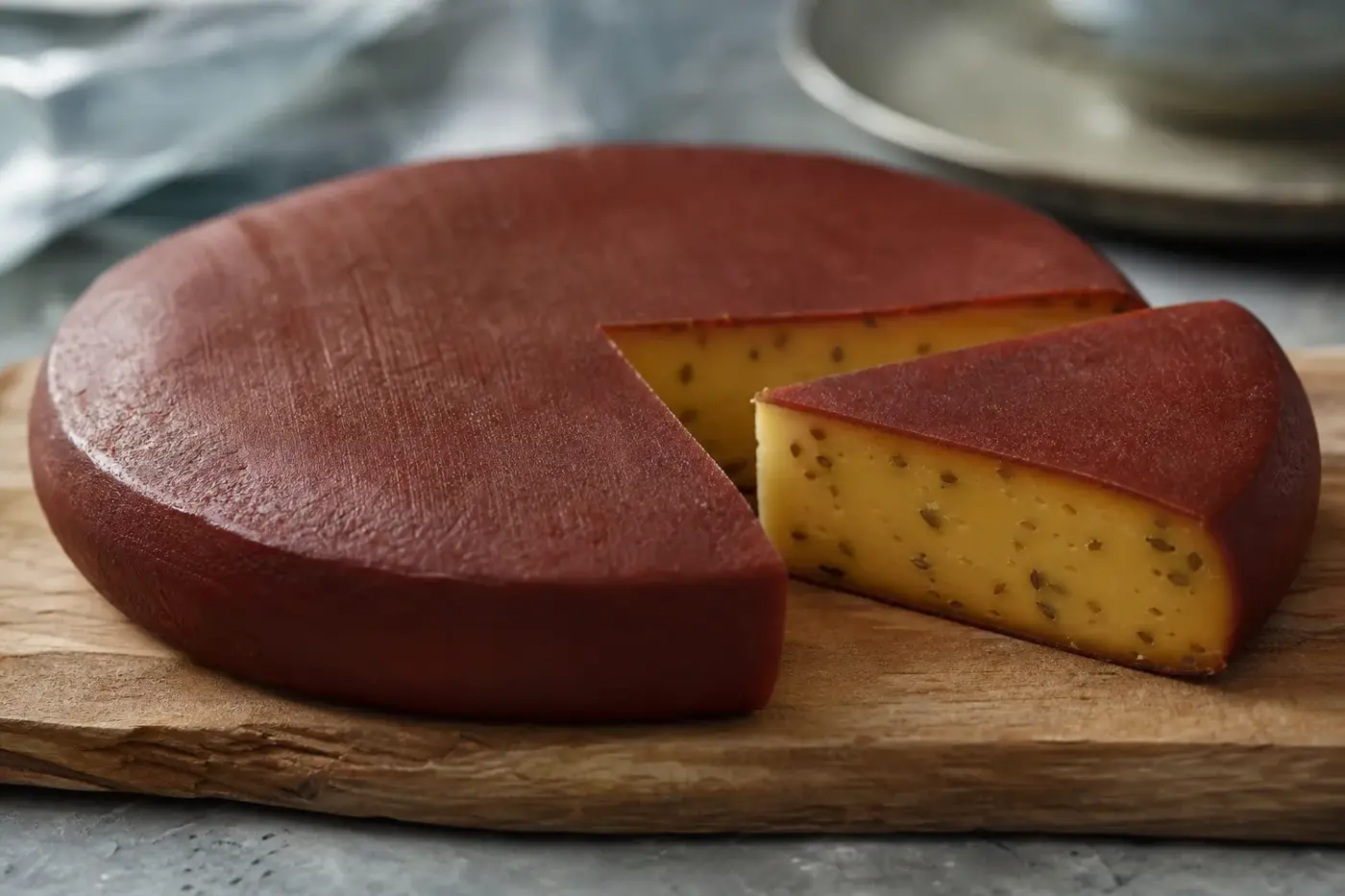
Beside the cheese vat on a farm around Leiden sits a butter churn. Cream goes one way; partly skimmed milk goes the other, into cheese scented with cumin. You can trace Leyden through that practical partnership, according to the producers’ association, and into Boeren-Leidse met sleutels: a PDO registered in the EU and Great Britain, with raw milk, a defined production area and a crossed-key mark at its heart. [1][2][3][4]
| What you want to know | The detail |
|---|---|
| Name you may know | Leyden, also encountered as Leiden cheese |
| Full registered name | Boeren-Leidse met sleutels. [3] |
| EU authority and identifier | European Commission, eAmbrosia, PDO-NL-0316; entity EUGI00000013137. [3] |
| EU status of Boeren-Leidse met sleutels | Registered PDO; protection date 13 June 1997; status as of November 2026. [3] |
| Great Britain status of Boeren-Leidse met sleutels | Registered PDO; UK scheme registration 31 December 2020, 23:00; status as of November 2026. [4] |
| Northern Ireland status | Not established here |
| Switzerland status | Not established here |
| United States status | Not established here |
| Milk in the protected cheese | Partly skimmed, unpasteurised milk from the farm’s own production. [2] |
| Fat requirement | 30 to 40% fat in dry matter in the English registration summary. [2] |
| Minimum maturation | For cheeses weighing at least 3 kg, at least 13 days at a minimum of 12 °C. [2] |
| Typical commercial maturation | Not established here |
| Required wheel weight range | Not established here |
| Clues to look for | Angular sides, red-brown coating and impressed crossed keys, as described by the producers’ association. [1] |
Before the cumin, there was butter
Leyden’s story begins with butter, not spice. The Vereniging van Boeren-Leidse Kaasmakers, the producers’ association, describes butter making developing near the population centres of the western Netherlands. Once farmers had taken the cream, Leiden cheese gave the remaining milk somewhere useful to go. [1]
Over time, the partnership changed direction. The association says butter is now a by-product of making the cheese. The former supporting act has rather taken over the bill. [1]
That history gives you a useful way into Leyden. Partly skimmed milk and cumin belong together here; the seeds are not simply decoration in an otherwise unspecified cheese. When you taste a slice, keep the churn in mind as well as the seasoning. [1][2]
The registration dossier places the cheese’s origins in the Oude Rijn basin around Leiden. Its territory reaches through Rijnland, Amstel en Vecht, Delfland, Schieland, Woerden and Leidse Rijn, plus specified districts or polders associated with Westerkoggenland, Giessenlande and Udenhout. Follow those names and you travel considerably further than the city alone. [2]
Meet the wheel, then look inside
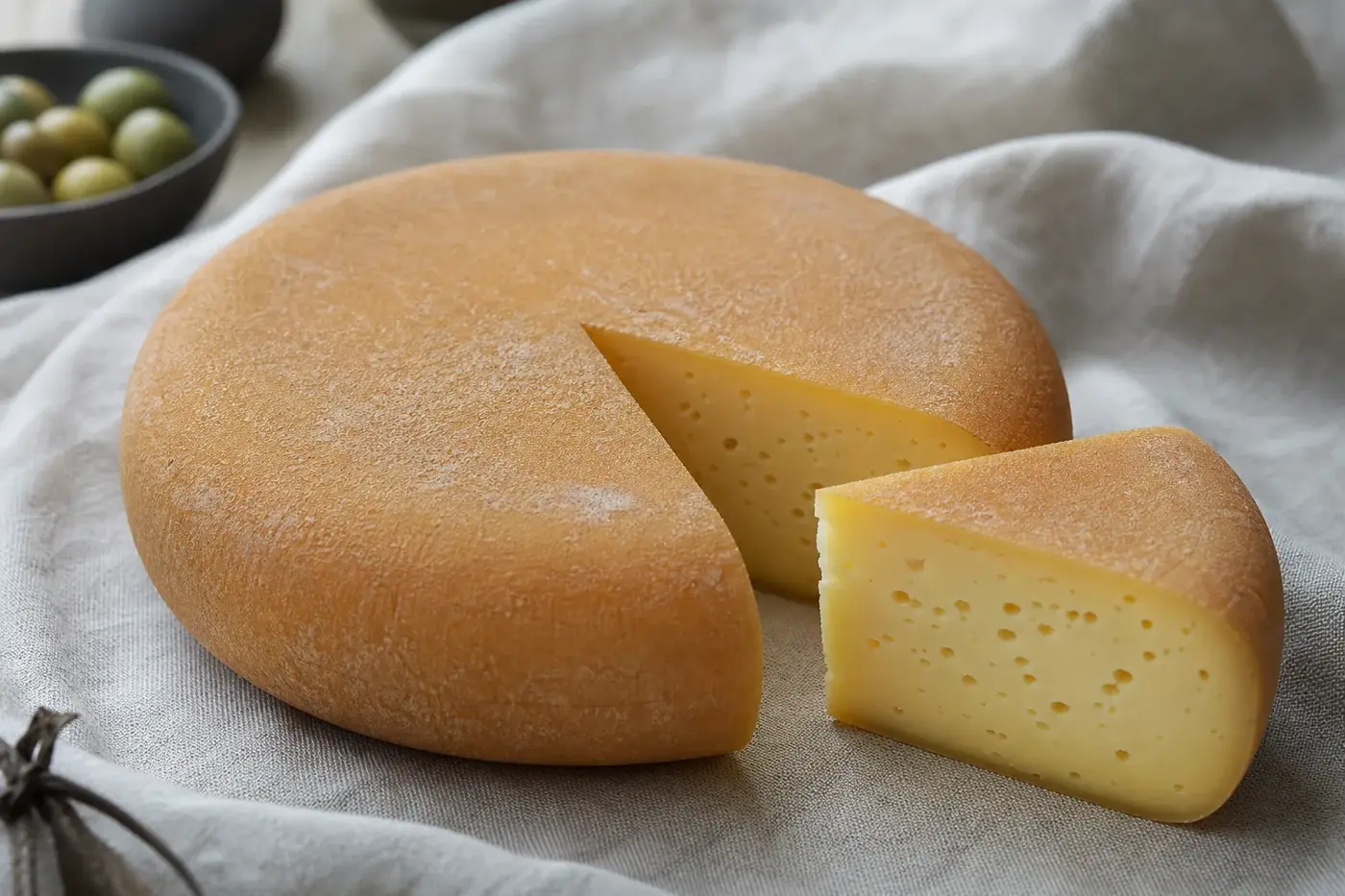
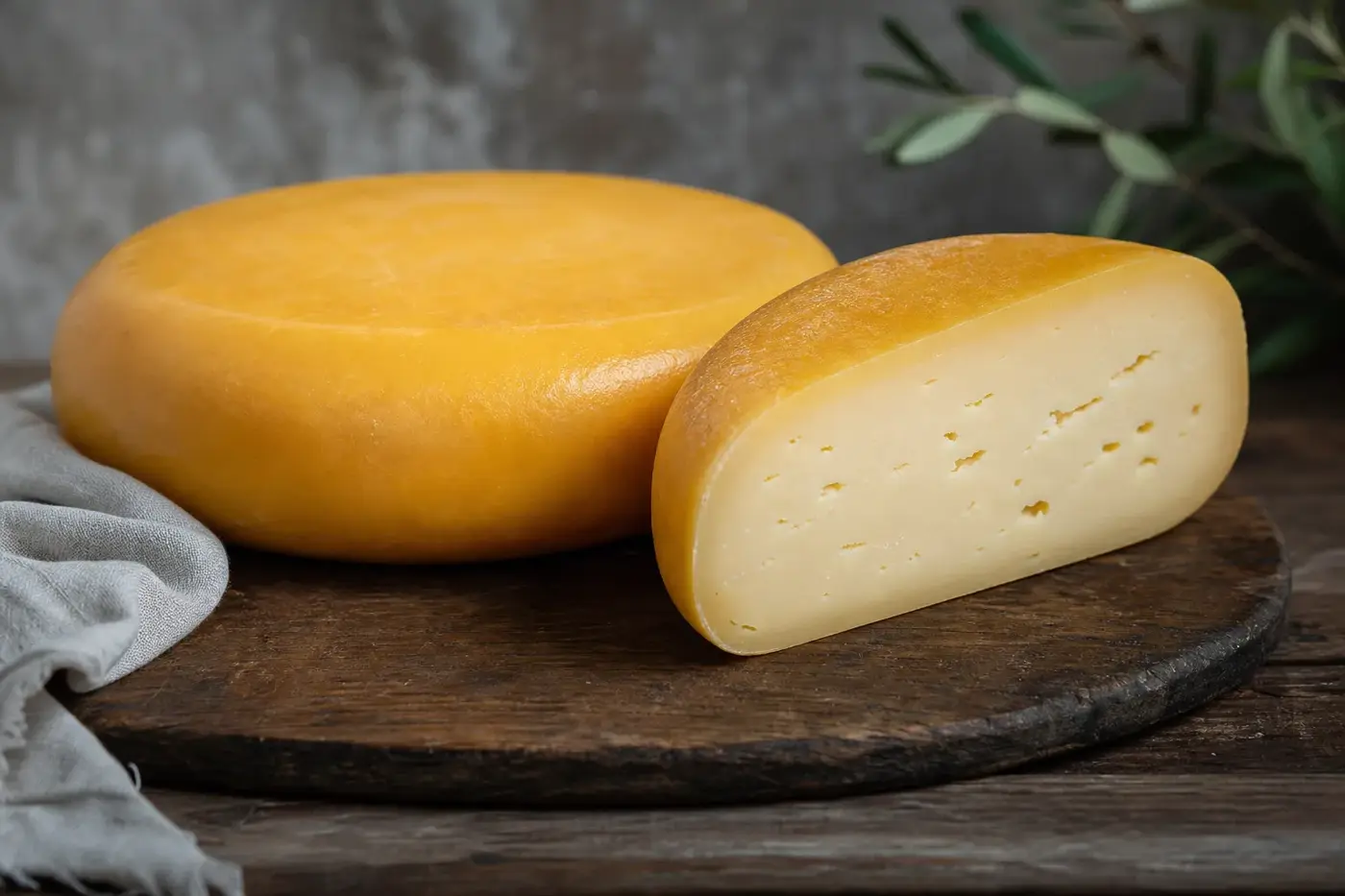
Start with the outline. A Leyden wheel is a flattened cylinder, with relatively angular edges where the faces meet the upright sides. The Dutch Boerenkaas specification calls this the Leiden model, contrasting it with the more rounded transitions of the Gouda model. [5]
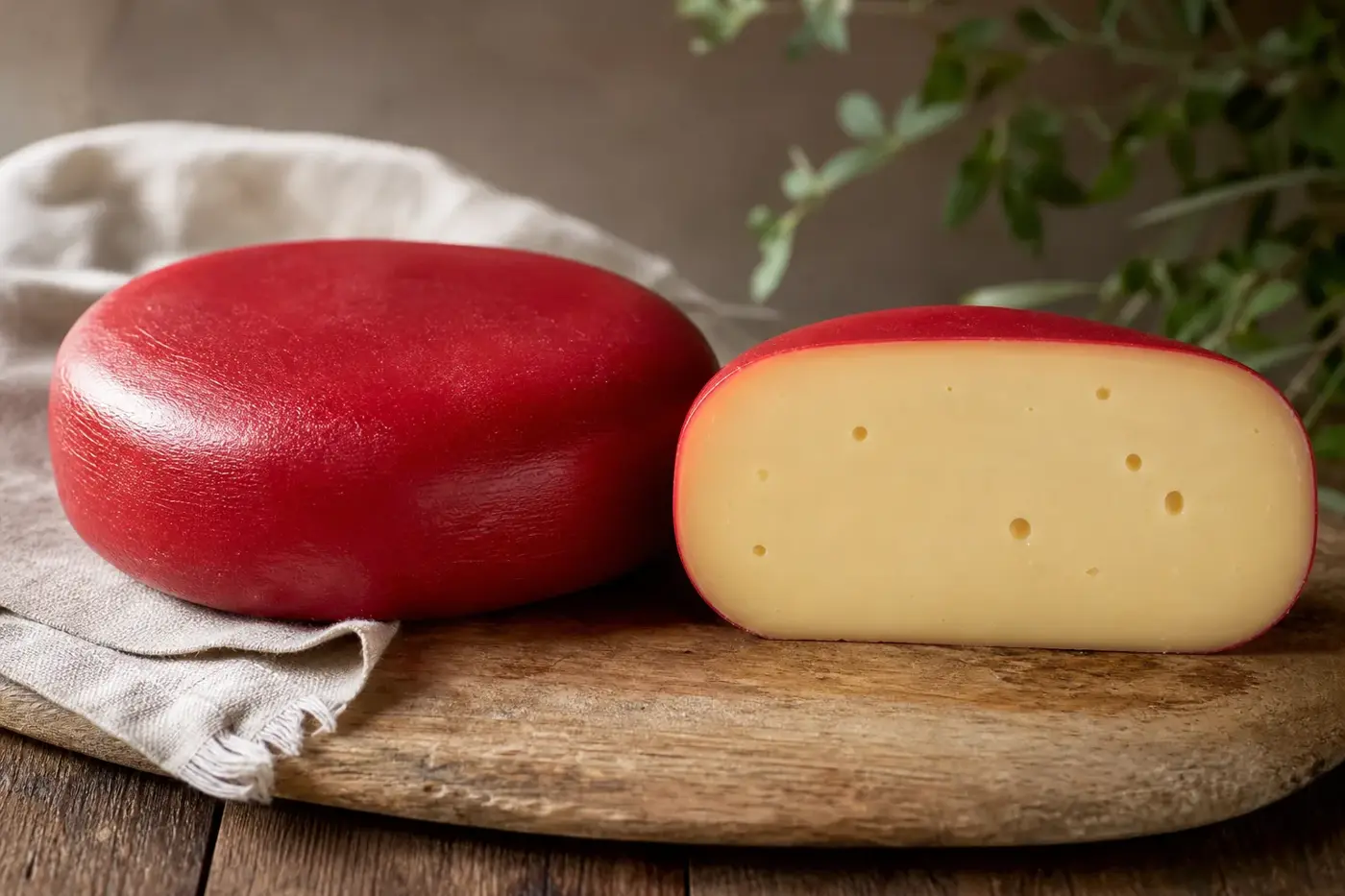
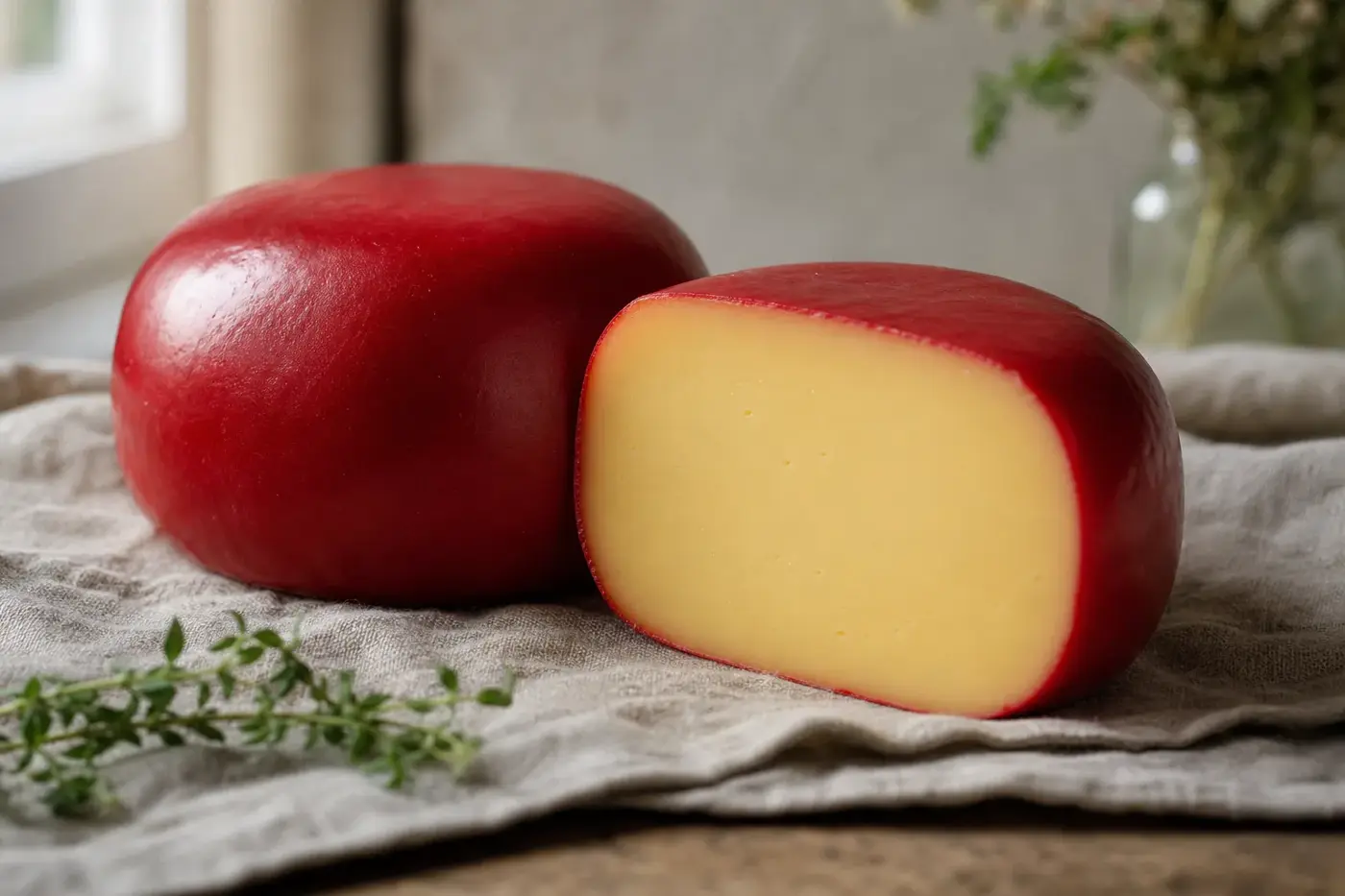
For Leidse Boerenkaas, that specification also describes a firm to hard, sliceable body. The rind is red and may be covered with cheese coating. Shape, texture and exterior each give you part of the picture. [5]
A cut wedge reveals the seasoning. The producers’ illustrated brochure shows a coloured exterior around a yellow interior dotted with small brown cumin seeds. Its photographs let you see the internal structure that a whole wheel keeps to itself. [6]
Use appearance to recognise the style, then read the label. For the PDO, you need the full registered name and accompanying information, not merely a particular rind colour or a scattering of seeds. For help separating style names, producers’ names and protected designations, turn to how to read a cheese label.
Taste what the skimmed milk brings
Take cream out of milk and you change what reaches the vat. After skimming, the producers describe substantial working of the curd, the coagulated milk solids. Their account centres on firmness rather than softness or a rich, high-fat mouthfeel, with the cheese growing drier as it matures. [6]
You can understand that texture through both the milk treatment and the work in the vat. The Boerenkaas specification offers a useful contrast: Goudse Boerenkaas is firm to supple and unctuous, while Leidse Boerenkaas is firm to hard and sliceable. Those descriptions belong to the named farmhouse types, so “Gouda” or “Leyden” alone cannot tell you exactly how your piece will feel. [5]
As you taste, give texture and seasoning separate attention. First notice the resistance of the paste, the cheese’s interior. Then notice the flavour when you bite through a cumin seed: “strong” is a rather blunt word for two quite different impressions.
Let the cumin speak, then ask about age
In the protected cheese, cumin is a requirement, not an optional flourish. Its warm, savoury spice character sits alongside the milk and maturation. Try a plain piece first, before mustard, chutney or another seasoning joins in. [2]
At the counter, ask about age rather than leaving it at “mature”. In its 2017 brochure, the producers’ association describes slowly matured cheese for the Boeren Leyden Traditioneel initiative, reaching its preferred characteristics at 12 to 18 months. That describes the initiative’s selected cheese, not the PDO’s minimum maturation requirement. [6]
The protected name tells you which cheese you are buying. Its actual age helps you decide whether it is the piece you want. For a revealing comparison, try younger and older pieces from the same maker together.
Notice how readily each piece slices or breaks. Pay attention to how long the cumin lingers and whether the cheese flavour stays distinct beside it. A note of maker and age gives you something firmer to return to than “that lovely one”, a filing system familiar to many cheese lovers.
Ask for the name with the keys
Boeren-Leidse met sleutels is the exact name in the European Commission’s register. In November 2026, eAmbrosia records it as registered, with no amendment in progress shown in that record. The GB register separately lists it as a registered Protected Designation of Origin, or PDO. [3][4]
If you want this particular farmhouse cheese, ask for the full name and its accompanying identification. “Dutch cumin cheese” describes seasoning and a national association. The registered wording identifies the product entered in the PDO register, a distinction worth making when you choose. [3]
The sleutels are keys. The dossier connects the crossed-key emblem with Leiden’s coat of arms, while the producers’ association identifies the impressed mark as a distinguishing feature of its cheese. If your retail wedge no longer carries that part of the wheel, ask for the original wheel’s identification or the supplier’s product information. [1][2]
Keep another name separate, too. The Boerenkaas specification includes “Leidse Boerenkaas” among its product types, but those words and the full PDO name are not interchangeable. [5] You can explore the wider picture in protected names explained.
From the farm’s milk to the final impression
The protected cheese starts with milk from no more than two successive milkings. The registration summary describes coagulation with rennet, followed by cutting and warming the curd and mixing in cumin. Some curd stays unseasoned, reserved for the smooth faces. [2]
Pressing follows in two stages. During the second, the cheese receives its identifying impression; brining and rind treatment complete the sequence described. Those keys belong to the making, not just to the view across the cheese counter. [2]
Raw milk is part of this protected production description. Here, it means milk that has not undergone pasteurisation, which you should establish from production information rather than colour. For the differences in treatment, read raw milk, thermised and pasteurised cheese.
Follow the process and you can see why cumin alone cannot define Leyden. Milk handling, curd work and pressing all contribute. The story runs from partly skimmed milk at the beginning to the impression made in the press.
Make room for Gouda and Kanterkaas
Put Gouda beside Leyden and you have a useful comparison of shape and texture. Kanterkaas takes you into another Dutch regional tradition. A published application from 2000 describes cheeses associated with Friesland and the Westerkwartier, distinguished by a sharply defined lower edge. [7]
That application separates plain Kanterkaas, clove-seasoned Kanternagelkaas and cumin-seasoned Kanterkomijnekaas. [7] These names are worth bringing into your conversation with the seller. Angular edges do not make every Dutch cheese the same, and neither do seeds.
Before choosing a replacement, establish which named type is on offer. Think about what you want to compare, too. Shape, seasoning and texture can lead you towards different choices.
Set plain Gouda beside Leyden to explore unspiced cheese against cheese containing cumin. Choose Kanterkomijnekaas for two cumin-bearing traditions side by side. Keep the ages as similar as the seller can establish, then consider texture and seasoning separately rather than judging everything in one mouthful.
Find the piece that suits your plans
Begin with a simple choice: do you want the wider cumin-flavoured style, or specifically Boeren-Leidse met sleutels? For the PDO, request the registered name, maker, stated age and original wheel identification. Those details turn a broad request into a particular product you can match to the official record. [3]
Then talk about how you plan to eat it. Age need not settle everything: you might want easy slices for bread or a firmer piece to shave over a dish. Tell the seller, and if a taste is offered, try the cheese plain before deciding.
Online, look for photographs and information about the actual product being supplied. Give a clear product name and maturation statement more weight than an atmospheric description. They offer firmer ground for deciding whether the cheese is the one you had in mind.
Take it home, then take it beyond the board
For household storage in England, Wales and Northern Ireland, the Food Standards Agency advises a fridge temperature between 0 and 5 °C and following dairy packaging storage instructions. For time out of the fridge, consult its current guidance on keeping chilled food out. This guidance is dated here to November 2026. [8]
Keep the seller’s label with your cheese so you retain its date and handling instructions. For wrapping and caring for cut pieces, follow how to store cheese at home.
At the table, start with thin slices and bread. Add a little apple or an unsweetened accompaniment if you like, but taste before reaching for stronger condiments. This is an invitation to explore, not a claim to a traditional pairing: give cheese and cumin the first mouthful.
For something beyond the cheeseboard, the producers’ association suggests Leyden with onions and tomatoes, in an omelette, and in a winter salad containing apple. Those give you useful places to begin. [9] To drink, water offers the clearest starting point when you are comparing the cheese flavour with its cumin.
General information only, not medical advice: follow the official guidance where you live.
Questions people ask
What does Leyden cheese taste and feel like?
Cumin gives it a warm, savoury spice character. The producers describe a firm cheese that grows drier as it matures.
Is Leyden made with raw milk?
The protected farmhouse cheese is made with partly skimmed, unpasteurised milk from the farm’s own production. Its production description specifies milk from no more than two successive milkings.
How can I identify the protected Leyden cheese?
Ask for the full registered name and check the accompanying identification. The producers’ association describes an impressed crossed keys mark, which the dossier links to Leiden’s coat of arms.
How long is Leyden cheese matured?
For protected cheeses weighing at least 3 kg, the minimum is 13 days at a minimum of 12 °C. The page does not verify typical commercial maturation.
How should I store Leyden cheese?
For households in England, Wales and Northern Ireland, the Food Standards Agency advises a fridge temperature between 0 and 5 °C and following the storage instructions on dairy packaging. Check the agency’s current guidance on keeping chilled food out of the fridge.
Sources
- Vereniging van Boeren-Leidse Kaasmakers. Boeren-Leidsekaas, sections “Historie” and “Kenmerken”, undated website. Read at boerenleidsekaas.nl
- Hoofdproduktschap voor Akkerbouwprodukten. Application for registration under Article 17 of Council Regulation (EEC) No 2081/92: Boeren-Leidse met sleutels, English registration summary, national application 004/94, dossier receipt recorded as 24 September 1996. European Commission attachment 71544. Read at webgate.ec.europa.eu
- European Commission. eAmbrosia geographical indication record: Boeren-Leidse met sleutels, PDO-NL-0316, live register record retrieved November 2026. Read at webgate.ec.europa.eu
- Department for Environment, Food & Rural Affairs. Boeren-Leidse met sleutels, GB protected food name register entry, published 4 January 2021, retrieved November 2026. Read at gov.uk
- Netherlands Enterprise Agency. Productdossier Boerenkaas, version hosted June 2022, sections 3 and 4 and comparative product tables. Read at rvo.nl
- Vereniging van Boeren-Leidse Kaasmakers. Boeren Leyden Traditioneel, Slow Food Presidium brochure, June 2017, pages 1 to 3 inspected. Read at boerenleidsekaas.nl
- French Ministry of Economy, DGCCRF. Avis de mise en consultation d’une demande d’enregistrement d’une appellation d’origine protégée concernant du kanterkaas, kanternagelkaas, kanterkomijnekaas (fromage), BOCCRF No. 4, 31 March 2000. Historical application summary. Read at economie.gouv.fr
- Food Standards Agency. How to chill, freeze and defrost food safely, current retrieved guidance, November 2026. Applies to England, Northern Ireland and Wales. Read at gov.uk
- Vereniging van Boeren-Leidse Kaasmakers. Recepten, undated website, retrieved November 2026. Producer-association cooking suggestions, with its commercial interest in promoting the cheese. Read at boerenleidsekaas.nl
Researched through official register records, published specification material, the producers’ association’s accounts and official household food-storage guidance.
Last checked: November 2026
Last checked November 2026.
The editors suggest you read next