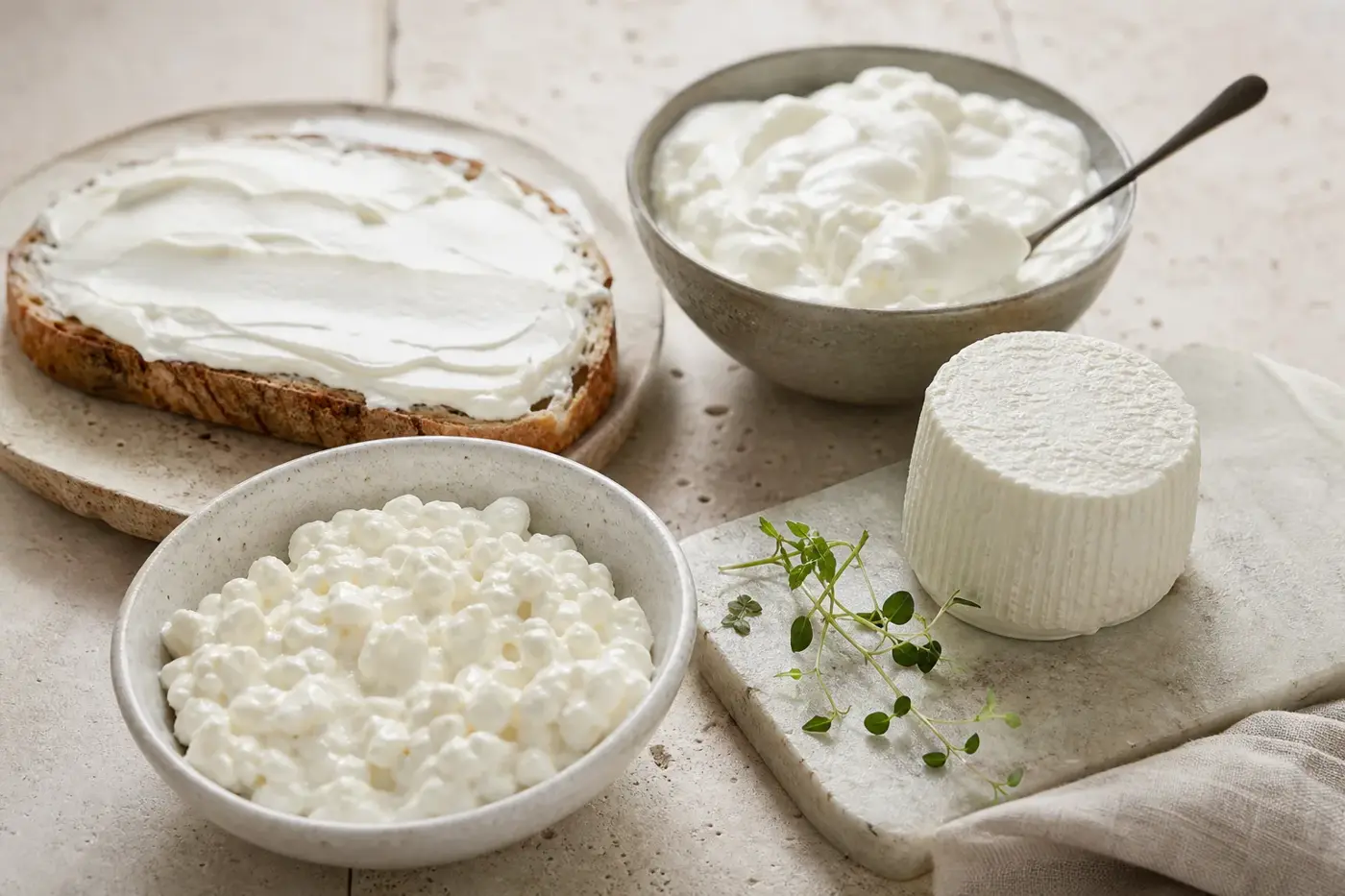
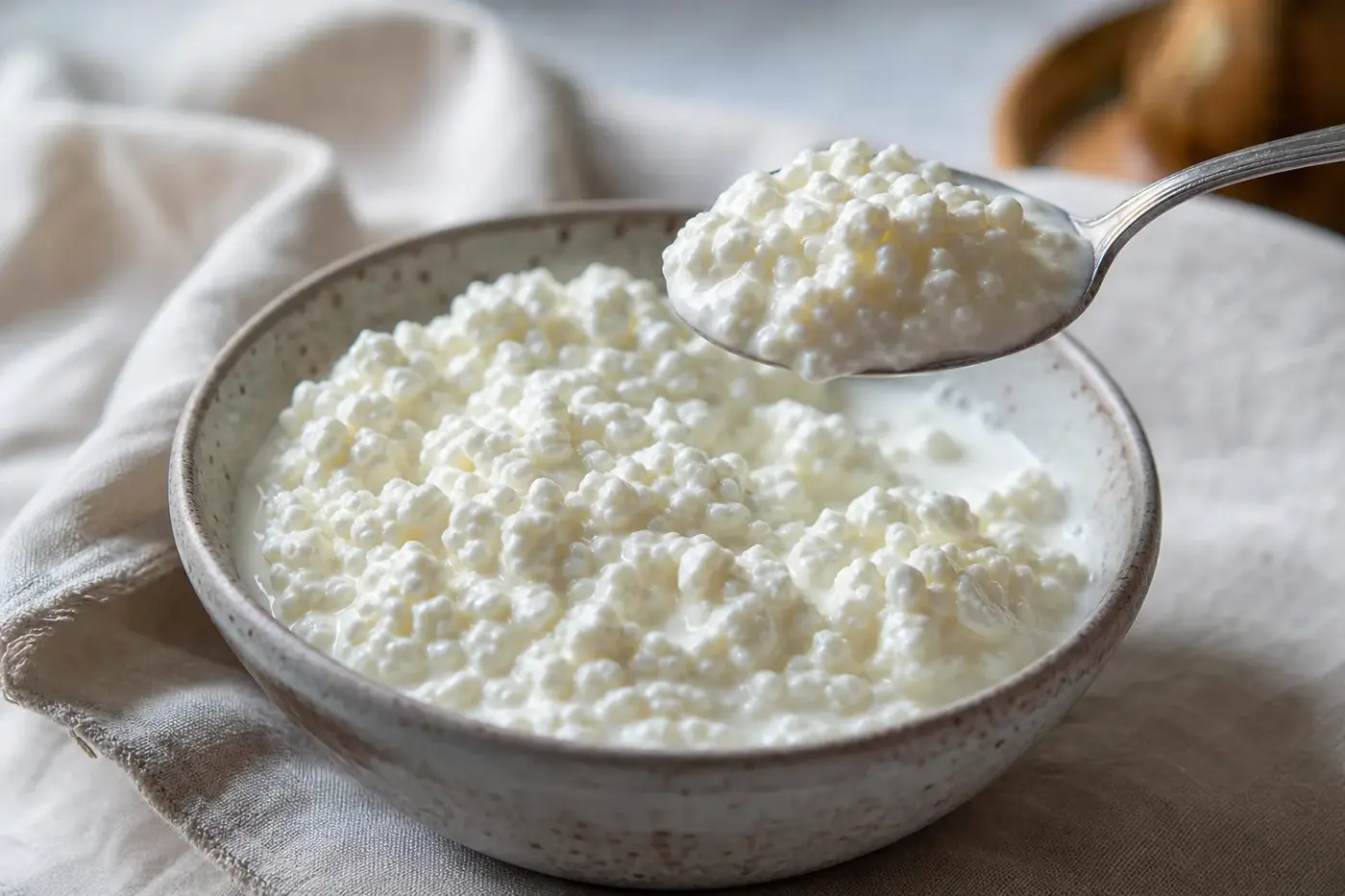
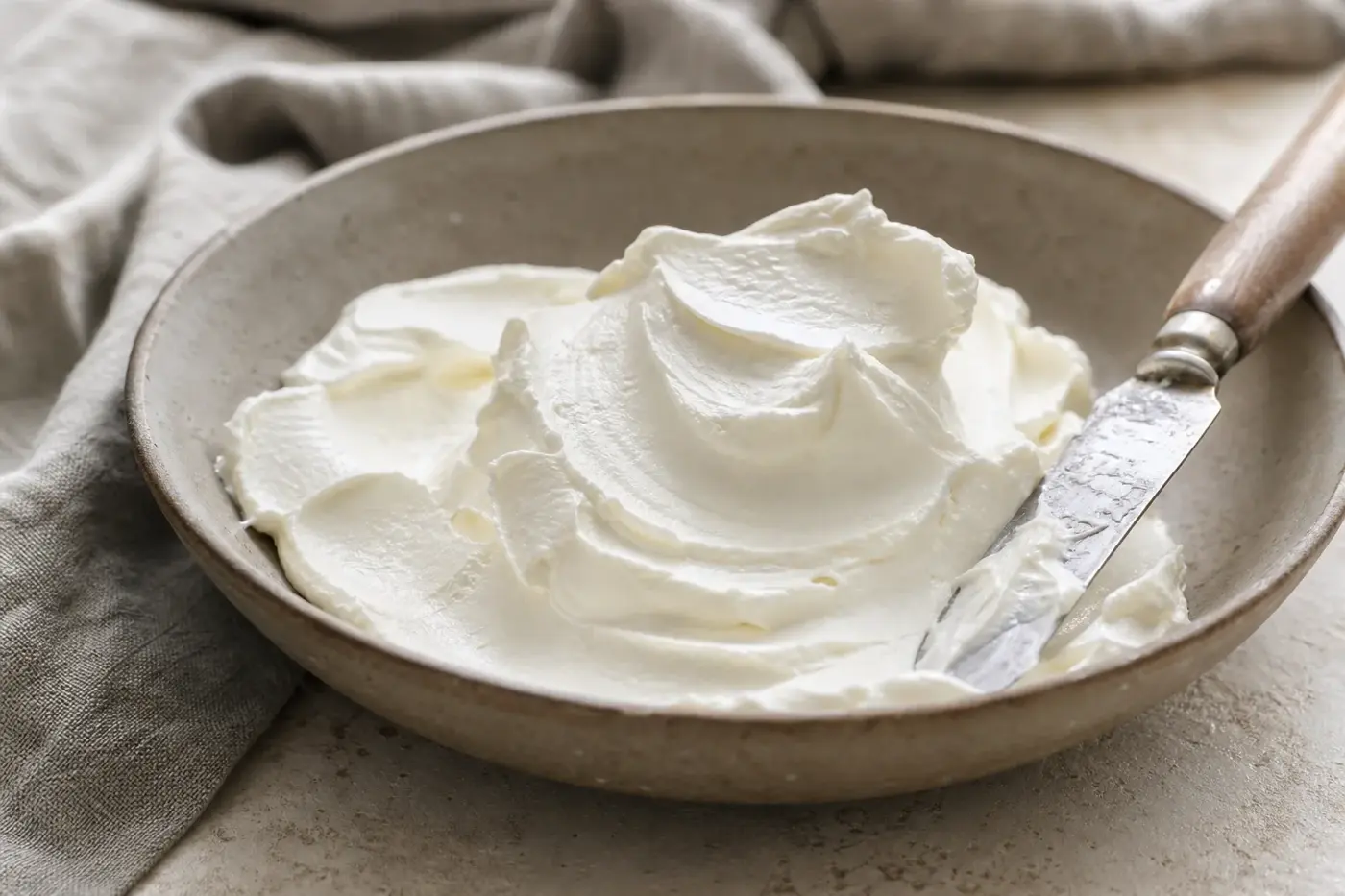
Fromage Blanc and Fromage Frais Explained
Lift the perforated basket from a pot of faisselle and look beneath it.
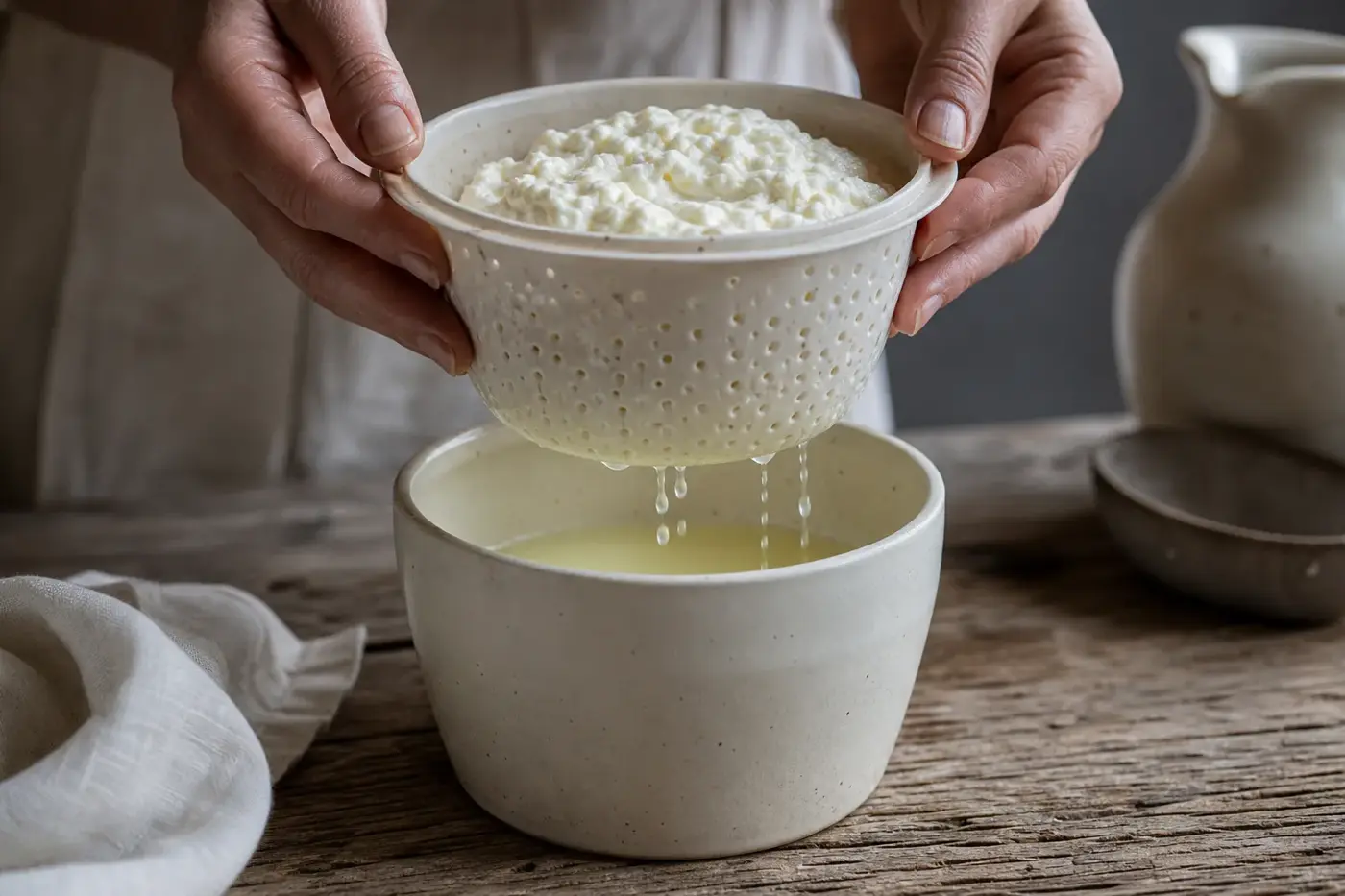
Lift the perforated basket from a pot of faisselle and look beneath it. There is the whey; above it, fresh white curd so soft you may hesitate before tipping it out. The basket tells you something useful: fromage blanc and fromage frais are overlapping names for soft, unripened cheeses, while faisselle names both the draining container and the fresh cheese commonly sold inside it.[1][2]
Fromage blanc or fromage frais? Get to know the pot
Here, freshness matters more than a rind or a long stay in a maturing room. Syndifrais, the French industry organisation for fresh dairy products, describes fromage blanc as an unripened cheese. Its production account includes basket drained, smooth, salted, sweetened and flavoured versions. Your spoon has options.[3]
For faisselle, CNIEL's dairy information site describes something particularly delicate. The cheese is moist, very soft and fragile, with no rind and a mild flavour.[2]
The names have a legal side, too. In France, Article 2 of Décret n° 2007-628 reserves fromage blanc for an unripened cheese whose fermentation, when present, is mainly lactic. Under these domestic conditions in November 2026, fermented fromages blancs sold with the qualifier frais or as fromage frais must contain living flora when sold to the consumer. One product can meet both descriptions, so fromage frais need not mean a separate recipe or a firmer cheese.[1]
At the shop, look beyond the name to the fuller description. Lisse means smooth; en faisselle means in a draining basket. Check the ingredients and the cheese itself: a fruit flavoured fromage frais and a plain basket drained fromage blanc can belong to the same family while doing very different jobs at your table. The names alone cannot rank them by thickness.[2][3]
Follow the milk from setting to spoon
Preparing the milk, setting it and separating curd from whey are the three central operations described by Syndifrais. Cultures, called ferments lactiques on French labels, help set the milk. A coagulant such as rennet can also be used; you can explore that coagulating enzyme preparation in the guide to rennet.[3]
As the milk coagulates, it forms a gel or curd. The liquid released during draining is whey, or lactosérum. Gravity can do the draining, or a manufacturer can speed up separation by centrifugation. Another approach in the industry account concentrates the milk before fermentation, using ultrafiltration to remove part of its watery component.[3]
After separation comes a choice you can feel on your spoon. The curd may stay in a basket or be beaten smooth, giving you delicate curd in one pot and an even, smooth consistency in another. For the wider sequence, see how cheese is made.[3]
What milk and cream bring to your spoon
Cow's milk may be familiar, but that white curd does not tell you everything. CNIEL records cow's, goat's and sheep's milk for faisselle, with sheep's milk less common than the other two. Alliance Elevage's technical introduction also describes faisselle made from all three. Check the species on your pack.[2][4]
Cream, draining and smoothing are separate decisions, not interchangeable clues. Syndifrais describes adding cream to adjust fat content, and sugar, fruit or flavourings to make different versions. Thickness alone cannot tell you how much fat a cheese contains. Read the ingredients and nutrition panel, comparing fat per 100 g of the finished product with the same measure on another pack.[3][5]
Faisselle: lift the basket, meet the cheese
That perforated basket is your defining clue. A faisselle is a mould that holds curd while liquid drains away, and CNIEL describes the cheese as very lightly drained. It is sold directly in its mould because it is fragile. The container has lent its name to its contents, so buying faisselle usually means taking home fresh curd in its own draining basket.[2][4]
The whey around the basket belongs there; it is part of the draining arrangement. Before tipping out the cheese, decide how you want to serve it. Less draining leaves more liquid with the curd, while letting more whey escape gives a firmer result. You are adjusting its handling and texture, not developing a mature cheese's character through long ripening.[2][3]
- Lift the inner basket clear of the surrounding whey, supporting it over its outer pot.
- For a firmer serving, support the basket above the liquid in its original container in the fridge, following the pack's instructions.
- To unmould, place a small plate over the basket, invert both together and gently lift away the basket. Or leave the cheese where it is and spoon it straight from the pot.[2][6]
Keep draining within the product's normal refrigerated handling and labelled life. The FSA's home advice for England, Wales and Northern Ireland is a fridge between 0 and 5 °C. Food Standards Scotland advises 5 °C or below.[6][7]
Meet the neighbours: yoghurt, cottage cheese and cream cheese
A white, spoonable dairy food does not tell you at a glance whether it is cheese or fermented milk. Under France's domestic yoghurt decree, yoghurt is fermented using Lactobacillus bulgaricus and Streptococcus thermophilus, which must remain alive in the finished product. The decree also prohibits draining away constituents of the milk. This is the specific French production rule in November 2026.[8]
| Product | How it comes together | What to notice on your spoon |
|---|---|---|
| Fromage blanc or fromage frais | Milk is set and drained, or concentrated before fermentation.[3] | Smoothness, thickness and acidity |
| Faisselle | Fresh curd sits in a draining basket.[2] | Fragile curd, moisture and mild flavour.[2] |
| Yoghurt | Milk is fermented, with specific cultures under French domestic rules.[8] | The product's thickness and acidity |
| Cottage cheese | Cultured milk is coagulated, then the curd is cut and drained; some versions have a dressing.[13] | Separate soft curds; dressing and salt affect flavour.[13] |
| Cream cheese | Milk and cream are cultured, coagulated and concentrated.[14] | Smooth and spreadable, often mild and tangy.[14] |
When you cook, substitute for consistency and purpose, not simply for a similar name. A smooth sauce needs something different from a filling where curds are welcome. Compare the actual products and follow a recipe written for your chosen ingredient. The NHS lists cottage cheese and cream cheese as examples of soft cheeses in its pregnancy guidance.[9]
A spoonful of jam, or a handful of herbs?
Plain fresh cheese leaves the seasoning in your hands. Alliance Elevage suggests honey and jam for sweet servings, or herbs, shallots, garlic, salt and pepper for savoury ones. Choose plain cheese if you want that freedom. Fruit preparation or added sugar has already made part of the decision for you.[3][4]
For a savoury bowl, try chopped chives, parsley or finely sliced shallot, building on those herb and shallot combinations. Spoon the mixture alongside cooked potatoes, or serve it as a dip with bread. For something sweet, add prepared fruit and a little honey. Or spoon jam beside the unmoulded cheese and enjoy the two separately: not everything needs a committee meeting in the bowl.[4]
If you have a cheesecake, tart filling or sauce in mind, choose a published recipe specifying fromage blanc or fromage frais. Match the consistency it requests. The NHS suggests plain yoghurt and fromage frais as alternatives to cream, giving you a useful starting point. Your recipe still needs to account for the product's moisture and other ingredients.[10]
Before you choose, give the label a moment
Start with four questions: which animal's milk is used, is it pasteurised, is the cheese plain or flavoured, and how must you store it? Look through the ingredients for cream, sugar, fruit, herbs and other additions. If milk treatment matters to your choice and the label is unclear, ask the maker or retailer before buying. The guide to raw, thermised and pasteurised cheese explains the different treatments.[2][3][9]
Follow the pack's dates and storage instructions, including any limit after opening. UK government guidance distinguishes a use-by date, which concerns safety, from a best before date, which concerns quality. Do not eat refrigerated fresh cheese after its use-by date. Storage matters before that date too, because incorrectly stored food can become unsafe earlier.[5]
Keep track of when you open the pack. Its printed date and its instructions for use after opening answer different questions, and both matter when you decide how long to keep it. For more detail, see how to read a cheese label and how to store cheese at home.[5]
This page summarises published guidance from the official sources it cites. It is not medical advice. Guidance differs between countries and changes over time, so check the current source for where you live, and ask your doctor, midwife, pharmacist or dietitian about your own circumstances.
Pregnancy and higher risk: understand the cheese type
UK advice, November 2026: The NHS lists pasteurised soft cheeses, including cottage cheese and cream cheese, among foods that can be eaten in pregnancy. It advises avoiding mould ripened soft cheeses with a white coating and soft blue cheeses unless cooked until steaming hot, even if pasteurised.[9]
It also advises avoiding soft cheeses made with unpasteurised milk unless cooked until steaming hot, but permits hard cheeses made with unpasteurised milk. Check the milk treatment and cheese type rather than relying on the words fromage frais or faisselle.[9]
The NHS identifies pregnant people, newborn babies, people with weakened immunity and older people as at higher risk of serious listeriosis. Its dairy guidance advises children, people who are unwell, pregnant women and older people against unpasteurised milk or cream and some dairy products made from unpasteurised milk. Read the linked NHS guidance for the full advice, and discuss your individual circumstances with your healthcare professional.[10][11]
Questions people ask
What is the difference between fromage blanc and fromage frais?
Both names describe overlapping types of soft, unripened cheese. One product can meet both descriptions, and the names alone do not tell you which is thicker.
How do you drain and serve faisselle?
Lift the inner basket above the whey and leave it supported in its original container in the fridge for a firmer serving, following the pack's instructions. You can invert it onto a plate or spoon the cheese straight from the basket.
Is fromage frais the same as yoghurt?
Fromage frais is a fresh cheese, while yoghurt is fermented milk. French yoghurt rules specify two cultures that must remain alive in the finished product and prohibit draining away constituents of the milk.
What milk is used to make faisselle?
Faisselle can be made from cow's, goat's or sheep's milk. Sheep's milk is less common than cow's or goat's milk, so check the pack for the species used.
Can you eat fromage frais or faisselle during pregnancy?
The NHS lists pasteurised soft cheeses among foods that can be eaten in pregnancy. It advises avoiding soft cheeses made with unpasteurised milk unless cooked until steaming hot, so check the NHS pregnancy guidance and the cheese's milk treatment and type.
Sources
- Légifrance. Décret n°2007-628 du 27 avril 2007 relatif aux fromages et spécialités fromagères, consolidated text in force, particularly Articles 1 and 2. Article 2 wording effective from 1 January 2014; checked November 2026. Official consolidated text.
- CNIEL, Produits Laitiers de France. Faisselle, undated online cheese description, retrieved November 2026. Industry source for its description of the style. Faisselle.
- Syndifrais. Le fromage blanc, undated technical information booklet, particularly the “Fabrication” section and production diagram, retrieved November 2026. Industry source describing manufacturing options. Technical booklet.
- Alliance Elevage. Déroulé de fabrication d’une Faisselle, October 2026. Public introductory text; commercially interested dairy technical source. Technical introduction.
- GOV.UK. Understanding food labelling: Best before and use-by dates, current online guidance retrieved November 2026. Date and storage guidance.
- Food Standards Agency, GOV.UK. How to chill, freeze and defrost food safely, published 18 December 2017, current page retrieved November 2026. Applies to England, Northern Ireland and Wales. Home refrigeration guidance.
- Food Standards Scotland. Listeria monocytogenes, current consumer guidance retrieved November 2026. Scottish guidance.
- Légifrance. Décret n°88-1203 du 30 décembre 1988 relatif aux laits fermentés et au yaourt ou yoghourt, consolidated text in force, Articles 1 to 3, checked November 2026. Official consolidated text.
- NHS. Foods to avoid in pregnancy, current online guidance retrieved November 2026, section “Cheese, milk and other dairy”. UK pregnancy guidance.
- NHS. Dairy and alternatives in your diet, current online guidance retrieved November 2026, sections “Other dairy foods” and “What is pasteurisation?”. UK dairy guidance.
- NHS. Listeriosis, current online guidance retrieved November 2026, section “Risks of listeriosis”. UK listeriosis guidance.
- Food Standards Agency. Alerts, live official listing inspected November 2026. Official alerts listing.
This desk research combines French legal definitions, dairy industry manufacturing descriptions and attributed UK consumer guidance, with editorial suggestions for serving.
Last checked: November 2026
Last checked November 2026.
The editors suggest you read next
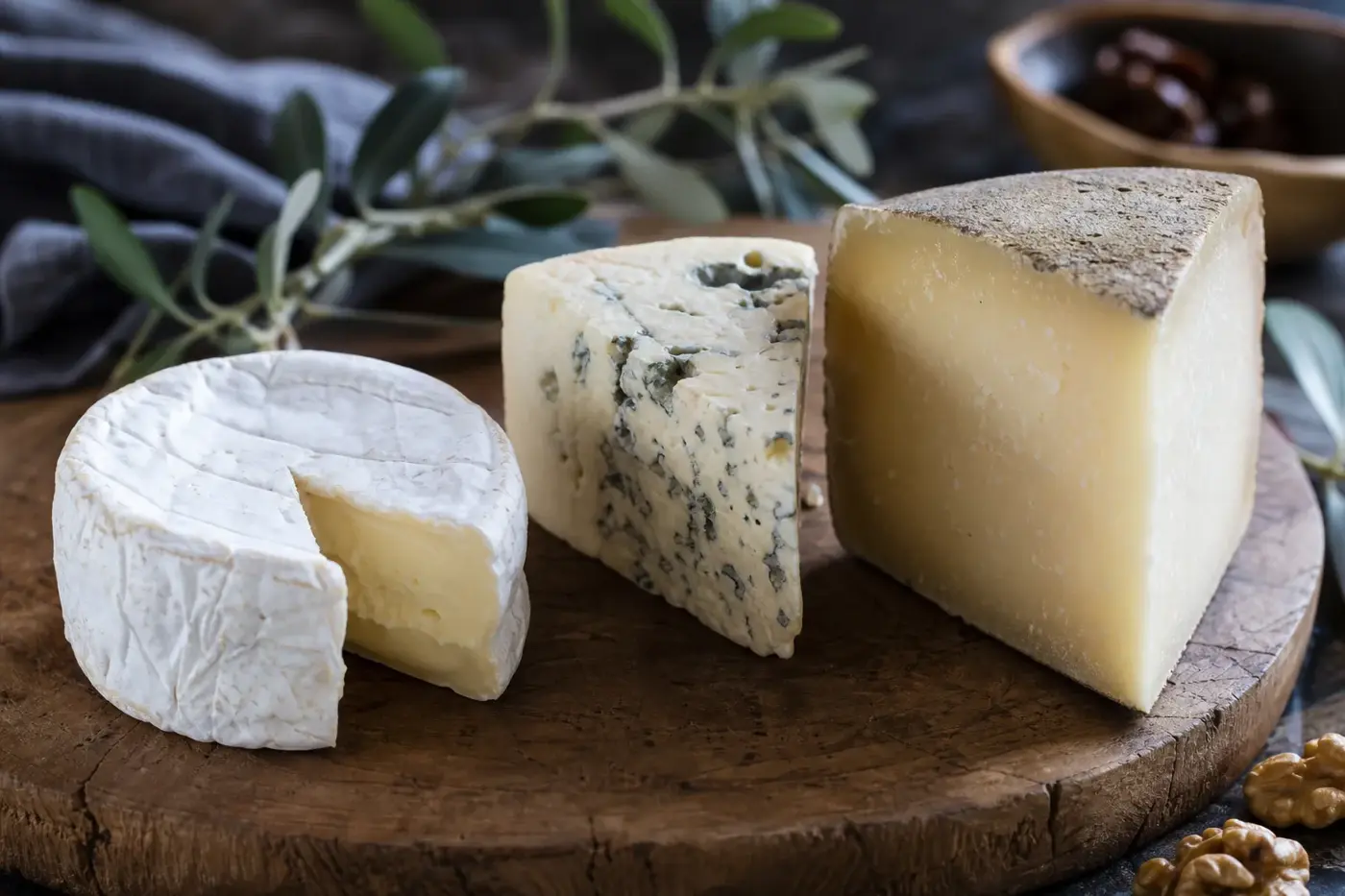
How to Tell Cheese Styles Apart: Milk, Rind, Texture and Method
Watch mozzarella curd being worked and stretched in hot water.