Cottage Cheese Explained
Dip in your spoon and moist white curds tumble apart, loose and lightly tangy.
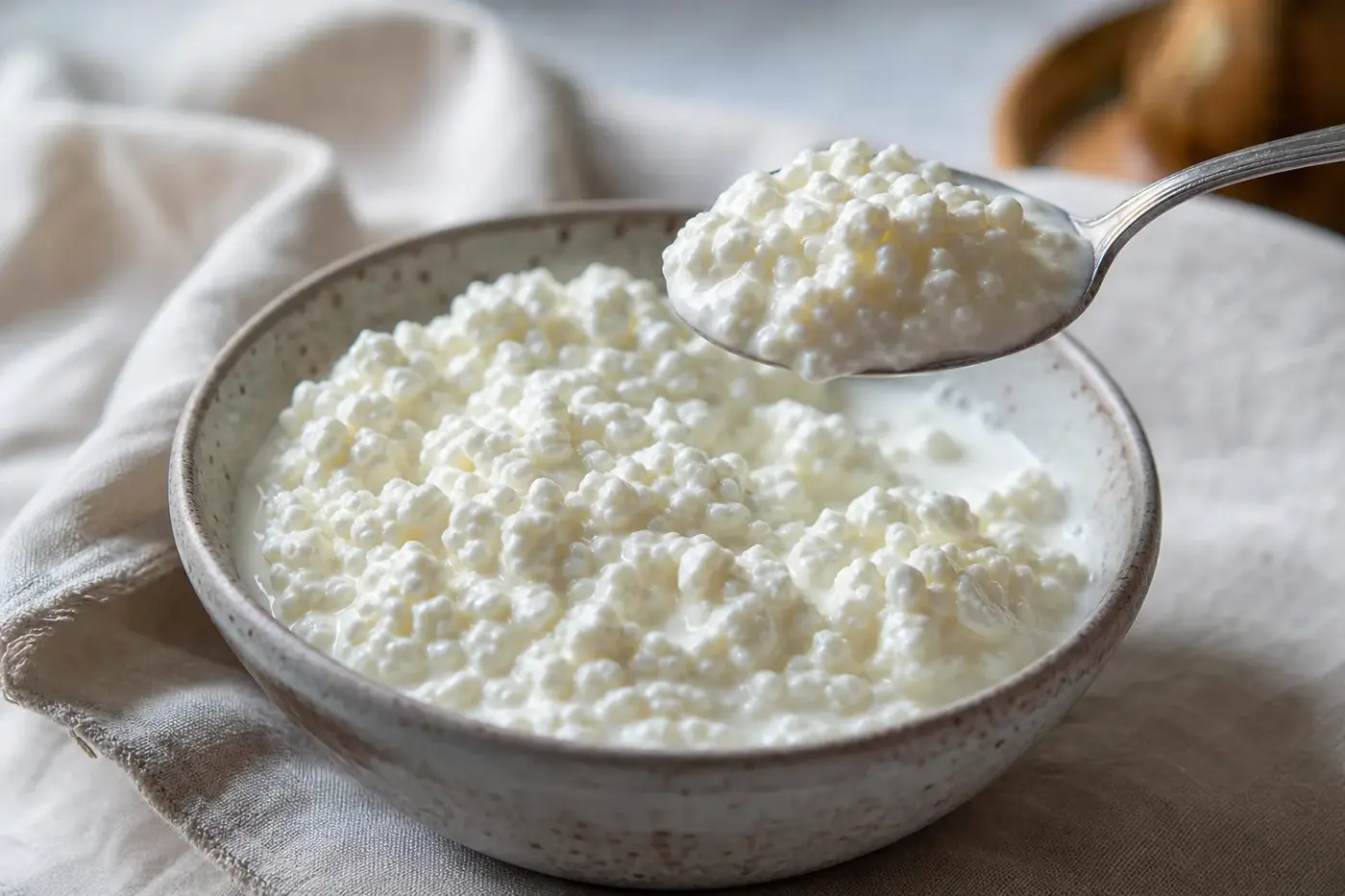
Dip in your spoon and moist white curds tumble apart, loose and lightly tangy. No rind to cut, no wheel to wrestle with: your cheese knife can sit this one out. The curds are cut, cooked, drained and usually washed, then mixed with a dressing rather than pressed together. Fresh and normally eaten without ageing, cottage cheese keeps its pleasures mild. [1,2]
Meet your spoonful
| What to know | The short version |
|---|---|
| Style | Fresh, rindless and unaged. [1,2] |
| Starting milk | Usually pasteurised skimmed milk. [1] |
| How it sets | Mainly acid from starter cultures; a little rennet may help. [1] |
| Texture | Separate, moist curds, often with a cream dressing. [1,2] |
| Milk allergen | Present in the dairy products described here. [3,4] |
A gentle hand makes those loose curds
Those separate grains begin as a delicate milk gel. Cutting, cooking and washing give them their shape. Curd is the milk solids gathered into the gel; whey is the liquid that drains away. You can follow the wider sequence in how cheese is made. [1,2]
In the cultured method described by the University of Guelph, starter bacteria acidify pasteurised skimmed milk. The starter culture is a selected population of microorganisms that guides fermentation. As acidity develops, casein, the milk protein, forms a delicate network that holds water. A little rennet, an enzyme preparation that helps milk set, can make this fragile curd easier to handle. [1,2,13]
The cheesemaker cuts the gel into pieces, then gently cooks them to firm the curds and encourage whey to leave. Draining removes whey; washing removes more lactose and acid, helping to keep the finished flavour mild. Cooling slows further acid development before the dressing goes in. [1,2]
Choose your grain, then get to know the dressing
Small, medium or large: your curd size begins with the cheesemaker's cut. Tetra Pak's production handbook describes all three as choices made at that stage. Choose the size you enjoy. This is about structure, not a quality grade, so there is no prize for picking the biggest. [2]
Then comes the dressing, which has just as much say in your spoonful. Longley Farm uses a soured-cream dressing in its natural cottage cheese, adding both fat and acidity. That helps explain why similar-looking curds can taste different, and why creamy liquid and firmer grains sit happily on the same spoon. [3]
Fat content tells you about the finished food's composition; curd size tells you about its structure. If the grains put you off, changing the fat percentage alone may not solve the problem. For a dip or spread, blending tackles the texture more directly.
Step into the home kitchen of 1840
Picture sour milk draining in a linen bag, ready to be worked with cream, salt and butter. That is cottage cheese in the tenth edition of Directions for Cookery, in its Various Branches, published in 1840. The recipe is headed Cottage Cheese. The book records another name too: smear case. [5]
The word cottage suggests milk becoming curd in a household rather than a factory. The documentary evidence supports that domestic connection, but does not give you a single birthplace or inventor. What the recipe does establish is pleasingly concrete: both the name and a home preparation were in print by 1840. [5]
There is a surprise in the texture, too. The recipe asks for the curd to be worked very fine, so today's large, separate grains are only one expression of cottage cheese. Its handling instructions belong to their period. Read them as a record of domestic preparation, rather than a template for every modern pot. [5]
Meet the fresh cheeses next door
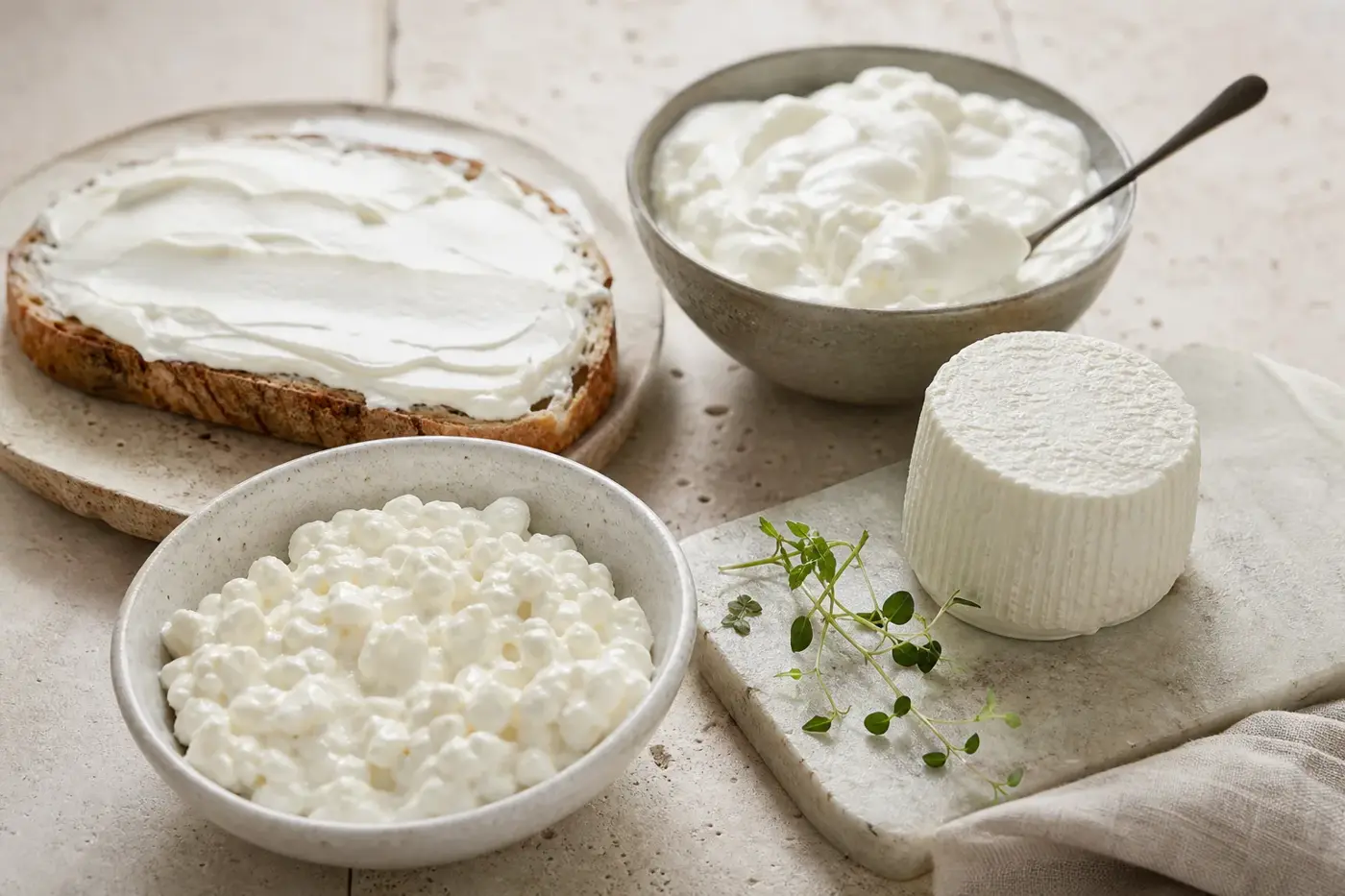
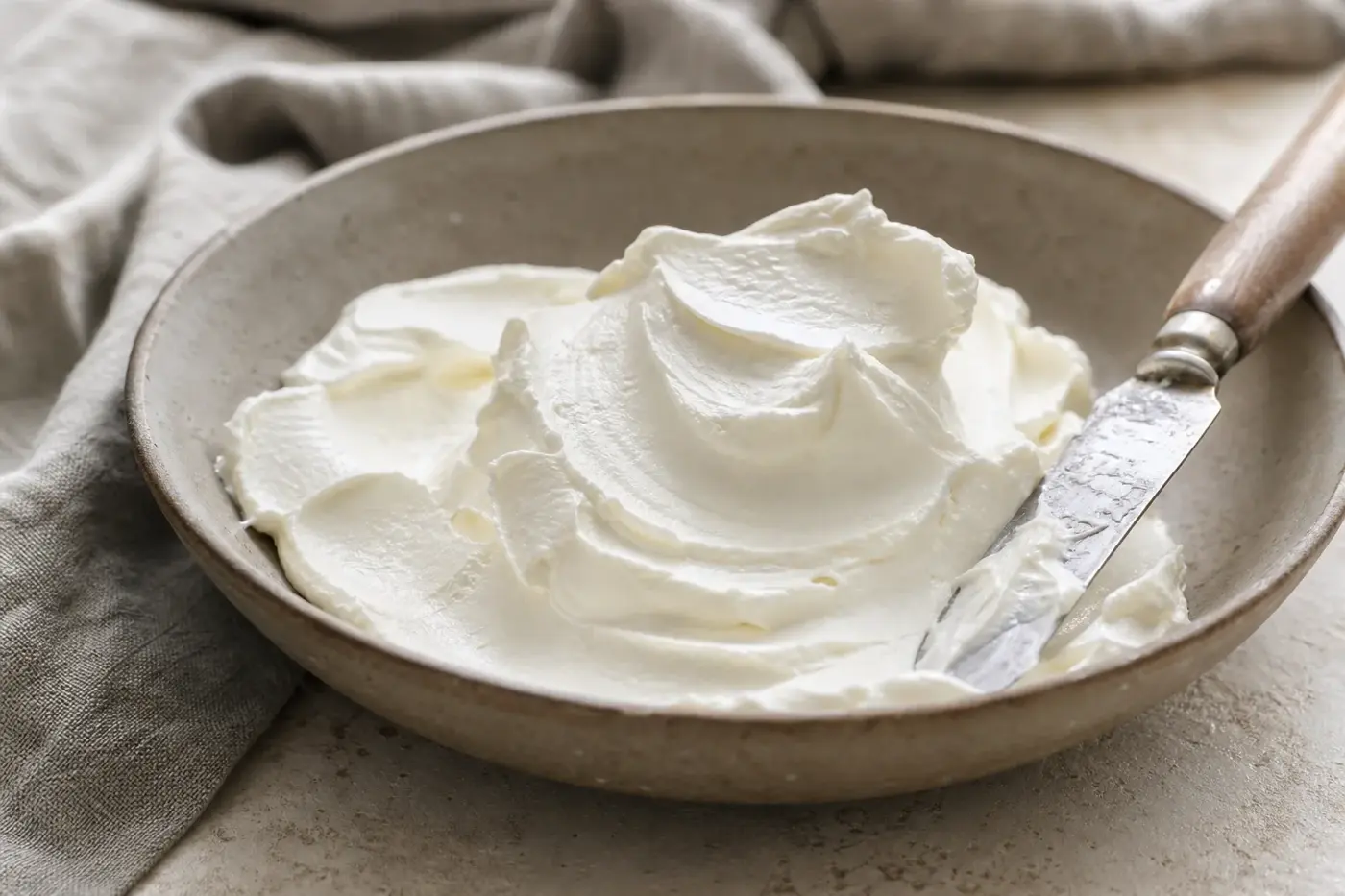
Follow the curd and the differences become clearer. Cottage cheese keeps its separate grains; cream cheese is worked into a smooth spread. Ricotta follows another production tradition, associated with recovering proteins from whey. [1,2]
| Cheese | What it starts with | What happens next | Texture to expect |
|---|---|---|---|
| Cottage cheese | Usually skimmed milk | Acid-set, cut, cooked and drained | Separate grains, often dressed. [1,2] |
| Cream cheese | Cream or milk enriched with cream | Cultured, drained and smoothed | Spreadable, without distinct grains. [1] |
| Fromage frais | Not specified here | Not specified here | Not specified here |
| Ricotta | Whey, sometimes with milk or cream | Whey proteins recovered during processing | Not specified here. [2] |
Before you substitute, ask what your dish needs: visible grains, a smooth spread or a loose filling. Read a fromage frais label for its particular ingredients and fat content, just as you would for cottage cheese. For the bigger picture, see how to tell cheese styles apart.
Turn the pot round: a closer look at the numbers
Compare labels per 100 g to give yourself a consistent starting point. Cottage cheese contributes protein, but protein, fat and salt vary with the product. These two examples use one manufacturer's published information from November 2026. [3,4]
| Product and amount | Protein (g) | Fat (g) | Salt (g) |
|---|---|---|---|
| Longley Farm Natural Cottage Cheese, 100 g | 10.3 | 6.0 | 0.80 |
| Longley Farm Natural Cottage Cheese, 30 g | 3.1 | 1.8 | 0.24 |
| Longley Farm Fat Free Natural Cottage Cheese, 100 g | 10.8 | 0.3 | 0.80 |
| Longley Farm Fat Free Natural Cottage Cheese, 30 g | 3.2 | 0.09 | 0.24 |
The 30 g figures are calculated from the published per 100 g values and rounded. They show you the arithmetic for a smaller amount, not a recommended portion. Notice that both products contain 0.8 g salt per 100 g despite their different fat contents. Give salt its own glance. [3,4]
The UK Composition of Foods Integrated Dataset, or CoFID, provides reference composition data for foods. When you are choosing between current pots, their own nutrition panels give the relevant comparison for those formulations. Keep your measures consistent: grams of fat per 100 g of finished cheese are not the same as fat expressed as a percentage of dry matter. [6]
Lactose is milk sugar, and you should not assume ordinary cottage cheese is lactose free. Longley Farm's two labels give total sugars, not a separate lactose measurement, so those figures alone cannot establish a lactose-free claim. Explore lactose in cheese for the wider difference between fresh and ripened styles. [3,4,7,8]
This page summarises published guidance from the official sources it cites. It is not medical advice. Guidance differs between countries and changes over time, so check the current source for where you live, and ask your doctor, midwife, pharmacist or dietitian about your own circumstances.
Milk allergy or lactose intolerance? Know the difference
Milk allergy concerns milk proteins; lactose intolerance concerns digesting milk sugar. The NHS distinguishes the two. Its UK guidance from November 2026 advises speaking to a GP or dietitian before excluding dairy from your own or a child's diet. That distinction matters when you choose cottage cheese. [7,8]
Removing lactose leaves milk proteins behind, so a lactose-free dairy product still contains milk. For milk allergy, read the actual pot's full ingredients and allergen information, including on flavoured versions, and follow your allergy team's advice. Switching to another animal's milk also needs specialist guidance. [7,11]
For lactose intolerance, the NHS says reducing or avoiding lactose can prevent symptoms for many people, although tolerance varies. Low fat and lactose free answer different questions about your cheese. If symptoms recur, or you are unsure about a diagnosis, the NHS advises contacting a GP. [8]
Find the pot that suits your plate
Start with what you fancy eating. For a potato or salad, choose the curd size and dressing you like. If you plan to blend a spread, the finished mixture's thickness matters more than visible grains. A plain pot leaves the sweet or savoury decision to you.
Read the ingredients, nutrition panel and storage instructions together. Look for the milk declaration, cream or other dressing ingredients, and additions such as herbs or fruit. Compare protein, fat and salt on the same per 100 g basis. The big words on the front cannot tell you everything inside. [3,4,9]
If vegetarian suitability matters to you, check that product's declaration or ask its manufacturer. Acidification alone does not establish which coagulant a cottage cheese producer uses. For help separating ingredients from marketing language, turn to how to read a cheese label. [1]
Make room in the fridge
Keep cottage cheese refrigerated and follow the pot's storage instructions. For England, Wales and Northern Ireland, the Food Standards Agency's household guidance from November 2026 recommends a fridge temperature between 0 and 5 °C. Take what you need, then return the pot promptly. The FSA advises keeping chilled food out for the shortest time possible. [10]
A use-by date concerns safety; a best-before date concerns quality, according to UK official labelling guidance. Do not eat cottage cheese after its use-by date. The FSA explains that smell cannot reliably detect harmful bacteria, even if the cheese smells normal. [9,12]
Once you open the pot, follow any shorter period printed on it as well as the use-by date. Write the opening date on the lid if that helps you follow the instruction. Choose a pot you can finish within its stated limits, rather than relying on one general number of days for all cottage cheese. [9]
Bring on the toast, potatoes and fruit
Let the grains be part of the pleasure, or blend them when your dish wants something smooth. These suggestions start with plain cottage cheese. Season gradually, remembering the salt already in the pot.
Think contrast: crisp toast against soft curds, sharp vegetables beside a mild dressing. Or try juicy fruit with a spoonful that still holds its separate grains. Not every curd needs to meet the blender.
- Toast: spoon over sliced tomatoes, chives and black pepper. Keep the cheese in loose mounds if you enjoy the curds, or blend it first for a spread that reaches the edges more easily.
- Salads: put spoonfuls beside cucumber, radishes and leaves rather than stirring until everything is coated. Dress the vegetables separately, then taste the finished plate before adding more salt or acidity.
- Baked potatoes: top with cottage cheese and spring onions or herbs. Add the cheese after baking to keep that contrast between hot potato and cool, moist curds.
- Fruit: try berries, sliced pears or peaches, with cinnamon or a few chopped nuts. Taste before adding honey or another sweetener, especially if your cottage cheese already contains fruit.
- Cooking: consider it for a vegetable filling, savoury bake or blended sauce. Before replacing another fresh cheese, look at the recipe's intended texture: loose curds bring a different structure from a smooth spread.
For cooked dishes, follow the FSA guidance for England, Wales and Northern Ireland. Cool and refrigerate leftovers within one to two hours, then eat within 48 hours or freeze. The original pot's opening instructions still govern any uncooked cheese left inside it. Find more detail in how to store cheese at home. [9,10]
Questions people ask
Why does cottage cheese have separate curds?
The set milk gel is cut into pieces, then gently cooked to firm the curds and encourage whey to leave. The curds are drained and usually washed, then mixed with a dressing rather than pressed into a wheel.
How is cottage cheese different from cream cheese and ricotta?
Cottage cheese keeps separate grains, while cream cheese is worked into a smooth spread. Ricotta comes from a different production tradition associated with recovering proteins from whey.
Is cottage cheese suitable for someone with lactose intolerance?
Ordinary cottage cheese should not be assumed to be lactose free. The NHS says reducing or avoiding lactose can prevent symptoms for many people, although the amount tolerated differs. See NHS guidance on lactose intolerance.
Is cottage cheese vegetarian?
Acidification alone does not establish which coagulant a cottage cheese producer uses. Check the particular product’s declaration or ask its manufacturer.
How should cottage cheese be stored after opening?
Keep it refrigerated and follow any shorter period printed on the container as well as the use by date. For England, Wales and Northern Ireland, the Food Standards Agency recommends a fridge temperature between 0 and 5 °C.
Sources
- University of Guelph, Cheese Making Technology e-Book, chapter 32, “Fresh Cheese (Acid-Coagulated Cheese)”, online edition, publication year not stated. Sections on cottage cheese, quark and cream cheese.
- Tetra Pak, Dairy Processing Handbook, chapter 16, “Cheese”, online edition, publication year not stated. General coagulation principles and cottage cheese production. This is an equipment manufacturer's technical account.
- Longley Farm, Natural Cottage Cheese, product information, undated live edition checked November 2026. Manufacturer's account of its dressing, ingredients and nutrition.
- Longley Farm, Fat Free Natural Cottage Cheese, product information, undated live edition checked November 2026. Manufacturer's ingredients and nutrition.
- Project Gutenberg, Directions for Cookery, in its Various Branches, tenth edition, 1840; electronic transcription updated 2020. “Cottage Cheese” entry and title page.
- Public Health England, Composition of Foods Integrated Dataset (CoFID), 2021 edition, publication page updated 19 March 2021.
- NHS, Dairy and alternatives in your diet, current online guidance checked November 2026. Sections on milk allergy, lactose intolerance and lactose-free dairy.
- NHS, Lactose intolerance, current online guidance checked November 2026. Foods containing lactose, distinction from allergy, treatment and when to contact a GP.
- GOV.UK, Understanding food labelling: Best before and use-by dates, current online guidance checked November 2026.
- Food Standards Agency, How to chill, freeze and defrost food safely, published 2017, current online text checked November 2026. Applies to England, Northern Ireland and Wales.
- Food Standards Agency, Food allergy and intolerance advice for consumers, current online edition, 2026. Applies to England, Northern Ireland and Wales.
- Food Standards Agency, Home food fact checker, current online edition, 2026. Advice on date markings and the sniff test.
- Tetra Pak, Dairy Processing Handbook, chapter 13, “Fermented Milk Products”, online edition, publication year not stated. Starter cultures and conversion of lactose to lactic acid.
This piece was researched from technical production accounts, a historical cookery text, manufacturer information and official UK guidance, with serving suggestions developed through desk research.
Last checked: November 2026
Last checked November 2026.
The editors suggest you read next
How to Tell Cheese Styles Apart: Milk, Rind, Texture and Method
Watch mozzarella curd being worked and stretched in hot water.