Hochland
Picture a 2 kg block of processed cheese in Goßholz in the Allgäu.
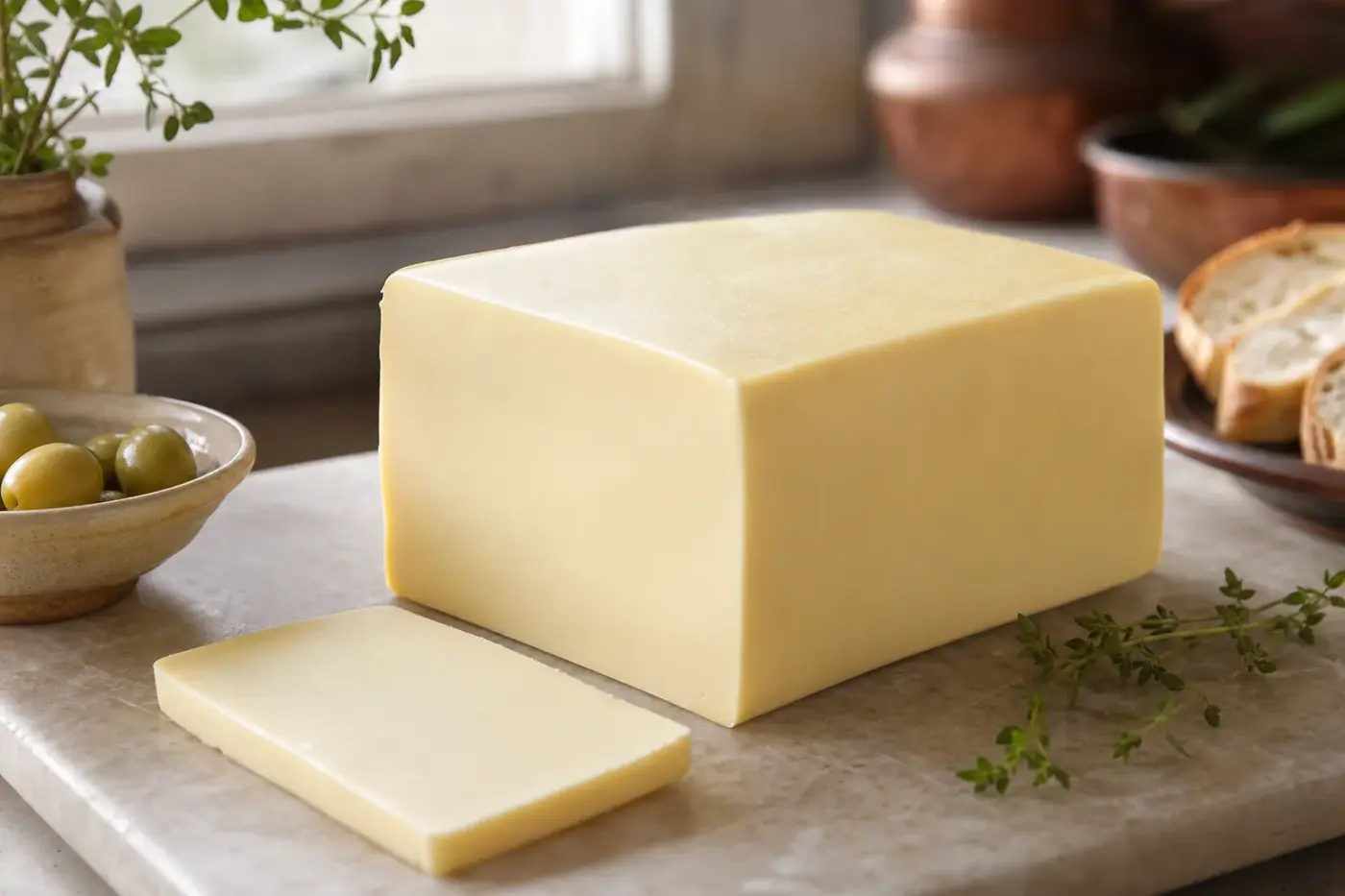
Picture a 2 kg block of processed cheese in Goßholz in the Allgäu. In 1927, that was Hochland’s first product. By 1928, wedges were being tucked into round and half-round tins, giving cheese lovers something rather more manageable to open. [1]
Follow those tins through the years and you arrive at Hochland SE, a wholly family-owned German cheese group headquartered in Heimenkirch. Today, you’ll find dairy cheese and spreads alongside a separate portfolio of plant-based alternatives. The little tins had considerable ambitions. [1][2]
Your quick introduction to Hochland
| What you might want to know | The details |
|---|---|
| Legal entity | Hochland SE. [2] |
| Headquarters | Heimenkirch, Allgäu, Germany. [2] |
| Ownership | Wholly family-owned and privately held. [2] |
| Main business | Branded cheese, private label, food service and business-to-business supply. [2] |
| Reporting year | 2025. [3][4] |
| Cheese sales | 438,012 tonnes. [3] |
| Employees worldwide | 6,313. [3] |
| Ownership and figures as at | November 2026. [2][3] |
When cheese moved into a hat factory
A former hat factory became Hochland’s home in Heimenkirch in 1931. Its published history starts in Goßholz, near Lindenberg, not in the town where you’ll find its headquarters today. By the time of the move, wedges in tins had joined those original processed-cheese blocks. [1]
New ways of portioning and packing cheese kept coming. In 1956, Hochland expanded into packing natural cheese in slices and chunks. A French sales company followed in 1968, then its own machinery business, Natec, in 1974. [1]
That history helps you make sense of the modern group. A supermarket tub, a burger slice and production-line equipment might look like unlikely companions. But they belong to a business shaped by preparing, packing and supplying food consistently at scale, with cheese-making and machinery growing together. [1][2]
Behind the name, a family business
Hochland says it has remained wholly family-owned since its founding. At the centre sits Hochland SE, with an executive board and a separate supervisory board. National subsidiaries handle manufacturing and commercial activities, supported by central functions at headquarters. [2][3][5]
You can follow the business through four commercial segments: brands, private label, food service and B2B, meaning business-to-business supply. The name on your cheese pack therefore tells only part of the story. Private-label work supplies retailers’ own ranges, while food service supplies professional kitchens and restaurant businesses. [2][4][6]
Bonifaz Kohler is the group’s private-label specialist. Natec takes you behind the production line, supplying food-processing and packaging equipment, along with complete lines. The group’s reach extends beyond its own consumer brands into other businesses’ products and the systems used to make them. [4][5]
A big cheese business changes course
In 2025, Hochland reported cheese sales of 438,012 tonnes and 6,313 employees worldwide, including 2,361 in Germany. These were its latest full-year results available in November 2026. Read the tonnage as a sales figure, rather than a separate measure of factory output. [3][4]
There was a change of direction, too. In its May 2026 results announcement, Hochland said it had withdrawn from the US cheese market to focus resources on core markets. Its current corporate overview names six cheese-production countries: Germany, France, Spain, Poland, Romania and Russia. [2][4]
Come inside the factory map
Start your tour in Heimenkirch for processed cheese, then head to Schongau for fresh and white cheese. Across the wider group, factories make soft cheese, cream cheese, sliced cheese and regional specialities. The location directory distinguishes manufacturing sites from national headquarters and engineering operations; this picture dates from November 2026. [5]
| Country | Where the cheese is made | What else you’ll find |
|---|---|---|
| Germany | Heimenkirch: processed cheese; Schongau: fresh and white cheese | Group headquarters in Heimenkirch |
| France | Dieue-sur-Meuse: soft cheese and cream cheese | Fromagerie Henri Hutin |
| Spain | Cheese production listed at country level | Spanish subsidiary in Viladecans |
| Poland | Kaźmierz: processed cheese; Węgrów: fresh and semi-hard cheese | Headquarters in Poznań |
| Romania | Sighişoara: processed cheese; Sovata: Romanian specialities | Headquarters in Bucharest |
| Russia | Raos: processed cheese; Prokhorovka: cream cheese; Belinsky: sliced cheese | Russian subsidiary |
The sales map takes you beyond those factory gates. Hochland’s brand directory highlights Germany, Romania, Poland, Russia and Spain, with routes into their national ranges. US and Australian locations still appear in its current directory, but they are Natec engineering operations, including US technical service, not continuing US cheese-production sites. [5][7]
Familiar tubs, different national tastes
Almette’s small keg-shaped tubs are among the group’s most distinctive packages. The cream-cheese brand has dedicated websites for Germany, Poland, Romania and Russia. Hochland itself serves as both company name and consumer brand, with its international directory linking you to German, Spanish, Polish, Romanian and Russian ranges. [7]
Grünländer has a German brand identity of its own. Patros, Gervais, Fetaxa and Valbon also appear in the published portfolio. Valbon neatly illustrates how making and selling can happen in different places: Hochland describes its soft-ripened cheeses as made in France for Poland. [7]
Think of these as country-specific ranges, not a single international cheese selection. A national brand website shows you how products appear in that market; the label identifies the food in your hand. Recipes, formats and product descriptions can differ between the group’s national businesses. [7]
Look beyond the slice
A neat slice can be natural cheese or processed cheese. Its shape alone won’t tell you which. In Hochland’s food-service portfolio, “natural cheese” occupies a commercial category separate from processed cheese, cream cheese, white cheese and soft cheese. [5][6]
Give spreads the same attention. Fresh cream cheese such as Almette belongs to a different category from processed-cheese spread, even though both can go on bread. Look for the descriptive food name before treating “spread”, “cream cheese” and “processed cheese” as interchangeable. [6][7]
Professional kitchens help explain the variety. Hochland supplies quick-service restaurants, full-service restaurants, wholesalers and retail food departments, offering multiple cheese categories and vegan alternatives. Dedicated teams work in Germany, Poland, Romania and Spain; for the wider production sequence, explore how cheese is made. [6]
Meet the plant-based side of the family
Simply V is the principal named plant-based alternative brand in Hochland’s corporate portfolio. The group also identifies a plant-based alternative within Patros. Its current location directory lists vegan production at both Heimenkirch and Schongau, placing these products within the wider manufacturing network. [2][5][7]
If you’re shopping in Britain, read in this order: brand, descriptive food name, ingredients, then storage instructions. Compare the plant-based range separately from dairy products. A familiar cheese-company name tells you who is behind the product; the descriptive name and ingredients tell you about its recipe. [2]
Follow the milk beyond the Allgäu
Hochland sources milk regionally across its six-country production network. Its milk page describes supplier cooperation and animal-welfare measures that differ by country. For the sourcing behind your particular cheese, follow the product and national business rather than applying the Allgäu origin story to the whole group. [5][8]
In January 2026, Hochland launched a programme with Maschinenring Ostallgäu for dairy farmers in southern Germany, according to its sustainability update. Feeding is the initial focus, bringing together advice, knowledge sharing and practical work. Through the group’s farm-data work, participating farms also receive individual carbon-footprint assessments and proposed improvements. [9]
Hochland reports that half the milk it sources in Germany comes from farms in housing system level 3 or level 5. Keep that scope in mind when you read it: the statement concerns German milk sourcing as a whole. It is not certification for an individual product. [8]
The climate story begins on the farm
Around 70% of Hochland’s emissions come from the agricultural supply chain, according to its sustainability update. The company says it calculates its corporate carbon footprint every year using the Greenhouse Gas Protocol. Its climate page reports an 8% reduction in 2025 against a 2023 baseline. [9][10]
Hochland also reports that all purchased electricity for its European plants comes from renewable sources. That addresses one part of the footprint, rather than the whole picture. Milk production, transport, packaging and other energy remain separate areas in the company’s climate approach. [10]
The Sustainability Update 2025/26 generally covers 2025, with some information extending through June 2026, and states that it has not been externally audited. Farm-specific data coverage varies: on a 2024 milk-volume basis, it ranges from 77% in Germany to 100% in Romania. France and Russia each show 0%; these figures are company-reported. [9]
A little guidance for your British shopping basket
Continental Food Store’s British retail listings from November 2026 give you some concrete examples. They include Almette soft cheese with yoghurt, Almette with herbs and several Hochland processed-cheese formats, including products with ham. For today’s range, go to the retailer. [11]
Start with the pack’s food name and ingredients, particularly if you’re choosing a flavoured product. Separate any stated place of manufacture from the responsible business’s address: a German headquarters address answers a different question from a product’s country of manufacture. For more help, turn to reading a cheese label. [2][5][11]
For storage, follow that product’s instructions, including what to do after opening. The Food Standards Agency publishes chilling guidance for England, Wales and Northern Ireland, which you can consult alongside the pack. You’ll find the fuller reference in storing cheese at home. [12]
Making room for Hochland at the cheese counter
Hochland brings together consumer brands, retailer supply, professional kitchens and manufacturing equipment. That breadth tells you more about its place in the industry than any single tub or slice. Its published footprint remains strongly European, with Russia also a production and sales market, while its own description stresses independence and family ownership. [2][4][5]
Bel makes a useful comparison, with familiar portioned and spreadable products in its portfolio too. Babybel, Boursin, Kiri and The Laughing Cow appear in Bel’s brand directory; Almette, Grünländer and Simply V appear in Hochland’s. Keep the companies and their ranges distinct, and you’ll find that crowded cheese counter a little easier to navigate. [7][13]
General information only, not medical advice: follow the official guidance where you live.
Questions people ask
Who owns Hochland?
Hochland says it has remained wholly family owned since its founding. Hochland SE is the central group company and is headquartered in Heimenkirch, Germany.
Where does Hochland make cheese?
Hochland lists six cheese production countries: Germany, France, Spain, Poland, Romania and Russia. Its Heimenkirch site makes processed cheese, while Schongau makes fresh and white cheese.
Which brands belong to Hochland?
Hochland’s portfolio includes Almette, Grünländer, Patros, Gervais, Fetaxa and Valbon. Hochland is both the company name and a consumer brand.
Does Hochland make plant based alternatives?
Simply V is the principal named plant based alternative brand in Hochland’s corporate portfolio. The group also identifies a plant based alternative within Patros.
Is sliced Hochland cheese always processed cheese?
No. A sliced product can be natural cheese or processed cheese, so its shape alone does not distinguish them.
Sources
[1] Hochland SE, Company history: Innovation and enjoyment since 1927, undated corporate chronology, accessed November 2026. Entries for 1927, 1928, 1931, 1956, 1968 and 1974.
[2] Hochland SE, Our company, current corporate overview, accessed November 2026. Headquarters, family ownership, business segments, portfolio and manufacturing countries.
[3] Hochland SE, About us, current corporate disclosure, accessed November 2026. Governing bodies and group figures for 2025.
[4] Hochland SE, Hochland publishes 2025 Annual Report, May 2026 press release. Business segments, 2025 performance and withdrawal from the US cheese market.
[5] Hochland SE, Hochland sites: From the Allgäu to the world, current location directory, accessed November 2026. Manufacturing, headquarters and engineering functions.
[6] Hochland SE, Food service at Hochland, current business-unit description, accessed November 2026. Customer segments, product categories and national teams.
[7] Hochland SE, Our Hochland brands: Variety, quality, and innovation, current brand directory, accessed November 2026. Brand portfolio, national websites and Valbon manufacturing statement.
[8] Hochland SE, Our milk: Milk production at Hochland, current sourcing disclosure, accessed November 2026. Supplier relationships and German animal-welfare sourcing statement.
[9] Hochland SE, Sustainability Update 2025/26, 2026 edition, pages 1 to 3. Reporting boundaries, agricultural emissions, farmer programme and primary-data coverage.
[10] Hochland SE, Climate protection and CO₂e emissions at Hochland, current climate disclosure, accessed November 2026. Corporate footprint, purchased electricity and reported 2025 progress.
[11] Continental Food Store, Hochland, live UK retailer catalogue, accessed November 2026. Used only as primary evidence of the retailer’s own product listings.
[12] Food Standards Agency, How to chill, freeze and defrost food safely, GOV.UK publication landing page, published 18 December 2017, accessed November 2026. Territorial scope and link to official guidance.
[13] Bel Group, Bel Group, current corporate website and brand directory, accessed November 2026. Babybel, Boursin, Kiri and The Laughing Cow.
Researched through live desk research using company disclosures, the group’s sustainability update, an official food-agency publication page and a UK retailer’s own catalogue.
Last checked: November 2026
Last checked November 2026.
The editors suggest you read next
Who Makes the World's Cheese? The Big Dairy Groups
You pick up Galbani at the cheese counter, then pause over Kerrygold.