Ricotta
Look into the heated whey and you can watch delicate white curds gathering at the surface.
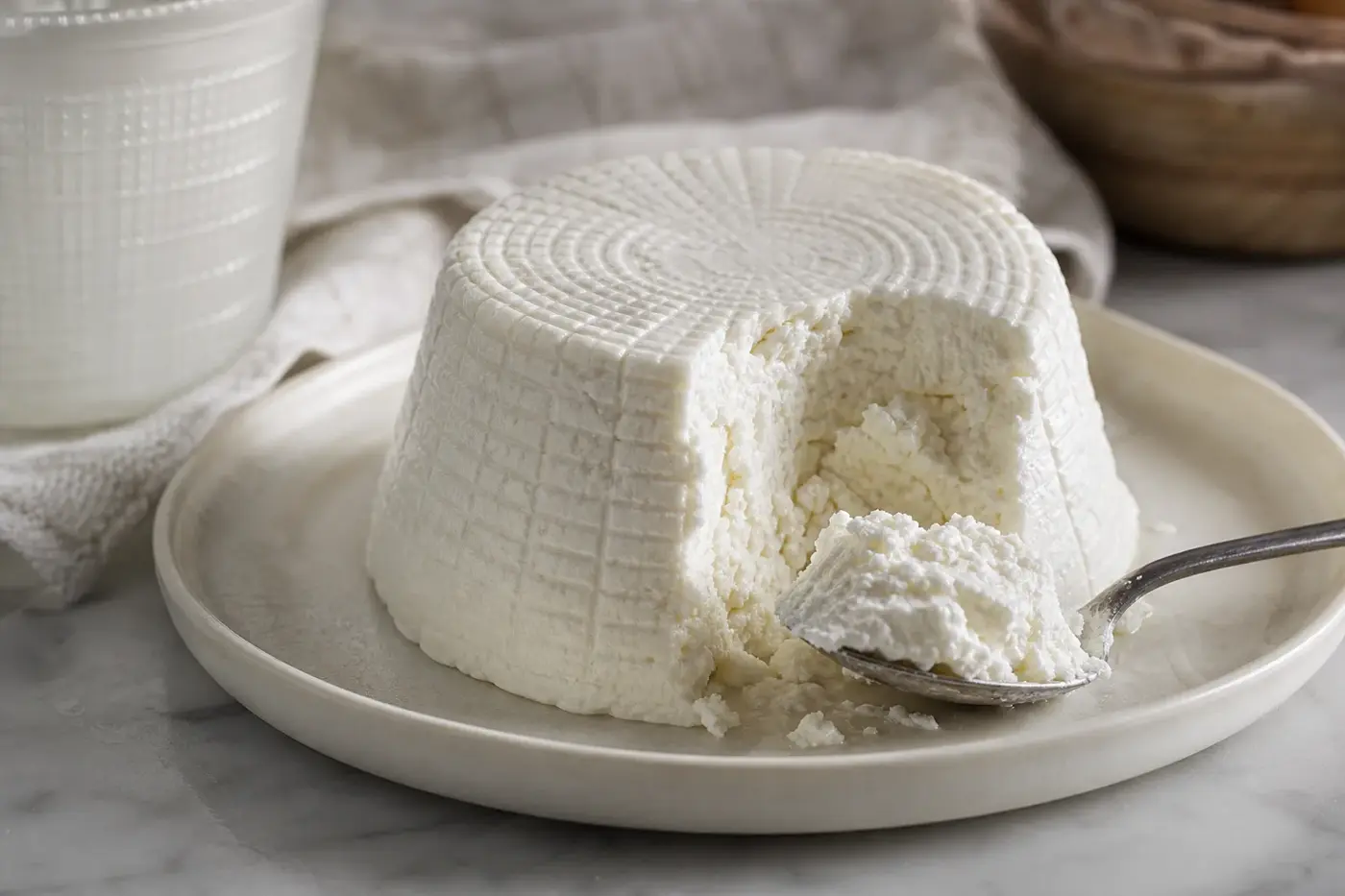
Look into the heated whey and you can watch delicate white curds gathering at the surface. The first cheese has gone, but there is another harvest in the making. Ricotta means “recooked”; freshly drained, it is soft, moist and gently milky. The milk species, any added milk or cream, and how much liquid escapes all help decide what reaches your spoon. [1, 2, 4, 5]
| At a glance | Your quick guide |
|---|---|
| Name | Ricotta, a family of whey cheeses. [4, 5] |
| Home and traditions | Italy, with distinct regional methods. [1, 2, 9] |
| Where the whey begins | Sheep, cow, goat and buffalo milk, including mixtures. [1, 5] |
| Fresh appearance | White, soft and moist, without an aged rind. [1, 6] |
| Protected name | Ricotta Romana, an EU protected designation of origin (PDO). [2, 3] |
| Milk allergen | Contains milk. [1, 2, 5] |
The whey gets its second moment
The first cheese has taken its curd, but the whey still has something to offer. Whey is the liquid separated from curd, the solid part of milk. Cheesemaking with rennet, a preparation containing enzymes that coagulate milk, removes much of the casein, milk’s main protein. Whey proteins remain in the liquid, ready for ricotta’s turn. [4]
Heat changes those proteins’ structure, allowing them to join together into curds. Where acid is used, it changes the conditions in which they gather. The Wisconsin Center for Dairy Research describes two approaches: sweet whey heated without added acid, and whey mixed with milk and treated with citric acid. [4]
The curds are then lifted into perforated baskets or moulds to drain. Those fine ridges on a basket-shaped ricotta are the mould’s imprint, a little record of where it has been. Draining helps determine whether your cheese is tender and spoonable or holds more firmly together. For the earlier stages that produce the whey, see how cheese is made. [1, 4]
What milk and cream bring to the spoon
Whey is the traditional starting point, but your ricotta label may also list milk, cream or salt. Added milk supplies more milk solids. Cream changes the fat content and, with it, the texture. [4, 5]
The dairy research centre also records creaming and pressing before packaging. The Campania buffalo ricotta study describes additions used to increase yield or adjust structure. These details help explain why two tubs bearing the same name can behave rather differently. [4, 5]
Read the ingredients with your dish in mind. Do you want loose cheese for spooning, or something drier for a filling? An added ingredient gives you useful information about the product. It is not, by itself, a verdict on quality.
Sheep, cow, goat or buffalo? Start with the whey
The milk species tells you where the whey began. Draining and additions then help shape the finished ricotta. Think of these regional accounts and products as a taste of the range, rather than a fixed flavour rule for each animal’s milk. [1, 2, 5, 6]
| Whey source | What you can expect from this example |
|---|---|
| Cow | Puglia’s traditional-food atlas describes fresh cow’s whey ricotta with white, delicate curds and a gently acidulous flavour. [1] |
| Sheep | Ricotta Romana’s specification describes a fine structure and a delicate, sweetish flavour. [2] |
| Goat | ONAF, Italy’s cheese tasters’ association, describes its example as soft, finely granular and spreadable, with lactic acidity. [6] |
| Buffalo | The Campania study describes buffalo whey ricotta whose structure and yield can be adjusted with milk, cream and acid additions. [5] |
Ask whether your ricotta’s whey comes from one species or a mixture. Puglia’s atlas records mixed-milk traditions, too. The ingredients or the cheesemaker’s description may tell you more than a familiar local name. [1]
Through Italy, with a closer look at Lazio
Follow ricotta through Italy and you find changing milks and seasons. Puglia’s regional atlas describes cow’s whey ricotta made throughout the year, alongside seasonal production from sheep’s and goat’s whey. In Campania, buffalo whey provides another starting point. Irpinia also has a documented tradition of salted sheep’s whey ricotta. [1, 5, 9]
Within this broad family, Ricotta Romana has a precisely defined identity. It holds an EU protected designation of origin, or PDO. Its published specification places production in Lazio and requires sheep’s whey from the defined area. You can explore the scheme in the protected names guide. [2, 3]
The ministry’s specification allows whole sheep’s milk from the area to be added up to 15% of the whey’s volume. It describes heating without acidity correctors, followed by collecting and draining the curds. These requirements distinguish Ricotta Romana from general ricotta methods using other milk species or added acid. [2]
Fresh for spooning, salata for grating
Fresh ricotta is soft, moist and ready for your spoon. Ricotta salata follows another path: salting, firmer draining and maturation turn it into a cheese for grating or crumbling. The Italian National Research Council’s account of Irpinian sheep’s whey ricotta records dry salting and maturation of one to three months. [9]
Let moisture and seasoning guide your choice. Fresh ricotta suits a soft filling or spread, while ricotta salata brings a salty finish to a dish. Puglia’s atlas describes its salted version as semi-hard, friable and generally used for grating. [10]
Find the ricotta that suits your plans
Start with the job you want your cheese to do. For spreading, choose a soft ricotta that yields readily to a spoon. For stuffed pasta or baking, ask whether it is already well drained. A filling should stay in the pasta, not make independent travel plans.
Those basket ridges tell you about moulding, rather than which dish to make. Puglia’s regional account also documents the fresh cheese’s white colour and soft structure. Look beyond its pretty shape to the texture you need. [1]
Buying a packaged product? Check the milk species, ingredients, storage directions and instructions after opening, then match the date to your plans. At a counter, ask for the same information, especially storage requirements and the recommended consumption deadline. The guide to reading a cheese label shows you where to find these details. [7]
Give it toast, greens or something sweet
Fresh ricotta can carry seasoning without taking over your dish. ONAF suggests serving fresh goat ricotta on toasted bread, alongside vegetable salads, or with fresh fruit for dessert. Such simple company gives you a useful introduction to its savoury and sweet possibilities. [6]
For savoury cooking, give the cheese a clear job:
- Pasta fillings: mix well-drained ricotta with cooked, squeezed greens and seasoning. Aim for a cohesive filling, not a loose one. Follow a complete recipe for making and cooking the pasta.
- Spreading: spoon ricotta onto toast with olive oil, black pepper and herbs. Season lightly at first, then adjust to suit your particular cheese.
- Baking: choose a drained ricotta for a savoury tart or layered pasta dish. Follow the recipe when selecting the cheese and managing its moisture, especially if the filling needs to set.
For something sweet, try ripe pear, berries or citrus zest with ricotta, or use it in a baked ricotta dessert. A softer cheese works in a spooned fruit dessert; a pastry filling usually needs more attention to draining. Add sugar gradually and taste before adding more. The spoon does have a legitimate job here. [1, 6]
Drain for the texture your recipe needs
If your recipe needs less free liquid, drain the ricotta. Let the required consistency guide you, because different tubs will not all need the same treatment. For a filling, look for cheese that holds together on a spoon rather than flowing from it.
- Set a clean fine sieve over a bowl. Leave enough clearance to keep the cheese above the liquid that collects.
- Spoon in the ricotta, cover and refrigerate while it drains. If you follow the Food Standards Agency guidance for England, Wales and Northern Ireland, keep the fridge at 5 °C or below. [7, 8]
- Compare the texture with what your recipe needs. Use the drained cheese within the original product’s date and any shorter instructions after opening. Draining does not restart its storage life. [7]
Keep it cool and follow the dates
Follow the pack’s refrigeration instructions and return your ricotta to the fridge once you have taken what you need. Use clean utensils and keep the remaining cheese covered. If you buy at a counter, ask the seller for storage instructions then. The name alone cannot tell you how many days it will keep. [7, 8]
The FSA’s published UK food-labelling guidance makes an important distinction: a use-by date concerns safety; a best-before date concerns quality. Follow the date shown on your product. Do not eat ricotta after its use-by date, and follow any shorter deadline for opened packaging. Correct refrigeration remains essential before that date, too. [7]
If your tub is destined for several dishes, plan their order around the instructions after opening. Do not keep an opened tub indefinitely with the intention of baking it later. Take out only what you need for preparation. The home cheese storage guide covers organising cheese in the fridge.
This page summarises published guidance from the official sources it cites. It is not medical advice. Guidance differs between countries and changes over time, so check the current source for where you live, and ask your doctor, midwife, pharmacist or dietitian about your own circumstances.
Pregnancy and ricotta: the UK guidance
In its November 2026 UK guidance, the NHS lists pasteurised ricotta among the soft cheeses you can eat during pregnancy. It advises checking the packaging to confirm pasteurisation and says any cheese can be eaten when cooked until steaming hot all the way through. Consult the NHS pregnancy food guidance for current advice and exceptions. [11]
At a cheese counter, ask specifically about the product’s milk treatment. Neither the name ricotta nor the heat used in making it answers that question. If the information is unclear, ask the seller and consult the official guidance for your country before choosing.
Questions people ask
What is ricotta made from?
Ricotta is traditionally made from whey, the liquid separated from curd during cheesemaking. The whey can come from sheep, cows, goats or buffalo, including mixtures, and milk or cream may also be added.
What is the difference between ricotta and ricotta salata?
Fresh ricotta is soft and moist. Ricotta salata is salted, drained more firmly and matured for grating or crumbling.
How do I drain ricotta for a filling?
Place a clean fine sieve over a bowl, leaving space above the collected liquid, then spoon in the ricotta. Cover and refrigerate it while it drains, checking the texture against your recipe.
How long does ricotta last after opening?
The name alone cannot tell you how many days ricotta will keep. Follow the product’s date and any shorter instructions after opening, and ask the seller for storage instructions if buying at a counter.
Can I eat ricotta during pregnancy?
The NHS lists pasteurised ricotta among the soft cheeses that can be eaten during pregnancy and advises checking the packaging to confirm pasteurisation. It also says any cheese can be eaten when cooked until steaming hot all the way through. Consult the current NHS guidance at https://www.nhs.uk/pregnancy/keeping-well/foods-to-avoid/.
Sources
- PAT Puglia, Ricotta, regional traditional-food atlas, undated online edition, accessed November 2026. Describes milk sources, white colour, texture, basket marks, seasonal production and reheating. Source.
- Italian Ministry of Agriculture, Disciplinare di produzione della denominazione di origine protetta “Ricotta Romana”, ministry-hosted specification, undated PDF, accessed November 2026. Articles 3 and 5 cover the area, whey, permitted sheep’s milk addition and production method. Source.
- Italian Ministry of Agriculture, Domanda di modifica ordinaria del disciplinare di produzione della denominazione di origine protetta «Ricotta Romana», Gazzetta Ufficiale, Serie generale No. 86, 14 April 2026. Application notice, not evidence that the proposed amendment became operative. Source.
- University of Wisconsin Center for Dairy Research, Dairy Pipeline, volume 11, number 1, Winter 1999, “Ricotta Cheese”, page 9. Technical account of whey coagulation, whey and milk blends, draining, creaming and pressing. Source.
- Institute for Experimental Veterinary Medicine of Southern Italy and collaborating public veterinary service, Evaluation of some microbiological and chemical parameters of Campania buffalo ricotta cheese, Italian Journal of Food Safety, 2017. Primary monitoring study of four dairies; introduction describes reheating, protein aggregation and production additions. Source.
- ONAF, Ricotta di capra, technical and sensory product sheet, undated PDF, accessed November 2026. Sections on sensory characteristics, production and uses. Source.
- Food Standards Agency, Understanding food labelling: Best before and use-by dates, current online edition accessed November 2026. Sections on date meanings, refrigeration and instructions after opening. Source.
- Food Standards Agency, How to chill, freeze and defrost food safely, published 18 December 2017, online edition accessed November 2026. Applies to England, Northern Ireland and Wales. Source.
- Italian National Research Council, Institute of Food Sciences, I prodotti caseari del Mezzogiorno: Ricotta salata di pecora, undated online research record. Describes observations from five producers, including salting, maturation and culinary use. Source.
- PAT Puglia, Ricotta salata o marzotica, regional traditional-food atlas, undated online edition, accessed November 2026. Describes salting, maturation, friable texture and grating use. Source.
- NHS, Foods to avoid in pregnancy, current online edition accessed November 2026, “Cheese, milk and other dairy”. Source.
Researched through Italian regional records, the ministry’s published specification, dairy technical literature and official UK consumer guidance; culinary suggestions are editorial synthesis, without site recipe testing or first-hand tasting.
Last checked: November 2026
Last checked November 2026.
The editors suggest you read next
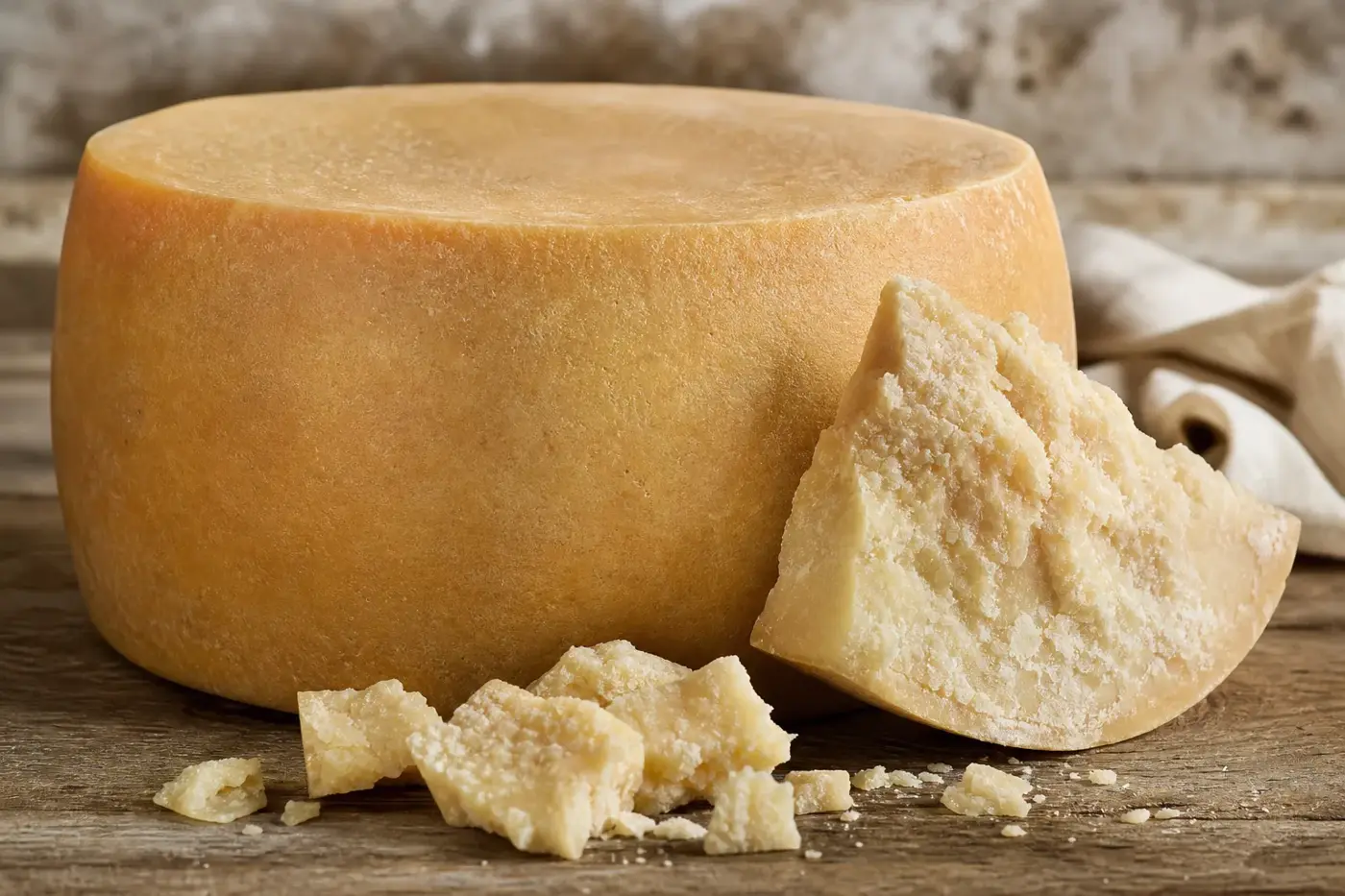
Parmigiano Reggiano
Break into a wheel of Parmigiano Reggiano and flakes fall away, revealing a finely granular cheese, pale straw to straw in colour.