Hungarian Cheese
Your fork meets a little cluster of curd: moist, pleasantly sour and shaped rather like tiny cauliflower florets.
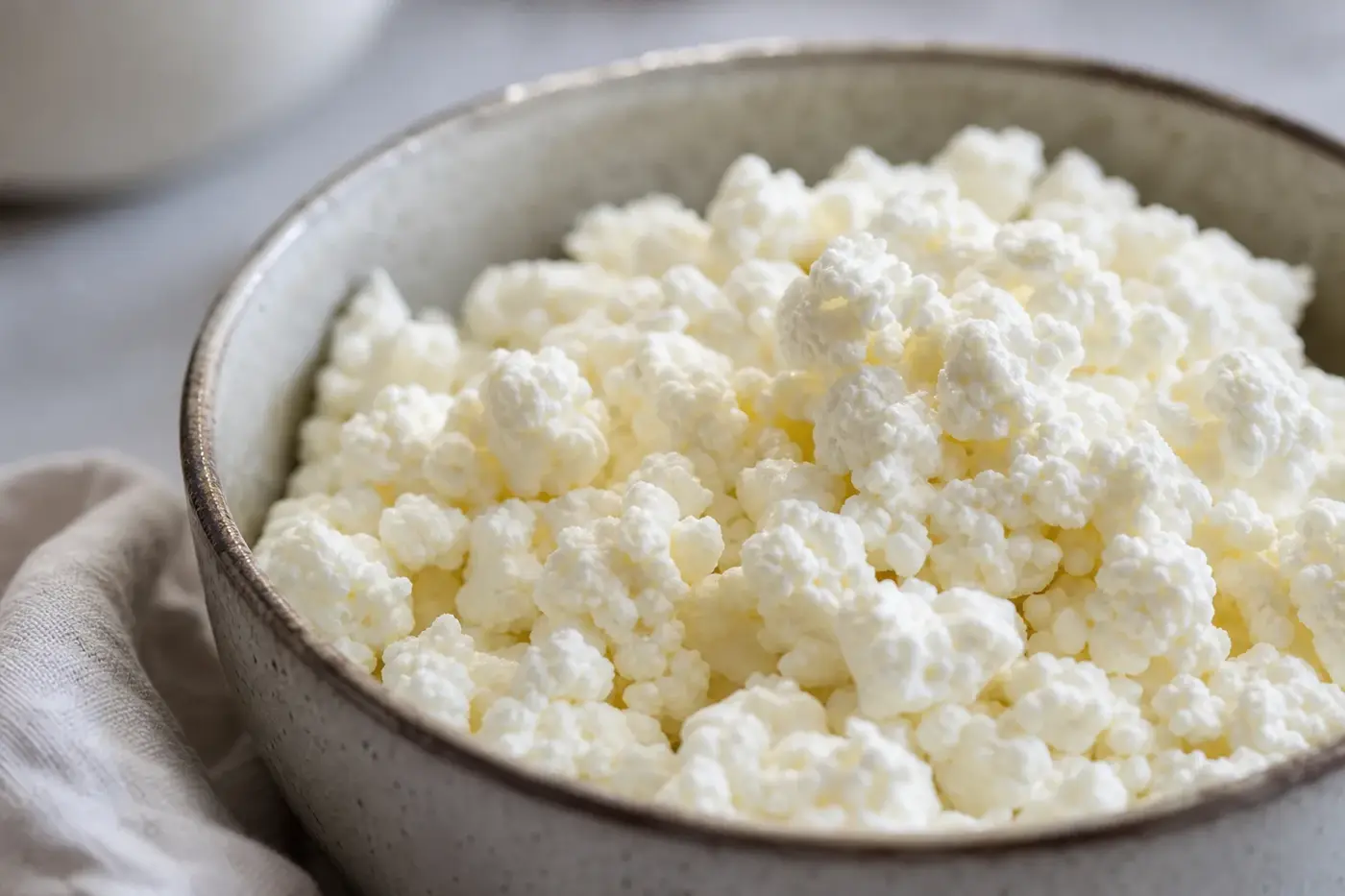
Your fork meets a little cluster of curd: moist, pleasantly sour and shaped rather like tiny cauliflower florets. That unlikely comparison comes straight from the Rögös túró specification, which describes loose clusters made to hold their shape. Meet túró in túrós csusza, a savoury pasta dish, and you soon understand why the kitchen matters so much here. Beyond this fresh staple, everyday Trappista and the reddish rinds of Hungary’s north-western specialities await. [1][2][3]
| Your quick guide | What to look for |
|---|---|
| Country | Hungary. [4] |
| Milks to explore | Cow, sheep and goat; Hungarian food standards allow gomolya made from any of these, or mixtures. [3] |
| Regional names to know | Győr-Moson-Sopron megyei Csemege sajt and Lajta sajt, both in Hungary’s official geographical indications list. [9] |
| EU name and file reference | Győr-Moson-Sopron megyei Csemege sajt, PGI-HU-02303. [4] |
| EU name and file reference | Lajta sajt, PGI-HU-02844. [6] |
| Traditional speciality | Rögös túró, EU reference HU-TSG-0007-01113. [2] |
| Current EU register status and pending procedures, November 2026 | Status unspecified. |
Begin with a spoonful, not a grand wheel
Your first stop need not be a monumental wheel. Rögös túró gives you fresh acidity and separate clusters to explore, with no ceremonial knife required. Its specification calls for a moist, loose structure and a fresh, pleasantly sour taste. Look for those qualities rather than treating every fresh cheese as interchangeable. [2]
Túró is fresh curd, classified as fresh cheese in the specification. Rögös túró is the particular named product governed by that document. If a packet says only túró, the word alone does not establish that it meets those requirements. [2]
Then change direction. Trappista is a salted, ripened, semi-hard cow’s milk cheese, while Pálpusztai belongs to the soft, surface-ripened group. A restaurant cheeseboard can show you only part of this dairy story. Leave room for what happens in the kitchen. [3]
For your first tasting, set out plain fresh curd, a slice of Trappista and a rind-ripened speciality. Taste each on its own. You will find it easier to notice what acidity, firmness and maturation bring to the mouthful.
Follow the milk into Hungary’s landscape
Cow’s milk connects Trappista, Pálpusztai, Lajta sajt and Győr-Moson-Sopron megyei Csemege sajt. Gomolya opens up more possibilities: the Hungarian standard describes cow’s, sheep’s and goat’s milk versions, including mixtures. Before comparing two examples, ask which milk went into each. [3][4][6]
In north-western Hungary, the link between landscape and cheese comes into focus. The Csemege specification describes a plain built by the Danube and neighbouring rivers. Conditions favour maize and forage production for dairy cattle. The document connects that milk supply with the growth of local processing expertise. [4]
This Transdanubian story brings feed crops, farmers, dairies and technical knowledge together. With Lajta sajt, the sense of place reaches into the ripening room too. Its local environment matters, alongside skilled management of the surface flora. [6]
On the Great Plain, let markets and dairy counters guide you through the milks. Ask for sheep’s and goat’s milk cheeses alongside cow’s milk examples, rather than looking for one cheese to represent the whole region. Ask where the animals live and where the cheese is made. A market address tells you where something is sold, not necessarily where it began.
Three cheeses to make room for
Trappista: give an everyday favourite your attention
Do not let the regional specialities take over your tasting. The Hungarian food standard describes Trappista as a semi-hard cow’s milk cheese with fermentation holes. Its characteristic flavour is pleasantly salty and gently acidic. [3]
Choose an ordinary example and, if you can, one from a small dairy. Ask about maturation, then taste them side by side. Gyugos Sajt’s published range puts Trappista alongside gomolya, fresh curd and other cheeses. These categories sit comfortably together on a producer’s counter. [11]
Gomolya: let the milk do the talking
Gomolya is a useful fresh cheese for getting to know different milks. The standard permits cow, sheep and goat milk, and Gyugos Sajt publishes a separate gomolya range. Start with a plain example, so an added flavour does not take charge of the comparison. [3][11]
Pálpusztai: follow that unmistakable aroma
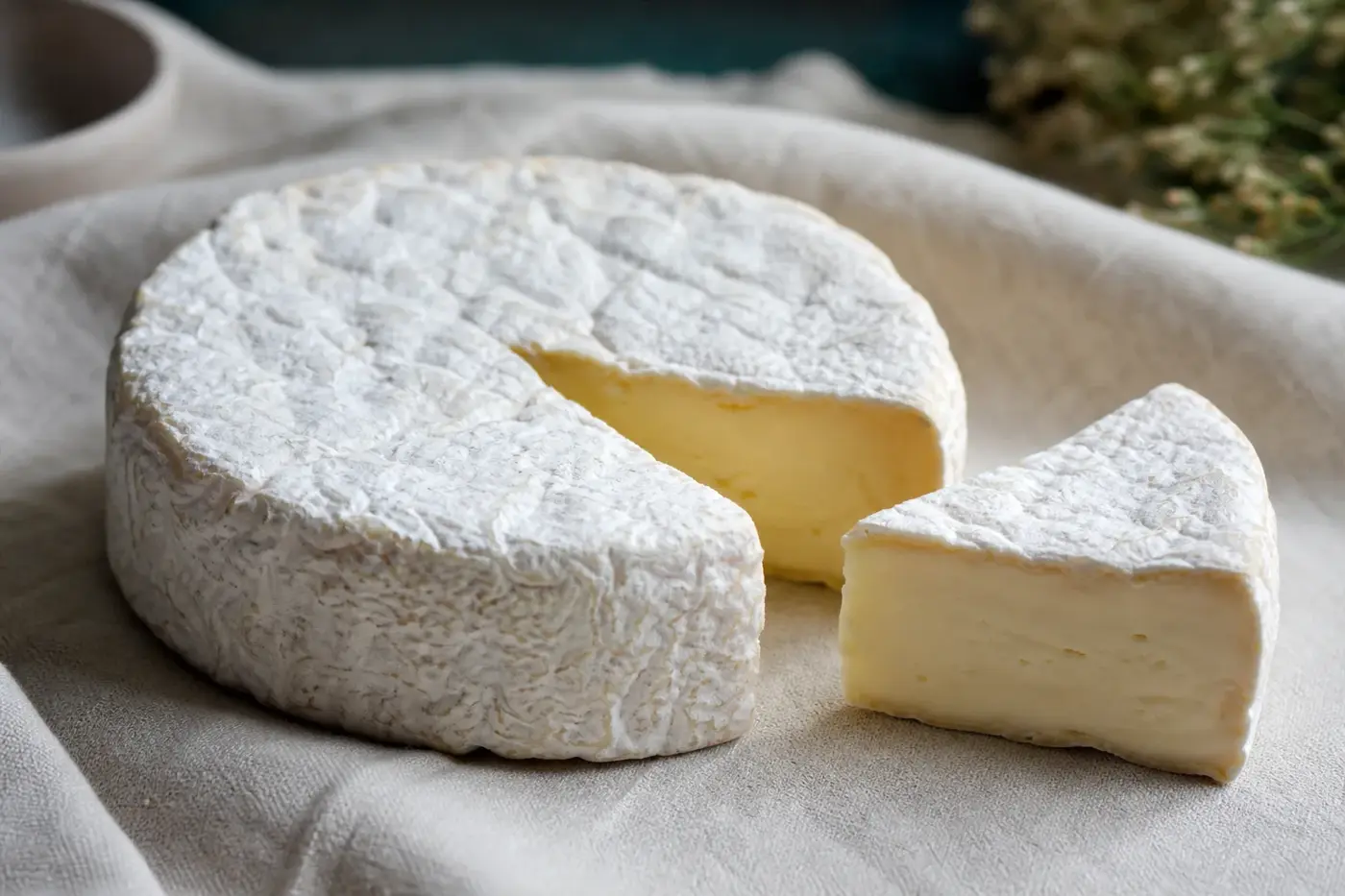
A thin reddish-brown rind and a pronounced piquant aroma announce Pálpusztai. Beneath the rind, the food standard describes a soft, spreadable cow’s milk cheese with a pleasantly salty flavour. Its ripening flora includes Brevibacterium linens. [3]
Try a small piece with plain bread. Give the texture and aroma a moment before reaching for stronger accompaniments. Your nose has already done some of the introductions.
Ask for these names in full
At the counter, a complete name gives you something useful to go on. The two geographical indications below define production areas. The Rögös túró traditional speciality document sets out a fresh curd’s characteristics and method instead. For the broader picture, turn to protected names explained. [2][4][6][8][9]
| The full name to ask for | Protection to know about | What the production rules require |
|---|---|---|
| Győr-Moson-Sopron megyei Csemege sajt | EU PGI, recorded in Hungary’s official GI list. [9] | Cow’s milk cheese; specified production stages take place in listed municipalities within Győr-Moson-Sopron. [4] |
| Lajta sajt | EU PGI, entered by Regulation (EU) 2023/2138. [8] | Cow’s milk cheese produced and matured within Győr-Moson-Sopron county. [6] |
| Rögös túró | EU TSG status unspecified. Registered as a TSG in Great Britain as of November 2026. [10] | Fresh cow’s milk curd made to preserve its loose, lumpy structure. [2] |
Győr-Moson-Sopron megyei Csemege sajt: discover the soft crumble
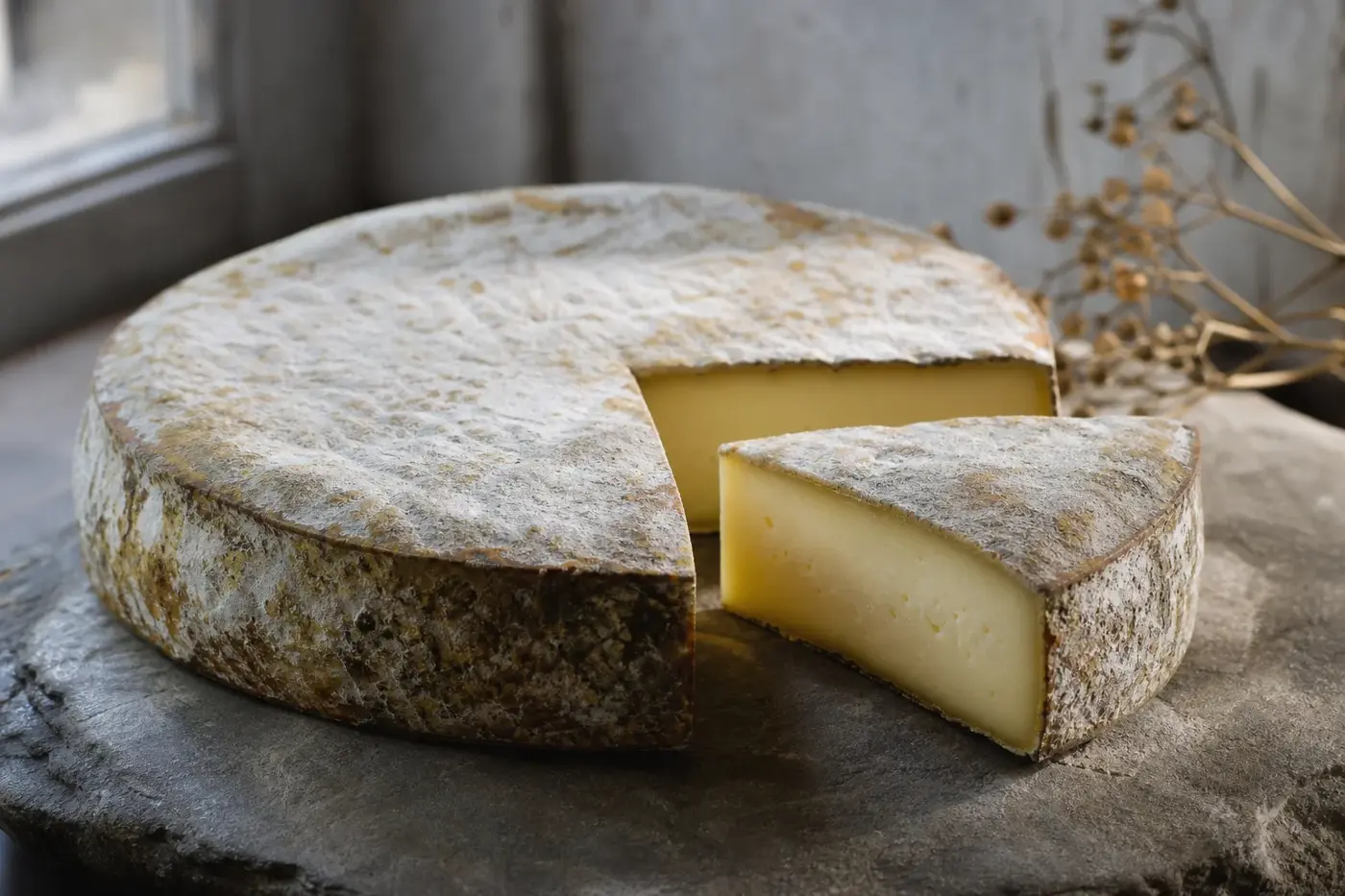
Behind the long name sits a distinctive disc. Its published single document describes a thin, flexible, reddish-yellow rind and a yellowish-white interior with closely distributed openings. Expect an aromatic, salty and slightly acidic flavour. Easy to cut, it breaks into a soft crumble in your mouth. [4]
The full specification takes you into a humid ripening room, where the cheeses rest on pine boards. Careful turning and brine washing accompany approximately three weeks of ripening, working from the surface towards the centre. Ask for the full name at a specialist counter. Shorten it to the broad word csemege and you lose the precision that identifies this cheese. [5]
Lajta sajt: get to know the reddish-rinded block
Lajta sajt takes the form of an elongated block rather than a disc. Its specification describes a slightly soft, porous cheese with a reddish-yellow rind and a gently acidic, mildly piquant flavour. It uses pasteurised milk, with chymosin specified as the milk-coagulating enzyme. [6]
Before the characteristic surface flora develops, the curd is cut, worked, moulded and salted. Two weeks on pine boards, with careful turning and brine washing, are central to maturation. Both making and maturing must take place within Győr-Moson-Sopron county. [6]
The legal dates have distinct roles. The registration regulation was adopted on 6 October 2023 and published on 13 October 2023. Its provision for entry into force on the twentieth day is separate from both dates. [8]
Rögös túró: treasure those little clusters
For the maker, preserving the clusters is the essential task. Rögös túró begins with cow’s milk, raw or pasteurised as the specification permits. Cream, lactic cultures and rennet are available within the prescribed methods. Whey drains gently through gravity and self-pressing, allowing the characteristic curds to survive handling and packing. [2]
If you are cooking, look for the complete name. Buying another túró? Ask about texture before you choose. A smooth product and a loose, lumpy curd will behave differently in your filling.
Take túró out to lunch, then find a bakery
Order túrós csusza for a straightforward introduction to curd in a savoury meal. You meet túró alongside pasta, rather than tasting the dairy ingredient entirely on its own. It is a useful way into the kitchen’s side of the story. [1]
Next, explore pastries and sweets. Ask the bakery which fillings contain túró, whether they are smooth or visibly curdy, and what else goes into them. Taste the filling before the sweeter outer elements if you want to notice its acidity. Treat this as a useful tasting sequence, not a prescribed national order.
For a savoury spread, ask for körözött and find out which dairy ingredients that particular version contains. Gyugos Sajt lists it separately from fresh curd and plain cream cheese. Ask for the prepared food by name, rather than expecting those different curd products to stand in for one another. [11]
At your own table, keep the first round simple: plain bread, cheeses separately, accompaniments afterwards. Before making a sandwich, notice whether each paste bends, crumbles or spreads. Does the rind supply most of the aroma? For more words to describe what you find, try telling cheese styles apart.
Meet the teachers and makers behind the cheese
Inherited practice is only part of this story. Teaching and research helped shape these cheeses too. The Csemege specification records a teaching centre at Csermajor in 1886 and the predecessor of the dairy research institute at Mosonmagyaróvár in 1903. These institutions helped bring milk production and processing skills together. [4]
Hungary’s agriculture ministry dates the development of Lajta’s distinctive manufacturing technology to the 1930s. Its account places the cheese at the meeting point of established dairying and technical expertise in the north-west. That ripening room has knowledge behind it as well as milk. [7]
A ministry presentation from 2014 considers Trappista, gomolya, Pálpusztai and Lajta together within Hungarian dairy standards and hand-crafted production. Today, Gyugos’s published range likewise stretches across fresh curd, gomolya, Trappista and parenyica. Put those records beside each other and you find overlapping traditions. One kind of cheese has not simply pushed another aside. [11][13]
Keep their shared Central European setting in mind as you explore the names and methods. Ask what a Hungarian maker brings to a style through local milk and maturation. You will learn more that way than by asking whether a shared tradition belongs exclusively to one nation.
Find a good counter and start a conversation
Choose your setting according to what you want to discover. A market stall can introduce a maker; a dairy shop can help you compare products. A restaurant shows curd at work in a dish, while a farm dairy can explain the relationship between milk and cheese. Visit several kinds of place rather than asking one to tell the whole story.
At a market or dairy counter, keep these questions handy. They take you beyond admiring the display, enjoyable though that part undoubtedly is:
- Which cheeses were made locally?
- Which milk was used?
- Where was the cheese made, rather than merely packed?
- Is it fresh or matured?
- For a protected product, can you see the complete registered name?
Gyugos Sajt offers one documented starting point in Derecske. Its published selection includes gomolya, Trappista, Rögös túró and körözött, and its contact page gives its Derecske location. Before travelling, contact the business to ask whether an appointment, collection or tasting is possible. [11][12]
For a restaurant visit, check the current menu for túrós csusza and ask how the kitchen uses túró. At a bakery, find out what is inside the filling. Before heading to a farm dairy, confirm booking requirements, accessibility and whether you can meet the maker.
If a label leaves you wondering where a cheese comes from, start with how to read a cheese label. It will help you distinguish the maker, packer and seller. Then you can return to the more delicious business of choosing.
Questions people ask
What is the difference between túró and Rögös túró?
Túró is fresh curd, classified as fresh cheese in the specification. Rögös túró is the particular named product governed by that document, and the word túró alone on a packet does not establish that it meets the requirements.
What is Trappista cheese?
Trappista is a salted, ripened, semi-hard cow’s milk cheese. The Hungarian food standard describes fermentation holes and a flavour that is pleasantly salty and gently acidic.
What milk is used to make gomolya?
The Hungarian food standard permits gomolya made from cow’s, sheep’s or goat’s milk, including mixtures. Ask which milk an example contains before comparing it with another.
What is Pálpusztai cheese like?
Pálpusztai is a soft, spreadable cow’s milk cheese with a thin reddish-brown rind and a pronounced piquant aroma. Its flavour is pleasantly salty, and its ripening flora includes Brevibacterium linens.
How is Lajta sajt made and matured?
Lajta sajt is made with pasteurised cow’s milk, using chymosin as the specified milk-coagulating enzyme. It matures for two weeks on pine boards, with careful turning and brine washing. Both manufacture and maturation must take place within Győr-Moson-Sopron county.
Sources
- Wikipedia, Túrós csusza, undated search extract retrieved November 2026. Supports the identification of the dish as savoury pasta with fresh curd. Source.
- European Commission, Product specification of a Traditional Speciality Guaranteed: Rögös túró, published with Decision 2019/C 111/07, 25 March 2019, particularly sections 3 and 4. Specification.
- Hungarian Ministry of Agriculture, Földművelésügyi Értesítő, volume LXXIII, issue 2, 16 June 2023, dairy guidelines and sensory descriptions. Official publication.
- European Commission, Single document: Győr-Moson-Sopron megyei Csemege sajt, 2019/C 408/06, 4 December 2019, sections 3 to 5. Official Journal.
- Hungarian government, Győr-Moson-Sopron Megyei Csemege Sajt: termékleírás, official specification, undated retrieved version, sections 3 to 5. Specification.
- Tradicionális Magyar Sajtok Egyesület, Lajta sajt: termékleírás, dated 4 November 2021, official Hungarian government copy, sections 2 to 5. Specification.
- Hungarian Ministry of Agriculture, Uniós oltalomban részesült a Lajta sajt, 13 October 2023. Ministry statement.
- European Commission, Commission Implementing Regulation (EU) 2023/2138, adopted 6 October 2023, published 13 October 2023, Articles 1 and 2. Binding registration act.
- Hungarian government, Földrajzi árujelzők, undated live geographical indications list, retrieved November 2026. Official list.
- Department for Environment, Food & Rural Affairs, Rögös túró, protected food name register entry, published 4 January 2021, retrieved November 2026. Register entry.
- Gyugos Sajt, Termékeink, undated producer product list, retrieved November 2026. Commercial primary source for its own published selection. Product list.
- Gyugos Sajt, Kapcsolat, undated producer contact page, retrieved November 2026. Contact information.
- Hungarian Ministry of Rural Development, A magyar sajtút, presentation, 1 April 2014, tables comparing dairy standards. Presentation.
This desk-researched draft compares official specifications, Hungarian government publications and a producer’s published range; culinary and current-register checks remain outstanding in the editorial evidence log.
Last checked: November 2026
Last checked November 2026.
The editors suggest you read next
French Cheese: The Complete Guide
Picture Normandy’s pastures, then follow the milk towards the Loire’s goat dairies, the Jura’s shared cheesemaking traditions and the sheep country of the Pyrenees.