Imeruli
A clay pan sits over embers in an Imereti village, bread wrapped around a filling of fresh, crumbly cheese.
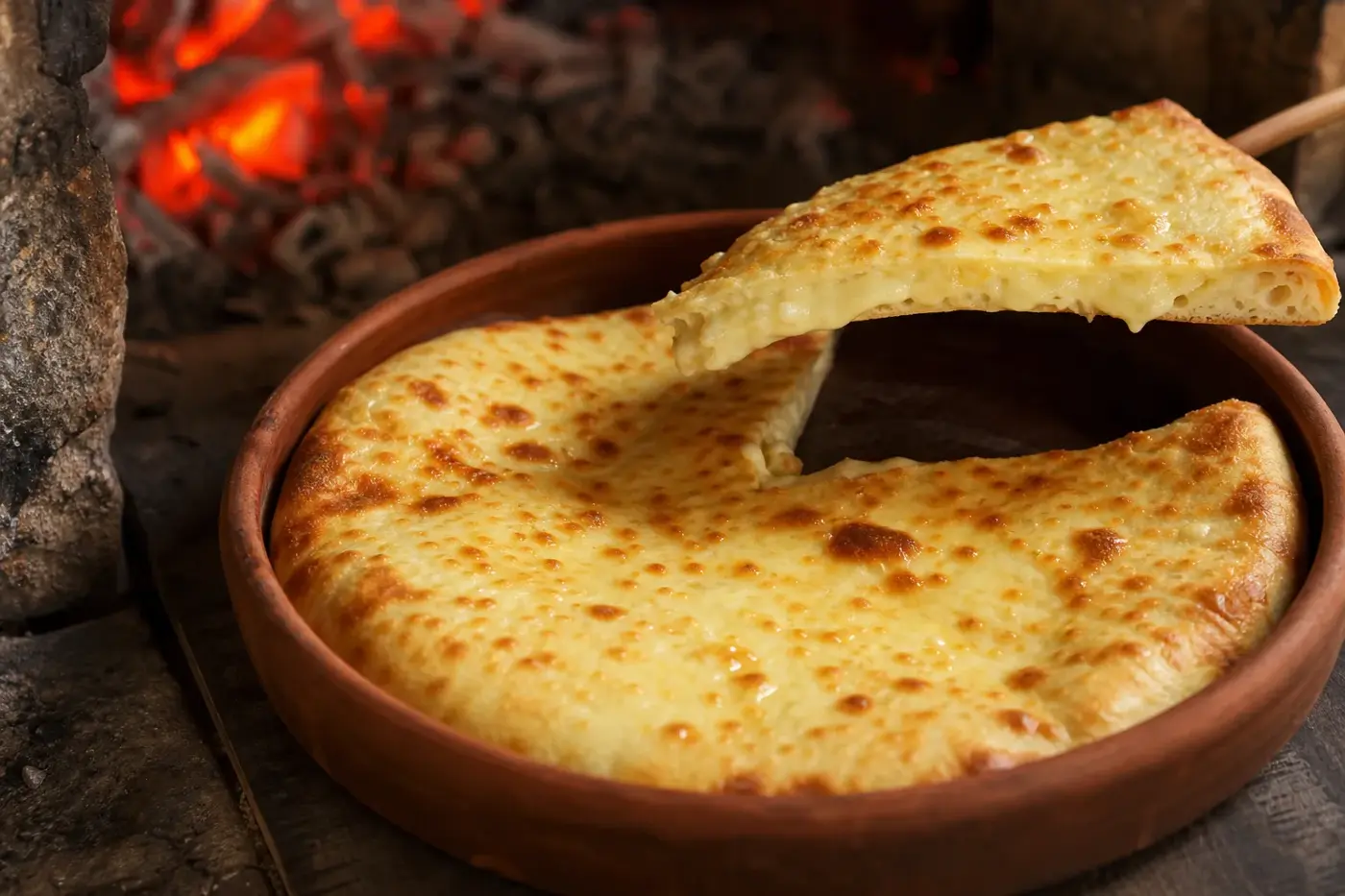
A clay pan sits over embers in an Imereti village, bread wrapped around a filling of fresh, crumbly cheese. This is Imeruli khachapuri, with its milk aroma and restrained saltiness. Bring the cheese itself to your table and you meet another side of this pale, gently springy cheese from western Georgia: a quietly appealing cultured milk flavour. [4, 6]
| What to know | The details |
|---|---|
| Names you might see | Imeruli; Imeretian cheese. [2] |
| Registered name | იმერული ყველი; Latin form Imeruli Kveli. [1, 2] |
| Protection in Georgia | Geographical indication, Sakpatenti registration No. 15, registered 24 January 2012; listed November 2026. [1] |
| Protection in Great Britain | Registered PGI under the UK scheme from 31 December 2020; November 2026 register information. [3] |
| Home region | Imereti, Georgia. [2] |
| Milk in the vat | Cows’ milk; up to 20% buffalo or goats’ milk permitted. [4, 5] |
| Milk treatment | Ask the producer whether the milk is raw or pasteurised. |
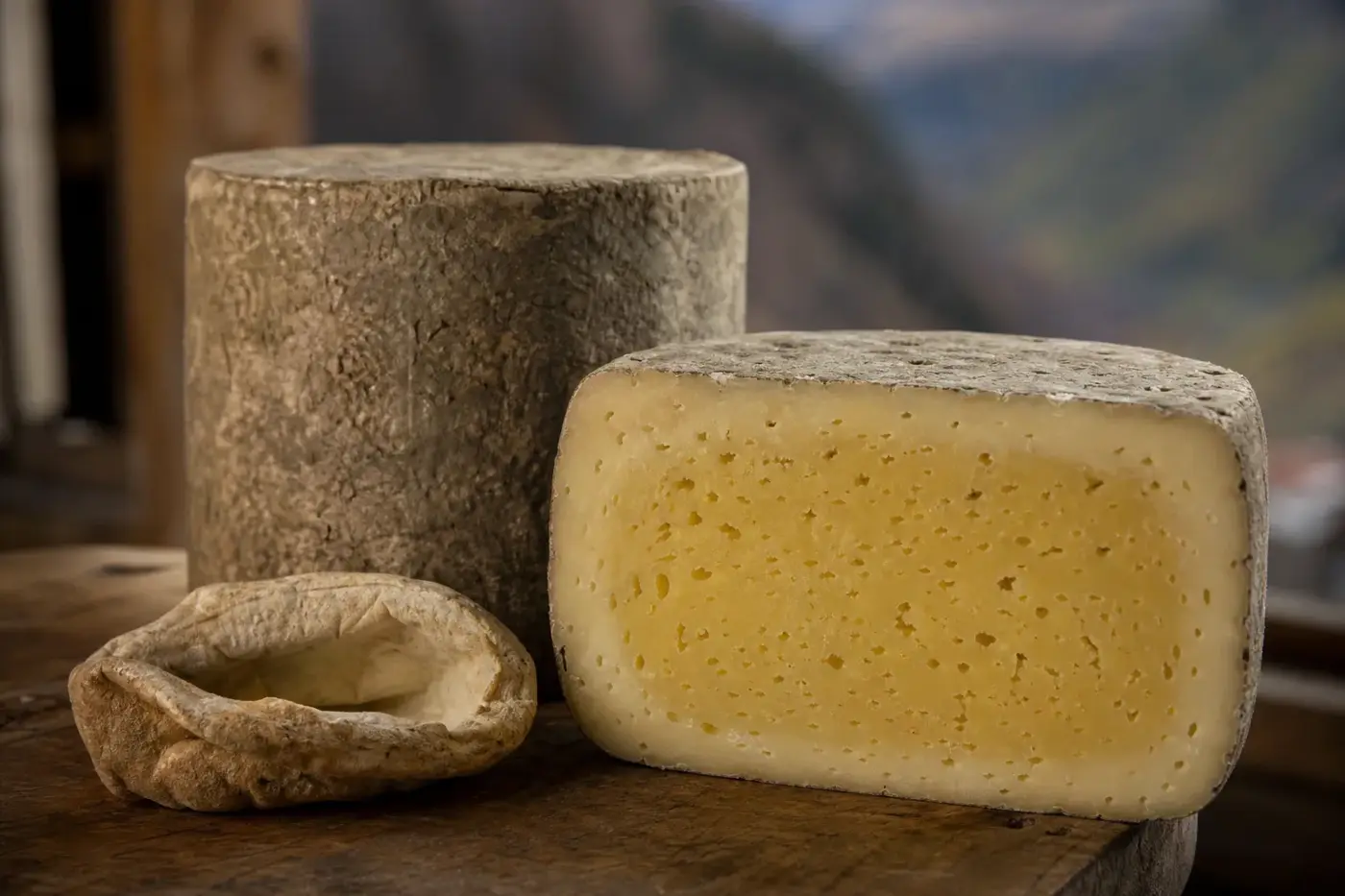
| Rind and interior | Rindless; white to yellowish, slightly soft and elastic. [4, 5] |
| Shape to look for | Low cylinder with rounded sides; a log format is also documented. [4] |
| Pregnancy guidance | UK: NHS foods to avoid in pregnancy, November 2026 guidance. [11] |
Imereti puts its name on the cheese
Imeruli belongs to Imereti in more than name. Its specification places both milk production and processing in this region of western Georgia. When you buy it, that name means a defined regional cheese, not simply a fresh Georgian style. [1, 2]
Sakpatenti’s register lists იმერული ყველი as geographical indication No. 15, registered on 24 January 2012. An older transitional provision allowed cheese made elsewhere in Georgia to carry the same name until 1 January 2021. After that date, the specification gives names including Akhali Kveli and Chkinti Kveli for cheese made outside Imereti. [1, 2]
The distinction matters when you shop: a familiar kind of fresh Georgian cheese is not necessarily entitled to the geographically protected name. Great Britain separately lists Imeruli as a registered PGI, protected through the UK trade agreement with Georgia, with a UK scheme registration date of 31 December 2020. For the difference between an origin name and a style, see protected names explained. [2, 3]
Cut a slice and meet its gentle spring
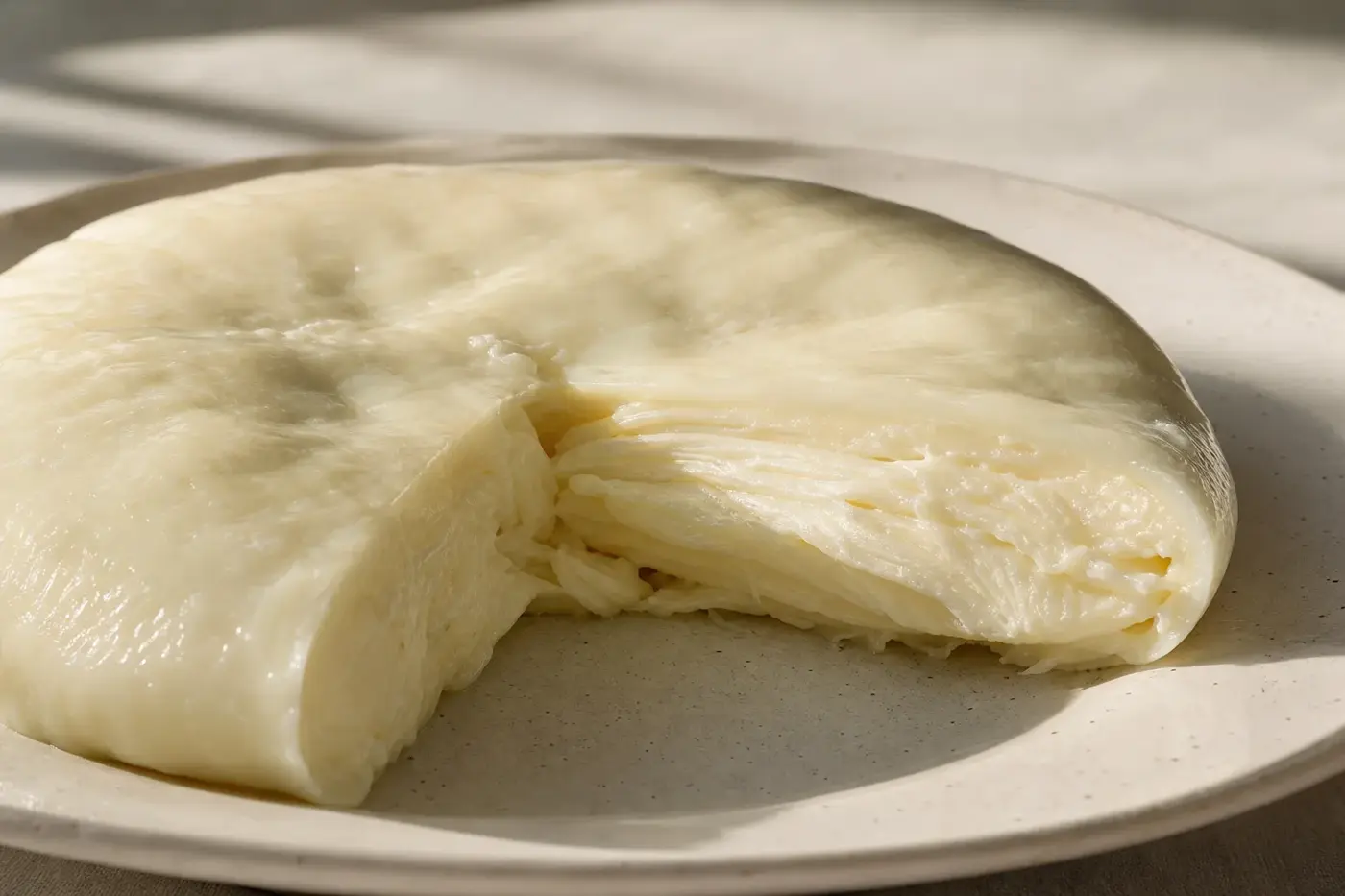
Cut into Imeruli and you may find a white to yellowish face, close and uniform, with irregular holes or none at all. There is no developed rind. Its usual shape is a low wheel with rounded sides, sometimes bearing the marks of a mould or draining cloth. [4, 5]
The specification calls the texture slightly soft and elastic. Think a little spring, not the layered pull of a stretched cheese. Cultured milk flavour and moderate saltiness give you a milky character with a gentle lactic tang, rather than the concentrated flavours of long maturation. [4, 5]
For khachapuri, Georgia’s official tourism guidance singles out fresh, crumbly Imeretian cheese with a milk aroma and restrained saltiness. Ask what your cheese is intended for: filling bread, or eating as a saltier table cheese? Freshness and salting matter in the kitchen, even if your first instinct is simply to cut another slice. [6]
This page summarises published guidance from the official sources it cites. It is not medical advice. Guidance differs between countries and changes over time, so check the current source for where you live, and ask your doctor, midwife, pharmacist or dietitian about your own circumstances.
Follow the milk from vat to mould
Cows’ milk starts the story of registered Imeruli, but it need not be alone in the vat. The specification permits up to 20% buffalo or goats’ milk. If the cheese’s character matters to your cooking, ask about the mixture rather than assuming it is exclusively cows’ milk. [4, 5]
First comes coagulation, when milk sets into curd. The curd is cut and stirred, then some whey, the liquid it releases, is removed before further warming. Once in the moulds, the curds settle under their own weight, knitting together as more whey drains away. [5]
Salting follows shaping and draining. The Georgian specification describes several hours of self-pressing in moulds before the cheese moves into brine. This salt water plays a part in production and handling, while developing the characteristic salted taste. [5]
An official English specification describes sale from the day after that stage. It is a short journey from curd to finished cheese, which helps explain why freshness takes such a prominent place in culinary accounts. For the wider picture, follow how cheese is made. [2]
Imeruli and Sulguni: close connections, different textures
Sulguni takes fresh curd through another transformation. Its Georgian specification describes draining the curd, allowing it to ferment, then cutting it into thin pieces to work in hot water. The softened mass is kneaded and folded into the finished cheese. [7]
That extra working helps explain the connection between the cheeses. The specifications do not, however, establish Imeruli itself as Sulguni’s starting curd. If you buy a finished, salted Imeruli for the table, treat it as a separate cheese. [5, 7]
You can see the distinction in their finished textures. Sulguni’s specification calls for an elastic, layered structure, with layers that separate readily; Imeruli has a close paste, sometimes with scattered openings. Their cheesemaking connection does not make them identical, and those different structures affect how they behave inside bread. [4, 7]
Into khachapuri, or straight to your table
Imeruli khachapuri keeps its cheese tucked inside the bread. Georgia Travel describes the preferred filling as fresh Imeretian cheese, crumbly enough to spread through a thin casing of dough. Restrained saltiness allows a generous filling, and its account records village cooking in a ketsi, the clay pan set over embers. [6]
Sometimes two cheeses share the work. A restaurant recipe published by Georgia Travel combines Imeruli and Sulguni in pan-fried Imeretian khachapuri. Fresh curd meets worked, layered cheese, each bringing its own structure: distinct ingredients, not interchangeable names. [8]
For a simple meal, slice your Imeruli and serve it with bread, tomatoes, cucumber and herbs. Plain accompaniments leave room for its milk tang and salt. This is not a cheese that needs an elaborate supporting cast.
If you are cooking, choose a recipe naming fresh Imeretian cheese and read the instructions before adding more salt. Season the whole filling, not just one ingredient: another salty cheese changes what the mixture needs compared with Imeruli alone. To reproduce a particular regional bread, weigh the cheeses separately and follow the recipe’s proportions.
Three questions worth taking to the cheese counter
Start with the producer’s identity, place of manufacture, milk treatment and storage directions. A Georgian address belonging to an importer or retailer tells you less than a clear statement of where the cheese was made. For the geographical name, look for Imereti in the description, not just a familiar spelling or an appealing picture. [1, 2]
Then ask three direct questions: when was it made, how salty is this batch, and is it suitable for khachapuri? If you are buying loose cheese, ask for the maker’s storage and use instructions too. Pale colour and a pleasant smell can tell you about appearance or quality, but they cannot replace handling information. [6, 9]
Before you buy, decide whether you want the cheese for immediate eating or for cooking. That matters particularly if you are substituting it for a named cheese in a recipe. For help separating useful information from presentation, turn to reading a cheese label.
Keep it cool and follow the label
Refrigerate Imeruli promptly and follow the label. For home storage in England, Wales and Northern Ireland, the Food Standards Agency advises a fridge temperature between 0 and 5 °C. If the instructions say to keep the cheese in its brine, retain the supplied liquid rather than making a replacement. [9]
The NHS advises using opened food within two days unless the packaging says otherwise. Eat, cook or freeze food by its use-by date, and keep raw foods separate from ready-to-eat cheese. Brine affects handling, but it does not replace refrigeration or date instructions. [10]
Take out only what you need to serve. NHS guidance says to eat ready-to-eat foods within four hours of removing them from refrigeration, keeping that time as short as possible. These UK instructions are dated November 2026; how to store cheese at home covers the wider handling principles. [9, 10]
Raw or pasteurised? Ask about your cheese
Was this particular cheese made with raw or pasteurised milk? Imeruli’s regional name cannot tell you. For label terminology, see raw milk and pasteurisation; for your own circumstances, consult the current official guidance where you live.
In the UK, NHS pregnancy guidance includes pasteurised soft cheeses without a white mould rind, such as mozzarella and feta, among cheeses that can be eaten. It also permits hard cheeses made with unpasteurised milk. The guidance explains which soft cheeses should be avoided unless cooked until steaming hot, so consult its current advice for the particular cheese. [11]
The NHS identifies pregnant people, newborn babies, people with weakened immunity and older people as groups at higher risk from listeriosis. Its guidance stresses chilled storage and use-by dates: milk treatment is only one part of the picture, and handling matters after cheesemaking too. Consult these NHS sources, dated November 2026 here, and ask your healthcare professional about your circumstances. [10, 11]
No Imeruli? Let your dish guide the substitute
For khachapuri outside Georgia, feta mixed with mozzarella is a documented substitute. The restaurant recipe published by Georgia Travel proposes crumbled feta and mashed mozzarella in place of its Georgian cheeses. Use that substitution for the recipe’s combined filling, not as a fixed conversion for every Imeruli dish. [8]
Give the two cheeses different jobs in your kitchen. Feta supplies a crumbly, salty component, while mozzarella makes the filling softer and more elastic. Adjust extra seasoning to the cheeses you have, and follow the substitute recipe’s proportions rather than swapping by eye: the mixture shapes the result’s character. [8]
For eating with bread, look for a mild fresh white cheese with some spring, rather than a heavily matured cheese. Choose a balance of milk flavour, moisture and salt that suits your meal. Feta alone gives you a more crumbly mouthful; mozzarella alone is gentler and more elastic, so these are choices by style, not identical replacements. [4, 8]
Keep the names clear when serving or writing a menu: bread made with a substitute contains that substitute. For a closer look at what each ingredient brings, explore the guides to feta and mozzarella. They explain their characters and uses, helping you choose a substitution that suits your dish.
Questions people ask
What is Imeruli cheese?
Imeruli is a fresh cheese from Imereti in western Georgia. It is rindless, slightly soft and elastic, with a cultured milk flavour and moderate saltiness.
How is Imeruli different from Sulguni?
Imeruli has a close paste that may have scattered openings, while Sulguni has readily separating layers. Sulguni curd is fermented, worked in hot water, then kneaded and folded.
What can I use instead of Imeruli for khachapuri?
A restaurant recipe published by Georgia Travel suggests crumbled feta and mashed mozzarella in place of its combined Imeruli and Sulguni filling. Follow the substitute recipe’s proportions rather than treating the mixture as a fixed conversion for every Imeruli dish.
How should I store Imeruli?
The Food Standards Agency advises a fridge temperature between 0 and 5 °C for home storage in England, Wales and Northern Ireland. Follow the cheese’s label and retain the supplied brine if its instructions say to keep it in the liquid.
Can I eat Imeruli during pregnancy?
The NHS includes pasteurised soft cheeses without a white mould rind among cheeses that can be eaten, but advises avoiding certain soft cheeses unless cooked until steaming hot. Imeruli’s name does not establish its milk treatment, so check the current [NHS pregnancy guidance](https://www.nhs.uk/pregnancy/keeping-well/foods-to-avoid/) for the particular cheese and ask your healthcare professional about your circumstances.
Sources
- Sakpatenti, State register of appellations of origin and geographical indications, live register, accessed November 2026. The Georgian register lists იმერული ყველი, registration No. 15, dated 24 January 2012.
- Department for Environment, Food & Rural Affairs, იმერული ყველი/IMERULI KVELI: product specification, undated English document linked from the GB register, retrieved November 2026.
- Department for Environment, Food & Rural Affairs, იმერული ყველი / Imeruli Kveli, register entry published 4 January 2021, accessed November 2026.
- Sakpatenti, Official bulletin No. 17, application No. 1584/07, IMERULI KVELI, 12 September 2011, printed page 70. Historical application text, used for the documented product description rather than present registration status.
- Sakpatenti, იმერული ყველი: geographical indication specification, registration No. 15, Georgian document currently linked from the register, retrieved November 2026. The upload path contains a 2025 date; the document’s amendment and effective dates are not established here.
- Georgian National Tourism Administration, Georgia Travel, Khachapuri: True Symbol of Georgian Cuisine, undated web edition, accessed November 2026, especially the Imeretian and Megrelian sections.
- Sakpatenti, სულგუნი: protected geographical indication specification, registration No. 10, Georgian document currently linked from the register, retrieved November 2026, sections II and III.
- Georgia Travel, Rediscovering Khachapuri, Georgia’s must-try classic, 2 March 2023, including the published restaurant recipe and its substitute filling. The recipe is a primary source for that restaurant’s formulation.
- Food Standards Agency, How to chill, freeze and defrost food safely, published 18 December 2017, current web edition accessed November 2026. The publication states that it applies to England, Northern Ireland and Wales.
- NHS, Listeriosis, page last reviewed 10 November 2023, current edition accessed November 2026.
- NHS, Foods to avoid in pregnancy, current web edition accessed November 2026, “Cheese, milk and other dairy”.
This piece was researched through official Georgian registration records and specifications, the GB register, published Georgian culinary material and UK agency guidance, with the production comparison and serving suggestions identified as editorial synthesis.
Last checked: November 2026
Last checked November 2026.
The editors suggest you read next