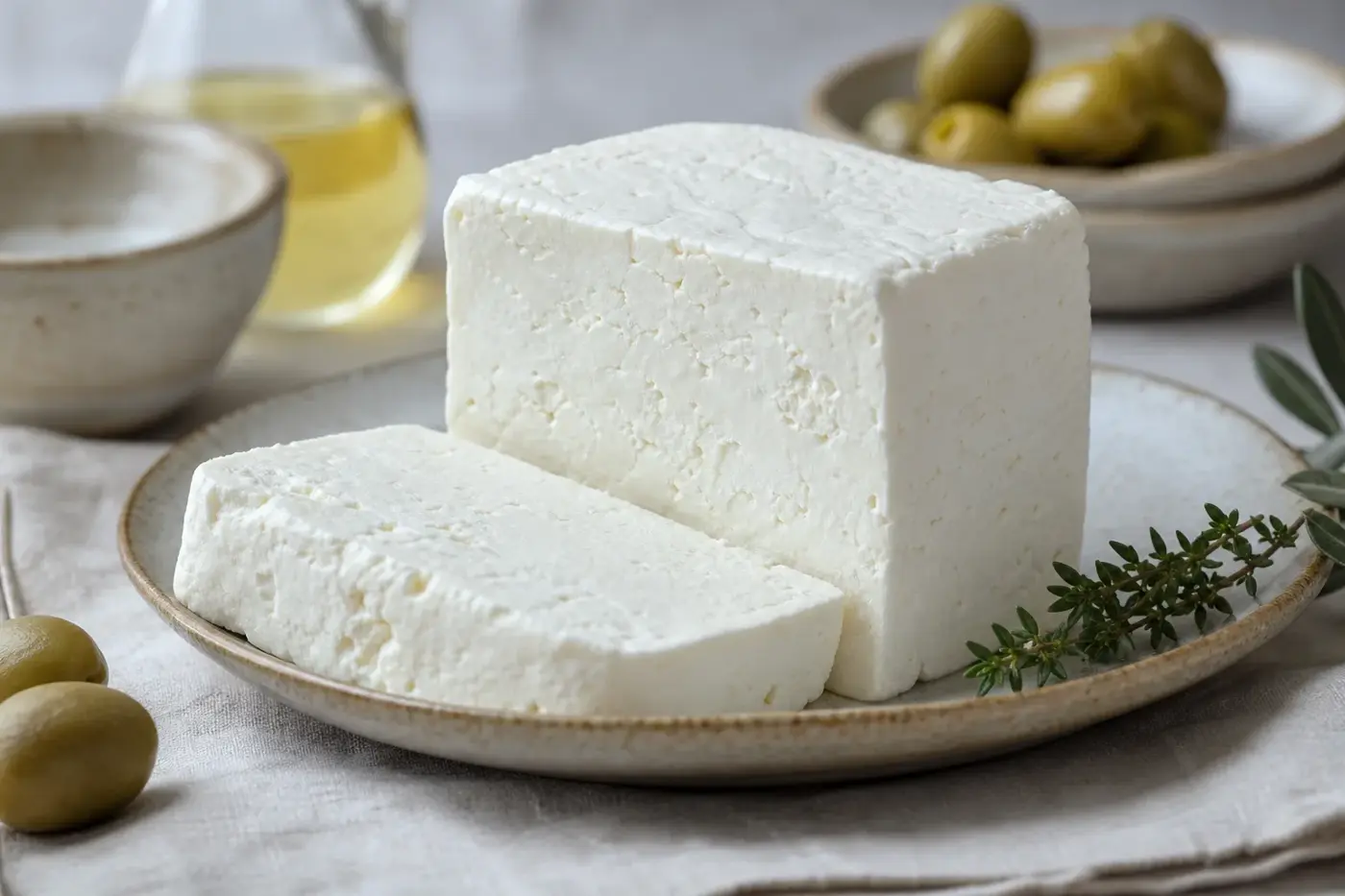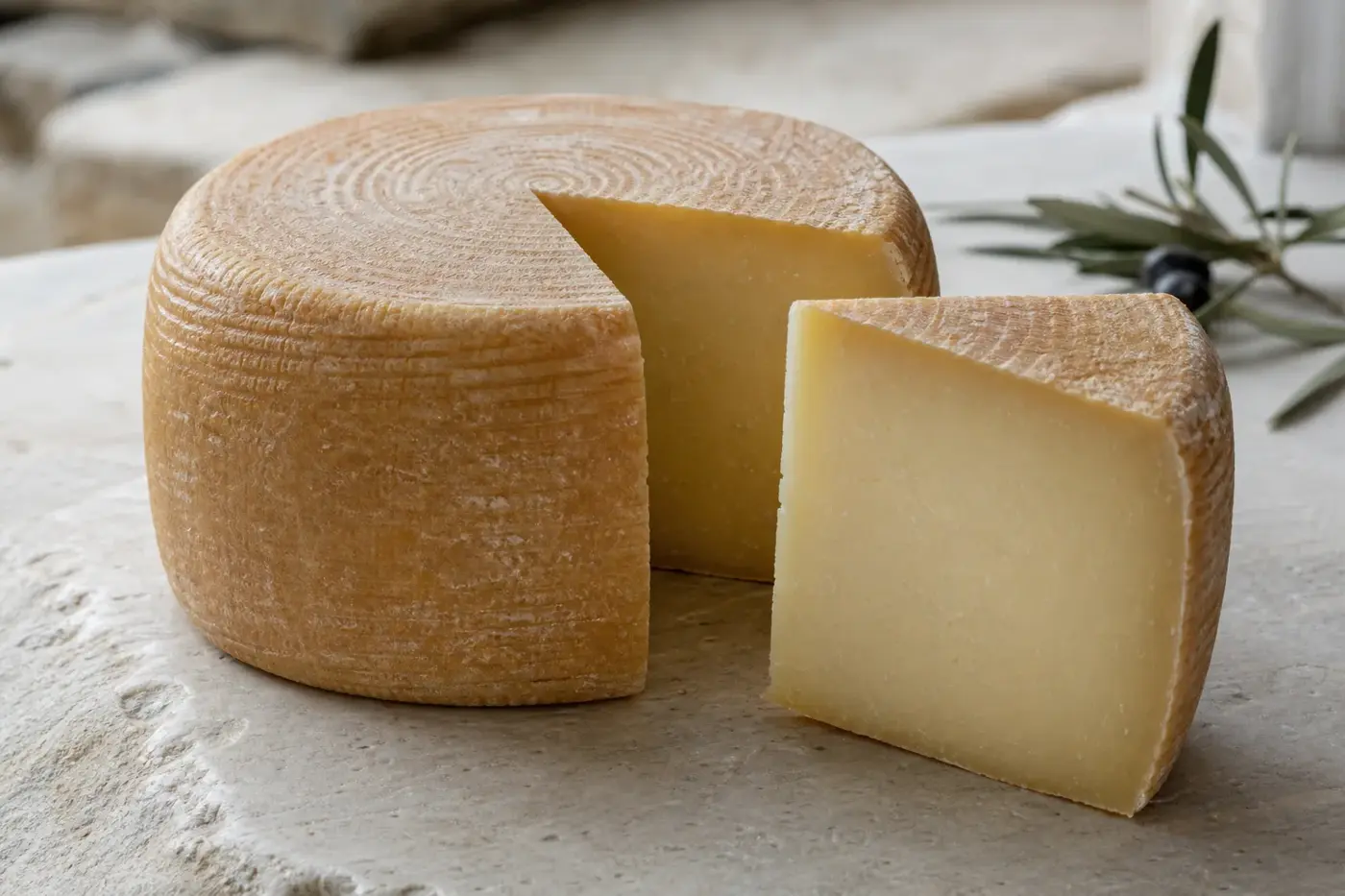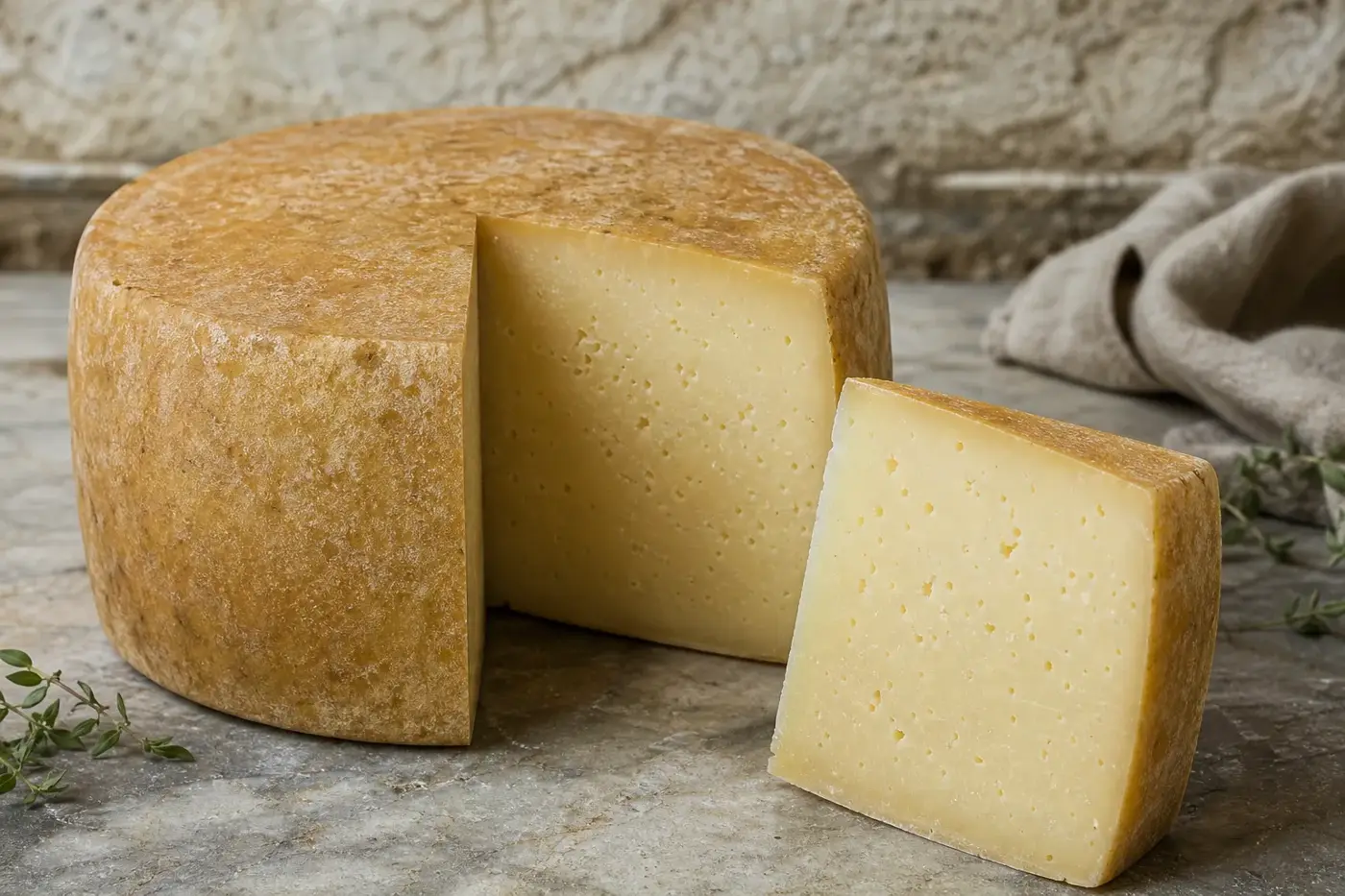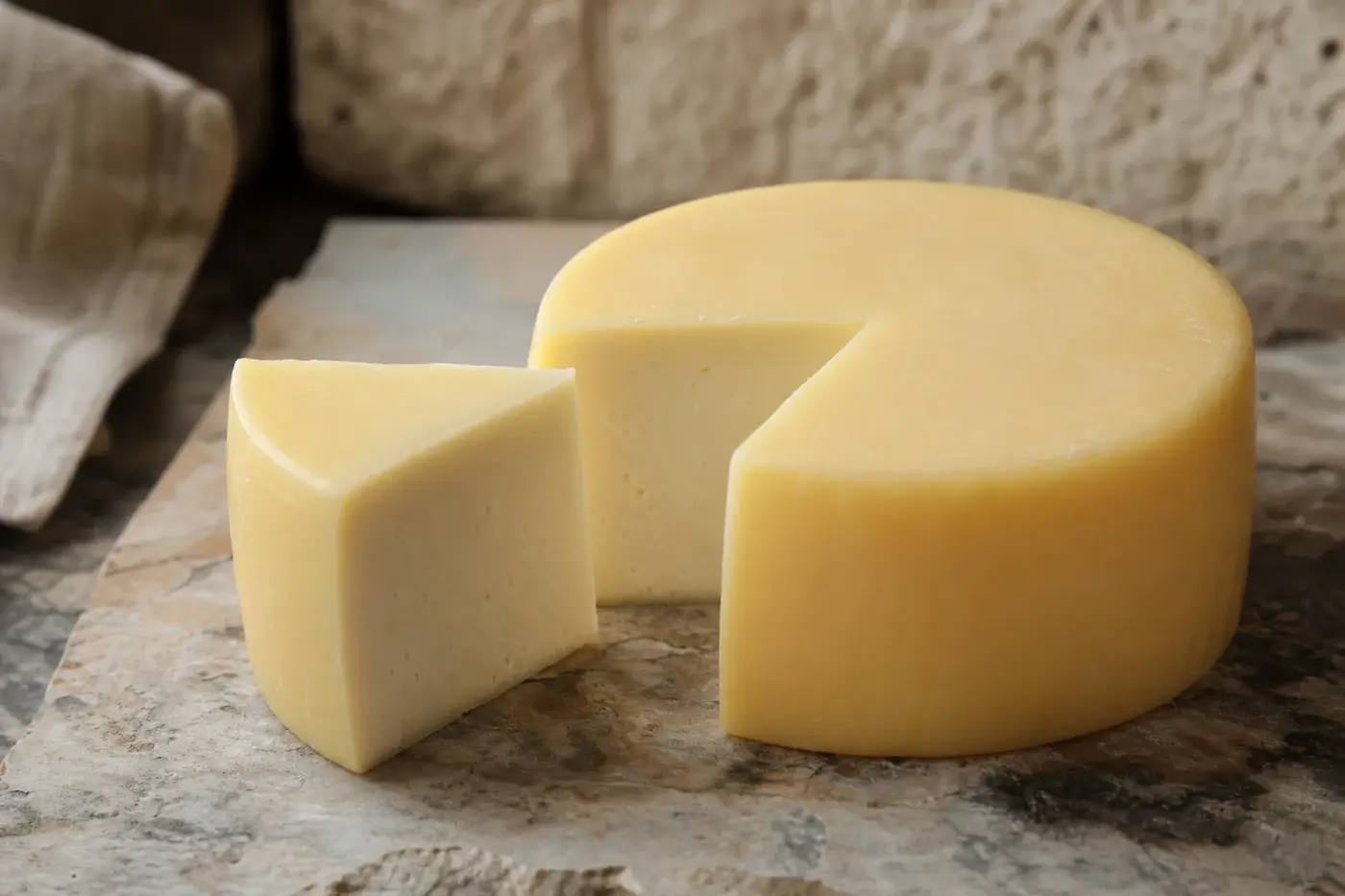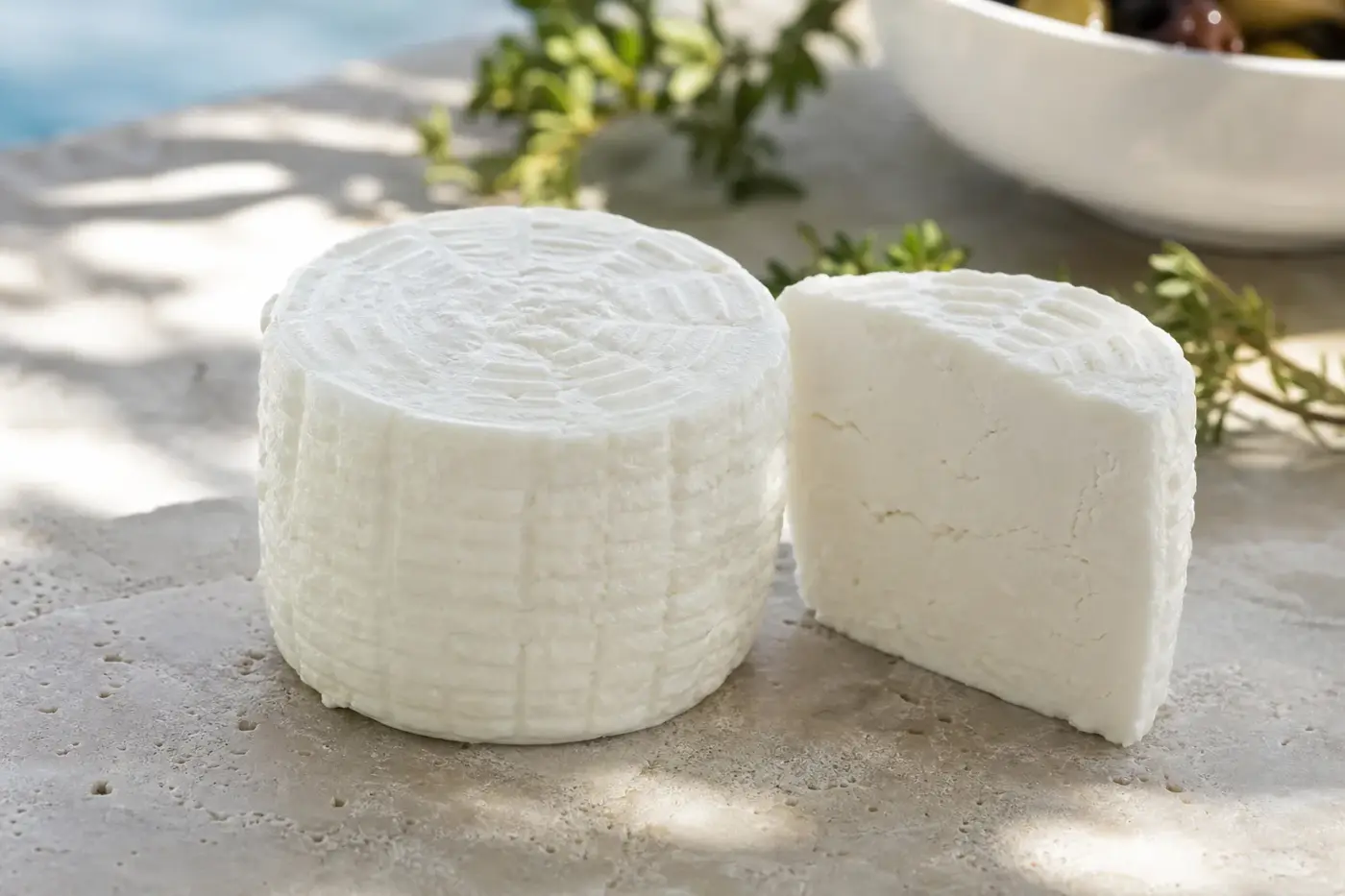
Look at the white cheese on your plate. A little basket has left its signature, pressed into the surface of Kalathaki Limnou. Made on the Greek island of Limnos from sheep’s milk, sometimes with goat’s milk, it takes both shape and name from its mould. Brine maturation and EU protected designation of origin (PDO) status complete the picture. [1,4,5]
| At a glance | The details |
|---|---|
| Familiar name | Kalathaki Limnou [1] |
| Registered name | Καλαθάκι Λήμνου / Kalathaki Limnou [1] |
| EU registration | European Commission, eAmbrosia EUGI00000013185; file PDO-GR-0435; registered 21 June 1996. Information dated November 2026. [1] |
| Great Britain | Registered PDO; UK scheme registration 31 December 2020. Information dated November 2026. [3] |
| Northern Ireland | Unconfirmed status |
| Switzerland | Unconfirmed status |
| United States | Unconfirmed status and applicable rights |
| Specification | Greek Ministerial Decision 313044/1994, Articles 1 to 5. [2] |
| Home territory | Limnos island: milk production, cheesemaking and maturation. [2,5] |
| Milk | Sheep’s; up to 30% goat’s milk permitted. Raw or pasteurised. [2,5] |
| Coagulant | Traditional rennet or enzymes with equivalent action. [2] |
| Minimum maturation | Two months. [2] |
| Composition limits | Maximum whole-cheese moisture 56%; minimum fat in dry matter 43%. [2] |
| Shape and size | Rindless cylinder; diameter 10 to 15 cm; height about 10 cm; weight 0.7 to 1.3 kg. [2] |
| Pregnancy guidance | UK: NHS guidance, November 2026. [9] |
Meet the basket that leaves its mark
Kalathaki means “little basket”; Limnou means “of Limnos”. The basket earns its place in the name by holding the curd, the coagulated solids of milk, as it drains and takes shape. The North Aegean regional account describes traditional moulds woven from rushes or chaste tree, alongside modern moulds that reproduce their patterned surface. [4]
When you buy a whole cheese or a generous wedge, look for that imprint. Leave the curved outside intact and you can see something a bowl of crumbles cannot show you: the mark of a practical draining tool. For your first serving, keep the patterned edge on display. Even a cheese deserves to arrive looking like itself.
Follow the flocks into the Limnos landscape
Picture plains and low hills, with a long-established tradition of farming and livestock keeping. That is the island setting described by the North Aegean regional account. It reaches into the production rules, too: the animals must belong to breeds traditionally reared and adapted to the area, with a diet based on its flora. [2,4]
Via Lemnia’s account of island cheesemaking connects this brined cheese with spring, when local vegetation is at its fullest. It also puts bread and cheese at the heart of island food culture. You begin to see what sits behind that handsome cylinder: working flocks, seasonal milk and everyday meals, all rooted in the island named in the legal definition. [10]
Sheep’s milk leads, and Limnos sets the rules
Sheep’s milk leads the way here. Goat’s milk is optional, so a cheese made entirely from sheep’s milk fits the designation perfectly. The permitted maximum is a ceiling, not a recipe requirement. The Greek ministry’s cheese table identifies both the island origin and this milk combination. [5]
The EU register records the Greek and Latin names together, while Great Britain has its own registered entry, detailed above. These registrations concern a cheese with a defined origin and specification, rather than simply a way of making cheese. To untangle a regional name from a cheese style, turn to protected names explained. [1,3]
Into the basket, then into the brine
At the dairy, the permitted coagulant sets the milk. The curd drains and acidifies in cylindrical basket moulds, taking on their shape as it goes. Once drained, the cheeses receive coarse salt before going into tins of brine containing 6 to 8% salt by weight. [2]
The specification describes approximately three weeks at 14 to 18 °C, followed by maturation below 6 °C until the required period is complete. Those are dairy maturation temperatures, not instructions for your kitchen. At home, follow the refrigeration and pack guidance below. [2,8]
Follow those stages and you can picture the transformation. Liquid milk becomes curd, draining establishes the small cylinder, and salting leads into brine maturation. The basket gives the cheese its outline and patterned surface; the stages that follow make it a white brined cheese. For the wider story, see how cheese is made. [2,4]
Cut a piece and taste the gentle tang
Beneath that basket-marked surface, you find pure white paste. The specification describes a compact texture, a few mechanical cracks and few or no holes. Soft and rindless, the cheese has a slightly acidic flavour, with pronounced aroma and flavour associated with lipolysis: the breakdown of milk fat during maturation. [2]
The North Aegean regional description adds a mildly salty, piquant character. Let the cheese in front of you have the final say, because different producers’ cheeses need not taste equally salty. Compare labelled salt figures when choosing packs. At the table, taste a small piece before adding salt, lemon or other sharp seasoning to your plate. [4]
Give the brine its proper place
Brine contributes salt to the flavour, while the liquid around the cheese helps limit drying. Maturation develops texture and flavour over time. Neither replaces refrigeration or the maker’s storage instructions. [2,4,8]
Lift out the portion you need and let the excess liquid drain. Serve it beside bread or vegetables and enjoy it as a moist cheese, rather than trying to dry the whole piece. Keep the remainder refrigerated, following the pack’s directions for its brine and storage after opening. [8]
Kalathaki Limnou and Feta at the same table
Kalathaki Limnou and Feta have plenty in common: sheep’s milk, optional goat’s milk and maturation in brine. Their protected identities part company over production area and form. The European Commission describes Feta being removed from draining moulds, sliced, salted and matured in brine. [2,5,6,7]
| How the EU PDOs compare | Kalathaki Limnou | Feta |
|---|---|---|
| Milk and production area | Limnos island | Specified mainland Greek regions and the former Lesbos prefecture [2,5] |
| Milk | Sheep’s, with up to 30% goat’s optional | Sheep’s, with up to 30% goat’s optional [2,5] |
| Distinctive shape | Basket-imprinted cylinder | Slices from wedge-shaped or rectangular cheese [2,6] |
| Minimum maturation | Two months | Two months [2,6] |
You can happily put either beside tomatoes and bread. Choose Kalathaki Limnou when you want that basket-marked shape to be part of the pleasure. If you are swapping one for the other in a cooked dish, consider the particular cheese’s moisture and salt. Shared ingredients and related methods do not promise identical results.
Make room on the plate for the cheese
Give the basket pattern a little space. These serving ideas start with the cheese’s documented white paste, slight acidity and salty character, then add a few companions. Begin with a substantial piece and taste as you assemble your plate. The cheese does not need an entire supporting cast. [2,4]
Tomatoes and cucumber: arrange thick pieces of tomato and cucumber beside the cheese, with olive oil and a little oregano. Add olives or capers if you fancy them, then decide whether extra salt is needed. Leave the cheese in a wedge for sharing, or break off a few larger pieces for individual portions.
Bread and barley rusks: put the cheese at the centre of a simple plate with bread, olive oil and sliced vegetables. Serve the oil alongside so everyone can combine it with bread and cheese as they eat. Barley rusks offer another way to assemble small bites. Keep the cheese in pieces rather than turning it into a spread.
Cooked vegetables and pulses: set a portion beside roasted peppers, aubergines or chickpeas dressed with olive oil and parsley. Add the cheese at serving time, leaving some vegetables or pulses plain so you can adjust the balance with each mouthful. Put lemon on the table separately for anyone who wants it.
At the counter, get to know your cheese
Look for the full registered name and a clearly identified producer or packer. If you are buying a cut portion, ask to see the original container or product information, including the milk treatment, date and storage instructions. Raw and pasteurised milk are both permitted. The name alone will not tell you which was used. [1,2]
For pregnancy guidance in the UK, consult the NHS advice on cheese and other dairy foods (November 2026). Ask your midwife about your own circumstances. [9]
To understand the differences between raw, thermised and pasteurised milk, see milk treatments explained. Keep reading a cheese label handy when comparing packs and their information.
Keep it chilled and keep the label
Keep Kalathaki Limnou refrigerated. The Food Standards Agency’s household guidance for England, Northern Ireland and Wales (November 2026) recommends a fridge between 0 and 5 °C. It advises refrigerating dairy products, following pack instructions, including use-by dates, and keeping chilled food out of the fridge for the shortest possible time. [8]
Choose a pack size you can finish within its stated instructions after opening. If it comes in brine, retain that liquid and follow the maker’s directions for keeping the remainder covered; ask the seller if directions are missing. For loose cheese, request written storage instructions with your portion. The maturation period tells you nothing about how long it will keep in your fridge.
Keep the label with the container, so the date, batch and handling directions stay within reach. For more on wrapping and organising your fridge, see storing cheese at home. [8]
General information only, not medical advice: follow the official guidance where you live.
Questions people ask
Where is Kalathaki Limnou made?
It is made on the Greek island of Limnos. Milk production, cheesemaking and maturation must all take place on the island.
What milk is used to make Kalathaki Limnou?
It is made from sheep’s milk, with up to 30% goat’s milk permitted. Either raw or pasteurised milk may be used, so the name alone does not indicate the milk treatment.
What does Kalathaki Limnou taste like?
It has a slightly acidic flavour and a pronounced aroma. A regional description also calls it mildly salty and piquant.
How is Kalathaki Limnou different from Feta?
Kalathaki Limnou is a basket imprinted cylinder made on Limnos, while Feta comes from specified mainland Greek regions and the former Lesbos prefecture. Both can be made from sheep’s milk with up to 30% goat’s milk and mature in brine for at least two months.
How should Kalathaki Limnou be stored?
Keep it refrigerated and follow the pack’s instructions for brine and storage after opening. The Food Standards Agency recommends a fridge between 0 and 5 °C in its household guidance for England, Northern Ireland and Wales.
Sources
- European Commission. eAmbrosia: Καλαθάκι Λήμνου / Kalathaki Limnou. Live register record, EUGI00000013185, file PDO-GR-0435; registration dated 21 June 1996. Official register entry.
- Greek Ministry of Agriculture. Recognition of the protected designation of origin of the cheese “ΚΑΛΑΘΑΚΙ ΛΗΜΝΟΥ” (KALATHAKI LIMNOU), Ministerial Decision 313044, Government Gazette B 16, 14 January 1994, Articles 1 to 5. Greek original; English descriptions in this article are translations and summaries. Official specification text. The ministry’s current cheese index continues to identify this decision for the designation.
- Department for Environment, Food & Rural Affairs. Καλαθάκι Λήμνου / Kalathaki Limnou. GB protected food names register, published 4 January 2021; live record checked November 2026. GB register entry.
- North Aegean regional product portal, gaioVaigaio. Καλαθάκι Λήμνου. Undated product and cultural account, live version checked November 2026. Used for attributed descriptions of landscape, basket traditions and sensory character, not to override the specification. Regional account.
- Greek Ministry of Rural Development and Food. ΠΡΟΪΟΝΤΑ ΠΟΠ ΖΩΙΚΗΣ ΠΡΟΕΛΕΥΣΗΣ, in its livestock publication, undated edition. Table of cheese production areas and permitted milk, rows for Kalathaki Limnou and Feta. Ministry publication.
- Greek Ministry of Agriculture. Recognition of the protected designation of origin “ΦΕΤΑ” (FETA), Ministerial Decision 313025, Government Gazette B 8, 11 January 1994, especially printed page 52, Articles 3 and 4. Official specification text.
- European Commission. Feta PDO. Undated explanatory account, live version checked November 2026, “Production process”. Commission account.
- Food Standards Agency. How to chill, freeze and defrost food safely. Published 18 December 2017; live version checked November 2026. Applies to England, Northern Ireland and Wales. Official household guidance.
- NHS. Foods to avoid in pregnancy. Live version checked November 2026, “Cheese, milk and other dairy”. Official pregnancy guidance.
- Via Lemnia. Τυροκομία. Undated local account of Limnos cheesemaking, live version checked November 2026. Cultural account.
Researched through official registration records, Greek specification texts, attributed regional accounts and official household guidance; serving suggestions are editorial, with no site tasting or recipe test.
Last checked: November 2026
Last checked November 2026.
The editors suggest you read next