Latvian Cheese
A round caraway cheese sits among the wreaths, songs and bonfires of Jāņi, Latvia’s midsummer celebration.
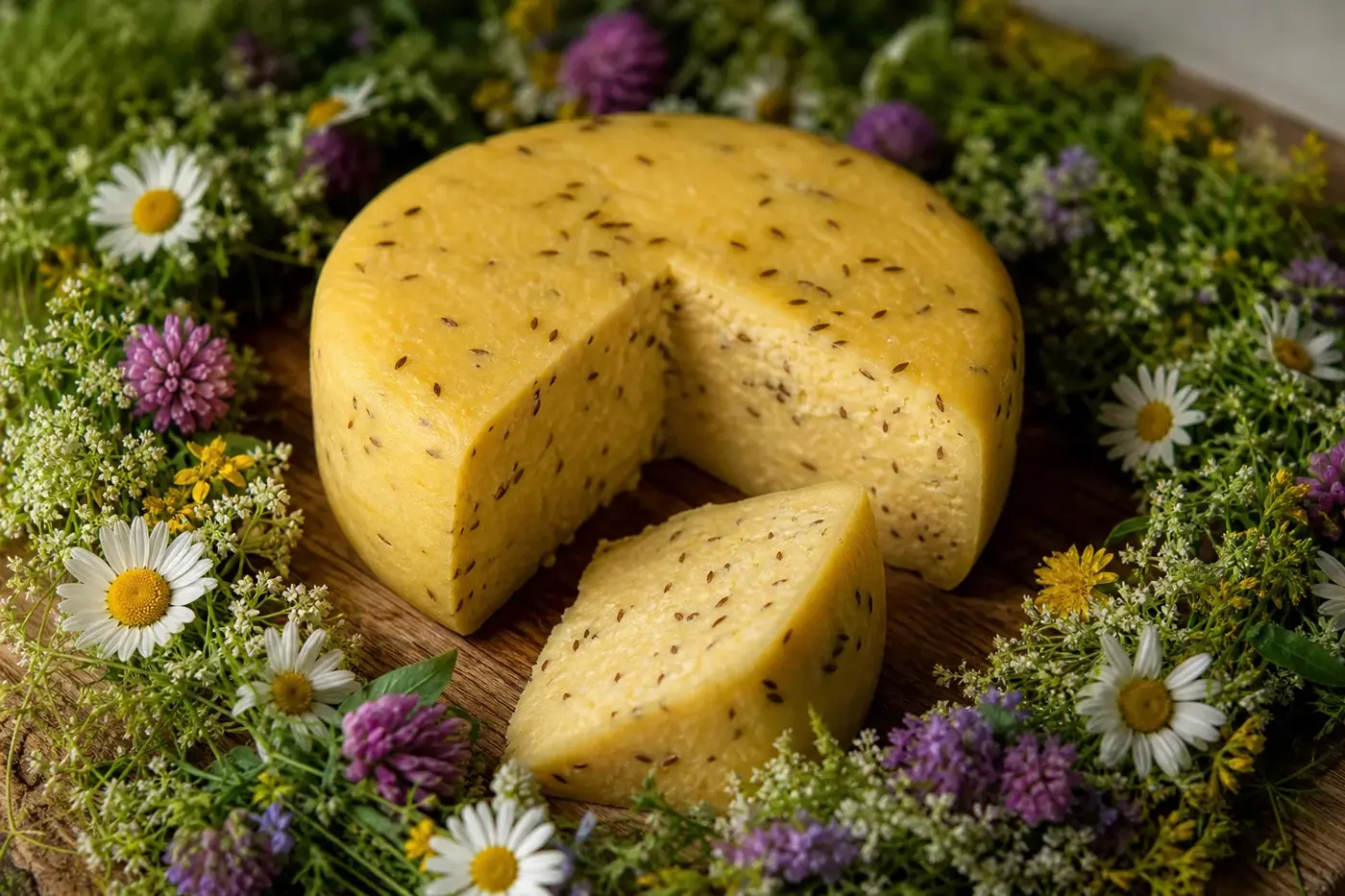
A round caraway cheese sits among the wreaths, songs and bonfires of Jāņi, Latvia’s midsummer celebration. This is Jāņu siers, fresh curd shaped into a cheese at the heart of the feast. Start here, but leave room on your plate, that most optimistic of cheese lover’s instructions. The regional traditions of Latgale and pungent, ripened Latvijas siers, associated with Smiltene, have plenty more to tell you. [3][5]
| Your starting point | What to know |
|---|---|
| Country | Latvia [4] |
| Principal milk | Cow’s milk [4] |
| Main contrasts | Fresh curd and matured cheeses [1][5] |
| Jāņu siers, EU specification identifier | LV-TSG-0007-01264 [1] |
| Other two EU register identifiers | Not established here |
| Countrywide cheese definition and standard | Not established here |
| Protection schemes in force | Not established here |
| Raw milk rules | Not established here |
| Enforcement authority | Not established here |
Start with caraway, then follow your nose
Put Jāņu siers beside Latvijas siers and you have a delicious introduction to Latvia’s range. The first has the familiarity of a household recipe. Its specification describes a fresh sour-milk cheese, with caraway scattered through a compact, slightly grainy body. [1]
Latvijas siers takes you into the ripening room instead. Its producer group’s application describes a pale orange surface and an assertive aroma. Taste the two together: fresh lactic tang at one end, the pungency of a matured surface at the other. Neither is short of character. [5]
Follow the milk into the countryside
Cow’s milk anchors Latvian cheesemaking, with substantial farming behind it. In 2024, Latvia’s Central Statistical Bureau recorded 961,000 tonnes of raw milk, including goat’s milk. Dairy companies purchased 86.9% of that total, while the agricultural report records 604,300 hectares of pastures and meadows. There is a whole farming and processing story beyond the midsummer table. [4]
If you visit, follow a named dairy, a farm or a particular way of working. In Vidzeme, the Latvijas siers application connects the cheese with Smiltene municipality and milk from Latvian Brown cows. In the east, the rural tourism association’s Latgale Milk Tour brings dairy foods together with farm kitchens, bread making and rural heritage. Ask how the milk becomes cheese, and you have a rewarding thread to follow through the countryside. [5][8]
Meet the cheeses worth saving room for
Jāņu siers: inside the yellow caraway round
Milk and fresh curd begin the story of Jāņu siers. Curd is the solid material separated from milk during cheesemaking; whey is the liquid fraction. The registered specification describes heating milk and curd to release whey, then adding butter or cream, eggs, salt and caraway. Further heating and stirring bring everything into a uniform mass, a traditional method you can explore through a producer’s demonstration. [1]
The prescribed shape is a low cylinder, the familiar round cheese of the feast. Its colour runs from pale yellow to yellow, with moderate saltiness, a clear lactic tang and pronounced caraway flavour and aroma. Look at the cut face for evenly scattered seeds. Caraway alone does not make Jāņu siers: shape, ingredients and method all belong together. [1]
Latgales pakša siers: a name to take east
Latgales pakša siers draws you towards Latvia’s eastern regional food identity. The official application gives two names: Latgales pakša siers and the Latgalian Latgolys pakša sīrs. On 21 September 2026, Latvia’s Food and Veterinary Service announced that the application had passed its national assessment for submission to the European Commission. [6]
The ingredients, production method and precise geographical requirements remain unspecified here. Keep both forms of the name in mind as you explore Latgale’s food. They give you a particular cheese to ask about, rather than just a region on the map. [6]
Latvijas siers: let the ripening room speak
Latvijas siers is a specific cheese name, not a general label for Latvian cheese. Its producer group’s PGI application describes a semi-hard, ripened cheese made with pasteurised cow’s milk, microbial coagulant and cultures. Those cultures include Brevibacterium linens for its surface. The coagulant helps the milk set into curd. [5]
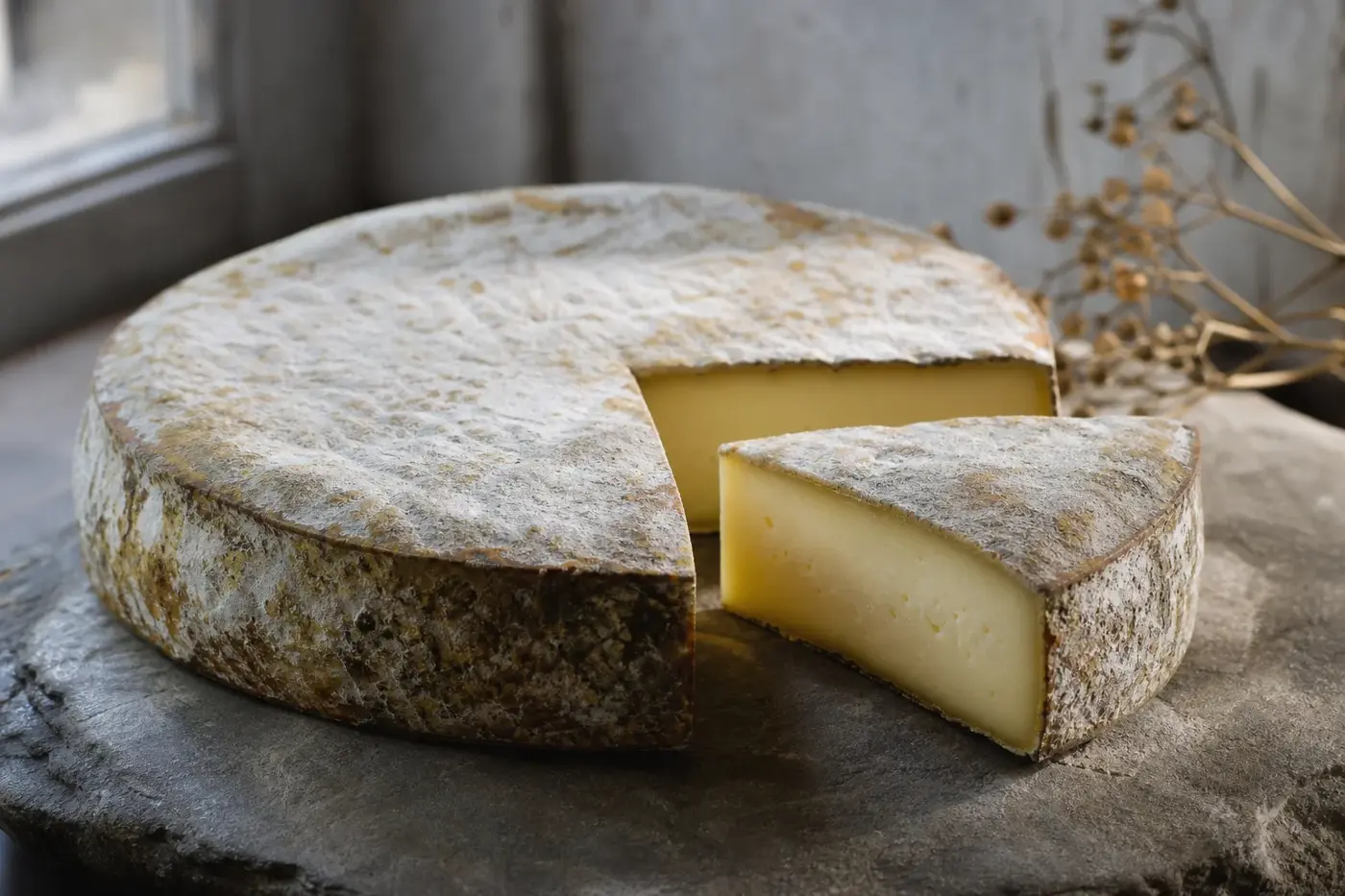
Ripening lasts at least 45 days, with washing and turning along the way. The applicant describes a lightly moist, pale orange rind, an irregular, lace-like pattern of openings and a pronounced, sharp aroma. Look, smell, then taste: those details give you something concrete to notice. [5]
Try it alongside Jāņu siers and the distinction between fresh and ripened becomes tangible. One makes its impression through lactic tang and caraway; the other through maturation. For the broader picture, explore how to tell cheese styles apart. [5]
Leave a corner of the plate for local makers
These three names are only part of your tasting. At Rauna, Siera ražotne makes Zaļais siers, its green cheese, with an herb it calls sierāboliņš, grown in its own garden. The producer also lists cheeses flavoured with garlic, herbs and porcini. [9]
In Bērzciems, Tukums tourism describes Kundziņsiers as making caraway, garlic, spiced and smoked cheeses. Ranges like these give each stop its own character. Arrive with a little room for discovery: a cheese itinerary need not become a binding contract. [10]
Read the names, understand the protection
A traditional recipe and a geographical connection have different kinds of protection. Jāņu siers was registered as a Traditional Speciality Guaranteed, or TSG, under an EU act adopted on 13 November 2015 and published on 17 November 2015. Its current register status remains unspecified here. [2]
Latvian authorities have also recorded applications for Protected Geographical Indication, or PGI, for Latvijas siers and Latgales pakša siers. The table sets out the documented stages. An application is distinct from a completed registration. [3][6]
| Cheese name | Scheme | Where the paperwork stands |
|---|---|---|
| Jāņu siers | EU TSG | Registered under Regulation (EU) 2015/2045; current register status not established here. Published specification covers recipe and method. [1][2] |
| Latvijas siers | PGI application | Submitted to the European Commission on 7 February 2025. [3] |
| Latgales pakša siers, Latgolys pakša sīrs | PGI application | National decision of 17 September 2026 approved submission to the Commission. [6] |
On the pack, read the exact cheese name separately from the maker’s brand. For Jāņu siers, the specification is your reference for the named product; midsummer cheeses are not all interchangeable. For the two PGI applicants, the dates mark steps recorded by national authorities. Explore the wider distinction in protected names explained. [1][3][6]
Pull up a chair, from Jāņi to breakfast
Cheese and beer are integral to the Jāņi feast, according to Latvia’s agriculture ministry. Around them come wreath making, plants gathered for decoration, singing and bonfires. For celebration dates, turn to a Latvian cultural heritage source; those dates remain unspecified here. [3]
Prefer an alcohol-free accompaniment? Try herbal tea with cheese and bread. The Latgale tourism route documents tea, homemade bread, butter and cheese together at Andrupene. It is an inviting combination to bring to your own table. [8]
Latvijas siers also belongs at a less ceremonial table: its application records breakfast sandwiches as one use. Begin with bread and a modest selection of contrasting cheeses, then choose more once you know what appeals. Taste each alone, then with bread. Ask yourself what makes the strongest impression: the milk’s acidity, an added seed or herb, or the ripened surface. [5]
Meet the hands behind the cheese
Latvia’s cheesemaking knowledge lives in family recipes and carefully managed production alike. The tourism authority describes family cheesemaking recipes. The agriculture ministry’s account of Latvijas siers, meanwhile, emphasises production knowledge, shared skills and a specially managed ripening room. [3][7]
The historical transition from household to industrial production remains an open question here. What carries the craft forward is not just the written recipe, but experienced cheesemakers and controlled maturation. Instructions matter; so do the hands following them. [1][3]
Small-scale cheesemaking belongs to the present landscape, too. The rural tourism association dates the beginning of Lapsu Mājas Siers in Ogre to 2013 and describes handmade cheeses, including Jāņu cheese made with butter or sweet cream. Siera ražotne dates its founding in Rauna to 2006. These accounts place household-scale work and specialist dairies alongside established manufacturing, giving you several ways into the craft. [9][11]
Let cheese lead you around Latvia
Rīga makes a useful first stop if you want to compare cheeses before heading further afield. The national tourism authority identifies a dairy pavilion at Riga Central Market, giving cheese a dedicated place within the larger food market. Its national cuisine guide also points you towards Āgenskalns and Kalnciema markets, plus rural goods markets in Cēsis and Straupe. Talk to sellers and jot down producer names: your next destination might begin at the counter. [7][12]
For a more focused stop, try a producer’s own shop. Siera ražotne lists one at its Rauna dairy and asks you to book tours and tastings in advance. In Bērzciems, Kundziņsiers offers another possibility for a cheese-focused visit, with tastings described by Tukums tourism. Confirm arrangements directly, including booking, language, accessibility and whether your visit includes production, a tasting or both. [9][10]
If farm kitchens and rural settings appeal, plan with the Latgale Milk Tour. Its Pumpuri listing describes cheese and smoked meats; Mežinieku Mājas brings together cattle keeping, dairy foods and bread making. At Andrupene, an early twentieth-century farm setting places cheese within the wider rural household. Give hosts your dates and ask what they can arrange, especially if regional food is the reason for your journey rather than an extra. [8]
Seasonal celebrations offer another way to meet cheese in its own setting. The rural tourism association lists midsummer celebrations at Andrupene, alongside a St Michael’s Day market and traditional crafts. For midsummer, seek a locally advertised Jāņi programme with food traditions, then confirm the organiser’s current details before travelling. The celebration gives caraway cheese its social setting; a booked dairy visit gives you more time to ask how it is made. [8]
Make your next cheese-counter conversation count
Start with three questions: who made this cheese, where was it made, and is it fresh or ripened? For fresh cheese, ask when it was made; for matured cheese, ask how long it has ripened. If it is flavoured, ask which seeds, herbs or other ingredients went in. Request written product information rather than relying on a name spoken across a busy counter.
Keep the producer’s name with your tasting notes, especially when several cheeses look alike. You need only the cheese name, maker, place, age if supplied, and the quality that caught your attention. A tasting notebook need not become a second job. For help with the pack, turn to how to read a cheese label.
Before a farm detour, confirm official contact details and visiting arrangements. Before carrying cheese across a border, consult the official requirements for both your destination and your transit route. A little practical planning leaves you free to concentrate on the cheese.
Questions people ask
What is Jāņu siers?
Jāņu siers is a fresh sour-milk cheese associated with Jāņi, Latvia’s midsummer celebration. It is shaped into a low cylinder and has a lactic tang and pronounced caraway flavour.
How is Jāņu siers made?
Milk and fresh curd are heated to release whey, then butter or cream, eggs, salt and caraway are added. Further heating and stirring bring the mixture into a uniform mass.
What is the difference between Jāņu siers and Latvijas siers?
Jāņu siers is a fresh cheese with a lactic tang and caraway. Latvijas siers is a semi-hard, ripened cheese with a sharp aroma and a pale orange surface.
Are Latvian cheese names protected?
Jāņu siers was registered as a Traditional Speciality Guaranteed under an EU act adopted in 2015, although its current register status has not been verified. Latvian authorities have also recorded Protected Geographical Indication applications for Latvijas siers and Latgales pakša siers.
Where can I taste Latvian cheese?
Riga Central Market has a dairy pavilion where cheese has a dedicated place. Siera ražotne in Rauna lists a dairy shop and asks visitors to book tours and tastings in advance.
Sources
- European Commission, Product specification of a Traditional Speciality Guaranteed: Jāņu siers, Official Journal C 204, 20 June 2015, specification LV-TSG-0007-01264. Sections 3 and 4 cover composition, appearance, sensory characteristics and production. )
- European Commission, Commission Implementing Regulation (EU) 2015/2045, adopted 13 November 2015, published 17 November 2015. Articles 1 and 2 cover registration and entry into force.
- Latvian Ministry of Agriculture, LV produkti ES shēmās, live national account, accessed November 2026. Sections for Jāņu siers and Latvijas siers.
- Central Statistical Bureau of Latvia, Agriculture of Latvia 2025, 2025 edition, reporting 2024 agricultural production and land use.
- AS Smiltenes piens, Pieteikums reģistrācijai aizsargātas ģeogrāfiskās izcelsmes norādes reģistrā: Latvijas siers, application published by the Latvian Ministry of Agriculture, version retrieved November 2026.
- Latvian Food and Veterinary Service, Paziņojums par aizsargātas ģeogrāfiskās izcelsmes norādes “Latgales pakša siers / Latgolys pakša sīrs” reģistrācijas pieteikuma atbilstību, 21 September 2026.
- Investment and Development Agency of Latvia, Latvia Travel, Latvian national cuisine, undated live page, accessed November 2026.
- Latvian rural tourism association Lauku ceļotājs, The Latgale Milk Tour: Info, undated live itinerary, accessed November 2026.
- Siera ražotne, Par mums, undated producer account, accessed November 2026. Product and visitor information is the producer’s own account.
- Tukums tourism information service, Sieru darbnīca “Kundziņsiers”, undated live visitor listing, accessed November 2026.
- Lauku ceļotājs, Lapsu Majas Siers, undated live producer and visitor listing, accessed November 2026.
- Investment and Development Agency of Latvia, Latvia Travel, Riga Central Market, undated live visitor listing, accessed November 2026.
This desk-researched article brings together official product documents, agricultural statistics and attributed producer and tourism accounts.
Last checked: November 2026
Last checked November 2026.
The editors suggest you read next
French Cheese: The Complete Guide
Picture Normandy’s pastures, then follow the milk towards the Loire’s goat dairies, the Jura’s shared cheesemaking traditions and the sheep country of the Pyrenees.