Luigi Guffanti
Picture an abandoned silver mine in Valganna, with Gorgonzola quietly taking the place of silver.
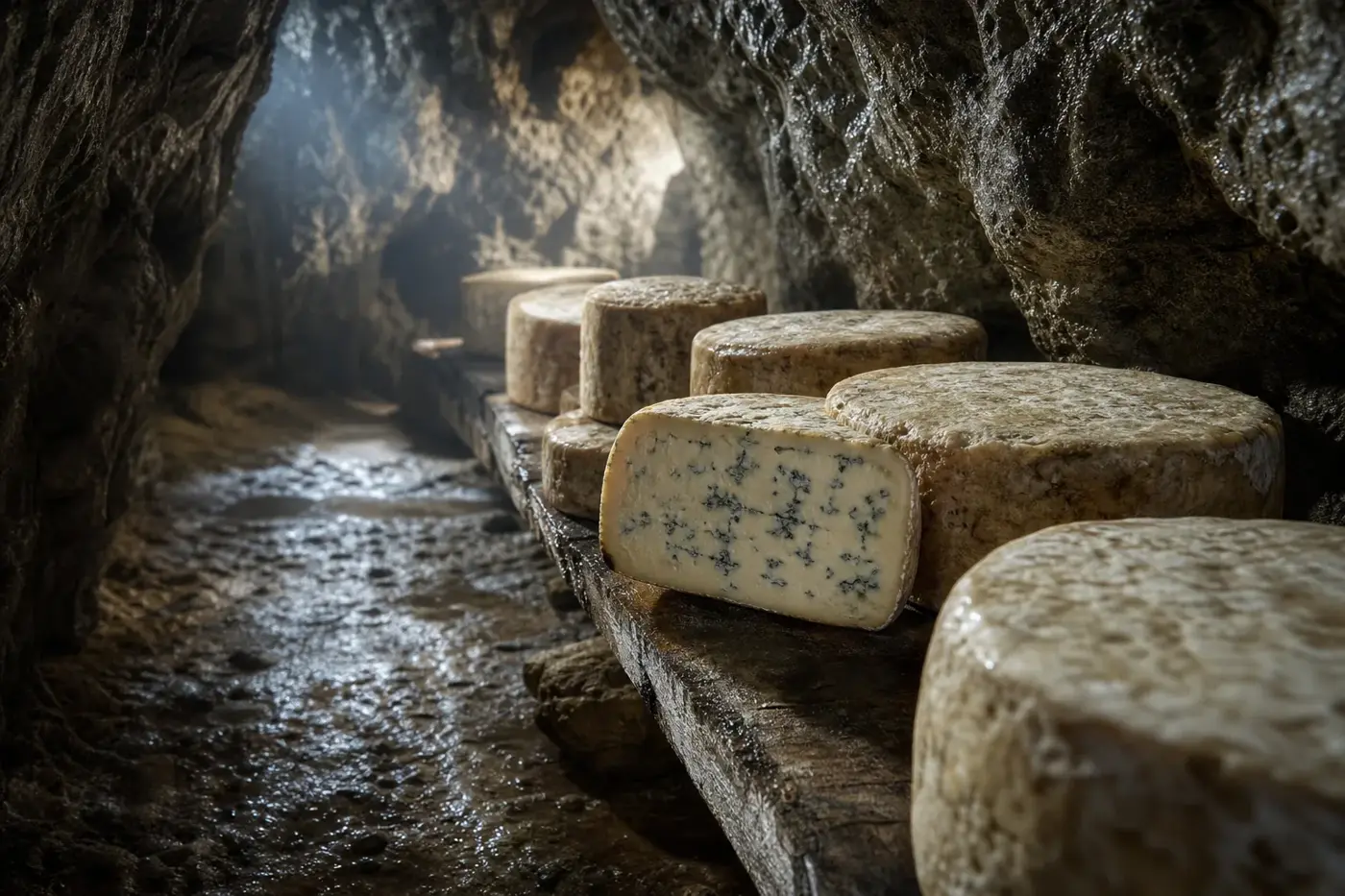
Picture an abandoned silver mine in Valganna, with Gorgonzola quietly taking the place of silver. Its relatively constant temperature and humidity made it a promising cheese cellar for Luigi Guffanti, whose business began in 1876. An unusual career change for a mine, but a useful one for cheese. [1][2]
Today, the Italian family business in Arona still connects producers, farms and mountain pastures with the work of the cellar. Selected cheeses arrive with potential. Skilled handling and carefully chosen conditions help them develop before they reach you. [2][3]
A few things to know about Luigi Guffanti
| A useful detail | The story |
|---|---|
| Business name | Unioncamere’s historical profile records Luigi Guffanti 1876 S.r.l.; this historical record does not establish the current legal entity. [1] |
| Where to find it | Via Milano 140, Arona, province of Novara, Piedmont, Italy. [1][5] |
| When it began | 1876, according to the company history and Unioncamere’s historical business profile. [1][2] |
| The family | Guffanti Fiori; the company describes five generations in the business. [2] |
| Its work | Selecting, ageing, refining, distributing and selling cheese. [3][5] |
| Who is involved | The company’s account, as of November 2026, names Carlo, Luisa, Giovanni and Davide in management and selection. [2] |
| Official website | Guffanti’s website, listed in Sources. [5] |
What does it take to raise a cheese?
Guffanti calls itself an allevatore di formaggi: literally, a raiser of cheeses. Picture a wheel already made, with much of its development still ahead. The task is to recognise its potential and give it the care it needs. Selection, ageing and refinement run through the company’s account of its trade. [2][3]
At the counter, you can usefully separate those jobs. The cheesemaker turns milk into cheese; the selector chooses which cheeses to take. The affineur manages maturation, the distributor moves cheese through the supply chain, and the retailer sells it to you. Guffanti’s published account covers several of these roles. [3][5]
So “Is this a Guffanti cheese?” starts the conversation rather than settles it. Ask who made it, where it was made and what Guffanti did afterwards. You give the producer, selector and affineur their proper credit. Suddenly, the name on the counter has a much richer story to tell.
Follow the Gorgonzola underground
The story begins in 1876, when Luigi Guffanti started ageing cheese, particularly Gorgonzola. In the company’s history, an abandoned silver mine in Valganna, in the province of Varese, is central to that early enterprise. Below ground, relatively constant temperature and humidity offered conditions suited to maturation. [1][2]
There was no new cheese to invent. Gorgonzola supplied the starting point; the mine provided somewhere to care for it. That partnership between an existing regional cheese and deliberately chosen ageing conditions still sits at the heart of Guffanti’s explanation of its craft. [2]
Follow the founding story and several places come into view. The company’s shop account mentions Cassano Magnago, while other historical accounts connect the early business with Arona and Valganna. These accounts leave the relationship between the locations unclear. [1][2][3][6]
Unioncamere records that the founder’s sons continued maturing Gorgonzola in refrigerated underground rooms at the Arona premises. They also bought mountain cheeses from producers in the Ossola valleys near Switzerland. The range was already travelling beyond the cheese that had started everything. [1]
Five generations around the cheese
The business was under way long before its formal registration. Unioncamere records Ditta Luigi Guffanti’s registration as a partnership in February 1918. The founder’s sons succeeded him after his death in 1925. [1]
Leadership later passed through the Fiori branch of the family. Another generational transition began in 1970, with younger family members joining during the 1990s. A nineteenth-century beginning became a family story stretching well beyond its founder. [1]
In the company’s account as of November 2026, Carlo Guffanti Fiori, his sister Luisa and his sons Giovanni and Davide are involved in management, research and cheese selection. It describes Carlo and his sons as the fourth and fifth generations. [2]
Through those generations, the practical questions keep returning. Which cheeses should you choose, how do you assess them, and what care do they need? Guffanti’s public identity rests on knowledge of cheeses, their producers and their places of maturation. You can follow that thread from selection at source to care in the cellar. [2][3]
Begin where the cheese is made
Before a cheese reaches the cellar, someone has to choose it. According to its catalogue, Guffanti’s specialists select directly at production sites across Italy and elsewhere in Europe. The company favours raw-milk cheeses and, where possible, cheeses made where the animals are milked. Summer selection includes producers working on high mountain pastures. [3]
That gives you some useful questions to take to the counter. Was the cheese made in a particular season, and can the seller name the dairy or farm? What was the milk treatment? Was it selected at a particular maturity, or did the affineur mature it further?
“Italian mountain cheese” becomes more interesting when you can attach a producer, a production season and an account of what happened after manufacture. Place matters, but those details explain what the place name means for the piece in front of you. For the underlying distinctions, see raw, thermised and pasteurised milk.
Good selection also means recognising differences worth keeping. Cheeses from separate regions have their own milk, methods and intended maturity. You learn more about an affineur’s judgement by exploring those differences than by expecting everything bearing its name to share one texture or strength.
Affinage takes more than a calendar
Turning wheels, brushing them and tending their rinds: maturation involves active work. Affinage means skilled care during maturation, and Guffanti describes all these tasks. Where appropriate, wheels are rubbed with mixtures containing water, oil and salt to keep the rinds supple. [3]
A developing cheese may also move between cooler or more humid parts of the maturation space. Temperature and humidity are working conditions, considered alongside the cheese itself. Its rind, consistency and maturity help determine what happens next. [3]
Guffanti’s published account includes traditional assessment tools, among them small hammers and sampling tools. These accompany the hands-on business of caring for the surface. The aim is to understand the cheese, not simply count the days. [1][3]
“Older” tells you about age, but rather less about the rind, the texture within or the maturity intended for that cheese. Ask about those instead. A wheel does not improve merely by collecting birthdays. You will get a more useful buying conversation, and a clearer distinction between attentive maturation and simply waiting.
Step inside the Arona cellars
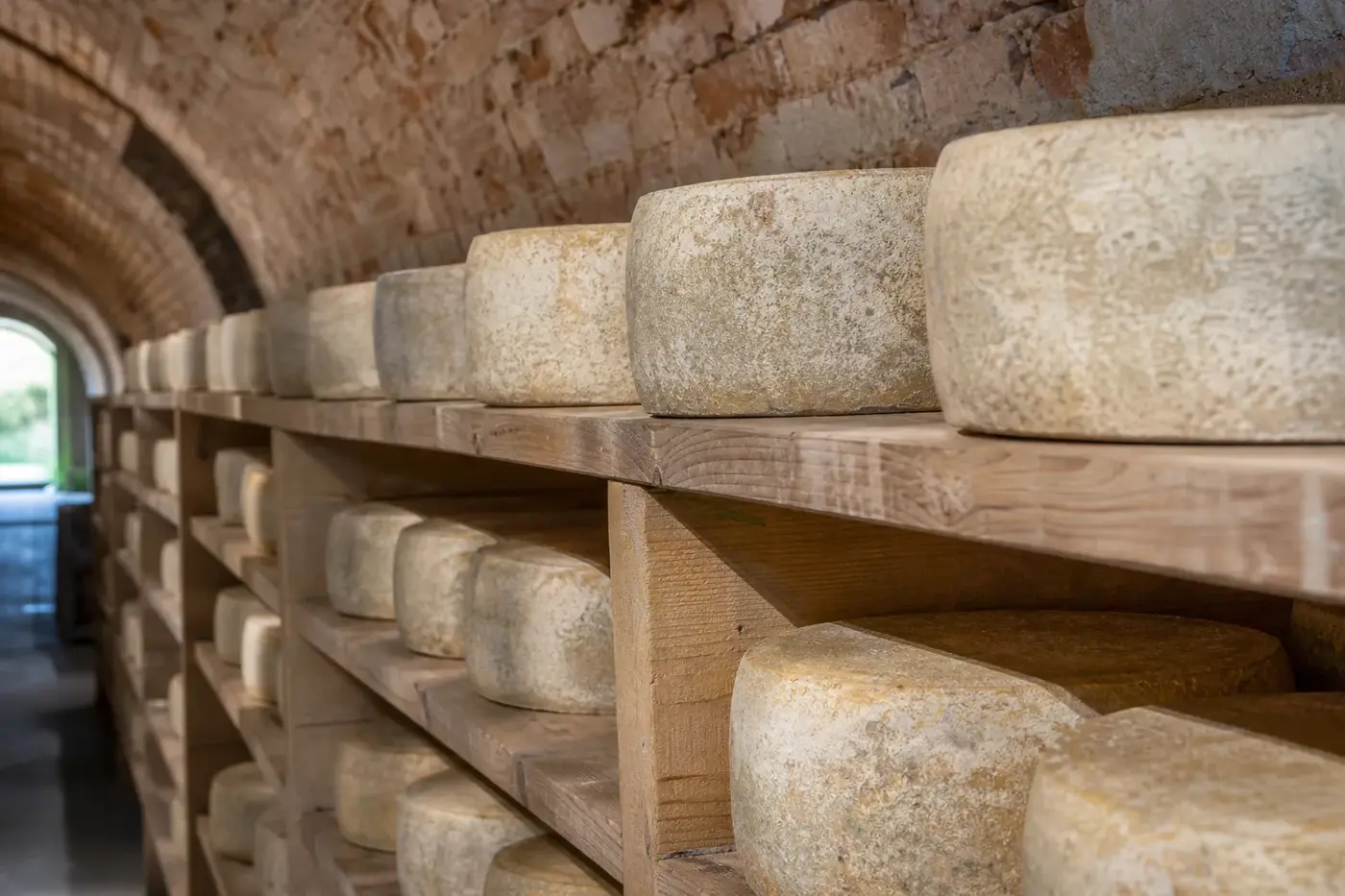
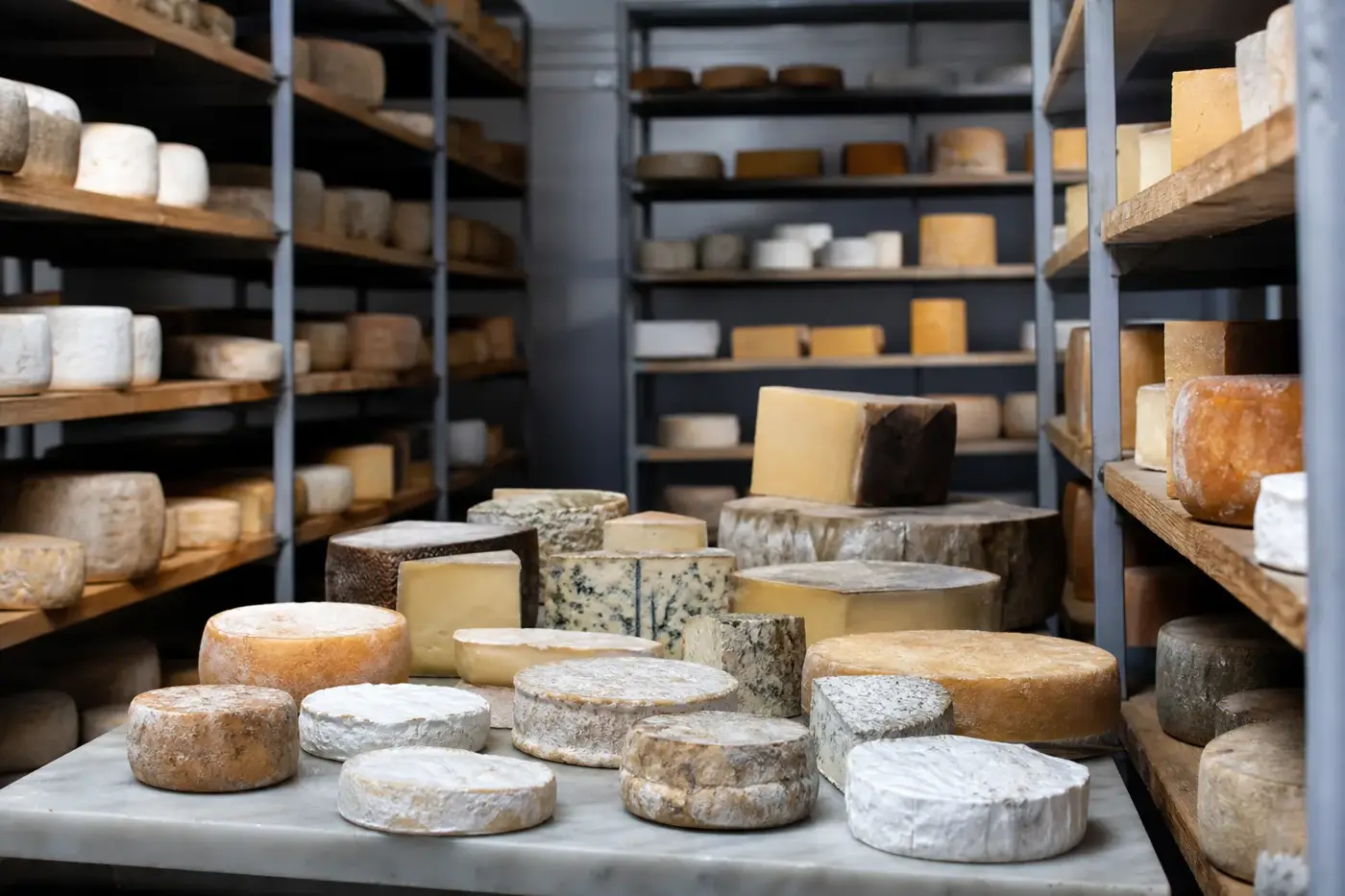
Guffanti places its Arona caves close to Lake Maggiore and a stream flowing towards the lake. In the company’s account, an ageing room draws part of its character from its materials, established microbial environment and long use. Temperature and humidity belong to that picture too. [4]
A cellar, though, cannot make the decisions. The people working there must recognise each cheese’s condition, understand what it needs and choose a response. Different cheeses need different attention; the skill lies in reading them. [3][4]
At the counter, ask what care your cheese received, and where. Did Guffanti select it, mature it for longer, treat its surface or prepare it for sale? A precise answer gives you more to appreciate than “cave” alone, however inviting the word sounds.
Find your next cheese in the Italian range
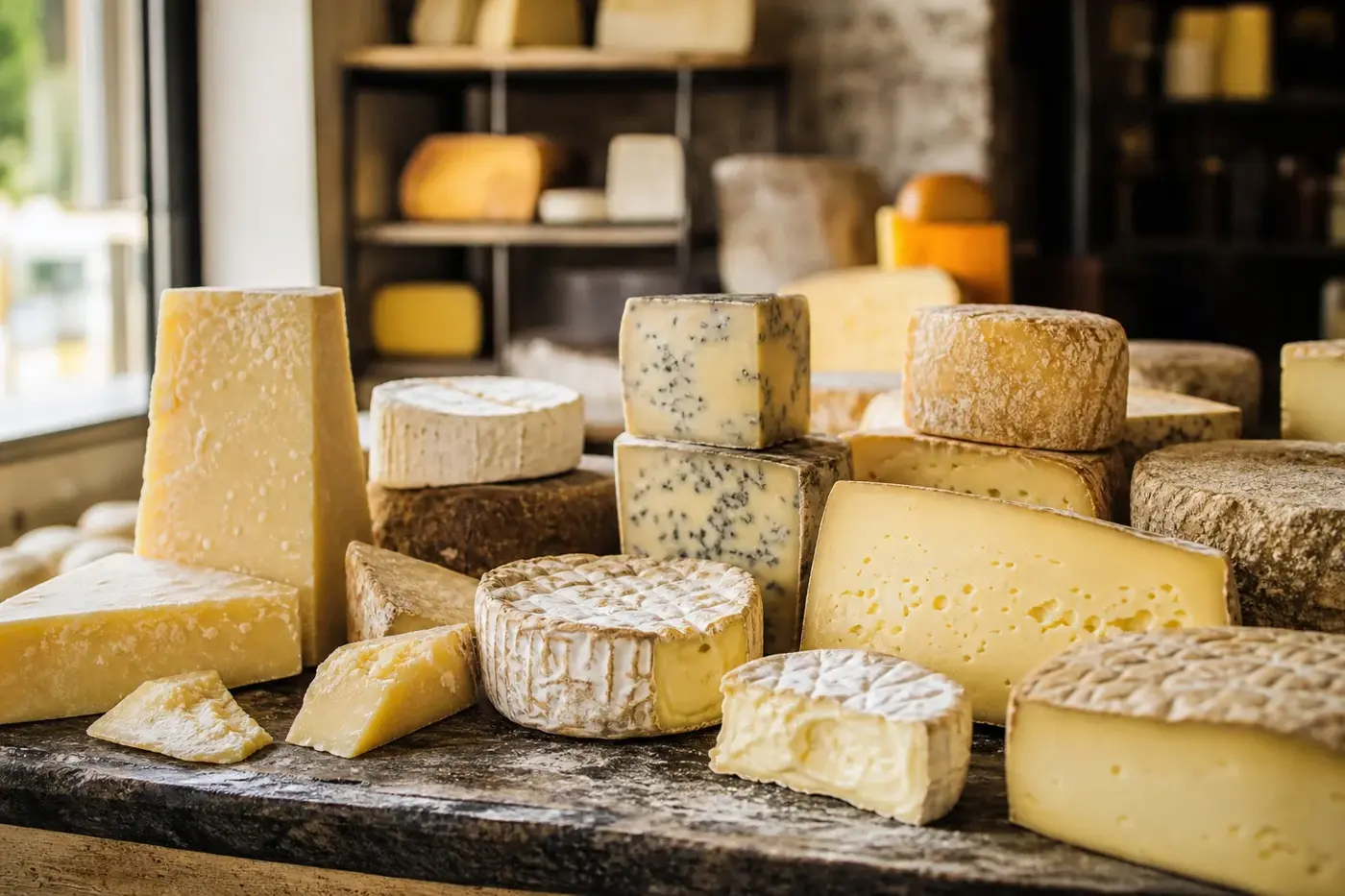
Gorgonzola is only the beginning. Guffanti’s current listings stretch across blue cheese, Alpine cheeses, sheep’s-milk cheeses and products expressly named for goat’s or buffalo milk. You can use that range to explore how origin, style and subsequent care come together in an individual cheese. [6]
Gorgonzola: will you spread it or crumble it?
Gorgonzola remains closely tied to the business’s history. Guffanti lists both dolce and piccante, while the Gorgonzola consortium describes the cheese as made with pasteurised cow’s milk. The consortium distinguishes softer dolce from firmer, more crumbly piccante, which it associates with a stronger flavour. [6][7]
Ask for the version by name, then talk about texture and how you want to use it. A soft cheese for spreading has a different job from a firmer blue for crumbling. Even a familiar name can give you distinctly different possibilities on your plate.
Mountain cheeses with a season to tell
Bettelmatt appears in Guffanti’s listings with named summer production years. Cheeses identified with Antigorio and other mountain traditions feature too. These descriptions offer you season and locality, rather than leaving “mountain cheese” to explain everything. [6]
Ask what the season designation tells you about the piece for sale. It opens a conversation about production and subsequent handling, especially when you are comparing pieces of different ages. Keep your attention on the actual cheese: a year or mountain name cannot tell you its condition on its own.
Make room for sheep, goat and buffalo cheeses
The listings include Grande formaggio di pecora Sardegna, Capra Sarda di Montagna and BuonaSorte con latte di bufala. They do not establish who selected or matured each cheese, or where that work happened. Those are separate questions to take to the seller. [6]
Get to know each as an individual product before deciding how to serve it. Ask about milk treatment, texture and maturation. Milk species is one part of the story, alongside rind, texture and production method. The guide to cheese styles helps you keep those distinctions clear.
Give the protected name its due
A protected cheese name and an affineur’s name answer different questions. The protected name identifies a cheese governed by its own specification. The affineur’s name identifies a business involved in getting it to you.
Read both, and ask about the exact registered name, geographical area and production stages covered by the specification. If maturation is geographically restricted, that limits the work an affineur can undertake. It also helps explain the relationship between the producer and the business selecting or handling the cheese.
For a Guffanti selection, ask where the cheese was made and where its required maturation happened. Then ask what Guffanti did afterwards. That distinguishes a cheese selected and sold by the business from one given additional maturation in its cellars. For the wider framework, see protected names explained.
Bring a Guffanti selection home in Britain
Start with the exact cheese, not just the business name. Ask your cheesemonger for its maker or production origin, milk treatment, maturity and storage instructions. Say whether you want to eat it alone, spread it, grate it or cook with it. A clear brief makes a broad range easier to navigate.
Buy a quantity you expect to use comfortably, and keep the label or written instructions. If you choose several cheeses, ask for each to be identified separately, so the right storage information stays with the right piece. You will also have a record of the producer, region and style you enjoyed.
Find the right spot in your fridge
Keep your fridge between 0 °C and 5 °C. In its guidance for England and Wales as of November 2026, the Food Standards Agency recommends this range and checking it with a fridge thermometer. It also advises following packaging instructions, including date labels. [8]
Food Standards Scotland’s guidance as of November 2026 separately recommends the same temperature range and regular thermometer checks. Follow the instructions for your particular cheese, including any directions after opening. Professional maturation and home storage have different purposes: your purchase comes with consumer storage instructions for a reason. [9]
For fuller handling advice, see how to store cheese at home. Keep those instructions close and follow them for your purchase. Your fridge serves a different purpose from an affineur’s cellar.
Bring out a little and enjoy it
For dolce Gorgonzola, the consortium recommends taking it out of refrigeration at least half an hour before eating to appreciate its soft texture. Follow that flavour advice within the relevant national handling guidance. The FSA says chilled food should spend the shortest possible time outside the fridge during preparation, with a maximum of four hours. [7][8]
In Scotland, Food Standards Scotland advises returning food to the fridge promptly and leaving party food out for no more than four hours. Put out a modest portion and replenish it as needed. Your whole purchase need not remain on display throughout the gathering. [9]
Keep identifying labels with your notes, so the connection between cheese and producer survives the meal. Then make your comparisons specific: which milk, which place, which texture? Ask what selection or maturation contributed. You will have more than a name to remember that particular piece by.
General information only, not medical advice: follow the official guidance where you live.
Questions people ask
Does Luigi Guffanti make its own cheese?
Guffanti describes itself as a raiser of cheeses, selecting, ageing and refining cheeses that have already been made. For a particular cheese, ask who made it, where it was made and what Guffanti did afterwards.
Where is Luigi Guffanti based?
The business is based in Arona, in the province of Novara, Piedmont, Italy. Its Arona cellars are close to Lake Maggiore.
What is the difference between Gorgonzola dolce and piccante?
The Gorgonzola consortium describes dolce as softer. It describes piccante as firmer and more crumbly, with a stronger flavour.
What kinds of cheese does Guffanti select?
Guffanti selects cheeses at production sites across Italy and elsewhere in Europe. Its catalogue states a preference for raw milk cheeses and, where possible, cheeses made where the animals are milked.
How should I store Guffanti cheese at home?
The Food Standards Agency advises keeping the fridge between 0 °C and 5 °C, checking its temperature with a thermometer and following packaging instructions, including date labels. Food Standards Scotland recommends the same temperature range and regular thermometer checks. See the guidance from the relevant agency and follow the instructions supplied with your cheese.
Sources
- Unioncamere, “Luigi Guffanti 1876 S.r.l.”, historical business profile, undated current web edition. Legal name, address, business chronology and historical maturation activities. Source.
- Luigi Guffanti, “Cheese Growers”, undated current company account. Founding narrative, Valganna mine, family generations and described management involvement. Commercial primary source, attributed in the article. Source.
- Luigi Guffanti, “Catalogo Guffanti Formaggi”, undated edition hosted in the company’s November 2024 document directory, especially PDF pages 4, 14, 16 and 18. Selection, distribution and maturation practices. Commercial primary source. Source.
- Luigi Guffanti, “Cheese Caves”, undated current company account. Arona location and the company’s explanation of cellar character. Commercial primary source. Source.
- Luigi Guffanti, “Cheese refiners since 1876”, current corporate website, including business address, retail navigation and company notices dated 2026. Source.
- Luigi Guffanti, “Formaggi online: Gorgonzola Dop, d’alpeggio e pecorini”, current company product listings, checked November 2026. Evidence of listed selections, not guaranteed availability. Commercial primary source. Source.
- Consorzio per la Tutela del Formaggio Gorgonzola, “The Gorgonzola”, undated current industry-body account. Milk treatment, descriptions of dolce and piccante, and serving suggestion. The consortium is an industry body, not a regulator. Source.
- Food Standards Agency, “How to chill, freeze and defrost food safely”, published 18 December 2017, current retrieved guidance. Applies to England, Northern Ireland and Wales. Source.
- Food Standards Scotland, “Chilling food”, undated current consumer guidance. Applies to Scotland. Source.
Researched through primary business accounts, Unioncamere’s historical profile, the Gorgonzola consortium and official British food-handling guidance; no visit or tasting was undertaken.
Last checked: November 2026
Last checked November 2026.
The editors suggest you read next
Farmhouse, Artisan and Industrial Cheesemakers Explained
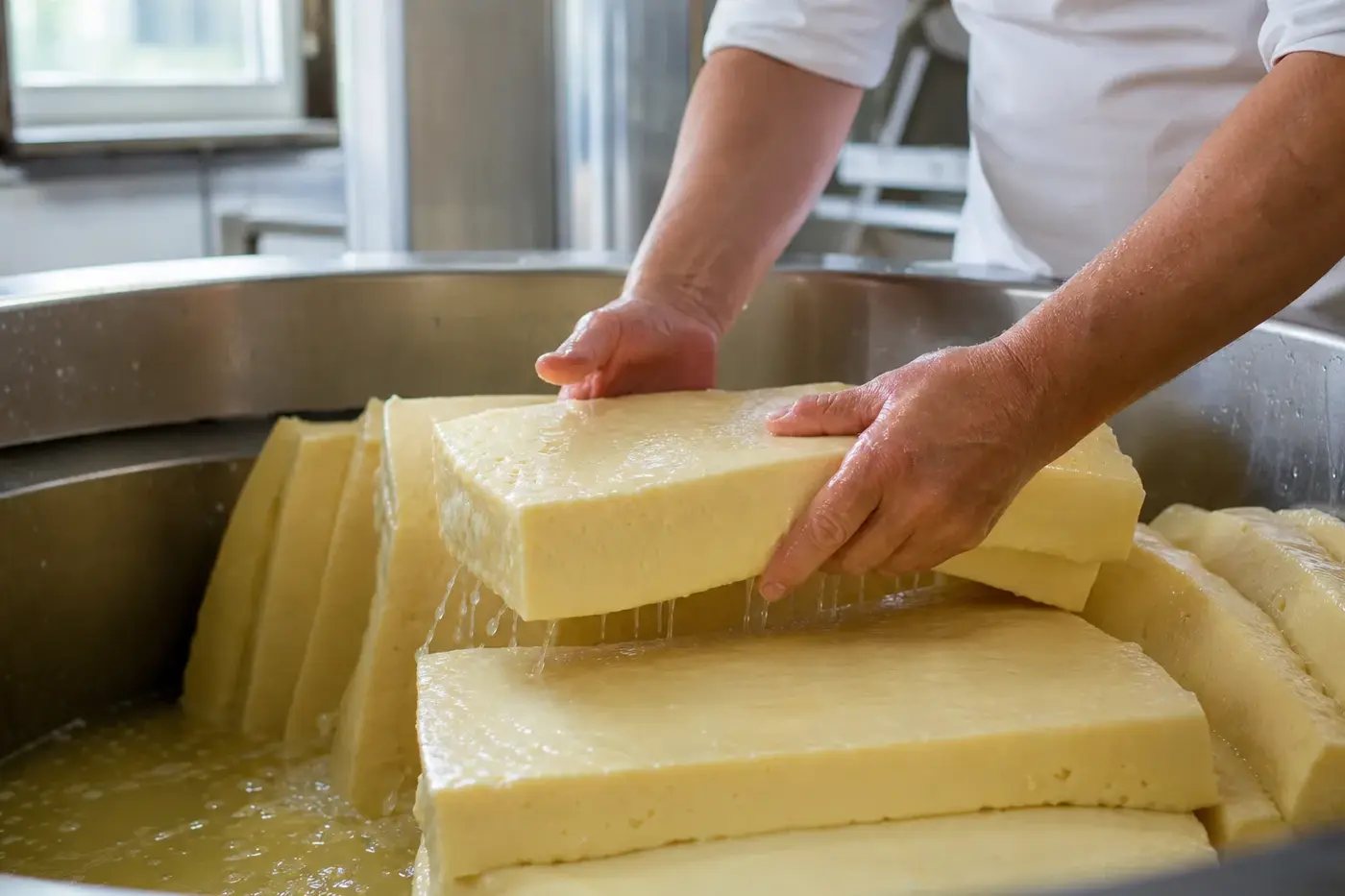
Slabs of curd are turned and stacked by hand.