Meeny Hill Blue
A small piece of Meeny Hill Blue, plain bread and a little fruit: give this cheese some room on your plate.
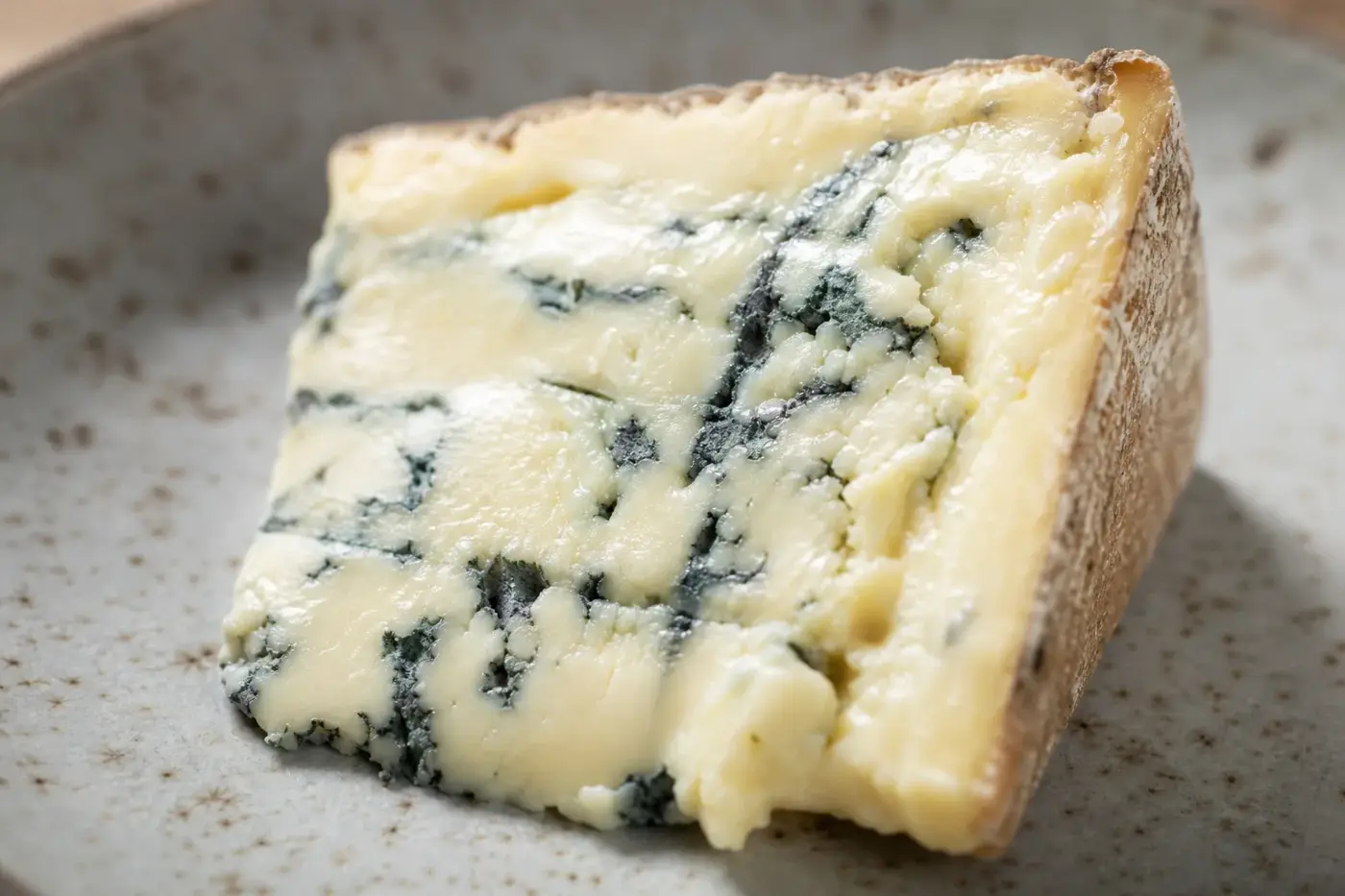
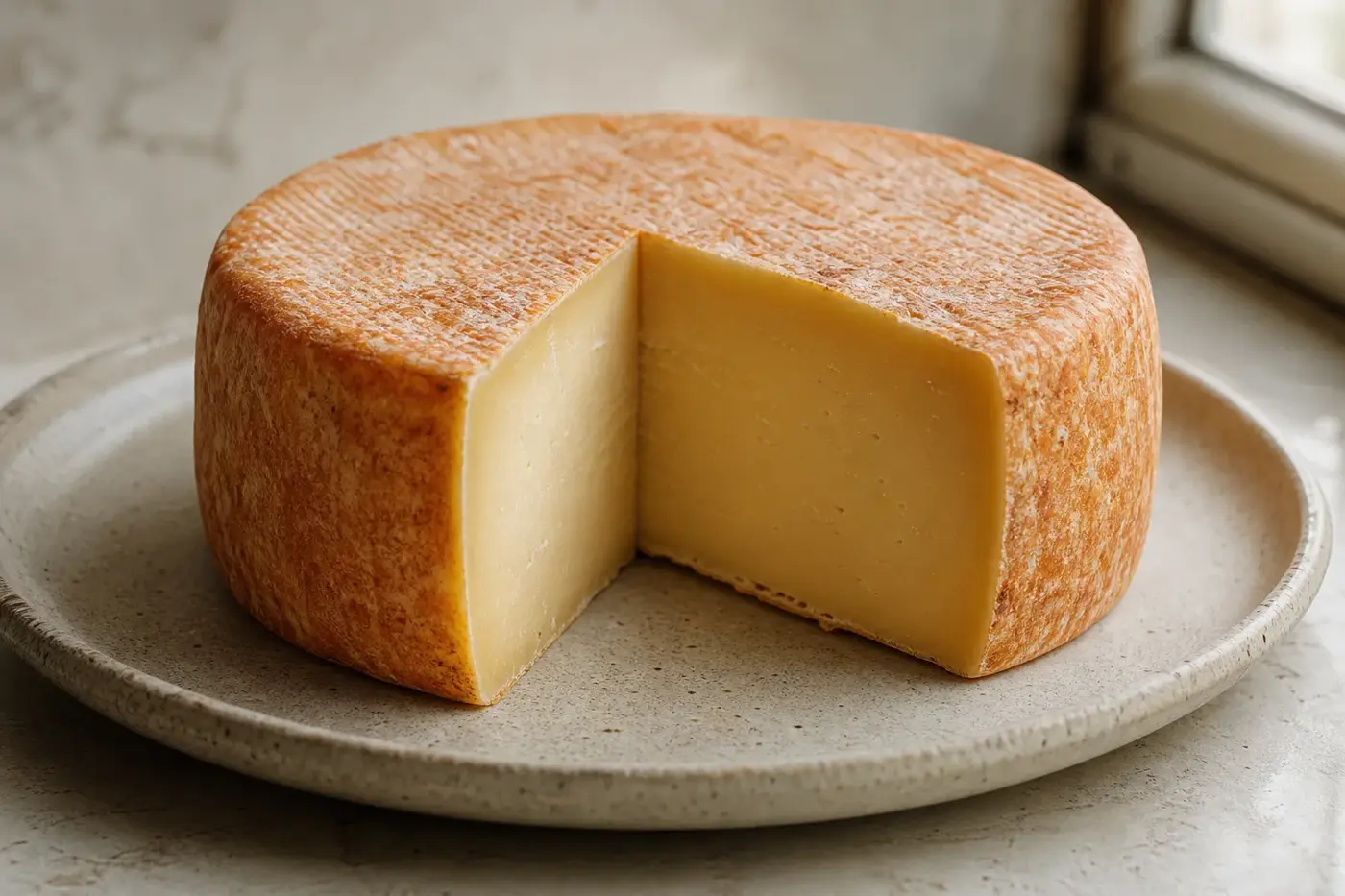
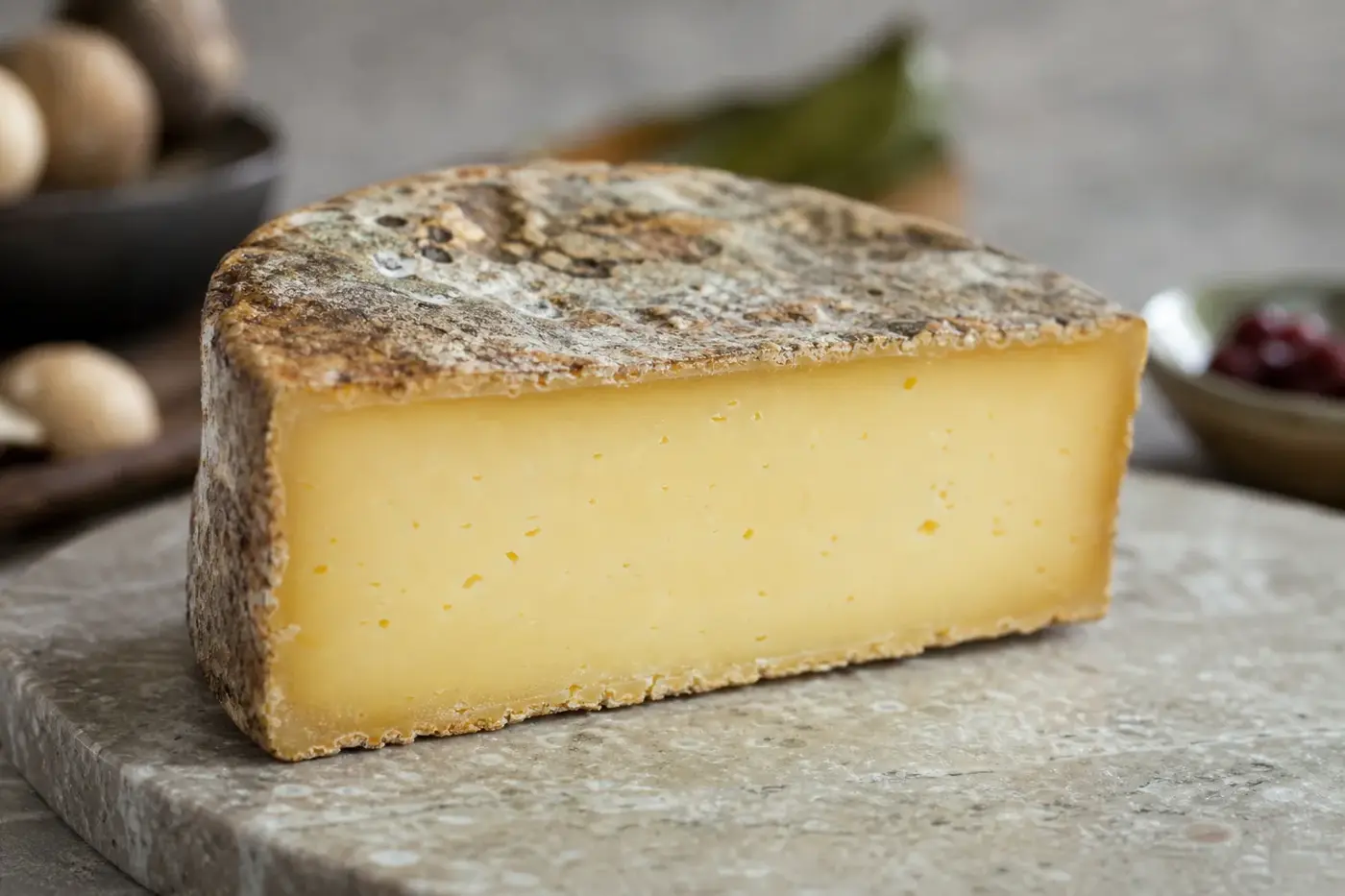
A small piece of Meeny Hill Blue, plain bread and a little fruit: give this cheese some room on your plate. Earth and mushrooms lead you towards a supple bite threaded with blue. Made by Dart Mountain Cheese in County Londonderry, Northern Ireland, this goat’s milk cheese deserves a moment before the chutney starts making conversation.[1]
| Your quick guide | What to know |
|---|---|
| Name to ask for | Meeny Hill Blue.[1] |
| Maker and home | Dart Mountain Cheese, Park, County Londonderry, Northern Ireland. The maker uses Co. Derry in its address.[2] |
| Milk and treatment | Pasteurised goat’s milk.[1] |
| Maker’s declared coagulant | Vegetable rennet.[1] |
| Rind | Natural.[1] |
| Maker’s minimum ageing | Two months.[1] |
| Named milk supplier for this cheese | Ask the maker for details |
| Blue culture and strain | Ask the maker for details |
| Whole-cheese shape and paste colour | Ask the maker for details |
| Registered name, authority and register ID | Ask the maker for details |
| GI status in Northern Ireland and Great Britain | Ask the maker for details |
| Allergen | Milk.[1][9] |
A soft heart with a blue streak
Meeny Hill Blue brings two qualities to your plate: a soft body and blue development inside. It is a ripened cheese, rather than a fresh, unripened goat’s milk cheese.[1]
Start with a small piece on its own, then try another with bread. Save the fruit or drink for your next taste. This little sequence lets you notice texture, aroma and blue character separately, then choose companions for whichever part you enjoy most.
Curious about where it sits in the wider cheese family? The guide to cheese styles explains how milk, rind, texture and method fit together.
Below Dart Mountain, a barn finds its calling
In 2009, a disused agricultural barn became a dairy. Dart Mountain Cheese’s published story begins with that conversion, then follows the work of learning to make and mature cheese. Experience accumulated, and the range grew from that converted farm building.[2]
You’ll find the dairy below Dart Mountain in the Sperrin Mountains, on Tamnagh Road at Park, County Londonderry. The maker calls the county Derry throughout its own account. It describes a family-run business supported by the surrounding community.[2]
You can explore that setting through its tasting experiences and farm visits. The published goat-cheese experience includes Craigbane Goat Farm. Other experiences bring cheese, local refreshments and the Sperrins together.[3]
Before you set off, ask the maker for current booking information, access arrangements and the itinerary. If Meeny Hill Blue is the reason for your journey, ask which cheeses your visit will include.
Follow the milk into the Sperrins
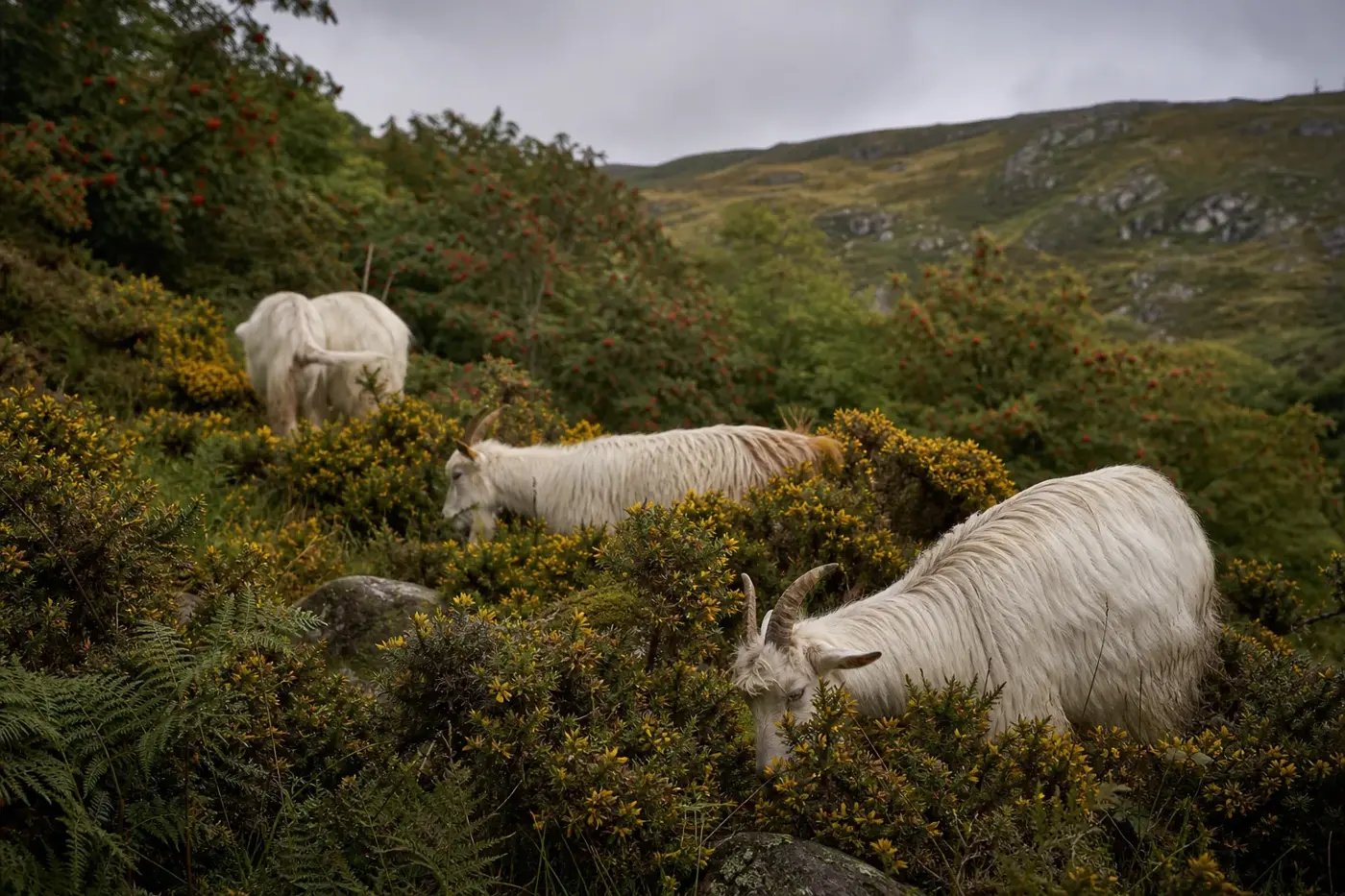
Dart Mountain says it sources milk from local, family-owned dairy farms in the Sperrin Mountains. That description covers sourcing across the business.[4] On its separate Meeny Hill Goat Cheese page, the maker describes goats grazing around Meeny Hill among gorse and mountain ash.[5]
You get a vivid sense of the farming landscape, but the names need a little attention. Meeny Hill Goat Cheese and Meeny Hill Blue have separate product pages and descriptions. Ask for the Blue by its full name when you order or discuss it.[1][5]
Read the milk information on the piece you’re buying, then keep its wrapping or label. If you need a particular dietary declaration, ask about that current product, not another cheese from the dairy. The important information should come home with the cheese you’ll actually serve.
For the wider picture, milk treatments explains raw, thermised and pasteurised cheese.
From milk to a blue worth waiting for
Dart Mountain declares vegetable rennet as Meeny Hill Blue’s coagulant.[1] Rennet helps milk form a gel, which cheesemakers separate into curd and whey. The curd becomes cheese; whey is the liquid released along the way.[6]
A little air makes room for blue
Blue mould needs oxygen to develop inside cheese. A scholarly account published by the American Society for Microbiology explains that blue cheeses are commonly pierced to make air channels. An open structure between curd particles also helps oxygen reach the interior.[6]
The account describes Penicillium roqueforti as a mould used in blue cheesemaking. During ripening, mould enzymes act on fats and proteins, helping shape flavour and texture. That is how the mould inside contributes to the blue cheese you eventually taste.[6]
Dart Mountain gives Meeny Hill Blue a minimum ageing period of two months.[1] For its culture, piercing method and ageing conditions, ask the maker for further details. When you buy a piece, ask your cheesemonger about its present condition and when it was cut.
You can follow the broader journey from milk to maturation in how cheese is made.
Take your time with earth, mushrooms and spice
Delicacy and spice share the stage in Dart Mountain’s tasting profile. The maker describes a supple texture, with aromas suggesting earth and mushrooms.[1] Use those notes as a starting point, then see what you notice yourself.
Smell the cut cheese before you put it on bread. Take a small bite and consider texture first, then flavour: how readily does it yield, and what lingers after you swallow? Add an accompaniment to your next bite and notice what changes.
Let strong condiments wait their turn. Put chutney, fruit and crackers alongside the cheese, so you and your guests can choose your own balance. A plain first taste gives every later addition something clear to compare with.
A Bronze moment for Meeny Hill Blue
Meeny Hill Blue received a Bronze award in the Artisan Cheese Awards’ published 2024 results. Dartmountain Cheese entered it in class 9, Vegetarian.[7]
That recognition belongs to this named cheese, in that category, competition and year, rather than to another cheese in the range. When you’re deciding how to serve your piece, the maker’s description and its present condition offer more immediate guidance.
Make a little space at the table
Peaches or nectarines are Dart Mountain’s suggested companions, including a grilled presentation.[1] Start there if you’d like to explore fruit with the blue. You can adjust the sweetness to suit your taste.
Serve a little, keep the rest chilled
Bring out a small portion and keep the rest chilled. For home handling in Northern Ireland, follow the Food Standards Agency’s guidance for England, Northern Ireland and Wales. The November 2026 guidance cited here advises a fridge between 0 and 5 °C (32 to 41 °F), and the shortest possible time out for chilled food, with a maximum of four hours.[8]
Take out only what you intend to serve shortly. As cheese warms, its fat becomes less firm and its texture changes, which helps explain why a small serving can feel different from a fridge-cold piece.[6] Find the texture you enjoy within the agency’s handling limit.
Allow about 30 g per person as a modest starting portion alongside other food. An NHS resource uses 30 g as a reference cheese serving.[10] Plan from there, then adjust for the meal and how many other cheeses you’re serving.
Choose one companion and follow your taste
You don’t need a plate crowded with competing flavours. Begin with one combination and give it your attention. These suggestions build on the maker’s fruit pairing; the bread, oat biscuit, pear and drinks are editorial serving ideas.
| Try it with | How to serve it | What to notice |
|---|---|---|
| Peach or nectarine | Keep the slices separate | The maker’s recommended fruit pairing.[1] |
| Plain bread | Start with a small bite of each | How it compares with cheese tasted alone |
| Oat biscuit | Choose an unflavoured version | Contrasting texture without another condiment |
| Pear | Set a thin slice beside the cheese | Another way to explore fruit with the blue |
| Water or an unsweetened fruit infusion | Pour alongside your food | An alcohol-free option without much added sweetness |
Keep chutney in a small amount on the side to begin with. You can always add more after tasting; the jar is unlikely to object. On a cheeseboard, give Meeny Hill Blue its own serving utensil and enough room for everyone to cut a manageable piece.
Keep your glass pleasantly uncomplicated
Water makes an easy companion. If you fancy something more aromatic, try an unsweetened fruit infusion. Either can sit alongside the food without turning your cheese plate into an elaborate pairing exercise.
Keep it cool, with the label close by
The instructions and date on your actual wrapping come first. The FSA advises refrigerating dairy products and following the manufacturer’s storage directions. Use a fridge thermometer to establish the temperature: the control dial’s position is not a temperature reading.[8]
Keep the label with any remaining cheese, especially if you transfer it to another container. Buy an amount that suits your plans, then serve smaller portions while the rest stays refrigerated. For help with wrapping and arranging your fridge, see storing cheese at home.
Milk is the allergen to identify here. FSA technical guidance includes goat’s milk in its discussion of milk allergens.[9] Keep that information available for guests, and look at accompaniments separately: bread, biscuits and condiments bring their own ingredients to the plate.
For personal allergy questions, ask your clinician or dietitian. The guide to cheese allergy and lactose intolerance explains the distinction between those conditions.
General information only, not medical advice: follow the official guidance where you live.
Questions people ask
Where is Meeny Hill Blue made?
It is made by Dart Mountain Cheese in Park, County Londonderry, Northern Ireland. The dairy sits below Dart Mountain in the Sperrin Mountains.
What milk and rennet are used in Meeny Hill Blue?
Meeny Hill Blue is made with pasteurised goat’s milk. The maker declares vegetable rennet as its coagulant.
What does Meeny Hill Blue taste like?
Dart Mountain describes it as delicate and spicy, with aromas of earth and mushrooms. It has a supple, soft texture and blue veining.
How long is Meeny Hill Blue aged?
Dart Mountain states a minimum ageing period of two months. Its blue culture, piercing method and ageing conditions have not been verified.
How should Meeny Hill Blue be stored and served?
Follow the instructions and date on the wrapping, and try it with plain bread, peaches or nectarines. The Food Standards Agency advises keeping the fridge between 0 and 5 °C and chilled food out for the shortest possible time, up to four hours; check its current guidance.
Sources
- Dart Mountain Cheese, Meeny Hill Blue Cheese, undated product information, retrieved November 2026. Product page.
- Dart Mountain Cheese, About us, undated company account, retrieved November 2026. Company account.
- Dart Mountain Cheese, Tours & Experiences, undated visitor information, retrieved November 2026. Visitor information.
- Dart Mountain Cheese, Sustainability, undated sourcing statement, retrieved November 2026. Maker’s sourcing statement.
- Dart Mountain Cheese, Meeny Hill Goat Cheese, undated product information, retrieved November 2026. Separate product page.
- American Society for Microbiology, The Basics of Cheesemaking, Microbiology Spectrum, 31 October 2013, DOI 10.1128/microbiolspec.cm-0002-2012. Full text.
- Artisan Cheese Awards, Award Winners 2024 Artisan Cheese Awards, 2024 results document. Official results.
- Food Standards Agency, How to chill, freeze and defrost food safely, published 18 December 2017, live version retrieved November 2026; applies to England, Northern Ireland and Wales. Official guidance.
- Food Standards Agency, Food allergen labelling and information requirements technical guidance, live version retrieved November 2026, paragraphs 40 to 42. Official guidance.
- NHS West and North London, Dairy Foods, published 18 June 2026. Reference serving sizes.
Research used the maker’s published accounts, the awarding body’s results, a scholarly cheesemaking reference and official UK handling and allergen guidance, with editorial serving suggestions identified separately.
Last checked: November 2026
Last checked November 2026.
The editors suggest you read next