Single Rose Brie
Fresh milk leaves the Wright family’s dairy farm at Ballylisk.
Fresh milk leaves the Wright family’s dairy farm at Ballylisk. Approximately five minutes later, it reaches Ballylisk of Armagh’s production facility. Between Portadown and Tandragee in County Armagh, Northern Ireland, Single Rose Brie begins with a journey shorter than many cheese lovers spend choosing a biscuit.[1][2][4]
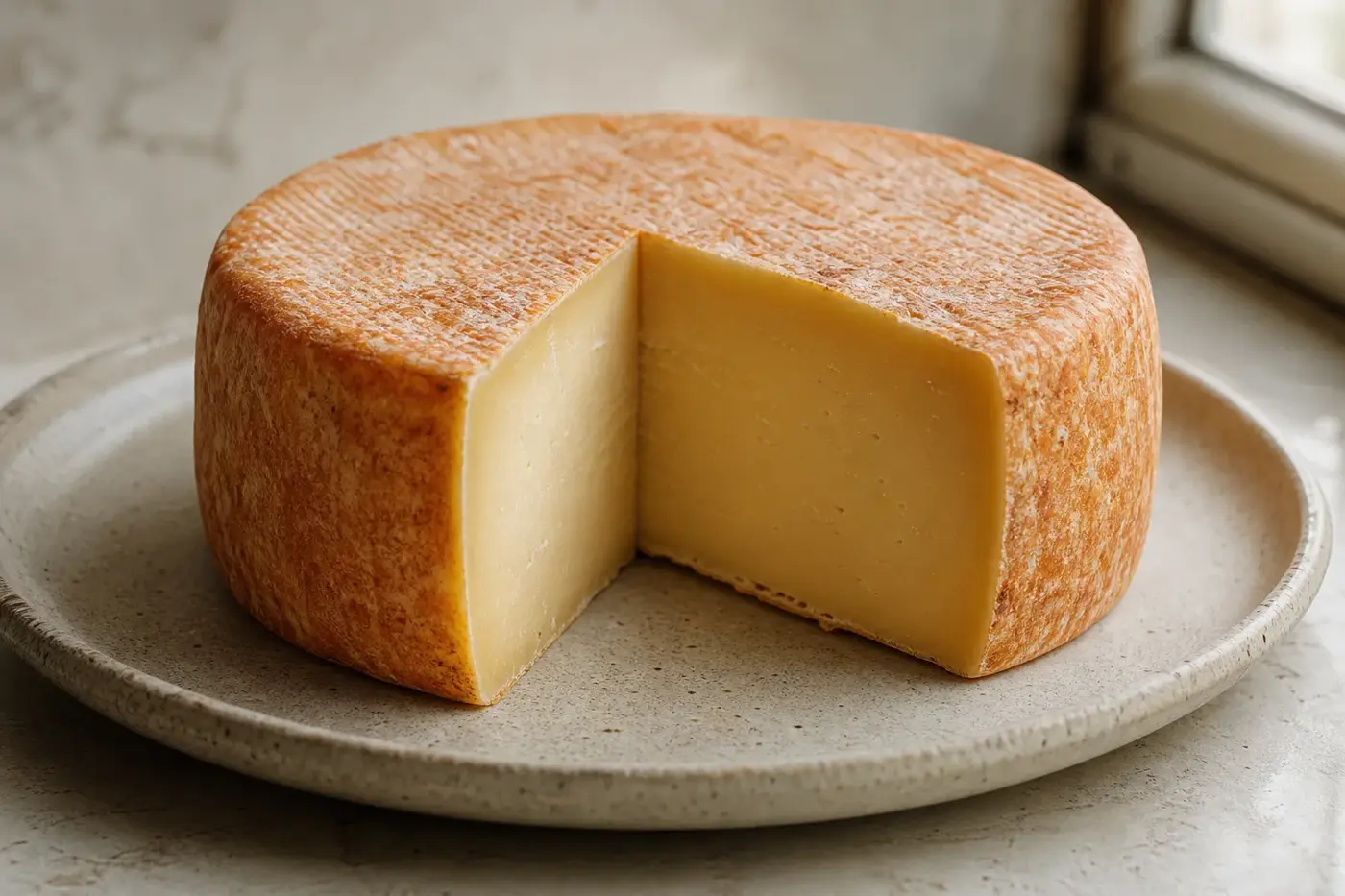
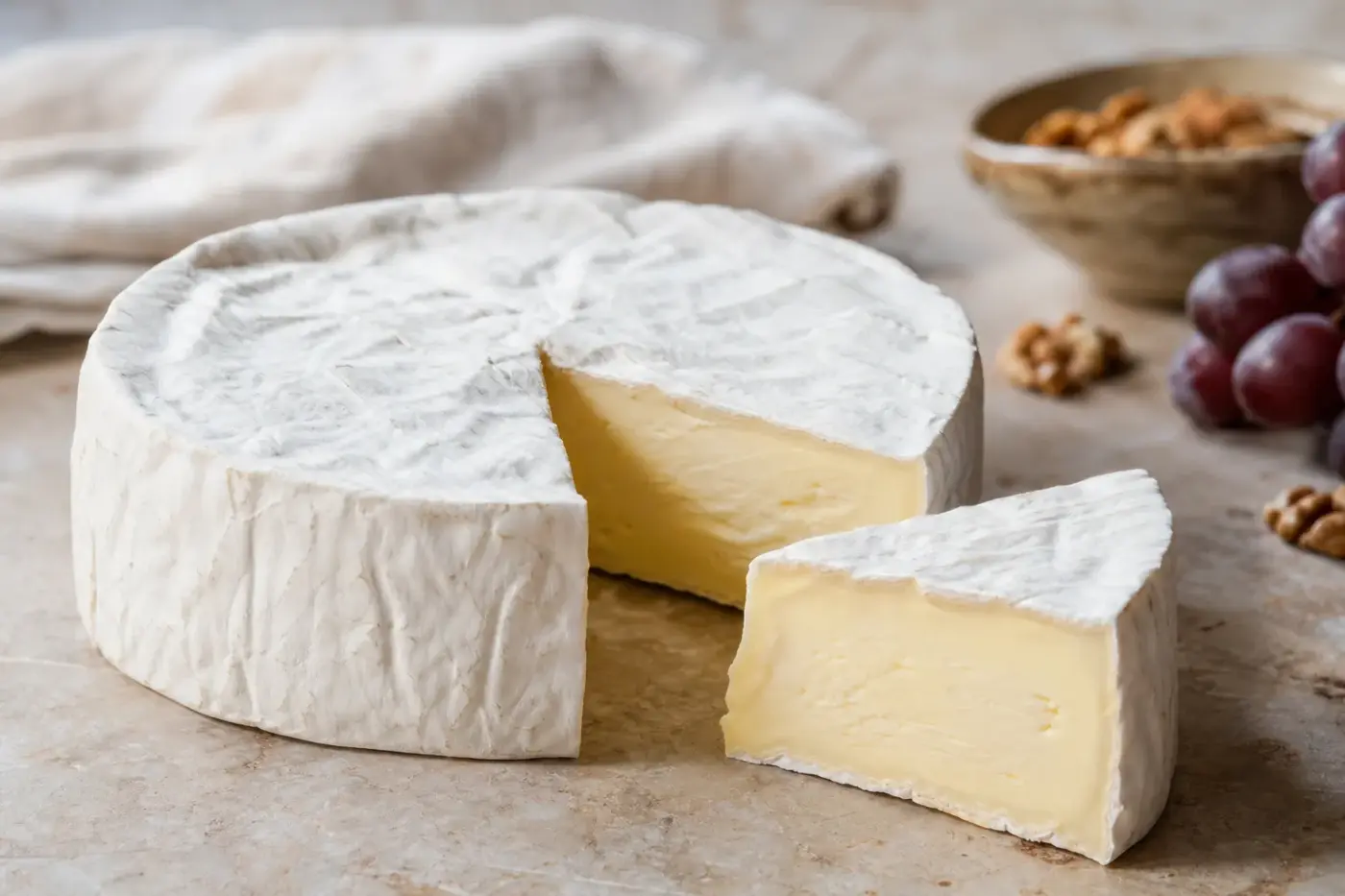
On your plate, that milk becomes a soft, white mould-ripened cow’s milk cheese. Beneath its white, bloomy rind sits a white to cream-coloured centre. The maker describes fresh dairy, mushroom and rounded savouriness: a pale exterior with plenty to say.[3][5]
| Your first look | What to know |
|---|---|
| Name | Single Rose Brie.[3] |
| Maker | Ballylisk of Armagh.[2] |
| Home | County Armagh, Northern Ireland.[1][2] |
| Milk source | One herd on the family farm, identified by the maker as pedigree Holsteins.[1][3] |
| Milk treatment | The maker’s general production account describes pasteurisation; ask about Single Rose specifically.[4] |
| Style | Soft, white mould-ripened farmhouse Brie.[2][3] |
| Coagulant | The maker’s general production account describes vegetarian rennet; ask about Single Rose specifically.[4] |
| Whole-product vegetarian suitability | Ask the maker about the whole product. |
| Published ripening period | Two to three weeks in the maker’s general production account.[4] |
| Registered name, authority and register ID | These details remain unspecified here. |
Meet the Armagh Brie beneath the bloom
Single Rose is Ballylisk’s farmhouse Brie, made around milk from a single herd and a soft, mould-ripened texture. The dairy specialises in cow’s milk, white-mould soft cheeses. Single Rose belongs to that family, with its own identity alongside the cream-enriched Triple Rose range.[2][3]
Start with the rind. Henderson Foodservice’s dated supplier description records a uniformly white bloom surrounding an interior that ranges from white to cream-coloured. “Bloomy” means the visible mould on the surface, which helps shape the cheese’s appearance and ripening character.[5][6]
If supermarket Brie is your starting point, look a little closer here. Ballylisk describes dairy freshness, mushroom and a little farmyard character. Those notes tell you more than “soft” alone, and give you somewhere useful to begin when choosing accompaniments.[3][4]
The broader Brie guide introduces the style. Here, the interest is more particular: one Armagh milk supply, a hands-on dairy and the flavour its maker develops through ripening.
Two brothers find a new use for the milk
Ballylisk’s dairy business began in 2017, when two brothers from the farming family looked for another use for their herd’s milk. Conversations with chefs, restaurateurs and specialist retailers helped give that ambition its shape.[1]
Triple Rose came first. Ballylisk records obtaining premises in June 2017 and converting them into a dedicated production facility. The first cheeses emerged in April 2018; Single Rose followed as the range developed.[1]
Keep that order in mind when you encounter the names. Single Rose is the later farmhouse Brie, not another name for the original triple-cream cheese. Ballylisk gives each its own description and identity.[1][3][7]
“Handcrafted” can be a rather misty word. Ballylisk brings it into focus: its homepage describes stirring the milk and curds, turning the cheeses and packing them by hand. You can picture the work, from the vat to the finished cheese.[2]
Follow the milk, and the rose, through Armagh
The rose in the name has local roots. According to the family’s account, Ballylisk townland was formerly connected with the McGredy rose farm. That connection gives the cheeses their shared naming theme.[1]
The family farm stands halfway between Portadown and Tandragee, within the townland. Its pedigree Holstein herd supplies milk that Ballylisk describes as particularly creamy. This single-herd supply is central to the maker’s story of its cheeses.[1][2]
Then comes the short drive. Ballylisk describes collecting fresh milk and taking it approximately five minutes to the production facility, where pasteurisation takes place.[4]
Farm and dairy are close companions, but their jobs are different. The family farm supplies the milk; the dairy receives it and makes the cheese. Ballylisk’s production account follows that route through collection, transport and cheesemaking.[4]
Get to know the milk behind your cheese
Single Rose is a cow’s milk cheese, and Ballylisk emphasises its single-herd supply.[2][3] The maker describes pasteurisation in its general production account. For Single Rose’s specific milk treatment, ask the maker or consult the current pack.[4]
Milk treatment and ripening do different jobs. Pasteurisation concerns the milk before cheesemaking; ripening transforms the curd into the finished soft cheese. Keep that distinction in mind when you reach the official pregnancy advice below.
Ballylisk’s general account also describes vegetarian rennet. Rennet is the coagulant that helps milk set into curd, the solid material from which cheese is formed. If you would like to understand its different sources, turn to rennet explained.[4]
For a dietary decision, read the current pack and ask the maker about the whole product. The coagulant alone does not establish whether the cheese is suitable for you.
The patient work beneath the white rind
Ballylisk’s general production account begins with pasteurised milk, starter cultures and vegetarian rennet. The curds go into moulds and drain overnight. This is the range’s published process; ask the maker which stages apply specifically to Single Rose.[4]
Hand salting comes next, followed by two to three weeks of ripening. The cheeses are turned and individually maintained during that time, before wrapping and dispatch. Your finished cheese has had a fair amount of personal attention by then.[4]
Starter cultures are selected microorganisms used in cheesemaking. The white surface growth belongs to ripening. Research on Camembert-type cheeses identifies surface fungi as major contributors to the appearance and sensory properties of bloomy-rind cheeses.[6]
Their enzymes break down proteins and fats, helping develop this cheese family’s characteristic texture and flavour. That white rind is not just there to look handsome. It helps change the cheese beneath it.[6]
The same research identifies several organisms used in commercial Camembert-type ripening cultures. Those findings concern its experimental cheese system, not a named Ballylisk culture recipe. Ballylisk describes its own additions more broadly as starter cultures and vegetarian rennet.[4][6]
For the full journey, visit how cheese is made. It takes you from milk through curd, drainage and maturation, putting these individual stages into a wider picture.
Let mushroom and fresh dairy lead the tasting
Fresh dairy notes, mushroom character and an umami-rich finish lead Ballylisk’s current description of Single Rose. If umami feels like an elusive word, think savoury depth, distinct from sweetness or acidity.[3]
The maker describes a rounded flavour, with ripening aimed at some pungency without bitterness. Its range overview adds a hint of farmyard character. These are Ballylisk’s tasting notes, rather than a fromage.co.uk tasting.[3][4]
Treat them as an invitation, not a script you have to follow. Smell a freshly cut piece, then taste a little of the interior. Does mushroom appear in the aroma, arrive as you chew or linger after you swallow?
Give the texture your attention, too. Compare the centre with the paste just beneath the rind: is each firm, yielding or spreadable? That contrast tells you about the piece in front of you, without expecting every cheese to behave identically.
A bloomy-rind cheese changes as it ripens. Its surface community contributes to sensory development, while the maker’s handling determines the product that leaves the dairy.[2][6]
Give Single Rose the first bite
Before you reach for bread, fruit or preserves, taste Single Rose alone. It is easier to notice its character that way. Then you can choose accompaniments that bring out what you enjoy.
Try plain bread or an oat biscuit, followed by a small piece of apple or pear. These are suggestions for you to explore, not pairings from a recorded trial. Ballylisk itself offers oat-based biscuits and apple, pear and fruit preserves alongside its cheeses.[2]
Begin with water if you want a straightforward comparison. Apple juice diluted with sparkling water gives you an alcohol-free option to try with the fruit; plain tea offers another uncomplicated comparison. Take a bite without a drink first, so you have a reference point.
Serve modest slices and let everyone come back for more. Cut each portion to include the centre and an edge. Nobody needs to become the table’s designated rind recipient.
If you prefer cheese less cold, put out only what you plan to eat and let the chill ease briefly. UK NHS guidance says ready-to-eat food should stay refrigerated at 5 °C or below and be eaten within four hours of removal. Preparation and time on the table both count towards those four hours.[8]
Keep it chilled and understand the rind
Keep Single Rose refrigerated and follow its packaging instructions. The Food Standards Agency’s household guidance for England, Northern Ireland and Wales recommends a fridge temperature between 0 and 5 °C. Use a thermometer to check it, and keep dairy products chilled.[9]
For opened food, the NHS advises use within two days unless the packaging says otherwise. Eat, cook or freeze food by its use-by date. Follow the cheese’s pack if it gives a shorter instruction.[8]
The white bloom is the intended ripening surface. Remove the wrapping before serving, and consult the maker’s or cheesemonger’s instructions about eating the rind. If you prefer less rind, trim your own portion rather than the whole cheese.
For pregnancy, UK NHS guidance recorded in November 2026 says white-coated, mould-ripened soft cheeses such as Brie must be thoroughly cooked. Cheese cooked until steaming hot appears among its permitted choices. This advice covers both pasteurised and unpasteurised versions.[10]
The NHS also identifies older people and people with weakened immunity as being at increased risk of serious listeriosis. If that includes you, consult its current guidance and your healthcare professional about your circumstances.[8]
For practical handling, visit how to store cheese at home. You can find the wider context in the guide to cheese food safety.
Find your rose: Brie, triple cream or smoked
Single Rose is the farmhouse Brie. Triple Rose is the triple-cream cheese, enriched with extra cream and described by Ballylisk as having salty and lemony notes. Those descriptions are your clearest guide to telling them apart.[3][7]
Smoked Triple Rose begins with Triple Rose and is cold-smoked using cherrywood, according to its separate product page. That smoking process belongs to the smoked cheese, not Single Rose.[11]
Look for the full name when you choose. The shared rose theme ties the range to the same local story. The individual name tells you which cheese you are bringing to the table.[1][3][7][11]
General information only, not medical advice: follow the official guidance where you live.
Questions people ask
Is Single Rose Brie made with pasteurised milk?
The milk treatment for Single Rose has not been verified. Ballylisk’s general production account describes pasteurisation.
Is Single Rose Brie suitable for vegetarians?
Its whole product vegetarian suitability has not been verified. Ballylisk’s general production account describes vegetarian rennet, but the coagulant used specifically for Single Rose has not been verified.
Can you eat Single Rose Brie during pregnancy?
UK NHS guidance says white coated, mould ripened soft cheeses such as Brie must be thoroughly cooked during pregnancy, whether made with pasteurised or unpasteurised milk. The NHS lists cheese cooked until steaming hot among the permitted choices. Check the current NHS guidance and ask your healthcare professional about your circumstances.
What does Single Rose Brie taste like?
Ballylisk describes fresh dairy notes, mushroom character and an umami rich finish. The maker also describes a rounded flavour and a hint of farmyard character.
What is the difference between Single Rose and Triple Rose?
Single Rose is Ballylisk’s farmhouse Brie. Triple Rose is a triple cream cheese enriched with extra cream, which Ballylisk describes as having salty and lemony notes.
Sources
- Ballylisk of Armagh, Our Story, undated web edition, retrieved November 2026. Maker’s account.
- Ballylisk of Armagh, Ballylisk of Armagh, homepage, undated web edition, retrieved November 2026. Maker’s homepage.
- Ballylisk of Armagh, Single Rose Brie, undated product page, retrieved November 2026. Product description.
- Ballylisk of Armagh, Our Cheese, undated web edition, retrieved November 2026. Production and range descriptions.
- Henderson Foodservice, Ballylisk Single Rose Brie, product information dated 19 May 2026.
- Applied and Environmental Microbiology, The Composition of Camembert Cheese-Ripening Cultures Modulates both Mycelial Growth and Appearance, 2012. Retrieved introductory passage concerning surface fungi and their sensory contribution. Research article.
- Ballylisk of Armagh, Triple Rose, Triple Cream Single Herd Cheese, undated product page, retrieved November 2026. Product description.
- NHS, Listeriosis, reviewed 10 November 2023, current retrieved edition checked November 2026. Official guidance.
- Food Standards Agency, How to chill, freeze and defrost food safely, published 18 December 2017, current retrieved edition checked November 2026. Official household guidance.
- NHS, Foods to avoid in pregnancy, current web edition checked November 2026, section “Cheese, milk and other dairy”. Official pregnancy guidance.
- Ballylisk of Armagh, Smoked Triple Rose, Smoked Triple Cream Cheese, undated product page, retrieved November 2026. Product description.
This piece combines the maker’s published accounts, a dated supplier record, research on bloomy-rind cheese and official UK consumer guidance; serving suggestions are identified as editorial suggestions.
Last checked: November 2026
Last checked November 2026.
The editors suggest you read next